Welcome to The International wine of the Month Club

Featured Wines

September 2008

Premier Series
Featured Wineries & Wines
Membership Type
Kenwood Russian River Pinot Noir 1 Red 1 White; 2 Reds
Cave des Grands Crus Blancs St. Véran 1 Red 1 White; 2 Whites
Cape Rock Cape of Good Hope Dry Red 2 Reds
Casa Silva Sauvignon Gris 2 Whites


Master Series
Featured Wineries & Wines
Membership Type
Hans Marlborough Pinot Noir 1 Red 1 White; 2 Reds
Cave des Grands Crus Blancs St. Véran 1 Red 1 White
Kenwood Russian River Pinot Noir 2 Reds


Collector Series
Featured Wineries & Wines
Membership Type
Hans Marlborough Pinot Noir 1 Red 1 White; 2 Reds
Hans Marlborough Pinot Gris 1 Red 1 White
Château du Courneau Margaux 2 Reds

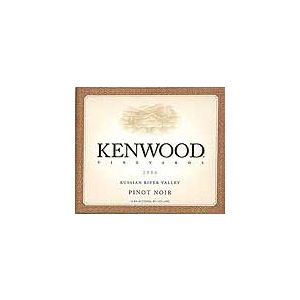
Kenwood Russian River Pinot Noir 2006 – U.S.A.

"The air is wine. Across Sonoma Mountain, wisps of sea fog are stealing. The afternoon sun smolders in the drowsy sky. I have everything to make me glad I am alive."

—Author Jack London

Kenwood Russian River Pinot Noir 2006 – U.S.A.To generations of readers, author Jack London is renowned for his marvelous tales of adventure and human courage. But the "Master of Adventure" was also know to his contemporaries as an adept winemaker, fashioning some of California's finest wines from his sprawling Sonoma County ranch in Kenwood known as Beauty Ranch. Many Americans mistakenly believe that the California wine boom began spontaneously in the 1960s and early 1970s, but Sonoma County was a thriving viticultural region at the turn of the last century, before Prohibition put a halt to commercial wine production. And today, that very same Sonoma land that captivated the writer Jack London is home to

Kenwood Vineyards. Kenwood plants, farms, and harvests the historical, lava-terraced vineyards of Jack London's ranch.
Jack London infuses his best literature with palpable tension and excitement. Time and again London captures our imagination in a literary vice-grip that holds us suspended between the physical sensations of elemental nature and the refinements of civilization. In essence, London impels us in his writing to consider the value of each. Similarly, the winemakers at Kenwood consistently offer the taster extraordinary sensory pleasure along with clean, artfully crafted flavors from Sonoma County's premier vineyards.

London's life mirrored the polar pulls of the physical and the civilized. In his early years, London worked as an oyster pirate, shipped on a seal-hunting expedition, and joined the Yukon Gold Rush in 1897. At the turn of the century, however, London found literary success. As America's best-selling author, he acquired a significant fortune and in 1905 began acquiring farmland in Sonoma Valley to form Beauty Ranch. In contrast to his adventurous youth, London was committed to experimental and progressive farming techniques, such as controlling erosion and designing labor-saving farm buildings. So, although deeply drawn to the native beauty of his land, London spent his final years fabricating a haven of comfort and civilized living at Beauty Ranch, which included some of Sonoma County's finest wines.

After London's death in 1916, his sister managed the ranch until World War II, when she was forced to let the land lie fallow. Thirty years later, London's grandson, Milo Shepard, replanted 130 acres of the vineyards, and in 1976 Kenwood Vineyards obtained exclusive rights to produce wine from the fruit of Jack London Ranch. Kenwood, founded in 1970, is committed to producing the finest Sonoma County wines. All of the winery's offerings that appear under the Jack London moniker are made exclusively from fruit produced on London's former estate; the rest emanate from surrounding vineyards.

Today, more than 800 acres of Jack London's Beauty Ranch are now owned and operated by the California State Parks System. Visitors have the opportunity to hike, bike, or horseback ride through much of the property, as well as view many of the ranch's buildings and Jack London's home and grave, including the remains of London's famous Wolf House.

Tasting Notes: An elegant, flavorful, finesse-driven Pinot, the 2006 Kenwood Russian River Pinot Noir captures the ethereal beauty of Burgundy's most illustrious grape. At the same time it highlights how far California has come in fashioning top-notch Pinot Noir. Reminiscent of good Burgundy, this Pinot displays a brilliant cherry, garnet-tinged robe with a huggable bouquet that offers everything from fresh berry fruit to a cachet of oriental spice. Soft and seductive in the mouth, this wine is so very easy to drink; it captivates the taster not with sheer power or weight but with impeccable balance and a wealth of savory delights. And it finishes with a nod and a smile to complement its gregarious nature. Perhaps best of all, this charming Russian River Pinot needs no muss nor fuss before serving. Consequently, we suggest you open the 2006 Kenwood Pinot Noir and pour it straight away. It will open immediately and begin to unfold in the glass within minutes. Enjoy!

Accompaniments: Wine as tasty, textured, and easy to drink as the 2006 Kenwood Russian River Pinot Noir needs very little in the way of accompaniment. However, this Russian River Pinot Noir offers a haunting aromatic profile and a host of soft, savory flavors – all of which lend themselves to the culinary wonders of the table. In the case of Kenwood's 2006 Pinot Noir, its affinity for food adds up to a superb complement to both fish and meat. Specifically, chicken, ham, pork, salmon, and tuna all provide this comely offering with superb companionship. Braised pork tenderloins with apples and cream, milk-fed veal smothered in a mushroom sauce, and salmon served with fennel in a savory sauce are just a few of our favorite dishes with Kenwood's delightful 2006 Russian River Pinot Noir. All accentuate the savory aspects of this exciting wine without overpowering the wine's delicacy.

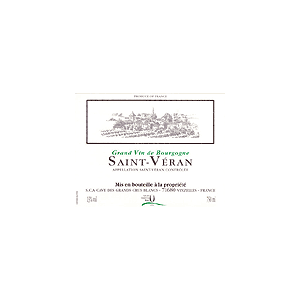
Cave des Grands Crus Blancs St. Véran 2006 – France

Cave des Grands Crus Blancs St. Véran 2006 – FranceThe Caves des Grands Crus Blancs is one of the top wine cooperatives in France. Begun in 1929 as a union of small growers from the tiny Maconnais hamlets of Vinzelles and Loché, the Caves des Grands Crus Blancs has expanded over the years to represent growers in all the renowned appellations of southern Burgundy, including St. Véran, Pouilly-Fuissé, and Beaujolais. Its specialty, however, remains pure, unadulterated Chardonnay from the Maconnais.

Although the International Wine of the Month Club rarely features wines by cooperatives or even negociants, the quality of the Burgundy wines that flow from the Caves des Grands Crus Blanc is not only on par with the quality we see from private estates in the Maconnais, it is even better. In the case of this winery's St. Véran, we found it a noticeable cut above the competition and even more compelling than many Pouilly-Fuissé – further evidence to support the adage that one cannot drink a label or a price tag, only the wine in the bottle.

St. Véran: One of the Two Crown Jewels of the Maconnais

St. Véran is one of the two finest appellations in the Maconnais of southern Burgundy; Pouilly-Fuissé is the other. St. Véran takes its name from the Macon village of Saint-Vérand; but, like most wine appellations in France, St. Véran encompasses a number of nearby villages in addition to its namesake, all of which sit upon the limestone-rich soil of an ancient sea bed, adjacent to Pouilly-Fuissé. Granted appellation status in 1971, St. Véran presently covers approximately 625 acres, devoted entirely to Chardonnay. Consequently, only white wine ever flows from the renowned appellation of St. Véran.

Although quite similar in style to Pouilly-Fuissé, the wines of St. Véran typically exhibit a bit more flesh and fruit, and there is often added warmth to St. Véran that one rarely sees in Pouilly-Fuissé – a reminder that in this area of the Maconnais one has left northern France and is offered a first glimpse of the south, or Midi. And whereby Pouilly-Fuissé has built its reputation on supreme elegance and an ethereal quality that the French would describe as the preponderance of a certain je ne sais quoi, St. Véran wins admirers with a slightly rounder, more textured feel. Perhaps the best way to understand these two wines is to equate them with two sides of the same coin. Moreover, neither St. Véran nor Pouilly-Fuissé traditionally sees much oak barrel ageing, which serves to preserve the delicacy, roundness, and eminent drinkability that one has come to expect from the Macon's two crown jewels.

Chardonnay: From the Maconnais to the World's Most Celebrated Grape

Chardonnay is the most widely cultivated white varietal on the planet. Twice each year at harvest time (because the seasons are reversed in the northern and southern hemispheres) in its native Burgundy and in countless locales throughout the world, Chardonnay grapes command premium prices. In tribute, Chardonnay produces the finest, most flavorful dry white wines in the world, to which writers and connoisseurs devote countless columns and untold hours exalting its virtues and dissecting its flavors. Whether it be from the Maconnais or Champagne, Napa or McLaren Vale, or from the most illustrious of vineyards perched atop the slopes of Corton and Montrachet, Chardonnay is the yardstick by which all other dry white wines have come to be measured.

From its origins in the Burgundy region of France, Chardonnay has traveled the globe. Today, Chardonnay is produced on all continents except Antarctica. In numerous locales Chardonnay now produces outstanding wine that reflects in every detail the climate and the soil (terroir) in which it is grown. Outside of Burgundy, Chardonnay's greatest success has been in California, where a number of areas stand out for quality. In the last decade Santa Barbara and Sonoma counties and Central California's Edna Valley have led the charge.

With food, Chardonnay is a peerless match. Chablis and Macon-style Chardonnays provide superb complements to seafood and poultry. Meanwhile, fuller, fleshier Chardonnay wines, typified by the best Australian and Californian versions, more than hold their own with heavier complex fare, rich cream sauces, and even pork. Moreover, the finest Chardonnay wines shine on their own, requiring nothing but a clean glass to please the palate. Enjoy!

Tasting Notes: A brilliant, golden-yellow robe highlights the sprightly 2006 Caves des Grands Crus Blancs St. Véran, which makes a fine first impression. More importantly, this lovely round St. Véran follows through on the nose and exhibits a pronounced bouquet of soft scents: white fruits, citrus, minerals, and melted butter. In the mouth, one is struck by the tactile feel and soft texture of this medium-bodied, un-oaked Chardonnay that caresses the palate with hints of acacia, apple, pear, hazelnut, and more. In addition, the 2006 Caves des Grands Crus Blancs St. Véran is not to be outdone on the back end as it finishes with a long, crisp, refreshing afterglow. A finely balanced wine from the world's favorite white grape, the 2006 Caves des Grands Crus Blancs Saint Véran shines most intently when consumed only moderately chilled, so we suggest you give it few minutes to open in your glass in order for it to best strut its stuff.

Accompaniments: Superb with grilled white meats and seafood, the 2006 Caves des Grands Crus Blancs St. Véran provides a splendid accompaniment to almost any table. For starters, it complements an array of tasty appetizers: Crispy Crab Rangoons or Wontons, Maryland Style Crab Cakes, Shrimp or Vegetable Rolls, even shrimp cocktail. Wasabi Sautéed Oysters, served with an anise sauce, baby spinach, prosciutto, and cashew vinaigrette in the company of this fine St. Véran make for an especially memorable start to an evening. Scallops and pistachio nuts, sautéed in a light cream sauce, is another perennial favorite. A simple crab cocktail or dip offers another fine pairing. In addition, almost any chicken dish prepared with cream sauce will highlight this wine. Light to medium flavored cheeses like Brick, Colby, or Monterey Jack with a loaf of crispy French bread provide plenty of companionship too. Furthermore, the 2006 Caves des Grands Crus Blancs St. Véran makes a compelling case as an aperitif – all by itself. Bon appétit!

Cape Rock Cape of Good Hope Dry Red 2007 – South Africa

Cape Rock is grown and produced at the venerable Van Loveren Estate. In fact, Cape Rock and Van Loveren are synonymous. Van Loveren is located on the banks of the Breede River in Robertson, one of South Africa's premier wine-producing regions. Two brothers, Nico and Wynand Retief, own this stunningly beautiful property, which lies just 100 miles from Cape Town. Yet it is not just the physical splendor of the place that captivates – its lanes are lined with rare red canna lilies. Van Loveren consistently fashions wines that are in every way as exquisite as the landscape. In the days of yore, Van Loveren was a large farm affectionately called Goudmyn (Goldmine). Today, it is a 330-acre wine estate that is highly regarded for its picturesque beauty and liquid gold, mostly in the form of delicious red and white wines.

Van Loveren is currently one of the leading producers of premium Chardonnay and Sauvignon Blanc in South Africa and a driving force behind the recent success of red varietals in Robertson. The region's limestone-rich soil has always been deemed perfect for white wines, which has led some critics to compare Robertson's wines, and Van Loveren's wares in particular, to the renowned offerings of France's Pouilly-Fuissé (Chardonnay) and Sancerre (Sauvignon Blanc).

However, with these pundits in mind, it is important to note that the Retief brothers fashion an entire portfolio of high quality white wines and red wines at their estate. In addition to their superb Chardonnay and Sauvignon Blanc, Van Loveren crafts excellent Colombard, Pinot Gris, and Riesling, along with two fine dessert wines and a delicious sparkling wine they call Papillon. Also, since the early 1990's, the Refief brothers have been working with premium red varietals, most notably Cabernet, Merlot, Shiraz, and Pinotage, South Africa's own unique varietal. The estate's Dry Red (a meritage) and Reserve Cabernets have been especially successful. We will almost certainly be hearing much more about this property in years to come, and tasting many more of its wine wares as well.

Tasting Notes: Soft, scented, and succulent in both bouquet and flavor, the 2007 Cape Rock Dry Red is an ingratiating blend of Bordeaux varietals that makes a compelling case for red wines in Robertson. Scents of crushed berries, cedar, and soft spring woods meld artfully with cacao and dark chocolate aromas to haunt the nose. And in the mouth, the Cape Rock Dry Red is both smooth and thoroughly captivating; it expands on the grateful palate and offers complex berry tones that display hints of cassis and mulberry. As one panel member so succinctly stated, "There is only one problem with this wine, it goes down just too darn easy." And there was no argument there. The dispute arose when it was discovered that there was barely enough of this delicious red for half of the panel to receive seconds . . . decisions, decisions. Consider yourself forewarned! Enjoy this flavorful, easy-to-drink Bordeaux blend at cool room temperature (62°-66° F), and keep a second bottle on hand to avoid a riot.

Accompaniments: Versatility is the hallmark of the 2007 Cape Rock Dry Red. This affable, easy-to-drink meritage pairs extremely well with a wide variety of foods. Some of our favorite pairings with this wine are roasted and smoked meats, pastas with creamy tomato based sauces, and hunks of imported provolone cheese. Herb charged soups, salads, and grilled vegetables provide other excellent choices. For a grander affair, we suggest Rotisserie Chicken with sage and rosemary, Veal Milanese, or Cashew Crusted Pork Chops. Each offers an easy-to-prepare dinner party option to accompany the 2007 Cape Rock Dry Red. However, fancy fare need not be on the menu to open a bottle of this charming, huggable red. Hamburgers, buffalo burgers, and personal pizzas, even those with plenty of toppings, all provide ideal accompaniments to this tasty meritage from the Cape of South Africa. Enjoy!

Casa Silva Sauvignon Gris 2007 – Chile

A dynamic, well-run winery, Casa Silva continues to astound with the quality as well as the variety of the wines it produces. Casa Silva is undoubtedly one of the truly great wine estates in South America. Located some two hundred kilometers south of Santiago, in the heart of Colchagua, an area many are now calling Chile's Napa Valley, Casa Silva has garnered more recognition and awards at international wine competitions than any other Chilean winery. Catad'Or Hyatt, Chile's most prestigious wine competition, has named Casa Silva "the Best Chilean Producer" three consecutive times. Furthermore, the International Wine & Spirit Competition recently pronounced Casa Silva "The best South American Producer." The Silva family, father Mario and sons Mario Pablo, Gonzalo, and Francisco, and Mario Geise, the winery's outstanding consulting oenologist, continue to take this beautiful property to ever-loftier heights.

What comes as a surprise to consumers and critics alike is that Casa Silva's present inception dates back to only 1997, the year this property began bottling premium wines under its own name. For generations the estate nurtured extraordinary vineyards but made wine in bulk or sold its wares to other concerns. However, historical accounts tell us that the Silva family's predecessors were pioneers in Colchagua more than a century ago, when they brought the first grape varieties from France to their Angostura estate at the base of the towering Andes. Today, the Silvas remain pioneers: they are Colchagua's foremost experts on Carmenère, Chile's emblematic red grape variety, and they produce the finest Sauvignon Gris we have ever tasted. Moreover, this great property is at the vanguard of South America's success with many other grape varieties, including Sauvignon Blanc, Semillon, Viognier, and, of course, Cabernet Sauvignon.

Tasting Notes: The 2007 Casa Silva Sauvignon Gris is another outstanding effort from this impeccable property. Produced from 90- and 100-year-old vines that are the oldest in Colchagua, the 2007 Casa Silva Sauvignon Gris pays tribute to the superb but relatively obscure Sauvignon Gris varietal; and it alone offers ample reason to propagate more of this rare variety. As a relative of Sauvignon Blanc, Sauvignon Gris yields a dry, medium-weight wine with lots of aromatic profile, but this Casa Silva offering pushes the envelope and takes this excellent variety to new heights. The 2007 Casa Silva Sauvignon Gris sports a bright, beautiful robe and a great nose. Melon, fig, herb, and freshly squeezed citrus aromas emanate from this wine and provide a feast for the nose. And, as always, the same long, unique flavors along with a gentle mineral tone fill the mouth and linger on the palate long after the wine has been consumed. Although some may prefer to serve this Sauvignon Gris ice cold, we suggest one consume this outstanding offering between 40°-50° F, or perhaps even less chilled in order to bring out the delicate fruit and subtle complexities that lurk within.

Accompaniments: Seafood is the first word and, perhaps, the last in accompaniments to the 2007 Casa Silva Sauvignon Gris. Clams, mussels, oysters, scallops, and shrimp are all good bets with this pure, tasty wine with a friendly twist. Specifically, Shrimp Ceviche, Sautéed Sea Scallops, and Seafood and Cheese Empanadas provide especially mouthwatering complements to Casa Silva's flagship white wine. Moreover, they are a great way to wow a crowd. Chilean Sea Bass, marinated Yellow Fin Tuna, and, in fact, most deep sea catches that have been cooked over a charcoal or mesquite fire offer other terrific pairings with this wine. Nonetheless, we suggest you not limit this fine Sauvignon Gris to seafood. The Casa Silva Sauvignon Gris accompanies hors d'oeuvres, cream-based pastas, and a host of pork and ham dishes with aplomb, too. Furthermore, we like it as an aperitif. Enjoy!

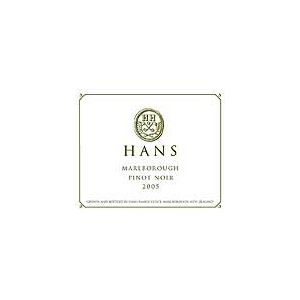
Hans Marlborough Pinot Noir 2005 – New Zealand

Hans Marlborough Pinot Noir 2005 – New ZealandHans Herzog has made exemplary wines for more than thirty-five years in Europe and New Zealand, but Herzog's recent releases under the Hans label truly highlight the brilliance of the man behind the barrel. It all starts in the vineyard. A walk through Hans and Theresa Herzog's meticulously tended Wairau vineyard is akin to a stroll in paradise. Lofty green mountains hover above the fruited vineyard that recalls both the Garden of Eden and the idyll expressed on a Watteau canvas. Without seeming out of step, the Hans Winery combines the best of the natural world with the civility and comfort of old world charm. Located at the end of Jeffries Lane in one of Marlborough's more temperate locales, Herzog's Hans Winery is simply the finest vineyard in Marlborough, and, moreover, it is home to New Zealand's best restaurant.

The meticulous Herzog is renowned for practicing only sustainable methods of viticulture and intentionally limiting vineyard yields, which are purported to be the lowest per vine in Marlborough. His high-density planted vineyard comprises only ten hectares (22 acres), but it is packed with nine different varietals: Pinot Gris, Chardonnay, Viognier, Montepulciano, Pinot Noir, Merlot, Cabernet Sauvignon, Cabernet Franc, and Malbec. In all, six different wines are produced at Hans, and each is more intense and profound than the next. The estate's superb Pinot Noir and expertly crafted meritage blend named Spirit of Marlborough are the winery's best known wines internationally, but Herzog's Pinot Gris and Chardonnay are superb, as well, and they easily rival their French counterparts from Alsace and Burgundy.

Marlborough: A Noble Land

Marlborough is situated on the northern tip of New Zealand's mystical South Island, where it enjoys a unique dry maritime climate. High mountains isolate this enchanted land from the cold alpine interior of the rest of the South Island, while the spectacular Marlborough Sound to the north provides a conduit to the sea as well as the planet's most majestic view of New Zealand's North Island as it soars skyward across the swells of Wellington Straits – a sight that ranks as one of the world's most stunning vistas. Moreover, Marlborough is about as close to viticultural paradise as one can find, especially for Pinot Noir and white varietals.

Marlborough's long, sunny, but not excessively hot growing season provides nearly ideal conditions for grape growing. The average summer daytime temperature hovers between 24° C and 28° C (72° - 80° F) depending upon one's altitude and proximity to the sea. The air is crystal clear and the light luminous, with nary an overcast day, let alone much rain during the long growing season. Cool nights keep acid levels high in the grapes, even as sugar levels rise abruptly. Such conditions, while lending themselves to an extended growing season, provide slow, even ripening and extended hang time for the grapes. The results are ripe, healthy fruit, fresh, vibrant flavor, and crisp underpinning, which add longevity and zing to the regions noblest wines.

In addition to its superb summer climate, Marlborough boasts excellent soil for grapes. Most of Marlborough consists of silt and free-draining alluvial loams over gravelly sub-soils. In addition, river stones lie scattered throughout Marlborough, remnants of the many rivers that once coursed through the pretty valleys of Marlborough. These river stones store heat from the warm, sunny days and radiate that heat back into the vineyards at night, thereby providing a unique microclimate and terroir, much like that of Châteauneuf-du-Pape. Moreover, most Marlborough growers are committed to sustainable agricultural practices in order to preserve the region's noble terroir. And the French thought they had a monopoly on terroir. We think not.

Tasting Notes: Pinot Noir is perhaps the most demanding of all premium grapes to cultivate and the least forgiving wine of its creator. Woe to the winemaker who does not understand this finicky varietal and is unwilling to cater to her whims. And even if all is done in the cellar with the utmost care and attention, the idiosyncrasies of weather and terroir can easily wreak havoc and ruin upon the soul brave enough to tackle the task of producing world-class Pinot Noir. With all this in mind, Hans Herzog has succeeded where most have failed. In his 2005 Hans Marlborough Pinot Noir, one meets the real deal, 100% organic, world-class Pinot Noir that shames many a red Burgundy from the region's premier villages and purveyors. Deep cherry in color and formidable in aroma, the 2005 Hans Pinot Noir offers up seductive scents of black cherry, cassis, sassafras, smoke, spice, and chocolate that appear almost imperceptibly, but unfold steadily in the nose before infusing into the flavor and very marrow of the wine. The longer one can hold this wine in the mouth the more it reveals its latent charms. Layer upon layer of elegant, mouth-filling Pinot Noir come to fore. Seductive but amply structured, this Burgundian-style Pinot Noir is thoroughly charming now, but it will surely improve for years to come. For near-term consumption, we suggest allowing the 2005 Hans Pinot Noir an hour in the decanter before serving. Anticipated maturity: 2008-2014.

Accompaniments: Fine Pinot Noir provides the perfect foil to the cook skilled in the savory delights of country cooking. It provides equally faithful friendship to the chef looking to glorify the noble aspects of haute cuisine. And last but not least, bodacious Pinot Noir like the 2005 Hans is a wine for meditative moments, as it serves as ample reminder that fine wine helps wash away the weather-stained cares of life. Moreover, it needs no support aside from a clean glass. Yet when paired with beef, veal, wild game, spit-roasted chicken, or duck, the 2005 Hans shines. Coq au Vin, Duck à l'Orange, and Boeuf Bourguignon provide some traditional favorites. Chicken or turkey, dressed with a savory bread and sage stuffing, creates another memorable combination. A simple veal stew; quiche, onion and leek tart; or even just a loaf of good French bread with a choice of full-cream, uncrusted cheese creates one more opportunity to enjoy life with the 2005 Hans Marlborough Pinot Noir, so . . . bon appétit!

Hans Marlborough Pinot Gris 2007 – New Zealand

Editor's Note: It is rare that the International Wine of the Month Club offers two wines from the same winery in any calendar year, let alone two wines from the same estate in a given month. However, the beauty and rarity of Hans Herzog's wines compelled us to make an exception in the case of the Hans Marlborough Pinot Noir and Pinot Gris. Both wines constitute the finest examples of their type and exemplify the ultimate expression of Marlborough's fabulous terroir. We trust you will enjoy these very rare, exceptional offerings as much as we do.

Hans Herzog is unquestionably the maestro behind the artistry at this exceptional Marlborough estate. He is descended from one of Switzerland's most renowned families (not to be confused with the Baron Herzog label, purveyors of inexpensive kosher wines, who sadly have blocked Hans Herzog from ever selling wine in the United States again under his rightful name. Hans Herzog's family has proudly carried their surname for more than 500 years, but the Baron Herzog group has claimed legal right to the Herzog brand name under US law, and they are preventing Hans Herzog from using his own surname on the label. What is truly ironic in all this is that Hans Herzog is the real baron . . . so much for justice.)

Hans Herzog was once the proprietor of Zurich's most fashionable restaurant. Today he and his wife Therese hold court at the small, intimate restaurant on the Herzog property, which is actually part of their home. However, this is no rustic little affair. The Herzog Luxury Restaurant is an impeccably appointed temple of gastronomy that serves artfully prepared cuisine and equally impressive wines. This is the place to dine in New Zealand. "An epicurean heaven" is how one critic described the Herzog restaurant. And, "I really can't recommend the restaurant too highly… without a doubt it offers the finest dining in New Zealand," is how Wine and Food critic James Halliday describes it. And then there is the wine.

Hans Herzog is a master in the cellar as well as in the kitchen. His small, immaculate, well-appointed winery draws attention to its master. In fact, Hans Herzog's winery resembles more the atelier of an artist or master craftsman than it does a modern winery; testimony to the very hands-on approach Hans takes to his wines and the passion with which he approaches wine – his labor of love.

Tasting Notes: Sporting a beautiful bright copper-colored robe that is reminiscent of the finest Alsatian Pinot Gris and the increasingly rare, sublime examples of this varietal from Italy's Alto Adige, the Hans Marlborough Pinot Gris pushes the envelope on winemaking in New Zealand and makes the most compelling case of any New World producer for fashioning excellent, multi-faceted Pinot Gris. Fresh, vigorous, scented, and savory, there is nothing but pure drinking pleasure in this wine. One discovers in this magical Pinot Gris the allure of the grape as well as the wonder of great winemaking and tastes the freshness and purity of the hand-picked, physiologically ripe fruit fruit for which Herzog's wines are renowned, without a trace of residual sugar. This remarkable Pinot Gris, organically grown, cold fermented, and bottled unrefined and unfiltered, calls to fore the essence of spring, the freshness of the sea, and the ethereal, indescribable quality of a rare, patently elegant white wine. In short, one must taste this wine, drink it, and then ponder its purity to appreciate its true greatness because Hans Herzog's Pinot Gris is a monument to the varietal. You will enjoy this wine well chilled for its simple elegance, freshness, and purity of flavor; bu,t if allowed to open in the glass and achieve cool room temperature (60°-65° F), the 2007 Hans Marlborough Pinot Gris blossoms and portrays much more than overt charm and simple elegance. It writes the book on the varietal and reveals a whole new dimension in white wine. However, we must warn you: this wine slips ever so effortlessly down the throat, which makes it easy to miss the 14% plus alcohol that it embodies. Consider yourselves forewarned! Anticipated maturity: 2008-2011.

Accompaniments: Hans and Therese Herzog are two of New Zealand's finest restaurant hosts and the proud proprietors of the only five-star restaurant winery in New Zealand. One of the surest ways they know to begin a special meal or even a convivial evening with family or friends is by opening a bottle or two of their 2007 Hans Marlborough Pinot Gris. We heartily concur, as the elegant, crisp, flavorful Hans Pinot Gris serves as an aperitif extraordinaire. However, this charming Pinot Gris also makes for a great starter. A plate of New Zealand's finest mussels or oysters, Wasabi Fried Oysters prepared with an anise sauce, Linguini with white clam sauce, Maryland Crab Cakes, and even a mildly Spicy Thai Shrimp all provide superb accompaniments to this substantial Pinot Gris. Yet there are so many enticing companions to serve with this wine: Grilled Trout prepared amandine with slivers of organic toasted almonds; and Sesame Seed Crusted Ahi Tuna served with sautéed cabbage, toasted almonds, and feta cheese over wasabi mashed potatoes, to name a couple. And, of course, sushi and tempuras provide memorable pairings, too. But why stop there? Besides, seafood hardly holds a monopoly on the companionship to Herzog's versatile Pinot Gris. So why not try a salad of organic greens with grilled chicken or pancetta? Pâté and pastas provide other rewarding choices, as well. Enjoy!

Château du Courneau Margaux 2002 – France

Château du Courneau is a stylish Margaux that is grown and produced at the legendary Château Haut-Breton Larigaudière. It is a tiny production each year of usually no more than 1,500 cases, which is snapped up in short order by savvy European customers, mostly in Belgium, Germany, Great Britain, and Switzerland. Château Haut-Breton Larigaudière is owned by the De Schepper-De Moor family, who in the past two decades has transformed the 15 hectare (38 acres) Haut-Breton Larigaudière into perhaps the finest Cru Bourgeois estate in Soussans. Soussans is one of the five favored Médoc communes entitled to bear the illustrious name Margaux.

Château du Courneau is grown on gravel outcrops at Haut-Breton Larigaudière, and it is comprised of a classic Margaux cépage of Cabernet Sauvignon (63%), Merlot (31%), Cabernet Franc (4%), and Petit Verdot (2%). The wine is aged in small oak barrels, a high percentage of which are new each year. The resulting wine is both elegant and rich in the finest tradition of Margaux.

Margaux

The name Margaux conjures more images of greatness than any other appellation in Bordeaux, and none of those images is associated with the economical or ordinary. Indeed there is nothing commonplace about the wines of the Margaux appellation, nor would anyone, short of a billionaire, ever accuse the wines of Margaux of being inexpensive.

Margaux is the largest and most sprawling of the great communes of the Médoc, encompassing a little over 2,800 acres. It is situated in the southern Médoc just downriver from the city of Bordeaux, which makes Margaux the nearest of the Médoc appellations to Bordeaux itself. In reality, the Margaux appellation includes five separate communes, each of which is entitled to bottle its wine as Margaux. Arsac, Cantenac, Labarde, Margaux and Soussans all qualify to bear the illustrious Margaux name.

A classic, fragrant perfume and an elegant, supple style are what distinguish the wines of Margaux from the wines of other great Bordeaux communes. In addition, Cabernet Sauvignon rules the roost in Margaux, constituting up to 90% of the cépage in some Grand Vin like Château Margaux. Yet, in spite of the high percentage of Cabernet Sauvignon employed in the commune, the wines of Margaux nearly always retain an elegant suppleness that can be found nowhere else. At the same time, Margaux wines possess a true propensity for aging, which allows the finest wines of the appellation to develop tremendous complexity and texture – second to none – for many decades. Exemplary bottles of Château Margaux from such illustrious vintages as 1900 and 1921 still exist, and there is currently no shortage of lesser-known growths whose wines are worth seeking out after a decade or more in bottle.

Tasting Notes: A classic Margaux, the 2002 Château du Courneau embodies elegance, breed, and good taste. It also possesses a deep ruby color and a haunting scent – the calling cards of the finest wines of Margaux and the bolsters behind the commune's legendary status among Bordeaux drinkers. As one panel member remarked: "The bouquet of this wine is worth the price of admission." Yet the 2002 Château du Courneau is not content to simply beguile the eye and the nose; it pleases the palate, too, with a symphony of subtle flavors. Deft touches of cassis, cedar, coffee, and dark chocolate all rise from the glass to delight the olfactory and seep almost surreptitiously into the patina of the wine. Unquestionably, this Bordeaux, like most Margaux wines, is all about balance and class. Consequently, if it is sheer power you are seeking, you would be wise to search elsewhere. Instead of mass, the medium-bodied 2002 Château du Courneau offers supreme smoothness and texture, which caress the mouth and enliven the senses. From start to finish, this child of Margaux is a delight to behold. For optimal enjoyment, we strongly suggest opening the 2002 Château du Courneau at least a half hour before serving, and then enjoying it for the next hour or more as it continues to unfold in the glass. We have on a number of occasions had this wine open for several hours, at which time it was still continuing to evolve. And, as one would expect, the Château du Courneau prefers cool room temperature (60°-66°).

Accompaniments: Mature red Bordeaux (or claret, as the English might say) has the well-deserved reputation as "the quintessential dinner party wine," and we are inclined to agree, especially in the case of the 2002 Château du Courneau. Genteel, yet imbued with a wealth of flavor, this delightful Margaux provides the perfect accompaniment to fine cuts of meat, poultry and even small game. Like most fine red Bordeaux, the 2002 Château du Courneau prefers simple preparations of the highest quality. Roast chicken, pheasant, filet mignon, rabbit, and veal are some of our preferences with this delightful wine. Eschew heavy sauces in favor of natural juices or light, sprightly sautés, and the Château du Courneau will shine. Finishing a meal with some delicious Edam, Port Salut, or similar styled soft cheese provides another superb way to enjoy this engaging wine at its peak. Salut!


logo for wine club
Since 1994
Home
Join Our Wine Club
Gift Memberships

Membership Renewals
Reorder Your Favorites
Wine of the Month Club
More Information
Current Selections
Past Selections
Testimonials
Other Gourmet Gifts
Corporate Gifts
Wedding Gift Ideas
All About Wine
Website Tools
Who We Are
Contact Us

1 - 800 - 625 - 8238
(Outside US call: 949-206-1904)
P.O. Box 1627, Lake Forest, CA 92609