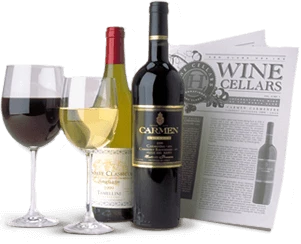
Featured Wines
August 2007
Premier Series |
|
Featured Wineries & Wines |
Membership Type |
| Napa Cellars Napa Valley Merlot | 1 Red 1 White; 2 Reds |
| Bedegas Naia Las Brisas | 1 Red 1 White; 2 Whites |
| Domaine du Vieux Chêne Haie des Grives Côtes-du-Rhône | 2 Reds |
| Villa Giada Moscato d'Asti | 2 Whites |
Master Series |
|
Featured Wineries & Wines |
Membership Type |
| Bethany Barossa Shiraz | 1 Red 1 White; 2 Reds |
| Bodegas Naia Las Brisas | 1 Red 1 White |
| Napa Cellars Napa Valley Merlot | 2 Reds |
Collector Series |
|
Featured Wineries & Wines |
Membership Type |
| Bethany Barossa Shiraz | 1 Red 1 White; 2 Reds |
| Dr Bürklin-Wolf Wachenheimer Rechbächel | 1 Red 1 White |
| Kenwood Jack London Cabernet Sauvignon | 2 Reds |
Napa Cellars Napa Valley Merlot 2002 – U.S.A.
Napa Cellars is a Napa Valley landmark. It lies just north of the famous Mustard's Restaurant, on the west side of California Highway 29. Napa Cellars Oakville address is about as close to the heart of Napa Valley as one can be. However, in the world of wine location means very little, until the vineyard's terroir yields results and the winery's good stewards know what to do with the bounty the land surrenders. At Napa Cellars, the past and present proprietors have been just stewards, and the consumer has consistently reaped the gustatory benefits. At this historic property, one need not have any doubts about the quality of wine this small estate puts put. In fact, this overachieving enterprise could serve as a model for other less serious-minded Napa Valley estates. Napa Cellars is a well-funded, solidly run property that fashions a fine array of good, old-fashioned Napa Valley wines.
Napa Cellars was born in 1992, when Rich Frank, Chairman of Walt Disney Television and Communications, and Koerner Rombauer, proprietor of Rombauer Vineyards (one of Napa Valley's finest producers of Chardonnay and Cabernet Sauvignon) teamed up to form Frank-Rombauer. They later changed the estate's name to Frank Family Vineyards. Almost since its inception, the celebrated Napa Valley winemaker Todd Graff was the man behind the barrel and the reason for the outstanding quality at this landmark estate. He is, also, the person responsible for all the current vintages and present releases at Napa Cellars.
In 2006, Napa Cellars was sold to Trinchero Family Vineyards, another serious, quality-minded family enterprise in Napa Valley. Happily, it appears that Napa Cellars will continue to operate as an independent winery. At the same time, the winery will be home to the Trinchero Family's flagship Napa Valley wine, Folie à Deux. If past performances on the part of the Trinchero Family and the quality of Folie à Deux are any indicators of what the consumer can expect from this group, Napa Cellars is in very good hands indeed.
Tasting Notes: The 2002 vintage in Napa Valley was cooler than normal; a boon for the valley's early maturing Merlot. In 2002, Napa Cellars made an outstanding Merlot that is certainly one of the finest Merlot wines ever produced at this venerable property. The 2002 Napa Cellars Merlot is a juicy, plush wine that offers up plenty of ripe cassis, cedar, and chocolate tones, both in the nose and on the palate. Ripe, soft, but full-flavored, this Napa Cellars rendition of Merlot will please both the true Merlot aficionado as well as the most ardent detractors of the mercurial Merlot variety, who claim (and sometimes rightfully so) that the variety does not always proffer enough flavor or stuffing to support its frame. Such criticism will not be the case with the Napa Cellars, as it offers balance, flavor, and just enough tannin to enclose and highlight the finest attributes of one of the world's greatest red grape varieties. The 2002 Napa Cellars could easily serve as the New World counterpart to Bordeaux's Grand Cru St. Émilion. Enjoy!
Accompaniments: Merlot is a wonderful accompaniment to a variety of foods, and the 2002 Napa Cellars Merlot is no exception. Its plush savory characteristics make it a natural companion to fine cuts of meat and poultry, especially duck. And in fact, the folks at Napa Cellars extol the virtue of pairing their Merlot with a variety of duck entrÉes. One of their chef's favorite recipes is Duck Confit, served with roasted fingerling potatoes and a cassoulet of flageolets and apple smoked bacon. In addition, we suggest serving this tasty Merlot with other duck dishes, including a simple roast duck with a fruit sauce or reduction: Blackberry, orange, and plum sauces all get our nod. Veal and lighter cuts of beef pair nicely with this wine, too. And when meats simply will not do, the elegant but flavorful 2002 Napa Cellars Merlot is a knockout with a plate of gourmet cheeses.
Bodegas Naia Las Brisas Rueda 2006 – Spain
Bodegas Naia is a partnership between three talented individuals: Javier Alen, the respected Galician producer of Viña Mein; Victor Rodriquez, the former director of Spain's highly acclaimed Vino y Gastronomia; and Eulogio Calleja, one of Rueda's most talented winemakers. This trio is responsible for three outstanding white wines from a splendid 98.8 acre vineyard in Rueda, where many of the vines are ungrafted and nearly 100 years of age.
Bodegas Naia is situated in the town of La Seca, which locals consider to be the only grand cru village in Rueda. Moreover, this outstanding bodega specializes in the production of indigenous Spanish varietals, most notably Verdejo and Viura. The estate's racy Las Brisas offering is an artful blend of 50% Verdejo and 50% Viura/Sauvignon Blanc. The bodegas' other two outstanding wines: Naia and Naiades are both crafted from 100% Verdejo. Naia is aged for four months on it lees, while Naiades hails from the oldest, ungrafted Verdejo vines on the property and has been aged eight months in French oak. Naiades constitutes one of Spain's finest white wines and is the equal of the greatest French Grand Cru Chablis. It is by all accounts the ultimate expression of Verdejo and a tour de force in winemaking.
All of Bodegas Naia's wines come to the United States courtesy of Jorge Ordonez.
Jorge Ordonez: The Master from Malaga
Jorge Ordonez came to the United States in 1987. When he arrived in this country he spoke no English, but he had a dream. Today, he is one of the most respected importers in the United States and his unique, very special portfolio of Spanish wines known as The Fine Estates of Spain have taken North America by storm. Moreover, the name Jorge Ordonez is now synonymous with the renaissance in Spanish viticulture and it is as close to a guarantee in the world of wine that what rests inside a bottle that bears the name is one of the tastiest and most affordable wine treasures on earth.
Ordonez's key to success has been his unfailing dedication to quality over quantity, coupled with a patient, systematic approach to opening and building each and every individual market. Ordonez leaves no part of the viticultural puzzle to chance. He works personally with each and every producer of the wines he offers for sale and he is meticulous in his selection as well as his distribution. In fact, each and every bottle of wine that bears the name of Jorge Ordonez leaves the winery under ideal, temperature controlled conditions and is delivered to his North American clients under similar circumstances. Nothing is done haphazard or left to chance. Is there any wonder then that the Spanish Renaissance in wine corresponds to Ordonez's quest to bring The Fine Estates of Spain to North America? Ordonez's accomplishments are no mean feats. The boy from Malaga has done well and made us all proud. Jorge Ordonez has justly earned the title "The Master of Malaga."
Tasting Notes: If energetic, full-flavored, in your face white wine appeals to you, you will surely love the 2006 Las Brisas from Bodegas Naia and if such a wine is not your style you will probably enjoy it anyway. "Wow, this wine is hard to resist" is how one incredulous, persnickety member of the tasting panel described this wine – authentic testimony and high praise from one hard to please type. With a glint of sunshine and hint of gold to dazzle the eye, this top notch Rueda begins a sensory odyssey. Las Brisas continues its retinue of sensual delight by offering up an exciting set of olfactory fireworks, which include apricot, spice, and tons of ripe citrus fruit. It is hard to believe that so much scent and savor can be packed into a single wine, but thankfully they are in the 2006 Las Brisas. Pink grapefruit, lime, melon, passion fruit, and ohhh so much more come through on the palate. And even with so much fruit flavor, the youthful 2006 Bodegas Naia Las Brisas remains bone-dry, crisp, and long to the finish where it explodes in a crescendo. Enjoy this fun-filled wine ice cold or only moderately chilled. For the greatest enjoyment we suggest consuming the 2006 Las Brisas in its exuberant youth, but do allow it a few minutes to rest in the glass to gather its grandeur and proffer every bit of its many delights. Unequivocally, this is the finest Las Brisas we have tasted to date and this effort constitutes a new chapter for this dynamic, up and coming winery. Salud!
Accompaniments: The 2006 Bodegas Naia Las Brisas is a natural summertime wine. With its crisp, pinpoint flavors and racy demeanor, it simultaneously quenches the thirst as it awakens the gustatory passions that haunt the mind. Tapas and the freshest sushi immediately come to mind, but why stop there? Grilled Sea Bass with steamed jasmine rice; Bacon Crusted Swordfish with grilled Portobello mushrooms; and Potato Encrusted Grouper, served with a shitake mushroom and smoked salmon duxelles, are just a few of the favored dishes that can evoke paradise in the presence of the 2006 Las Brisas. Steamed shrimp, mussels, clams, and oysters provide other good bets with the this flavorful, very easy to drink white wine. Crusted cheeses such as Brie, Camembert, and Explorateur provide simple but outstanding accompaniments, too. Enjoy!
Domaine du Vieux Chêne Haie des Grives Côtes-du-Rhône 2005 – France
Domaine du Vieux Chêne is the quintessential Provencal estate, which means a true family affair. Jean-Claude and BÉatrice Bouche are the formidable husband and wife team behind this very well run domaine that is located in the village of Camaret. Intriguingly, Camaret lies in the heart and soul of the Vaucluse, Provence's most beloved core. In fact, the great early 20th century French writer Marcel Pagnol set Camaret as the home of Jean and Florette, two of his more famous Provencal characters, from the novel and subsequent film Jean de Florette.
Begun in 1978, Domaine du Vieux Chêne has emerged as a leader in the production of pure, naturally made Côtes-du-Rhône wines. For more than a dozen years, Domaine du Vieux Chêne has been a certified organic producer, which means no chemical herbicides, pesticides, or fertilizers are ever used at this estate. In addition, the use of sulfites is strictly limited. The result is an enviable selection of individual Côtes-du-Rhône cuvÉes that highlight the appellation's two most important red varietals: Grenache and Syrah. Consequently, Domaine du Vieux Chêne's CuvÉe des Capucines is comprised exclusively of Grenache, while the fuller Haie des Grives offers up additional flavor and depth due the artful blending of a sizeable percentage of Syrah into the Grenache blend. Domaine du Vieux Chêne also fashions an excellent 100% Syrah Côtes-du-Rhône under the CuvÉe BÉatrice label.
Domaine du Vieux Chêne, like most serious Provencal wineries, also produces a first rate rosÉ and small quantities of a superb, proprietary labeled Vin de Pays from Grenache and Syrah called CuvÉe Friande. This estate fashions a first rate Merlot as well, which leads us to wonder if this energetic couple ever has time to sleep, especially since harvesting and nearly every thing else at this property is done the old-fashioned way – by hand. Vive la DiffÉrence!
Tasting Notes: Pure, natural, and easy to drink, the 2005 certified organic Domaine du Vieux Chêne Haie des Grives Côtes-du-Rhône really knows how to please a crowd. Medium-bodied and as natural tasting as any wine we have ever had the pleasure to drink, the charming 2005 Haie des Grives provides a lightly fragrant nose and plenty of flavor and mouth feel in the guise of uncomplicated black fruits, subtle spice, and a velvet finish. Due to the natural methods of viticulture and production that are scrupulously practiced by the Bouches at Domaine du Vieux Chêne, the hallmark of Haie des Grives remains its consistency from vintage to vintage, which always includes an overwhelming charm, purity of flavor, and a natural, clean, uncomplicated finish. What more could one want from Côtes-du-Rhône? We'll tell you! The 2005 Haie des Grives continues to unfold in the glass or decanter for hours after opening and it takes on subtle complexity, without revealing massive tannin or an elevated level of alcohol. We suggest serving the lovely 2005 Domaine du Vieux Chêne Haie des Grives at cool room temperature or even slightly chilled in warm weather (55°-65° F). Allow for 15-20 minutes of aeration.
Accompaniments: BÉatrice Bouche is known as one of the finest country cooks in the Côtes-du-Rhône. And good old-fashioned country cooking (or down home fare as some of us are apt to say) provides the perfect, unpretentious accompaniment to the 2005 Domaine du Vieux Chêne Haie des Grives. In fact, one of our all time favorite foods with this wine remains pizza, but not just any ordinary pizza. Perhaps, the best-kept secret of Provence is this: Provence, rather than Italy, bears the distinction of being the ancestral home of pizza. Meanwhile, the region's second best secret is just how good Provencal pizzas are. The Provencal versions of the world's most popular food are what we commonly refer to as gourmet pizza. Consequently, some of our favorite accompaniments to the Haie des Grives are perennially a three-cheese and black olive pizza; a chicken and mushroom pizza, with red onion, peppers, and Provencal herbs; and any number of vegetable pizzas with eggplant, zucchini, or artichoke. Light meats, pasta and almost anything served with fresh tomato sauce, including fish, also provide savory pairings in the company of the natural, easy to drink 2005 Haie des Grives. Enjoy!
Villa Giada Moscato d'Asti 2006 – Italy
Andrea Faccio's Azienda Agricole Villa Giada brings exquisite wines to the table from the classic grape varieties his family has grown in Italy's Piedmont for more than two centuries. Located midway between Asti and Alba, the world's foremost production zones for Moscato and Barbera, Villa Giada specializes in the making of handcrafted Piedmontese wines from single vineyards. With more than forty-five acres of estate vineyards, located around three ancient farmhouses, Villa Giada's aim is to fashion great wines from individual vineyards and terroirs – a goal that local cognoscenti and international wine critics alike believe this classic estate has certainly fulfilled.
Villa Giada's historical property dates to 1790, and the estate's ancient farmhouses and winery remain in use today. The old part of the winery still plays host to all of the estate's barriques (small oak barrels), which refine the classic Barbera wines that Andrea Faccio so adeptly crafts. In addition, Villa Giada also sports a modern winery that features stainless steel vats, temperature and pressure control equipment, and the latest technological accoutrements, which Andrea uses for making exquisite Moscato d'Asti, Piedmont's lovely frizzante (lightly, naturally sparkling white wine). Moreover, Donato Lanati, a professor at nearby Turin University and one of Italy's foremost oenologists, assists Andrea in the crafting of Villa Giada's wines. Together this dynamic duo fashion wines that are both internationally appealing and traditional in character.
Tasting Notes: Once again Andrea Faccio has crafted a light, lovely elixir that captures the essence of spring and captivates the senses. It is comforting to taste and see how consistent this great producer is with his wines. The 2006 Villa Giada Moscato d'Asti exudes the pure scent and savor of Moscato: pear, peach, mango, and just enough of that kinky, exotic touch of true Moscato to be compelling. Moscato d'Asti is typically light, effervescent, low in alcohol, and long on flavor, but the Villa Giada is more than the usual pleasant dose of small bubbles and lush Moscato fruit one comes to expect from the Muscat Canelli of Piedmont. Rather, the scent and savor of ambrosia haunt every sip of this naturally fruity bubbly. The Villa Giada provides a fine dollop of the ancient Muscat grape in every glass as well as an impeccably balanced format, so it never comes off as cumbersome or syrupy. We advise serving the 2006 Villa Giada Moscato d'Asti lightly or moderately chilled. Since it is easier to let a wine warm up in the glass rather than cool down, we suggest chilling this Moscato to approximately 40° F, then allowing it to unfold gracefully in the glass. Enjoy!
Accompaniments: The 2006 Villa Giada Moscato d'Asti is an easy wine to drink, even guzzle. It is as comfortable on its own as it is with fruit, poached fish, or an elegant dessert. One of our favorite summer pastimes is adding a little Villa Giada Moscato d'Asti to a ripe Honeydew or Crenshaw melon and allowing the two to stew for a few hours, or even overnight, before serving the glorious concoction as an appetizer or dessert. Additional suggestions as a finale include serving the Villa Giada Moscato with poached pears, a creamy fruit and custard tart, or a white chocolate cheesecake. In addition, many panel members continue to insist that less is more with this delicious Moscato and prefer consuming it au naturel or with tiny bits of a soft fruity cheese like Mascarpone. Moreover, the 2006 Villa Giada Moscato can take the place of dessert or simply be dessert itself.
Bethany Barossa Shiraz 2002 – Australia
Johann Gottlob Schrapel and his family arrived in South Australia in 1844, just eight years after the colony was settled. They arrived in Port Adelaide as free settlers (as opposed to convicts or indentured servants as did most of Australia's early European immigrants) seeking a new life in a mysterious, time worn land "down under" that we know as Australia. Curiously, the Schrapels arrived in South Australia aboard a vessel named George Washington, which served as their bridge to freedom and a life far better than any they could have imagined in the old country. Upon arrival, they settled in the Barossa and quickly built a home and cleared the land to grow crops and raise sheep. They also planted a vineyard and constructed a wine cellar. Today, the fifth generation descendents of Johann Gottlob Schrapel, Geoff and Rob Schrapel, carry on the family tradition at Bethany Wines.
Bethany is a quaint, cottage-style winery in the successful garagiste tradition of Bordeaux. Located in a quarry high in the Barossa Ranges, the picturesque Bethany Winery overlooks the historic village of Bethany and the family's 66 acres of old vines, many of which require hand selection and traditional methods of pruning. The Schrapels own three of the most important vineyard blocks in Bethany, including the well-known Bethanien Block, the Old Manse Block, and the Homestead Block. In typical South Australian fashion, Bethany Wines grows a multitude of grape varieties within these three vineyard blocks: Chardonnay, Riesling, Semillon, Shiraz, Cabernet Sauvignon, Cabernet Franc, Merlot, and Grenache are all represented in these vineyards and each finds its way into a Bethany wine or two. As master craftsmen, the Schrapel brothers know how to fashion more than one kind of wine, and we would be hard pressed to find a Bethany wine that was not at the top of its game. Nonetheless, in Barossa Shiraz is king, and Bethany's Barossa Shiraz ranks among the very best that South Australia has to offer, as countless awards and trophies will attest. In fact, Bethany's stunning, very limited 1992 Grand Reserve Shiraz was judged to be the Best Shiraz at Australia's National Wine Show. Subsequent Shiraz offerings from Bethany have received similar accolades in international competitions.
Bethany's unique location on the foothills of the Barossa Ranges affords it a unique microclimate and a distinct advantage over many of it neighbors. From the Barossa Ranges, a cool evening breeze emanates that fans the grapes throughout the night. In a hot, dry climate such as Barossa, where daytime temperatures can exceed 110° F, a cool evening breeze is a respite for the grapes as well as the people who grow them. Moreover, this cooling effect each night allows the grapes to retain their natural acidity and still achieve full sugar levels, without becoming over-ripe. In short, the wide variation at Bethany between day time and night time temperatures translates into well-balanced, full-flavored wines with structure and finesse that age extremely well.
At Bethany, sustainable methods of agriculture are the norm. The Schrapels employ very little spraying and utilize only a minimum amount of sulfite. Gravity is used to reticulate the must from the crusher to the tanks and barrels for fermentation, and each wine is handcrafted in small lots. And unlike most Australian wines, which are the product of huge conglomerates, Bethany wines are made the old-fashioned way – by hand with tender loving care by the people who care for the vines.
Tasting Notes: The quintessential Barossa Shiraz, the 2002 Bethany Shiraz from Barossa is luxuriously robed and full of rich, deep down flavors. However, what sets this lovely Shiraz apart from much of the competition is its sense of elegance. Certainly, ripe black cherry and cassis flavors haunt the nose and there is plenty of black fruit, cedar, and eucalyptus in this flavor packed Shiraz to go around. However, try to find a Shiraz with this much complexity and finesse and you will find there are very few Australian Shiraz that can compete with the Bethany. A sixteen month stay in American oak has left its indelible mark on this wine, too. It has imparted a roundness and warmth to the Bethany and aligned it to a wealth of fresh juicy fruit, which explodes on the finish. Although still quite young and capable of extensive ageing, the 2002 Bethany Shiraz is already a veritable pleasure to drink and savor. For optimum enjoyment, we suggest allowing this wine at least 30-45 minutes of aeration before consumption at cool room temperature (no more than 66° F). Anticipated Maturity: 2007-2014.
Accompaniments: A flavor packed Shiraz with breed and elegance like the 2002 Bethany Barossa Shiraz is one of he easiest wines to pair with foods. In Australia, beef casseroles, steaks, stews, roast lamb with a myriad of condiments, kangaroo, and even ostrich are the favored accompaniments to fine Shiraz. And indeed, the Bethany Barossa Shiraz will complement these meats with great aplomb. We also think traditional Provençal cuisine provides a myriad of tried and true recipes in the form of country cassoulets and hearty ratatouilles. What we may suggest for the more adventuresome, though, is pairing the 2002 Bethany Shiraz with some Indian specialties such as Lamb Biryani, a classic dish with juicy pieces of lamb, cooked with basmati rice, spices, and nuts; Chicken Makhni or its vegetarian counterpart Dal Makhni, which contains a variety of lentils, slow simmered and sautÉed with fresh garlic, ginger, tomato, herbs, and spices: or a any number of authentic Tandoori offerings. Providing the spices are kept to a dull roar, the Bethany will more than hold its own. And for ending a meal, some good Esrom cheese and a loaf of crusty bread are all one needs with this Shiraz to make the day complete. Enjoy!Dr. Bürklin-Wolf Wachenheimer Rechbächel Monopol Pfalz Riesling 2005 – Germany
Founded in Wachenheim in the 16th century by Bernhard Bürklin and expanded to its present size in the 19th century by Dr. Albert Bürklin, Weingut Dr.Bürklin-Wolf continues to shine in the 21st century as one of the premier wine estates in all Germany. Weingut Dr.Bürklin-Wolf also possesses the distinction of being the largest family-owned wine estate in Germany with a total of 275 acres (by California standards this would be a decidedly modest size property), all of it in the Mittelhardt – the quality core of the renowned Pfalz region, along the Rhine River just to the east of Germany's border with Alsace. Dr.Bürklin-Wolf includes most of the top sights in the Pfalz, including those in Wachenheim, Deidersheim, and Ruppertsberg. Moreover, two of the region's most famous vineyards, Gaisbohl and Rechbächel are owned entirely by Dr.Bürklin-Wolf. Hence, the term Monopol is attached to their name.
Since 1990, Dr.Bürklin-Wolf has witnessed a true renaissance, beginning with the ascendancy of Bettina Bürklin and her husband Christian von Guradze to the helm. Under their direction, this historic property has re-discovered the Golden Age of Riesling and re-introduced this noble grape variety to the world. In the19th and early 20th centuries Riesling eclipsed all other white varietals. This was an era when Riesling was made to be richly textured, notoriously long-lived, and fermented dry in large oak barrels. Then, Riesling graced the noblest tables of the civilized world, and so it does again, thanks to Bettina Bürklin and Christian von Guradze at Dr.Bürklin-Wolf.
Riesling, the other great white grape variety, reigns supreme at Dr.Bürklin-Wolf. Here, Riesling is fermented naturally dry, in the traditional manner; yet, it retains all the luscious golden goodness for which the finest Rieslings are world-renowned. In essence, the wines of Dr.Bürklin-Wolf are all about natural fruit, rather than residual sugar. Thanks to excellent winemaking skills and noble terroir authentic dry Riesling is once again on the ascendancy in Germany.
Riesling: The Other Great White Grape Variety
The Riesling grape is one of the oldest known white grape varieties. Its origins can be traced back to the Middle Ages. Its home is traditionally ascribed to Germany, particularly the areas along the Rhine and Mosel Rivers, but Riesling has been cultivated extensively in Alsace, Austria, and Northern Italy for centuries. With full, rich, flavorful fruit and a naturally high acidity, a well made Riesling can live for decades. In fact, Rieslings constitute some of the longest lived wines in the world; quite a few 17th and 18th examples still exist in excellent condition.
Although Riesling is susceptible to Botrytis cinera ("noble rot") and is capable of making some of the planet's most glorious dessert wines, the greatness of Riesling as well as its legendary reputation in past centuries was based not upon sweet wines but dry wines similar to Dr.Bürklin-Wolf's Wachenheimer Rechbächel. Thanks to Bettina Bürklin, Christian von Guradze, and other like-minded winemakers, Germany and the international community have rediscovered the glorious tradition of dry Riesling – a wine that can come to table before dessert or be enjoyed as an aperitif, like the other great white grape variety – Chardonnay.
Tasting Notes: The 2005 Dr.Bürklin-Wolf Wachenheimer Rechbächel Riesling wears a lightly golden robe and appears as if it has been gently kissed by the first rays of the morning sun. Here the subtlety ends, at least for the moment, for this is young, serious, full-bodied Riesling from a great vintage. It offers a superb draught of nearly everything that is special about Rhine Riesling. A heady, spicy scent of ripe summer apples, pear, quince, and stony minerals mingle with the flavors of lemon zest and oriental spice. In scent and savor, the 2005 Dr.Bürklin-Wolf Wachenheimer Rechbächel Riesling seems to overflow the glass as it saturates the senses. And to add further to this wine's allure, one finds a firm underpinning of alcohol and acidity to gird the fruit of this bold, beautiful wine and provide the makings of a Riesling legend. However, as satisfying as the 2005 Wachenheimer Rechbächel is presently, it will only get better. All of this reaffirms the Bürklin-Wolf winery's goal of fashioning dry white wines for the long haul. Enjoy this glorious Riesling now and for next 10 years or more. We suggest serving this traditional Rhine Riesling moderately chilled at approximately 40° F. Anticipated maturity: 2008-2017.
Accompaniments: As a rich, dry, complex white wine, the 2005 Dr.Bürklin-Wolf Wachenheimer Rechbächel Pfalz Riesling can compete favorably at table with any excellent Chardonnay, including the very best white wine that Burgundy can produce. Consequently, we suggest serving the well-endowed Dr.Bürklin-Wolf Wachenheimer Rechbächel with a wide variety of finely prepared dishes. For starters, scallops or lobster in a rich cream sauce complement the Wachenheimer Rechbächel with aplomb, as do salmon and most deep sea fish. Ham and pork dishes are natural accompaniments to this wine as well. In addition, this versatile Riesling can stand up to deftly prepared curries and other Indian specialties – something very few Chardonnays can claim. Thai and Vietnamese recipes that do not rely too heavily on fiery sauces are good bets, too. Moreover, as this splendid Riesling ages, it will take on added depth and weight and provide an excellent complement to poultry and cheeses. Aged Appenzeller, authentic Gouda, and other rich, cow's milk cheeses will offer superb accompaniments to a mature rendition of Dr.Bürklin-Wolf's Wachenheimer Rechbächel. However, this wine need not have a cohort of accompaniments to be enjoyable. Presently, it provides a very full rich experience as an aperitif and it will certainly continue to improve in bottle for years to come, so no need to rush to capture the magic. Enjoy!Kenwood Jack London Vineyard Sonoma Valley Cabernet Sauvignon 2004 – U.S.A.
Jack London infuses his best literature with palpable tension and excitement. Time and again London captures our imagination in a literary vice-grip that holds us suspended between the physical sensations of elemental nature and the refinements of civilization. In essence London impels us in his writing to consider the value of each. Similarly, the winemakers at Kenwood consistently offer the taster extraordinary sensory pleasure along with clean, artfully crafted flavors in the vineyard's Jack London Series Cabernet Sauvignon.
London's life mirrored the polar pulls of the physical and the civilized. In his early years, London worked as an oyster pirate, he shipped on a seal-hunting expedition, and he joined the Yukon Gold Rush in 1897. At the turn of the century, however, London found literary success. As America's best-selling author, he acquired a significant fortune and in 1905 began acquiring farmland in Sonoma Valley to form Beauty Ranch. In contrast to his adventurous youth, London was committed to experimental and progressive farming techniques, such as controlling erosion and designing labor saving farm buildings. So, although deeply drawn to the native beauty of his land, London spent his final years fabricating a haven of comfort and civilized living at Beauty Ranch, which included some of Sonoma County's finest wines.
After London's death in 1916, his sister managed the ranch until World War II when she was forced to let the land lie fallow. Thirty years later, London's grandson, Milo Shepard, replanted 130 acres of the vineyards, and in 1976 Kenwood Vineyards obtained exclusive rights to produce wine from the fruit of Jack London Ranch. Kenwood, founded in 1970, is committed to seeing that all of its Jack London wines are made exclusively from fruit produced on London's former estate.
Tasting Notes: It is evident from the outset that Kenwood has fashioned another award winning Cabernet Sauvignon in the 2004 Jack London. Beginning with a richly endowed robe and a haunting aroma, replete with blackberry, currant, eucalyptus, and mint, the newly released 2004 Jack London Cabernet Sauvignon captures this terraced vineyard's unique terroir: the red-lava earth of Mount Sonoma, the warm eastern sun, and the cooling afternoon sea breeze much like the author's stories invoke all the physical and elemental sensations of nature. And remarkably, with only fifteen or twenty minutes of breathing time, this young, but well-balanced Cabernet delivers to the palate all that it promises in the olfactory. From the very first sip, succulent, complex Cabernet flavors fill the mouth: blackberry, cassis, menthol eucalyptus, and currant, all beautifully imbued with oak. And once again, this Jack London's elegant ripe tannins are beautifully integrated into the wine, as are all twenty-four months of ageing that every Jack London Cabernet spends in French oak barrels. Certainly, some aeration improves the impressive 2004 Jack London Cabernet Sauvignon, but one of the real charms of this wine is not having to wait an hour or more for elemental drinking pleasure. Enjoy this youthful Cabernet at no more than 66° F and as often as you can. Anticipated maturity: 2008-2019.
Accompaniments: A fine young Cabernet Sauvignon, such as the 2004 Kenwood Jack London, is ideally paired with rich, rewarding fare. Consequently, a prime cut of filet mignon, grilled over an open flame, lightly coated with a wild mushroom sauce, and served next to creamy mashed potatoes, remains one of our favorite pairings with this wine. Prime Rib of beef and leg of lamb provide other excellent tried and true accompaniments, but given this wine's connection to Jack London we suggest you dare to be adventurous. Consider tapping into the wild past of North America and sample what sustained many Native American tribes and the earliest Rocky Mountain men, buffalo, in the form of a nutrition-rich coffee-crusted bison filet. If you take this route, pay attention to the cooking time and temperature since bison provides a lean, quick-cooking cut of meat. Most cows' milk cheeses offer excellent companionship to this flagship wine as well. And when a vegetarian mood strikes, a spicy four-bean chili will satiate any appetite. Fortunately, an unadorned glass of the 2004 Kenwood Jack London is such a pleasurable experience, too. Enjoy!