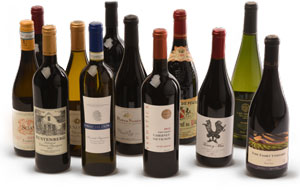
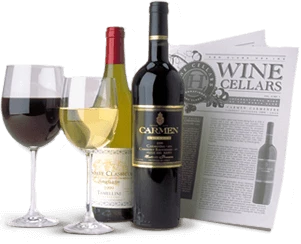
Featured Wines
April 2007
Premier Series |
|
Featured Wineries & Wines |
Membership Type |
| Montellori Chianti | 1 Red 1 White; 2 Reds |
| Caldora Colle dei Venti Pecorino | 1 Red 1 White; 2 Whites |
| Rockbare Shiraz | 2 Reds |
| Rockbare Chardonnay | 2 Whites |
Master Series |
|
Featured Wineries & Wines |
Membership Type |
| Montecastro Ribera del Duero | 1 Red 1 White; 2 Reds |
| Caldora Colle dei Venti Pecorino | 1 Red 1 White |
| Montellori Chianti | 2 Reds |
Collector Series |
|
Featured Wineries & Wines |
Membership Type |
| Montecastro Ribera del Duero | 1 Red 1 White; 2 Reds |
| Domaine de la Solitude Pessac-Leognon Graves | 1 Red 1 White |
| Alejandro Fernandez Pesquera Ribera del Durero | 2 Reds |
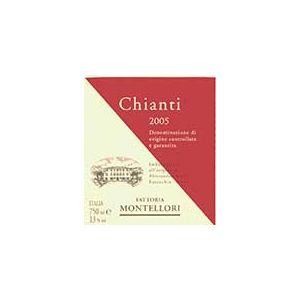
Fattoria Montellori Chianti 2005 – Italy
On a recent trip to Italy, we discovered Fattoria Montellori and the estate's enthusiastic, serious-minded proprietor Alessandro Nieri. Shortly afterwards, we met Dr. Marco Razzauti, Montellori's exuberant 29 year old viticulturist and oenologist, and it quickly became clear to us just how serious this estate is about making world class Chianti and Super Tuscan reds. What is happening at Montellori is nothing short of enthralling. And instead of smoke and mirrors leading the way, as is sometimes the case in the world of wine, it is a solemn revitalization of the estate's vineyards and a complete dedication to natural, sustainable agronomy that has pushed the quality quotient at Montellori to ever higher levels. This estate's total makeover is due to the vast improvements in viticultural practices that Dr. Razzauti instituted several years ago, and Montellori's decision to limit production. Needless to say, the results speak for themselves.
Fattoria Montellori is located off the beaten track, away from the glitz and glamour of the well-worn wine road that winds its way from Florence to Siena. Instead, Montellori is tucked away in the Montalbano zone of Chianti to the west of Florence, near the stately Tuscan town of San Miniato. San Miniato is renowned for its wealth of beautifully preserved Romanesque and Renaissance churches, which thrust their many spires skyward. This pretty town is equally renowned for its savory truffles and heavenly wines. The latter treasures constitute some of Tuscany's most hedonistic pleasures.
The Montellori estate, which is also known as Castel Rapiti, dates from 1293. Yet, the Nieri family has been the guardian of this outstanding property only since 1895, a mere 111 years, which is a relatively short time when one considers the entire eight centuries of history that Fattoria Montellori shares with posterity. Giuseppe Nieri purchased the villa and surrounding grounds at the end of the 19th century from profits he had realized from his leather trade. He quickly set about planting vineyards and upgrading the property. Giuseppe's son Mario continued the pioneering spirit and renovation at Montellori that was begun by his father. However, it was not until Giuseppe Nieri, Alessandro's father, took control of the estate in the early 1980's that it expanded to its present 170 acres and began fashioning wines as smooth and fine as the Florentine leather his forbearers' once crafted. Today, the estate houses a modern winery, hundreds of oak barrels, great and small, and some of the finest hillside vineyards in Tuscany. Moreover, it crafts wines of great character, distinction, and personality that reflect the attributes of Montalbano Chianti and the distinct terroir of San Miniato.
Thanks to the foresight of Giuseppe Nieri, Fattoria Montellori owns six distinct vineyards, all of which possess a unique soil, microclimate, exposure, and altitude. Red wine is king here, as it is throughout Tuscany. Not surprisingly, Chianti is the estate's most important wine, at least in terms of production. And what a Chianti it is! In recent years, Montellori has fashioned three Super Tuscan offerings, too: Moro, Salamartano, and Dicatum. Moro is a single vineyard offering that is closest to Chianti in style. It is a blend of primarily Sangiovese to which small amounts of Cabernet Sauvignon and Malvasia Nera have been added. Salamartano on the other hand is a classic Bordeaux blend of Cabernet Sauvignon and Merlot that has been aged in small barriques. Meanwhile, Dicatum is the most decadent and quintessentially Tuscan of this estate's offerings. It is 100% Sangiovese from the property's finest hillside vineyard Cerreto Guidi; this is the last vineyard that Giuseppe Nieri personally planted. Alessandro and Marco craft several excellent white wines, too, including Mandorlo, an artful non-traditional blend of Chardonnay, Viognier, Marsanne, Roussanne, and Clairette.
Tasting Notes: The 2005 Montellori Chianti captures all that is beautiful in Montalbano Chianti, beginning with a bright cherry colored robe that sparkles through the glass and a haunting perfume that sets the senses afire. A medium-bodied wine with a touch of tenderness, Montellori's 2005 Chianti offers up soft, textured fruit along with plenty of delicate charm. Forever the coquette, this dry, expertly made Chianti changes from moment to moment in the glass, emerging with each sip to reveal a new and interesting face. This wine reminds us of the delicious, haunting Chiantis we taste in Italy that flow from casks in the finest Tuscan trattorias. In other words, the 2005 Montellori Chianti captures the natural, ethereal goodness of authentic Chianti. It also reflects the commitment to quality and sustainable wine making that Montellori espouses. We suggest you enjoy this fine Chianti cool (60° F-66° F) straight from the bottle, or better still allow it an hour or more to breathe: you will then be amazed at how truly magical Chianti can be.
Accompaniments: Chianti is by nature a delicate, dry red wine that is made to accompany food. It is also the most important wine of Tuscany, which makes it a mainstay of the Tuscan table. Consequently, the simple fresh fare of Tuscany provides many superb, healthy accompaniments to the 2005 Montellori Chianti. We recommend serving this aromatic, in your face Chianti with a myriad of meats and vegetables. Some irresistible favorites include classic Tuscan white bean dishes, served with flat Tuscan onion bread and a few slices of hard cheese; herb roasted chicken or pheasant, stuffed with braised vegetables, porcini mushrooms and a hint of truffle, makes another memorable meal in the company of the tender 2005 Montellori Chianti. Duck, game hens, and finer cuts of pork provide other worthy suitors. Veal, pounded thin and then lightly sautéed in butter, olive oil, and fresh herbs provides another simple but memorable way to celebrate Montellori's soft, textured, food friendly Chianti. So, whether it is simple elegance or sophisticated fare you seek, you are sure to find a friend in this wine. Our only caveat is to avoid heavy tomatoes sauces or other ponderous concoctions, as they will dull the luster and delicate nature of most Chianti, the Montellori included. Buon Appetito!
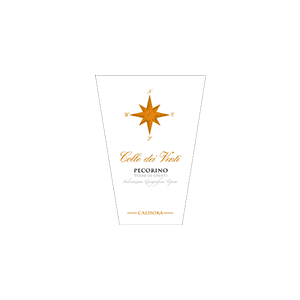
Caldora Colle dei Venti Pecorino 2005 – Italy
Caldora is a new winery that began in 2003, as a partnership between Valentino Sciotti and renowned winemaker Mario Ercolino. This dynamic duo launched Caldora when they rented one of the largest cooperative wineries in the Abruzzo, outfitted it with new custom made technology specified by Ercolino, a winemaker obsessed with attaining the maximum expression of fruit in his wines, and then began fashioning the region's most prodigious wines from autochthonous varietals.
To push Caldora's wines to an even higher level of quality, Sciotti and Ercolino have established an avant-garde vineyard management system, which compensates grape growers who agree to adhere to rigidly specified agricultural standards, a set amount of money according to the size of the vineyards under production, rather than according to the quantity of grapes produced. The combination of excellent grapes and outstanding wine making have yielded results that speak volumes. In just a few short years, Ercolino's taste for intense, deep fruit in his wines has won many friends and transformed how the wine drinking world views the wines of the Abruzzo as well as the rare indigenous vines of the region.
The Caldora production area is located in Ortona, mostly in the splendid Moro River Valley. Here a unique ribbon of land lies between the gleaming Adriatic and a precipitous 10,000 foot ridge of the Apennine Mountains. This special land possesses a microclimate that is ideal for Pecorino and the region's other indigenous grape varieties, which explains why winemaking has been prized in this region since the 3rd century AD.
Pecorino is one of the best known local varietals. Its name comes from the shape of the grape's bunches or clusters, which locals say resembles the head of a sheep. This special varietal is renowned for its complexity and outstanding aromatic profile. Yet, Pecorino is little known outside of Ortona as the grape is notoriously low yielding. Consequently, production is meager and most Pecorino is made for home and personal consumption by select growers. Caldora's Pecorino comes from Colle dei Venti (meaning hill of the wind), a 33-acre vineyard with an ideal location. Colle dei Venti experiences warm summer days, but the heat of the day quickly fades when the cool breeze that springs each evening from the Adriatic flows over the vineyard. Such swings between day time and night time temperatures help preserve the balance between acid and sugar in the grapes and add immeasurably to the aromatics of the ensuing wine. Caldora's Pecorino is fermented at low temperatures in both stainless steel vats and large oak barrels made of the finest Austrian oak. .
Tasting Notes: It has been said that "Opening a bottle of Caldora wine is one of the most predictable hedonistic experiences known to humankind," and the 2005 Caldora Colle dei Venti Pecorino certainly won't refute that statement. Yet, this unique medium-bodied wine is more than a mere fleshpot: it is winemaker Mario Ercolino's finest Pecorino to date and the ultimate expression of the rare indigenous Pecorino variety. From the moment the cork exits the bottle, an intense aroma of fruit and haunting spice caress the nose, and immediately one knows that Ercolino has worked his magic; he has captured the glory of the Abruzze sun and the softness of the sea breeze from the azure Adriatic in each and every bottle. Scents of fresh apricot and almond blow from the glass and linger on the palate, where they entwine with haunting spice and a dry, freshness that recall the splendor of a sunny afternoon at the beach. Unique and unto itself, but in the finest sense of the expression, the 2005 Caldora Pecorino is a special wine that simply must be tasted to be believed as it can more than speak for itself. We suggest moderate chilling (40°-45° F), and a second bottle nearby . . . just in case one bottle is not enough.
Accompaniments: Seafood, fresh from the gleaming Adriatic, is of course the locals first choice of companionship with the 2005 Caldora Pecorino, but one doesn't have to be sitting in a trattoria overlooking the Adriatic to appreciate the joys of Pecorino. Almost any fresh fish or shellfish will pair well with the Caldora Pecorino, a fresh, scented wine with enough spice to hold up to a steaming pot of Bouillabaisse or Cioppino. Swordfish, calamari, and lobster, prepared in a variety of ways, provide other splendid accompaniments to Caldora's Pecorino. Full flavored hors d'oeuvres provide wonderful pairings with this wine, too. Crab Stuffed Porcini Mushrooms, Grilled Scallops Nacho, and Chicken Satay offer wonderful starters that merit a bottle or two of Ercolino's heady Pecorino. Steamed Green Lip Mussels in a white wine, herb, and lemon butter sauce over linguine is another winning accompaniment. The freshness and haunting flavors of the Pecorino complement simple grilled seafood, while these same scents and savors provide excellent counterpoint to earthy, more savory dishes. Consider, too, that the 2005 Caldora Pecorino is also an aperitif extraordinaire that offers comfort and pleasure all by itself. A large clean glass and a sunset over the sea might be more than one person can bear. Enjoy!Rockbare McLaren Vale Shiraz 2004 – Australia
Rockbare is the handiwork of Tim Burvill, Australian winemaker extraordinaire, in collaboration with the great terroir of McLaren Vale. McLaren Vale is a relatively small viticultural area of South Australia that is known for its premium grapes and its abundance of meticulously tended, family owned vineyards, which not surprisingly turn out some of the very finest wine Australia can produce.
Tim Burvill has run the gamut in Australian viticulture. He gained extensive winemaking experience working at Southcorp, one of Australia's leading wine conglomerates, where he was responsible for making what many consider to be Australia's most exciting and expensive premium Chardonnay – Yattarna. Equally well versed with red and white wines, as well as the merits of technical razzle-dazzle, Tim made a conscious effort when he created the Rockbare label in 2000 to eschew technical homogeneity along with the smoke and mirrors employed by so many other Australian winemakers. Instead, he employs winemaking techniques at Rockbare that were more in vogue a century or more ago. Using minimal filtering, or even a no filtration approach, and very little oak, Tim does not obscure or obliterate the great McLaren fruit he sources from the region's premier vineyards. Consequently, Rockbare's wines are filled with complex flavors driven by outstanding fruit and natural acidity, not some wine technocrat's rendition of the Molotov cocktail.
Rockbare puts all of its attention into producing two outstanding McLaren Vale offerings: Shiraz and Chardonnay. Both varietal offerings are produced from 100% McLaren Vale fruit, much of it from old vines that are dry-farmed. Taste and see the difference!
Tasting Notes: There is nothing quite like the rich, regal robe of authentic South Australian Shiraz and the unfiltered, full-flavored 2004 Rockbare McLaren Vale Shiraz more than bolsters McLaren Vale's preeminence in this regard. Better still are this wine's olfactory fireworks, a combination of blackberry, cassis, and chocolate; all of which have been overlaid by smooth vanilla oak tones that seep deeply into the wine's hedonistic, richly fruity core. As is the case with all of Tim Burvill's wines, the 2004 Rockbare McLaren Vale Shiraz is a luscious, easy to drink potion. From beginning to end, the wine remains opulent and elegant, viscous and supple on the palate, which further serves to highlight the greatness of McLaren Vale fruit. On the finish, the wine's oak overlay melds with touches of mocha and dark chocolate for added complexity and intensity. For optimum enjoyment, we suggest serving the 2004 Rockbare Shiraz at or below 66° F, after only 15-20 minutes of aeration.
Accompaniments: In Australia, Shiraz and lamb are nearly synonymous. In a nation where sheep far outnumber people and Shiraz may as well be declared the national beverage, there can be little doubt as to why these two aliments are so often paired together. Simply, Shiraz and lamb complement each other. Moreover, they share the distinction of representing their country's gustatory predilection, a taste that seems to have garnered many converts around the world. Not surprisingly, the 2004 Rockbare McLaren Vale Shiraz falls in line with the national preference, providing a wonderful companion to braised lamb shanks, grilled lamb chops, or roast leg of lamb. And for those not as enamored of lamb as our Australian brethren, fine cuts of beef, especially beef tenderloin and filet mignon, offer equally tantalizing options. For vegetarians, Eggplant and Zucchini Parmigiana constitute some of our favorite pairings. Furthermore, most Mediterranean dishes, including traditional southern Italian favorites that favor heady tomato sauces, complement the 2004 Rockbare Shiraz. In each case, both the food and wine offer plenty to savor as they accentuate each other's rich flavors. Enjoy!
Rockbare McLaren Vale Chardonnay 2005 – Australia
Rockbare is the handiwork of Tim Burvill, Australian winemaker extraordinaire, in collaboration with the great terroir of McLaren Vale. McLaren Vale is a relatively small viticultural area of South Australia that is known for its premium grapes and its abundance of meticulously tended, family owned vineyards, which not surprisingly turn out some of the very finest wine Australia can produce.
Tim Burvill has run the gamut in Australian viticulture. He gained extensive winemaking experience working at Southcorp, one of Australia's leading wine conglomerates, where he was responsible for making what many consider to be Australia's most exciting and expensive premium Chardonnay – Yattarna. Equally well versed with red and white wines, as well as the merits of technical razzle-dazzle, Tim made a conscious effort when he created the Rockbare label in 2000 to eschew technical homogeneity along with the smoke and mirrors employed by so many other Australian winemakers. Instead, he employs winemaking techniques at Rockbare that were more in vogue a century or more ago. Using minimal filtering, or even a no filtration approach, and very little oak, Tim does not obscure or obliterate the great McLaren fruit he sources from the region's premier vineyards. Instead, Rockbare's wines are filled with complex flavors driven by outstanding fruit and natural acidity, not some wine technocrat's rendition of the Molotov cocktail.
Rockbare puts all of its attention into producing just two outstanding McLaren Vale offerings: Shiraz and Chardonnay. Both varietal offerings are produced from 100% McLaren Vale fruit, much of it from old vines that are dry-farmed. Taste and see why critics have gone crazy over Rockbare wines!
Tasting Notes: Tim Burvill has always made exceptional Chardonnay, but Rockbare's 2005 McLaren Vale Chardonnay is unquestionably this winery's most prodigious offering to date. The 2005 Rockbare Chardonnay wears a pretty straw-colored robe and a sunlit gleam, but even more exciting is the wine's seductive aroma – a combination of fresh apple and peach, followed by a gentle minerality, and a textured creaminess that persists all the way through to a glorious finish. Furthermore, all of the olfactory goodness in the 2005 Rockbare Chardonnay is followed by a refreshing mouthful of pure elegant Chardonnay fruit, minus the smoke and mirrors of excessive oak. How is it that Rockbare can fashion such a gorgeous, seamless, European style Chardonnay in South Australia, a land considered more attuned to red wine than white, when legions of well-heeled winemakers from around the world (including Burgundy and California) can barely furnish the consumer more than insipid, malnourished progeny that in the New World at least far too often rely on a massive infusion of oak to mask their inherent malediction? The flamboyant, medium-bodied Rockbare Chardonnay has just the right amount of acidity and oak, as well as a bright, clean, racy finish that just begs the taste buds for another sip. Recently, the 2005 Rockbare Chardonnay has garnered high praise from critics from all corners of the globe, so alas quantities are strictly limited. We suggest serving this versatile Chardonnay fairly well chilled (about 40° F), and then allowing it to warm gradually in the glass. Indeed, it would be a shame to miss any of the subtle nuances and latent goodness inherent in the 2005 Rockbare McLaren Vale Chardonnay.
Accompaniments: The 2005 Rockbare McLaren Vale Chardonnay is the ideal wine to drink now with family or friends, or it can be put aside for six months or more in search of an occasion. With food or without, in warm weather or cold, the 2005 Rockbare McLaren Vale Chardonnay is easy to adore. Fish, shrimp, clams, oysters, scallops, and nearly anything else that swims in the sea gets our nod for partnering with the 2005 Rockbare Chardonnay. And rest assured the fruits of the sea are not the only noteworthy complements: How about Crispy Chicken with a Honey Dijon Glaze? Vegetable and Feta Stuffed Acorn Squash makes another wonderful accompaniment, as does a cheese and fruit platter. Whatever you decide, we are confident that you will enjoy this splendid Chardonnay. Enjoy!Bodegas Y Viñedos Montecastro Ribera del Duero 2004 – Spain
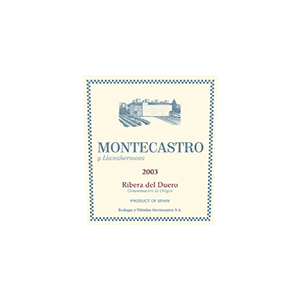
Bodegas Y Viñedos Montecastro was founded in 2001 by a group of Madrid professionals led by the prominent publisher Alfonso de Salas, the Marqués de Montecastro y Llanahermosa. Since its inception, Montecastro has fashioned outstanding Ribera del Duero from established vineyards. This impeccably run property has built a modern bodega and modeled itself after the finest estates in Ribera del Duero, which is unquestionably one of Spain's top red wine producing appellations.
From the beginning, Montecastro has done things right. They have focused on Tempranillo, the Ribera del Duero's most important varietal. Moreover, they have retained Jean-Francois Hébrard (of the famous Château Cheval Blanc) as technical director. Hébrard has overseen the acquisition of the property as well as all of the subsequent planting. He has also helped the estate select a small group of growers with old vines, who can appropriately augment the estate's 55 acres. Presently, Montecastro's vines range in age from 8 to 100 years of age; and all are subject to highly restricted yields and are situated at various altitudes and soils in order to add complexity to the ensuing wine.
Montecastro is dedicated to sustainable methods of agriculture. Even the modern bodega emulates the region's traditional medieval subterranean chimney (zarcera), which serves a dual purpose: it provides natural ventilation and daylight illumination without resorting to the use of additional fossil fuels. Natural fermentation is the order of the day at Montecastro, too. Only new and second year barrels are used, and the results are remarkable. Come and taste the difference a little pride and hard work can achieve. Bravo!
Tasting Notes: "Ohhh . . . my." "Wow"! "What a nose"! "Great wine," are just a few of the panel's comments regarding the 2004 Montecastro Ribera del Duero. Indeed, this is a superb, intense Ribera del Duero and an outstanding example of just how appealing and complex Tempranillo can be from a great appellation in a classic vintage like 2004. The 2004 Montecastro is as deeply colored as any Spanish wine we have encountered. Its robe is nearly opaque and recalls the greatest examples of Cahors, "the black wine of France." Aged 17 months in small oak barrels, this hedonistic delight contains all the elegance, breed, and explosive fruit one could ask for and then sets them amid a sea of firm, ripe tannins. A testimony to low yields and fine wine making, the 2004 Montecastro is a delight to drink now, especially with a little aeration, but it will continue to improve in the bottle. In fact, it should age beautifully for many years to come. We suggest decanting this blockbuster offering at least an hour before drinking, and then allowing it to open slowly in the glass. Serve this majestic dinner party wine at cool room temperature (62°-66° F). Anticipated maturity: 2007-2018.
Accompaniments: An elegant dinner party may be the only requisite for optimal enjoyment of the 2004 Montecastro Ribera del Duero. Although charming, elegant, and plenty satisfying on its own, this aristocratic red will positively shine in the company of well prepared cuisine. A Rack of Lamb, served with a savory stuffing; Filets of Beef Tenderloin, covered with an herb infused medley of mushrooms, and accompanied by pearl onions; and Spit Roasted Quail, prepared with a wild rice risotto, are just a few of the more tempting dishes we suggest with the lovely 2004 Montecastro Ribera del Duero. Chicken, veal, and pork provide additional opportunities for gastronomic pleasure with the ebullient 2004 Montecastro. A Crown Roast of Pork offers an especially pleasing match for this wine as the sweet, succulent qualities of the pork compliment the juicy, velvety underpinning of this wine with aplomb. Enjoy!
Ribera del Duero
by Stephen Metzler, President, Classical Wines from Spain, Ltd.
Editor's Note: Steve Metzler is one of the nation's foremost authorities on the traditional wines of Spain. He has written this piece exclusively for our membership.
We first arrived in Ribera del Duero in 1983, in time to witness the finishing of that region's first officially-controlled vintage, the great 1982. Having founded Classical Wines upon the assumption that Spain's high-altitude, non-Mediterranean wine districts offered classic quality potential second to none, Alejandro Fernández and his Tinto Pesquera became an early and powerful affirmation.
Following the international discovery of Pesquera, much has changed in Ribera del Duero. After decades of vineyard reduction in favor of irrigated crops such as sugar beets, the region's sudden rise to fashion attracted investment from within the industry and from prominent personalities, much in the Napa manner. While many are busy turning large fortunes into smaller ones (to paraphrase the famous one-liner), the basis for quality is real.
Ribera del Duero boasts soils quite similar to Burgundy, with a wide range of chalk, clay, marl and gravel, combined and in varying degrees of prominence, with clay and chalk predominating. Whereas Burgundy's soil complexity results from plate tectonics, in Ribera del Duero this results from the river's erosion through the sedimentary layers of the Castilian meseta.
Vineyards range from 2500 to over 3300 feet, altitude serving to delay ripening of the short-cycle Tempranillo variety (locally: Tinto Fino and Tinta del País). Extreme diurnal temperature variation at extreme altitude also serves to maintain a healthy level of acidity, minimizing the need for adjustment or inclusion of compensating varieties. Meanwhile, the intense luminosity of the meseta thickens and darkens the skins of the grapes, producing wines with concentrated phenolic structure.
The hallmark of Ribera del Duero is monovarietal Tempranillo. The best producers have learned to combine lots from heavier and lighter soils as well as earlier and later harvests as a means of obtaining complexity and balance. In Pesquera, Alejandro Fernández has designed his vineyards to cover the full range of terroirs. Montecastro, under the direction of Jean-Franéois Hébrard, has undertaken a similar approach upon search and acquisition of mature plots sourced beginning with his début 2002 vintage.
Domaine de la Solitude Pessac-Léognon 2004 – France
Domaine de la Solitude is a traditional Graves from the commune of Pessac-Léognon. This estate belongs to a religious order of silent nuns, known as La Sainte Famille. Since 1993 Domaine de la Solitude has been under the expert management of the Bernard family of Domaine de Chevalier, who have completely revitalized the estate's vineyards and cellar. Domaine de Chevalier is one of the greatest of all Pessac-Léognon producers, fashioning riveting red Graves and the finest of all white Graves. Under the care of Domaine de Chevalier, Domaine de la Solitude has flourished and can rightfully claim its place of honor at the forefront of the illustrious Graves appellation.
Graves: The First Bordeaux
Graves is the oldest and most historic of all the Bordeaux communes. Before Latour, Lafite, Margaux, and the rest of the well-known names of the Médoc even existed or had even seen a cultivated vine, there was Graves. In fact, Graves has been the home of cultivated vines since the 1st century AD; due at least in part to the Romans inability to grow other crops in the graveled soil from which the name Graves is derived. The stone and gravel deposits are vestiges of the last Ice Age, a bane to most farmers but a boon to grape growers, whose vines struggle deep into the thin porous soil to draw life and subtle complex flavors from the nutrients below.
The wines of Graves appear to be the first Bordeaux wines to be exported, with archeological evidence that Roman garrisons in Britain were the happy recipients of Bordeaux's quintessential wines. And by the early 12th century, Graves was the most sort after wine in England and beyond for its quality as well as its proximity to the city and port of Bordeaux itself, which lies just a few kilometers from Graves.
Today, the northern section of Graves called Pessac-Léognon must battle the urban sprawl that has broken out of the confines of the city of Bordeaux and spread to the nearby suburbs of Talence and Pessac; yet the vine still flourishes here and the wines of Pessac-Léognon remain the finest of all white Graves. A little south of these towns lays the pastoral heart of Graves, a pretty, rural country, where vineyards mingle with pastures and pine forests. Here, life remains wedded to the land and the joys of the vine.
Graves is rightly famous for both its red and white wines. At their best, the red wines of Graves are unsurpassed for their aromatic beauty as well as their smooth, rich flavors. Earthy fragrant aromas that resemble cedar, a classic cigar box scent, black currant, and tobacco emanate from red Graves and form a bouquet that is frequently described as enchanting and profound. Moreover, fine red Graves is often the supplest claret of all. It is also the most flavorful and easily appreciated of all Bordeaux reds.
Meanwhile, white Graves remains a dry, very aromatic wine that emits great freshness, along with luxurious flavor. Perhaps, the greatest event in Graves in the past twenty years has been the revolution that has taken hold among the top producers of white Graves. Once, an obscure and expensive proposition that did not always travel well, the finest white Graves today have retained their traditional style but taken on additional vigor, personality and depth that underscores the physiological ripeness that was sometimes absent in the white Graves of yesteryear. At their finest, the white Graves of Pessac-Léognon rival the best white wines of France. Domaine de la Solitude is one such example.
Tasting Notes: A splendid, old-fashioned Graves, the 2004 Domaine de la Solitude Pessac-Léognon is everything an exceptional white Graves is called be: aromatic, full, deep, highly structured, and capable of extensive bottling aging. The 2004 Domaine de la Solitude is all this and more. In true Pessac-Léognon fashion, the Domaine de la Solitude Blanc is not your brash, sit around sipping kind of white wine. Instead, it is a wine with a soul, whose charm and character run deep. Rather than flaunt its wares, it prefers to speak quietly and unfold graciously in the glass at table in the company of the finest foods. And remember, good things come to those who wait! Like the exceptional red wines of Pessac-Léognon, this wonderful white Graves also requires a little aeration, but the few extra minutes are more than worth the wait. This Domaine de la Solitude is set in a sunlit, yellow robe that expands in the glass to reveal a sensuous nose of melon, mineral, and subtle fruit. In the mouth the wine is textured, almost waxy, as it expands on the palate to reveal a core of clean fruit and liquid minerals. The finish is long, lingering and refreshingly dry – the quintessential Pessac-Léognon Graves. We recommend that this classic Graves be well chilled, but consumed only moderately cool (40°-50°F) to allow it to open slowly and fully in the glass. Anticipated maturity: 2006-2009.
Accompaniments: In Bordeaux white Graves is the order of the day with the region's legendary seafood. Indeed, Domaine de la Solitude struts its stuff when placed in front of Pecan Encrusted Sea Bass or a simple plate of prawns, dipped in drawn butter, or just about any other fruits de mer. Why not consider more eclectic seafood offerings and other elaborate fare as well? In that vein, we suggest Baked Grouper Filets, prepared with a pumpkin seed pesto, or Almond Encrusted Pork Tenderloin, served with a dried cranberry and apple conserve. Both dishes offer a myriad of flavors to complement the sophisticated but well-endowed 2004 Domaine de la Solitude Blanc. A cheese platter that offers a variety of French cheeses, including authentic Roquefort, provides another satisfying complement to this soulful Graves. Bon appétit!
Bodegas Alejandro Fernandez Tinto Pesquera Ribera del Duero 2003
The original Pesquera bodega was founded in 1972 by Alejandro Fernández, the living icon of modern Spanish wine and the most famous name in Ribera del Duero. When Fernández founded Pesquera, the Ribera del Duero was known as the home of the nation's single greatest wine, Vega Sicilia, but to little else in the way of viticulture. In the early 1970's sheep grazing and sugar beet production were the extent of the region's agronomy. Consequently, Alejandro Fernandez changed the face of Ribera del Duero when he began Pesquera, a patch work of biodynamic, low yield, wire trained vineyards that comprise all the important soil types of the region, including a locally rare gravel deposit. Nearly 500 acres are now under cultivation at Pesquera, nearly all of it devoted to Tempranillo – Ribera del Duero and Spain's most important red grape varietal.
The founding and subsequent acclaim that Pesquera has garnered among critics and consumers, not to mention the impact this estate has had on Spanish viticulture as a whole, are in themselves remarkable accomplishments. However, Alejandro Fernandez's vision of creating great Tempranillo wines and restoring Spanish viticulture to its rightful place of honor in the world has not stopped with Bodegas Pesquera or even within the confines of the Ribera del Duero appellation. Fernandez has founded three other outstanding estates: Condado de Haza, a splendid south facing slope of vines along the Duero; Dehesa La Granja, a 1,800 ranch in nearby Zamora; and El Vinculo, the finest example of old vine Tempranillo in Toro – one of Spain's least known but potentially rich viticultural areas. All of these properties specialize in the production of pure, natural wines from the finest Tempranillo vines. Moreover, each of these properties now fashions the flagship wine in its respective appellation. One would expect nothing less from Alejandro Fernandez, the "Master of Tempranillo" and the father of modern biodynamic viticulture in Spain.
Tasting Notes: Smooth, smooth, smooth . . . the suave, sophisticated 2003 Tinto Pesquera just rolls off the tongue, caresses the mouth, and fills the senses. This medium bodied beauty is already a pleasure to drink, as it offers a cornucopia of scents and savors for the discerning palate: ripe textured Tempranillo fruit, chestnut, violet, and smooth sandalwood like flavors pour from the glass and delight the thirsty throat. Although it is the most approachable young Tinto Pesquera in recent years, the forward, tasty 2003 will undoubtedly improve further in bottle with additional bottle age. Opened and allowed to breathe for nearly four hours at our last tasting, the 2003 Tinto Pesquera continuously gained complexity and silken texture as it unfolded graciously in the glass with each sip and savor, yet the wine drank beautifully from the moment the cork exited the bottle. Consequently, we suggest allowing this outstanding Ribera del Duero as much time to breathe as your patience and thirsty throat will allow, but as you like it!
Accompaniments: A sophisticated dinner party wine, the 2003 Alejandro Fernández Tinto Pesquera will accompany haute cuisine as easily as good down home cooking. We like serving this quintessential Ribera del Duero with Duck Breast, prepared with either a refined blackberry or cherry sauce. A thick herb encrusted Veal Chop, accompanied by a mushroom risotto, provides another sophisticated companion. However, lest you think the 2003 Tinto Pesquera is a snob, a plain grilled sirloin steak with a bit of barbecue rub makes an equally pleasing accompaniment. In fact, the 2003 Tinto Pesquera needs very little to shine, other than a good clean glass. Nonetheless, it is a hedonistic offering that almost demands to be shared with company, and at a splendid table. Enjoy!