Featured Wines
October 2008
Premier Series |
|
Featured Wineries & Wines |
Membership Type |
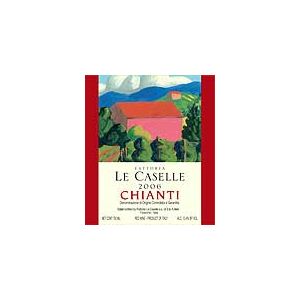
| Fattoria Le Caselle Chianti | 1 Red 1 White; 2 Reds |
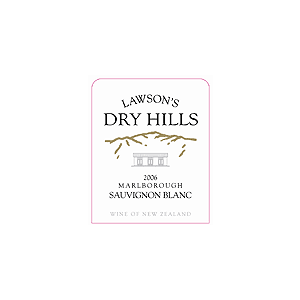
| Lawson’s Dry Hills Marlborough Sauvignon Blanc | 1 Red 1 White; 2 Whites |
| Maison Arnoux Vieux Clocher Vacqueyras | 2 Reds |
| Palazzone Orvieto Classico Superiore Terre Vineate | 2 Whites |
Master Series |
|
Featured Wineries & Wines |
Membership Type |
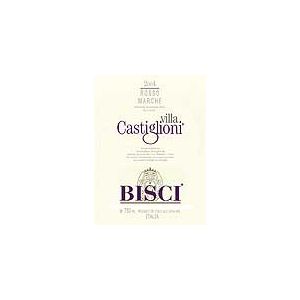
| Bisci Villa Castiglioni Rosso Marche | 1 Red 1 White; 2 Reds |
| Lawson’s Dry Hills Marlborough Sauvignon Blanc | 1 Red 1 White |
| Fattoria Le Caselle Chianti | 2 Reds |
Collector Series |
|
Featured Wineries & Wines |
Membership Type |
| Bisci Villa Castiglioni Rosso Marche | 1 Red 1 White; 2 Reds |
| Domaine du Chardonnay Chablis | 1 Red 1 White |
| J. Rickards Brown Barn Vineyard Alexander Valley Petit Sirah | 2 Reds |
Fattoria Le Caselle Chianti D.O.C.G. 2006 – Italy
Le Caselle is a small wine estate in the Tuscan hills around San Miniato, a town renowned nearly as much for its truffles and fine leather as its exquisite wines. The property consists of a large olive orchard and just 18 acres of prime vineyard, all owned by Alessandro Nieri of Fattoria Montellori. The grapes cultivated at Le Caselle are primarily Sangiovese, with small amounts of Malvasia Nero and Syrah. The Syrah is harvested from a special plot that was planted decades ago by Alessandro's father; it is used to produce the estate's cru Tuttosole. Tuttosole yields by all accounts a staggering statement of a wine that is, for our palate and pleasure, the very finest Syrah made in all Italy.
Several years ago, we discovered Le Caselle and Montellori and met the estates' enthusiastic, serious-minded proprietor, Alessandro Nieri. Shortly afterwards, we had the pleasure of meeting Dr. Marco Razzauti, Le Caselle's exuberant 32-year-old viticulturist and oenologist, and it quickly became clear to us just how serious these two gentlemen are about making world-class Chianti and Super Tuscan reds. What is happening at Le Caselle and Montellori is nothing short of enthralling. And instead of smoke and mirrors leading the way, as is sometimes the case in the world of wine, it is a solemn revitalization of each estate's vineyards and a complete dedication to natural, sustainable agronomy that has pushed the quality quotient at both properties to ever-higher levels. Each estate's total makeover is due to the vast improvements in viticultural practices that Dr. Razzauti instituted several years ago, along with Nieri's decision to limit production. Needless to say, the results speak for themselves.
Le Caselle is located off the beaten track, away from the glitz and glamour of the well-worn wine road that winds its way from Florence to Siena. Like its sister estate Montellori, Le Caselle lies tucked away in the Montalbano zone of Chianti to the west of Florence, near the stately Tuscan town of San Miniato. San Miniato is renowned for its wealth of beautifully preserved Romanesque and Renaissance churches, which thrust their many spires skyward. This pretty town is also revered for its savory truffles, as well as its heavenly wines. The latter treasures constitute some of Tuscany's most hedonistic pleasures.
Tasting Notes: The 2006 vintage in Tuscany is no doubt superb, as the ripe, round, highly expressive 2006 Le Caselle Chianti aptly attests. Aromatic, distinctive, and full of flavor, this wine speaks of the glory of Tuscany, a land of simple elegance and immutable beauty. A tribute to winemaker Marco Razzauti, this classic Chianti is savory, supple, and well delineated – yet another work of Tuscan art. It offers an aromatic profile, reminiscent of violets, plum, and the soft scents of a fecund, well-tended land. On the palate, the 2006 Le Caselle releases a draught of cherry and plum fruit, mingled with a hint of mineral and a touch of Tuscan terroir, which add complexity and definition. As authentic Chianti, the 2006 Le Caselle is neither big nor brawny. Rather, it is ethereal, and at the same time full of flavor. This is the type of wine one hopes to find in the best Tuscan trattorias and country inns – a charming, round, huggable red that goes down ever so easily, gracefully, in fact, but with more than a passing nod. In short, the 2006 Le Caselle is what DOCG Chianti is all about. For the record, it opens beautifully upon first pour, yet it will improve markedly with at least thirty minutes of aeration. Anticipated maturity: 2008-2012.
Accompaniments: For those of us who have had the pleasure of spending time in the Tuscan countryside, a bottle of the 2006 Le Caselle Chianti and a bowl of well-made Ribollita (a Tuscan specialty that draws heavily on local brick oven bread, beans, and vegetables) are the materials from which dreams are made. However, one does not have to be in Tuscany, nor does one need Ribollita to enjoy Marco Razautti's charming Chianti. Sautéed veal, grilled beef or pork, sausages, and nearly all bean- and lentil-based dishes provide beautiful accompaniments to this wine. Homemade pasta, served with a fresh tomato sauce that hasn't simmered too long, bobolis, and brick oven pizzas offer other fine choices with the Le Caselle. We can also endorse heartily a three-cheese spinach pizza with roasted garlic, as well as the classic Margharita pizza with tomato and cheese with this wine. A whole rotisserie roasted chicken with herbs is another superb complement to the 2006 Le Caselle Chianti, as are rabbit and country stew. And as balanced and flavorful as the 2006 Le Caselle Chianti is, it will provide excellent companionship to nearly any dish that is not overpowering, so stir the pot and fire up the grill. Buon Appetito!
Lawson's Dry Hills Marlborough Sauvignon Blanc 2006 – New Zealand
Lawson's Dry Hills is a winery that consistently fashions high-quality wines and has one heck of a story, not to mention more than the usual cast of colorful characters. Founded in 1992 by Ross and Barbara Lawson, a charming and witty couple with a great sense of timing and the uncanny knack of knowing what consumers like, Lawson's Dry Hills was one of the first small boutique wineries in Marlborough to receive international acclaim for estate bottled wines.
Committed solely to the production of premium Marlborough wines, the Lawsons have distinguished themselves in the past 16 years as serious producers of tasty, fruit-driven wines of renown. And with Barbara and Ross around, you can be sure there is nary a dull moment at Lawson's Dry Hills, and we haven't even mentioned the winery's most esteemed character – Tomi.
Tomi: A Man's Best Friend and Every Winemaker's Dream
Tomi is Ross Lawson's golden retriever and, by all accounts, she possesses the premier palate at Lawson's Dry Hills estate. Instead of playing in the yard or retrieving prey like most golden retrievers, Tomi has a promising career. She decides when to harvest at Lawson's and what grapes to pick and when. With one sniff of her supercharged olfactory she can determine the brix (a measure of sugar, most notably in grapes). Intuitively, Tomi knows when the grapes have attained physiological ripeness or at the very least a minimum of 22 brix – essential information to any winemaker even remotely interested in the production of fine wine. Many famous and not-so-famous wineries pay huge sums of money for technical equipment and consulting oenologists to tell them precisely what Tomi already knows, and does best.
Essentially, Tomi just loves grapes, but only when they are perfectly ripe. At first, Ross Lawson could hardly believe he had a grape dog on his hands; but, after extensive testing and verification with expensive equipment, Tomi's uncanny and unfailing talent have been borne out, and she is now legendary in New Zealand.
And, lest you think we are concocting a ruse or somehow embellishing a story, we can assure you to the contrary. In fact, we are not the first to report Tomi's oenological prowess. This canny canine enjoys celebrity status in Marlborough and beyond because of her unfailing ability to find and, if permitted, consume copious quantities of only the most perfect grapes. Moreover, her fame is spreading. The editor of the magazine Wine New Zealand has actually dedicated part of the periodical's vintage report to Tomi. Without simile or metaphor or some other saccharine slop, Tomi can say all that needs to be said about a vintage with just one appreciative slurp. Now that is our kind of dog! In the future, we may, perhaps, see a whole new breed of dog? And how much do you want to bet there will be a long line in Marlborough for one of Tomi's pups?
Tasting Notes: Packed with a cornucopia of scents and flavors, the 2006 Lawson's Dry Hills Marlborough Sauvignon Blanc epitomizes the distinctive Marlborough style of Sauvignon Blanc. Gooseberry, grapefruit, tropical fruits, fresh-mown grass, and the unmistakable herbal essence that characterize authentic New Zealand Sauvignon Blanc are all alive and well in the 2006 Lawson's Dry Hills. Throw in a dollop of ripe melon, a handful of fresh white figs, and a dash of citrus, and this wine's herbal cachet and flavor profile stand to greet you. On the finish, the Lawson's finishes dry, with a touch of citrus oil, but without any of the afterburn so typical of lesser renditions of New Zealand Sauvignon Blanc. We suggest you serve the 2006 Lawson's Dry Hills Sauvignon Blanc well chilled (no more than 40° F) to brighten up a cloudy day. Enjoy!
Accompaniments: By nearly all accounts, Sauvignon Blanc and seafood were made for each other, so what better accompaniment is there to the 2006 Lawson's Dry Hills Marlborough Sauvignon Blanc than the catch of the day? In New Zealand and around the tasting panel's table, as well, shellfish reigns as the number one companion to Sauvignon Blanc. Steamed green-tipped mussels, served in a tasty, herb infused broth; Prince Edward Island oysters, raw or lightly sautéed; a Maryland style lump crab cake; and a good old-fashioned jumbo shrimp cocktail, complete with a mild cocktail sauce, are just some of our favorite selections with the 2006 Lawson's Marlborough Sauvignon Blanc. Black snapper sashimi, yellow fin Carpaccio, and most sushi dishes provide other fine accompaniments to the Lawson's Dry Hills Sauvignon Blanc, as well. And, if seafood just doesn't stir your gastronomic waters, why not try this wine with a mixed nut crusted goat cheese that is served warm over mixed organic greens? A full-throttle chicken salad made with sundried tomato, roasted red pepper, and feta cheese offers another outstanding pairing. Yum!Maison Arnoux Vieux Clocher Vacqueyras 2005 – France
Maison Arnoux is located in Vacqueyras, one of the prettiest wine villages in all of France. Not only is Vacqueyras a quintessential, sun-drenched Provencal town, it turns out some of the finest wines of the entire Rhône Valley. For centuries Vacqueyras has enjoyed great acclaim for its scenery as well as its superb red wine. To further advance its stature, Vacqueyras lays claims to a favorite son in Raimbaut de Vacqueyras, a celebrated 12th century troubadour. In days gone by, Vacqueyras was also the preferred haunt of Sarah Bernhardt, the 19th century's most renowned actress and celebrity. The town no doubt served as a haven from the paparazzi of the day. However, it was not until 1995 that Vacqueyras was granted its own wine appellation, separate from that of the other top Côtes-du-Rhône Villages.
Maison Arnoux was founded in 1717 when the Count Francois de Castellanne, de Lauris, de Vassadel, de Gérard, Chevalier Marquis d'Ampuis, de Lagneroux, universal landlord of Vacqueyras and its lands, donated a parcel of vines to Pierre Bovis, an ancestor of the Arnoux family. Today, the vines of the Arnoux family extend over 40 hectares (88 acres). Moreover, Arnoux's Vieux Clocher still occupies a prime site in Vacqueyras at the foot of the majestic Dentelles de Montmirail, the last rocky outcropping of the Alps. A distinctive Provencal landmark, the Dentelles de Montmirail towers above Vacqueyras and neighboring Gigondas. Here Grenache, Syrah, Mourvèdre, and Cinsault thrive in the dry, wind-scoured air of this mystical corner of Provence known as the Vaucluse.
Tasting Notes: In character and quality, the wines of Vacqueyras most resemble those of nearby Châteauneuf-du-Pape, and the 2005 Vieux Clocher Vacqueyras is ample testimony to the comparison. Deeply colored, full-bodied, and polished, the 2005 Vieux Clocher Vacqueyras displays a comely bouquet and a wealth of flavor. Rich dark fruits, anise, and garrique (the amplifying herbal scents and savors of the Provencal landscape), pepper, and spice all make a splendid appearance in this wine. Full, but in no way rustic, this exemplary effort from Vieux Clocher drinks beautifully. Another year or two in bottle will only enhance this charming wine, but we doubt you can wait. So for current consumption, we suggest you allow this Vacqueyras at least a half hour of aeration. And as with most fine Rhône reds, a cool serving temperature (57°-62° F) is the order of the day for the 2005 Vieux Clocher Vacqueyras, even if it means giving it a few minutes in the refrigerator before serving on a warm day.
Accompaniments: Lamb and beef are the traditional accompaniments to fine, hearty Rhône reds, and the 2005 Vieux Clocher Vacqueyras will more than do its part to fill that bill. However, one of the many attributes of top-notch Vacqueyras is its versatility at table. It can hold court with grand cuisine or it can lend credence to an ordinary meal. For example, the 2005 Vieux Clocher Vacqueyras can render simple peasant foods and casual midweek meals fit for royalty. Spiral-sliced ham, homemade potato salad, and a large multigreen salad, served with crusty French bread and a hunk of hard cheese, make for a splendid midweek banquet in the company of this excellent Vacqueyras. Similarly, split pea or lentil soup, grilled Italian sausages, and barbecue spare ribs offer this wine a chance to shine, too. And since the Vieux Clocher likes to be served cool (not cold), it also offers a fine complement to grilled tuna steaks, especially when served with lentils, beans, ratatouilles or tomato-based dishes. Bon appétit!
Palazzone Orvieto Classico Superiore Terre Vineate 2007 - Italy
Palazzone is a stunning estate that sits atop a hill. It overlooks the venerable hill town of Orvieto. A more appropriate testimony to the illustrious name of Orvieto would be hard to find, as the estate and the wine at Palazzone do justice to the accolades and the unabashed praise that millennia of joyful Etruscans, Romans, and assorted moderns have heaped upon Orvieto and its seductive white wine.
Orvieto Classico is certainly the most representative wine of Umbria; it can also be one of Italy's most consistently delightful white wines. Unique among Italy's white wines for its complex blend of five varietals, Orvieto is rarely an easy wine to make because of differing ripening timetables for each of its five varietals and the requisite difficulty of proportionate blending. Palazzone incorporates in artful fashion all five of the traditional varietals into its Orvieto: Procanico, Verdello, Grechetto, Malvasia and Drupeggio.
For centuries, Orvieto was a semi-sweet wine, not unlike France's Vouvray; but today nearly all Orvieto is vinified dry. Some producers still turn out small quantities of amabile or abboccato, the designations given to sweet Orvieto, but the very finest producers like Palazzone seem to impart a wonderfully rich, silky body and an intensely fruity bouquet to their wine without the residual sugar that most contemporary wine drinkers eschew.
Thanks to the Dubini family, the present guardians of Palazzone, their estate is now the zone's benchmark for quality. The Dubinis bought the estate in 1970. Within two years they had resurrected and restructured the neglected property and fashioned it into what has become the model estate in Orvieto. The semi-abandoned country house was fixed up, and 40 acres of vineyards were planted on soils of volcanic origin with ideal southeastern exposure. Molto bene!
Tasting Notes: Wonderfully consistent year after year, the recently released 2007 Palazzone Terre Vineate Orvieto Classico Superiore offers up its usual feast for the eyes as well as the nose. Soft scents of wildflowers and honey emanate from the golden-hued 2007 Palazzone Terre Vineate. Soft and seductive, it carries the intoxicating scents of spring in every draught of its delightful bouquet. Moreover, all of this lovely Orvieto's olfactory goodness follows through on the palate, so that each sip of the 2007 Palazzone Terre Vineate Orvieto recalls the vernal awakening amidst the budding green and amber-hued hills that surround Orvieto. The wine, like the vaulted town of Orvieto itself, appears timeless – a cross between the ancient and the eternal. The 2007 Palazzone Terre Vineate combines the best attributes of the golden-hued abboccato style of Orvieto, for which Orvieto was once famous, with all of the freshness and vivacity of contemporary Orvieto. In the 2007 Terre Vineate, the Dubini family has fashioned a dry, succulent Orvieto of grace, elegance, and distinction that speaks directly to the senses. It purveys a truly aesthetic quality, worthy of the city for which Orvieto is named. Some may prefer the 2007 Palazzone Terre Vineate moderately chilled (about 40° F), but our preference is for drinking Orvieto cool, rather than cold. The seductive side of Orvieto blossoms with a more ambient temperature, so consider allowing the 2007 Terre Vineate to sit in the glass a few minutes before consuming.
Accompaniments: In Orvieto, the wine that bears the name of Italy's most illustrious hill town is best known as an aperitif or a starter wine with a delicate first course. The 2007 Palazzone Terre Vineate provides that wonderful aperitif and much more. Displaying more body and flavor than most contemporary Orvieto, the 2007 Terre Vineate offers splendid accompaniment to fish, pork, lightly smoked meats, and cheeses. A simple grilled fish, served with a creamy cheese-infused polenta, provides one of our favorite companions to Palazzone's finest. For those seeking heartier fare, pea and lentil soups supply superb pairings, as does a thick bread and cabbage soup with a cheese crust, the kind that is served in homes or local trattorias throughout northern and central Italy. Sautéed scallops in a cream sauce, served with homemade pasta, lentils and peas, provide another near perfect pairing. And remember, one also has the option of serving the 2007 Terre Vineate all by itself or with just a bit of cheese and some freshly baked bread. Enjoy!Bisci Villa Castiglioni Rosso Marche 2004 – Italy
The Castiglione Bisci estate is the Marche's finest expression of quality and style for red and white wines alike. This is a superbly situated property whose consistent success with Verdicchio, the region's most renowned wine, and Villa Castiglioni, the estate's outstanding proprietary red, make Bisci the Marche's most illustrious name in wine. In fact, its owners produce several wines of extraordinary quality. In order to produce such outstanding wines, draconian measures are taken by Bisci to assure the ultimate quality of every bottle: rigorous pruning to limit yields, strict selection of every cluster at harvest, the bottling of only free-run must, along with the steadfast refusal to bottle wine in poor vintages – a rarity in today's cash-flow-driven economy. And these are just a few of the measures that set this estate apart from the vast majority of commercial producers in the Marche.
The Marche is the picturesque viticultural region of Italy that lies between the Apennines and the Adriati, a green pastoral land that recalls the simple delights of Tuscany in times gone by. Here several excellent and increasingly well-known wines are produced: Verdicchio, Rosso Piceno, and Rosso Conero. However, the region's best-kept secret remains outstanding proprietary reds such as Bisci Villa Castiglioni. Moreover, Bisci is widely acknowledged to be the foremost producer of Verdicchio, the Marche's signature white wine.
Bisci is located in the heart of Matelica, a very small township couched in the hilly rural part of the central Marche. Yet, even in the Marche, Bisci's wines are fairly rare and difficult to find. Matelica is the real Marchs, a land of substance as well as charm, whose attributes are aptly reflected in the property's wines. All of Bisci's wines are handcrafted in tiny quantities and most are consumed locally.
In addition to producing outstanding Verdicchio di Matelica from the estate's vineyards, Bisci crafts small quantities of superb red wine. The estate's signature red, Villa Castiglioni, is a seductive blend of 70% Sangiovese (the famous Tuscan varietal which is also indigenous to the Marche) and 30% Cabernet Sauvignon. This is roughly the same blend or cepage as the great proprietary reds of Tuscany, known as Super Tuscans, who legally cannot claim to be Brunello di Montalcino, Vino Nobile de Montepulciano, or any other well-known Tuscan red because of the addition of Cabernet Sauvignon. Villa Castiglioni proffers a heavenly bouquet and more than enough elegance and flavor to put to shame many of the neighboring so-called "Super Tuscans." And like its Tuscan counterparts, Villa Castiglioni must be labeled with a proprietary name and not that of an appellation. If Villa Castiglioni substituted the local Montepulciano grape for its portion of Cabernet Sauvignon, it would be entitled to the Marche's Rosso Piceno appellation. Such is the Byzantine intrigue and the confusing vagary of fine wine production in Italy. No matter, the wine is both beautiful and sensual.
Tasting Notes: From its deep ruby robe, the color of finest velvet, to its long graceful finish, the 2004 Bisci Villa Castiglioni cuts a handsome figure. As one panel member so eagerly proclaimed, "I could drink a lot of this wine," to which the rest of the panel responded, "Amen." It offers a superb nose, an aromatic enchantment sated with the scent and savor of Bordeaux (Cabernet Sauvignon) along with the ethereal warmth of Tuscany (Sangiovese).This is a perfumed wine, replete with the redolence of woodland blackberries, truffle, anise, and smoked meats. On the palate the 2004 Villa Castiglioni comes across as a super-smooth "Super Tuscan," silky and seamless and ohhh so flavorful. Already this wine drinks like a veritable Tuscan treasure or first rate Médoc, and further bottle age will only increase the pleasure quotient of the 2004 Villa Castiglioni, so you will want to stash a few bottles away for another day. Our experience with Villa Castiglioni over the years has been superb; in fine vintages such as 2004, Villa Castiglioni will drink beautifully young, but like Sleepy Beauty the fairness of the 2004 Villa Castiglioni will increase with slumber and deepen over the years to a rare illustriousness. We fully expect this wine to continue to evolve in bottle for several more years and offer superb drinking for up to ten years or more. Anticipated maturity: 2009-2016. And, as with most fine Italian reds, we suggest some breathing time (at least twenty minutes in a decanter or resting in the glass before consuming). Enjoy!
Accompaniments: Given the supreme elegance, velvet smoothness, and considerable flavor profile of the 2004 Bisci Villa Castiglioni, this wine has no difficulty finding suitable companionship. It is equally adept at providing the ideal accompaniment to an elegant dinner party as it is to sprucing up midweek meatloaf or the weekend's leftovers. Nevertheless, fine wine is at its best with food of similar stature, so why not bring the finest that your kitchen has to offer? Some of our top choices with the Bisci Villa Castiglioni include Lamb Shanks with Beans, Florentine Steak, or freshly made Cheese and Wine Sausages that are gently grilled over Cabernet vine cuttings or mesquite. Spit-roasted chicken or game hen, Duck à l'Orange, and even hearty marinara sauces will also do the 2004 Bisci Villa Castiglioni proud; but no need to stop here, as there are very few dishes that this wonderful wine won't enhance. For those limiting their ingestion of meat, we suggest Cavolo in Casseruola, a Northern Italian dish that adds new meaning to the raison d'être of the humble cabbage. Besides, in the company of creamy, flavorful cheeses such as Vacherin or Edam, the Bisci Villa Castiglioni is right at home. Salute!Domaine du Chardonnay Chablis 2005 – France
Domaine du Chardonnay was born in 1987 when three wine growers, Etienne Boileau, William Nahan, and Christian Simon, joined forces to create what is now one of the finest domains in Chablis. They began their venture with only 11 hectares of vines (a little more than 24 acres), of which only nine hectares were in production. Fortunately for thirsty consumers the estate has grown over the past two decades to 37 hectares (nearly 82 acres), including choice holdings in Petit Chablis, Chablis, and five Premier Crus: Montée de Tonnerre, Montmains, Mont de Milieu, Vaugiraut, and Vaillons.
Although the wines of Domaine du Chardonnay have been heralded since the estate's inception, the huge investment the partners made in new winery equipment in 1993 has allowed winemaker Etienne Boileau to work his magic. In the past fifteen years, Domaine du Chardonnay has coveted an extensive array of gold medals, with its hillside A.O.C Chablis garnering more than its fair share of top honors. This month's feature, the 2005 Domaine du Chardonnay, won gold at France's most prestigious wine competition, the Concours Génerale Agricole de Paris. We trust you will enjoy this superb Chablis as much as our tasting panels and the Concours' illustrious judges.
Chablis
Chablis is a distinct part of Burgundy as well as one of the world's finest white wines. Since the 12th century, when Cistercian monks introduced Chardonnay into the region, the name Chablis has been synonymous with outstanding white wine. No wonder so many generations of California producers tacked the name Chablis onto their inferior generic wares, hoping to elevate their wines in the eyes of consumers.
Today, all authentic Chablis are derived exclusively from Chardonnay grapes that are grown in Chablis' chalky, limestone-rich soil known as Kimmeridgian. The name Kimmeridgian is in reference to an identical landmass that scientists identified in England's Kimmeridge Bay. Chablis possesses one of the world's greatest terroirs for the cultivation of white grapes; the appellation (A.O.C.) sits upon what was once the floor of an ancient sea bed dating from the Second Jurassic Period (also known as Kimmeridgian) that now feeds the region's Chardonnay vines. Because of this special terroir, Chablis yields unique, dry, mineral rich wines of considerable finesse and flavor.
The French National Institute of Appellation d'Origine Controlée (A.O.C.) recognizes four distinct areas of Chablis: Petit Chablis, Chablis, Chablis Premier Cru, and Chablis Grand Cru. All offer the taster a special experience. However, in recent years, it is the Chablis appellation itself that has come to fore, producing some of the region's finest quality and value. In total all four districts of Chablis cover just 7,000 hectares (15,400 acres). The best parcels typically occupy the region's hillsides, making such choice parcels in Chablis and the surrounding Premier Cru and Grand Cru vineyards the most apt to produce the region's fullest, most complex wines.
Tasting Notes: A ripe, round, personality filled Chablis, the 2005 Domaine du Chardonnay hits all of the high notes and knows how to please. From its bold, golden glow and pure haunting aroma of minerals, fresh-picked apples, and dried pineapple to its creamy texture and clean, racy finish, the 2005 Domaine du Chardonnay reveals the glory of the appellation as well as the vintage. The 2005 vintage was an excellent one for white Burgundy, and all the attributes of that magical harvest happily appear in this Chablis. Ripe, but not over the top, fresh but not acidic, Domaine du Chardonnay has turned out a very sophisticated, yet easy-to-drink Chablis. It should be at its best from 2008-2010. For optimum enjoyment, we suggest a moderate chill at least initially (about 40° F), but the real charms of Chablis are revealed when the wine reaches toward ambient temperature. So, there is no need to rush through a glass of this captivating wine, unless you have another bottle waiting to be opened. Enjoy!
Accompaniments: Among many serious wine aficionados and classically trained chefs there is an unwritten rule that states that Chablis and seafood were made for one another, and the 2005 Domaine du Chardonnay Chablis adds credence to the credo. This wine does indeed do serious justice to the myriad of fruits of the sea, especially shellfish. Perhaps, it is the soil of the ancient sea bed that calls its name? Our favorite accompaniments with this superb Chablis are steamed lobster, King Crab legs, or soft-shell crab, with some drawn butter. However, given the level of ripeness inherent in the 2005 vintage, the 2005 Domaine du Chardonnay Chablis provides attractive companionship to more than just seafood. This round, charismatic Chablis pairs wonderfully with roast chicken, turkey, and even game hens. It also has a penchant for cheeses, especially soft, cow's milk cheeses; yet, it will hold up beautifully to Brie, Camembert, and other crusted cheeses where most other red and white wines pale. Although Chablis typically warrants food to be at its best, the extroverted personality of the 2005 Domaine du Chardonnay Chablis makes it an intriguing, full-flavored, easy-to-drink aperitif. Truly, this A.O.C. Chablis shines on its own. Salut!J. Rickards Brown Barn Vineyard Alexander Valley Petit Sirah 2005 – U.S.A.
The discovery of a brand-new winery and the tasting of that winery's premier releases are some of the most exciting and rewarding tasks in the world of wine, especially when the wines are as good as what Alex Holman has fashioned in his debut vintage at J. Rickards. Holman, a graduate of California State University and an accomplished oenologist, has teamed up with Jim and Eliza Rickards, long-time Sonoma County grape growers, to launch J. Rickards. The 2005 vintage is J. Rickard's first, an auspicious entrance by all accounts.
It is becoming increasingly apparent that boutique operations such as J. Rickards are fashioning many of California's most compelling wines – flavorful, natural-tasting wines that are both interesting and just plain fun to drink. These wines are being made by a coterie of small boutique wineries that are dedicated to quality and individuality. Some are from long-time growers of superlative fruit who have decided to take a turn at winemaking, while others emanate from well-established winemakers and oenologists who have simply had enough of commercial formulas. J. Rickards combines the best of both worlds, with Rickards and Holman. The result is a dynamic portfolio of Petit Sirah from the Brown Barn Vineyard, two excellent Zinfandels, a succulent meritage offering, and more – all in limited quantities. If these first releases are any indication, we will no doubt be hearing a lot more about J. Rickards once the word is out.
Tasting Notes: When done right, Petite Sirah is one of life's simple pleasures. There is nothing subtle about the varietal, just straight-ahead fruit on the nose and on the palate, with enough structure and spice to hold all that fruit in place for sensory enjoyment. In appearance, ripe Petit Sirah resembles purple or black ink, and in this regard the 2005 J. Rickards Brown Barn Alexander Valley Petit Sirah is certainly no exception. No wimpy Petit Sirah here at J. Rickards! In fact, the Brown Barn Sirah delivers exactly what you would expect from good Petite Sirah: lovely blackberry, blueberry, and earth notes on the nose, balanced with appropriate but noticeable oak overtones – a classic Petite Sirah profile. A sensuous mouthfeel is present as well, reinforcing the intensity of the flavors. Yet, in spite of loads of fruit, this wine is all muscle and bone with no flab. Although straightforward and accessible in a manner typical of the varietal, the 2005 J. Rickards begins to separate itself from run-of-the-mill Petite Sirah after just a few minutes in the glass. A second tasting following the initial impression yields subtle and surprising complexity. The once-sleepy tannins wake up and assert themselves and combine pepper and spice notes to the fruit to produce a complete, thoroughly enjoyable glass of wine that provides a big, thick, almost viscous, mouthfeel to enhance its bold, deep-down flavors. All of this bodes well for this young, single-vineyard Petit Sirah. Kudos to Alex Holman for fashioning a Petit Sirah that is both scrumptious now and capable of gaining further complexity and depth with additional bottle age. Before drinking this hedonistic delight, we suggest an hour of aeration for optimal enjoyment. Anticipated maturity: 2008-2013.
Accompaniments: One of the finest attributes of a first-rate Petit Sirah is its ability to rise to an occasion or elevate almost any dish in the eye of the imbiber. Specifically, the 2005 J. Rickards Brown Barn Petit Sirah is as easily at home with hamburgers from the grill as it is with rack of lamb or venison tenderloin, served with a complex sauce. It is a natural with food. So, whether it is haute cuisine at an exclusive dinner party you are planning or simple barbecue fare with a couple of friends, you can count on this wine to stand up and deliver. Grilled ribeye steaks served with garlic mashed potatoes; wood-grilled double cut lamb chops, brushed with extra virgin olive oil and seasoned with fresh mint and rosemary; and Chicken or Veal Marsala are just a few of our favorite accompaniments with this bold, beautiful Petit Sirah. Southern Italian classics such as lasagna and manicotti do well, too. In addition, complex Northern Italian specialties that make use of mushrooms, truffles, and complex sauces make superb complements to this wine as well . . . so, as you like it!