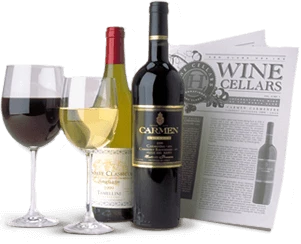
Welcome to The International wine of the Month Club

Featured Wines

June 2007

Premier Series
Featured Wineries & Wines
Membership Type
Dominio de Eguren Codice Vino de la Tierra de Castilla 1 Red 1 White; 2 Reds
Giovanni Almondo Sparse Roero Arneis 1 Red 1 White; 2 Whites
Rosenthal the Malibu Estate Devon Vineyard Merlot 2 Reds
Dog Point Marlborough Sauvignon Blanc 2 Whites


Master Series
Featured Wineries & Wines
Membership Type
Domaine du Vieux Lazaret Châteauneuf-du-Pape 1 Red 1 White; 2 Reds
Giovanni Almondo Sparse Roero Arneis 1 Red 1 White
Dominio de Eguren Codice Vino de la Tierra de Castilla 2 Reds


Collector Series
Featured Wineries & Wines
Membership Type
Domaine du Vieux Lazaret Châteauneuf-du-Pape 1 Red 1 White; 2 Reds
Soléna Cellars Oregon Pinot Gris 1 Red 1 White
Pasanau Finca La Planeta Priorat 2 Reds

Dominio de Eguren Codice Vino de la Tierra de Castilla 2004 – Spain

Dominio de Eguren Codice Vino de la Tierra de Castilla 2004 – SpainDominio de Eguren is a family enterprise that specializes in exciting wines from Spain's most renowned varietal: Tempranillo. Eguren's Codice comes from an extraordinary, high altitude site (more than 2,700 feet above sea level) that the family cultivates in ancient Castilla. The Egurens also fashion a less expensive but noteworthy red called Protocolo from this same area of Castilla, which spills into La Mancha. In addition, the Egurens are the winemakers and the success behind the great Sierra Cantabria Rioja winery that has in recent years received enormous praise and critical acclaim from all sectors. Thanks to the Eguren family and a number of other talented, like-minded individuals, the Golden Age of Spanish wine has just begun.

In Spain, "El Siglo d'Oro" (the Golden Century) is the term used to describe the Spanish Renaissance, the great early 17th century re-birth of art, architecture, and literature, which saw Spain come to the forefront of European arts and letters and reach the pinnacle of its cultural and political power. However, right here and right now, in the beginning of the 21st century, Spain is in the midst of another renaissance. This time, the Spanish Renaissance encompasses a total transformation of the world's third largest producer of wine, leading Spain from its once comfortable position of viticultural anachronism to its present status as the most exciting wine producing nation on earth. Today, there are more interesting, individualistic, and affordable wines coming out of Spain than anywhere else on the planet. Dominio de Eguren's Codice is just one example of the remarkable quality and style of wine that this second "Golden Age" has been able to advance in Spain.

We trust you will enjoy Codice and will look forward to drinking many of the other fine wines from Spain that Jorge Ordonez has to offer.

Jorge Ordonez: The Master from Malaga

Jorge Ordonez came to the United States in 1987. When he arrived in this country he spoke no English, but he had a dream. Today, he is one of the most respected importers in the country and his unique, very special portfolio of Spanish wines known as The Fine Estates of Spain have taken North America by storm. Moreover, the name Jorge Ordonez is now synonymous with the renaissance in Spanish viticulture and as close to a guarantee in the world of wine that what rests inside a bottle that bears his name is one of the tastiest and most affordable wine treasures on earth.

Ordonez's key to success has been his unfailing dedication to quality over quantity, coupled with a patient, systematic approach to opening and building each and every individual market. Ordonez leaves no part of the viticultural puzzle to chance. He works personally with each and every producer of the wines he offers for sale and he is meticulous in his selection as well as his distribution. In fact, each and every bottle of wine that bears the name of Jorge Ordonez leaves the winery under ideal, temperature controlled conditions and is delivered to his North American clients under similar circumstances. Nothing is done haphazard or left to chance. Is there any wonder then that the Spanish Renaissance in wine corresponds to Ordonez's quest to bring The Fine Estates of Spain to North America? Ordonez's accomplishments are no mean feats. The boy from Malaga has done well and made us all proud. He has justly earned the title "The Master of Malaga."

Tasting Notes: Without any ado or hyperbole, the 2004 Domino de Eguren Codice Vino de la Tierra de Castilla is plain and simple one very fine drinking wine. From Codice's deeply hued robe to its long, satisfying finish, it could lure a sailor from the sea or even more impressive, turn a consummate Francophile or New World aficionado of all that is California into a stalwart admirer of Spanish wines and the 2004 Codice in particular. As one panel member so humbly confessed: "I wish I had a cask of this wine with a spigot on it; that way I wouldn't ever worry about running out." What more can we say? That the 2004 Codice is one crowd pleasing wine that offers a captivating bouquet of fresh summer strawberries and dark cherries, which have been wrapped with subtle spices and soft, seductive, vanilla tones. On the palate, the wine unfolds gracefully, almost majestically, before culminating in a long, lovely, satisfying finish that is full of soft, succulent tannins. Enjoy this excellent Tempranillo on the cool side (60°-66° F), with or without aeration. We found the 2004 Codice ready to go just minutes after the cork exited the bottle . . . but as you like it.

Accompaniments: Although wine and food are long time companions, wine as charming and generous as the 2004 Dominio de Eguren Codice certainly doesn't need a cohort to shine. However, we must confess that this wine begs for all kinds of foods, as it can turn simple, well-prepared meals into veritable feasts. In fact, a small plate of French, Italian and Spanish cheeses and a few plain crackers in the company of the 2004 Codice constitutes a thoroughly satisfying gustatory delight. The exuberant fruit and soft vanilla finish of the Codice brings out the very best in all kinds of cheeses, including piquant Italian Reggiano and sweet Spanish Manchego. In addition, pasta, pizza, tapas, and most meats all complement the Codice as well. No need to fuss with this beauty; almost any fresh, carefully prepared casserole, stew, or Mediterranean dish will do. In fact, some nicely cured green and black olives with the Codice would suffice and could almost substitute for a summer sojourn in Spain. Enjoy!

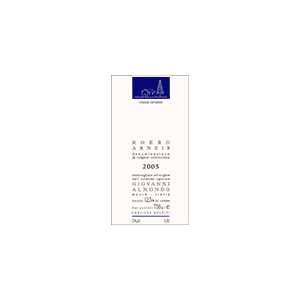
Giovanni Almondo Sparse Roero Arneis 2005 – Italy

Giovanni Almondo Sparse Roero Arneis 2005 – ItalyWhen considering the viticultural achievements of the gifted Giovanni Almondo and other similarly accomplished winemakers one is almost compelled to ask the all important question: Why is it that some people can turn success into failure, while others manage to be successful in every endeavor and with everything they touch? Moreover, why do some people appear to possess all the talent, while others wouldn't recognize basic ability, let alone true talent, if it slammed them up one side of the head and down the other? Well, to be perfectly honest, we don't know why life seems to be so partial, but we do know extra ordinary people when we see them, and Giovanni Almondo is indeed one of the extra ordinary people in this world – a man with a genuine Midas touch.

A graduate of the University of Turin with a doctorate in agronomy, Giovanni Almondo has no trouble juggling the passions in his life: he loves cultivating his vineyards and running his cellars. He, also, enjoys pursuing a career in public administration and acting as the mayor of Monta d'Alba in the Roero district of Italy's Piedmont. Perhaps, Almondo's cellars are more than a clue to his success: everything is orderly and spotless, and precise rows of stainless steel fermentation tanks and small oak barrels fall carefully in place.

This well-tended estate produces a first rate Barbera d'Alba and two different styles of excellent Arneis, for which Giovanni Almondo and his meticulously run property have become justly famous. Almondo produces a fresh, lively Arneis called Vigne Sparse. It is assembled from grapes that hail from several vineyards and is fermented exclusively in stainless steel. It reflects the essence and unadorned beauty of the Arneis variety. In addition, Almondo fashions small quantities of Bricco delle Ciliegie, an Arneis from a single site high on a hill in Monta d'Alba above the entire Roero. Here the grapes receive the morning sun but are shielded from the excessive summer heat of the Piedmont. With Bricco delle Ciliegie, Almondo ferments at least a third of the vineyard's grapes in barrels to increase structure and complexity. The result is that each of Giovanni Almondo's special Roero Arneis wines is a palate pleaser and at the same time wholly unique. We are partial to both styles of his Arneis (Sparse and Ciliegie). However, we prefer the Sparse in spring and summer, when the weather is warm. Correspondingly, the Ciliegie comes into its own in cooler months, when winter begs for the bigger, bolder wine. Indeed, life is good when there is a wine for every season. And because luck has very little to do with quality, is there any further reason to wonder why Giovanni Almondo produces the finest of all Arneis wines?

Arneis: An Ancient Varietal

Arneis is an ancient grape variety native to the Roero district of Italy's Piedmont. Arneis, which has been translated as "little rascal" has had a long, but not always illustrious history. Like most of Italy's indigenous grape varieties, Arneis has only recently been cultivated and bottled as a varietal. For centuries, the local white Arneis, also known as Bianchetta and Nebbiolo Bianco, was most often blended into the Piedmont's full-bodied, rustic reds to augment their aromatic profile and soften their tannic edge. In the days before the laws of denominazione di origine controllata, even Barolo would receive a dollop of Arneis to enhance its aroma and tame its fire.

Since the 1970s, Arneis has come of age. With the advent of technical wine equipment and the enforcement of DOCG regulations in Italy, Arneis has been rescued from extinction and born again as Piedmont's finest and most expensive dry white wine. Arneis yields a medium-bodied wine of haunting bouquet. Spring flowers, stone fruits, and a waft of fennel are the scents and savors most associated with this charming, food friendly varietal that is highly adaptable to stylistic interpretation. It can be enjoyed quite chilled or slightly cool, as you like it.

Tasting Notes: A classic Roero Arneis, the 2005 Giovanni Almondo Sparse displays the telltale aroma and flavor of the Arneis grape. The 2005 Sparse is adorned in a sunlit, yellow robe that holds a litany of haunting scents: spring flowers, stone fruits, lemon oil, liquid minerals, and a slight waft of fennel. These same inviting, highly nuanced scents are, also, sunk into the wine's medium body and carry through on the palate and finish, which augments this delightful wine's extensive portfolio of pleasure. Appearing light and at the same time mouth filling, the 2005 Almondo Arneis enlivens the senses and refreshes the palate. When allowed to linger in the mouth, each sip adds to the intrigue. Enjoy this expertly crafted Almondo Arneis well-chilled, cool, or somewhere in between.

Accompaniments: The 2005 Giovanni Almondo Sparse Arneis makes for a wonderful summertime interlude, with or without food. However, this wine's flavorful, refreshing profile makes it the perfect foil for fish. Consequently, we suggest that you try this delightful Arneis with Pan Seared Tilapia, served with diced tomato, romaine lettuce, and a cilantro avocado salsa; SautÉed Scallops with Pistachio Nuts, served in an herb infused cream sauce; or Pecan Encrusted Salmon. The 2005 Sparse is wonderful with sushi and sashimi, too. However, this wine exhibits considerable versatility as well, so we suggest you try it with chicken, pork, and creamy pasta dishes. And for a simple meal or appetizer, we suggest pairing it with fresh homemade bread and warm goat cheese. Buon Appetito!

Rosenthal The Malibu Estate Merlot Devon Vineyard 2001 – USA

George Rosenthal's The Malibu Estate continues to impress with its outstanding portfolio of wines, and with each successive vintage this estate seems to imbue its wines with even greater pleasure and complexity. An astute real estate developer, restaurant/hotel owner and more, George Rosenthal produces southern California's finest wines, but such wines are not made by mere chance or terroir alone. The Malibu Estate, which sits high above the Pacific Ocean in the most beautiful, sheltered canyon in Malibu, specializes in fashioning unfiltered, unfined Cabernet Sauvignon, Merlot and Chardonnay in miniscule lots. Here, George Rosenthal and French winemaker Christian Rougenet continue to spare no expense in the pursuit of full throttle, highly extracted wines of distinction.

At Rosenthal's Malibu Estate, the grapes are entirely handpicked from low yield vines and the resulting hand crafted wines are all aged in the finest French oak barrels. No wine is released until it is ready to drink, a practice that defies contemporary economic exigencies but aptly defines this estate's commitment to quality as well as the consumer's ultimate enjoyment of wine. To highlight just how serious this property is about releasing wines only when they are ready to be consumed, the 2001 Devon Vineyard Merlot was not released for sale until it was more than four years of age, and this is the case for all of the estate's red wines. In addition to the single vineyard Devon Vineyard Merlot, The Malibu Estate fashions two great Cabernet Sauvignon wines; an estate Cabernet and a Founder's Reserve Cabernet; a Bordeaux style mertitage offering; and a knockout Chardonnay.

Once again, we feel privileged to offer to our club members such a highly acclaimed and strictly allocated wine as the 2001 Rosenthal The Malibu Estate Devon Vineyard Merlot. We would also like to thank George Rosenthal and Neil McNally, the estate's Director of Sales and Marketing, for the opportunity to feature the outstanding 2001 Devon Vineyard Merlot. This wine is easily one of California's top ten Merlots.

Tasting Notes: The 2001 Rosenthal The Malibu Estate Devon Vineyard Merlot is rich in color and flush with flavor. Yet, it is an elegant, easy to drink Merlot that combines the rich, redolent fruit of California with the elegance and suave sophistication of classic, top-notch Bordeaux from St. Émilion. A rich amplifying nose of cassis, cedar, chocolate, tobacco, and plum all recall the best efforts of Bordeaux's most privileged St. Émilion Grand Cru estates. Meanwhile, this wine's rich fruit, great extract, and substantial body, including 14.1% alcohol, remind us, indeed, that Rosenthal's Devon Vineyard Merlot remains a California classic. This wine is, also, Merlot at its best. Smooth but very flavorful, the 2001 The Malibu Estate Devon Vineyard Merlot is thankfully nothing like the far too many thin, insipid, over-cropped renditions of California Merlot that pervade the market. Instead, this outstanding effort is testimony to the importance of low yields and the estate's fastidious approach to winemaking. As always, this most recent release from The Malibu Estate was bottled without fining or filtration. We wish more California wineries would take a lesson here? Enjoy this classic beauty now and for the next several years. We suggest serving The Malibu Rosenthal Estate Merlot at cool room temperature or approximately 66° F. Extended aeration is not necessary, as this wine requires only a few minutes in the glass to shine.

Accompaniments: A classic, noble, silky Merlot, the 2001 Rosenthal The Malibu Estate Devon Vineyard Merlot requires neither food nor companionship to be thoroughly enjoyed. However, one could double the pleasure of this estate bottled beauty by pairing it with an array of well-prepared dishes. For an ultimate dining experience, we suggest pairing this Merlot with a grilled lamb chop, served with truffle and thyme infused mashed potatoes, or grilled veal medallions with a ricotta cheese, wild mushroom, and pancetta manicotti, topped with a port wine demi glace? Carefully prepared poultry and rabbit dishes also provide first-rate pairings with the Devon Vineyard Merlot as do a variety of cheeses made from either cow or sheep's milk. One of our favorite cheeses with the Devon Vineyard Merlot remains Mahon, a very flavorful cow's milk cheese from the Spanish island of Menorca. Cheddar, Havarti, and Muenster offer wonderful accompaniments to this Merlot as well. Enjoy!

Dog Point Marlborough Sauvignon Blanc 2006 – New Zealand

James Healy and Ivan Sutherland are the heart and soul of the Dog Point Vineyard. Both left well-known Cloudy Bay, where they served as winemaker and vineyard manager respectively, to begin Dog Point Vineyard and make their own style of wine. And what wines they make. In just three vintages, James, Ivan, and their wives Margaret and Wendy have created benchmark Chardonnay and Pinot Noir in addition to the finest New Zealand Sauvignon Blanc we have ever tasted.

Dog Point uses only older, well-established vines from which yields have been strictly limited. This practice results in an optimal flavor profile in each of the estate's wines. In addition, only natural yeasts are employed, adding to the complexity of the wines. The results of Dog Point's meticulous practices are clearly evident in the rich, flavorful, and highly textured products they send to our table.

Dog Point derives its name from the stark hills overlooking Marlborough's Wairau Valley, where in times past packs of wild dogs would roam and attack the flocks of sheep that grazed on the hills. Dog Point is also home to one of New Zealand's national treasures, the indigenous "ti kouka" or cabbage tree, whose image graces the winery's labels.

Tasting Notes: As a super premium New Zealand Sauvignon Blanc, the 2006 Dog Point Vineyard Marlborough Sauvignon Blanc captures all that the mercurial Sauvignon Blanc variety has to offer. In fact, the 2006 Dog Point provides a smorgasbord of Sauvignon Blanc scents and savors that recall the best of the world's Sauvignon Blanc based wines from around the globe. In short, there is nothing ordinary about this wine, with the possible exception of the label at first glance. And frankly, none of us can or should ever drink a label or a price tag anyway. Fortunately for us, Dog Point puts all of its effort into what is in the bottle: a combination of tropical fruit flavors, gooseberry, delicate herb, subtle mineral tones, and a tender texture that allows this wine to slide down easily and make the tongue beg for more. Indeed, this is one suave sophisticated Sauvignon Blanc that combines the passion fruit flavors of the finest New World Sauvignon Blanc wines with the aristocratic charm of the noblest French Graves. Dry, long, layered, and deep, the 2006 Dog Point Sauvignon Blanc may be the finest Marlborough Sauvignon Blanc we have ever tasted. Enjoy this wonderful summer time wine moderately chilled (40°-45° F), and often.

Accompaniments: In New Zealand, one is never too far from the sea or the exquisite and varied seafood that graces the tables of this clean, green, and stunningly beautiful country. Hence, fish, mollusks, and other fruits of the sea in all their glory are the primary accompaniments to this island nation's finest Sauvignon Blanc. Consequently, the 2006 Dog Point Vineyard Sauvignon Blanc is superb with New Zealand Green Tip Mussels, prepared any way you can image. For adventuresome gourmands, we suggest Spicy Chorizo Mussels, served with garlic bread Herb crusted shrimp provides another tasty treat. For those who eschew seafood, this wonderful Sauvignon Blanc will also enliven Grilled Herb Chicken Salad and elevate simple appetizers to the status of delectable treats, so why not consider the 2006 Dog Point Sauvignon Blanc with Endive Spears and Herbed Goat Cheese or simply serve it with St. AndrÉ Cheese and plain crackers? No need to fuss as this wine already shines on its own; food just doubles the pleasure. Enjoy!

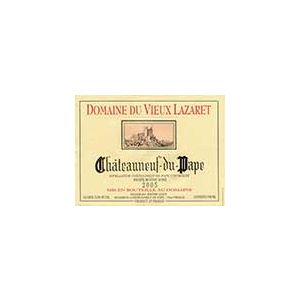
Domaine du Vieux Lazaret Châteauneuf-du-Pape 2004 – France

Domaine du Vieux Lazaret Châteauneuf-du-Pape 2004 – FranceA proponent of the fleshy, seductive, modern style of Châteauneuf-du-Pape, Jerome Quiot, proprietor of Domaine du Vieux Lazaret, has pushed the envelope in recent years, fashioning forward, immensely pleasing wines that are some of the finest wines to date from his substantial, well-established property. With over 200 acres to exploit, Quiot is one of the movers and shakers in what many critics claim to be the finest appellation in France. Quiot also plays an integral role in the administration of the appellation system in France, a process that not so ironically was born in Châteauneuf-du-Pape in the 1920's.

Blessed with a nearly ideal climate for vines and the production of red wine, Châteauneuf-du-Pape also possesses some of the oldest vines in France; the average age of the vines in Châteauneuf-du-Pape is in excess of 40 years, by far the oldest of any major appellation in France. In addition, the entire production of this great wine is hand harvested, and we haven't even mentioned the region's fabulous terroir – large flat stones known as galets – that provides excellent drainage as well as subtle nuances of flavor in the resulting wine.

Tasting Notes: The 2004 Domaine du Vieux Lazaret Châteauneuf-du-Pape is testimony to just how smooth and charming old vine Grenache can be when grown in the fabulous terroir of Châteauneuf-du-Pape. Although a traditional blend of primarily Grenache
(67 %) and Syrah (22%), Domaine du Vieux Lazaret is unique in that its red Châteauneuf-du-Pape contains all thirteen of the appellation's permitted grape varietals. And though young and poised to emerge from its adolescent shell, the 2004 Domaine du Vieux Lazaret already offers up a friendly, warm bouquet of crunchy black fruits, mingled with crushed pepper and Asian spices. On the palate, the wine is predictably forward, soft, and easy to drink, but we suggest allowing this youthful Châteauneuf-du-Pape just a little more time in bottle as there is nary a Châteauneuf-du-Pape that comes into its own before its third birthday. The only problem with that scenario is that you may be compelled to consume the other eleven bottles from the case before the wine truly comes of age. Fortunately, no charges are likely to be brought in this case. However, like many modern Châteauneuf-du-Pape wines, the 2004 Vieux Lazaret tops out at 14.5 % alcohol which it adroitly hides behind its easy going charm and low acid profile. So, consider yourself forewarned. We suggest serving this easy to please red at cool room temperature (no more than 62° F); even if it means cooling it down a bit in warm weather as is the custom in Provence.

Accompaniments: One of the glories of Châteauneuf-du-Pape is how well in complements a wide variety of foods, from game, with elaborate sauces, to an unadorned pizza. However, no self-respecting Provençal man, woman, or child would ever turn down gigot d'agneau (roast leg of lamb) paired with an authentic Châteauneuf-du-Pape the likes of the 2004 Domaine du Vieux Lazaret, and neither would we. Lamb, prepared just about any way one can image, provides a splendid opportunity to highlight the full, rich flavors of Châteauneuf-du-Pape. The flavors of the meat are simultaneously enhanced and mellowed by the wine. However, the personality filled 2004 Domaine du Vieux Lazaret is much more than a one dish wine. Consequently, we recommend this lovely Provençal delight with everything from eggplant, fennel and onion antipasto to rare beef tenderloin. Lobster ravioli, tortellini with fresh peas and prosciutto, and four-cheese pizza are other excellent accompaniments. Furthermore, the 2004 Domaine du Vieux Lazaret, like most Châteauneuf-du-Papes, has the innate ability to elevate simple well-prepared foods to the status of haute cuisine and to highlight grande cuisine rather than overshadow it. Enjoy!

SolÉna Cellars Oregon Pinot Gris 2005 – U.S.A.

In just a few short years, SolÉna Cellars has become one of Oregon's top producers of both Pinot Gris and Pinot Noir. Launched in 2002 by Laurent Montalieu and Danielle Andrus Montalieu, this husband and wife team has wasted no time in establishing SolÉna Cellars'outstanding Pinot Gris and Pinot Noir as benchmarks for Oregon's two most prized grape varieties. And when one considers the burgeoning Oregon wine scene, the Montalieu's accomplishment constitutes no small feat, indeed.

Before establishing SolÉna Cellars, Laurent and Danielle enjoyed considerable renown in the wine industry as the force behind some of Oregon's finest wines. With their marriage in 2000, Laurent and Danielle gave birth to a new family operated winery by purchasing an eighty acre estate in Willamette Valley as a wedding gift to each other. They named the estate vineyard in Yamhill Domaine Danielle Laurent. The name of the winery, SolÉna, comes from a combination of two words that signify the sun and the moon – earth's two most powerful forces. SolÉna is also the name that Danielle and Laurent have given to their daughter.

Today, SolÉna Cellars produces a whole host of fine wines. Pinot Noir is the only varietal grown presently in the Domaine Danielle Laurent vineyard, so the Montalieus fashion their exquisite Pinot Gris, Merlot, Cabernet Sauvignon, Syrah, and Zinfandel from other selected vineyard sites in Oregon and Washington State. So taken has the public and the press been by this couple's wines that they have already been served at official state dinners at the White House and are now highly allocated. What else could one expect from two great wine personalities whose impetus is the sun and the moon?

Willamette Valley: The Heart of Oregon Wine Country

Oregon's Willamette Valley was the destination and the dream of thousands of 19th century pioneers as they migrated west across the Great American Desert to "the promised land," a green oasis where crops and orchards bore fruit aplenty. Today, the Willamette Valley retains its original allure. It is the center of the Oregon wine and fruit industries and it has become a haven for many environmental and high tech industries.

Today, the Willamette Valley is home to more than two thirds of the wineries and vineyards in Oregon. At last count there were more than two hundred wineries in this broad and varied valley that follows the Willamette River from north to south for a hundred miles from the Columbia River to just south of Eugene. The Willamette Valley is one of the premier places on earth for the cultivation of Pinot Noir, one of the finest, yet most difficult grape varieties to grow. So favorable is this land for Pinot Noir that Willamette Valley is mentioned in the same breath as Burgundy and a few select cool weather locations in California as one of the few placse on earth for growing the often magical, yet mercurial Pinot Noir grape. Willamette Valley, also, provides ideal terroir for Pinot Gris and other premium white varietals.

Tasting Notes: With the color of the noonday sun, the 2005 SolÉna Cellars Oregon Pinot Gris is a feast for the eyes as well as the palate. A full throttle Pinot Gris, SolÉna's exuberant 2005 Pinot Gris is as big, bold, and beautiful as any Oregon Pinot Gris we have tasted, and without ever going over the top. In the aroma, scents of fresh apricot and the nectar of pure summer fruits caress the nose. And on the palate, the wine is full and rich, but never flabby. It possesses subtle spice tones, a racy mid palate, and just enough acidity and zip to frame its bodacious flavors, all the while remaining vibrant and refreshing. With these attributes in mind, it is easy to see why SolÉna Pinot Gris has been served at the White House and at official state dinners; this pure, unadulterated Pinot Gris sums up all that is admirable in Pinot Gris and the indomitable American spirit. Enjoy this beautiful white wine well chilled (about 35°- 40 ° F). Anticipated Maturity: 2007-2009.

Accompaniments: Dungeness Crab; Maryland or Carolina Style Crab Cakes; Alaskan King Crab Legs, served with warm drawn butter; and Maine Lobster, steamed to perfection are just a few American classics that pair superbly with the 2005 SolÉna Cellars Oregon Pinot Gris. However, there is far too much versatility and flavor in the SolÉna Pinot Gris to restrict its role at table to one or two delectable companions. Therefore, we heartily recommend other shellfish and fruits de mer with this wine as well many traditional dishes from France's ancient province of Alsace, including Pork and Sauerkraut, with apples, bacon and caraway seeds. A whole host of Asian dishes provide sublime accompaniments, too. With a firm structure and plenty of fleshy, spice laden fruit, the 2005 SolÉna Oregon Pinot Gris is a natural accompaniment to Thai and Vietnamese classics, most notably Lightly Fried Crispy Fish and Grao Prao with chicken and basil. Enjoy!

Pasanau Finca La Planeta Priorat 2002 – Spain

In little more than a decade, the Pasanau family and their beloved Priorat have achieved international fame. Priorat is currently Spain's most glamorous wine producing region, fashioning a splendid array of sensational wines. And at the forefront of Priorat's viticultural renaissance and the accompanying critical acclaim for the region's wines is the Pasanau family.

Pasanau commands the high ground in Priorat, literally and figuratively. At over 2, 400 feet, Pasanau's Finca La Planeta, which is devoted almost entirely to Cabernet Sauvignon,dominates Priorat's arid, landscape. Planted on gravely scree and slate, the 12.5-acre La Planeta vineyard yields what many have described as one of the most complex and intense of all Priorat wines.

In addition to Finca La Planeta, the Pasanau estate also includes equally impressive parcels of ancient, ungrafted Garnacha and Mazuelo vines, which the family crafts into La Morera – a more traditional Priorat style of wine. And more recently, Pasanau has released Ceps Nous, a delicious light red Priorat that is comprised primarily of the estate's traditional Garnacha (Grenache) and Mazuelo, along with a healthy dollop of Merlot and Syrah from young vines. Small amounts of excellent Viognier are also crafted at this outstanding property.

Working out of a small modern bodega that was completed in 1995, Pasanau fashions three of Spain's most compelling wines. Here, grapes are routinely picked very late, often not until late October, in order to extract the greatest intensity from each low yielding vine. All winery tanks are gravity fed and racking and fining are done only during a full moon, using all natural ingredients – all of which says more than a little about Pasanau's commitment to excellence as well as its debt to tradition.

Tasting Notes: A deeply colored, brooding red wine, the 2002 Pasanau La Planeta resembles at first glance a youthful Château Lafite, one of Bordeaux's greatest wines. Initially, La Planeta's glorious robe appears impenetrable and its packed aroma coquettish, yet hesitant to reveal without commitment the breadth of its inner beauty. However, a little time will more than reward the patient imbiber. La Planeta unfolds slowly, almost imperceptibly, until a seductive bouquet of black currant, coffee, graphite, and chocolate stream from the glass. On the palate, the 2002 La Planeta is medium to full-bodied and incredibly smooth and seductive. A suave flavor profile of black fruits and coffee, laced with subtle infusions of oriental spices, emerge from this charming, sophisticated wine. A delightful combination of Bordeaux hauteur and Spanish warmth make the velvety 2002 La Planeta almost irresistible. We suggest allowing this great and unique Priorat plenty of breathing time before consuming. An hour or more in a decanter will do this layered, urbane wine justice. Enjoy!

Accompaniments: A complex sophisticated wine such as the 2002 Pasanau La Planeta calls for foods worthy of complementing world class wine. The finest cuts of meat, a complex sauce, or simple dish made from the very freshest ingredients are the hallmark of great food and wine pairings. Consequently, we recommend just such foods with the 2002 La Planeta. Roast Leg of Tender Spring Lamb, Chateaubriand, or Loin Veal Chops, served with shitake mushrooms and an herb rice pilaf, are just a few of our favorite foods with Pasanau's La Planeta. Pan Roasted Duck Breast will do this wine justice as well. Roasted Quail, stuffed with apple-smoked bacon and mushrooms, served over a corn based risotto, makes for another tasty suggestion. Yet, it is not so much what one serves with the La Planeta that matters as much as it is the quality of the ingredients used. Pasanau's wines are complex and sophisticated, yet tender and easy to pair with accompaniments befitting its stature.


logo for wine club
Since 1994
Home
Join Our Wine Club
Gift Memberships

Membership Renewals
Reorder Your Favorites
Wine of the Month Club
More Information
Current Selections
Past Selections
Testimonials
Other Gourmet Gifts
Corporate Gifts
Wedding Gift Ideas
All About Wine
Website Tools
Who We Are
Contact Us

1 - 800 - 625 - 8238
(Outside US call: 949-206-1904)
P.O. Box 1627, Lake Forest, CA 92609