Welcome to The International wine of the Month Club

Featured Wines

August 2006

Premier Series
Featured Wineries & Wines
Membership Type
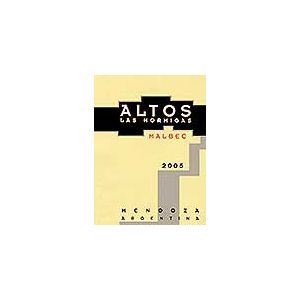
Altos Las Hormigas Malbec 1 Red 1 White; 2 Reds
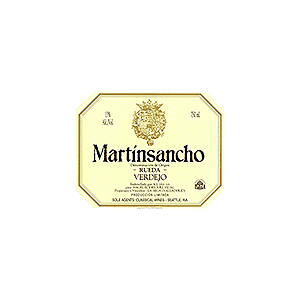
Martinsancho Rueda Verdejo 1 Red 1 White; 2 Whites
Kim Crawford Marlborough Pinot Noir 2 Reds
Kim Crawford Unoaked Chardonnay 2 Whites


Master Series
Featured Wineries & Wines
Membership Type
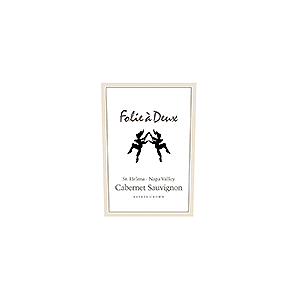
Folie a Deux St. Helena Estate Cabernet Sauvignon 1 Red 1 White; 2 Reds
Martinsancho Rueda Verdejo 1 Red 1 White
Altos Las Hormigas Malbec 2 Reds


Collector Series
Featured Wineries & Wines
Membership Type
Folie a Deux St. Helena Estate Cabernet Sauvignon 1 Red 1 White; 2 Reds
Belondrade Verdejo 1 Red 1 White
Chateau de Gaby Canon-Fronsac 2 Reds

Altos Las Hormigas Mendoza Malbec 2005 – Argentina

Altos Las Hormigas Mendoza Malbec 2005 – ArgentinaSince its inception, Altos Las Hormigas has been one of the hottest boutique wineries in Argentina. Situated in the midst of the mighty Mendoza, the Altos estate is located at an altitude of 2,500 feet, which puts it high into the foothills of the towering Andes as the estate's name implies. Altos is unique among Argentine wineries. Firstly, it specializes in the cultivation and production of just one grape varietal. In fact, this winery produces only one kind of wine – outstanding Malbec. Presently, the 475-acre Altos estate has 75 acres of vines under cultivation, all of which are devoted to Malbec.

Formerly known as Altos de Mediano when it released its debut vintage in 1997, Las Hormigas changed its name in 1999. This modification paved the way for the estate to use very old vines of Malbec from outside of the immediate geographic area of the property, which is solely within the Medrano region of Mendoza. Now under the ownership and direction of Marco de Grazia, whose portfolio of great Italian estates is second to none, Altos Las Hormigas produces sensational Malbec from selected old vines.

Indeed, if there is a single great varietal in Argentina, it is Malbec. Malbec is a French red wine grape in origin that made its way to Argentina from Bordeaux well over a century ago, before the phylloxera scourge devastated the vineyards of Europe. In Bordeaux, where it is often referred to as Cot or Pressac, it still plays an important, but now subordinate role, alongside of Cabernet Sauvignon, Merlot and Cabernet Franc. However, around Cahors in Southwest France, Malbec remains the major player, accounting for the traditional, full-flavored "black wine" of Cahors. It is with this excellent, dark colored Cahors-style Malbec in mind that Altos Las Hormigas excels, transforming Malbec's great color, flavor and tannin into tasteful velvet.

Argentina and the Mighty Mendoza

Argentina has long been one of the world's leading producers and consumers of wine. Presently, this sprawling nation, which contains some of the world's most diverse geography: tropical jungle, barren desert, towering snow-capped mountains and windswept deserted islands that herald Antarctica, is the world' fifth largest producer of wine and the planet's third largest consumer of the fruit of the vine, placing it just behind Italy and France. As an interesting comparison, Argentina consumes more than five times the amount of wine per capita as does the United States, (10.5 gallons per capita in Argentina versus just 2.00 gallons per head in the United States).

Although Argentina has cultivated the vine since the arrival of the first Spanish missionaries in the 16th century, the modern tale of wine in Argentina really begins with the Italian migration of the late 19th century. Sparked by political strife and economic stagnation in their homeland, many Italian growers and winemakers headed for Argentina. Settling in the dry rain starved Mendoza at the base of the Andes, these Italian immigrants began to sluice the snow waters from the mountains onto their vineyards, causing the desert to bloom. In less than a century, the Mendoza, a state approximately the size of Illinois, has become Argentina's leading wine producing region, accounting for the vast majority of the nation's wine production and more than half of all the wine made in South America.

Driven by Argentina's seemingly insatiable thirst for wine, as well as the burgeoning worldwide demand for fine wine, especially well-made reds, the "Mighty Mendoza" now comprises some 700,000 acres of vines, and is still growing. The vast majority of wine from the arid, nearly insect-free environment of Mendoza is red, and happily the quality of these wines continues to grow exponentially. The recent attention to quality is much to the delight of savvy North American consumers, who are now gobbling up the wine wares of Argentina at an ever increasing rate.

Since the early 1980's, an infusion of international talent has transformed the Mendoza. With the likes of Paul Hobbs, Jacques and Francois Lurton and more recently Marco de Grazia, the "Mighty Mendoza" is finally coming into its own. This once sleeping giant now houses a treasure trove of fine wines, with the wonders of Malbec in the vanguard. Excellent Cabernet Sauvignon is also being fashioned here; and in recent years, the Mendoza has made great strides in the production of white wines, too, most notably with Chardonnay and Torrontes, an Argentine specialty. Viva La Mendoza!

Tasting Notes: A consistent performer from their very first vintage, Altos Las Hormigas sets the standard for Malbec. The estate's 2005 Malbec is a balanced, splendidly endowed wine.; It bears a rich, royal robe, and it offers a beautiful aroma of raspberry, black cherry, and sandalwood. Traces of bacon fat or what the French refer to as gras tantalize the nose as well. On the palate, the Altos Las Hormigas is as smooth and refined as any young Malbec can possibly be, but even more exciting are the layers upon layers of flavor that unfold with every sip. Deep down Malbec fruit, spice, sweet tannins, and inexorable charm pour from the glass and caress the palate. And as the wine airs, it continues to reveal subtlety and real nuance of flavor. With time, one single, seamless garment emerges from this charming potent, which makes us wonder why you haven't already stockpiled this little charmer in your cellar. We highly suggest putting at least a couple of bottles of this little treasure away for another year; you'll be glad you did. We suggest serving this alluring Malbec at cool room temperature (62°-66° F).

Accompaniments: Malbec is rarely a wine to stand on ceremony, nor is it a wine to serve with Nouvelle Cuisine. Rather, it prefers simple, hearty cooking, with which it shares a natural affinity. Consequently, we strongly suggest that you introduce the 2005 Altos Las Hormigas Malbec to almost anything that comes off the grill: steaks, burgers, kebobs, even lamb chops. Meats, stews, and wild game also provide excellent accompaniments to the intriguing 2005 Altos Malbec. Keeping with the Italian influence and tradition in the Mendoza, we also recommend this racy Malbec with full-throttle pasta dishes and most tomato rich, southern Italian specialties, including pizza. Garlic, olive oil and fresh, ripe plum tomatoes will not overpower this flavorful but balanced Malbec, so have a party and invite a few friends for dinner. Enjoy!

Bodegas Angel Rodriguez Martinsancho Rueda Verdejo 2004 – Spain

Bodegas Angel Rodriguez Martinsancho Rueda Verdejo 2004 – SpainWe have always thought the man and the story behind this incredible little bodega are nearly as intriguing as the property's wonderful wine. Indeed, Angel Rodriguez and the emergence of Rueda as the most prestigious still white wine-producing region of Spain are synonymous. Angel's story is the story of a unique grape called Verdejo. Although Verdejo is among only a handful of truly noble Spanish white varietals, Verdejo was in serious danger of extinction by the early 1970's due to the pervasive planting of more prolific native varietals such as Viura and Palomino and the introduction of international favorites such as Chardonnay. Through his loving refusal to uproot his ancient 17th century vineyard calledMartinsancho, Angel Rodriguez saved the shy bearing, thick-skinned Verdejo from extinction

The original majuelo or 17th century vineyard of Martinsancho is less than one acre of gnarled, ungrafted vines, preserved in isolation as a museum of pre-phylloxera viticulture and a continuing source of undisputed varietal authenticity. Once considered an anachronism and an economic liability, nurseries throughout Europe now treasure the Martinsancho vineyard for the vine cuttings it provides and the legacy it has preserved. Yet, thirty years ago no one seemed to care about this old vineyard with extremely low yielding vines; in fact, few had even heard of Martinsancho's existence. Besides, Verdejo was not deemed profitable enough then by most experts to preserve, let alone grow, despite the vine's noble pedigree and the undisputed quality of the wine it produced. Yet, in spite of the prevailing pressure and "expert advice" to uproot the old vineyard, Angel Rodriguez preserved it, and then undertook the near impossible or what many have called sheer lunacy: he re-grafted a vineyard by hand onto 25 acres of premier land, using Martinsancho cuttings.

In 1974 Angel Rodriguez planted the noble, nearly extinct Rueda Verdejo into his very best vineyard: thereby, assuring the continuation of the Martinsancho vineyard as well as the venerable production of Verdejo. In this special 25 acre vineyard, the alluvial soil is nearly all gravel to a depth of over thirty feet. Moreover, the harsh continental climate and the extreme altitude of Old Castile, together with the vineyard soil's austere inhospitality to all types of insects and bacteria, allow for the practice of completely organic viticulture – a rarity, especially for white wine.

With the help of Angel Rodriguez, other Rueda growers have planted Verdejo, to the point that today this shy bearing vine is once again the leading white varietal in Rueda. For his great sacrifice and untiring efforts in favor of re-establishing Verdejo's prominence in its region of origin, Angel Rodriguez has been officially honored by King Juan Carlos of Spain.

In spite of his great accomplishment and the recognition he well deserves, Angel Rodriquez remains a humble man who believes in tradition. He steadfastly maintains a very low-tech approach to the natural production of his wine. Angel still uses the centuries old, subterranean family bodega, replete with ancient 5,000 liter oak barrels for aging. The only quasi-modern pieces of equipment are two 20,00 liter glass tanks, which are used for the fermentation of the unpressed Martinsancho Verdejo, but subsequently even the Martinsancho is transferred underground for clarification and aging in ancient casks.

Production of the great Martinsancho remains quite small, under 2000 cases, but this wine's refined tactile quality and great depth of flavor reveal the indomitable spirit of a great winemaker and the preservation of a legacy. Enjoy!

Tasting Notes: Considering the quality quotient under which Angel Rodriguez has always operated and the consistency he has displayed in varying vintages, it is indeed hard to believe that each successive vintage of his beloved Martinsancho has been an improvement over the one that preceded it. The 2004 Martinsancho, the most recent release from Angel Rodriguez, is a clear knockout and a tour de force in white winemaking. It is also totally organic. This latest release eclipses even the exceptional 2001and 2003 renditions of Martinsancho in both structure and sheer pleasure. In short, the 2004 Martinsancho raises the quality bar on Verdejo in general. The 2004 Martinsancho displays an amplifying aroma of fresh citrus, spring flowers, minerals, and liquid stones– all of which signal a purity rarely seen in other white wines. The savor and gustatory pleasure that emanate from the wine are equally outstanding. From its brilliant golden, green-tinged robe to its long natural tasting finish, the brilliant 2004 Martinsancho Verdejo remains truly unique and nothing short of remarkable. Additional accolades and adjectives aside, the following comment by wine critic Robert Parker Jr. about an earlier vintage of Martinsancho sums up our experience with the 2004 Martinsancho: "This is the best dry white table wine I have tasted from Spain". . . and we would add that the best has just gotten even better. Enjoy this one of kind gem cool, moderately chilled, or frosty. As for us, we love it any way we can get it.

Accompaniments: Food enhances wine and vice versa, and the 2004 Martinsancho Verdejo is no exception to our mantra. However, the 2004 Martinsancho Verdejo, like its predecessors, needs no accompaniment to shine; its purity and individuality speak volumes on their own. Nonetheless, the panel shares some tried and true favorite accompaniments to Martinsancho. Some of our favorite pairings with the 2004 Martinsancho include tapas, hors d'oeuvres, smoked salmon with capers, fish, shellfish, poultry, and paella, providing the paella is not too highly charged. In addition, we highly recommend the 2004 Martinsancho with the finest sushi and sashimi. Martinsancho is especially tasty with grilled red snapper and salmon, too. Better still, why not have a party, invite some new acquaintances, and serve the Martinsancho as your opening act? By the end of the evening, you will have a room full of new friends. Enjoy!

Kim Crawford Marlborough Pinot Noir 2005 – New Zealand

Kim Crawford is New Zealand's most celebrated winemaker. A two time recipient of the prestigious Winemaker of the Year Award, Kim is the first New Zealander to be so honored. In any winemaker's book, these are hefty accolades and honors, but they are especially meaningful to a guy who grew up on a farm in Waikato, the heart of dairy country, far from any grapes. Moreover, some twenty odd years ago Kim had no idea what he wanted to do with his university degree in Botany and Microbiology. Fortunately, Kim had an erudite professor at college in the early 1980's who not so casually suggested that Kim consider New Zealand's then fledgling fine wine industry.

Wisely, Kim took his mentor's advice and loved what he saw. Four years later he returned to New Zealand with a graduate degree from Roseworthy College, Australia's most prestigious School of Oenology, and several years experience making wine in Australia, California, and South Africa. Within a year of returning to New Zealand, Kim was the head winemaker for Cooper's Creek Winery, which he propelled to the top of the charts in New Zealand. The Kim Crawford brand was conceived when Kim and his wife Erica were in London. They are fond of saying that the impetus to start a winery and a family coincided over a glass of wine. In 1996, the Kim Crawford winery was born and so was the Crawford's first child.

Kim's style of wine has remained true to his initial philosophy and vision. Kim is fond of saying that it was his youthful self-righteousness that helped him start the winery and conceptualize the kind of wine he wanted to make. He says that he decided early on that the world needed a clean, top quality, fruit driven Chardonnay devoid of the heavy oak used at the time, and he made it. He has extended that same award winning philosophy to Sauvignon Blanc, Pinot Gris, and Pinot Noir – all of which he fashions into more award winning wines.

Tasting Notes: The words light, lovely, pure, and exuberant aptly describe the delicious 2005 Kim Crawford Marlborough Pinot Noir. Ruby bright and heavenly scented with the redolence of unencumbered Pinot fruit, which recalls the essences of strawberry and raspberry, this latest Marlborough release from Kim Crawford should leave the vast majority of French producers of village Burgundy shaking their heads and quaking in their boots. No doubt about it, this is one good drinking Pinot Noir. It combines the purity of the finest New World fruit with the body and texture that comes from Old World breeding. In short, this is one pretty, easy drinking Pinot from its amplifying olfactory start to its clean, smooth, sophisticated finish. We suggest serving the comely 2005 Kim Crawford Pinot Noir at no more than 68° F, after just a few minutes of aeration.

Accompaniments: Food is an option with the 2005 Kim Crawford Pinot Noir, but not essential. Nonetheless, it would be a shame to let opportunity go begging. Consequently, we suggest pairing this delightful Marlborough Pinot Noir with light to medium fare. Lightly grilled Ahi or Yellow fin tuna, served over a creamy Risotto, makes a wonderful meal and provides excellent companionship for this wine. Ham, pork tenderloin, and salmon offer other first rate accompaniments. Soft cheeses with no rind make excellent companions as well to Kim Crawford's first rate Marlborough Pinot Noir. Enjoy!

Kim Crawford Marlborough Unoaked Chardonnay 2005 – New Zealand

Kim Crawford is New Zealand's most celebrated winemaker. A two time recipient of the prestigious Winemaker of the Year Award, Kim is the first New Zealander to be so honored. In any winemaker's book, these are hefty accolades and honors, but they are especially meaningful to a guy who grew up on a farm in Waikato, the heart of dairy country, far from any grapes. Moreover, some twenty odd years ago Kim had no idea what he wanted to do with his university degree in Botany and Microbiology. Fortunately, Kim had an erudite professor at college in the early 1980's who not so casually suggested that Kim consider New Zealand's then fledgling fine wine industry.

Wisely, Kim took his mentor's advice and loved what he saw. Four years later he returned to New Zealand with a graduate degree from Roseworthy College, Australia's most prestigious School of Oenology, and several years experience making wine in Australia, California, and South Africa. Within a year of returning to New Zealand, Kim was the head winemaker for Cooper's Creek Winery, which he propelled to the top of the charts in New Zealand. The Kim Crawford brand was conceived when Kim and his wife Erica were in London. They are fond of saying that the impetus to start a winery and a family coincided over a glass of wine. In 1996, the Kim Crawford winery was born and so was the Crawford's first child.

Kim's style of wine has remained true to his initial philosophy and vision. Kim is fond of saying that it was his youthful self-righteousness that helped him start the winery and conceptualize the kind of wine he wanted to make. He says that he decided early on that the world needed a clean, top quality, fruit driven Chardonnay devoid of the heavy oak used at the time, and he made it. He has extended that same award winning philosophy to Sauvignon Blanc, Pinot Gris, and Pinot Noir – all of which he fashions into more award winning wines.

Tasting Notes: The 2005 Kim Crawford Unoaked Marlborough Chardonnay is New Zealand's answer to Pouilly-Fuissé, and a darn good one at that. It possesses a pretty robe and a soft seductive nose that reminds us of fresh apples, spring flowers, beeswax, and fresh baked bread straight from the oven. It is pure and gentle, but oh so flavorful. From the first sniff to the very last sip, the 2005 Kim Crawford Unoaked Marlborough Chardonnay makes one wonder why it took so long for Americans to discover the glory of unoaked Chardonnays. This wine has all the charm and ethereal beauty of the finest Macon wines, plus a good mélange of flavors that capture the very essence of the Chardonnay grape. Pretty and downright seductive, this is one good drinking wine. Enjoy it light to moderately chilled (40°-55° F), and as often as you can.

Accompaniments: Seafood and summer were made for the 2005 Kim Crawford Unoaked Marlborough Chardonnay, so how about some steamed New Zealand mussels, Scallops au gratin, or oysters on the half shell? Shellfish is one of this unoaked Chardonnay's very best friends. However, most fish and other fruits of the sea will find a faithful companion in this wine as well. We have also enjoyed it with white meats, cheeses, and pasta. In particular, the Kim Crawford Unoaked Chardonnay provides splendid accompaniment to Fettucine Alfredo and Pasta Primavera. It is also shines as an aperitif, so as you like it.

Folie à Deux St. Helena Napa Valley Estate Cabernet Sauvignon 2002 – U.S.A.

Folie à Deux St. Helena Napa Valley Estate Cabernet Sauvignon 2002 – U.S.A.Folie à Deux is a small 13-acre Napa Valley estate that is planted exclusively to Cabernet Sauvignon. This historic property lies just north of St. Helena in the heart of Napa Valley. Folie à Deux's vineyards and century old farmhouse lay sandwiched between Spring Mountain and Howell Mountain, at the narrowest part of Napa Valley. The estate's location provides a unique microclimate and a special terroir, which permit cool air to roll slowly down Mount St. Helena and cool the vineyard during the long summer days of torrid heat. At Folie à Deux, unlike many other Napa locales, the cool air sifts its way through the vineyard the way sand passes through an hourglass. The result is great physiological ripeness in the vineyard, without a loss of aromatic or flavor profile.

Since 2004 Folie à Deux has been owned by Bob Trinchero, the proprietor of a number of renowned California wineries, but this boutique estate has had an interesting and often amusing history, as the name suggests. Folie à Deux was founded as a bonded winery in 1981 by two psychiatric professionals. When the couple told their friends that they planned to fulfill a mutual dream by starting a winery, the friends jokingly suggested that the couple was exhibiting the classic symptoms of Folie à Deux, a psychiatric term that is defined as the sharing of fantasies by two close friends. The name stuck. To build on the theme, a local Napa Valley artist, Susan Ortega, created a drawing of twin dancers based on a Rorschach inkblot. Her inspiration for the label was the fantasy that she and her sister shared of one day becoming professional ballerinas.

However, there is more to this amusing story, which leads one to wonder if our subconscious minds do not comprehend more than we think and indeed play a greater role in events than we imagine. During the 1930's Folie à Deux's farmhouse and surrounding property were owned by Spanish prizefighter Luis Santa Maria, who retired with his family to St. Helena to tend sheep and make wine. The Santa Maria family lived in the farmhouse that now serves as the winery's offices and tasting room and they used the same old stone shed to store wine that Folie à Deux now utilizes for storing wine.

Curiously, Bob Trinchero, the present owner, and Santa Maria's daughter sang together in the school choir many years ago. One could presume that the young Trinchero's subconscious was somehow at work here. However, what is even more serendipitous is the connection between Trinchero and Scott Harvey, Folie à Deux's long time winemaker, who for years Bob used to kid by telling him he was "watching," and perhaps he was. Bob's home looks down on the Folie à Deux property, which he so wisely purchased in 2004. Apparently, he liked what he saw and tasted, and so did we.

Whether life's coincidences and connections are the result of random chance or the result of our subconscious fantasies, are matters open to debate. However, what is not in question is the quality of the Cabernet Sauvignon produced by Folie à Deux. Folie à Deux fashions two distinctive Napa Cabernet Sauvignon offerings, one a blend of three different vineyards from Napa Valley and the other the estate's flagship wine, the St. Helena Estate Cabernet Sauvignon that we are proud to feature this month.

Tasting Notes: A dense, rich, full throttle Cabernet Sauvignon, the 2002 Folie à Deux St. Helena Napa Valley Estate Cabernet Sauvignon is what the best Cabernet Sauvignon offerings from Napa Valley are all about. This is a heady concoction that marries the distinctive aromas of chocolate, mint, and eucalyptus to plush, ripe Cabernet fruit. From the moment the cork exits the bottle, every sip of the majestic Folie à Deux Estate Cabernet Sauvignon caresses the palate. It brings with it gobs of black currant fruit that seem infused with deft touches of chocolate, leather, and tobacco – all of which add to the wine's charm and complexity. With great fruit, a long ripe complex center, and beautiful balance, the 2002 Folie à Deux Estate Cabernet Sauvignon is nothing short of a fantasy, so we think most imbibers will dispense with aeration. Enjoy this lush, textured Cabernet at cool room temperature (66° F), with or without breathing time. However, from the response we received from the tasting panel, we highly suggest you have a few additional bottles lined up, especially if you plan to serve this wine to friends because what you will be sharing then will be more than just a Folie à Deux.

Accompaniments: The 2002 Folie à Deux St. Helena Estate Cabernet Sauvignon is one of the few great young California Cabernets that provides majestic drinking all on its own. However, we have to agree with the folks at Folie à Deux, who claim that this "awesome wine is the ideal accompaniment to any hearty beef dish." The ripe fruit, lush texture, and soft tannins of the 2002 Folie à Deux St. Helena Napa Valley Estate Cabernet Sauvignon are indeed a force to be reckoned with, and they are perfect with beef. Therefore, bring out the beef: porterhouses, sirloins, strips, and tenderloins. Light up the grill and have a party! No fancy recipes are required, but we can assure you that complex sauces and fine accompaniments will not be wasted on this outstanding Cabernet Sauvignon. In fact, such accoutrements will only enhance the meal and the experience. However, if beef is simply not your cut of meat, why not try lamb? The 2002 Folie à Deux St. Helena Estate Cabernet Sauvignon provides an equal opportunity for gastronomic pleasure when accompanied by a fine leg of lamb. And for those who eschew meat, we can also attest to the glories of vegetarian chili with the 2002 Folie à Deux Estate Cabernet Sauvignon, especially if you fold in some sweet red pepper. Yum!

Belondrade Y Lurton Rueda Verdejo 2003 – Spain

Didier Belondrade and Brigitte Lurton are the most ambitious producers of the esteemed Verdejo grape in Rueda, Spain's recently resurrected capital of white wine. This single minded French couple began their quest to produce the world's finest Verdejo in 1994 with the purchase of an old, abandoned winery at Nava del Rey in the heart of Rueda. Since acquiring the dimly lit maze of subterranean cellars and twisting labyrinths that served as the original winery, a bodega that recalled the glories of Spain many centuries ago rather than any hope for the future, Belondrade and Lurton have constructed an ultra modern winery. The couple's simple, highly efficient edifice stands just outside the tiny village of La Seca, where it serves as a symbol of a new way of fashioning Spain's traditional varietals, and where it so adroitly underscores the wine renaissance that is presently sweeping every important wine region of Spain.

Belondrade Y Lurton fashions its modern luxury style of Rueda from just 26 acres of vineyards that are concentrated in the la Seca sub-zone of Rueda, the appellation's finest area. Here the gravelly soil and limestone bedrock combine with optimal climatic conditions for the production of the noble Verdejo varietal, whose origins date back well beyond Spain's first Siglo d'Oro (Golden Age). Inspired by the great white Burgundies of their native France and the arduous work of Rueda's Angel Rodriquez, who three decades ago nearly singled handedly resurrected Verdejo from extinction, Belondrade and Lurton have succeeded in crafting the region's richest, most concentrated Verdejo. With 100 % barrel fermentation, followed by year in French and American oak barrels, there is a no expense spared approach at Belondrade Y Lurton, which has earned this dynamic couple the great international acclaim they deserve. Although, this estate's top offering is immensely pleasing upon release around its second birthday, it will continue to improve in bottle for several more years.

Rueda

Rueda lies to the northwest of Madrid in an historic part of ancient Castilla and León. Rueda, especially the town of Nava del Ray and the surrounding countryside, is known for its extraordinary architecture. Many opulent churches, monasteries, and mansions punctuate the region, highlighting Rueda's important role in the medieval Reconquest of Spain from the Moors.

Wine production has been an integral part of Rueda since the 11th century, when King Alfonso IV offered freehold ownership of land to those prepared to resettle Rueda after the Reconquest. Monastic orders quickly took up the King's offer and built monasteries with vineyards to provide a steady wine supply. Soon the vineyards of Rueda had become the primary suppliers of wine to the itinerant medieval Castilian court. The viticultural glory and commercial success of Rueda and its noble Verdejo grape would last until phylloxera devastated the region between 1909 and 1922, destroying more than two-thirds of the region's vineyards. Subsequently, the vines chosen for replanting were unfortunately selected for yield rather than quality, which means that Palomino replaced Verdejo as the main grape in Rueda. Furthermore, the little Verdejo that was made had no chance to mature; it was sold locally in bulk.

In the 1970s the sagging fortunes of Rueda took a turn for the better. Marqués de Riscal, a leading Rioja producer, came to Rueda and set up a bodega to make young, fresh white wines from native Verdejo grapes. Meanwhile, Angel Rodriquez was launching his quest at Martinsancho to revive Verdejo and restore the indigenous varietal to its former glory. As a result of these efforts Rueda won DO status in 1980, and it has never looked back. Rueda is presently Spain's leading DO for still premium white wines.

Tasting Notes: Belondrade Y Lurton 2003 Verdejo is a stunning, flavorful white wine from the Rueda region of Spain. A golden hue catches the eye with a purity that points to the seamless quality of this wine. Floral and fruit notes mingle in the nose: light honeysuckle soothes the mind and joins with a hint of pineapple and spice to pique the interest. Consisting of 100% Verdejo, a native varietal of the Rueda, this wine is loaded with charm and interest. Initially floral and fruity on the palate, a lush creamy texture quickly coats the mouth and carries a full, prolonged flavor profile through to a gratifying finish. A touch of smokiness emerges underneath, infused by a year in new French and American oak, but this faint rusticity adds depth and never intrudes as does the oaky quality of many California Chardonnays. As the wine effortlessly works its way down the throat, a bracing tingle combines with a spicy quality to frame the wine's long, lingering finish. Hands down, we're big fans of the Belondrade Y Lurton Verdejo for its distinctive flavor and wonderful smoothness and balance. Kudos to Didier Belondrade and Brigitte Lurton for creating the most individual and intense Rueda we have ever tasted.

Accompaniments: Packed with flavor, the 2003 Belondrade Y Lurton Verdejo exhibits a versatility that pairs well with a varied menu. So, be inspired by the wine's breadth and plan a tapas menu for an evening of relaxed, unhurried get-to-know-you socializing. Include on your tapas bar a few light cheeses, such as Manchego, which is a Spanish sheep's cheese that comes in mild and slightly sharper variations. Also, be sure to incorporate traditional Spanish flavors, such as smoked paprika in a salad dressing or on grilled chicken breasts to accent the spicy finish of the Belondrade Y Lurton Verdejo. Or search for cool Mediterranean inspired recipes that use cilantro or fruits, such as apricot or fig, to complement the floral and fruit notes of the 2003 vintage. Our featured recipe for Caramelized Onions and Fig Jam, for example, combines fruity, spicy, and sweet flavors in a rich flavorful blend. While preparing the caramelized onions, remain patient and cook the onions until they have truly caramelized and released their internal sugars to form an almost candy-like coating. Enjoy the freedom a tapas menu brings when paired with the 2003 Belondrade Y Lurton Verdejo: the wine, the selection of food, and the socializing that ensue are sure to unbridle the senses and set the tone for a mid summer night's dream. Enjoy!

Château du Gaby Canon-Fronsac 2000 – France

Château du Gaby is an historic property that dates from the early 18th century. For over 250 years this property remained in the same family and rode the familiar Bordeaux cycles of boom and bust, based upon the vagaries of economics and politics, as well as the individual acumen of the hand on the barrel. However, since 1999 Château du Gaby has produced wines of superlative quality. Under the current ownership and the watchful eyes of Gilles Pauquet, the estate's winemaker, Château du Gaby now rivals and often surpasses the Grand Cru offerings of nearby St. Emilion and Pomerol. And unlike the majority of Bordeaux "châteaux," whose manor houses are garages or sheds and their vineyards far a field, Château du Gaby contains an authentic château that sits upon a hill, surrounded by 28 acres of vines that occupy the perfect limestone terroir. Moreover, from Château du Gaby's magnificent slopes one has a commanding view above the Dordogne River and some of the prettiest countryside in all Bordeaux.

The mission at Château du Gaby is quite clear. Their aim is to fashion the finest wine of Canon-Fronsac, the historic "Right Bank" appellation that sits on the Dordogne River upriver from Bordeaux itself. Canon-Fronsac lies adjacent to Pomerol and St. Emilion with which it shares a similar cepage (a blend of Merlot, Cabernet Sauvignon, and Cabernet Franc) and terroir (soil, climate, and upbringing). Within the Fronsac appellation, there are really two separate appellations: Fronsac and Canon-Fronsac. Canon-Fronsac is the older, smaller, and more prized of the two appellations because of the uniform high quality of wine produced within its diminutive confines. Under new ownership and management since 1999, Château du Gaby has benefited from the substantial investment and development by the new owners and management. The estate's wines are now made using only sustainable agricultural methods, which means no herbicides are used and only organic fertilizers are permitted in the vineyard. The château also practices minimal, controlled treatment spraying with organic products. The results are clear. Château du Gaby is now fashioning wine as captivating as the château's commanding view. Vive la différence!

Tasting Notes: The 2000 Château du Gaby Canon-Fronsac provides more than ample testimony to the commitment to excellence brought by the new ownership at this estate and to the splendor of the outstanding 2000 vintage. This Grand Cru style claret sports a deep, nearly impenetrable robe that makes it almost as beautiful to look out as to drink. Better still is the wine's amplifying nose that contains all the juicy black fruit flavors like blackberry, cassis, and current, which make fine claret so compelling. Mingled within the wine's lush interior and texture are hints of spice, earth, tobacco, and new oak. Beneath all this goodness lies a core of sweet, ripe tannin that will allow this glorious Canon-Fronsac to develop further and mature for at least another ten years. Given Château du Gaby's classic structure and relative youth, we suggest that it be opened at least one hour before serving. In addition, we recommend that the 2000 Château du Gaby be served relatively cool (at no more than 66° F). Santé!

Accompaniments: While it is true that most hosts plan food for a dinner party first and foremost, with nary a thought to the wine, such is not the case among true wine aficionados. Instead, most wine lovers and quite a few renowned chefs, too, plan their meals around their wines – a philosophy we heartily endorse. In the case of the 2000 Château du Gaby Canon-Fronsac, we highly recommend that whatever you choose as an accompaniment be of comparable quality. Classic claret of Grand Cru stature deserves food of equal standing. Therefore, we believe classic French cooking provides a myriad of outstanding accompaniments to Antoine Kahayat's stunning Canon-Fronsac. Duck à l'Orange, Escalopes de Veau à la Crème (Medallions of Veal in a Mushroom Cream Sauce), Gigot d'Agneau (Roast Leg of Lamb), and Tournedos Rossini (Filet Mignon with Artichoke Hearts, Foie Gras, Truffles, and Madeira Sauce) all provide wonderful accompaniments to highlight this wine. Simple foods will delight in its company as well. Homemade bread and French cheeses such as Cantal and Pont L'Eveque offer excellent alternatives to haute cuisine and terrific pairings with the delightful 2000 Château du Gaby. Salut!


logo for wine club
Since 1994
Home
Join Our Wine Club
Gift Memberships

Membership Renewals
Reorder Your Favorites
Wine of the Month Club
More Information
Current Selections
Past Selections
Testimonials
Other Gourmet Gifts
Corporate Gifts
Wedding Gift Ideas
All About Wine
Website Tools
Who We Are
Contact Us

1 - 800 - 625 - 8238
(Outside US call: 949-206-1904)
P.O. Box 1627, Lake Forest, CA 92609