Featured Wines

Vol. 9 No. 2

Premier Series
Featured Wineries & Wines
Membership Type
Santa Monica Tierra de Sol Cabernet Sauvignon 1 Red 1 White; 2 Reds
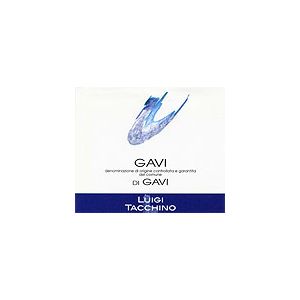
Luigi Tacchino Gavi de Gavi 1 Red 1 White; 2 Whites
H de l'Hospitalet Cuvee Rouge 2 Reds
Alfredo Roca Tocai Fruiliano 2 Whites


Master Series
Featured Wineries & Wines
Membership Type
Kenwood Jack London Cabernet Sauvignon 1 Red 1 White; 2 Reds
Luigi Tacchino Gavi di Gavi 1 Red 1 White
Santa Monica Tierra de Sol Cabernet Sauvignon 2 Reds


Collector Series
Featured Wineries & Wines
Membership Type
Kenwood Jack London Cabernet Sauvignon 1 Red 1 White; 2 Reds
Domaine de la Collonge Vieelles Vignes Pouilly-Fusse 1 Red 1 White
Clos du Toit Mont du Toit 2 Reds

Santa Monica Tierra de Sol
Private Reserve Cabernet Sauvignon 1997 – Chile

Founded in 1976 by Emilio de Solminihac, Santa Monica is one of the more contemporary wineries in Chile. Yet, this superb property is truly an amalgam of Old World charm and modern technology Located in the beautiful Rapel Valley, this historical 19th century property includes a beautiful old hacienda that dates from Chile’s colonial past as well as one the tidiest and most up to date wineries in all Chile.

Emilio de Solminihac, more affectionately known as Don Emilio to a burgeoning legion of young Chilean winemakers, is the guardian of traditional winemaking in Chile and one of South America’s finest winemakers. He is also an affable gentleman who seems cut from a bygone age. Hailing from a wine making family, Don Emilio received his first training in wine as a young man while working in his grandfather’s vineyard and winery. Later he would graduate from the Universidad de Chile with a degree in agricultural engineering, and subsequently depart for France, where he would study at the Université de Bordeaux under the legendary Emile Peynaud – then France’s most renowned oenologist. While attending the Université de Bordeaux, Emilio earned that venerable institution’s esteemed degree in oenology, the first Chilean to do so. Today, Emilio de Solminihac is revered as much for his legacy of fine, age worthy wines as he is for his numerous oenological innovations – many of which have helped to transform the Rapel Valley into the Napa Valley of Chile.

In the 1970’s Don Emilio returned to Chile. He established an oenological laboratory in Rancagua and began consulting for many local Rapel Valley vineyards and wineries, an experience that brought him an intimate knowledge of the region’s terroir. In the meantime, the young Emilio also began teaching oenology and vinification at the Universidad de Chile and the Universidad Catolica de Chile, where he earned a reputation for his unabashed dedication to the production of clean, complex, age worthy wines in the Bordeaux tradition – a devotion he still pursues.

Chile in the 1970’s was a time of great economic uncertainty. Nevertheless, in 1976, when other growers were continuing to pull up vines because they were barely able to give away their wares, let alone make a living by producing wine, Don Emilio made a fateful decision: he purchased the old Vina Purisma estate outside of Rancagua. Originally planted in 1930, this established 230- acre Rapel property contained many splendid old vines whose yields were meager but whose quality was high. Don Emilio re-named the estate Santa Monica in honor of his wife Monica Fonseca and began with her their family winery. What many considered madness three decades ago has now become a dream come true.

Today, Santa Monica reigns as an oasis of calm and simple elegance. Beyond its gates lay long rows of well-tended vines that doze between the towering Andes and the coastal mountain ranges. From these neat rows of vines that hold just about every grape imaginable, Don Emilio fashions a bevy of delicious wines. However, the highly acclaimed Private Reserve Tierra de Sol and Gran Reserva offerings of Cabernet Sauvignon and Chardonnay constitute the signature series at Santa Monica. In them, one can taste and see Don Emilio’s passion for making traditional Bordeaux and Burgundy style offerings, with a personal touch. These are complex, age worthy wines that are as endearing as they are enduring.

Tasting Notes: The1997 Santa Monica Private Reserve Tierra de Sol Cabernet Sauvignon is the progeny of one of Chile’s finest vintages. In appearance, it is as youthful and vibrant as any newborn Cabernet. It remains deep in color and imbued with a stylish bouquet that is, perhaps, best described as an infusion of fresh berries, cassis, dark chocolate, and the classic cigar box scent of cedar. The 1997 Tierra de Sol Cabernet Sauvignon recalls all that is beguiling and hauntingly beautiful about classified Bordeaux, and great Chilean Cabernet Sauvignon, too. Moreover, in the tender 1997 Private Reserve Tierra de Sol, one encounters a concentrated core of blackberry fruit, cassis, and plum that deftly overlay hints of chocolate and roasted coffee. For optimum enjoyment, allow this medium-bodied, classically wrought claret to breathe at least thirty minutes or more before consuming, so that it can easily envelop your palate and entwine itself in your gustatory soul. And like all fine Cabernet wines, we strongly suggest that the 1997 Santa Monica Private Reserve Tierra de Sol Cabernet Sauvignon be drunk at no more than 66° F. Enjoy!

Accompaniments: Although quite easy and enjoyable to drink on its own, the 1997 Santa Monica Private Reserve Tierra de Sol Cabernet Sauvignon is an excellent food wine. In fact, it seems to us to be the quintessential dinner party wine. And best of all, one need not have a flair for haute cuisine to see this wine shine. A butter and herb roasted chicken, a tender veal chop, or grilled thinly sliced beef tenderloin is all this beautifully aged wine needs to elevate a meal to a feast. For the gourmet or more adventuresome eater, we suggest a grilled loin of lamb with herbed and chèvre stuffed peaches and either a creamy rich risotto or mashed garlic and rosemary infused potatoes. Yum! Most meat ragouts and well prepared stews will complement the 1997 Santa Monica Tierra de Sol Cabernet Sauvignon as well.

Luigi Tacchino Gavi di Gavi DOCG – Italy

The Luigi Tacchino winery is what one would call a garagiste, literally and figuratively. The Tacchino family winery is plainly part of the house, the garage in fact. Moreover, the entire operation is a family affair. Today, some of the best and most expensive wines in Italy, France, and elsewhere, are born in garages; hence, the term garagiste.

The pragmatic middle aged Luigi Tacchino is the namesake of this small boutique winery that has been producing wine for three generations, but much of Tacchino’s recent surge in quality is attributed to Luigi’s energetic daughter Romina, who continues to push the envelope and proverbial quality quotient at this Piedmontese property. Scattered over a little more than 55 acres at some of the highest elevations in the Monferrato, Tacchino’s low yielding vineyards are dedicated primarily to Gavi, Barbera, and Dolcetto – all Piedmontese specialties. Until now, none of Tacchino’s wines had ever appeared in the United States. Tacchino’s primary markets have always been Italy, Germany, Switzerland, and Norway, but that is about to change.

Italy is full of surprises and unexpected wine delights, often from the least likely of locales. The Luigi Tacchino winery is just one of many wonderful discoveries from a recent sojourn in Italy. What follows is a commentary or series of personal impressions on Italy and Italian wines that our tasting panel collected along the way.

Italian Travels – Part I – The Panel on the Road

Although we tasted some 400 wines in just 6 days in Northern Italy this seemingly lofty number of offerings constitute far less than 1% of all Italian wine. However, the 400 wines we tasted were carefully selected to provide a perspective of Italy's principal wine regions. From this parapet we were treated to a panoramic view of the Northern Italian winescape. However, what lies beyond is an even vaster realm of oenophilia – the world’s most prolific and exciting.

Thoughts on the wines:

In general, quality red and white wines in Italy are the result of limiting yields from well drained densely planted vineyards that most often sit astride steep slopes, where no mechanical harvester dare tread. Such terroirs and viticultural practices serve to stress vineyards, with the goal of achieving a balance between fruit concentration and acidity in the grapes. These viticultural practices furnish a high skin to juice ratio; consequently, substantial tannins and wines with firm acid backbones, especially in regards to the reds, are the result. Surely, Italian wines are not Australian wines, effusive in their fruit flavors, big bold, or brash unless the producer has decided intentionally to "internationalize" his or her wines by blending in Chardonnay for whites or one or more of the red triumvirate of Cabernet, Merlot or Syrah for reds. Such international varietals, when grown in Italy, are distinctly fleshier, fuller and fruitier in taste than traditional Italian varieties such as Cortese di Gavi, Garganega, Nebbiolo, Barbera, Sangiovese, and even Dolcetto, the name notwithstanding.

Tasting Notes: A bright, sunny wine, the 2004 Tacchino Gavi di Gavi is ample reminder that spring is on the way. Forsythia, spring flowers, and subtle mineral tones highlight the scent of this lovely, balanced Gavi – testimony to just how hauntingly aromatic the Cortese grape variety can be in the hands of a master winemaker, especially from low yielding vineyards with south facing slopes. Furthermore, pure light lovely fruit distinguishes the center of Tacchino’s Gavi di Gavi. Followed by hints of crushed flowers, mineral, and lemon oil; this Gavi displays both elegance and flavor on the palate. Dry and ethereal on the finish, the 2004 Luigi Tacchino Gavi di Gavi is quintessential Gavi, which is tantamount to grace in a glass. We suggest you serve this charming white wine well chilled (about 40º F) and then allow it to slowly reach ambient temperature in the glass. This will allow this excellent Gavi to unfold and reveal naturally all its latent charms and subtle nuances of flavor. Salute!

Accompaniments: Considering the supreme elegance and purity of the 2004 Luigi Tacchino Gavi di Gavi, two glasses may be the only prerequisite for this wine. After all, it would be a shame to drink this beautiful Gavi all by oneself….or maybe not. Just be sure it is the right someone else. Add some top-notch seafood to the two glasses of Luigi Tacchino’s Gavi and you have a recipe for a sublime dining experience. Pan Seared Red Snapper, Stuffed Flounder, or Sautéed Alaskan Halibut all provide delicious accompaniments. However, Sautéed Bay Scallops, prepared in a cream sauce with unsalted pistachio nuts and Mediterranean herbs is one of our all time favorite dishes with Tacchino’s Gavi. A simple but carefully prepared Chicken Francese is another one of our perennial favorites. In addition, most cream based sauces and soft cow’s milk cheeses pair nicely with this Gavi; the Cortese grape seems to have natural proclivity for accompanying dairy as well as seafood. Enjoy!

Château de l’Hospitalet
H de l’Hospitalet Rouge 2003 – France

H de l’Hospitalet Rouge is the ultimate red blend of all of all the best red varietals from the sun drenched hills of the Languedoc. Produced by Gérard Bertrand, the reigning king of Languedoc wine, H seeks to recreate in a single bottle all the pleasure and charm of a visit to the south of France.

For a long time Gérard Bertrand and his coterie of excellent Languedoc wines have enjoyed a serious following in Europe, but mostly they have remained a bit of an insider’s secret – until now. We first featured a Bertrand Minervois to considerable member acclaim several years ago before this estate’s wines were generally available in the United States, but with the recent international press, replete with corresponding accolades for current releases, the Bertrand secret is finally out of the bag.

Undoubtedly, Gérard Bertrand is the most respected name in the Languedoc – the oldest and largest wine region in France. The Bertrand name is associated with most of the very best domains and vineyards in all of southern France, and like his father before him, Gérard has not only inherited the Bertrand legacy from his forbearers, he has augmented and cultivated the family heritage by acquiring an ever increasing array of outstanding properties – each of which produces wines of superlative quality and eminent distinction. Domaine de Villemajou, Cigalus, Ch?teau Laville-Bertrou, and the venerable Ch?teau de l’Hospitalet are all jewels in Bertrand crown and have earned him the rightful title: the King of Languedoc.

All Bertrand estate wines are produced in respect to the environment, using sustainable methods and hand harvesting. Each authentic bottle of Bertrand wine also bears the emblem of the Visigoth Cross, the symbol of Languedoc since the 7th century.

Tasting Notes: Aromatic, round, and amply endowed with the deep purple robe of Languedoc, the 2003 H de l’Hospitalet Rouge contains all the splendid red varietals that make the wines of Provence and Languedoc so eminently drinkable. Syrah, Grenache, Mourvèdre, and old vines Carignane all make their appearance in H de l’ Hospitalet. With just a few minutes of aeration, the fecundity of southern France emerges from the glass, exhibiting the scents and savors of anise, plums, blackberry, violets, and the ubiquitous Herbes de Provence. Round, soft, and generous on the palate, the medium-bodied 2003 H de l’ Hospitalet Rouge dazzles with its generous fruit and easy going charm rather than its brawn. No hard edges or tannic overload to deal with here. Consequently, H de l’ Hospitalet requires very little in the way of aeration and is good to go the moment it hits the glass. As is the case with most Rhône reds we suggest serving H de l’ Hospitalet cool (no more than 66º F) for optimum enjoyment. Salut!

Accompaniments: Considering the round generous nature of the 2003 H de l’ Hospitalet, it provides excellent companionship to a wide variety of foods. We are especially fond of H with pastas and pizzas, but meats and even certain fish provide excellent accompaniments as well. Grilled Portabella mushrooms; served on toasted ciabatta bread with sautéed spinach, goat cheese, and pesto is another winning item with
the H de l’ Hospitalet Rouge. Grilled chicken or rare Ahi tuna over organic greens delights the palate in the company of H, too. In short, most Mediterranean inspired dishes are at home on the table with H de l’ Hospitalet, so start the grill and fire up the pot.

Alfredo Roca Family Reserve
Tocai Fruilano 2004 – Argentina

The past four generations of the Roca family have all been in the wine trade and since 1979 when they acquired their own family winery; they have been making some of Argentina’s most interesting and intense wines from nearly a dozen different grape varieties. The Alfredo Roca winery is located in San Rafael, an area commonly referred to as the southern oasis of Mendoza.

San Rafael is in sight of the snow capped Andes and like nearly all producers in Mendoza, the Rocas irrigate their 260 acres of vineyards from Andean snow melt. Here the air is quite dry and the sun intense. Daytime temperatures are hot, too; while the evenings are nearly desert like cool. This great variation between daytime and nighttime temperatures permits a very slow even ripening of the grapes, which is reflected in the intense colors, aromatics, and flavors that characterize all of Alfredo Roca’s wines.

The Alfredo Roca estate is comprised of four distinct vineyards: La Perseverancia, Las Paredes, Los Amigos, and Santa Herminia, all of which are tended by the Roca family themselves. Presently, Alfredo Roca grows Cabernet Sauvignon, Merlot, Malbec, Syrah Bonarda, and Sangiovese for making red wines and Chardonnay, Chenin Blanc, and a miniscule amount of a delicious Tocai Fruilano for whites. The Rocas fashion three levels of wines. Those labeled Family Reserve are the Roca’s finest offerings and they all emanate from the best barrels and the choicest parcels.

Tasting Notes: The 2004 Alfredo Roca Family Reserve Tocai Fruilano is one mouthful of wine and one of the most gratifying Tocai Fruilano’s we have tasted in a very long time, and that says a lot. Italian in origin, like many of the varietals grown in Argentina, Tocai Fruilano (no relation to the sweet Tokay of Hungary but rather the dry Alsace and Italian varietal) is an ultra premium white grape that possesses a unique and delicious flavor profile, all of which Alfredo Roca adeptly captures in his 2004 Family Reserve. While wearing the color of the summer sun, this bold rendition of Tocai Fruilano offers up an entrancing nose of fresh ripe apricots, pineapple, and lime. On the palate, the wine is equally full and satisfying. Its flavor profile mirrors its hedonistic nose, offering up plenty of decadent fruit along with a smoky, mineral quality that serves as an alter ego to the fruit. Dry on the finish and good to the last drop; you will want to explore this intriguing wine again and again. Initially, we suggest you serve the 2004 Alfredo Roca Tocai Fruilano very chilled (38°-40° F), and then allow it to unfold slowly in the glass as it warms. Enjoy!

Accompaniments: One of the most exciting aspects of Tocai Fruilano and the 2004 Alfredo Roca Family Reserve in particular is how well this grape and its resulting wine complements foods that are typically difficult to pair with less extroverted wines. Where other white wines fail the 2004 Alfredo Roca Tocai Fruilano shines. Spicy Chinese Chicken and Broccoli; Spring Rolls; Fried or Steamed Dumplings; and even Thai specialties like Grilled Chicken Salad with lemon grass, green onion, lime chili dressing, and a touch of curry paste would destroy most other white wines; instead, all make wonderful accompaniments to Alfredo Roca’s flavorful, highly charged Tocai Fruilano. Eggplant or Zucchini Parmesana, Italian deli specialties such as Capicollo, Mortadella, and Sopressata with fresh Buffalo Mozzarella provide other tasty treats with which to enjoy Alfredo Roca’s personality filled Tocai Fruilano. Piquant fish dishes and heavy hors d’oeuvres offer additional delights. Salud!

Kenwood Jack London Vineyard
Sonoma Valley Cabernet Sauvignon 2002 – U.S.A.

Is it possible that a bottle of Kenwood Jack London Cabernet Sauvignon 2002 can probe the same elemental and intellectual firmament as the literary works of the most famous American writer of his time, Jack London? Thanks to excellent care and commitment by the winemakers of Kenwood Vineyards, the answer to this question is a resounding, YES!

Jack London infuses his best literature with palpable tension and excitement. Time and again London captures our imagination in a literary vice-grip that holds us suspended between the physical sensations of elemental nature and the refinements of civilization. In essence London impels us in his writing to consider the value of each. Similarly, Kenwood’s Jack London Cabernet Sauvignon offers the taster extraordinary sensory pleasure along with clean, artfully crafted wine.

Even London’s life mirrored the polar pulls of the physical and the civilized. In his early years, London worked as an oyster pirate, he shipped on a seal-hunting expedition, and he joined the Yukon Gold Rush in 1897. At the turn of the century, however, London found literary success. As America’s best-selling author, he acquired a significant fortune and in 1905 began acquiring farmland in Sonoma Valley to form Beauty Ranch. In contrast to his adventurous youth, London was committed to experimental and progressive farming techniques, such as controlling erosion and designing labor saving farm buildings. So, although deeply drawn to the native beauty of his land, London spent his final years fabricating a haven of comfort and civilized living at Beauty Ranch, which appropriately included fashioning some of Sonoma County’s finest wines.

After London’s death in 1916, his sister managed the ranch until World War II when she was forced to let the land lie fallow. Thirty years later, London’s grandson, Milo Shepard, replanted 130 acres of the vineyards, and in 1976 Kenwood Vineyards obtained exclusive rights to produce wine from the fruit of Jack London Ranch. Kenwood, founded in 1970, is committed to seeing that all of its Jack London wines are made exclusively from fruit produced on London’s former estate. The Cabernet Sauvignon was, for example, harvested in late September and early October 2002, aged for 24 months in newer French Oak barrels, and bottled in January 2005.

The reward for Kenwood’s commitment to “small lot” winemaking comes when the 2002 Jack London Cabernet Sauvignon is savored. One will definitely know that, yes, this is a drink that is the essence of civilization. Here is a glass full of the best that humankind can offer. Yet, a wine poured from a bottle into which is etched Jack London’s well-known wolf head logo, also lets us recognize what bookish Humphrey Van Weyden finally comes to understand in The Sea Wolf, “that [even] the soul transmuted itself, expressed itself, through…the sight and sense and touch.” So, rest assured. The physical, elemental sensations of nature that Jack London promises us are integral to tasting the 2002 Cabernet. The bold aroma and flavor evoke the atmosphere of London’s vineyard on the slopes of Mount Sonoma: the red-lava earth of terraced vineyards, the warm eastern sun, and the cooling afternoon sea breeze. So, when exploring London’s writing or Kenwood’s Cabernet, how will the scales tip for you? Toward the refinements of civilization or to the mystery, beauty, and adventure promised by nature itself? Pick up a book, drink a glass or two, and find the answer.

Tasting Notes: A progeny of the outstanding 2002 vintage, the 2002 Kenwood Jack London Cabernet Sauvignon is the most complete wine we have ever tasted from this historic property, and that is no mean feat given the many award winning Cabernets that have flowed from this vineyard in the last four decades. Beginning with a richly endowed robe and a heavenly scent, the 2002 Jack London Cabernet Sauvignon stands and delivers; pure black currant fruit, mint, and berry scents just pour from the glass. And what this well-balanced Cabernet promises in the nose, it delivers to the palate. From the very first sip, soft succulent complex Cabernet flavors fill the mouth: cassis, menthol eucalyptus, currant, and fresh tobacco all conjure the image of great Jack London Cabernets of yesteryear, but with added charm. This Jack London’s elegant ripe tannins are beautifully integrated into the wine as are the twenty-four months of ageing in French oak barrels, all of which render this one fine drinking wine. Certainly, some aeration improves this impressive young effort, but we think waiting more than thirty minutes to consume the 2002 Jack London Cabernet Sauvignon may be construed as cruel and unusual punishment, so as you like it! Enjoy this excellent Cabernet at no more than 68º F as often as you can.

Accompaniments: A big, fine Cabernet Sauvignon, such as the Kenwood Jack London 2002, is ideally paired with rich, rewarding fare. A prime cut of filet mignon grilled over an open flame, lightly coated with a wild mushroom sauce, and served next to creamy mashed potatoes is always a favorite selection. But given this wine’s connection to Jack London, dare to be adventurous. Look to the sea, as many of London’s literary characters did, and experiment with a peppercorn tuna steak served with a simple parmesan risotto. Or tap into the wild past of North America and sample what sustained many Native American tribes and the earliest Rocky Mountain men, a nutrition-rich coffee-crusted bison filet. If you take this route, pay attention to the cooking time and temperature in the accompanying recipe since bison provides a lean, quick-cooking cut of meat. When a vegetarian mood strikes, a spicy four-bean chili will satiate any appetite. Fortunately, an unadorned glass of the 2002 Kenwood Jack London is such a pleasurable experience that as long as you avoid citrus-laden foods, which will interfere with the deep berry fruit notes of the Cabernet, you are free to experiment and enjoy!

Domaine de la Collonge Vieilles Vignes Les Champs
Pouilly-Fuissé 2004 – France

Editor’s Note: Gilles Noblet and his eminent Domaine de la Collonge are no strangers to many of our wine club members. In the course of the last five years we have featured Noblet’s excellent estate bottled wines multiple times, but this is the first time we have ever been able to offer this dynamic producers Vieilles Vignes (Old Vines) Les Champs. It is produced in very small quantities from the estate’s oldest vines; and unlike Noblet’s other Macon wines, the Vieilles Vignes Les Champs sees extensive barrel aging in new oak. The result is a rich decadent style of Pouilly-Fuissé, which is both immensely interesting as well as satisfying. Nevertheless, the 2004 Domaine de la Collonge Pouilly-Fuissé Vieilles Vignes Les Champs is a wine in its infancy. Like all fine Burgundy wines, red or white, it will improve with patience under proper storage conditions. Enjoy this outstanding white Burgundy now and for the next several years!

Gilles Noblet’s Domaine de la Collonge is a small family owned and run estate of only 22 acres. Gilles is the fourth generation member of his family to make wine at this prized property. In addition, Gilles’ wife hails from prime viticultural stock, too. For the record, Madame Noblet is the sister of Jacky Janodet, the reigning champion of Grand Cru Beaujolais, so wine and winemaking run deep in the heart and soul of this estate as well as in the terroir of Domaine de la Collonge’s well-tended vineyards.

The name Domaine de la Collonge derives from the sector or area (known as an aire) of the Fuissé commune that is called Collonge. Most of Gilles Noblet’s estate is spread along the hills of la Collonge, which yield on average only a little more than six thousand cases of estate bottled Pouilly-Fuissé each year. In addition to producing outstanding Pouilly-Fuissé, Monsieur Noblet also fashions small quantities of Macon-Fuissé, Pouilly-Loché, and St. Véran – all elegant Chardonnay based wines similar to Pouilly-Fuissé – which emanate from neighboring appellations just outside the boundary of Pouilly-Fuissé. However, what must be one of Burgundy’s best-kept secrets is Noblet’s extraordinary Vieilles Vignes Les Champs Pouilly-Fuissé, which he makes only in very limited quantities and in the finest vintages.

Although not certified organic, Domaine Gilles Noblet practices sustainable agriculture and uses non-interventionist methods almost exclusively. No artificial fertilizers or insecticides are employed, and only natural yeast is used in fermentation. Moreover, the average age of the vines at Domaine de la Collonge averages more than forty years, while many vines are considerably older. These old vines and reduced yields result in wines that are more generous and concentrated than the average Pouilly-Fuissé.

In an appellation that turns out large quantities of wine, Gilles Noblet decided a long time ago to dance to a different beat. Rather, the Domaine de la Collonge style of Pouilly-Fuissé is one of concentration, purity, and the honest expression of the appellation’s terroir. Noblet’s Pouilly-Fuissé features a real balance between flesh and bone or fruit and minerality, if you will. In addition, Noblet uses traditional wooden foudres (large wooden tanks) with temperature control elements for fermentation to insure fine texture and a gentle roundness in his Pouilly-Fuissé. For his regular estate bottling of Pouilly-Fuissé, he ages the wine in a combination of foudres and small oak barriques, of which only 20% are new each year. For the Vieilles Vignes Les Champs, Noblet employs considerably more new oak barriques and prefers an extended stay in barrel. The result is classic white Burgundy that will drink well young and also continue to age to perfection for at least three or four more years.

Tasting Notes: Imbued with the brilliance of the noonday sun, the 2004 Domaine de la Collonge Vieilles Vignes Les Champs Pouilly-Fuissé dazzles the eye with its bright yellow robe. Even more satisfying are the aromatic scents of pure ripe fruit, acacia flowers, and forsythia that first dance from the glass. This heavenly bouquet persists and heightens, folding into its olfactory profile dabs of butter, creamy new oak, and a waft of liquefied minerals. It is this gentle minerality that always seems to underscore the finest wines of Pouilly-Fuissé. However, on the palate, the Vieilles Vignes Les Champs is noticeably fuller, richer, and more structured than one might expect from a Pouilly-Fuissé. In fact, Noblet’s Vieilles Vignes Les Champs could easily be mistaken for a Premier Cru Chassagne-Montrachet. Yet, this magnificent Pouilly-Fuissé exhibits all of Noblet’s telltale ripe, round, seductive signature and a beautiful creamy finish as well. Given the style and quality of the 2004 vintage, we expect this wine to continue to evolve and improve in bottle for several more years, so enjoy it now and for years to come. We suggest serving the 2004 Domaine de la Collonge Vieilles Vignes Les Champs moderately chilled (40°- 50° F) in its youth and slightly less so as it matures. Salut!

Accompaniments: The 2004 Domaine de la Collonge Vieilles Vignes Les Champs Pouilly-Fuissé is an easy wine to pair with food. Its rich fruit, creamy texture, and deft touches of oak complement cream and cheese based sauces with aplomb; while, the wine’s purity and latent minerality make it a perfect match for shellfish and a whole host of seafood specialties. Lobster Newburgh or a thick crab dip gets our nod as an opening act for this hedonistic styled Pouilly-Fuissé. Scallops, sautéed in a light cream sauce or prepared as a classic Coquilles St Jacques, provide other perennial favorites. When considering a main course, we highly recommend the 2004 Vieilles Vignes Les Champs Pouilly-Fuissé in the company of a whole steamed lobster, served with nothing more than drawn butter and plenty of time for enjoyment. Pasta with shrimp or other fruits de mer, served in an Alfredo sauce, provides a rewarding complement, too. Rotisserie chicken or turkey, accompanied by a light stuffing, also, does justice to Noblet’s most noble Pouilly-Fuissé. Bon appétit!

Mont du Toit Paarl 1999 – South Africa

Mont du Toit is the ultimate expression of the superb terroir of the renowned Clos du Toit Kelder estate in Paarl. Paarl is one of the first and finest of South Africa’s many viticultural regions. Clos du Toit is located on the Cape of South Africa, just forty miles northeast of Capetown. This classic estate lies at the foot of rugged Hawequa Mountain, which bears more than a passing resemblance to Provence’s Dentelles de Montmirail, the Rhône Valley’s most distinguished geological ontcropping. So similar are the two natural landmarks that one could almost attest to being in Gigondas or Vacqueyras – two of the southern Rhône’s most important wine towns, both of which overlook the Dentelles. Not surprisingly, Paarl and Provence, also, share the same Mediterranean climate and coterie of grape varieties that have made each proud of its wines.

Mont du Toit is a selection of the finest barrels of Cabernet, Merlot, Syrah, Mourvèdre, and several other red varietals from Stephan du Toit’s old vine, 100-acre vineyard. All of Stephan du Toit’s vineyards face northwest (equivalent to a southwest slope in Europe). Moreover, Mont du Toit has been a rare collaborative effort that teamed two of Europe’s most illustrious winemakers, Georg Breuer and Bernd Philippi, with Stephan du Toit and the best vineyards that South Africa has to offer. Sadly, the 1999 vintage will definitely be the last for Mont du Toit, due to Georg Breuer’s untimely death. We believe the 1999 Mont du Toit, Breuer’s masterful swan song, to be a fitting eulogy to an outstanding winemaker and a giant of a man.

Tasting Notes: A masterful wine from a master winemaker, the 1999 Mont du Toit reflects the terroir and unmistakable flavor of the Cape of South Africa; yet, it manages to move way beyond the typical broad earthiness of most South African reds into a class by itself. In short, Mont du Toit is an elegant world-class wine. For starters, few wines evolve in the glass quite as much as the Mont du Toit. In addition, as this wine approaches its seventh birthday, it still sports a deep ruby robe and requires ample time to breathe. Meanwhile, each breath reveals yet another beguiling scent and flavor. Initially, somewhat overwhelming and monolithic, the Mont du Toit opens magnificently in the glass to reveal an entrancing aroma of wood smoke, rural woodlands, wild blackberries, mulberry, mocha, and coffee. Solid, but suave and sophisticated, the 1999 Mont du Toit plays the real coquette; she reveals all her charm and latent goodness, but only to those who are patient. Moreover, we believe the best is yet to come with this wine. Enjoy this staggering statement of a wine after an hour in a decanter or just three to five minutes on the AccelaBreathe.

Accompaniments: Like fine wine everywhere, the 1999 Mont du Toit is at its best with foods that complement it. Consequently, given the Mont du Toit’s bold, sophisticated flavors, we suggest foods of comparable personality and quality. Rich, savory stew, grilled buffalo steak, and game offer natural allies to pair with the Mont du Toit. Duck, quail, and tenderloin of venison provide especially good complements, too. Roast leg of lamb is another fine choice and a perennial favorite with the tasting panel. Traditional Mediterranean favorites such as ratatouille, roasted garlic and eggplant, and Provencal cheese pies supply other wonderful accompaniments, so as you like it. Enjoy!


logo for wine club
Since 1994
Home
Join Our Wine Club
Gift Memberships

Membership Renewals
Reorder Your Favorites
More Information
Wine of the Month Club
Current Selections
Past Selections
Testimonials
Other Gourmet Gifts
Corporate Gifts
Wedding Gift Ideas
All About Wine
Website Tools
Who We Are
Contact Us

1 - 800 - 625 - 8238
(Outside US call: 949-206-1904)
P.O. Box 1627, Lake Forest, CA 92609