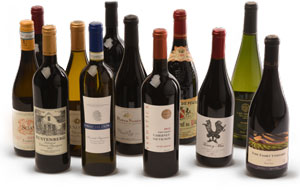
Welcome to The International wine of the Month Club

Featured Wines

April 2008

Premier Series
Featured Wineries & Wines
Membership Type
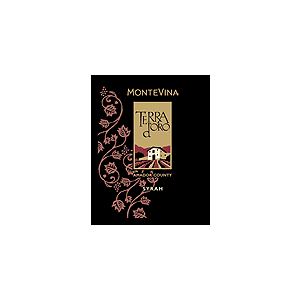
Montevina Terra d’Oro Amador County Syrah 1 Red 1 White; 2 Reds
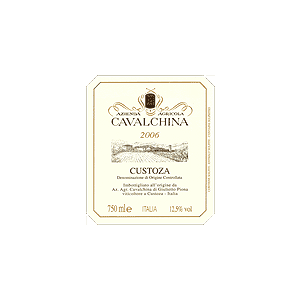
Cavalchina Bianco di Custoza DOC 1 Red 1 White; 2 Whites
Costantini Massarosa Lazio Rosso 2 Reds
Wieninger Nussberg Grüner Veltliner 2 Whites


Master Series
Featured Wineries & Wines
Membership Type
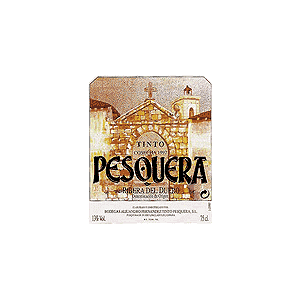
Bodegas Alejandro Fernández Tinto Pesquera Ribera del Duero 1 Red 1 White; 2 Reds
Cavalchina Bianco di Custoza DOC 1 Red 1 White
Montevina Terra d’Oro Amador County Syrah 2 Reds


Collector Series
Featured Wineries & Wines
Membership Type
Bodegas Alejandro Fernández Tinto Pesquera Ribera del Duero 1 Red 1 White; 2 Reds
Sandalford Margaret River Estate Reserve Sauvignon Blanc Semillon 1 Red 1 White
Giacomo Mori Riserva Castelrotto Chianti DOCG 2 Reds

Montevina Terra d'Oro Amador County Syrah 2004 – U.S.A.

Montevina Terra d’Oro Amador County Syrah 2004 – U.S.A.Montevina is one of the oldest and most prestigious wineries in Amador County. Set amid the foothills of the Sierra Mountains, Montevina lies at the heart of California's "Gold Rush Country." However, today Montevina is best known for its liquid gold in the form of excellent Syrah, Zinfandel, and assorted Italian grape varieties.

The Trinchero family has owned Montevina since 1988, but this winery's passion for growing outstanding fruit and producing many of California's finest Rhône and Italian style varietals dates back even further to the 1960's. And since 1986 Jeff Meyers, unquestionably the most experienced winemaker in the Sierra Foothills, has been the General Manager and guiding force behind Montevina's huge success. Possessing an encyclopedic knowledge of the region's viticulture along with a knack for fashioning distinctive Mediterranean varietals that possess elegance as well as fabulous flavor, Jeff is one of the first California winemakers to be enormously successful with these varieties. Montevina's Barbera, Sangiovese, Syrah, and Zinfandel, produced under the Terra d'Oro label, create a benchmark portfolio for these varieties that would be hard to find elsewhere. And unlike most of the wines from this estate's competitors, Montevina's wines are produced from old vines.

Trinchero Family Estates and Environmental Leadership

Montevina is an integral part of Trinchero Family Estates. Trinchero Family Estates (TFE) is a leader in the employment of sustainable methods of agriculture, re-cycling, and green land management. Trinchero Family Estates employs only sustainable, organic, and biodynamic practices in their estate vineyards, which include Montevina. They eschew the use of potentially harmful chemicals and work with the state of California and other vineyards to develop healthy, natural alternatives to harsh chemicals. No chemical pesticides or herbicides are used at TFE, and natural ground covers such as barley and clover prevail throughout all the estate vineyards. Furthermore, botanical oils and natural predators take the place of potentially hazardous chemicals. TFE also recycles 50 million gallons of water annually and recycles 20 tons of office paper, 850 tons of cardboard, and 100 tons of plastic each year. All proceeds from recycling revert to TFE's employees in the form of an employee-in-need fund. In addition, Trinchero has planted over 3,000 oak trees near their vineyards and created extensive greenbelts and lakes to improve the natural environment. Not surprisingly, Trinchero Family Estates has received California's Waste Reduction Awards Programs (W.R.A.P.) Award for seven consecutive years.

Tasting Notes: In Italian Terra d'Oro means "Land of Gold," and there is no doubt that Montevina's 2004 Terra d'Oro Amador County Syrah is the property's reserve Syrah and nothing short of liquid gold. Although wonderfully consistent from year to year, the 2004 Montevina Terra d'Oro Syrah is a special wine in its own right. It radiates all the voluptuous charm of Amador County: a lush scent and oodles of decadent fruit. Yet there is a European sensibility about this wine as well. Beneath a rush of blackberry and blueberry fruit, a velvety texture, and plenty of long woodland flavors lie crisp acidity and just enough tannin to permit this first rate Syrah to evolve in bottle for years to come. For optimum enjoyment, allow the full-flavored 2004 Montevina Terra d'Oro Syrah to breathe in a decanter or glass for at least thirty minutes before consuming. Anticipated maturity: 2008-2012.

Accompaniments: Although we heartily endorse the tradition of pairing Syrah with beef and lamb, the 2004 Montevina Terra d'Oro Amador County Syrah deserves a broader palette upon which to draw. Ultimately, you may decide to dust off that recipe you saved for a braised lamb shank or the perfect beef tenderloin to serve with this fine Syrah, but there are so many additional pairings to consider. Roasted duck or quail, grilled chicken with rosemary and garlic, Provencal pizzas, stuffed ravioli, and most pasta dishes, too, provide delicious accompaniments to the 2004 Montevina Terra d'Oro Syrah. Spinach and parmesan tarts, gnocchi with wild mushrooms, and freshly made risottos are a just a few other tasty morsels to consider with Montevina's Terra d'Oro Syrah. Brunswick stew, game, barbecued pork ribs, and other stick-to-your-ribs kind of meals will provide winning combinations with this wine, too. Enjoy!

Cavalchina Bianco di Custoza DOC 2006 – Italy

Cavalchina Bianco di Custoza DOC 2006 – ItalyThe Calvachina winery is located along the southern shore of majestic Lake Garda. It has belonged to the present owners, the Piona family, since the beginning of the 1900s. As far back as 1848 Cavalchina was registered officially as having the finest vineyards in the region, and they still do. After all, terroir is terroir and good winemaking remains the order of the day at Cavalchina. This is also an estate that is not afraid to experiment. Presently, the Piona family harvests grapes from two distinct sites: 16 hectares at the original Cavalchina estate in the Veneto and at La Prendina, a nearby parcel just over the regional border of Lombardia. Grapes from both estates are vinified at Cavalchina, but each is fermented and bottled individually.

Cavalchina specializes in traditional regional wines, including the zone's finest Bianco di Custoza (a blend of Garganega, Tocai, and Trebbiano grapes) and several excellent Bardolino in varying styles. Giulietto Piona, the reigning family patriarch, invented Bianco di Custoza at Cavalchina in 1962; he is now considered the founder of that thriving DOC. Presently, his talented son Luciano makes all of the wine at Cavalchina.

At Cavalchina and La Prendina, the estate wines are marvelously consistent and always delicious. Yet every vintage brings a new and interesting surprise from this ingenious proprietor: one barrel of an innovative and scrumptious dessert wine, a Bardolino Novello, an older vintage of something squirreled away in the cellar, or a wonderful vino da tavola. Luciano Piona always keeps life fun and interesting, just like the marvelous array of wines he and his family love to produce. And even though Luciano Pioni routinely fashions increasingly superlative wines from one vintage to the next (anyone who tasted Cavalchina's wines from the 2001 or 2004 vintages can readily attest to the ultimate quality of this estate's wines), the outstanding 2006 vintage may be responsible for Cavalchina's greatest efforts to date.

Cavalchina's wines are enormously popular in their native Veneto, and they can be found in nearly all of the area's best restaurants and trattorias. One of the greatest pleasures of the regional Italian table (and in Italy there is only regional cooking; the concept of "Italian cuisine" is a myth of foreign invention) is to eat fresh lake fish and homemade pastas accompanied by a genuine Bardolino, Bianco di Custoza or estate bottled Soave. Wines of such breeding may be considered unassuming by those who have never tasted honest, estate bottled examples, but the traditional, authentic wines of the Veneto contribute so much to the splendor of the Venetian table and to the enjoyment of fine food, everywhere. Cavalchina's delicious wines are natural partners to northern Italy's culinary cavalcade. In fact, this estate's Bianco di Custoza and Bardolino are considered by consumers, critics, and local cognoscenti to be the consummate wines of their appellation and the finest accompaniment to the Veneto's regional fare, and we agree. Indeed, Cavalchina is in a class by itself.

Tasting Notes: The 2006 Cavalchina Bianco di Custoza is as limpid and refreshing as a mountain stream. One panel member went so far to remark that "the 2006 Cavalchina Bianco di Custoza tastes like a cold draught of alpine spring water, with minerals and lemon zest." Indeed, this Bianco di Custoza weds quench ability to a host of distinctive, satisfying flavors. Bright, tangy, and brimming with nuanced flavors as well as more than a little bravado, the Cavalchina Bianco di Custoza remains the appellation's benchmark of quality. Although neither fat nor complex, it dazzles the senses with its scent and savor of lemon cream, lime sorbet, and eau de vie. And everything about this dry white wine conveys a satisfied air of simple elegance and personal comfort, which add to its charm and thirst quenching ability. We suggest serving the 2006 Cavalchina Bianco di Custoza well chilled (35°-40° F), at least initially, and then allowing it to slowly evolve in the glass as it warms. This is providing one doesn't consume the bottle in short order. For the too rapid consumption of the 2006 Cavalchina Bianco di Custoza there remains only one solution – another bottle. Enjoy!

Accompaniments: The 2006 Cavalchina Bianco di Custoza is the natural scion of the local cuisine, which in this part of the Veneto draws heavily from the abundance of Lake Garda and nearby lakes and streams. The delicacy of trout and other delicate freshwater fish complement the elegance and distinction of Bianco di Custoza. Consequently, baked or grilled fish provide outstanding foils for this wine. However, heartier foods fare well, too, so why not try a three or four cheese pizza with fresh tomato and basil; a vegetable pizza, especially one with mushrooms, olives, or roasted red peppers; or even a classic pizza margherita? Thinly sliced prosciutto wrapped around balls of ripe honeydew melon offer another tasty treat with this refreshing wine. Yet one should not overlook the ability of the 2006 Cavalchina Bianco di Custoza to do double duty as an outstanding aperitif. Its fresh tangy flavors can set the stage for a rewarding meal and provide the perfect palate cleanser, too. Buon Appetito!

Costantini Massarosa Lazio Rosso 2006 – Italy

Costantini Massarosa is not your typical Lazio producer, but then again Piero Costantini is not your ordinary winegrower, nor is he emblematic of the industrialist mentality that pervades the production of so much of Lazio's wines. At Costantini Massarosa, which is known locally as Villa Simone, quality is supreme. All of Costantini's grapes are organically cultivated and all systemic treatments have been banished from this 55 hectare estate in favor of natural, sustainable methods of disease control. Furthermore, production per hectare is half the legal limit, and great care is expounded both in the vineyard as well as in the cellar to make the estate's excellent Lazio Rosso and exemplary Frascati the finest in the region. Thanks to Piero Costantini and his winemaker nephew Lorenzo, the wines of the Alban hills remain the pride and joy of Rome.

Lazio (Latium)

Lazio or Latium is the region of Rome. It is also the source of so much of the wonderful produce, meat, and especially wine that flow into the Eternal City to sustain Romans and multitudes of visitors alike. Lazio is unquestionably one of the most important wine regions in Italy, both in sheer volume as well as quality. And what may come as a surprise to many is that ninety percent of Lazio's wines are white, including the region's best known wine – Frascati.

Although white wine reigns supreme in Lazio, the red wines of Lazio can be some of Italy's most enjoyable. However, red Lazio is made in very small quantities and it is rarely exported. Moreover, Romans tend to keep the best Lazio reds for themselves and sell the bulk wine in local trattorias. Fortunately, we were able to secure, with some coaxing, a quantity of Costantini's famous Massarosa Lazio Rosso. We hope you enjoy it as much as we do.

Tasting Notes: The 2006 Costantini Massarosa Lazio Rosso is a bright, tasty red wine that just bursts with flavor. It is both lithe and satisfying, which makes it go down ever so easily. It offers an enchanting nose and a distinctive flavor that mirror dark ripe cherries, summer fruits, and woodland violets. The Massarosa Rosso is neither complex nor complicated, but it captures every bit of the glorious sun-drenched terroir from whence it comes. Like the Alban Hills themselves, Costantini's 2006 Massarosa Rosso possesses a certain luminosity and purity that are hard to resist. We suggest allowing this beautiful Roman red at least fifteen minutes of aeration before serving. Our preference is to serve it slightly cool (55°-62° F) and then, if desired, allow it to open slowly in the glass. Enjoy!

Accompaniments: The 2006 Costantini Massarosa Lazio Rosso is the quintessential Roman red. It provides the ideal companion to the simple, uncomplicated, but full-flavored fare for which the Eternal City is justly renowned. Moreover, the luminous 2006 Massarosa Rosso brings a certain conviviality to the table. It offers both freshness and flavor to complement the savory tomato and garlic laden dishes that are popular in Rome. So, fire up the pasta pot and bring on the heady marinara and spicy meat sauces as well as the garlic and herb crusted pork roasts, and don't forget to save some of this delicious Lazio red to wash down at least a few hunks of good Pecorino cheese. Traditional southern Italian staples such as lasagna, manicotti, pizza, and ravioli all represent themselves well in the company of the Massarosa Rosso, too. However, don't be afraid to branch out beyond the obvious with the Massarosa Rosso; you won't be sorry that you did. Buon Appetito!

Wieninger Nussberg Grüner Veltliner 2006 – Austria

Vienna is justly famous for its pastries, opera, music, and glistening pedestrian thoroughfares, not to mention its lingering Old World charm. However, Austria's capital is equally renowned throughout Europe for its fine wine. In fact, Vienna holds the distinction of being the only world capital to grow and produce fine wine for sale, albeit in small quantities.

Wieninger is the most prestigious of Vienna's wineries, and Fritz Wieninger is the capital's current oenological star. Dubbed the "King of Viennese winemaking" by his countrymen, Fritz Wieninger is the consummate artist in the cellar. He has also been named one of Vienna's "most eligible bachelors," an adage that has no doubt brought potential heiresses out of castles and townhouses and into the cellar – for a taste and a look of course. However, all this recent publicity has hardly distracted the serious-minded Fritz Wieninger from his true calling, the production of Vienna's finest wines.

Viennese wines and the Wieninger name are nearly synonymous, and they have been for a century. Much of the prestige of Vienna's wines can be attributed to the work of the Wieninger family. For nearly 100 years the Weingut Wieninger was run exclusively as one of Vienna's famous "heurigen" (vineyard taverns). That is, until Fritz Wieninger, Jr., the present "King of Viennese wines," became manager of the wine production in the 1980s. Fritz now concentrates solely on fashioning discriminating, high-quality wines, which find their way into the world's most exclusive restaurants and specialty shops. A small amount of wine is still sold at the winery and the rest is served at the family's heurigen, which is operated by Fritz's brother Leo. A few fortunate and discerning club members are now among the chosen few to be offered the opportunity to taste Vienna's most famous wine.

Fritz Wieninger produces an amazing array of fine wines, all from Viennese vines. At last count there were more than two dozen wines for sale from this great producer, which include white, red, dry, and sweet offerings as well as single vineyard and traditional old vine field blends. Although all of Wieninger's wines are considered to be outstanding examples of their type, a few have garnered world wide attention and international acclaim. First among the estate's wines are the offerings from Nussberg, Vienna's most prestigious vineyard. Nussberg is renowned for producing very flavorful wines of power and longevity. With the 2006 Wieninger Nussberg Grüner Veltliner we are proud to offer our International Wine of the Month members a glimpse of the century old Wieninger tradition as well as a bottle of rare Viennese wine. Prost!

Tasting Notes: The 2006 Wieninger Nussberg Grüner Veltliner offers up a bewitching nose and an equally exciting palate profile. The essence of pure September fruit, citrus zest, liquid stones, and an entrancing cachet of spice are just some of the amplifying scents and savors that one can discover in this electrifying wine. Bold, beautiful, and 100% Grüner Veltliner, the 2006 Wieninger Nussberg is no wilting flower or semisweet Rhine style knockoff. Rather, Wieninger's Nussberg is an exceptional Grüner Veltliner; it possesses rich fruit, spicy accents, and a citrus-like freshness that place it in a world by itself it. For optimum enjoyment, we strongly suggest that the Wieninger Nussberg Grüner Veltliner be served fairly well chilled, at least initially, and then allowed to warm slightly in the glass – providing of course that you have not consumed the glass straight away. Prost!

Accompaniments: The 2006 Wieninger Nussberg Grüner Veltliner provides a great complement to a wide variety of foods, but when paired with spicy, unusual, or traditionally hard-to-pair dishes, this 2006 Wieninger Nussberg truly shines. One can easily choose a traditional Viennese specialty, such as Veal Paprika or a simple pork schnitzel to accompany this delicious Grüner Veltliner, and be more than satisfied. Yet an Asian stir fry in the company of the Nussberg Grüner Veltliner can be a true work of art. A rich, heart-stopping pâté or a persnickety vegetable dish, prepared with asparagus, eggplant, or cucumber will fare equally well with this bright, flavorful Grüner Veltliner. We have even enjoyed this delightful wine with Mexican food. Chicken Fajitas and flour tortillas stuffed with chicken, cheese, and moderately spicy salsa received two thumbs up recently with this mercurial wine from all takers, and that says a lot. Alpine cheeses, the likes of aged Apenzeller or Emmenthaler, offer other stellar ways to finish a bottle of Wieninger's delicious Nussberg Grüner Veltliner, so as you like it!

Bodegas Alejandro Fernández Tinto Pesquera Ribera del Duero 2004 – Spain

Bodegas Alejandro Fernández Tinto Pesquera Ribera del Duero 2004 – SpainThe original Pesquera bodega was founded in 1972 by Alejandro Fernández, a living icon of modern Spanish wine and the most famous name in Ribera del Duero. When Fernández founded Pesquera, the Ribera del Duero was known as the home of Spain's single greatest wine, Vega Sicilia, but of little else in the way of viticulture. In the early 1970's sheep grazing and sugar beet production were the extent of the region's agronomy. Consequently, Alejandro Fernández changed the face of Ribera del Duero when he began Pesquera, a patchwork of biodynamic, low yield, wire trained vineyards that comprise all the important soil types of the region, including a locally rare gravel deposit. Nearly 500 acres are now under cultivation at Pesquera, nearly all of it devoted to Tempranillo – Ribera del Duero and Spain's most important red grape varietal.

The founding and subsequent acclaim that Pesquera has garnered among critics and consumers, not to mention the impact this estate has had on Spanish viticulture as a whole, are in themselves remarkable accomplishments. However, Alejandro Fernández's vision of creating great Tempranillo wines and restoring Spanish viticulture to its rightful place of honor in the world has not stopped with Bodegas Pesquera or even within the confines of the Ribera del Duero appellation. Fernández has founded three other outstanding estates: Condado de Haza, a splendid south facing slope of vines along the Duero; Dehesa La Granja, a 1,800 ranch in nearby Zamora; and El Vinculo, the finest example of old vine Tempranillo in Toro – one of Spain's least known but potentially rich viticultural areas. All of these properties specialize in the production of pure, natural wines from the finest Tempranillo vines. Moreover, each of these properties now fashions the flagship wine in its respective appellation. One would expect nothing less from Alejandro Fernández, the "Master of Tempranillo" and the father of modern biodynamic viticulture in Spain.

Ribera del Duero
by Stephen Metzler, President, Classical Wines from Spain, Ltd.

Editor's Note: Steve Metzler is one of the nation's foremost authorities on the traditional wines of Spain. He wrote this piece exclusively for our membership.

We first arrived in Ribera del Duero in 1983, in time to witness the finishing of that region's first officially-controlled vintage, the great 1982. Having founded Classical Wines upon the assumption that Spain's high-altitude, non-Mediterranean wine districts offered classic quality potential second to none, Alejandro Fernández and his Tinto Pesquera became an early and powerful affirmation.

Following the international discovery of Pesquera, much has changed in Ribera del Duero. After decades of vineyard reduction in favor of irrigated crops such as sugar beets, the region's sudden rise to fashion attracted investment from within the industry and from prominent personalities, much in the Napa manner. While many are busy turning large fortunes into smaller ones (to paraphrase the famous one-liner), the basis for quality is real.

Ribera del Duero boasts soils quite similar to Burgundy, with a wide range of chalk, clay, marl and gravel, combined and in varying degrees of prominence, with clay and chalk predominating. Whereas Burgundy's soil complexity results from plate tectonics, in Ribera del Duero this results from the river's erosion through the sedimentary layers of the Castilian meseta.

Vineyards range from 2500 to over 3300 feet in altitude, serving to delay ripening of the short-cycle Tempranillo variety (locally: Tinto Fino and Tinta del País). Extreme diurnal temperature variation at extreme altitude also serves to maintain a healthy level of acidity, minimizing the need for adjustment or inclusion of compensating varieties. Meanwhile, the intense luminosity of the meseta thickens and darkens the skins of the grapes, producing wines with concentrated phenolic structure.

The hallmark of Ribera del Duero is monovarietal Tempranillo. The best producers have learned to combine lots from heavier and lighter soils as well as earlier and later harvests as a means of obtaining complexity and balance. In Pesquera, Alejandro Fernández has designed his vineyards to cover the full range of terroirs. Montecastro, under the direction of Jean-François Hébrard, has undertaken a similar approach upon search and acquisition of mature plots sourced beginning with his début 2002 vintage.

Tasting Notes: For more than three decades Alejandro Fernández has been dazzling the world of wine with an unbroken string of savory, sophisticated Tinto Pesqueras. However, never have we tasted a finer young Tinto Pesquera than the 2004. A great wine from an outstanding vintage, the 2004 Tinto Pesquera is world-class wine that takes its rightful place among the very top echelon of wines produced anywhere in the world. Deep purple in color, this super saturated wine offers up a tremendous olfactory, replete with the fragrance of blackberry, blueberry, currant, earth, and lead pencil. Perhaps more impressive even than the wine's mesmerizing scent is its full, rich liqueur-like flavors that come wrapped in one seductive, downright voluptuous body – all of which add up to eminent drinkability in this youthful, full-bodied, impeccably made Pesquera. However, as fine as this masterpiece may appear at the moment, it will continue to mature for years in bottle. It should approach its apogee in five or six years, and then hold for decade or more. For near-term consumption, we suggest letting this outstanding Ribera del Duero breathe for thirty minutes or more in a decanter, or better still give it as much time to breathe as your patience and thirsty throat will allow. And if at all possible, serve the 2004 Tinto Pesquera cool (59°-66° F). Enjoy!

Accompaniments: As one has come to expect from Alejandro Fernández, Tinto Pesquera constitutes one of the world's great dinner party selections. In fact, the 2004 Tinto Pesquera can easily hold court at table with haute cuisine. Consequently, we like serving this quintessential Ribera del Duero with Duck Breast, prepared with either a refined blackberry or cherry sauce. A thick herb encrusted Veal Chop, accompanied by a mushroom risotto, provides another sophisticated companion. Quail or squab in puffed pastry makes for a memorable accompaniment, too. However, lest you think the 2004 Tinto Pesquera is a snob, a plain grilled sirloin steak with a bit of barbecue rub makes an equally pleasing accompaniment. In fact, good down-home cooking won't do any harm to the 2004 Tinto Pesquera, either. And if you are stuck, just remember that all one really needs to enjoy the 2004 Tinto Pesquera is a good clean glass. Yet, beware! The gorgeous, hedonistic 2004 Tinto Pesquera almost shouts from the glass and demands to be shared with company at a splendid table; otherwise, one risks being truly covetous.

Sandalford Margaret River Estate Reserve Sauvignon Blanc Semillon 2007 – Australia

Sandalford is one of the oldest and largest privately owned wineries in Western Australia. Founded in 1840 by Western Australia's first Surveyor General, John Septimus Roe, the Sandalford Estate began as part of only the second land title in Western Australia. Roe named the estate after the English priory at Sandalford, where his father was rector. Since 1991, historic Sandalford Wines has been owned by the Prendiville family. It still occupies the original 40 hectares of the grant, spread out along the banks of the beautiful Swan River, less than a 30 minute drive from Perth. Moreover, Sandalford is unequivocally one of Western Australia's leading purveyors of premium wines.

In 1970, Sandalford planted one of the first vineyards in the Margaret River, which lies south of Perth. Since then Margaret River has become Western Australia's most important appellation for premium grapes. Sandalford's Margaret River vineyard comprises 600 acres that are entirely dry farmed. This vineyard is the source of all the winery's estate offerings. Meanwhile, Sandalford's Estate Reserve selections reflect the epitome of winemaking under the direction of Winemaker Paul Boulden.

In addition to making some of the continent's most exquisite wines from traditional Bordeaux varietals, most notably Cabernet Sauvignon, Sauvignon Blanc, and Semillon, Sandalford Wines also fashions excellent Shiraz and Chardonnay. Furthermore, all of the estate's top wines are featured at Sandalford's luxury restaurant. Under the direction of Chef Mark Ford, the restaurant at Sandalford has become a must stop for both locals and visiting dignitaries in search of exemplary cuisine. Set amid vines more than a century old, the restaurant serves a fantastic array of local specialties, which makes it easy to understand why it has been deemed "one of the top half dozen winery restaurants in the country." In all respects, Sandalford warrants serious attention from gourmands and oenophiles alike. And then there is the view: What more could one ask?

The Margaret River

The Margaret River is a green temperate corner of Western Australia that sits beside the sea. Here the Margaret River makes its way through wooded hills and steep ridges carpeted with wildflowers, before sighing almost inaudibly into the gleaming Indian Ocean. Crystalline waters and high rolling waves offer Australia's finest surfing as well as its most compelling seascapes. These very same waters, along with steady ocean breezes, a unique soil, and a Mediterranean climate, also make Margaret River one of the finest natural wine-producing areas on earth and a great place to peacefully whittle away the time.

In the early1960's, a scholar named John Gladstone was the first to recognize and publicize Margaret River's special climate, soil, and conditions known as terroir. In a detailed account Gladstone wrote glowingly of the similarities between the finest wine producing regions of Bordeaux and Margaret River. Moreover, he extolled the perfect weather of Margaret River for the cultivation of the vine, especially for the traditional Bordeaux varietals. And, indeed, Gladstone's proclamation has proven to be more than just wishful thinking, surpassing even his own expectations: In the past three decades the Margaret River has established itself as a world-class wine producing region for Shiraz and Chardonnay as well as the traditional Bordeaux varietals.

Fortunately or unfortunately, and that depends upon one's perspective, Margaret River remains widely unknown to the average wine consumer in the United States. Barossa, Hunter, McLaren Vale, and even the Clare garner more attention, and this may be due to the relatively small production in the Margaret River; the Margaret River produces less than 2% of Australia's wine, despite extensive planting in the last three decades. Yet the Margaret River garners the highest proportion of gold medals and trophies for its wines of any viticultural region of Australia – a tribute to the Margaret River's dedication to premium varietals, quality winemaking, and outstanding terroir.

Tasting Notes: The 2007 Sandalford Margaret River Estate Reserve Sauvignon Blanc Semillon is a knockout blend of Bordeaux's two finest white grape varieties and further evidence of the Margaret River's supremacy in crafting superb wines from traditional Bordeaux varietals. This most recent Estate Reserve Sauvignon Blanc Semillon from Sandalford is an intense white wine that marries tremendous flavor to supreme balance, a beautiful texture, and an incredible finish. "Wow," is how one long time member of the tasting panel described the Sandalford Sauvignon Blanc Semillon, and with good reason. The 2007 Sandalford Sauvignon Blanc Semillon is a rich fruit concoction backed up by vibrant acidity that beguiles the nose from the first sniff until the last. It offers up the haunting scents of fresh fig, quince, and pink grapefruit, before promptly exploding on the palate in a cacophony of savory delights. For optimum enjoyment, we suggest chilling this
wine to 40° F and then allowing it to open slowly in the glass. Enjoy!

Accompaniments: One could easily finish a bottle of the 2007 Sandalford Estate Reserve Sauvignon Blanc Semillon neat, with a friend of course, but why settle for half the pleasure when you can have it all? This Sandalford Estate Reserve cepage offers the taster an outstanding opportunity to pair just about anything that swims in the sea or crawls upon the ocean floor to one of the finest Sauvignon Blanc style wines made on the continent. Whether it is smoked salmon with capers, marinated mussels, sautéed oysters, grilled scallops, or a more elaborate fish dish such Pan Fried Tasmanian Salmon, served with chive mash and a shaved fennel and ruby grapefruit salad, the 2007 Sandalford Estate Reserve Sauvignon Blanc Semillon reports to duty with a smile and more than enough flavor to tackle just about any conceivable seafood combination. However, lest you think this Sandalford offering too parochial, we can recommend it with much more than seafood. It complements chicken and pork equally well. In addition, we suggest you consider the Sandalford with various Thai or Asian fusion preparations. Po Pia Sod, the Thai rendition of fresh spring rolls with whole shrimp, brings out the lush fruit and herb tones in this Sauvignon Blanc Semillon. Salads and bean dishes, served with either fresh papaya or a papaya relish offer some more notable marriages with the 2007 Sandalford Sauvignon Blanc Semillon. Soft, creamy cow's cheeses offer wonderful accompaniments, too.

Giacomo Mori Riserva Castelrotto Chianti DOCG 2004 – Italy

A meticulous engineer and skillful sailor, Giacomo Mori is the driving force behind the resurrection of this ancestral property. For years Giacomo dreamed of revitalizing his grandfather's vineyard and making fine wine. With vision and painstaking pride, he embarked in the early 1990's upon replanting this vineyard, which lies very close to the neighboring appellation of Vino Nobile di Montepulciano.

To his credit, Giacomo chose only low yielding rootstock and the finest clones of Chianti's indigenous Sangiovese and Canaiolo to resurrect his family's ten-hectare vineyard. He has spaced the vines tight, so as to force their roots to dig deep into the earth and yield maximum complexity. He prunes very short and employs only organic fertilization. Furthermore, no chemical sprays are used at Giacomo Mori. In short, this is the kind of vineyard most winemakers can only fantasize about.

Moreover, in order to augment the great revival in the vineyard, the ever-diligent Giacomo Mori has refurbished the family's spectacular cellar and re-equipped the ancient winery and cave. The cellar is dug into live tufo rock and is built on three different levels, in order to ensure that all the wine can be racked and transferred entirely by gravity feed, so as to negate the necessity of pumping the wine until it is bottled.

Only two wines are ever produced at Giacomo Mori. They are the estate's traditional Chianti, which is made in the time-honored manner and then aged in large Tuscan casks, and Chianti Castelrotto, a single vineyard riserva offering that sees extended aging in small French oak barriques. Both wines speak of the quintessence of Chianti and give testimony to the greatness of Tuscany's red varietals. The regular estate Chianti is primarily Sangiovese, with Canaiolo playing an important supporting role. Meanwhile, the Castelrotto Riserva is produced from Sangiovese and small amounts of Merlot. In these wines, Giacomo Mori's lifelong dream of creating the finest expression of Chianti has been fulfilled, two times over. Not surprisingly, many of his neighbors in the illustrious appellation of Vino Nobile di Montepulciano have been looking over their shoulders as well as their fences.

Tasting Notes: The 2004 vintage in Tuscany enjoys a great reputation, and the wine wares of this vintage are indeed proving to be as fine as the initial reports. More importantly, the 2004 Giacomo Mori Riserva Castelrotto Chianti is an outstanding Chianti Riserva and one of the great successes of an exemplary vintage. However, patience will be required, and we would like to add more than justly rewarded. Mori's Castelrotto is always a staggering statement when young that requires at least five or six years in bottle, and the 2004 Castelrotto is an especially deep, dense Chianti that is simply packed with all that it needs to succeed in life. However, to drink it now would be tantamount to infanticide. This biodynamic wine is the product of true commitment, superb winemaking, and the blessings of the outstanding 2004 vintage. Moreover, the 2004 Giacomo Mori Castelrotto exudes the quintessence of authentic Chianti: a deep nearly impenetrable robe, a beguiling nose, and oodles of brooding, ripe fruit that just won't quit. Cherry, violets, blackberry, and currant are entwined around a solid core of tannin and subtle earth tones that slowly, layer by layer, unfold in the glass. This beautiful wine marries tremendous depth and power to true elegance and breed in a way that few Chiantis ever do. Although approachable and even enjoyable now with extended breathing time (two hours in a decanter would not be too much), we strongly recommend laying down this rare Chianti Riserva for an additional year or more until it can fully strut its stuff and afford the patient collector with tremendous hedonistic pleasure. Only from low yielding, biodynamically farmed vines can one experience such power, purity and flavor, so let it be. Anticipated maturity: 2009-2016.

Accompaniments: Grilled meats, homemade sausages, and traditional bean and lentil-based dishes are some of our favorite foods to accompany Giacomo Mori's full-flavored Chiantis. Whole roasted chickens, stuffed with an entire clove of garlic, oranges, lemons, and Mediterranean herbs, offer another great complement to the 2004 Giacomo Mori Riserva Castelrotto Chianti. Homemade pasta, made with fresh tomato sauce, fresh ricotta, and warm mozzarella cheese; and artfully crafted lasagna provide other fine choices to serve with this classic Chianti. However, lest you think that 2004 Castelrotto is fit only for simple country fare, we suggest the contrary. As flavorful and powerful as the 2004 Giacomo Mori Castelrotto is, it also retains great finesse and the propensity to shine at the most elegant of tables. In the company of complex flavors, it will provide excellent companionship. Stuffed veal chops, braised rabbit, game birds, and venison will all pair beautifully with a mature bottle of the Castelrotto Riserva Chianti, as will nearly any roast or fine cut of beef, lamb, or pork, so enjoy!


logo for wine club
Since 1994
Home
Join Our Wine Club
Gift Memberships

Membership Renewals
Reorder Your Favorites
Wine of the Month Club
More Information
Current Selections
Past Selections
Testimonials
Other Gourmet Gifts
Corporate Gifts
Wedding Gift Ideas
All About Wine
Website Tools
Who We Are
Contact Us

1 - 800 - 625 - 8238
(Outside US call: 949-206-1904)
P.O. Box 1627, Lake Forest, CA 92609