Welcome to The International wine of the Month Club

Featured Wines

October 2006

Premier Series
Featured Wineries & Wines
Membership Type
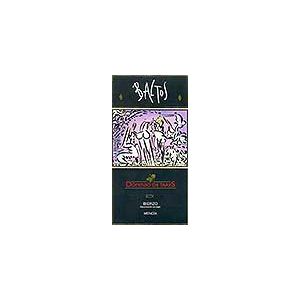
Domino de Tares Baltos Tempranillo 1 Red 1 White; 2 Reds
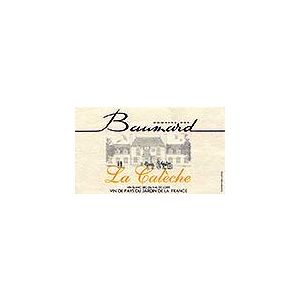
Baumard La Caleche Chenin Blanc 1 Red 1 White; 2 Whites
Chateau La Mothe Bordeaux Rouge 2 Reds
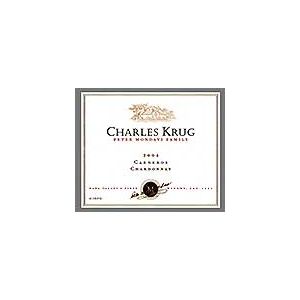
Charles Krug Carneros Chardonnay 2 Whites


Master Series
Featured Wineries & Wines
Membership Type
Chateau Plaisance St. Emilion Grand Cru 1 Red 1 White; 2 Reds
Baumard La Caleche Chenin Blanc 1 Red 1 White
Domino de Tares Baltos Tempranillo 2 Reds


Collector Series
Featured Wineries & Wines
Membership Type
Chateau Plaisance St. Emilion Grand Cru 1 Red 1 White; 2 Reds
Wieninger Nussberg Alte Reben 1 Red 1 White
Torbreck The Struie Shiraz 2 Reds

Dominio de Tares Baltos Mencia Bierzo 2004 – Spain

Dominio de Tares Baltos Mencia Bierzo 2004All of a sudden Bierzo is Spain's hottest wine region, and Dominio de Tares is its brightest star. Bierzo is situated in the extreme northwest of Castilla in the province of Leon, which lies on the frontier of Galicia and nearby Portugal. In other words, El Bierzo is deep in the middle of nowhere, but in the case of Bierzo "nowhere" harbors one of Europe's most interesting grape varietals and its land comprises one of the finest terroir for grapes in all Europe. This isolated, wildly beautiful region sits on the bed of an ancient lake, which the Romans drained in their quest for the area's mineral resources – namely gold. Today the Bierzo produces liquid gold in the form Mencia, an indigenous red gape variety that is presently taking Spain and the rest of the wine drinking world by storm.

The Mencia varietal is considered by enologists to be the direct ancestor and precursor of modern Cabernet Franc. This vine hails from the plantings of the earliest Roman settlers in Bierzo, who planted this variety two thousand years ago in what remains one of Europe's most isolated wine regions. Certainly, it is the very isolation of the Bierzo that has allowed Mencia to survive and even thrive. Moreover, the average age of the vines in the Bierzo is quite old, which lends itself to the production of high quality wines. Consequently, the wonderfully fruity, spicy, and wholly intriguing Mencia has recently been discovered or rather re-discovered by modern legions of wine drinkers. They are no doubt intrigued by this unique viticultural entity we call Mencia, whose attributes are consummate with both modern Merlot and Cabernet but with a softer, more exotic tone. It is Mencia's re-birth and the contemporary emphasis on quality versus quantity in Bierzo that led to the formation of Dominio de Tares.

Dominio de Tares was founded in 2000 by an enthusiastic group of local investors, who are leading the quality resurgence in Bierzo, following years of obscurity and benign neglect in the region. Given Bierzo's unique climate, a mixture of Continental and Atlantic influences, and the region's mineral rich soil, all that was needed to make world class wine from the region's plethora of old vine Mencia was a world class winemaker. To the credit of Dominio de Tares, they retained Amancio Fernandez, a Bierzo native and one of Spain's brightest young enologists, to transform Bierzo's old vine Mencia into "liquid gold."

Tasting Notes: A deep ruby robe, with a glint of purple, imbue the 2004 Dominio de Tares Baltos Mencia Bierzo with a mystical air, not unlike the land of Bierzo itself. However, what is even more intriguing than the color is the set of lovely aromas and flavors that emanate so hospitably from this delightful wine. Initially, the round cherry and cassis flavors that typify the Mencia variety are all in evidence. In addition, the wine's pretty fruit is married to the subtle spice and mineral tones that stem from the unique terroir of Bierzo, a high, enchanted land ringed by mountains and influenced by the nearby Atlantic Ocean. The 2004 Domino de Tares Baltos is produced entirely from old vines of the ancient Mencia variety. Consequently, it is a full-bodied wine that adeptly marries deep fruit flavors and subtle earth tones to an exceedingly round seamless structure. A careful bunch selection and six month stay in oak barrels no doubt account for the wine's smooth finish, too, and add considerably to the wine's overall suave, distinctly Spanish taste. We suggest giving the mouthwatering 2004 Dominio de Tares Baltos Mencia a little aeration before serving it between cellar and cool room temperature (55°-66°F).

Accompaniments: The 2004 Dominio de Tares Baltos Mencia provides an exemplary partner for a host of simple and sophisticated dishes. The wine's full flavor and seamless structure make it easy to pair with nearly all types of meats. The 2004 Baltos is at home with a juicy steak as it is with grilled chicken. Put that chicken over a bed of organic greens that are laced with black and green Spanish olives, red onion, and garlic sautéed green beans, and you have a simple feast with which to accompany the flavorful 2004 Dominio de Tares Baltos. A chicken and shrimp paella provides another lovely accompaniment. In fact almost any rice and bean dish, even spicy black bean versions that are served with Cuban pork, won't overwhelm this unique wine. So whether you are planning a formal dinner party or an impromptu get together, the 2004 Baltos is ready to please. Enjoy!

Domaine des Baumard La Calèche 2003 – France

Domaine des Baumard La Calèche 2003Domaine des Baumard lays tucked away in the tiny village of Rochefort-sur-Loire, just south of Savennières, at the very heart of the ancient Duchy of Anjou. This is an impeccably run estate that has been fashioning outstanding Loire valley wines since 1634. The historical Baumard family are viticulturists who specialize in the great but nearly forgotten Chenin Blanc variety. Under the recent guardianship of Jean and Florent Baumard, Domaine des Baumard has soared to new heights, even as many of Baumard's neighbors have struggled to maintain their marginal vineyards.

Although Domaine des Baumard has played a key role in producing great Loire Valley wines for centuries, much of the modern day lore can be attributed to Jean Baumard, Florent's father, who resurrected this family property in the 1950s and 1960s after decades of decline due to phyloxerra, economic depression, and the ever shifting tastes of the wine drinking public. For decades the Baumards, like many of their neighbors were forced to concentrate their efforts on their nursery business and the cultivation of vines rather than wine making. That is until the 1950s when Jean began acquiring several of the greatest vineyards in Côteaux-du-Layon and Quarts de Chaume and refocused the family's effort into the crafting of the greatest of all Loire Valley wines.

In the past decade, Jean's son Florent, a brilliant winemaker in his own right, has continued the great renaissance at Domaine des Baumard. In fact, Florent may be the region's finest winemaker. The Wine Advocate has stated that "Baumard quietly fashions some the world's most complex dry and sweet wines . . . and if he had been born a Californian, Burgundian, or Bordelais, wealthy vineyard owners would be standing in line to employ his services as a consultant," which is high praise indeed.

Presently, Domaine des Baumard has one of the most extensive portfolios of Anjou wines, including outstanding dry Savennières offerings, sweet treasures from Côteaux-du-Layon and Quarts de Chaume, a host of artful cuvees like La Calèche, and at least three of the Loire Valleys most enjoyable sparkling wines. There are also a number of single vineyard offerings. All of Baumard's Savennières and Côteaux-du-Layon wines are produced from low yields (1.5-2.5 tons per acre). Moreover, all of Baumard's wines are hand harvested and each of the estate's wines is made in small, individual lots, including the special cuvees La Calèche and Cuvée Ancienne de Jean Baumard.

Savennières, Côteaux-du-Layon, and Quarts de Chaume

The Loire, France's longest and most scenic river, gives rise to some of the world's most distinguished white wines. The Upper Loire, above Orléans, is famous for Sauvignon Blanc in the guise of Sancerre, Pouilly-Fume, and assorted other place names. However, as one moves downriver towards Touraine and Anjou, Chenin Blanc reigns supreme. No more glorious and immortal white wines are produced in France than those of the finest vineyards of Savennières and Côteaux-du-Layon.

Savennières: Situated west of Angers, Savennières produces small quantities of powerful, long lived white wines of outstanding quality from Chenin Blanc. Nearly all of its meager 12,000 case production is made dry. This splendid appellation includes two Grand Crus vineyards, Roche aux Moines and Coulée de Serrant.

Côteaux-du-Layon: Situated to the south of Angers, Côteaux-du-Layon is the largest appellation for quality Chenin Blanc in Anjou. Most of its wines reflect the decadent, hedonistic side of Chenin Blanc, ranging from soft and fruity to full blown dessert wines that can improve in bottle for decades. Côteaux-du-Layon contains two outstanding Grand Crus in Quarts de Chaume and Bonnezeaux.

Quarts de Chaume: A 112 acre Grand Cru of Côteaux-du-Layon, Quarts de Chaume is reputed to produce the world's finest Chenin Blanc, particularly in splendid vintages with plenty of sun and a dose of botrytis. From a great vintage and in the hands of Baumard and a few other outstanding producers, Quarts de Chaume can be sublime and nearly immortal.

Tasting Notes: The 2003 Domaine des Baumuard La Calèche is a light golden wine that captures every bit of the warmth and charm of the perennial sunshine that blessed the uncommon 2003 vintage. A special cuvee of Chenin Blanc from Baumard's various Anjou vineyards, La Calèche possesses everything that a fine white Anjou has to offer: a delectable floral aroma that recalls the seductive scents of a flower garden; a multitude of flavors, including the telltale savor of fresh butterscotch and warm crème brûlée; and a soft plush mouth feel that contains just enough bracing acidity to carry off a gustatory coup d'état. Most assuredly, this is wine for good old fashioned drinking, or for the less inhibited . . . guzzling. La Calèche possesses Chenin Blanc's most endearing quality, a combination of floral seduction and a citrus twist. Interesting and pleasing in a straightforward format, we suggest drinking the ebullient 2003 Baumard La Calèche only moderately chilled (about 50° F) in order to enjoy every bit of the subtle charm that Baumard and the lovely land of Anjou have to offer. Salut!

Accompaniments: The usual white wine accompaniments, fish, poultry, and other demure, self effacing fare, will admirably complement the 2003 Baumard La Calèche, but by all means please do not stop there. Although light and easy, La Calèche, like most top rated Chenin Blanc wines, provides more than a passing complement to ordinary foods. Consequently, we suggest a daring hand in the kitchen. Why not start with a mild Loire Valley goat cheese like Sainte-Maure de Touraine and serve it with some almonds, walnuts, and toasted French bread? A glass of La Calèche with this appetizer will set the tone for a rewarding evening. If a main course is more to your thinking, we suggest Shrimp or Lobster Croquettes with a pineapple salsa. Chicken or seafood crêpes offer yet another tantalizing accompaniment to Baumard's special cuvee. Mildly spicy Chinese, Thai, and Vietnamese dishes provide more eager companions to be enjoyed with La Calèche, so as you like it.

Château Lamothe de Haux Premières Côtes de Bordeaux 2003 – France

Château Lamothe de Haux is a splendid wine estate and country manor whose origins date to the 17th century. It is one of the most impressive, poetic pieces of the splendid Premières Côtes of Bordeaux. Château Lamothe was renovated in the 19th century and is now the charming home of the Néel-Chombard family who own and manage this property along with neighboring Château Sauvage and nearby Château Manos.

The splendor of Château Lamothe de Haux begins with its imposing position. It sits atop a rocky spur that is surrounded by vines. When viewed from the vineyard, the Château and its nearly two hundred acres of vines appear as a ship, plying the open waters of the sea. Situated in an undulating sea of vines, Château Lamothe is caressed by the light of both the rising and setting sun – the perfect Bordeaux terroir for the cultivation of the vine.

Although Château Lamothe itself dates only to the 17th century, the vine and the spirit of wine have thrived in the picturesque part of the Premières Côtes de Bordeaux where Château Lamothe now sits since Gallo Roman times. This area was also once an important stop over for the annual throng of pilgrims on their way to Santiago de Compostella, one of medieval Christendom's greatest pilgrimage sites. Today, the fusion of sun and earth produce the alchemy that draws visitors to its caves and render the wines of Château Lamothe so endearing.

The Néel-Chombard family and their trained winegrowers and enologists, Anne, Fabrice, Maria, and Damien fashion wonderful white as well as red wine at Château Lamothe. As with many family owned Bordeaux estates, there is equal attention paid to white and red wine here and both are made in considerable quantity. The Château Lamothe Blanc is a traditional blend of three white Bordeaux grape varieties: Sauvignon Blanc (40%), Sémillon (40%), and Muscadelle (20%). The latter varietal is an authentic Bordeaux variety from which dry white wine is fashioned; it bears no relation to Moscatel, the sweet insipid wine of old. Similarly, the Château Lamothe Rouge combines the three long-established red Bordeaux varietals into an artful blend. In a normal vintage, the traditional red cuvee is comprised of Merlot (60%), Cabernet Sauvignon (30%), and Cabernet Franc (10%).

Tasting Notes: A light, lovely, charming claret, the 2003 Château Lamothe de Haux Premières Côtes de Bordeaux is a juicy crowd pleasing red Bordeaux that could do serious damage to Merlot sales in America. Its bright ruby robe, beguiling bouquet, friendly up front flavor, and gracious huggable body make for one very pleasing, easy drinking red wine. If you are expecting or looking for a tannic monster, please apply elsewhere. The 2003 Château Lamothe de Haux Premières Côtes is all about fine, every day drinking – right now. We truly appreciate all the immediate appeal that the Néel-Chombard family has poured into their lovely red Premières Côtes de Bordeaux. The aromatic profile of cassis, cedar, and mulberry, coupled with the round, huggable savor of crushed berries and sandalwood, make for plain, old-fashioned good drinking. Bravo! This is the kind of wine that made Bordeaux famous centuries ago, and why not? We suggest serving it cool (no more than 60° -65° F) straight out of the bottle.

Accompaniments: Light, savory dishes such as French Country Chicken, a medley of grilled chicken, finely diced carrots, celery, olive oil, and spices offers a superb accompaniment to the 2003 Château Lamothe de Haux Premières Côtes de Bordeaux. A plain or lightly grilled veal chop provides another excellent complement to the sprightly Château Lamothe de Haux Premières Côtes de Bordeaux. Spit or rotisserie roasted chicken makes for good company as well. Fusilli Pasta, topped with grilled chicken or tuna, fresh cherry tomatoes, and a light cream sauce highlights the attributes of this classy claret, too. Light to medium flavored cow's milk cheeses will also provide satisfying company, so sit back, pop the cork, pour a glass, and enjoy authentic claret. Salut!

Charles Krug Carneros Chardonnay 2004 – USA

Charles Krug Carneros Chardonnay 2004Charles Krug is the oldest winery in Napa Valley. It is also the Peter Mondavi Family winery, the original Mondavi Napa Valley winery that was established by Caesar Mondavi, Robert and Peter's father. Krug has also been referred to as "the other Mondavi winery" and "the road less traveled" because, unlike brother Robert's winery, Krug has eschewed the limelight and kept a relatively low profile, except among critics and connoisseurs.

Originally founded in 1861 by Charles Krug, this historic property, like most others in Napa Valley, languished during Prohibition. Purchased by Caesar Mondavi, Krug first began producing wine under the Mondavi name in 1943. Today, the Krug Winery comprises more than 800 acres of prime Napa Valley vineyards. All of this estate's vineyards are located in the most acclaimed regions of Napa Valley (Carneros is a distinct appellation within Napa) and are farmed exclusively under the direction of Peter Mondavi and his family.

The Charles Krug Family of wines includes a fine Carneros Pinot Noir, an outstanding full-throttle, oak aged Carneros Chardonnay, and several excellent full-bodied Cabernet Sauvignon and Merlot wines. Krug also offers a Reserve Sangiovese and a few other special bottlings of Napa Valley wines. However, the two characteristics we like best about Krug wines is the consistent high quality of fruit that is found in each of the winery's offerings and the estate's no smoke and mirrors approach to producing traditional, full-flavored Napa Valley wines. At Krug, no fainthearted or overly sculptured wines need apply; this is good old-fashioned Napa Valley wine, the way it ought to be.

Tasting Notes: Made in the traditional Napa style of Chardonnay, the 2004 Charles Krug Carneros Chardonnay sports a pretty golden hued robe, the color of the California sun, and it exhibits a wonderful bouquet of ripe fruit that is etched with butter, spice, and plenty of toasty vanilla oak. The 2004 Carneros Chardonnay, like all Krug wines, is not for the faint hearted. There is both flesh and bone in this powerful Carneros Chardonnay, and plenty of alcohol, too; a wimpy fruit bomb the 2004 Krug Carneros Chardonnay is not. Instead, this is classic, dry Carneros Chardonnay, which hides its power behind subtle complexities. In the finest Carneros tradition, Krug's Carneros offering possesses breed and finesse in a firm dry structure, and like its red counterparts will benefit from at least ten or fifteen minutes of aeration. With a little time to open, forsythia, honeysuckle and buttered apple scents and savors emerge, and as this wine opens, it reveals power as well as pride. Moreover, its lovely finish will linger on the tongue long after the wine has been swallowed. We suggest serving the comely 2004 Krug Carneros Chardonnay at approximately 45°-50° F for maximum enjoyment.

Accompaniments: One won't easily run out of foods to serve with the 2004 Krug Carneros Chardonnay because this Krug offering can stand and deliver well beyond the usual Chardonnay fare. Therefore, put aside the dainty delicacies. Instead, we suggest heartier fare the likes of Stuffed Chicken Tortillas or Grilled Halibut, served with a pungent fresh pineapple and tropical fruit chutney, or a rare Ahi tuna steak, prepared with a teriyaki sauce and served with shitake mushrooms. Pasta Primavera or Shrimp and Grits provide other tasty accompaniments. Most white meats, pastas, and cream based sauces pair quite nicely as well with the Krug Carneros, and fresh tomatoes pose no difficulties either. In fact, the 2004 Krug Carneros Chardonnay should be able to hold up to most anything you serve with it short of red meat. Enjoy!

Château Plaisance Saint-Emilion Grand Cru 1998 – France

Château Plaisance is located in the heart of St. Emilion, and since the late 1990s it has ranked with the finest wines of the great St. Emilion appellation. Château Plaisance is hardly a newcomer to this fashionable appellation: it was constructed in 1885. Its mere 38 acres of vineyard are comprised entirely of Merlot and Cabernet Sauvignon, which grow in a mixture of sand and gravel that allow for perfect drainage. Since 1997, Château Plaisance has been owned by the Mareschal family who has brought this wonderful property to new heights, including well deserved Grand Cru status. The Mareschals also owns the great Château Destieux, which they completely refurbished and modernized just prior to purchasing Château Plaisance.

The Mareshals have invested a fortune in Château Plaisance. In addition, they have championed a strict selection for their Grand Cru wine and severely curtailed yields. They also practice sustainable agriculture and employ only natural fertilizers. The entire harvest is picked by hand, and in order to assure uniform high quality more than seventy people are hired at harvest to pick and sort each grape at this small vineyard. In keeping with its Grand Cru status, Château Plaisance is fermented in new temperature controlled stainless steel tanks and then aged in all new oak barrels for 18 months. Moreover, Château Plaisance utilizes a second label, Château La Fleur Plaisance, which insures the consumer that only the best of this estate's wine is bottled as Grand Cru.

St. Emilion

St. Emilion is Bordeaux's most important wine town and the region's hottest attraction. This walled, medieval village, perched atop a series of hills and surrounded by vines, is unquestionably the most beautiful wine village in all Bordeaux. Indeed, it is arguably the most beautiful wine village in all France. Nearly everything about St. Emilion is centered on wine, even the church in St. Emilion is a cellar. And lest you think that St. Emilion has just recently succumbed to contemporary commercialism or sold itself to the modern mania for all that is Bacchanalian, rest assured that very little has changed in principle in this village since antiquity: St. Emilion was founded by the Romans, who used it as a viticultural bastion in the then burgeoning area know as Burdigala.

St. Emilion sits about twenty-five miles due east of the city of Bordeaux on a high escarpment above the Dordogne River. From the village of St. Emilion, one has a commanding view of the entire St. Emilion appellation, whose vines descend the slopes to the river and then occupy the nearby plateau that flows into Pomerol. It is from this great appellation that many of Bordeaux's finest wines flow, including the world's very best Merlot based wines. It is in St. Emilion that Merlot reaches its apogee. Here, Merlot is king, supported by varying amounts of Cabernet Sauvignon and Cabernet Franc as noble vassals. The only notable exception to the dominance of Merlot in St. Emilion is the venerable wine of Cheval Blanc, which is largely comprised of Cabernet Franc. Otherwise, the result is the fleshiest, juiciest, roundest, and most popular wines of all Bordeaux – testament to just how great Merlot can be.

Interestingly, there are two distinct districts of St. Emilion, each possessing its own special terroir. Both produce compelling wines, but of a different sort. Typically, the côtes or hills upon the escarpment yield the fullest, slowest to mature wines of St. Emilion. Here the soil is nearly all limestone and the resulting wine is more apt to act like a great Cabernet based wine of the Medoc. The other area distinct district of St. Emilion lies on the plateau adjoining Pomerol, where the soil is comprised of sand and gravel. It is in this well-drained soil that the fleshiest, sexiest wines of the appellation are born. Each style is authentic St. Emilion, which allows for double the pleasure. Salut!

Tasting Notes: "The ultimate dinner party wine," is how one panel member succinctly described the 1998 Château Plaisance St.Emilion Grand Cru. "Elegance in the bottle … quintessential St.Emilion" and "bottled poetry," are several other statements made in regard to this top notch Bordeaux – all of which sum up the consensus of the panel. The 1998 Château Plaisance St.Emilion Grand Cru is classic claret. A beguiling bouquet of ripe cassis fruit, toasted bread, and subtle earth tones, which epitomize all that is good in Grand Cru Bordeaux, complement the wine's dark ruby robe and seductive texture. Moreover, this comely wine brings to the palate all the flavor, breed, charm and elegance that epitomize the finest mature red wines of St. Emilion. Moreover, this charming Grand Cru adds further testimony to the greatness of the 1998 vintage in both St. Emilion and nearby Pomerol. With neither an edge nor a note out of place, the 1998 Château Plaisance St.Emilion Grand Cru creates a symphony out of Bordeaux's two arch rivals, Merlot and Cabernet. With all attributes in place, it is no wonder the 1998 Château Plaisance met with resounding approval and unanimous support from the panel. Vive Château Plaisance!

Accompaniments: Mature, sexy wines, the likes of the 1998 Château Plaisance St. Emilion Grand Cru, provide exemplary accompaniments to both simple, well prepared dishes and grand cuisine. Nonetheless, our preference runs towards simple elegance. In our experience, a plump roasted chicken or game hen provides the ultimate accompaniment to the 1998 Château Plaisance or any other fine, mature red Bordeaux. Roast beef, especially Prime Rib, affords another opportunity to showcase this wonderful St. Emilion. When served with mashed potatoes, fresh green beans, and either creamed or pearl onions, the Château Plaisance and Prime Rib will form a bond that only emptying the bottle can break. A tray of French cheeses containing Cantal, Port Salut, or even a young Camembert offers another fine way to enjoy Château Plaisance. A votre santé!

Wieninger Nussberg Alte Reben 2004 – Austria

Vienna is justly famous for its pastries, opera, music, and glistening pedestrian thoroughfares, not to mention its lingering Old World charm. However, Austria's capital is equally renowned throughout Europe for its fine wine. In fact, Vienna holds the distinction of being the only world capital to grow and produce fine wine for sale, albeit in small quantities.

Wieninger is the most prestigious of Vienna's wineries and Fritz Wieninger is the capital's current oenological star. Dubbed the "King of Viennese winemaking" by his countrymen, Fritz Wieninger is the consummate artist in the cellar. He has, also, been named one of Vienna's "most eligible bachelors," an adage that has no doubt brought potential heiresses out of castles and townhouses and into the cellar – for a taste and a look of course. However, all this recent publicly has hardly distracted the serious minded Fritz Wieninger from his true calling, the production of Vienna's finest wines.

Viennese wines and the Wieninger name are nearly synonymous, and they have been for a century. Much of the prestige of Vienna's wines can be attributed to the work of the Wieninger family. For nearly 100 years the Weingut Wieninger was run exclusively as one of Vienna's famous "heurigen" (vineyard taverns). That is until Fritz Wieninger, Jr., the present "King of Viennese wines," became manager of the wine production in the 1980s. Fritz now concentrates solely on fashioning discriminating, high quality wines, which find their way into the world's most exclusive restaurants and specialty shops. A small amount of wine is still sold at the winery and the rest is served at the family's heurigen, which is operated by Fritz's brother Leo. A few fortunate and discerning club members are now among the chosen few to be offered the opportunity to taste Vienna's most famous wine.

Fritz Wieninger produces an amazing array of fine wines, all from Viennese vines. At last count there were more than two dozen wines for sale from this great producer, which include white, red, dry, and sweet offerings as well as single vineyard and traditional old vine field blends. Although all of Wieninger's wines are considered to be outstanding examples of their type, a few have garnered world wide attention and international acclaim. First among the estate's wines are the offerings from the Nussberg, Vienna's most prestigious vineyard area. Nussberg wines are known for their power and longevity. Nussberg is also famous for its old vine Riesling, Traminer and field blends, which Fritz Wieninger fashions into modern Viennese masterpieces on par with the cities finest confections. Wieninger's Nussberg Alte Reben (old vines) is the master's most unique and highly sort after wine. We are proud to offer our club members a bottle of this century old tradition; Nussberg Alte Reben bears a vintage photo on the label from the early 1900's, and it features current owner Fritz Wieninger's grandmother in the lower left hand corner. This multi-varietal white known as a "field blend" is a traditional blend from very old vines – all from the Nussberg in Vienna. It consists of all of Vienna's premium white varietals. Prost!

Tasting Notes: A "field blend" of Weissburgunder, Neuberger, Welschriesling, Gruner Veltliner, Sylvaner, Zierfandeler,Traminer, and Riesling, the golden hued 2004 Wieninger Nussberg Alte Reben offers up a knockout nose and an equally exciting palate profile. Apricot, peach, citrus oil, liquid stones, and an entrancing cachet of spice are just some of the amplifying scents and savors that one can discover in this electrifying wine. Big, beautiful, and wholly unique, the 2004 Wieninger Nussberg Alte Reben is certainly no wilting flower or German style knock off: Rather, it is a dry, rich, supremely pure, individualistic white wine that must be tasted to be appreciated. "A great concoction," is how one taster described it, and those three words certainly sum up the panel's impression of this wine as well. For optimum enjoyment, we strongly suggest that the Wieninger Alte Reben not be served well chilled. Instead, this wine prefers to be brought to table cool or only slightly chilled. Our preference is for it be only lightly chilled to about 50° F, and then allowed to warm slightly in the glass – this is of course if you have not already finished the glass straight away.

Accompaniments: When served only slightly chilled or even at cool room temperature, the 2004 Wieninger Nussberg Alte Reben provides one of the world's greatest sipping wines. However, this is heady stuff, even if it goes down ohhh so easy. Consequently, the Viennese prefer drinking this oenological icon with one of their classic specialties. The Wieningers suggest serving their Nussberg Alte Reben with a stuffed pork roast, and we heartily agree. A thick, juicy, stuffed veal chop offers another heavenly accompaniment. Duck, quail, and squab also provide pleasurable companionship, especially when paired with a plum or berry sauce. Refined pâtés, too, make a great way to start a meal with Wieninger's flagship wine. Similarly, serious alpine cheeses such as aged Apenzeller or Emmenthaler offer a stellar way to finish a feast as well as a bottle of Vienna's finest. Enjoy!

Torbreck The Struie Barossa Shiraz 2003 – Australia

Torbreck dates only to 1994, the first year that the erudite Dave Powell crushed just three tons of dry farmed, old vine grapes, which he fashioned into mighty fine wine. Today, Dave Powell remains the mastermind behind Torbreck Vintners. He is, also, one of Australia's most accomplished winemakers. Moreover, he has a knack for locating and securing some of the oldest vines in Barossa, which he so adeptly fashions into liquid gold – only Dave's liquid is mostly of the purple persuasion and the finest examples bear the venerable name Shiraz.

Torbreck's amazing Shiraz line-up comes only from a select number of old Barossa growers, who continue to harvest every grape by hand and eschew the vagaries of mechanical manipulation. To Dave's credit, all of his Shiraz offerings are the exclusive progeny of low yielding, dry farmed old vines; and the results are nothing short of remarkable. Torbreck's stunningly rich, old vine Shiraz offerings include wines with such colorful names as Descendant, The Factor, Runrig, and The Struie.

The Struie receives its name from a hill that rises above Scotland's Glenmorangie distillery. At first glance, this may appear all a bit surprising, but for Dave Powell this all makes perfect sense. Besides, Torbreck gets it name from a forest in Scotland where Dave once worked as a lumberjack. In addition, it seems that The Struie is also the home of a pub called the Altman Arms, a pub that Dave Powell frequented and where he once heard a band called Run Rig play. This information should tell us something about the nomenclature of Torbreck's wines, if nothing else. In the case of the Struie, this wine is an artful blend of 100% Shiraz from two distinct vineyards – one in the Barossa, the other in the high altitude of nearby Eden Valley. The result is classic Hermitage style Shiraz that will age beautifully and judiciously reward cellaring.

Tasting Notes: A full-bodied offering, Torbreck The Struie Barossa Valley Shiraz 2003 is a monolithic wine that powerfully embraces and soothes. A garnet hue deepening toward faded ruby hints at the lush, heady aroma that rushes from the glass. Like a bon vivant Australian who considers everyone a "mate," the rich, fruity nose of The Struie unabashedly invites a comfortable informality and license to indulge. Plum and fig tangibly emerge from the glass and mingle with an earthy, almost toasted oat or dry woodsy, fragrance. As the wine crosses the palate, all the olfactory promise of the nose is fulfilled. Characteristic of great Shiraz, the 2003 Torbreck The Struie offers an initial fruity sweetness that is simultaneously smooth, rich, and deep. Hence, a velvety, soul soothing texture spreads across the tongue and lingers as the tannic component of the wine swells from underneath the fruit to fully support and finish the tasting experience. Never overwhelming or biting, the 2003 Struie possesses a solid, well-formed structure in combination with a loaded fruit driven charm that suggest that as this wine ages it will become even more distinctive and pleasurable. As it stands now, Torbreck The Struie 2003 is nearly too much of a good thing – and, you know, there's nothing wrong with that mate. Cheers!

Accompaniments: Pair Torbreck Barossa Valley 2003 The Struie with anything that comes off the grill and call it a day; your work is done. We're partial in this case to tender, succulent rib-eye steaks or beef tenderloin kabobs. These cuts of beef respond well for those of us who occasionally light up the backyard grill, and they will easily match The Struie for flavor and ease. If one wishes to experiment, try pork tenderloin or lamb chops. But be adventurous and dig out your favorite grilling cookbook and experiment with rubs and sauces. Generally speaking, rubs work seasoning into the surface and infuse base flavors, such as garlic, cumin, or oregano. Sauces then complement flavors of the meat and the rub with tantalizing taste combinations. Sauces to try with The Struie include those that mingle spice and fruit, such as orange, mango, apricot, or lime with chiptole or other chilies and peppers. A well-chosen sauce accentuates the various qualities of The Struie and allows you to get to know this wine and your dinner companions well. A tip when serving is to avoid over-saucing. Let the flavor of the meat shine through; you can always add additional sauce to taste. Enjoy!


logo for wine club
Since 1994
Home
Join Our Wine Club
Gift Memberships

Membership Renewals
Reorder Your Favorites
Wine of the Month Club
More Information
Current Selections
Past Selections
Testimonials
Other Gourmet Gifts
Corporate Gifts
Wedding Gift Ideas
All About Wine
Website Tools
Who We Are
Contact Us

1 - 800 - 625 - 8238
(Outside US call: 949-206-1904)
P.O. Box 1627, Lake Forest, CA 92609