Featured Wines

August 2008

Premier Series
Featured Wineries & Wines
Membership Type
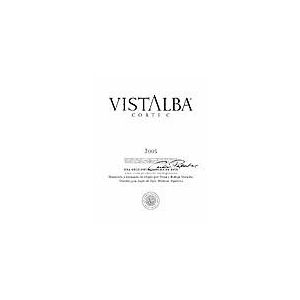
Bodega Vistalba Mendoza Corte C 1 Red 1 White; 2 Reds
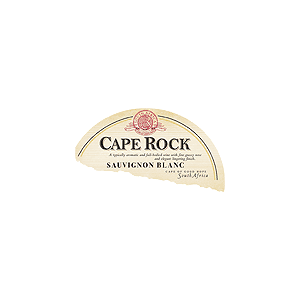
Cape Rock Cape of Good Hope Sauvignon Blanc 1 Red 1 White; 2 Whites
Cavalchina Bardolino DOC 2 Reds
Turner & Cole Eden Valley Riesling 2 Whites


Master Series
Featured Wineries & Wines
Membership Type
R Petite Sirah Enver Salman Vineyard 1 Red 1 White; 2 Reds
Cape Rock Cape of Good Hope Sauvignon Blanc 1 Red 1 White
Bodega Vistalba Mendoza Corte C 2 Reds


Collector Series
Featured Wineries & Wines
Membership Type
R Petite Sirah Enver Salman Vineyard 1 Red 1 White; 2 Reds
Benito Ferrara Greco di Tufo DOC 1 Red 1 White
Dog Ridge Vineyard DV7 McLaren Vale Shiraz 2 Reds

Bodega Vistalba Mendoza Corte C 2005 — Argentina

Bodega Vistalba Mendoza Corte C 2005 – ArgentinaVistalba is the family estate of Carlos Pulenta and his family. It is located in the center of Vistalba in the Luján de Cuyó region of Mendoza, Argentina. Here the Cordon del Plata and the towering range of snow-capped Andes that define the Mendoza loom over the Vistalba winery and the estate's vineyards, which spread up the foothills in search of the cold, living waters of snow melt that allow the Mendoza to bloom. Vistalba is the finest area in all Mendoza for Malbec, and Pulenta and his family exploit their enviable location and exceptional terroir to the fullest.

Begun in 1948, the Vistalba estate is comprised of many old vines. In total the estate counts 58 hectares (nearly 128 acres) under vine, most of which are devoted not surprisingly to Malbec — the backbone of Carlos Pulenta's fine range of wines and the mainstay of Mendoza viticulture. However, Malbec is hardly the only red varietal grown at Vistalba or, for that matter, at Pulenta's sister venture, Tomero. Merlot, Cabernet Sauvignon, and Bonarda are all well represented at Vistalba. While Malbec provides the basis for all of the estate's red wines, the other red varietals play significant supporting roles.

At Vistalba, one encounters what we have come to call the A, B, C wines. Each of the wines is called Corte, meaning harvest, cutting, or cross section in Spanish, to which an A, B, or C is attached. With each of the A, B, C wines, the actual blend or cepage is likely to vary somewhat from vintage to vintage, much as the classified wines of Bordeaux alter the percentage of each varietal, depending upon the vagaries and gifts of an individual vintage. Nonetheless, Corte A is typically the fullest of the trio. A blend of 40% Malbec, 40% Cabernet Sauvignon, and 20% Bonarda, Corte A sports 15% alcohol and can require some time in bottle to tame its intensity. Corte B, a blend of 57% Malbec, 30% Cabernet Sauvignon, and 13% Bonarda, is another full-bodied, rather intense offering. Corte C, on the other hand, is a more refined wine that draws from the charming side of Malbec. In most vintages, Corte C is comprised of 85% Malbec and 15% Merlot, a cepage that highlights the glory of Argentine Malbec at the same time that it affords Corte C a tailored, sophisticated Bordeaux feel and style.

In addition to the Corte series of wines, Vistalba fashions several other fine offerings, including an excellent white wine from Torrontes, an Argentine specialty. Vistalba also produces Tomero, a series of traditional varietal wines that reflect the noble lightness of the melted snows that irrigate the Mendoza.

Malbec (mahl-bec) at a Glance

Malbec is one of the five classic red grapes that comprise red Bordeaux or claret. Although now relegated to a minor role in Bordeaux, Malbec or Cot as it is sometimes called remains the heart and soul as well as the brawn and brains of Cahors, the illustrious "black wine" of southwest France, a wine renowned for its power and longevity.

Malbec produces one of the deepest, most intensely hued wines in the world. Argentina is now considered to be the spiritual home of Malbec, where old vines of this premium varietal yield the finest wine that nation can produce as well as one of South America's most compelling wines.

Tasting Notes: As one would expect, the 2005 Vistalba Corte C wears a rich, regal robe. Deep purple in color, opaque, and nearly black in its impenetrable center, it would be easy to surmise, at least at first glance, that Vistalba's Corte C was just another forceful, teeth staining Malbec. That is, until one takes the first sniff. Sensual aromas of red and black berries, cedar, cassis, and eucalyptus rise from the glass to cheerfully greet the nose. And upon first sip, the 2005 Vistalba Corte C becomes even more remarkable. It embodies the comely flavor and finesse of a first-rate Bordeaux. It caresses the palate and fills the senses, ending with an exemplarily long finish that displays plenty of ripe, sweet tannins. In short, the Corte C is no ordinary Malbec. We suggest serving the Vistalba Corte C at cool room temperature (no more than 66° F), after an hour of aeration.

Accompaniments: Beef is the national dish of Argentina, as anyone who has ever visited Argentina will attest. And what better accompaniment is there to the national dish than Vistalba's Corte C? Given the gracious flavor profile of the Vistalba Corte C, we suggest that it be served with a serious steak. Some of our favorite cuts of beef with this rich, but polished, Malbec are porterhouse and sirloin steaks. And to further complement the polished, flamboyant side of the wine, a side dish with that steak of sautéed Cremini, Portabella, or Shitake mushrooms, prepared in a red wine reduction with shallots and a dash of rosemary and spicy mustard, constitutes a heavenly feast. However, lest you think the Corte C is a one-dimensional wine, we can heartily recommend it with tried-and-true alternatives to "Beef Almighty." Lusty pasta dishes with heavy red pasta sauces, three-mushroom pizzas, and grilled ostrich provide other splendid parings with Vistalba's lovely Malbec. And let's not forget lamb or even the best burger money can buy. They, too, offer splendid complements to Carlos Pulenta's viticultural art. Enjoy!

Cape Rock Cape of Good Hope Sauvignon Blanc 2008 — South Africa

Cape Rock Cape of Good Hope Sauvignon Blanc 2008 – South AfricaCape Rock is grown and produced at the venerable Van Loveren Estate. In fact, Cape Rock and Van Loveren are synonymous. Van Loveren is located on the banks of the Breede River in Robertson, South Africa's premier white wine producing region. Two brothers, Nico and Wynand Retief, own this stunningly beautiful property, which lies just 100 miles from Cape Town. Yet it is not just the physical splendor of the place that captivates — its lanes are lined with rare red canna lilies — Van Loveren consistently fashions wines that are in every way as exquisite as the landscape. In the days of yore, Van Loveren was a large farm affectionately called Goudmyn (Goldmine). Today, it is a 330-acre wine estate that is highly regarded for its picturesque beauty and liquid gold, mostly in the form of delicious white and red wines.

Van Loveren is currently one of the leading producers of premium Chardonnay and Sauvignon Blanc in South Africa and a driving force behind the recent success of Robertson as a prime viticultural area. The region's limestone-rich soil is perfect for white wines, which have led some critics to compare Robertson's wines, and Van Loveren's wares in particular, to the renowned wines of France's Pouilly-Fuissé (Chardonnay) and Sancerre (Sauvignon Blanc). Specifically, this property's Sauvignon Blanc is world-class wine, a hypothetical cross between a bright, herbal New Zealand-style Sauvignon Bland and an elegant, mineral rich, pinpoint Sancerre from France's Loire Valley.

However, with these pundits in mind, it is important to note that the Retief brothers fashion an entire portfolio of high-quality wines at their estate, including a knockout Gewurztraminer and several superb reds. In addition to Chardonnay and Sauvignon Blanc, Van Loveren crafts excellent Colombard, Pinot Gris, and Riesling, along with two fine dessert wines and a delicious sparkling wine they call Papillon. Since the early 1990s the Refief brothers have also been working with premium red varietals, most notably Cabernet, Merlot, Shiraz, and Pinotage — South Africa's own unique varietal. Most assuredly, we will be hearing a lot more about this property in years to come, and tasting many more of its wine wares as well.

Sauvignon Blanc (so-vee-n'yohn blahn)

Sauvignon Blanc is a premium white wine grape that for all intents and purposes is indigenous to Bordeaux. Yet in Bordeaux, Sauvignon Blanc is traditionally blended with Semillon to make a rich, stylish wine with a flavor profile all its own. This stands in contrast to the 100% varietal offerings from France's Loire Valley, most notably from Sancerre, Pouilly-Fumé, and increasingly Menetou-Salon, whose wines remain some of the world's truest expressions of the grape. In California, Sauvignon Blanc is sometimes called Fumé Blanc, a relic of a marketing ploy that popularized the grape, but confused the consumer, since there is no clear-cut difference in California between wines labeled Sauvignon Blanc and Fumé Blanc. Recently, Australia, New Zealand, and South Africa are proving to be equally adept at producing premium Sauvignon Blanc. What nearly always distinguishes this grape is a distinct "freshly cut grass" aroma that can range from barely noticeable to nearly intoxicating.

Tasting Notes: Pale in color but not in character, the 2008 Cape Rock Sauvignon Blanc displays an amplifying nose of herb, mineral, citrus, and freshly cut grass. Bright and refreshing from the first sip, this Sancerre-style Sauvignon Blanc offers a lot to like. It fills the mouth with clear vibrant flavor, including hints of tropical fruit and a gentle herbal twist that made the tasting panel beg for more. Ripe, juicy, and sporting a mélange of crisp acidity, the Cape Rock Sauvignon Blanc finishes superbly and lingers in the mouth on a refreshing note. In short, this is one tasty, eminently drinkable Sauvignon Blanc that knows who it is — no oak, no smoke, and no mirrors. This is the style of Sauvignon Blanc we wish more New World producers could provide consistently, if they were not so obsessed with acid balancing and the taste of oak rather than the natural flavors of the grape. We suggest serving this bright, friendly Sauvignon Blanc well chilled (35°- 40° F), and often.

Accompaniments: The 2008 Cape Rock Sauvignon Blanc makes an excellent aperitif, as it provides a great opening act to nearly any affair. And as light and easy as the Cape Rock Sauvignon Blanc appears, one may be tempted to relegate it to the venial position of aperitif or party wine extraordinaire. However, we suggest that you not miss the opportunity to pair this South African beauty with some interesting and worthy food companions, as it is not the least bit recalcitrant in providing escort service to a large array of seafood dishes. Clams, mussels, oysters, shrimp, lobster, and just about anything that swims offer natural pairings with this wine, but that's not all. The 2008 Cape Rock Sauvignon Blanc is equally outstanding with salads, poultry, and a host of Asian dishes. A light salmon mousse, pecan encrusted salmon, and expertly prepared California rolls provide other exemplary pairings with this wine. A mixed green salad with caramelized walnuts, poached pears, tomatoes, and fresh, crumbled blue cheese; and Seared Sea Scallops tossed with a Thai nut relish make other noteworthy accompaniments. Enjoy!

Cavalchina Bardolino DOC 2006 — Italy

The Cavalchina winery is located along the southern shore of majestic Lake Garda. It has belonged to the present owners, the Piona family, since the beginning of the 1900s. As far back as 1848 Cavalchina was registered officially as having the finest vineyards in the region, and they still do. After all, terroir is terroir and good winemaking remains the order of the day at Cavalchina. This is also an estate that is not afraid to experiment. Presently, the Piona family harvests grapes from two distinct sites: 16 hectares at the original Cavalchina estate in the Veneto and at La Prendina, a nearby parcel just over the regional border of Lombardia. Grapes from both estates are vinified at Cavalchina, but each is fermented and bottled individually.

Cavalchina specializes in traditional regional wines, including the zone's finest Bianco di Custoza (a blend of Garganega, Tocai, and Trebbiano grapes) and several excellent Bardolino in varying styles. Giulietto Piona, the reigning family patriarch, invented Bianco di Custoza at Cavalchina in 1962. He is now considered the founder of that thriving DOC. Presently, his talented son Luciano makes all of the wine at Cavalchina.

At Cavalchina and La Prendina, the estate wines are marvelously consistent and always delicious. Yet every vintage brings a new and interesting surprise from this ingenious proprietor: one barrel of an innovative and scrumptious dessert wine, a Bardolino Novello, an older vintage of something squirreled away in the cellar, or a wonderful vino da tavola. Luciano Piona always keeps life fun and interesting, just like the marvelous array of wines he loves to produce. And even though Luciano Pioni routinely fashions increasingly superlative wines from one vintage to the next (anyone who tasted Cavalchina's wines from the 2001 or 2004 vintage can readily attest to the ultimate quality of this estate's wines), the outstanding 2006 vintage may be responsible for Cavalchina's greatest efforts to date. Not surprisingly, Cavalchina's wines are enormously popular in their native Veneto and can be found in nearly all of the area's best trattorias.

Tasting Notes: Authentic Bardolino is the perfect embodiment of all that is good and magical in the wines of Lake Garda and the surrounding Veneto. Cherry colored, light but round, and ohhh so sensual, the 2006 Cavalchina Bardolino offers the taster one of the Veneto's ultimate pleasures. As delicate as Venetian lace and as lusty as a Titian masterpiece, Cavalchina's 2006 Bardolino will have you reaching for a second bottle in no time. Simply stated, the 2006 Cavalchina Bardolino is the picture of style, elegance, and vivacity in a glass. Its compelling scent of black cherry fruit, marzipan and almond extract make for a most appealing bouquet. On the palate, warm round flavors are married to youthful exuberance to render the 2006 Cavalchina Bardolino the purest expression of the local Corvina, Rondinella, and Molinara grapes. Medium bodied, refreshing, and immensely drinkable (the quintessential attributes of true Bardolino), this offering from Cavalchina displays the ultimate Bardolino personality. Bardolino is typically a wine to drink young. However, we have found that Cavalchina's Bardolino will age well for three years or more before reaching its apogee. We suggest serving this wine at cool room temperature or better still at cellar temperature (55°- 60° F), especially in warm weather.

Accompaniments: Bardolino is a marvelously adaptable wine. Its flavorful, medium-bodied format suits most pastas and salads, so whether you are serving a simple chicken salad or homemade pasta with a complex sauce, the 2006 Cavalchina Bardolino is ready and able to please. Moreover, heartier fare like risottos and grilled meats also offer appealing accompaniments. Stews, cassoulets, and meatloaf are hardly too robust, either. A good hamburger or even a lightly seared tuna steak, served with a mango salsa, provides superb accompaniment to the 2006 Cavalchina Bardolino, as well. Fine cheeses such as Asiago, Emmentaler, Feta, and Morbier also shine in the presence of the 2006 Cavalchina Bardolino, so enjoy!

Turner & Cole Eden Valley Riesling 2005 — Australia

Turner & Cole is grown and produced by the great Henschke estate of South Australia. With premium vineyards in the Adelaide Hills, Barossa and Eden Valley, Henschke fashions a staggering number of award-winning wines each year. In fact, Henschke is one the oldest and most revered wineries in Australia; and its wines are benchmarks by which nearly all other Australian wines are measured. Although most renowned for their single-vineyard Shiraz offerings, including the amazing Hill of Grace from Eden Valley, Henschke enjoys an equally fine reputation for its outstanding Rieslings and Semillons.

The founder of Henschke, Johann Christian Henschke, was one of the first pioneers to plant Riesling in the Eden Valley in the 1860's. It was also the Henschke estate that helped revitalize Eden Valley after two world wars by replanting Riesling there. Since the 1950s, Henschke has fashioned award-winning Rieslings in Eden Valley, longer than nearly anyone else. Turner & Cole is one of Henschke's unbroken strings of success with Riesling, one of the most difficult of all white grape varietals to grow.

Eden Valley

The Eden Valley is a region of rugged beauty. It is a cool climate area nestled between 400 and 600 meters in the Barossa Range, which is part of the larger Mount Lofty Range. Despite its name, Eden Valley is actually not a valley at all. Rather, it takes its name from the township of Eden Valley. The region's cool climate provides ideal conditions for the production of high-quality Chardonnay, Riesling, and a spate of elegant red wines.

The history of Eden Valley parallels that of the nearby Barossa, with which it shares its eastern boundary. Henschke, Yalumba, and several of the finest names in Australia have substantial vineyard holdings here. Yalumba founder Samuel Smith planted the first vines in the Eden Valley in 1849. Johann Christian Henschke, who was already well known in the mid 19th century for excellent red and white table wines, was an early pioneer of Eden Valley as well. He established a winery at Keyneton in the late 1860s. These two estates continue to possess some of the most significant plantings in the Eden Valley, but many smaller wineries have followed suit. Replanted in the 1950s, Eden Valley has witnessed a steady expansion in viticulture, especially throughout the 1980s and 1990s. Moreover, its reputation has been greatly enhanced by the presence of two of Australia's leading vineyards, Hill of Grace and Mount Edelstone.

Tasting Notes: The 2005 Turner & Cole Riesling is an excellent example of Eden Valley's success with Riesling and testimony to Henschke's acumen with one of the planet's most complex grape varieties. Furthermore, the winery has stated that "2005 is sure to be ranked as one of the best Riesling vintages on record," and we agree. The 2005 Turner & Cole is a rich, full-throttle Riesling that combines sweet floral aromas, lush fruit, great minerality, and crisp acidity all into one beautiful wine. Scents of nectarine, white currant, peach, and citrus blossoms are followed by a pleasing burst of fruit, complex mineral tones, and lime zest in the mid palate — all of which are garnished by a crisp refreshing acidity on the finish. Drink this wine now or lay it down for a few years. For maximum enjoyment of the Turner & Cole Riesling, we suggest moderate chilling (37°- 45° F).

Accompaniments: Like all of the best dry Australian Rieslings, the 2005 Turner & Cole is one of the world's most versatile wines with food. Yet we must confess that this Riesling is also quite satisfying and endlessly faceted on its own. But why settle for half the pleasure when you can have it all? Chinese, Thai, and Vietnamese specialties meld beautifully with this Riesling. Stir-fried eggplant with basil, bell peppers, and onion (Pad Ma Kour); stir-friend ground chicken with bell peppers, green beans, onion, basil, and hot chilis (Gra Prao); and even fresh spring rolls make ideal partners to accompany the Turner & Cole Riesling. More traditional American and continental fare offer a wealth of possibilities: chicken, ham, pork, and seafood all get our nod as well. Enjoy!

R Petite Sirah Enver Salman Vineyard 2006 — U.S.A.

R Petite Sirah Enver Salman Vineyard 2006 – U.S.A.R is Jeff Runquist's own label. It is his passion, pride, and joy. R is also the envy of the legion of California winemakers who stay up nights dreaming of making wine their own way and being critically and financially successful in the process. Jeff Runquist is unequivocally one of California's finest and most consistent winemakers. He is the sole proprietor and winemaker for R, and he is the driving force and successful suit behind a number of other premium California wineries, including the McManis Family Vineyards.

"I just want to play the game my way," has always been Jeff Runquist's mantra. By this statement he means dedicating himself entirely to the art of winemaking, the way he wants to make wine. With R, Runquist specializes in ultra-premium, single-vineyard-designated, 100% varietal red wines. Petite Sirah, Syrah, and Zinfandel are Runquist's specialties and most renowned wines, but he also fashions small quantities of outstanding Cabernet Sauvignon, Pinot Noir, Barbera, Sangiovese, and Primitivo — the forerunner of Zinfandel.

Runquist has been making wine for nearly thirty years and the legendary R since 1995. Since inception, R wines have consistently won gold medals in major wine competitions. Each has sold out promptly, leaving the cellar devoid of even a single bottle shortly after release. Critics complain they haven't even had a chance to taste the R wines before they are sold out. In addition, Runquist spends little time selling wines and even less time marketing them, unlike most of his peers. This scenario is certainly not the norm, but then again Jeff Runquist is not an ordinary winemaker.

Neither R nor Runquist himself owns even a single vine. Runquist has no written contracts with any of the great growers and vineyards he sources year after year. Nonetheless, they always provide him with outstanding raw material with which to practice his art and work his magic. And to his credit and the utter amazement of the California wine establishment, Jeff Runquist does not even maintain a tasting room — an omission and unforgivable offense to the large commercial establishments that prey upon the accidental connoisseur and the casual wine tourist alike. Moreover, Runquist refuses to expand his annual production of R wines for fear of compromising their quality. In fact, his overriding objective is to produce all of his wines in tiny lots. This means producing only 700-1000 cases of each of his main varietals (Petite Sirah, Syrah, and Zinfandel) and only 100-300 cases of each of his other red varieties. Routinely, this process involves declassifying a third or more of his production each vintage simply because Runquist declares: "If I am not happy with a wine, I don't bottle it … if I don't get as big an economic reward, that's okay. I am happy with the wines made under my label." Sadly, this is hardly the prevailing philosophy elsewhere in today's world of wine. However, far be it from us to complain, as we are the delighted beneficiaries of such arcane practices. We are the chosen few who actually get to taste a bona fide R wine and enjoy it — the fruit of Jeff Runquist's refreshing philosophy.

Tasting Notes: Jeff Runquist has once again fashioned the quintessential California Petite Sirah in the 2006 R Petite Sirah from the Enver Salman Vineyard. An intensely purple robe the color of a perfectly ripe plum, a knockout nose, and oodles of flavor make it easy to see why Runquist's Petite Sirah from the Enver Salman Vineyard is quite possibly the finest Petite Sirah we have ever tasted. Likewise, it takes no great acumen to comprehend why each of the last six vintages of Jeff Runquist's Salman Vineyard Petite Sirah has garnered so many top honors at California's most prestigious wine fairs, including "Best Varietal Petite Sirah" at the 2004 California State Fair. For the record, the 2006 R Enver Salman Vineyard Petite Sirah is another staggering statement: it offers up an entrancing aroma of blackberry jam, ripe blueberries, and spicy oak. And considering the formidable nose and a whopping 15% natural alcohol, one might expect a dense, astringent monster. Instead, the 2006 R Enver Salman Vineyard Petite Sirah cajoles the senses with a beautifully balanced format and a cornucopia of flavors. Rich black fruits, mocha, chocolate, and forest woodlands all sing their seductive song within a deft framework of aromatic oak. From this wine's auspicious start to its amazingly long finish, there is neither a beat nor a chord even remotely out of sync. In short, the 2006 R Enver Salman Vineyard Petite Sirah is a tour de force in winemaking and testimony to just how seductive and pleasurable California Petite Sirah can be. We suggest serving this distinctive California gem at cool room temperature (64°-66° F) to a privileged few. Anticipated maturity: 2008-2013.

Accompaniments: It is nice to know that some things don't change. The first time we tasted a Runquist Petite Sirah several years ago, one of our senior panel members proclaimed rather emphatically, "You can serve this wine with whatever you want, but I'm drinking mine plain. I'm not going to let anything stand in the way of my idolizing this wine." Not surprisingly, a number of the present panel members felt the same way about the 2006 R Enver Salman Vineyard Petite Sirah. However, this should not negate the audacious, hedonistic 2006's innate ability to accompany simple, well-prepared meals and hearty, rib-sticking fare. Consequently, given this formidable Petite Sirah's great balance and overt personality, we highly recommend it with all kinds of meats and Mediterranean specialties, including game; a thick meaty cassoulet, an herb-roasted leg of lamb, Penne a la Siciliana (penne pasta in a very thick fresh tomato sauce, with roasted garlic, eggplant, and herbs), and authentic Piedmontese risotto. Hunks of hard, flavorful cheeses such as Parmesan or Provolone also provide outstanding accompaniments to the R Petite Sirah. Enjoy!

Benito Ferrara Greco di Tufo D.O.C. 2006 — Italy

The Ferrara estate is located in the hills high above the gleaming Tyrrhenian Sea in the famed village of San Paolo di Tufo. The scenic Campanian village of San Paolo di Tufo lies at the heart of the Greco di Tufo D.O.C. at an altitude of 1,800 feet. The original Ferrara property dates back to 1880, when it comprised 40 hectares (88 acres). However, after more than a century of plot divisions among family members, this venerable estate now comprises a mere 6 hectares (a little more than 13 acres). Plans are underway to add an additional hectare, but production at Benito Ferrara will always remain meager and supply even smaller. Unfortunately for many consumers, the demand for Ferrara's handcrafted wines always outstrips their supply, and this is especially true for the two outstanding Greco di Tufos that Ferrara so lovingly crafts. However, there is, of course, a silver lining to this scenario — or rather a gold lining, in the case of Ferrara's Greco di Tufo. For those fortunate enough to covet a bottle or two of Ferrara's precious Greco di Tufo, they will be in possession of one of southern Italy's finest white wines. In short, they are in for a real treat.

The vineyards of Benito Ferrara are planted in a unique calcareous soil that is comprised chiefly of mineral-rich rock known as tufa — hence the name Greco di Tufo. Here, Greco di Tufo, the ancient white grape that the Greeks brought to Italy's Campania more than two thousand years ago, thrives. And like most of the diminutive, family-owned wineries just beyond the Amalfi Coast that fashion authentic Greco di Tufo, Benito Ferrara's vineyards dig deep into the hills of tufa from which the Romans mined sulfur. From hillside vineyards facing southward, kissed by the pure Mediterranean light and soft spray of the sea, Ferrara fashions the finest Greco di Tufo.

Campania

Italy's Campania retains the allure and magic of ancient mythology. From the mystifyingly beautiful Amalfi Coast that still manages to conjure visions of gods and sirens, pleasure and lore, to the volcanic, fog-shrouded spine of the Appenines that bisect the Italian peninsula, the Campania never fails to enchant. Known to the Romans as the Campania Felix, meaning the "joyous country" or the "face with an open smile," the Campania is the ancient province of the Roman Empire that sits just south of Rome and neighboring Latium. As its name implies, this region produces friendly, gregarious wines and an abundance of produce. At the height of the Roman Empire, the Campania served as the granary of Rome, supplying sustenance to the capital and provisions to the legions of soldiers and magistrates who administered the empire. Today, what could be more exemplary of the good nature and open character of the land and people of the Campania than Greco di Tufo?

Tasting Notes: Grown on hillside vineyards in Frazione San Paolo in Tufo, the 2006 Benito Ferrara Greco di Tufo is an authentic descendant of the original Greco vines brought to southern Italy by the Greeks. Golden in color like the morning sun that kisses the vines, Ferrara's wine is both bright and bold. In its bouquet one smells the scent of lemon oil, the crisp, salty freshness of the sea, a waft of spring flowers, and a distinct minerality — all of which carry through on the palate. Make no mistake: Ferrara's Greco di Tufo is serious white wine. It is rich but not unctuous; long in the mouth but eminently refreshing; and it is definitely dry. Ferrara's Greco di Tufo also possesses a beautiful texture and an alluring glitter. Nevertheless, this unique wine is hard to describe, as it changes repeatedly over a course of an hour or more in the glass, much like a fine red wine. Although some may prefer this wine at a more ambient temperature, we suggest serving the Ferrara Greco di Tufo moderately chilled (about 40° F); one can always let the wine warm gently in the glass for a fuller effect.

Accompaniments: There is no finer wine with seafood than Benito Ferrara's 2006 Greco di Tufo. Whether you are sitting on a seaside terrace in Positano high above the Amalfi Coast or looking out the window of a high-rise apartment in Manhattan, the fruits of the sea are our first, second, and third choices with the 2006 Benito Ferrara Greco di Tufo. Rock Lobster, Seared Sea Scallops served with fresh lime and tamarind, grilled Sea Bass with a fruit and herb salsa, fresh anchovies (not the canned salty strips that routinely find their way into Caesar Salad) soaked in virgin olive oil and piquant spices — and what about sardines? Yes, sardines! Sardines are a Mediterranean favorite that are increasingly popular now in fine seafood establishments across the United States. When paired with beans and freshly squeezed lemon, black olives and tomato, or even chorizo sausage and goat cheese, sardines make for an authentic and delicious pairing with Ferrara's outstanding Greco di Tufo! However, just about any denizen of the sea can be paired happily with this wine. Enjoy!

Dog Ridge Vineyard DV7 McLaren Vale Shiraz 2003 — Australia

Dog Ridge is a jewel of an estate that sits at the base of South Australia's Southern Mount Lofty Ranges, a series of hills and low mountains that overlook McLaren Vale. A family-owned winery of 140 acres, Dog Ridge is dedicated to producing full-bodied, award-winning McLaren Vale wines of distinction from old-vine Shiraz and a coterie of other French varietals. In order to achieve their mission, Dog Ridge's proprietors, Dave and Jen Wright, tend their vineyards with great passion, employing only sustainable practices of viticulture and devoting their energies to a serious CO2 Emission Mission to reduce carbon emissions. In addition, they have undertaken the task of uprooting feral vegetation from their property and the surrounding area, which border Onkaparinga Gorge National Park, and they have re-planted the creek beds and ridges with more than 6,000 trees and shrubs of indigenous origin in order to revitalize the land.

Many of Dog Ridge's Shiraz, Cabernet, and Grenache vineyards in McLaren Vale date to the 1940s and form the basis of their many premium offerings such as DV7. At Dog Ridge, the soils vary considerably over a small area, giving the winery the opportunity to select small parcels of the best fruit to reflect the distinct terroir of each site. Furthermore, every one of this estate's wines reflects the natural diversity of an individual terroir, which adds to the uniqueness of each and every wine. Taste and see the difference!

Tasting Notes: Produced from 60-year-old Shiraz vines from the McLaren Vale of South Australia, the 2003 Dog Ridge Vineyard DV7 epitomizes the region's aromatic, full-bodied, hedonistic style of Shiraz and adds further credence to the McLaren Vale's reputation as one of the two leading appellations in Australia (Barossa is the other) for sensational Shiraz. Deep but not impenetrable in color, it may at first glance be mistakenly expected for a lighter, more subdued style of Shiraz — but not a chance. The 2003 DV7 starts with a bang and a cornucopia of aromatic fireworks: black fruits, mulberry, spice, and more. In the mouth, the wine is full, rich, and satisfying, a mélange of Angostura, charcoal, blackberry, and smooth spicy oak. And, as smooth and balanced as DV7 is, one hardly notices the 15° plus alcohol that it packs. Thanks to twenty months in French and American oak and additional bottle age before release, the DV7 drinks beautifully after just a little aeration. Anticipated maturity: 2008-2012.

Accompaniments: Nearly all meat and Mediterranean specialties stand to be enhanced by the award-winning 2003 Dog Ridge DV7 Shiraz. After all, this wine won the prestigious Blue Gold Award at the Sydney International Wine Competition for the finest Shiraz brought to table. In other words, this was the best wine with food. So, for a simple but exquisite culinary delight, we have chosen to follow the winery's number-one choice of accompaniment: a filet of lean beef rubbed with extra virgin olive oil, salt, pepper, and mixed herbs — all of which is baked in the oven. The beef is then cut thin and served over a bed of sweet potato mash with a reduced Shiraz glaze. Side dishes of roasted carrots, grilled sweet corn, and organic greens complete the picture. Enjoy!


logo for wine club
Since 1994
Home
Join Our Wine Club
Gift Memberships

Membership Renewals
Reorder Your Favorites
More Information
Wine of the Month Club
Current Selections
Past Selections
Testimonials
Other Gourmet Gifts
Corporate Gifts
Wedding Gift Ideas
All About Wine
Website Tools
Who We Are
Contact Us

1 - 800 - 625 - 8238
(Outside US call: 949-206-1904)
P.O. Box 1627, Lake Forest, CA 92609