Featured Wines
October 2007
Premier Series |
|
Featured Wineries & Wines |
Membership Type |
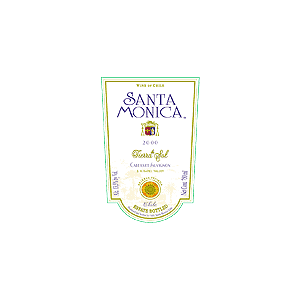
| Santa Monica Tierra De Sol Cabernet | 1 Red 1 White; 2 Reds |
| Domaine Alfred Goss Creek Chardonnay | 1 Red 1 White; 2 Whites |
| Caldora Montepulciano D'Abruzzo | 2 Reds |
| Can Feixes Blanc Seleccio | 2 Whites |
Master Series |
|
Featured Wineries & Wines |
Membership Type |
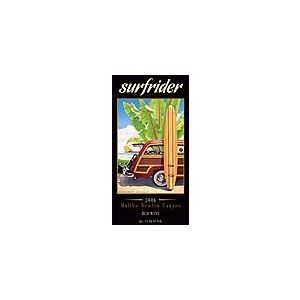
| Surfrider Meritage | 1 Red 1 White; 2 Reds |
| Domaine Alfred Goss Creek Chardonnay | 1 Red 1 White |
| Santa Monica Tierra de Sol Cabernet | 2 Reds |
Collector Series |
|
Featured Wineries & Wines |
Membership Type |
| Surfrider Meritage | 1 Red 1 White; 2 Reds |
| Picket Fence Russian River Chardonnay | 1 Red 1 White |
| Dominio Dostares Cumal | 2 Reds |
Santa Monica Tierra de Sol Private Reserve Cabernet Sauvignon 2000 – Chile
Founded in 1976 by Emilio de Solminihac, Santa Monica is one of the more contemporary wineries in Chile. Yet, this superb property is truly an amalgam of Old World charm and modern technology Located in the beautiful Rapel Valley, this historical 19th century property includes a beautiful old hacienda that dates from Chile's colonial past as well as one the tidiest and most up to date wineries in all Chile.
Emilio de Solminihac, more affectionately known as Don Emilio to a burgeoning legion of young Chilean winemakers, is the guardian of traditional winemaking in Chile and one of South America's finest winemakers. He is also an affable gentleman who seems cut from a bygone age. Hailing from a wine making family, Don Emilio received his first training in wine as a young man while working in his grandfather's vineyard and winery. Later he would graduate from the Universidad de Chile with a degree in agricultural engineering, and subsequently depart for France, where he would study at the Université de Bordeaux under the legendary Emile Peynaud – then France's most renowned oenologist. While attending the Université de Bordeaux, Emilio earned that venerable institution's esteemed degree in oenology, the first Chilean to do so. Today, Emilio de Solminihac is revered as much for his legacy of fine, age worthy wines as he is for his numerous oenological innovations – many of which have helped to transform the Rapel Valley into the Napa Valley of Chile.
In the 1970's Don Emilio returned to Chile. He established an oenological laboratory in Rancagua and began consulting for many local Rapel Valley vineyards and wineries, an experience that brought him an intimate knowledge of the region's terroir. In the meantime, the young Emilio also began teaching oenology and vinification at the Universidad de Chile and the Universidad Catolica de Chile, where he earned a reputation for his unabashed dedication to the production of clean, complex, age worthy wines in the Bordeaux tradition – a devotion he still pursues.
Chile in the 1970's was a time of great economic uncertainty. Nevertheless, in 1976, when other growers were continuing to pull up vines because they were barely able to give away their wares, let alone make a living by producing wine, Don Emilio made a fateful decision: he purchased the old Vina Purisma estate outside of Rancagua. Originally planted in 1930, this established 230- acre Rapel property contained many splendid old vines whose yields were meager but whose quality was high. Don Emilio re-named the estate Santa Monica in honor of his wife Monica Fonseca and began with her their family winery. What many considered madness three decades ago has now become a dream come true.
Today, Santa Monica reigns as an oasis of calm and simple elegance. Beyond its gates lay long rows of well-tended vines that doze between the towering Andes and the coastal mountain ranges. From these neat rows of vines that hold just about every grape imaginable, Don Emilio fashions a bevy of delicious wines. However, the highly acclaimed Private Reserve Tierra de Sol and Gran Reserva offerings of Cabernet Sauvignon and Chardonnay constitute the signature series at Santa Monica. In them, one can taste and see Don Emilio's passion for making traditional Bordeaux and Burgundy style offerings, with a personal touch. These are complex, age worthy wines that are as endearing as they are enduring.
Tasting Notes: The 2000 vintage has turned out to be an especially fine one for Santa Monica. The 2000 Santa Monica Private Reserve Tierra de Sol Cabernet Sauvignon exhibits plenty of round fruit and a more polished, Bordeaux demeanor than most Chilean Cabernets can muster. In appearance, the 2000 Tierra de Sol Cabernet displays a deep, dark, youthful robe, which it backs up with an amplifying aroma of blackberry, cassis, dark chocolate, and the classic cigar box scent of cedar. The 2000 Tierra de Sol Cabernet Sauvignon recalls all that is beguiling and hauntingly beautiful about the finest Chilean Cabernets. In addition, it offers a combination of Bordeaux complexity and New World flavor. Moreover, this most recent release from Santa Monica of Tierra de Sol Cabernet Sauvignon provides plenty of ripe tannins to complement the blackberry fruit, cassis, plum, chocolate and roasted coffer flavors that continually unfold for hours after opening. For optimum enjoyment, we suggest you allow this medium-bodied beauty to breathe for at least thirty minutes or more before consuming, so that it can gather its charm and beguile the senses. And like all fine Cabernet Sauvignon, we strongly suggest that the 2000 Santa Monica Private Reserve Tierra de Sol Cabernet Sauvignon be drunk at no more than 66° F. Enjoy!
Accompaniments: Although quite easy and enjoyable to drink on its own, the 2000 Santa Monica Private Reserve Tierra de Sol Cabernet Sauvignon is even better with food. Like fine, aged Bordeaux, the 2000 Tierra de Sol Cabernet Sauvignon constitutes the quintessential dinner party wine. And best of all, one need not have a flair for haute cuisine to see this wine shine. A simple butter and herb roasted chicken, a tender veal chop, or a grilled thinly sliced beef tenderloin is all this beautifully aged wine needs to elevate a meal to a feast. For the gourmet or more adventuresome eater, we suggest a grilled loin of lamb with herbed and chèvre stuffed peaches and either creamy rich risotto or mashed garlic and rosemary infused potatoes. A savory Lamb Ragout with mushrooms, red peppers and onions, oven-roasted potatoes, and braised greens provides another excellent pairing. Actually, most meat dishes and well prepared stews will complement the 2000 Santa Monica Tierra de Sol Cabernet Sauvignon as well.Domaine Alfred Edna Valley Goss Creek Chardonnay 2005 – USA
The first time we tasted Terry Speizer's wines, we knew they were special. Moreover, we were certain that Domaine Alfred would not remain under the critic's radar for long, and we were right. Nonetheless, in spite of the great demand for every drop of Chardonnay and Pinot Noir from this meticulous estate, we are pleased to present Domaine Alfred's 2005 Goss Creek Chardonnay, the winery's newest Edna Valley release.
Located in the cool Edna Valley of San Luis Obispo, Domaine Alfred is blessed by the wonders of the Central California coast environment, which include a long growing season, idyllic soil, and a perfect climate. In other words, great terroir! Moreover, all of Domaine Alfred's wines are estate bottled, with most of the grapes emanating from the winery's historic Chamisal Vineyard.
Chamisal, the first vineyard in Edna Valley, was originally planted in 1972. Purchased by the ingenious Terry Speizer in 1994, Chamisal, a then dormant vineyard, was replanted with six clones of Pinot Noir and five clones of Chardonnay on a total of 60 acres. Subsequently, an additional Chardonnay clone was added, followed by four clones of Syrah planted on an additional 14 acres. In 2000, Grenache and Pinot Gris were introduced into Chamisal and an additional 8 acres of Pinot Noir were planted. The original Chamisal clone of Chardonnay has also been reintroduced into this historic vineyard.
An innovative fellow, Terry Speizer is a consummate perfectionist and a great Chardonnay and Pinot Noir winemaker. And as is the case with most exceptional winemakers, Speizer's philosophy is quite simple. "The grapes are the soul of our wine," Speizer states emphatically. "If we do an exceptional job on the soul, then all we have to do is give it heart." And what a heart Speizer and his staff at Domaine Alfred have put into each of the eight vintages this property has released to date, beginning with the winery's inaugural 1998 vintage. Such work has tempted some to call Speizer the "Wizard of Oz," for each of his wines displays heart as well as brains and courage.
Chardonnay: The World's Most Celebrated White Wine
Chardonnay is the most widely cultivated white varietal on the planet. Twice each year at harvest time (because the seasons are reversed in the northern and southern hemispheres) in its native France and in countless locales throughout the world, Chardonnay grapes command premium prices. In tribute, Chardonnay produces the finest, most flavorful dry white wines on the planet to which writers and connoisseurs devote countless columns and untold hours exalting its virtues and dissecting its flavors. Whether it be from Chablis or Champagne, Napa or McLaren Vale, or from the most illustrious of vineyards perched atop the slopes of Corton and Montrachet, Chardonnay is the yardstick by which all other dry white wines have come to be measured.
From its origins in the Burgundy region of France, Chardonnay has traveled the globe. Today, Chardonnay is produced on all continents, except Antarctica. In numerous locales Chardonnay produces outstanding wine that reflects in every detail the soil and the climate (terroir) in which it is grown. However, in California a few areas stand out for quality, and in the last decade none have been more successful than Santa Barbara and Sonoma counties and Central California's Edna Valley.
With food, Chardonnay is a peerless match. Chablis-style Chardonnays provide superb complements in the company of seafood. And fuller, fleshier Chardonnay wines, typified by the best Australian and Californian versions, can more than hold their own with more complex fare, rich cream sauces, and meats. Moreover, the finest Chardonnay wines shine on their own, requiring nothing but a clean glass to please the palate. Enjoy!
Tasting Notes: The color of the noon day sun, the 2005 Domaine Alfred Goss Creek Edna Valley Chardonnay caresses the eye as well as the palate. It, also, offers up a heavenly aroma, replete with pure Chardonnay fruit, pear, quince, and delicate spice tones, all deftly accented by toasted French oak. Fresh, flavorful, and long in the mouth, the 2005 Domaine Alfred Goss Creek Chardonnay epitomizes charm and weighs in as one of the finest Edna Valley Chardonnays we have tasted in quite some time. Long, lingering, fresh, and extremely well balanced, one could drink this wine all night long and never tire of it. Now, how many other New World Chardonnays can make the same claim? We suggest moderate chilling of the Goss Creek Chardonnay (about 40° F) before consumption, but patient Chardonnay fans may wish to reap the reward of additional pleasure and flavor by allowing this first rate offering to linger awhile in the glass.
Accompaniments: What does one serve with the 2005 Domaine Alfred, Goss Creek Chardonnay? How about just about anything one wants. Terry Speizer's wines are so distinct and flavorful that one builds the meal around his wines, instead of the other way around. Besides, this Chardonnay is so enjoyable and easy to drink now on its own that it constitutes a meal in itself. With that said, the 2005 Domaine Alfred Goss Creek Chardonnay really knows how to liven up a mid week meal as well as showcase a special fish, fowl, or pork dish. So, whether it is smoked salmon with all of the accoutrements or Carolina pork barbecue that you are serving, this latest Chardonnay offering from Domaine Alfred is ready to take it on. Mushrooms, stuffed with crab and parmesan cheese; chicken salad, with grapes, walnuts, and Mediterranean herbs; poached salmon, served with fresh tomato and tarragon; or just a simple goat or cow's milk cheese that is rolled in pecans and fresh thyme all constitute tasty morsels in the company of Domaine Alfred's 2005 Goss Creek Chardonnay.
Caldora Montepulciano d'Abruzzo 2006 – Italy
Caldora is a new winery that began in 2003, as a partnership between Valentino Sciotti and renowned Italian winemaker Mario Ercolino. This dynamic duo launched Caldora when they rented one of the largest cooperative wineries in the Abruzzo, outfitted it with new custom made technology specified by Ercolino, a winemaker obsessed with attaining the maximum expression of fruit in his wines, and then began fashioning the region's most prodigious wines from autochthonous varietals.
To push Caldora's wines to an even higher level of quality, Sciotti and Ercolino have established an avant-garde vineyard management system that compensates grape growers who agree to adhere to rigidly specified agricultural standards, by paying them a set amount of money according to the size of the vineyards under production, rather than according to the quantity of grapes produced. The combination of excellent grapes and outstanding wine making have yielded results that speak volumes. In just a few short years, Ercolino's taste for intense, deep fruit in his wines has won many friends and transformed how the wine drinking world views the wines of the Abruzzo as well as the rare indigenous vines of the region.
The Caldora production area is located in Ortona, mostly in the splendid Moro River Valley. Here a unique ribbon of land lies between the gleaming Adriatic and a precipitous 10,000 foot ridge of the Apennine Mountains. This special land possesses a microclimate that is ideal for Montepulciano, Pecorino, and the region's other indigenous grape varieties, which explains why winemaking has been prized in this region since the 3rd century AD and why consumers have quickly gobbled up Caldora's wines.
Tasting Notes: Opening a bottle of Caldora wine is always a satisfying hedonistic experience. In the case of the 2006 Caldora Montepulciano d'Abruzzo, the pleasure begins in the eye: this Montepulciano is bedecked in a saturated purple robe that is both immediately enticing and nearly impossible to resist. Moreover, the wine's visual allure is matched by a gush of soft fruit that wafts ever so willingly above the glass. And what follows on the palate is a supple, seductive blend of ripe cherry, plum, and milk chocolate flavors that winemaker Mario Ercolino has wrapped ever so adeptly around a vinous, medium body. As is the case with all of Caldora's wines, Ercolino's 2006 Montepulciano d'Abruzzo is neither weighty nor complex. However, it is one tasty, easy to drink, in your face red wine that offers great all year round drinking pleasure. Winemaker Mario Ercolino has fittingly captured the charming, friendly side of Montepulciano d'Abruzzo rather than the rustic, antithetical edge of the mercurial Montepulciano variety in the Abruzzo. We suggest serving this delicious Montepulciano d'Abruzzo at cool room temperature or even slightly cooler on a hot day (55°-65° F).
Accompaniments: The 2006 Caldora Montepulciano d'Abruzzo provides the ideal house wine, for individuals and restaurants. The wine's soft, friendly flavors make it popular with a crowd and able to complement a wide variety of foods, without overpowering them. So, fire up the grill, bring on the burgers, barbecue chicken, and all the ribs you can muster. Make some pasta, with fresh tomato sauce and plenty of herbs of course, or order out for a really good pizza! And don't forget the staples of a simple southern Italian meal: garlic bread, antipasto, and fresh buffalo mozzarella, drizzled with olive oil and served with fully ripened plum tomatoes. But why limit yourself? With Caldora's Montepulciano, there is no need to stand on ceremony. Just open the bottle and pour a glass or two with whatever you are preparing; it is the Abruzzi way. Enjoy!Bodega Huguet Can Feixes Penedès Blanc Selecció 2006 – Spain
The historic Can Feixes (pronounced can fay shess) estate is situated on gravelly slopes in a high mountain amphitheater, astride the famous Montserrat pinnacle in northern Penedès. This is the Penedès vineyard farthest from the Mediterranean, which means the climate at this estate is continental and drier that of the surrounding vineyards. The high altitude and austere mountain terrain of this rugged area of Catalonia constitute the tiny viticultural home of the native Parellada varietal, which locally is known as Montonec ("grape of the mountain"). This estate is also the home of some of the finest, most intense Chardonnay, Merlot, Cabernet, and Tempranillo (locally referred to as Ull de Llebre) in all of Catalonia, thanks to the vineyard's premier location and unique terroir.
The Can Feixes estate dates back to 1400 with the arrival of Jaumes Feixes in the upper reaches of the Penedès. In addition, accurate historical records indicate that wine has been produced continuously at Can Feixes since at least 1690. Whether under the auspices of the Feixes family or the Huguet's, the present owners since the end of the 19th century, Can Feixes has always been considered the region's Grand Cru.
Today, the vineyards at Can Feixes comprise nearly 300 acres planted primarily to Parellada, an indigenous white varietal, and small amounts of Macabeo and Chardonnay for producing first rate white wines. Tempranillo, Merlot, and Cabernet are responsible for the red wines. A small quantity of a special Gran Reserva Cava is also produced from traditional varietals. The estate's Blanc Selecció is Catalonia's benchmark for Parellada and the Can Feixes Chardonnay is considered by critics and popular acclaim to be one of the finest produced in all Spain. The Huguet brothers, Joan and Josep Maria handle all viticulture and enology respectively at their estate.
Tasting Notes: Produced primarily from the free run must of Parellada, with minor additions of Macabeo and Chardonnay, the 2006 Can Feixes Blanc Selecció is testimony to the magic of the fine, but relatively unknown Parellada grape. It is, also, an indication of the quality one can expect from the outstanding 2006 vintage. At Can Feixas the native Montonec (Parellada) produces very small, tight-bunched grapes of great structure and aroma. Consequently, the 2006 Blanc Selecció possesses an amplifying nose, comprised of the scents of pure mineral, gravel, citrus, and wild flowers. Long and textured in the mouth, the 2006 Can Feixes Blanc Selecció caresses the palate with luxuriant fruit and spice – without a hint of sweetness. Moreover, the wine ends with a dry, embracing finish that needs to be experienced to be described, as this wine is neither simple nor ordinary. Although beautifully wrought now, the 2006 Can Feixas Blanc Selecció will undoubtedly evolve for several more years in bottle. For this reason, we suggest that you allow this uncommon white wine breathe in the glass for a few minutes as you would a red wine, allowing the chill of the refrigerator to dissipate and the great texture of the wine to come forth. Enjoy!
Accompaniments: The 2006 Can Feixas Blanc Selecció is both stylish and flavorful enough to hold up to a variety of foods. We can attest to its ability to accompany grilled salmon in a variety of ways, but most especially when served with asparagus, broccoli, wild mushrooms, and organic greens that have been lightly tossed in balsamic vinaigrette. A simple chicken and brown rice dish, with onion, carrot, zucchini and herbs makes another wonderful accompaniment to the Blanc Selecció. In fact, most fish and poultry will be right at home with this wine, as will many vegetarian selections. Sushi, sashimi, and tofu based dishes provide other wonderful companions for the 2006 Can Feixes Blanc Selecció. Interestingly, the only drawback to serving this wine seems to be its ability to disappear in a hurry, so if you open a bottle before a meal you will want to have another bottle on hand to accompany whatever you are serving.Surfrider Malibu Newton Canyon Red 2004 – U.S.A.
Surfrider is a special bottling of Bordeaux varietals by Rosenthal The Malibu Estate. The grapes for Surfrider come exclusively from Rosenthal's estate in Newton Canyon, just four miles from the renowned beach and surfers' haven at Malibu. Although only four miles away from the beach as the swallow flies, Rosenthal's vineyards are eons away in terms of climate and terroir. All of Rosenthal's vineyards are situated above the coastal fog line, at least 1,400 feet above the sea, and they are completely sheltered from the salt and spray of the Pacific. These vineyards do, however, receive cooling breezes, which intensify the aroma and fruit for which Rosenthal's The Malibu Estate has become justly famous.
When do wine and surf come together? When one takes the first sip of the amazing 2004 Surfrider Red. Since many people associate Malibu with beautiful beaches and surfing, Rosenthal Estate Wines designed a label and designated a special wine that incorporate Malibu's unique coastal lifestyle with fine wines. In doing so, Rosenthal Estate Wines has partnered with the Surfrider Foundation, a grassroots, non-profit, environmental organization that is dedicated to protecting the oceans, waves, and beaches along our shores. Rosenthal Estate Wines donates a percentage of the profits from Surfrider to this worthwhile organization.
Rosenthal The Malibu Estate is truly a boutique winery that crafts limited quantities of award winning wines, which makes each bottle of wine from this estate a rare and precious commodity. Only 429 cases of the 2004 Surfrider Red was produced, but this outstanding meritage offering is not only rare, it is exceptional in quality as well as in purpose. Surfrider has already garnered four gold medals in four major wine competitions, including Gold Medal and Best of Class from the prestigious West Coast Wine Competition. We are grateful for the opportunity to feature the 2004 Surfrider Red and wish to offer our thanks to the folks at Rosenthal Estate Wines for sharing such a limited release with us.
So, What is a Meritage?
Meritage is California's answer to Bordeaux. It is also a term that has come in vogue in the last decade to describe New World blends that are made from traditional red Bordeaux varietals. Therefore, a meritage wine is essentially a blend of three or more traditional red Bordeaux grapes with Cabernet Sauvignon, Merlot, and Cabernet Franc the most notable participants. Malbec and Petit Verdot are the other two possible players. However, there are no legal or proscribed percentages for each grape variety in a meritage wine, so producers are permitted to vary how much of each varietal finds its way into the final offering, much as Bordeaux Châteaux vary their cepages or blends depending upon the estate's desired style of wine and the vagaries of each individual vintage. Nearly all meritage wines must eschew the name of a single varietal on the label because varietal bottling requires that at least 75% of a single variety (in California and in most other states) be present in a blend to be labeled as such. The minimum requirement for varietal labeling in Europe and in most other New World producing wine countries as well is 80%.
Tasting Notes: The 2004 Surfrider is no ordinary California red. It is an expertly crafted meritage selection consisting of Merlot, Cabernet Sauvignon, and Petit Verdot from Rosenthal's estate vineyards. Deeply colored, rich, and full-bodied, Surfrider captures all the aromatic fireworks and intense fruit of the finest reserve offerings from Rosenthal's The Malibu Estate. As one ventures further into Surfrider, the thrill really begins. Blackberry, cassis, an plenty of jammy red fruit flavors slide into the wine's long, dry, intense finish, so hold on for the ride. This majestic red captures the essence of the great Malibu Canyon AVA (American Viticultural Area) with great flavor, purity, and intensity. In addition, Surfrider is further testimony to the outstanding quality of the 2004 vintage in Southern California and a reminder of the supreme winemaking acumen of Christian Rougenet, Rosenthal's talented winemaker. Anticipated maturity: 2007-2014.
Accompaniments: One of the most endearing characteristics of the 2004 Surfrider, and all Rosenthal estate wines for that matter, is how easily it pairs with simple fare as well as sophisticated dishes. Even in its youthful splendor, Surfrider is without peer: it is also the rare meritage offering that can stand on its own and beguile. And for those who insist on an accompaniment, a platter of soft, ripe cheeses provides a noble feast to accompany Rosenthal's latest enological success. Port Salut, Havarti, and Muenster constitute some of our favorite cheese selections with this wine. However, for dinner parties and more elaborate meals, we suggest Osso Bucco or grilled lamb chops that have been brushed with extra virgin olive oil and sprinkled with fresh rosemary and thyme. And for those less disposed to lamb, we recommend the finest cuts of beef. Pork, game, ostrich and venison also offer top-notch accompaniments to this wine. Traditional Greek and Lebanese specialties work well, too, especially for those not given to sensory overload. Enjoy!Picket Fence Russian River Valley Chardonnay 2005 – U.S.A.
"Home is a place you grow up wanting to leave, and grow old wanting to get back to it." —John Ed Pearce
Picket Fence is a family owned vineyard in California's beautiful Russian River Valley. Here, proprietor Katy Leese has teamed up with Don Van Staaveren, one of California's most celebrated winemakers, to produce some of the finest Chardonnay and Pinot Noir in the entire appellation. And when one considers the address, it is obvious that the Russian River Valley does not lack for talent or beg for notoriety. With such legendary names as Patz and Hall, Paul Hobbs, Rochioli, Siduri, and Williams Selyem as neighbors, it is obvious that Picket Fence enjoys good company. More importantly, the folks at Picket Fence want you to feel at home, too, and enjoy their wines. Consequently, we are sure you will be hearing a lot more about this great new venture. For now, we are content that we found Picket Fence before the world found it . . . because let's face it, there is only so long that a secret remains a secret, especially in a family.
Katy Leese chose the name Picket Fence to reflect what she calls "the incredible sense of place that is embodied in her family's vineyard and Russian River Valley home and to pay tribute to the belief that picket fences are a timeless symbol encircling what we cherish most." One taste of this family's extraordinary wines will solidify the image of coming home, as Picket Fence Chardonnay and Pinot Noir embody not only this special place Katy calls home, but the name carries with it part of the incredible people who make the wine, too.
For starters, the Vineyard Manager at Picket Fence is none other than the meticulous Pete Opatz, the current and past president of the Sonoma County Grape Growers Association and a man with a long history of producing great Sonoma County fruit. He has worked his magic at Chateau St. Jean and many other premium wineries for over thirty years, before coming to Picket Fence. Paired with Don Van Staaveren, the only winemaker in history to have five wines in the Wine Spectator's top 100 in the same year, including the # 1 wine, these two gentlemen make for a formidable team. Pete and Don's collaboration constitutes one of California's greatest parings: Picket Fence is the latest testament to both men's dedication and acumen.
In addition to fashioning 7,000 cases of outstanding Chardonnay, Picket Fence also turns out small quantities of excellent Pinot Noir.
Russian River Valley
The Russian River Valley appellation or American Viticultural Area (AVA) is one of the largest and most important appellations in California. The Russian River AVA is centered in Sonoma County, south and west of Healdsburg, as it follows the Russian River itself towards Guerneville and the Pacific Ocean. The southwestern end of the AVA lies just 55 miles north of San Francisco's Golden Gate Bridge.
Along the cool fog shrouded banks of the Russian River one finds some of the finest Chardonnay and Pinot Noir in the world. Chardonnay constitutes the largest single grape variety in the valley, but Pinot Noir is fast catching up. At present there are more than fifty wineries, hundreds of grape growers, and more than 16,000 acres of planted grapes in the Russian River Valley. The well drained soil and cool climate of the Russian River Valley provide some of the longest hang time for grapes in California, which translates into fine, balanced wines of distinction.
Tasting Notes: The 2005 Picket Fence Russian River Valley Chardonnay oozes old world charm and sophistication. From a golden-hued cup, an enchanting fruit bouquet of apricot and pear dances across the nose, bringing a smile of anticipation to our lips. Once in the mouth, a silky smooth texture evokes images and emotions of comfort and security just as the Picket Fence name and logo suggest. Complex and fruity, the 2005 Picket Fence Chardonnay offers up lemon, citrus and pear notes that mingle across the tongue and hold fast, giving this wine a wonderfully full center. Perfectly balanced, the 2005 Picket Fence Chardonnay remains connected and cohesive throughout. With a firm, yet mellow backbone derived from aging in French oak barrels, this Chardonnay introduces subtle, complex woodsy nuances while it preserves its old world style and intent to carry the fruit flavors to the end. An elegant, long finish adds to our appreciation with its pleasant persistence and vitality. Overwhelmingly, the Picket Fence Chardonnay 2005 wins our praise. Its elegant texture and perfectly balanced composition make it a wine to savor and to share with friends who also appreciate a classy, sophisticated Chardonnay. Serve at 50° F to enjoy the wine's full flavor.
Accompaniments: The 2005 Picket Fence Russian River Valley Chardonnay pairs well with a variety of foods. We, for example, have enjoyed this wine with simple skewers of grilled seasonal vegetables basted with olive oil, rosemary, sage, and thyme over cous-cous for a back-deck family meal. For entertaining, however, we have more ambitious suggestions that fall into one of two camps – either rich, substantive dishes or slightly sweet, al fresco choices. In the first category, possible appetizers include Oysters Rockefeller, clam chowder or other creamed soups, even salmon pâté. Although not classical stand alone entrées, we like main courses of Fettuccine Alfredo or Risotto Milanese w/ saffron for their nuanced flavors and creamy textures that mirror the silkiness of the Picket Fence Chardonnay. The second category of dishes includes our grilled vegetables, to which we should add corn on the cob grilled to a caramel-like glaze, crisp lentil salad with feta cheese, and our featured recipe of Grilled Fennel Chicken with Pesto whose flavors excellently complement the fruit flavor profile of the Picket Fence. A cheese course or slightly sweet Gruyere or Gouda should just about finish off an enjoyable evening and bottle of the 2005 Picket Fence Chardonnay.
Dominio Dostares Cumal Léon 2004 – Spain
Dominio Dostares (Doe-mean-yo Doe-star-ace) was founded in 2004 by the highly-respected Dominio de Tares (Doe-mean-yo Day-tar-ace) estate of Bierzo with the objective of reviving León's Prieto Picudo variety. Prieto Picudo (Pre-ate-o Pee-cue-doe) is a rare indigenous red variety that has been reduced to a few hundred acres of old vines, which in the hands of small local cooperatives were being used to make first-rate rosé, despite the vines' ancient age, high level of color, extract, and alcohol. Dominio de Tares acquired 75% of these great old Prieto Picudo vines, many in excess of 100 years of age, and launched Dominio Dostares by applying production methods they had perfected in the Bierzo DO with that region's indigenous Mencia variety. The results have been nothing short of spectacular as Dominio Dostares' Cumal already challenges Spain's greatest red wines at the highest level of quality, and the 2004 Cumal is only the first release of this wine.
The 2004 Cumal débuted in the spring of 2007 to tremendous acclaim, including a gold medal from Decanter, Britain's most prestigious wine publication. Rare and special in every way, the 2004 Cumal has to be experienced to be believed. Indeed, it is a rare and unique wine in the best sense of the term. Moreover, Cumal signifies the re-birth and revitalization of yet another great Spanish wine variety.
Tasting Notes: With the words "A glimpse of the divine" and "Awesome" two tasting panel members exclaimed their enthusiasm for the 2004 Dominio Dostares Cumal, while others simply shook their heads and grinned as another member proclaimed: "I figured this wine would be really good, but nothing quite prepared me for the Cumal experience. It's other worldly. Cumal is simply incredible. Where can I get a case of this wine? And what grape did you say this is made from"? These are just a few of the comments made during our tasting of the 2004 Cumal by our panel. Although comments such as these are subjective, they do mirror our collective experience and echo the tremendous acclaim that Cumal has received recently from every major critic and wine publication. We consider ourselves fortunate to have found Cumal first and secured some of this very limited production of the indigenous Prieto Picudo for our members. Without question, Cumal is the ultimate expression of the rare Prieto Picudo varietal and a staggering statement of a wine in its own right. It dazzles the nose with the lush scent of black fruits, chocolate, and wood smoke. And to the thirsty palate, it offers layer upon layer of deep down flavor, set to a seductive chord. In fact, it is not quite like any other wine we have ever tasted, in every positive sense. More importantly, this full-bodied, hedonistic red wine is thoroughly captivating now, even in its rambunctious youth. Although it is hard to believe that the 2004 Cumal could possibly taste any better than it does presently, it will almost certainly continue to improve in bottle for many years. The 2004 Dominio Dostares Cumal has everything great going for it, so it is sure to dazzle thirsty palates for years to come. Anticipated maturity: 2008-2015. Serve Cumal at cool room temperature (60°-65° F) and allow it plenty of time to breathe. Enjoy!
Accompaniments: Like its Mencia cousin Pago 3 from Dominio de Tares in Bierzo, the 2004 Domino Dostares Cumal needs nothing to shine, except a clean, thin, well-made glass. This wine drinks beautifully, with or without food, but it is even more impressive when brought to table to accompany great home cooking or the finest haute cuisine. Lamb, beef, and pork all get our nod to accompany this magnificent red. An oak fired Angus Filet Mignon, served with a black peppercorn and onion sauce, provides wonderful companionship to this wine. A slow roasted Pork Shank with caramelized rosemary apples and polenta offers another great accompaniment. For a simple but no less wonderful accompaniment, we suggest the best Spanish cheese available. Tetilla is particular favorite. It is a creamy, sumptuous Spanish cheese that seems to have an affinity for Spain's luxury brands of indigenous varietals. In this case, the cheese and the wine complement one another and accentuate the other's many attributes.