Vol. 8 No. 10
Premier Series |
|
Featured Wineries & Wines |
Membership Type |
| Heinrich Burgenland Zweigelt 2004 – Austria | 1 Red 1 White; 2 Reds |
| Kracher Illmitz Pinot Gris 2003 – Austria | 1 Red 1 White; 2 Whites |
| Praxis Monterey Pinot Noir 2003 – U.S.A. | 2 Reds |
| Praxis Lodi Viognier 2004 – U.S.A. | 2 Whites |
Master Series |
|
Featured Wineries & Wines |
Membership Type |
| Kingsley Estate Cabernet Merlot Gimblett Gravels 2000 – New Zealand | 1 Red 1 White; 2 Reds |
| Kracher Illmitz Pinot Gris 2003 – Austria | 1 Red 1 White |
| Heinrich Burgenland Zweigelt 2004 – Austria | 2 Reds |
Collector Series
|
|
Featured Wineries & Wines
|
Membership Type
|
| Casa Lapostolle Cuvée Alexandre Merlot 2003 – Chile | 1 Red 1 White; 2 Reds |
| Château Le Sartre Pessac-Léognan Graves 2001 – France | 1 Red 1 White |
| Kingsley Estate Cabernet Merlot Gimblett Gravels 2000 – New Zealand | 2 Reds |
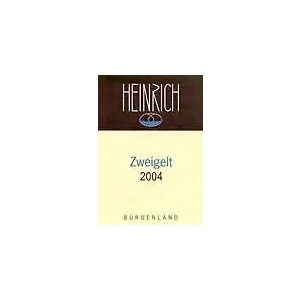
Heinrich Burgenland Zweigelt 2004 – Austria
Since the early 1990’s, the young Gernot Heinrich has firmly established
his family’s wine estate as one of the most exciting in all Austria and
a leader in the production of Zweigelt – Austria’s own grape.
The Heinrich story is a modern day fairytale, whereby a small family owned winery that for generations had produced only simple, tasty wines for family and friends and sold the balance in bulk, abruptly changed direction and emerged with Gernot’s dynamic leadership as a tour de force in winemaking. In Heinrich’s case, Gernot’s winemaking apprenticeship abroad was the catalyst for success. Upon returning to Austria, Gernot concentrated on traditional varietals, but with the goal of vinifying them in a more contemporary and international style – something his family had never done before. This philosophy translated immediately into the production of compelling wines of great charm as well as structure. Today, Heinrich’s wines possess gorgeous fruit as well as tannin, and they continue to improve with each successive vintage. Consequently, all of Heinrich’s wines are now extremely difficult to come by, and that in itself speaks volumes
Heinrich’s tiny Burgenland estate comprises a mere 10 hectares (22 acres). Zweigelt, a cross between the indigenous St.Laurent and a clone of Gamay, is Austria and Heinrich’s most renowned wine. However, two other Austrian varietals, Blaufrankisch (red) and Weissburgunder (white), provide equally intriguing offerings from this estate. Nevertheless, Gernot is not content to halt with present success. Merlot, Syrah, and Pinot Noir are now in the offering. Furthermore, Gernot has completed the construction of a whole new winery, which will increase his now meager capacity. Happily, we have much to look forward to from this young, energetic producer.
Tasting Notes: The 2004 Heinrich Zweigelt comes across as the quintessential Zweigelt. It is aromatic, deeply colored, and quite well endowed. The aroma of cherries that wafts from the glass and the cool tangy flavor that unfolds on the tongue with each successive sip recall the hedonistic delight of early summer. On the palate, fresh ripe fruit, a gentle spiciness, and a firm underpinning make the 2004 Heinrich Zweigelt an absolute delight to drink. Assuredly, the wine’s ripe, round, juicy flavors that hint if berry, cherry, and plum entice with each taste. Moreover, Heinrich’s Zweigelt recalls all the best attributes of the finest Grand Cru Beaujolais. It also serves as a reminder of what first rate Beaujolais could taste like more often, with just a little more care and character. It is no wonder then that critics continue to proclaim the virtues of Zweigelt and sing the praises of Heinrich Gernot and his superlative wines. We suggest you serve the 2004 Heinrich Zweigelt at cool room temperature (about 66°F), after it has been allowed to breathe for at least fifteen minutes. Extensive aeration (of an hour or more) will tend to mitigate the wine’s lush fruit and accentuate the spice and structure of Zweigelt, so as you like it!
Accompaniments: Pork and Veal Schnitzels, and many other traditional Austrian and German favorites such as Beef over Kartoffelklosse, provide splendid accompaniments to the 2004 Heinrich Zweigelt. Certainly, Sauerbraten and Black Forest Ham offer wonderful accessories to Gernot Heinrich’s delicious 2004 Zweigelt, too. However, it would be wrong to typecast this superb Zweigelt, which provides wonderful companionship to many more eclectic dishes. Grilled Smoked Chicken Breast, served with lentils; a thick Split Pea Soup, served with slices of white Vermont Cheddar and Pumpernickel Bread; Sautéed Wild Mushrooms and Risotto; and even Venison Tenderloin are all enhanced by a bottle of Gernot’s Zweigelt. Roast turkey, with savory onion and sage stuffing and the usual holiday trimmings, complements this Zweigelt, too. We also suggest serving the Heinrich Zweigelt with steaks and grilled meats; it can turn a simple mid week meal into a memorable moment. Prosit!
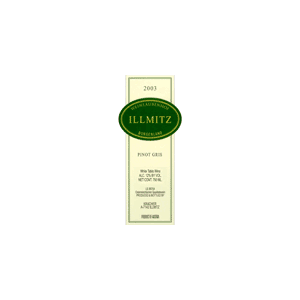
Kracher Illmitz Pinot Gris 2003 – Austria
Editor’s Note: Typically, our monthly primary red and white wine selections are drawn from different countries, but this month we felt compelled to break with that tradition to share with our members an exclusive opportunity to taste some of the world’s rarest and most interesting wines. Presently, Austrian wines are very “hot” and are in extremely high demand. Moreover, we trust you will enjoy this unique duo of wines as much as our tasting panel. Prost!
As one drives south from Vienna into what was once the Austrian-Hungarian Empire, the very heart of the Old World, one still encounters the very same quaint farms, charming villages and the great shallow lake that forms Austria’s border with Hungary, the Neusiedler See. Neusiedler See or the Sea of the Viennese as it is more commonly called is a favorite vacation spot for Austrians on holiday and for Viennese looking for a simple weekend respite from the weather stained cares of life in the big city. Neusiedler See is also the only steppe lake in central Europe. Moreover, the lake’s moderating effect on climate makes it a natural location for the cultivation of the vine, a practice that dates back to the early Medieval Period and perhaps into antiquity.
The area around Neusiedler See is more commonly referred to as Burgenland. It is the warmest and most prolific of Austria’s wine regions, due in part to the Neusiedler See’s tempering influence but, also, to the mixture of the area’s soils: black earth, fine sand, and loose gravel that allow for the cultivation of a wide variety of grapes. Around the shallow shores of the lake, which are conducive to noble rot, the production of great sweet wines predominates. However, as one moves away from the more humid shoreline, the preponderance of noble red and white grapes for the production of some of Austria’s finest dry wines begin to dominate. Here, Alois Kracher Sr. and his son Alois Kracher Jr. produce several of Austria’s most compelling dry and sweet wines from a myriad of grapes.
The production at Kracher is small and the allocation long, as is the case at nearly every good Austrian winery today. The situation at Alois Kracher is a microcosm of wine making in Austria; Kracher is both a family affair (father and son fashion the wine) and an expertly run facility that routinely sells out of all of its wine. Consequently, we were ecstatic to learn that there was just barely enough of this great producer’s Pinot Gris to fulfill this month’s membership. Hurray!
Kracher, father and son, share a passion for wine that seems unheralded. Alois Kracher’s wines are unmistakably intense and irrepressible, which should come as no surprise to anyone who has ever visited this great property. Even on the vine, Kracher’s grapes are a standout; the leaves are deeply verdant, the stalks thicker and stronger than most ordinary vines, and the fruit’s flavor is heads and tails above the rest – no small feat in a region known for its quality.
Typically, Alois the Elder (now a septuagenarian) spends most of his time in the vineyard; while Alois Jr, tends the cellar. And what emanates from this wonderful winery is nothing short of mind boggling. The Krachers fashion a dozen or more distinctive wines every year, including a rare and delicious Pinot Gris, another dry white wine that they refer to as “Days of Wine and Roses,” some traditional red wines, and a bevy of sweet dessert wines. All of the Kracher wines bear the unmistakable energy of their architects as well as a distinctive freshness and purity that are rarely seen in other producer’s wines.
Tasting Notes: A forceful, racy wine the 2003 Kracher Illmitz Pinot Gris bursts with energy. In the aroma one senses the marvelous purity of fruit that the Krachers extract from their grapes. There is also a hint of spice in the nose that speaks of the neighboring Levant: clove, nutmeg, and the entrancing perfumes of the Orient. In the mouth, the Kracher Pinot Gris is rich in fruit, textured, and long on the palate. And not alike a top Alsatian Pinot Gris, the 2003 Kracher Illmitz carries a wealth of fruit, flavor, mineral, and spice to a dry harmonious finish. We suggest chilling the Kracher Illmitz Pinot Gris to 35°-40° F before serving, and then tasting it at various temperatures as it warms in the glass. The wine undergoes several enjoyable and intriguing metamorphoses as it approaches room temperature that you will not want to miss, so enjoy!
Accompaniments: Although bold and beautiful on its own, the 2003 Kracher Illmitz Pinot Gris is a natural companion to food and an especially fine partner to many hard to match dishes. Austrian Schnitzels, White Asparagus in a creamy rich Hollandaise Sauce, and just about any grilled fish that is served with a sauce containing cilantro or other monolithic spice are all good bets with the Kracher Pinot Gris. A wide range of Asian specialties provide splendid companions to the Krachers’ Pinot Gris, too: Mango Chicken, Kung Pao Scallops or Shrimp, and Sichuan-Style Pork provide some of our top choices. A spread of soft or crusted cow’s milk cheeses offers another superb complement. The latter is a great way to end a fine meal.
Praxis Monterey Pinot Noir 2003 – U.S.A.
The erudite Bill Arbios, longtime winemaker and consultant for Jarvis, Lyeth, Fieldstone, and Souverain wineries among others is the artist and scientist behind Praxis. Praxis, the Greek word for practice, is hardly something Bill Arbios lacks; he has made wine for more than three decades, but Bill is a modest fellow with a lot of talent who likes to get things right. Bill and his patient wife Susan launched Praxis several years ago as an outgrowth of their Arbios Cellars Cabernet Sauvignon, which first debuted in 1993 with a mere 125 cases. Today, the entire production of Arbios Cellars remains at a modest 3000 cases – more than ample testimony to Bill’s insistence that “winemaking is not like being in a factory – it’s creating a work of art … winemaking defines the essence of my life; transforming a challenge into a vision of elegance, grace and power.”
Praxis wines are all 100% varietal offerings. In fact, most of this property’s wines are even produced from a single vineyard. Bill Arbios believes in allowing the nature of the grape variety and the natural terroir to express themselves in his wines. Consequently, he eschews blending as well as excessive manipulation. Bill’s philosophy is simple and can be summed up in the words of Bill’s early mentor, Lee Stewart: “buy the best grapes you can, spend more money than you can afford on the barrels, and don’t screw it up.” Essentially, this is the secret to great wines. Unfortunately, many winemakers miss the simple logic here and continue to manipulate their wines until they lack focus and are nearly unrecognizable. From Praxis, you can count on receiving only real wines that reflect individual grape varieties and their respective terroirs.
Presently, the Praxis line of wines include a very tangy quaffable Sauvignon Blanc, a classic delicious, perfectly balanced Viognier, a lovely Burgundian style Pinot Noir that puts many of its French cousins from Burgundy to shame, a spicy Syrah, and a powerful full throttle Merlot.
Tasting Notes: Graceful, light, lovely, and thankfully varietal in character, the 2003 Praxis Monterey Pinot Noir offers all the beauty and charm of the great Pinot Noir grape, without an edge. Beautifully scented, this cool climate Pinot Noir conjures an appealing array of aromatics: cherry, blueberry, cedar, oriental spice, and vanilla. Light to medium weight in the mouth, the Praxis Pinot Noir follows through on the palate with a wonderful silky textured feel, plenty of cherry-cola fruit, and deft touches of spice, orange peel, and vanilla. Moreover, a seven-month stay in French oak has framed this wine in the best possible light, while complementing the wine’s natural flavors. Bright and racy to the finish, this is one fine example of Pinot Noir. Enjoy it often, with or without fanfare, as it requires little aeration before blooming in the glass at temperatures between 60°-68° F.
Accompaniments: “Two glasses are all you need to enjoy this wine,” commented one panel member. “It would be a shame not to enjoy this wine with someone else, or to be unfortunate enough to have only one glass of it to drink,” he added. Well, these comments just about say it all. The 2003 Praxis Monterey Pinot Noir doesn’t require accompaniments to shine. Nevertheless, this wine’s bright acidity and lovely textured flavors and feel make it a natural partner for light foods. Veal, poultry, and assorted vegetarian specialties provide particularly satisfying accompaniments. Tender strips of corn fed chicken breast in a Marsala cream sauce constitute one such favorite offering. Fettuccini Alfredo and Pasta Primavera are two other winning accompaniments with the Praxis Monterey Pinot Noir. Grilled Ahi tuna, served with foccacia and a lightly herbed aioli, offers yet another match that could have been made in culinary heaven. Enjoy!
Praxis Lodi Viognier 2004 – U.S.A.
The erudite Bill Arbios, longtime winemaker and consultant for Jarvis, Lyeth, Fieldstone, and Souverain wineries among others is the artist and scientist behind Praxis. Praxis, the Greek word for practice, is hardly something Bill Arbios lacks; he has made wine for more than three decades, but Bill is a modest fellow with a lot of talent who likes to get things right. Bill and his patient wife Susan launched Praxis several years ago as an outgrowth of their Arbios Cellars Cabernet Sauvignon, which first debuted in 1993 with a mere 125 cases. Today, the entire production of Arbios Cellars remains at a modest 3000 cases – more than ample testimony to Bill’s insistence that “winemaking is not like being in a factory – it’s creating a work of art … winemaking defines the essence of my life; transforming a challenge into a vision of elegance, grace and power.”
Praxis wines are all 100% varietal offerings. In fact, most of this property’s wines are even produced from a single vineyard. Bill Arbios believes in allowing the nature of the grape variety and the natural terroir to express themselves in his wines. Consequently, he eschews blending as well as excessive manipulation. Bill’s philosophy is simple and can be summed up in the words of Bill’s early mentor, Lee Stewart: “buy the best grapes you can, spend more money than you can afford on the barrels, and don’t screw it up.” Essentially, this is the secret to great wines. Unfortunately, many winemakers miss the simple logic here and continue to manipulate their wines until they lack focus and are nearly unrecognizable. From Praxis, you can count on receiving only real wines that reflect individual grape varieties and their respective terroirs.
Presently, the Praxis line of wines include a very tangy quaffable Sauvignon Blanc, a classic perfectly balanced Viognier, a lovely Burgundian style Pinot Noir that outshines many of its French cousins in Burgundy, a spicy Syrah, and a powerful full throttle Merlot.
Tasting Notes: The 2004 Praxis Viognier is classic Viognier: floral, highly aromatic, deceptive, and seductive … right down to the last drop! From its lovely flower scented, fruit driven nose that seems to combine forsythia, jasmine, apricot, and pear into a single waft, one suspects this Viognier to be sweet, but alas not so. How deceptive and seductive Viognier can be, and utterly satisfying, too! The 2004 Praxis possesses lots of concentrated fruit and great acidity, which offer intensity and allow the wine to finish dry. Apricot, lime, subtle spice, and just a hint of exotica haunt the mid palate and silky textured finish of this charming Viognier, making it as quaffable as the frosty water of a mountain spring … with nearly 14° alcohol. Consider yourself forewarned. We suggest serving the 2004 Praxis Viognier fairly well chilled (about 40° F).
Accompaniments: The glory of Viognier is its chameleon like ability to adapt to its surroundings, and the 2004 Praxis is no exception. This wine is a crowd pleaser, with or without food. Some tasters characterize Viognier as a theoretical blend of the best of Chardonnay and Riesling; and although this analogy may be a bit simplistic, it affords the imagination a wonderful array of culinary possibilities to explore with Viognier. Seafood, Chinese, Thai, and Vietnamese specialties go especially well with the 2004 Praxis Viognier. Soft crusted and non-crusted cheeses, with homemade bread and freshly sliced pear, provide ample evidence of just how easy and adaptable this delicious Viognier can be. Bon appétit!
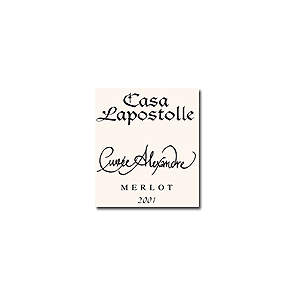
Casa Lapostolle Cuvée Alexandre Merlot 2003 – Chile
Casa Lapostolle is a collaborative effort of two great wine families: the Marnier family of France (of Grand Marnier fame) and the Rabat family of Chile. At the helm of this premier property is Alexandra Marnier-Lapostolle, who together with her husband Cyril de Bournet and Don Jose Rabat Gorchs reign over what many consider to be South America’s finest wine estate. In little more than a decade, Casa Lapostolle has taken the international wine world by storm.
In 1994, Alexandra Marnier-Lapostolle founded the Casa Lapostolle Winery, and with the world’s most prominent winemaker Michel Rolland selected prime vineyard sites that now yield world-class wine. Until quite recently, the Marnier-Lapostolle family was best known as the creator and founder of the world renowned liqueur Grand Marnier, even though this family has been involved in winemaking in France for generations, most notably as the owners of Chateau de Sancerre.
In creating Casa Lapostolle, the Marnier-Lapostolle family has pursued the same uncompromising approach to quality that made Grand Marnier a household name. The family’s objective at Casa Lapostolle is to consistently create world-class wines by marrying French expertise to the incomparable terroir of Chile. The Chilean climate is perfect for the cultivation of the vine, and the soil harbors no phylloxera. In addition, Chile contains a great number of old vines, mostly from French varietals that were brought from France in the 19th century before the dreaded vine louse devastated the parent stock in Europe. Consequently, many of these old vines continue to thrive in the vineyards of Chile, and nearly all Chilean vines, old and new, still grow naturally on their own rootstocks – a phenomenon rarely seen in Europe or elsewhere in more than a century. The result is pure, natural tasting wines that express expert care and ideal growing conditions.
Today, Casa Lapostolle comprises more than 750 acres of prime vineyards, located in three different growing areas. This estate produces two excellent white wines, a Bordeaux-style Sauvignon Blanc, which traditionally contains a small percentage of luscious Semillon, and an excellent Chardonnay. Both deftly represent Chile’s ability to turn out internationally acclaimed white wines. Nevertheless, red wines predominate. Cabernet Sauvignon, Merlot, and Carmenère (Chile’s own unique red varietal) dominate Casa Lapostolle’s excellent red wine portfolio and place this property among Chile’s finest wine producers. Casa Lapostolle’s most consistently delicious and most critically acclaimed wines remain the Cuvée Alexandre special reserve offerings, which are highly allocated and are offered only in the finest vintages.
Tasting Notes: Dedicated to Alexandre Marnier, the proprietor’s great-father, the 2003 Casa Lapostolle Cuvée Alexandre Merlot is nothing short of a tour de force in winemaking and, unequivocally, the very finest Merlot we have ever tasted from south of the equator. The product of the legendary Apalta Vineyard whose ungrafted vines average more than 60 years of age, this super saturated Merlot is the match for almost any Bordeaux Grand Cru St Emilion. An exceptionally rich wine, it contains gobs of blackberry and cassis fruit that mingle ever so eloquently with the opulent flavors of the world’s finest dark chocolate, spices, and oak. Girded by a boatload of ripe tannin, the Casa Lapostolle Cuvée Alexandre Merlot has one formidable life ahead of it. And like most of its great Bordeaux counterparts from exceptional vintages, the 2003 Cuvée Alexandre Merlot drinks well even at two years of age. Can you imagine a properly aged version of this wine; it is almost mind-boggling. Allow this outstanding Merlot at least a half hour or more in a decanter before serving at cool room temperature (below 68° F).
Accompaniments: Beef is the traditional Chilean favorite at Sunday barbecue and just about any time there is cause for celebration, even if that fiesta constitutes just a simple mid week respite from the mundane cares of life. Assuredly, the 2003 Casa Lapostolle Cuvée Alexandre Merlot provides more than an admirable companion to steaks and prime rib, but this wine fulfills more than the basic requirements of all self-respecting Chilean reds. The 2003 Cuvée Alexandre Merlot also complements more sophisticated fare, as it does equal or greater justice to subtle, complex sauces. Duck, goose, and the finest cuts of veal that are served with fruit based sauces remain some of our favorite dishes with this Grand Cru St.Emilion-style Merlot Porcini mushroom and truffle infused sauces and condiments constitute other treats with the lush 2003 Casa Lapostolle Cuvée Alexandre Merlot. Perfectly ripe, soft cheese provides another wonderful opportunity to enjoy this fine wine as well as a respite from red meat. In fact, this supple, decadently rich Merlot needs little to convince adherents of its greatness, except a clean glass, so enjoy!
Château Le Sartre Pessac-Léognan Graves 2001 – France
Château Le Sartre is a small highly prized property from the outstanding
Pessac-Léognan
appellation of Graves. This estate is well situated between two of the oldest
and most prestigious estates in Graves as well as all Bordeaux, Château
Fieuzal and Domaine de Chevalier. It is owned by Antony Perrin, also the proprietor
of Château Carbonnieux, which just so happens to be Graves’ most
consistent and renowned white wine estate.
Château Le Sartre is the beneficiary of a great terroir, superb winemaking, and a commitment to quality and excellence, all of which serve as the hallmarks of the finest classified Bordeaux estates. Both white and red Graves are produced at Château Le Sartre, but there is no doubt that the Sauvignon Blanc and Semillon blend that constitutes the domain’s white Graves ranks with the best this appellation has to offer.
Graves: The Birthplace of Bordeaux
Graves is the oldest and most historic of all Bordeaux communes. Before there was Château Latour, Lafite, and Margaux, and all the other illustrious names of the Médoc, there was Graves. In fact, Graves, which lies just to the south of the city of Bordeaux itself, is the birthplace of Bordeaux viticulture: vines have been cultivated in Graves since as early as the 1st century AD, due at least in part to the Roman presence and the legionnaires’ inability to grow much else in the graveled soil from which the name Graves is derived. The stone and gravel deposits of this great terroir are vestiges of the last Ice Age, a bane to most farmers but a boon to grape growers, whose vines struggle deep into the thin gravelly soil to draw life and subtle complex flavors from the nutrients below.
Today, the northern section of Graves called Pessac Léognon remains Graves’ premier appellation and one of the ultimate wine producing regions in all France, even though it must now battle the urban sprawl that spreads out from the confines of the city of Bordeaux and the nearby suburbs of Talence and Pessac. A little south of these towns lays the pastoral heart of Graves, a pretty, rural country where vineyards mingle with pastures and pine forests. Here, life remains wedded to the land and the joys of the vine.
Graves is rightly famous for both its red and white wines, which are produced in equal proportion. At their best, the red wines of Graves are unsurpassed for their aromatic beauty as well as their smooth, rich flavors. Earthy fragrant aromas that resemble cedar, the classic cigar box scent, black currant, and tobacco emanate from red Graves and form a bouquet that is frequently described as both enchanting and profound. Moreover, fine red Graves is often the supplest wine in all Bordeaux. Good Graves is also the most flavorful and easily appreciated of all Bordeaux reds for novices as well as connoisseurs.
Meanwhile, white Graves is a dry, very aromatic wine that emits great freshness
as well as a litany of flavors. Perhaps, the greatest event to take place in
Graves in the last quarter century is the revolution among the producers of
white Graves. Once, an obscure and expensive proposition that rarely traveled
well, contemporary white Graves has taken on vigor, personality, and even a
hint of exotica that underscores the physiological ripeness that was too frequently
absent in white Graves in years past. At their best, the finest white Graves
are enchanting, flavorful wines that rival the very best white wines of France.
Tasting Notes: A classic mature white Graves, the 2001 Château Le Sartre
Pessac-Léognan is all about elegance, refinement, and subtlety of
flavor. Like all truly exceptional white Bordeaux wines, Château Le
Sartre is not a heavy or weighty white wine on the palate; instead, it is
the ultimate in finesse and nuance of flavor. Delicate aromas of white peach,
stone fruits, and quince haunt the wine’s beguiling bouquet. Refined
and easy to drink, this classy white Graves offers up a well integrated set
of flavors that meld herb, citrus, butter, and clean vanilla oak into one
delicious package. If this wine has a fault, it is surely the impression
it gives of being carefree and light as it slips so merrily down the gullet.
Charming and ohhh so smooth, you will want another sip, and then another,
until you have consumed the bottle. Consider the 2001 Château Le Sartre
Pessac-Léognan as a seductress or true femme fatale, and enjoy! Moderate
chilling (about 40º- 45º F) for the Le Sartre seems to be the most
alluring point of departure; however, one can make a case for a more ambient
temperature, especially in cool climates. Salut!
Accompaniments: Fine white Graves is, perhaps, the ultimate wine with fish, so if you are so inclined the 2001 Château Le Sartre Pessac-Léognan will do any well-prepared seafood dish and its host or hostess proud. Prawns, served in a savory herb butter, sautéed scallops, shrimp, or crab, all provide especially fine parings with this wine. However, a classic Sole Meunière is, perhaps, the accompaniment par excellent. The delicacy of the fish and the wine intertwine to caress the mouth and guarantee that a second bottle will most assuredly have to be brought to table. In the absence of sole, fresh founder offers an excellent substitute and can be just as rewarding. Nonetheless, if the fruits of the sea are not to your liking, we suggest serving the 2001 Château Le Sartre as an aperitif or with some soft flavorful cheeses such as Derby or Neufchatel. It is sure to put you and your guests in the mood for an elegant meal. Bon appetit!
Kingsley Estate Cabernet Merlot Gimblett Gravels 2000 – New Zealand
It is no secret among wine drinkers that New Zealand fashions some very serious, if not outright fascinating wines. And what was once considered to be solely white wine country is now crafting world-class reds as well as whites. Yet, the question inevitably arises in iconoclastic minds as to the breeding of New Zealand wines, especially among wine snobs and those who see themselves as fundamentalist terroirists (those who believe that the land and microclimate alone determine a wine’s breeding and definitive quality). Invariably, the terroirist line of thinking neatly divides wine into two categories: New World upstarts, whose fruit driven wares reflect the bestial mark of technology, and their European forbearers, whose names, soils, and traditions are legendary and therefore better – the elect if you will. To the terroirist, only the latter can possess a soul and are worth savoring and cellaring. It is the classic good versus evil, them versus us, battle that the world is so fond of waging and our age is masterful at perpetuating. However, there is thankfully a voice in the wine wilderness that heralds a new day – and that voice belongs to Kingsley Tobin.
Kingsley Tobin, a tall imposing sincere man that comes across as equal parts mad scientist and prophet of old, is quite possibly New Zealand’s finest wine grower as well as its penultimate winemaker. His certified organic vineyard that sits astride the Gimblett Gravels, a true and outstanding terroir, is the most beautifully tended stand of vines we have ever encountered – anywhere. Moreover, all of Kingsley’s wines are made using biodynamic methods and, frankly, they put most Bordeaux wines and their so-called illustrious terroirs to shame. At the same time, they expose the delusion and often self-serving fraud that terroir alone makes great wine. Kingsley Tobin and his beautiful Cabernet, Merlot, and Syrah based wine lend credence to both the existence and importance of terroir, without denigrating the significance of the myriad of choices a winemaker takes (not which the least is yield control) and his ultimate skill. All Kingsley Estate wines are made in tiny quantities from very low yields, often as low as one ton per acre or less. Who in Bordeaux can claim the same?
Tasting Notes: Kingsley Tobin’s 2000 Cabernet Merlot possesses every bit as much breed, elegance, flavor and individuality as any classified Bordeaux. Upon first sip, Kingsley’s meritage blend recalls the Old World visage of St. Julien – Bordeaux’s quintessential claret. Immediately, the likes of Château Beychevelle and Leoville Las Cases spring to mind. Like its Bordeaux counterparts, the Kingsley Cabernet Merlot is deeply colored and heavenly scented, offering up beguiling aromas of blackberry, cassis, cedar and of course earth, which speaks of terroir, n’est-ce pas? Yet, plenty of pure fruit overlays this wine’s moderately tannic structure, with balance as the supreme result. In short, the Kingsley Cabernet Merlot is immensely interesting as well as plain delightful to drink. At last, a wine from the New World that enjoys the distinct signature of the land and climate from which it comes and the deft hand of it creator. Allow at least thirty minutes of aeration for optimum enjoyment.
Accompaniments: The adage, “The better the wine, the simper the food,” has always been our philosophy when pairing food and wine. In the case of the 2000 Kingsley Estate Cabernet Merlot, we reaffirm that notion. Why allow hot or spicy foods to obscure the balance and finesse of a wine? Consequently, some of our favorite choices with this wonderful claret like wine are poultry: A simple roasted chicken, spit roasted squab, duck, and Cornish game hens all offer wonderful accompaniments to Kingsley’s royal wine. Filet Mignon and beef tenderloin afford equally fine choices. Delicate saffron infused risottos merit high marks, too. Enjoy!