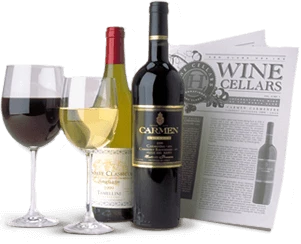
Vol. 7 No. 12
Standard Selection - (1) Red, (1) White
Villa Giada Ajan Barbera D'asti - Italy
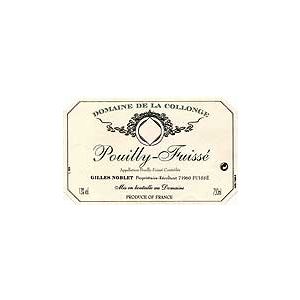
Domaine de la Collonge Pouilly-Fuisse - France
White Wines Only Featured Selection
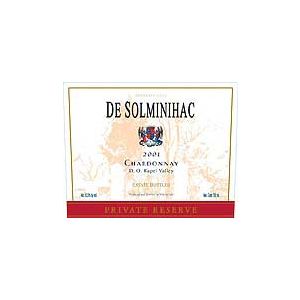
De Solminihac Chardonnay – Germany
Red Wines Only Featured Selection
Marcelino Diaz Temranillo – Australia
Villa Giada Ajan Barbera D'asti - Italy
![]() |
Andrea Faccio’s Azienda Agricole Villa Giada brings exquisite wines to the table from the classic grape varieties his family has grown in Italy’s Piedmont for more than two centuries. Located midway between Asti and Alba, the world’s foremost production zones for Barbera, Villa Giada specializes in the making of handcrafted Barbera wines from single vineyards. With more than forty-five acres of estate vineyards, located around three ancient farmhouses, Villa Giada’s aim is to fashion great wines from individual vineyards and terroirs – a goal that local cognoscenti and international wine critics alike believe they have fulfilled.
Villa Giada’s historical property dates to 1790, and the estate’s ancient farmhouses and winery remain in use today. The old part of the winery still plays host to all of the estate’s barriques (small oak barrels), which refine the classic Barbera wines that Andrea Faccio so adeptly crafts. In addition, Villa Giada also sports a modern winery that features stainless steel vats, temperature and pressure control equipment, and the latest technological accoutrements. Moreover, Donato Lanati, a professor at nearby Turin University and one of Italy’s foremost oenologists, assists Andrea in the crafting of Villa Giada’s wines. Together this dynamic duo fashions wines that are both internationally appealing and traditional in character. For this reason Villa Giada wines has begun sealing its wines with a specially designed synthetic cork, which preserves the wines original fruit and character while it prevents any possible taint that cork can imbue.
Although Barbera remains the flagship varietal at Villa Giada, this erudite estate also turns out small quantities of other classic Piedmontese specialtiess, including several still whites from local varieties and a lovely frizzante (lightly, naturally sparkling) Moscato d’ Asti.
The Piedmont
In the north of Italy, nestled just beneath the great Alpine wall as it tumbles out of Switzerland and the gleaming Mediterranean Sea, lies the Piedmont. It is a region of myriad beauty. It is also the region of Italy closest to France in proximity as well as in the sheer quality and variety of exceptional wines it produces. For centuries, Italy’s Piedmont remained a prize to be won, no doubt in part on account of the province’s world famous cuisine that still draws happily on the abundance and quality of local truffles. Yet today, it is the superbly made wines of Italy’s Piedmont that garner the most international recognition: complex, hedonistic red wines, still delicate whites, and sweet haunting Muscats. With such exquisite fare, should anyone question why the hearty robust delights of the Piedmontese table remain the region’s most famous ambassadors to a hungry and thirsty world?
Tasting Notes: The 2003 Villa Giada Ajan Barbera d’Asti is one of those rare Piedmontese classics, a wine born in an excellent vintage on the slopes of some of the world’s finest terroir. When the sun, the moon, the stars, and the weather align as they did in 2003, no place on earth produces better wine than Italy’s Piedmont, and this outstanding offering from Andrea Faccio is ample testimony to that claim. Ajan is named for Agliano, a village in the heart of the Piedmont that is known for producing the region’s most intensely flavored Barbera grapes, which Andrea Faccio fashions into wines of great finesse, flavor, texture, and longevity. The richly colored 2003 Villa Giada Ajan Barbera d’Asti is one lush, plush, well-endowed Barbera. Heady with the scent of ripe fruit that is tinged with truffle, violet, and oriental spice, the 2003 Ajan delivers a litany of ripe, textured flavors that boggle the mind as well as the senses. It has been years since the tasting panel has sampled a Barbera as elegant, ripe, textured, and enjoyable as the 2003 Villa Giada Ajan. Indeed, it is hard to believe that the 2003 Ajan is only a little more than a year old, and already it speaks of great hedonistic pleasure and eminent seduction. And if one could only wait a few more years or even a mere six more months, the latent greatness and secondary and tertiary characteristics that critics commonly refer to as complexity will emerge full force from the Ajan to provide even more innumerable pleasure (hard to image), but alas there will be no more of this fine Barbera available in six months as Villa Giada’s modest production of Ajan sells out all too quickly. Therefore, we suggest allowing the 2003 Villa Giada Ajan Barbera d’Asti a little breathing time in the glass before consuming it; better yet, let it air in a decanter for as long as you can keep your hands off of it, and enjoy at cool room temperature!
P.S. If you can find a couple of extra bottle to put away for a cold winter’s day, you will be more than amply rewarded – that is if Ajan’s present charms are not already too great to resist.
Accompaniments: As ripe, round and structured as the 2003 Villa Giada Ajan Barbera d’Asti is, consummate chefs and bumbling kitchen hacks alike can delight in the myriad of choices and accompaniments this fine Barbera affords. Whether it be a mid week meatloaf or a genuine Tournedos Rossini (filet mignon with artichoke hearts, foie gras, and truffles in a Madeira sauce), the Villa Giada Ajan is ready to please. And like most top end Barbera wines, this latest release from Andrea Faccio provides a splendid choice to the complex lively cuisine of Italy’s Piedmont. Consequently, if your culinary ability gravitates more towards that of the consummate chef than the kitchen hack, we suggest you try the 2003 Ajan with Sautéed Rabbit and Peppers, Braised Duck in a savory Barbera wine reduction, Osso Bucco (Braised Lamb Shanks), or Sautéed Veal Chops, the mouthwatering specialty of Milan.
For the Love of Cheese: For ardent cheese aficionados and those less endowed in the culinary arts or just plain short of time, we suggest they try the 2003 Villa Giada Ajan Barbera d’Asti with a three-cheese pizza or a first rate antipasto, replete with black olives and authentic classic Italian cheeses such as Montasio, Peccorino, and Toscano Reggiano. In fact, most hard and semi soft cheeses pair beautifully with the 2003Villa Giada Ajan. So for the love of cheese and a chance to indulge in a great selection of international cheeses to accompany the Villa Giada Ajan and the many other fine wines we feature, you need look no further than www.cheesemonthclub.com to enjoy a simple, easy to prepare treat. Salud!
Recipe for Red Wine:
Braised Veal Chops
4 veal chops 1 tsp. tarragon
4 Tbl. butter 1 tsp. basil
1 shallot – minced salt & pepper
1/2 cup wine
Preheat oven to 325 degrees. In a large skillet over medium heat, brown both sides of chops in butter. Reserve the drippings from the pan. Place chops in a large, shallow baking dish and cover with shallots, wine and spices. Pour reserved drippings over meat. Cover dish and bake for 30 minutes.
Domaine de la Collonge Pouilly-Fuissé 2003 – France
![]() |
Domaine Gilles Noblet is a small family owned and run domaine of approximately 22 acres. Gilles, the present proprietor, is the fourth generation member of his family to make wine at this prized property. And just for the record, Gilles’ wife is the sister of Jacky Janodet, the present dean of Grand Cru Beaujolais, so wine runs deep in the heart and soul of this estate as well as in the terroir of the property’s well-tended vineyards.
The name Domaine de la Collonge derives from the sector or area (known as an aire) of Fuissé that is called Collonge. Most of Gilles Noblet’s estate is spread along the hills of la Collonge, which yield on average only a little more than six thousand cases of Pouilly-Fuissé each year. In addition to his flagship Pouilly-Fuissé, Monsieur Noblet also fashions small quantities of Macon- Fuissé and Pouilly-Loché, wines similar to Pouilly-Fuissé, which originate from just outside the Pouilly-Fuissé appellation.
Although not certified organic, Domaine Gilles Noblet practices sustainable agriculture and uses non-interventionist methods almost exclusively. No artificial fertilizers or insecticides are employed, and only natural yeast is used in fermentation. Moreover, the average age of the vines for Domaine de la Collonge averages forty years of age, while many vines are considerably older. These old vines and reduced yields result in wines that are more generous and concentrated than the average Pouilly-Fuissé – an appellation that is notorious for more than its share of mediocre offerings due to overproduction.
In an appellation that turns out large quantities of wine, Gilles Noblet decided a long time ago to dance to a different beat. His style of Pouilly-Fuissé is one of concentration, purity, and the honest expression of the appellation’s terroir. His Pouilly-Fuissé features a real balance between flesh and bone or fruit and minerality. In addition, Noblet uses traditional wooden foudres (large wooden tanks) with temperature control elements for fermentation to insure texture and a gentle roundness in his wine. He also ages his wine in a combination of foudres and small oak barriques, only 20% or less are new each year. The limited use of new oak is practiced expressly, so that the oak imparts roundness and texture to the wine without an overwhelming taste of oak that would destroy the natural delicacy of Pouilly-Fuissé.
A strong, capable, and determined man, Gilles Noblet is highly regarded in Pouilly-Fuissé, but it is not only for his production of very fine Pouilly-Fuissé; it is also for his community service and civic pride. Gilles Noblet serves as the chief of the volunteer fire department in Fuissé, a position his father held before him. Santé!
Pouilly-Fuissé
Pouilly-Fuissé is the premier appellation of southern Burgundy as well as one of Burgundy’s finest white wines. Pouilly-Fuissé is ideally located in the heart of the Maconnais region and is renowned for its massif limestone bluffs and chalky alkaline soil, which provide the ideal terroir for Chardonnay. This appellation comprises just four villages that stretch out over a series of steep hills, just to the north of the ten Grand Cru villages of Beaujolais. All the wine of this renowned commune is white, emanating exclusively from Chardonnay vines.
In Pouilly-Fuissé, the tradition is to give fully ripened Chardonnay grapes a gentle press, so that the resulting wine expresses the ultimate quality of the grape and the soil, instead of sculpturing the wine by the extensive use of new oak. Consequently, most Pouilly-Fuissé wines still see little or no new oak barrel aging, so as not to obscure the delicacy, elegance, and subtle charm for which the wines of this excellent commune are justly famous.
Tasting Notes: The color of the noonday sun that gently ripens the golden
clusters of Chardonnay grapes in the heart of the Macon appears in every glass
of the exuberant 2003 Domaine de la Collonge Pouilly-Fuissé. Ripe, round,
and seductive, this lovely Pouilly-Fuissé offers up scents of spring
flowers, beeswax, soft ripened cheese and fresh baked bread, leading one taster
to refer to it as “my meal in a glass.” Gentle but very flavorful,
the 2003 Domaine de la Collonge follows through on the palate with a delightful
mélange of flavors, including pure fruit that captures the very essence
of the Chardonnay grape. Creamy and downright seductive in its center, this
wine is very very easy to drink. However, Gilles Noblet’s noble wine
also possess plenty of breed, charm and subtle nuances of flavor that become
most apparent with a little patience, so we suggest you stop to smell and taste
the goodness of this kindly wine, before gulping it. Like most fine Pouilly-Fuissé,
the Domaine de la Collonge is best when well chilled
(40° F) and subsequently allowed to evolve slowly in the glass as it warms.
Salut!
Accompaniments: The 2003 Domaine de la Collonge Pouilly-Fuissé is one of the easiest white wines to pair with food because it provides understated elegance to complement a wide variety of foods, especially fish and other fine fruits de mer. And unlike so many New World Chardonnays, which beg to make statements or absolutely must be the center of attention, the Domaine de la Collonge is content to harmonize. Scallops and pistachio nuts, sautéed in a light cream sauce, is one tried and true companion to Gilles Noblet’s elegant Pouilly-Fuissé. Flounder, sole, sea bass, and grouper, prepared a myriad of ways, offer other very fine choices with this wine, too. Pasta Primavera, a simple roast chicken, and healthy salads represent other excellent alternatives that are not beholden to seafood. Nevertheless, this first rate effort from Noblet needs no accompaniment to shine. In place of Champagne or as an aperitif, there is no better still white wine than the Domaine de la Collonge Pouilly-Fuissé to kick off a relaxing evening or pleasant interlude from the cares of life; we suggest you keep a bottle or two around for just such occasions.
Recipe for White Wine
Chicken Fricassee
1 whole chicken cut into pieces 1/4 tsp. peppercorns
4 cups water 1/4 cup flour
1 carrot – sliced thin
1 large onion – quartered
Place chicken pieces in a large stewing pan with water, carrot, onion and peppercorns. Bring it to a boil. Reduce heat and simmer covered about 2 hours or until meat is falling off bones. Strain the stock and remove meat. To make the gravy, boil stock until it is reduced in half and thicken with flour. (add the flour very slowly)
Pour gravy over chicken and serve with buttered noodles.
De Solminihac Reserva Privada Chardonnay 2001– Chile
![]() |
Emilio de Solminihac, more affectionately known as Don Emilio to a burgeoning legion of young Chilean winemakers, is the guardian of traditional winemaking in Chile and one of South America’s finest winemakers. He is also an affable gentleman who seems cut from a bygone age. Like most winemakers of his generation, Don Emilio received his first training in wine as a young man while working in his grandfather’s vineyard and winery. Later he would graduate from the Universidad de Chile with a degree in agricultural engineering, and subsequently depart for France, where he would study at the Université de Bordeaux under the legendary Emile Peynaud – France’s most renowned oenologist. While attending the Université de Bordeaux, Emilio earned that venerable institution’s esteemed degree in oenology, the first Chilean to do so. Today, Emilio de Solminihac is revered as much for his legacy of fine, age worthy wines as he is for his numerous oenological innovations – many of which have helped to transform the Rapel Valley into the Napa Valley of Chile.
Don Emilio’s long collection of wines include splendid Sauvignon Blanc, Semillon, Chardonnay, and a limited quantity of South America’s finest Riesling as well a host of revered reds, not which the least is the estate’s excellent Bordeaux-style Cabernet Sauvignon. Yet, Don Emilio’s most appealing legacy remains the limited production of Chardonnay, Merlot, or Cabernet Sauvignon that is bottled under the De Solminihac label. These complex, age worthy wines are as endearing as they are enduring, and they go a long way to dispel the notion that Chilean wines don’t age in the bottle or develop the portfolio of secondary characteristics that wine critics generally refer to as complexity. Try a De Solminihac wine, Don Emilio’s private reserve, and enjoy the legacy.
Tasting Notes: The 2001 De Solminihac Chardonnay goes a long way to redefining the consumer’s notion of Chilean Chardonnay. This Burgundian style Chardonnay was barrel fermented sur lie in French oak for a full six months before bottling. Don Emilio’s flagship Chardonnay boasts a pale yellow robe and an exuberant bouquet, reminiscent of good Meursault. Floral, butter, hazelnut, and vanilla scents all waft from the glass. On the palate the 2001 De Solminihac Chardonnay is well defined and complex, as each sip recalls yet another gustatory note. Apple, apricot, dried peach, citrus, and spring flowers all play a part in the symphonic harmony of this private reserve Chardonnay. Rich, well balanced, and very persistent, this medium to full-bodied Chardonnay is already delicious, but it will most certainly improve further in bottle for at least another couple of years. We suggest serving it between 40° – 50° F.
Accompaniments: The 200l De Solminihac Chardonnay is classic Chardonnay, and classic Chardonnay deserves classic food, or at least the very best fare one can bring to the table. Why not try Lobster Stuffed Ravioli, tossed in Champagne sauce with grilled shrimp, with Don Emilio’s classic Chardonnay. It’s simply delicious. A plain steamed lobster in drawn butter or seared scallops in a savory cream based sauce constitute other outstanding pairings. Poached salmon, sea bass, and tilefish are other classic marriages that are bound to succeed with the 2001 De Solminihac Chardonnay as well. And for contrarians or those who would rather die than eat what comes out of the briny deep, there is always chocolate, specifically in the form of chocolate truffles filled with Chardonnay. Indeed, such morsels do exist. For more great chocolate accompaniments, we invite you to visit our international chocolate of the month club at www.chocolatemonthclub.com
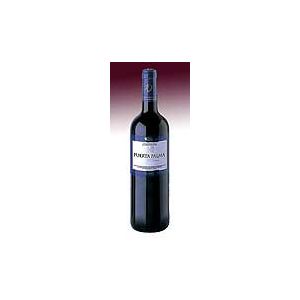
Bodegas Marcelino Diaz Puerta Palma Ribera del Guadiana
2001 – Spain
![]() |
The Diaz family is, perhaps, best known for their pioneering work at nearby Lar de Barros, an innovative estate in the remote southwestern part of Spain called Extramadura. In the 1970’s Marcelino Diaz, an Agricultural Engineer, began a revolution in the Extramadura by planting the highest quality red varietals on the bed of an ancient inland sea that had theretofore been used to grow only common white grapes for bulk wines. Marcelino’s efforts surpassed even his finest expectations, resulting in the first internationally respected red wine from Extramadura. Moreover, his success gave impetus to the founding of the D.O. Ribera del Guadiana and the Bodega Marcelino Diaz.
Bodegas Marcelino Diaz was launched in 2000 with the introduction of Puerta Palma, a full-bodied red that is made from Tempranillo (80%), Cabernet Sauvignon (15%), and Graciano (5%). Diaz established the vineyards for Puerta Palma in the Tierra de Barros sub-district of the Ribera del Guadiana. At 1500 feet above sea level, the grapes enjoy a healthy continental climate (hot summers and cold winters), where they mature perfectly in the vineyard’s limestone rich soil. Puerta Palma is aged at least six months in new American oak and is held additional time in bottle before release. The result is a rich, powerful, age worthy wine that can stand up to hearty food and a cold winter’s night.
Tasting Notes: The 2001 Puerta Palma could easily double as a Cahors, the famous black wine of Southwest France. Almost opaque, and as dark and deep as any wine from Cahors we ever have tasted, the Puerta Palma is one big, brooding, power packed potion – a wine that can surely hold its own with the best of the big boys. A heady, high alcohol concoction, this beauty emanates an intriguing aroma of plums, stewed black fruits, basil, tobacco, and oak, but the palate profile is the real glory of the Puerta Palma as this wine explodes when it hits the tongue. In the mouth, the Puerta Palma reveals a broad array of deep down fruit flavors, bordered by solid tannins and an almost massive, but balanced structure. As it breathes, the Puerta Palma takes on a flamboyant, almost hedonistic quality, à la the finest young Rhône wines from Chateauneuf-du-Pape and Gigondas. Consequently, we suggest allowing this classic, very traditionally styled red at least thirty minutes or more in the glass or decanter before serving in or order to capture all its magic and mystery. Laying it down for 2-3 more years would pay dividends as well. Cool room temperature (below 68º F) remains our preference for imbibing the 2001 Puerta Palma. Enjoy!
Accompaniments: The 2001 Puerta Palma is, indeed, a wine to ward off the chill of a cold winter’s night, where it works its magic with or without a fire in the hearth. It’s also a wonderful accompaniment to a genuine cassoulet, a hearty beef and vegetable stew, or a good old-fashioned t-bone steak. Puerta Palma is a wine to get the blood pumping and the heart racing. The 2001 Puerta Palma is what several members of the panel refer to as “a no heart attack wine.” A regular diet of this wine is almost certain to keep the arteries clean, so bring on the meat and don’t forget the cheese, too. Speaking of cheese, we have enjoyed the Puerta Palma with a host of Spanish cheeses, most notably Tetilla. Tetilla is a delicious, creamy cheese from Galicia that melts in your mouth. St. Maure, the elegant but very flavorful goat cheese from the Loire Valley of France, provides a wonderful accompaniment as well. For more winning cheese suggestions, visit our website at www.cheesemonth.com, and enjoy!
For Members Only
Give Your Friends FREE Beer, Wine, Cheese, Chocolate, Cigars & Flowers!
Through our Customer Appreciation Program
Your name has real value to your friends, co-workers, and family members! Every time a friend, family member, or anyone else you know joins any one of our clubs, [or gives a gift] for 3 months or longer, we'll give them 50% off of their first month, but only when they mention your name. And we'll also give you 50% off your next month too which can either be applied towards your current membership or you can try one of our other Clubs out! (We can add one more month to your order at 50% off for prepaid memberships!)
The Fine Print: Members giving gift memberships do not qualify for referral credits and you can't give yourself a gift to qualify! This Program is mutually exclusive of any other promotions.
Membership
Q & A
Note: Please do not use the web site to make any account related information changes such as address or billing changes, membership extensions, or terminations. To ensure timely processing of your request, please call us at 800-625-8238.
Q: What can I do if Im having difficulty receiving my shipment
at home?
A: You should consider having our discrete box delivered
to your work location or to a neighbor 21 yrs. of age that can
receive it for you. The box is brown corrugated cardboard and doesnt
say Wine on it anywhere. Consider having it shipped
to your work location as many of our customers do.
Q: What should I do if Im moving or want to extend my membership?
A: Please call us prior to the 9 th of the month to make
all account related information changes such as address changes,
membership extensions & terminations, or gift accounts desiring
to continue their memberships. Address changes made after that
time may require a repackaging and re-shipping charge and will
incur a $5.00 service charge from UPS that will be charged to your
account.
Q: What happens if my shipment is damaged?
A: If your shipment arrives damaged, please call us immediately toll
free at 1-800-625-8238 and report the incident for a prompt resolution.
Q: What happens if my credit card is declined?
A: We will send you a courtesy notice asking for an alternative payment
method, and will also attempt two more times to process the charges. If we
cannot secure
payment and have not been contacted by you, the order will be temporarily suspended.
Q: What happens if I join under a special incentive program and dont
stay a member for the entire term committed?
A: Not a problem. Although we want to do everything we can
to keep you as a member, we will allow you to cancel your subscription
early, however, you will be responsible to pay for the item which
was given to you as part of the promotion. If you received a discount
based on a specific term, the amount discounted will be charged
to your card.