Past Newsletters

Vol. 6 No. 9

Standard Selection - (1) Red, (1) White
Ventana Arroyo Secco Syrah 2000 - U.S.A.
Bisci Verdiccchio di Matelica 2000 - Italy

Red Wines Only Featured Selections
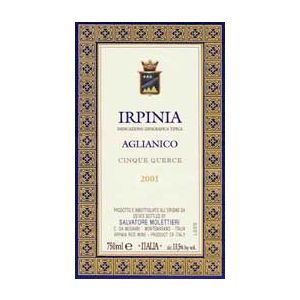
Molettieri Irpinia Aglianico 2001- Italy

White Wines Only Featured Selections
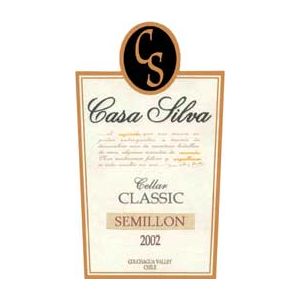
Casa Silva Classic Semillon 2002 - Chile

Ventana Arroyo Secco Syrah 2000 - U.S.A.

Doug Meador, a former Navy jet pilot and University of Washington Econometrics graduate, was planning a career in Washington State where his family owned orchards, when he was unexpectedly waylaid. On his way to Washington from the Navy, some college friends persuaded Doug to supervise the planting of 2,500 acres of grapes in Monterey County. Suddenly, Doug's plans changed. He had become fascinated with the challenge of cool climate viticulture, so he decided to remain in Monterey. Doug subsequently purchased the finest area of the large planting he was supervising and named it Ventana Vineyards. Doug chose the vineyard's name (the Spanish word for window) because the vineyard abuts to the Ventana Wilderness, and the vineyard symbolized to him the window to the future in viticulture in Monterey. However, not even Doug could have envisioned just quite how prophetic the name Ventana would become and how it would come to symbolize Monterey's miraculous transformation.

Today, Ventana Vineyards remains entirely owned and operated by Doug and Luann Meador, with assistance from their production staff. Moreover, Ventana Vineyards is the Most Award Winning Single Vineyard in America. For over thirty years, Ventana has essentially been a research vineyard the result of Doug Meador's single-minded dedication to earn Monterey County a respected place on the California wine map. This accomplishment is due in large part to his research and dedication to solving the challenges and reaping the rewards of cool climate viticulture. Some of Doug's innovations include close vine spacing and split canopy trellising methods that protect the vines from wind and open the grapes to sunlight and air circulation. This increases yields while improving overall fruit quality.

Doug Meador has also tackled clonal vine research, finding that many vines were mislabeled and were not the best varietals or clones for Monterey's cool growing region. With Doug in the vanguard, the Arroyo Seco American Viticultural Area of Monterey is now the fastest growing wine region in the world. From Doug's original plantation in 1972, the Arroyo Seco has grown to more than 50,000 acres, more than many other world renowned viticultural regions such as Spain's Rioja. Moreover, the Arroyo Seco now attracts the very top names in American and European viticulture.

The benefits of many years of study are found in the many fine wines of Ventana Vineyards. By his own proclamation, Meador describes his wines as possessing a European sensibility with an abundance of California fruit. In addition, each wine from Ventana Vineyards is true to its labeled varietal and is 100% estate grown and bottled from a single vineyard; these are qualities found in only the finest wines. Yet, these remarkable attributes are only part of the quality quotient at Ventana. The other half of the equation is Ventana Vineyard's refusal to bottle more than a third of its entire grape production. In choosing this path, the winery is able to bottle only the finest portion of each vintage, which assures the overall quality of its wines as well as consistency from vintage to vintage. The rest of the estate's production is sold off to other premium wineries, such as Bernardus, Cain, Fogarty, and Geyser Peak; the quality of Ventana's fruit as well as Doug Meador's reputation for viticultural research makes Ventana's grapes some of the most sought after fruit in California. Not surprisingly, these other wineries have made an unprecedented number of award winning wines from Ventana's fruit, augmenting further Meador's claim to fame with his own wines.

Climate Regions of California

Years ago the Viticulture and Enology Department of the University of California studied the various climatic zones within the state, confirming the long held notion among grape growers and ordinary residents alike that the Golden State was home to a multitude of microclimates. In order to assist growers, who were seeking the answer to the age-old question of what grape varietals to plant in what location, University scientists zoned the state into five distinct climatic regions, based upon a method of heat summation.

According to the University of California's method, each day of the growing season (April 1 October 31) is classified on a scale of degree days, whereby the length of time the temperature remains over 50º F on any given day is measured, resulting in a maximum number of degree days for each zone. The zones range from Region I, with 2,500 degree days or less, to Region V, with more than 4,000 degree days. Region I growing areas (Ventana Vineyards is located entirely within a Region I zone of Monterey County) are to be found in varying parts of California, including many of the choicest areas of Monterey, Santa Barbara, and Sonoma Counties, which specialize in the cultivation of Chardonnay, Gewürztraminer, Pinot Noir, and Syrah the so called cool climate varietals.

The advantage of cool climate viticulture in California for the appropriate grapes is an additional hang time of 30-60 days in the vineyard, which concentrates the flavor and balances the sugars and acidity in the grapes, resulting in wines of considerable flavor as well as finesse.

Tasting Notes: After just one taste of the 2000 Ventana Arroyo Seco Syrah, it will come as no surprise to learn that Ventana's Syrah is the progeny of the oldest Syrah vines in Monterey County. Lush, hedonistic and supremely balanced in bouquet as well as flavor, this offering from Ventana recalls the glory of Chateauneuf-du-Pape. Red fruits, black fruits, Asian spices and a hint of pepper caress the nose and coat the palate. Similarly, just the right amount of smooth American oak frames the center and finish of the 2000 Ventana Arroyo Seco Syrah, which leaves the imbiber begging for more. For optimum enjoyment, allow this elegant, medium-bodied Syrah to breathe in a decanter or glass for at least a few minutes before consuming it.

Accompaniments: While the timeworn tradition of pairing Syrah with beef and lamb is certainly a propos in the case of the 2000 Ventana Arroyo Seco Syrah, both the wine and the consumer deserve a broader palette upon which to draw. So, by all means dust off that recipe you have been saving for the ultimate braised lamb shank or the perfect beef tenderloin; and after that is all said and done, let's talk Mediterranean. Roasted quail, grilled chicken with rosemary and garlic, Provencal pizzas, stuffed ravioli, and just about any pasta dish of consequence provide other delicious accompaniments to the 2000 Ventana Syrah. A classic Florentine Pizza, with fresh garden spinach, garlic, chopped tomatoes ricotta, and mozzarella, in the company of the Ventana Syrah, remains one of our favorite meals. A fresh mushroom pizza is another winning combination. And for those drawn to the sea, a fine cut of tuna, brushed with olive oil and grilled rare with Mediterranean herbs, provides another taste sensation. Enjoy!

Recipe for Red Wine:

Braised Lamb

4 lbs. lamb shoulder - cut into chunks
3 garlic cloves minced
¼ cup red wine vinegar
¼ cup red wine
¼ cup chopped anchovy
4 Tbl. olive oil
2 Tbl. fresh rosemary

In a large fry pan, sauté the garlic in oil over low heat until lightly browned. Add the lamb and sauté on all sides until browned. Lightly salt & pepper the meat.

Raise heat to medium-high and add the red wine. Stir and cook for about 4 minutes. Cover and simmer for 20 minutes. While meat is simmering, blend together the rosemary and anchovy. Once all is blended to a paste, add vinegar. Stir paste into lamb and cook over medium, uncovered for 10-15 minutes.

Bisci Verdiccchio di Matelica 2000 Italy

The Castiglione Bisci estate is without a doubt Verdicchio's finest expression of quality and style. It is also one of the Marches most illustrious estates. Its owners produce several wines, both white and red, of extraordinary eminence. If the truth be known, draconian measures are taken by Bisci to assure the ultimate quality of every bottle: rigorous pruning to limit yields, strict selection of every cluster at harvest, the bottling of only free run must, and the steadfast refusal to bottle wine in poor vintages are just a few measures that set this estate apart from the majority of commercial producers in Verdicchio.

Verdicchio is a commonplace name among wines consumers, and so is the striking but hopelessly impractical fish-shaped bottle that encapsulates the most commercial of Verdicchio's wines from Castelli di Jesi. However, very few experts, let alone consumers, know that there are indeed two appellations where Verdicchio is produced Castelli di Jesi and Matelica. Both appellations employ the same indigenous white Verdicchio varietal, but the similarity ends there. Rarely are the wines of same region and varietal as radically different as the tale of the two Verdicchios.

The wines from the Castelli di Jesi appellation are responsible for Verdicchio's reputation as a light, supremely drinkable wine of refreshing simplicity and affordable price. Nearly all commercially bottled renditions of Verdicchio, including those that are put into amphoras or aquatic-shaped bottles, which is to say virtually all exported Verdicchio, are from Castelli di Jesi. Conversely, Verdicchio di Matelica is still virtually unknown outside of its appellation.

Verdicchio di Matelica is a very small township couched in the hilly rural part of the central Marches. The Marches is the green, picturesque region of central Italy that is wedged between the Appenine spine of the Italian peninsula and the cliff studded coast of the gleaming Adriatic Sea. Aside from the two month onslaught (July and August) of Italian and Teutonic tourists that descend upon the coastal regions of the province, the Marches remain an oasis of calm, rural charm, art, religious shrines, fine food, and of course wine the very glories of Italy. Yet, even within the Mettalica region, its Verdicchio is rare and difficult to find. This is the real Verdicchio, a wine of substance as well as charm. It is made in tiny quantities by local artisans, and not surprisingly most of it is consumed locally. Verdicchio di Metalica is in essence handcrafted and correspondingly hard to come by, and Bisci's two outstanding Verdicchios are no exception.

For the record, Verdicchio takes its name from the greenish yellow grape varietal that constitutes the mainstay of all Verdicchio wines; many critics would also add that Verdicchio renders heart and soul to the wine that bears its name. Up to twenty percent of Trebbiano and or Malvasia, two other local varietals, is permitted in Verdicchio, but the finest versions like Bisci contain only Verdiccchio.

In addition to an outstanding Verdicchio di Mettalica from the estate's vineyards, Bisci also produces tiny quantities of a single vineyard offering, Vigneto Fogliano. Both wines offer copious quantities of ripe fruit, exotic flavors, and subtle complexity the very ingredients missing in the wines of the Castelli di Jesi. Moreover, Bisci is a leading producer of fine red wine. The estate's proprietary red, Villa Castiglioni, is a seductive blend of 70% Sangiovese and 30% Cabernet Sauvignon. It proffers a heavenly bouquet, and more than enough flavor and elegance to put many a so-called 'super Tuscan to shame.

Tasting Notes: Forget all of the light, insipid Verdicchios you may have experienced in Italian restaurants or cheap seafood shacks across America, the 2000 Bisci Verdicchio di Metalica is the real Mazzoni. It is amply endowed and arrayed in a golden robe. Pure and richly fruity, this Verdicchio offers up aromatic fireworks and more than a hint of exotica. Ripe pineapple, along with hints of honeysuckle and white flowers, caress the nose, while a textured, fruit-driven mid palate presents more than it fair share of depth and subtle complexity. The 2000 Bisci di Metalica resembles in no shape or form any other Verdicchio we have ever tasted in America, and that bold statement alone should tell you something good about this exciting offering. Undoubtedly, this wine needs to be tasted to be believed. Enjoy!

Accompaniments: The 2000 Bisci Verdicchio di Metelica is the perfect accompaniment to any number of fish dishes for which the Marches are famous. In the towns and villages of the Marches, it is generally acknowledged that the dry, aromatic, fuller bodied Verdicchio di Matelica is better with the provinces heady seafood fare than the fruitier, commercial wines of Castelli di Jesi. Even the local fish soup, a version of Cioppino, doesn't overpower the Bisci Matelica. Yet, in order to highlight the wine, we suggest serving this subtley complex Verdicchio with such freshwater delicacies as trout or perch. Saltwater fish like snapper, rockfish, or sea bass serve as equally enjoyable backdrops, especially when steamed, grilled or served with a rich sauce. Nonetheless, there is more to the Marches than seafood and commercial Verdiccchio, as Bisci can testify, although it would be hard to convince the summer tourist crowd of that. Veal, baby lamb and almost all types of domestic and wild birds offer an endless array of possibilities with this Verdicchio Matelica. We even suggest the Bisci with pork tenderloin, as there is no wimp in this white wine. Salute!

Recipe for White Wine:

Pancetta Cream Sauce over Sea Bass

1 lb. Fresh Sea Bass fillets
1 oz. pancetta or 3 strips bacon
1 carrot peeled & sliced
1 zucchini peeled & sliced
3 Tbl. fresh basil - chopped
4 scallions sliced thin
1 cup heavy cream

Steam carrot & zucchini slices until crisp, but tender. Cook pancetta/bacon in a small skillet and reserve drippings. Cook scallions until tender in drippings and slowly add heavy cream. Bring to a boil and reduce heat immediately. Simmer on low for 5 minutes or until slightly thick. Add basil and remove from heat, but keep warm.

Cook fish fillets at 400? for 10 minutes, or until done. Turn fish once during cooking. Broil top of fillets for 1-2 minutes after cooking. Top fillets with cream sauce and crumble pancetta or bacon over top of sauce.

Molettieri Irpinia Aglianico 2001- Italy

Aglianico is the only truly great red grape varietal in southern Italy. The noble Aglianico was first planted in Italy by the ancient Greeks who colonized southern Italy (Magna Graecia) around 700 BC. The name Aglianico itself is an Italianate distortion of Hellenico, meaning Greek. Aglianico is a superb varietal, perfectly suited to the Italian Campania, most especially the appellation of Taurasi and the surrounding province of Irpinia, both of which lie in the mountains just west of Naples. In the Campania, once known as the granary of Rome, Aglianico produces a great red wine that is the equal of any in Italy, including wines from the renowned Nebbiolo of Barolo and Barbaresco fame.

The Molettieri estate comprises only seven hectares (about 15 acres) in Montemarano, historically one of the two finest crus of the appellation. This celebrated vineyard is situated at nearly 1700 feet in altitude. Not surprisingly, nearly all of the Campania's great Aglianico is grown between 1200 and 1800 feet in the volcanic soil of sequestered enclaves. Here perfect ripening occurs in the first week of November, yielding a wine of authority, power, and concentration. Typically, rich in polyphenols and extract and displaying a remarkably deep purple color, Salvatore Molettieri's Aglianico achieves absolute greatness with just a few years in bottle.

Salvatore Molettieri, a man of exquisite generosity, produced his first estate-bottled wine in 1988. Subsequently, he has invested nearly all of the estate's profits back into the vineyard and cellar. In the production of his forceful, often intense wines, he makes no concessions. Molettieri's Taurasi and Irpinia Aglianico will never be mistaken for frivolous wines; rather, these potions are the endearing legacy of the ancient Campania.

Tasting Notes: A deep, brooding, highly extracted wine, the 2001 Molettieri Irpinia Aglianico is more than a glass of wine; it's a meal as well. In the glass, the wine's saturated purple robe offers up exquisite scents of woodland truffles, anise, tar, and a sensual autumnal sweetness. On the palate, this Aglianico continues its gustatory assault with layer upon layer of black fruits, rose petal, tobacco, and subdued earth tones, and this is before the wine's culminating feat a long, dry finish that is imbued with ripe tannin and round subtle wood tones. The 2001 Moletierri Aglianico is, perhaps, best described as a tour de force in winemaking for the up and coming Irpinia DOC. Drink this full-bodied Aglianico moderately cool (about 65º F), after allowing it to breath for an hour or more. In an ideal world, one would have a bottle of this Irpinia on the table now and a case in the cellar to enjoy over the next few years.

Accompaniments: Whether it is heart healthy Mediterranean fare or full-flavored meats and cheeses, the 2001 Molettieri Irpinia Aglianico is ready to please. It provides wonderful drinking with traditional southern Italian recipes, especially lentil and bean dishes like Pasta e Fagioli. Homemade pasta in a thick red tomato sauce, laden with plenty of garlic and olive oil, also provides a splendid backdrop to the Molettieri Aglianico. Grilled lamb is another excellent accompaniment and a traditional companion to Aglianico in the Campania. Genuine, aged Parmesan or Provolone cheese in the company of Molettieri's Aglianico offers yet another treat, particularly when used as a finale to a fine meal; yet, just about any full-throttle, highly flavored food will do well in the company of this noble red wine.

Casa Silva Classic Semillon 2002 - Chile

Located in the heart of Colchagua, Chile's Napa Valley, Casa Silva is one of South America's most exciting and forward-looking wineries. Historical accounts tell us that the Silva family's predecessors were pioneers in Colchagua more than a century ago, when they brought the first grape varieties from France to this lovely valley, located just two hours south of Santiago. Today, the Silvas, father Mario and sons Mario Pablo, Gonzalo, and Francisco remain pioneers: they are Colchagua's foremost experts on Carmenere, Chile's emblematic red grape variety. Moreover, they are at the vanguard of their nation's success with Semillon and Viognier, two of France's greatest white varietals.

A family passion, a love for the land and its wine, and a commitment to future generations has catapulted Casa Silva in just seven years from a bulk supplier and bottler of wine to one of the continent's superstars. Since its inception in 1997, Casa Silva has become the Chilean winery with the most recognition and awards at international wine competitions. For three consecutive years, 2000, 2001, and 2002, the Catad'Or Hyatt, Chile's most prestigious wine competition, has heralded Casa Silva as the Best Chilean Producer. Furthermore, the International Wine & Spirit Competition named Casa Silva as The best South American Producer, and with good cause. This estate's many wines are uniformly excellent and getting better every day.

Tasting Notes: A brilliant, vibrant wine that radiates sunshine from every glass, the 2002 Casa Silva Classic Semillon is latent with the waft of tropical fruit: mango, pineapple, and lime emerge with airing, to foretell a long and illustrious future. Rich in flavor, texture and balance, the 2002 Casa Silva is already a bright, extremely enjoyable wine that seems ready to pop with pent up fruit and crisp acidity. And like all self respecting Semillon wines, the Casa Silva Classic will benefit from additional bottle age because as good as it is now; its best is yet to come. With a little more bottle age and sweet repose, we are betting that this debut Semillon will turn out to be nothing short of show stopping. If this first effort from Casa Silva is any indication of what the Semillon varietal is capable of achieving in Chile, the consumer is in for a real treat. We suggest serving the Casa Silva Semillon well chilled, but then allowing it to breathe and warm up in the glass. This way all the latent goodness and subtle nuance in the wine are not lost: for what it's worth, the tasting panel was nearly unanimous in its preference for handling the wine in this manner. Enjoy!

Accompaniments: Our first impression of the 2002 Casa Silva Classic Semillon was that it would be a superb accompaniment to shellfish and just about anything else that swims, and we were right. One of the first dishes we enjoyed with this wine was a traditional Chilean seviche, marinated in fresh limejuice. Yum! We also suggest trying the lighter more delicate forms of sushi, as well as sashimi, with this offering. As an alter ego, foie gras provides a wonderful companion, drawing out the wine's fruit and underpinning, along with the many subtle nuances of flavor that make this Casa Silva Semillon so enjoyable. And when all else fails, just a plain old, comfortable spot on the porch, surrounded by family and friends, provides another perfect way to enjoy Casa Silva's Classic Semillon.


logo for wine club
Since 1994
Home
Join Our Wine Club
Gift Memberships

Membership Renewals
Reorder Your Favorites
More Information
Wine of the Month Club
Current Selections
Past Selections
Testimonials
Other Gourmet Gifts
Corporate Gifts
Wedding Gift Ideas
All About Wine
Website Tools
Who We Are
Contact Us

1 - 800 - 625 - 8238
(Outside US call: 949-206-1904)
P.O. Box 1627, Lake Forest, CA 92609