Featured Wines
March 2007
Premier Series |
|
Featured Wineries & Wines |
Membership Type |
| Cusumano Syrah Sicilia | 1 Red 1 White; 2 Reds |
| Dry Creek Vineyards Fumé Blanc | 1 Red 1 White; 2 Whites |
| Dry Creek Vineyards Meritage | 2 Reds |
| Chateau St. Jean Sonoma County Chardonnay | 2 Whites |
Master Series |
|
Featured Wineries & Wines |
Membership Type |
| R Paso Robles Syrah | 1 Red 1 White; 2 Reds |
| Dry Creek Vineyards Fumé Blanc | 1 Red 1 White |
| Cusumano Syrah Sicilia | 2 Reds |
Collector Series |
|
Featured Wineries & Wines |
Membership Type |
| R Paso Robles Syrah | 1 Red 1 White; 2 Reds |
| Le Clos du Château l’Oiselinière Muscadet Sèvre-et-Maine | 1 Red 1 White |
| Villa Giada Bricco Dani Barbera d’Asti Superiore | 2 Reds |
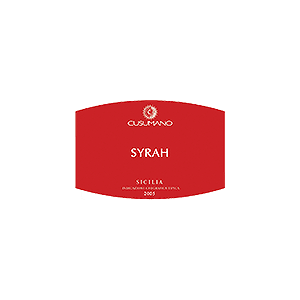
Cusumano Syrah Sicilia 2005 – Italy
Cusumano is a family owned and run winery that was born again in 2001, when brothers, Alberto and Diego, took over the management of the concern from their father Francesco. Since that time the estate has expanded and the quality of its wines has skyrocketed. We have been following the meteoric success of this family for the last five years and believe the Cusumano brothers are, indeed, on to something special, with both their red and white wines. In short, these two brothers have been performing magical feats with a variety of classic and indigenous varietals from more than half a dozen vineyards they own throughout Sicily.
With a passion for terroir and the production of authentic expressions of Sicily's rich viticultural heritage, the Cusumano brothers have set about acquiring numerous vineyards in the western and southern regions of the Mediterranean's largest island in order to offer the world a glimpse of what this great land has to offer. The brothers have also reconstructed a 19th century family farmstead to handle modern wine production. The Cusumanos' handsome new facility, which was completed only in 2003, houses everything from the winery's offices to a new underground barrique cellar for aging wine – a novel undertaking in Sicily.
Presently, the Cusumano brothers fashion a myriad of red wines that center around Syrah and the indigenous varietal Nero d'Avola. They also make what may be Sicily's finest white wine from the elegant and distinctive Insolia vine, an indigenous white Sicilian varietal that produces hauntingly beautiful wine. Chardonnay, Merlot, and Cabernet Sauvignon are also part of this fine estate's growing portfolio. The Cusumano brothers' most recent examples of Insolia as well as their limited offerings of varietal and proprietary reds constitute some of the very finest Sicilian wines we have had the pleasure to taste.
Sicily: More a Continent than an Island
Sicily is a large and varied land that wears as many faces as a circus harlequin. Its land and people are as diverse as any earthly realm. At the crossroads of Europe, Africa, and the Middle East, Sicily possesses a history and personality all its own. The Greeks called Sicily and nearby southern Italy Enotria, land of the vine, a description that is as apt today as it was 2,800 years ago. However, like its geography and people, viticulture in Sicily is an immensely varied proposition.
In terms of wine, Sicily is, indeed, more a continent than an island. Its sheer variety of grapes, autochonous and otherwise, set it apart from the rest of Europe. In addition, Sicily's grape harvest is the longest in Europe. Harvest begins the first days of August in the island's western provinces and doesn't end until the vine-covered slopes of Mt. Etna have been picked in November. Due to the proliferation of mountains, the surrounding sea, Sirocco winds, and extreme temperatures, more climates and zones exist in Sicily than in any other single wine producing region on earth, and this doesn't even take into account what are popularly referred to as microclimates. And then there are the island's soils, a countless array of colors and textures that are capable of imparting infinite variations to the wines they render.
Today as always, Sicily remains an exciting passionate place. From a wine grower's perspective, it remains a kin to an artist's palette or a blank canvas. Both canvas and palette speak forever of infinite potential and variety, they whisper the promise of greatness, and occasionally they give birth to a masterpiece for which a thirsty world is grateful.
Tasting Notes: The 2005 Cusumano Syrah is a deeply colored potion that captures the brooding pulse of Sicily. Stoic and reticent upon first meeting, the 2005 Syrah slowly gathers itself in the glass to emit a luxuriant scent of black fruits, plum, licorice, and Mediterranean herbs. On the palate, the 2005 Cusumano Syrah expands and fills the mouth with all of the enticing fruit and spice that Syrah can conjure, to which is added a soft mineral quality on the finish – the hallmark of the finest wines of Sicily. All this pleasure adds up to a unique variation on Syrah and one very enjoyable red wine. Moreover, the 2005 Cusumano Syrah is a beautiful combination of power and seduction, very much like the majestic island from whence it comes. For optimal enjoyment, we suggest serving the 2005 Cusumano Syrah cool (60°-68° F) and then allowing it to breathe for at least fifteen minutes in the glass before serving. Salute!
Accompaniments: Classic Sicilian and southern Italian specialties beg for a bottle or two of the 2005 Cusumano Syrah. Thick slices of Sicilian pizza, topped with black olives, fresh tomatoes, and thin slices of good pepperoni make for a treat. Eggplant Parmigiana, Lasagne, Manicotti, and simple homemade pasta, served with a thick heady tomato sauce provide other delectable choices with Cusumano's comely Syrah. Several other Sicilian favorites, Chicken Marsala and Grilled Tuna Steaks with an olive and artichoke tapenade, pair magnificently with this Syrah, too. However, last but certainly not least; we suggest you try the 2005 Cusumano Syrah with a classic Orzo and Garbanzo Bean Salad, made with red onion, fresh basil and mint. This combination is a real treat. And like all Cusumano wines, the estate Syrah is made with good old-fashioned enjoyment in mind, so enjoy!
For the Love of Cheese: What finer way is there to enjoy a bottle of wine than to start or finish a meal with some fine cheese? The 2005 Cusumano Syrah offers the ideal companion to some of Italy's most beloved cheeses. We highly recommend Parmiggiano Reggiano, Pecorino Toscano, and Provolone as accompaniments to Cusumano's Syrah. But why stop with just Italian cheeses? Danish Tilsit, a crumbly authentic English Lancashire, or aged Roquefort provides additional pleasure. To learn more about wine and cheese pairings, contact us at www.cheesemonthclub.com and discover the realm of gourmet cheeses from around the world.
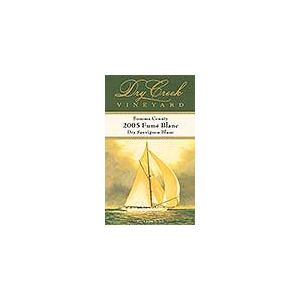
Dry Creek Vineyards Fumé Blanc 2005 – U.S.A.
When David Stare opened the doors of Dry Creek Vineyard in 1972, his foresight signaled a dramatic change for Sonoma County's Dry Creek Valley. Dry Creek Vineyards was the first new winery to open in Dry Creek Valley since Prohibition. Guided by a new vision for a long neglected grape growing region, Stare's initiative launched a new era in American viticulture. Furthermore, Stare's action and vision have subsequently transformed Sonoma County and much of the way we think about American wine.
David Stare began his illustrious affair with wine in Dry Creek Valley in 1972 when he purchased a single parcel of land on Dry Creek Road, which was then nothing more than a run down prune orchard. There, he planted his first forty acres of grapes, mostly Sauvignon Blanc, Chenin Blanc, and Chardonnay. The locals ridiculed him and even the "farm experts" laughed at his folly, going so far as to exclaim, "Sauvignon Blanc will never grow successfully in Dry Creek Valley." Today, Fumé Blanc (dry Sauvignon Blanc) is Dry Creek Vineyards' flagship white wine and its original claim to fame. Moreover, Dry Creek Valleys' Chenin Blanc is the yardstick by which all other California Chenin Blancs are now measured. We wonder who is laughing now . . . well, so much for the naysayers and so called experts. It takes courage, persistence, and vision to be a pioneer.
Dry Creek Vineyards' leadership under Stare has inspired many important changes for Sonoma County. Not only was Sonoma County's first Fumé Blanc created at Dry Creek Vineyards, but new standards of quality in California have resulted from Stare's advocacy for Bordeaux style blending for red wines. Stare proposed meritage offerings, as opposed to strict varietal bottling of a single grape variety, long before almost anyone else. Yet, Stare's greatest contribution to American viticulture is, perhaps, his success in securing appellation status for the entire Dry Creek Valley, due almost entirely to Stare's own accomplishments and the success of his Dry Creek Vineyards. These are no mean feats for a young MIT graduate from Boston, who decided in 1971 to give up his secure but unfulfilling career in civil engineering to become a true California pioneer and a Dry Creek Valley legend.
Aside from his many personal accomplishments at Dry Creek Vineyards, David Stare has been an advocate far and wide for Sonoma County wines. He has left his pioneering spirit and entrepreneurial mark on quite a few important Sonoma County organizations. It is as if the securing of BATF approval for the creation of the Dry Creek Valley in 1983 as a distinct appellation or American Viticicutural Area were just Stare's first step in promoting Dry Creek Valley, as he went on to found an important regional organization of growers called Wine Growers of Dry Creek Valley. David Stare is, also, a founding member and past president of the California Wineries Association. In addition, he was an early supporter of The Meritage Society in California and a founding father of the Society of Blancs (SOB's), an organization that extols and promotes the virtues of the noble Sauvignon Blanc varietal.
Many thanks to David Stare and the dedicated team at Dry Creek Valley Vineyards for more than thirty years of pioneering excellence!
Tasting Notes: The 2005 Dry Creek Vineyards Fumé Blanc is knockout Sauvignon Blanc. It combines the best of California fruit with the classic distinction of the finest Sancerre wines from France. It is no wonder that Dry Creek Sauvignon Blanc is the benchmark by which all other California Sauvignon Blanc wines are measured. Scents of melon, fig, grapefruit, herb, and fresh mown grass pour from the glass. In the mouth, this exemplary Fumé Blanc follows through completely on the olfactory with an explosion of clean, refreshing flavors that linger on the tongue. Impeccably balanced and varietally intense, Dry Creek's 2005 Fumé Blanc is textbook perfect. We suggest serving the exuberant Dry Creek Fumé Blanc well chilled, at least initially. Afterwards, allow this wine to unfold in the glass as it reaches towards a more ambient temperature. Most of all enjoy its pinpoint flavors and embracing vitality!
Accompaniments: Clams, mussels, prawns, oysters, scallops, and just about anything else with a shell on it or that comes out of the sea is a sure bet with the 2005 Dry Creek Vineyards Fumé Blanc. Herb encrusted chicken breasts, cheese pies, and quiches provide great companionship as well and offer excellent alternatives to seafood Hors d'oeuvres and appetizers make fine accompaniments, too. Furthermore, one of our favorite choices with top notch Fumé Blanc is a variety of gourmet cheeses, specifically Brie, Camembert, and other crusted cheeses. Dry Sancerre style Sauvignon Blanc's such as Dry Creek's Fumé Blanc are, perhaps, the finest accompaniments to full-flavored crusted cheeses, which can on account of their crusts render some red wines charm less and steely. In the company of such cheeses, both the cheese and the Dry Creek Vineyard Fumé Blanc will shine.Dry Creek Vineyards Meritage 2003 – U.S.A.
When David Stare opened the doors of Dry Creek Vineyard in 1972, his foresight signaled a dramatic change for Sonoma County's Dry Creek Valley. Dry Creek Vineyards was the first new winery to open in Dry Creek Valley since Prohibition. Guided by a new vision for a long neglected grape growing region, Stare's initiative launched a new era in American viticulture. Furthermore, Stare's action and vision have subsequently transformed Sonoma County and much of the way we think about American wine.
David Stare began his illustrious affair with wine in Dry Creek Valley in 1972 when he purchased a single parcel of land on Dry Creek Road, which was then nothing more than a run down prune orchard. There, he planted his first forty acres of grapes, mostly Sauvignon Blanc, Chenin Blanc, and Chardonnay. The locals ridiculed him and even the "farm experts" laughed at his folly, going so far as to exclaim, "Sauvignon Blanc will never grow successfully in Dry Creek Valley." Today, Fumé Blanc (dry Sauvignon Blanc) is Dry Creek Vineyards' flagship white wine and its original claim to fame. Moreover, Dry Creek Valleys' Chenin Blanc is the yardstick by which all other California Chenin Blancs are now measured. And then there is Dry Creek Vineyard's outstanding Meritage. We wonder who is laughing now . . . well, so much for the naysayers and so called experts. It takes courage, persistence, and vision to be a pioneer.
Dry Creek Vineyards' leadership under Stare has inspired many important changes for Sonoma County. Not only was Sonoma County's first Fumé Blanc created at Dry Creek Vineyards, but new standards of quality in California have resulted from Stare's advocacy for Bordeaux style blending for red wines. Stare proposed meritage offerings, as opposed to strict varietal bottling of a single grape variety, long before almost anyone else. Yet, Stare's greatest contribution to American viticulture is, perhaps, his success in securing appellation status for the entire Dry Creek Valley, due almost entirely to Stare's own accomplishments and the success of his Dry Creek Vineyards. These are no mean feats for a young MIT graduate from Boston, who decided in 1971 to give up his secure but unfulfilling career in civil engineering to become a true California pioneer and a Dry Creek Valley legend.
Tasting Notes: A classic cepage of Cabernet Sauvignon, Merlot, Cabernet Franc, Malbec, and Petit Verdot, the deeply colored 2003 Dry Creek Vineyards Meritage comes across the palate as one seamless garment. It blends all the traditional Bordeaux varietals into one juicy, up front, good drinking red wine, which succinctly states David Stare's case for more meritage style wines in California, as opposed to the more common, parochial approach of strict varietal bottling. With red wine as fine as Dry Creek Vineyards' 2003 Meritage, it makes us wonder why so many Cabernet and Merlot producers continue to embrace single variety bottling, as they turn out one mediocre varietal after another. Enjoy this balanced wine's rich berry flavors, subtle earth tones, and moderate tannins, after only a few minutes of aeration. For optimal enjoyment, we suggest serving this delicious meritage wine at no more than 68° F.
Accompaniments: Although more than a cut above the competition, the 2003 Dry Creek Vineyards Meritage was made for every day drinking in mind. Yet, it presents itself equally well with what genteel women of a certain age refer to as "fancy fare". So bring on the flank steaks, the burgers, and the barbecued ribs, but don't forget the chateaubriand, the veal medallions, or the crown roast of pork. Furthermore, fried chicken or three cheese pizza never tasted better than when in the company of a bottle of Dry Creek Vineyards' 2003 Meritage either. Come to think of it, nearly every meat or cheese dish we can think of would be well served with a bottle of the 2003 Dry Creek Meritage to accompany it, so where did you say that corkscrew was that you were looking for? Enjoy!
Chateau St. Jean Sonoma County Chardonnay 2005 – U.S.A.
Chateau St. Jean or Château Margo as the winery's staff and the brand's staunchest adherents are fond of saying has been one of California's most heralded and consistent wineries over the last three decades. Not surprisingly, much of the winery's success lies in the fact that Margo Van Staaveren has been making wine at Chateau St. Jean for the past 27 years.
Since graduating from UC Davis in 1979, Margo has never worked full time anywhere else. Like most California wineries, Chateau St. Jean has undergone several changes over the years in ownership as well as philosophy, but with Margo Van Staaveren always minding the vats, one bright, constant star has managed to guide Chateau St. Jean in the path of excellence.
When Margo first arrived at Chateau St. Jean, Dick Arrowood was the winery's chief winemaker. Now legendary, Arrowood later began his own winery, producing wines of unabashed excellence and critical acclaim. Margo concedes a great debt of gratitude to Arrowood, whom she considers a crucial mentor. However, when Arrowood moved on, Margo's husband, Don Van Staaveren took over as chief winemaker and he and Margo embarked on a new project that has since left an indelible stamp on the world of wine – the introduction of Cinq Cepages, one of California's first great meritage wines. The 1996 Cinq Cepages was named Wine of the Year in 1999 by Wine Spectator but, perhaps, even more impressive is the fact that Chateau St. Jean had five of the six top rated wines on California's Top Hundred List that year.
Chateau St. Jean is as renowned today for its glorious Chardonnays as it is for Cinq Cepages, thanks to Margo. Unequivocally, Margo Van Staaveren reigns over Chateau St. Jean, not only as the unofficial queen of Chardonnay, but also officially as the winery's chief winemaker. Several years ago, Margo finally accepted the much-heralded position of head winemaker at Chateau St. Jean. In fact, "when we announced that she was taking over as winemaker, they (winery employees) had a cape for her and a crown," said Dan Leese, the winery's president and managing director. I guess we are not the only ones who recognize royalty when we see it. Long live the queen!
Tasting Notes: Remarkably consistent and utterly pleasing from vintage to vintage, the 2005 Chateau St. Jean Sonoma County Chardonnay is another notable success from Margo Van Staaveren. This most recent Chateau St. Jean Chardonnay is both creamy and brimming with tropical fruit flavors. Scents of pineapple, pear, toasted almond, and creamy vanilla all make their anticipated appearance in the wine's luscious nose, before folding seamlessly into buttered apple and bright citrus flavors in the broad mid palate. Almost effortlessly, this Chardonnay hits all the right notes from aromatic prelude to resounding finish. And as one has come to expect from this winery, the second glass tastes even better than the first: indeed, the true test for Chardonnay is whether it can stand the test of time in the mouth. Medium-bodied and beautifully balanced, this gulp able Chardonnay is testimony to just how good California Chardonnay can be in the hands of an expert winemaker … Long live the queen!
Accompaniments: The 2005 Chateau St. Jean Sonoma County Chardonnay is a gustatory delight, with or without food. However, its vibrant acidity and superb balance make it a natural for food. We particularly like the way this wine accompanies fish and chicken that are prepared with tangy sauces. One of our favorite complements with Margo's regal Chardonnay remains fresh grouper or tilapia, served with plenty of mango chutney. Grilled chicken, served with a creamy avocado salad over a bed of mixed organic greens, is another favorite. Marinated chicken or pork tenderloin, accompanied by an apricot and macadamia nut compote, provides another fine companion. Meanwhile, shrimp and grits make for a pleasant interlude, too. A versatile wine by nature, the 2005 Chateau St. Jean Sonoma County Chardonnay will hardly wilt when faced with a little experimentation, so be daring and enjoy!R Paso Robles Syrah 2004 – U.S.A.
R stands for Runquist and Jeff Runquist's own label. It is his passion, pride, and joy. R is, also, the envy of the legion of California winemakers who stay up nights dreaming of making wine their own way and being critically and financially successful in the process. Jeff Runquist is unequivocally one of California's finest and most consistent winemakers. He is the sole proprietor and winemaker for R and he is the driving force and successful suit behind a number of other premium California wineries.
"I just want to play the game my way," has always been Jeff Runquist's mantra. By this statement he means dedicating himself entirely to the art of winemaking, the way he wants to make wine. With R, Runquist specializes in ultra premium, single vineyard designated, 100% varietal red wines. Petite Sirah, Syrah, and Zinfandel are Runquist's specialties and most renowned wines, but he, also, fashions small quantities of outstanding Cabernet Sauvignon, Pinot Noir, Barbera, Sangiovese, and Primitivo – the latter the forerunner of Zinfandel.
Runquist has been making wine for more than twenty-five years and the now legendary R since 1995. Since inception, R wines have consistently won gold medals in major wine competitions. Each has sold out promptly, leaving the cellar devoid of even a single bottle shortly after release. Critics complain repeatedly that they haven't even had a chance to taste the R wines before they are sold out. In addition, Runquist spends little time selling wines and even less time marketing them, unlike most of his peers. This scenario is certainly not the norm, but then again Jeff Runquist is not an ordinary winemaker.
Neither R nor Runquist himself own even a single vine. Runquist has no written contracts with any of the great growers and vineyards he sources year after year. Nonetheless, they always provide him with outstanding raw material with which to practice his art and work his magic. And to his credit and the utter amazement of the California wine establishment, Jeff Runquist does not even maintain a tasting room – an omission and unforgivable offense to the large commercial establishments that prey upon the accidental connoisseur and the casual wine tourist alike. Moreover, Runquist refuses to expand his annual production of R wines for fear of compromising their quality. In fact, his overriding objective is to produce all of his wines in tiny lots. This means producing only 700-1000 cases of each of his main varietals (Petite Sirah, Syrah, and Zinfandel) and only 100-300 cases of each of his other red varieties. Routinely, this process involves declassifying a third or more of his production each vintage simply because Runquist declares: "If I am not happy with a wine, I don't bottle it … if I don't get as big an economic reward, that's okay. I am happy with the wines made under my label." Sadly, this is hardly the prevailing philosophy elsewhere in today's world. However, far be it from us to complain; we are and sincerely hope to be in the future beneficiaries of such arcane practices. We are the chosen few who actually get to taste a bona fide R wine, and enjoy it – the fruit of Jeff Runquist's refreshing philosophy.
Tasting Notes: The 2004 R Paso Robles Syrah has been likened to the "life of the party," by one member of the tasting panel and "the portly gentleman with the winning smile, the gregarious manner, and the positively wicked wit," by another panel member. Indeed, Jeff Runquist's latest Syrah is one fun, but imposing statement of a wine. To begin with, it is an intensely purple, super saturated wine that could make a perfectly ripe plum look like the raw material for a pale rosé. Welcome to the full throttle world of Runquist wines, but lest you think this youthful Syrah is all brawn and no pleasure, just take a good long draught of this R's heavenly bouquet: crushed blackberry, oriental spice, and fragrant wood smoke stream from glass and continue to beguile for hours on end. And that's not all; this rich lush Shiraz style Syrah offers up plenty of lavish, up front flavors in a beautifully balanced format. Luscious black fruits, chocolate, coffee, and forest woodlands all sing their collective song before ending in a long symphonic finish of pure fruit and perfectly integrated oak. From this wine's auspicious start to its amazingly long finish, there is neither a note nor chord out of sync. In short, the 2004 R Paso Robles Syrah is another tour de force from Jeff Runquist and one of the most distinctive and enjoyable Syrah's we have tasted in a good long while. We suggest serving it at cool room temperature (64°-66° F), after giving it at least thirty minutes to breathe. Anticipated maturity: 2007-2014.
Accompaniments: The 2004 R Paso Robles Syrah is one of the few young Syrah wines, from anywhere, that truly needs little or no accompaniment to shine. Yet, it has the uncanny ability of elevating fine cuts of meat and well prepared country specialties to glorious new heights. Given this formidable Syrah's great balance and overt personality, we highly recommend that it accompany the best meat money can buy as well as thick rich, stick to your ribs kinds of meals. Consequently, we heartily endorse the combination of R Syrah with the likes of Filet Mignon au Poivre, accompanied by gorgonzola mashed potatoes and sautéed green beans. Tenderloin of New Zealand Lamb, stuffed with rosemary and garlic, and served over a white bean ragu makes for another memorable pairing. Beef or venison stew, served with plenty of vegetables and pearl onions, and Barbecued Baby Back Ribs provide other superlative choices, but these are just a few of the many options the formidable 2004 R has to offer. Several slices of hard cheese, some crusty French bread, and a spicy Provencal Ratatouille provide an excellent vegetarian alternative, but as you like it.Le Clos du Château l'Oiselinière Muscadet Sèvre-et-Maine 2002 – France
Le Clos du Château l'Oiselinière is a very special limited production wine made by the venerable house of Chéreau-Carré, the most prestigious of all producers of Muscadet. Chéreau-Carré is a family owned property, whose holdings occupy the most privileged position in the entire Nantes region of France. This family owned property dates back to the 15th century. Presently, Chéreau-Carré's vines cover more than 267 acres of the highest quality soil in the most prized region of Muscadet known as Sèvre-et-Maine.
Chéreau-Carré is managed by Bernard Chéreau, whose family's connection to wine dates back to the eleventh century. Bernard's passion for the premier Muscadet grape – Melon de Bourgogne – is evident in the quality of all of his wines, but none more so than in Le Clos. Bernard runs three separate estates under the umbrella of Chéreau-Carré: Chateau de La Chesnaie, whose wines originate from a 25 year old parcel in the heart of Sèvre-et-Maine; Comte Leloup de Chasseloir, a selection of pre-phyloxerra vineyards dating back to the turn of the last century; and Le Clos, a small single vineyard of 100 year old Muscadet vines that are grown on schist soils.
Bernard is passionate about the location of his vines as well as the handling of each individual parcel within each vineyard. Using only indigenous yeast and extended lees contacts, Bernard Chéreau has repeatedly demonstrated his preeminence as the region's finest producer of Muscadet. Moreover, he continues to push the envelope in terms of quality and consumer expectations for Muscadet.
The 2002 vintage marks the first vintage release of Le Clos, Bernard Chéreau's master work. Le Clos hails from a unique site. Bernard Chéreau chose the outstanding 2002 vintage for the introduction of Le Clos, a wine he brought to full expression by ageing it on the lees for 31 months. It was bottled unfiltered.
Muscadet Sèvre-et-Maine
Muscadet has the only classified vines in Brittany. This large appellation lies near the mouth of the Loire River, just to the south of the city of Nantes. Sèvre-et-Maine, which occupies the hills above the two rivers from which it draws its name, is the finest part of the sprawling Muscadet appellation. Two grapes, both white, have traditionally been associated with Muscadet: Gros Plant and Melon de Bourgogne. The latter was brought to Muscadet in the 17th century and was once a permitted variety in Burgundy as its name implies. Melon de Bourgogne is a far superior grape to Gros Plant and is now the only variety allowed in Muscadet wines that bear the Sèvre-et-Maine appellation.
Tasting Notes: Put aside all preconceived notions or previous experiences with Muscadet, favorable or unfavorable, because no other Muscadet comes close to matching the quality, individual style, or performance of the 2002 Le Clos du Château l'Oiselinière. Produced from an ancient parcel of Melon de Bourgogne vines that average more than 100 years of age, the 2002 Le Clos offers a beautiful aroma that mingles supple scents of fruit and mineral and then marries them to a soft sea breeze. Definite, yet delicate; elegant, yet full-flavored the 2002 Le Clos shines from the moment it is poured. However, what is even more impressive about this Muscadet is the depth and richness it shows on the palate. This is no ordinary offering from Sèvre-et-Maine: This soon to be legendary release contains abundant fruit and a long, lingering, perfectly balanced finish. In short, the 2002 Le Clos is a tour de force in winemaking and the most stunning Muscadet we have ever had the pleasure to drink. In the formidable 2002 vintage, one sees just how truly special old vine Muscadet can be when handled with the care and pride that Château l'Oiselinière has put into the 2002 Le Clos. We suggest consuming this outstanding white wine moderately chilled (40°-45° F).
Accompaniments: The 2002 Le Clos du Château l'Oiselinière Muscadet Sèvre-et-Maine needs nothing but a glass to charm. Yet, this most prestigious of Muscadets also gives stunning performances as the opening act to a great meal and as the sole companion to the freshest, most carefully prepared seafood entrées. Consequently, something as simple as Endive Spears filled with goat cheese; Roasted Butternut Squash Dip, served with homemade pita and roasted nuts; or a plain piece of lightly grilled flounder or sole can become a memorable experience in the company of the 2002 Le Clos du Château l'Oiselinière. For those seeking grandeur, save the 2002 Le Clos for the wares of an accomplished seafood chef and treat yourself to an Oscar, or should we say an Epicurean, winning performance. Seared Atlantic Sea Scallops and Maine Lobster, served with truffle butter; Steamed New Zealand Green Lipped Mussels, prepared in a tomato fennel broth with crème fraîche; and Jumbo Lump Crab Meat, with marinated Portobello mushrooms, truffles, bacon, and leek-infused cream are just a few seafood specialties that can offer memorable companionship to the 2002 Le Clos as well as dazzle the glass out of Bacchus' hand. Enjoy!
Villa Giada Bricco Dani Barbera d'Asti Superiore 2003 – Italy
Andrea Faccio's Azienda Agricole Villa Giada is a reference point for traditional Piedmontese wines. Faccio brings exquisite wines to the table from the classic grape varieties his family has grown in Italy's Piedmont for more than two centuries. Located midway between Asti and Alba, the world's foremost production zones for Barbera, Villa Giada specializes almost exclusively in the making of handcrafted Barbera wines from single vineyards. With more than forty-five acres of estate vineyards, located around three ancient farmhouses, Villa Giada's aim is to fashion great wines from individual vineyards and terroirs – a goal that local cognoscenti and international wine critics alike agree that Andrea Faccio's Villa Giada has more than fulfilled.
Villa Giada's historical property dates to 1790, and the estate's ancient farmhouses and winery remain in use today. The old part of the winery still plays host to all of the estate's barriques (small oak barrels), which refine the classic Barbera wines that Andrea Faccio so adeptly crafts. In addition, Villa Giada also sports a modern winery that features stainless steel vats, temperature and pressure control equipment, and the latest technological accoutrements. Moreover, Donato Lanati, a professor at nearby Turin University and one of Italy's foremost oenologists, assists Andrea in the crafting of Villa Giada's wines. Together this dynamic duo fashions wines that are both internationally appealing and traditional in character.
In spite of this erudite producer's ability to fashion modest quantities of other Piedmontese specialties, including a superb Moscato d' Asti, Barbera remains the focal point and raison d'être at Villa Giada. Bricco Dani, a splendid single vineyard Barbera, is this estate's most prized wine. It is a very limited production that is rarely available in the United States.
Tasting Notes: The 2003 Villa Bricco Dani Barbera d'Asti Superiore is a true Piedmontese classic. It is a wine born of an excellent vintage on the slopes of one of the world's finest terroir. When the sun, the moon, the stars, and the weather align as they did in 2003, no place on earth produces better Barbera than Italy's Piedmont. Moreover, Bricco Dani is this producer's finest wine and the ultimate expression of Barbera d'Asti. The scion of the finest grapes, natural yeasts, four gentle rackings, and a 14 month hiatus in traditional barriques, the 2003 Bricco Dani possesses great intensity and finesse as well as a myriad of well integrated flavors, all set in a silky smooth texture. In the words of one panel member, "the 2003 Bricco Dani could break your heart. It is so lush, plush, and well-endowed, but it keeps slipping away ever so ostensibly down my throat." Indeed, this is an easy wine to love. The 2003 Bricco Dani tantalizes the senses with plenty of luxuriously ripe fruit that seems infused with the essence of forest woodlands, truffles, violets, and even the captivating savor of oriental spice. Better still, the longer one allows the 2003 Bricco Dani to breathe the more complex and voluptuous it becomes. For optimal enjoyment, we strongly recommend decanting the Bricco Dani for the purpose of aeration and to limit the harmless, tartrate sediment that may appear due to the wine's natural, unmanipulated upbringing. In addition, our preference is to serve the 2003 Bricco Dani Barbera d'Asti Superiore fairly cool (60°-65° F) in order to unleash completely the litany of ripe, textured flavors that make this wine the envy of Barbera aficionados and producers the world over. Anticipated maturity: 2007-2011.
Accompaniments: Given the consummate quality and the careful upbringing of the 2003 Villa Giada Bricco Dani Barbera d'Asti, is any dish less than the complex lively cuisine of Italy's Piedmont fit to accompany this magnificent Barbera? Indeed, our first inclination is to seek out Piedmontese classics such as Risottos, Sautéed Rabbit and Peppers, Braised Duck in a savory Barbera wine reduction, Osso Bucco (Braised Lamb Shanks), or Sautéed Veal Chops, the mouthwatering specialty of Milan to serve with the Bricco Dani. However, one of Bricco Dani's greatest attributes is its ability to transform a plain, but well prepared mid week meal into a veritable feast and celebration. So, whether you re-construct Grandma's meatloaf recipe or fuss over a Tournedos Rossini (filet mignon with artichoke hearts, foie gras, and truffles in a Madeira sauce), the 2003 Villa Giada Bricco Dani is ready and willing to provide "extra" ordinary pleasure. In fact, another simple but rewarding accompaniment to the Bricco Dani remains a platter of classic Italian cheeses such as Montasio, Peccorino, and Toscano Reggiano, a loaf of crusty bread, and some finely cured olives. Salud!