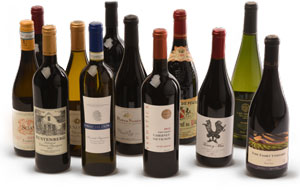
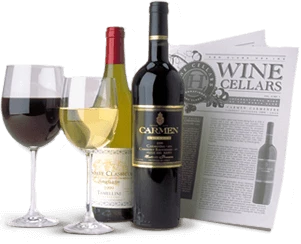
Welcome to The International wine of the Month Club

Featured Wines

February 2007

Premier Series
Featured Wineries & Wines
Membership Type
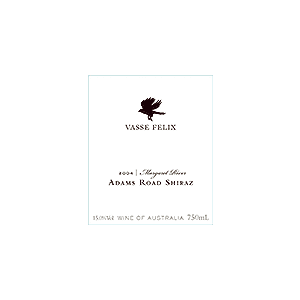
Vasse Felix Adams Road Shiraz 1 Red 1 White; 2 Reds
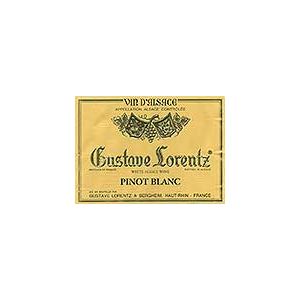
Gustave Lorentz Pinot Blanc d'Alsace Reserve 1 Red 1 White; 2 Whites
Montevina Terra d'Oro Amador Country Barbera 2 Reds
Vasse Felix Adams Road Chardonnay 2 Whites


Master Series
Featured Wineries & Wines
Membership Type
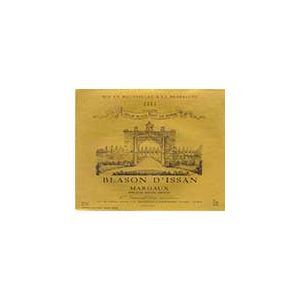
Blason d'Issan du Château d'Issan Margaux 1 Red 1 White; 2 Reds
Gustave Lorentz Pinot Blanc d'Alsace Reserve 1 Red 1 White
Vasse Felix Adams Road Shiraz 2 Reds


Collector Series
Featured Wineries & Wines
Membership Type
Blason d'Issan du Château d'Issan Margaux 1 Red 1 White; 2 Reds
Steele Mendocino Lolonis Vineyard Chardonnay 1 Red 1 White
Souverain Alexander Valley Winemaker's Reserve Cabernet Sauvignon 2 Reds

Vasse Felix Adams Road Shiraz 2004 – Australia

Vasse Felix Adams Road Shiraz 2004 – AustraliaVasse Felix is the oldest commercial vineyard and winery in Western Australia. Many critics also consider it to be the finest winery in the state. It produces award winning Shiraz, Cabernet Sauvignon, and Merlot among reds and a bevy of excellent whites, including Chardonnay and Sauvignon Blanc. Thanks to astute winemaking and an ideal terroir, Vasse Felix consistently fashions compelling wines, which have served to put Western Australia on the viticultural map and raise the eyebrows of the world's true connoisseurs. At the same time, Vasse Felix has inspired others in Australia's largest state to follow suit.

The name Vasse Felix is derived from the Latin word for luck (Felix) and the name of an early 19th century French sailor (Vasse) who died while exploring the section of the captivating coast of Western Australia we now know as the Margaret River. At first, the name may seem quite ironic, but to anyone who has ever caught a glimpse of this eye-popping place, pure good fortune and a perpetually smiling face are no exaggerations when speaking of this enchanted land. Therefore, to die in such a place is far more fortunate than never to have seen it.

Margaret River

The Margaret River is a green temperate corner of Western Australia that sits beside the sea. Here the Margaret River makes its way through wooded hills and steep ridges carpeted with wild flowers, before sighing almost inaudibly into the gleaming Indian Ocean. Crystalline waters and high rolling surf offer Australia's finest surfing as well as its most compelling seascapes. These very same waters, along with steady ocean breezes, a unique soil, and a Mediterranean climate also make Margaret River one of the finest natural wine producing areas on earth and a great place to peacefully whittle away the time.

In the early 1960's, a scholar named John Gladstone was the first to recognize and publicize Margaret River's special climate, soil, and conditions known as terroir. In a detailed account Gladstone wrote glowingly of the similarities between the finest wine producing regions of Bordeaux and Margaret River. Moreover, he extolled the perfect weather of Margaret River for the cultivation of the vine, especially for the traditional Bordeaux varietals. And, indeed, Gladstone's proclamation has proven to be more than just wishful thinking, surpassing even his own expectations: In the past three decades the Margaret River has established itself as a world-class wine producing region for Shiraz and Chardonnay as well as the traditional Bordeaux varietals.
 
In 1967, just two years after Gladstone's initial report on the soils and climate of the Margaret River, Dr. Tom Cullity planted vines at the present property and Vasse Felix came to life. Twenty years later, the estate was purchased by the Holmes à Court family. Today, Vasse Felix continues its pursuit of excellence under the leadership of Mrs. Janet Holmes à Court, who seems bent on taking this showcase property to the next level.

Fortunately or unfortunately, and that depends upon one's perspective, Margaret River remains widely unknown to the average wine consumer in the United States. Presently, Margaret River produces less than 2% of Australia's wine, despite extensive planting in the last three decades. Yet, the Margaret River garners a higher proportion of gold medals and trophies for its wines than any other viticultural region of Australia – a tribute to the Margaret River's dedication to premium varietals, quality winemaking, and outstanding terroir.

Tasting Notes: The Margaret River style of Shiraz is typified by the deeply colored 2004 Vasse Felix Adams Road Shiraz. This sleek balanced Shiraz offers up a seductive nose of blackberry, plum, eucalyptus, pepper, and aniseed. On the palate, this medium to full-bodied red displays a lavish dollop of ripe, textured fruit that is suitably underpinned by natural acidity and a tight, balanced structure. Reminiscent of the great Syrah wines of France's Rhône Valley, the 2004 Vasse Felix Adams Road exhibits all the character and stuffing it needs to age gracefully, including a nice touch of terroir in the form of mineral, slate, and subtle earth tones. All of this wine's sensual pleasure culminates in a long dry finish that contains a nice hint of oak. Although this latest Shiraz offering from Janet Holmes à Court is already a pleasure to drink now, our experience tells us that allowing this wine additional time in bottle will only augment the gratification. However, that calls for restraint on your part. For optimal enjoyment, we suggest you afford the 2004 Adams Road Shiraz at least thirty minutes of breathing time before serving. And like most Shiraz, we advise serving this wine at cool room temperature (62°-68° F).

Accompaniments: Packed with flavor but beautifully balanced, the 2004 Vasse Felix Adams Road Shiraz can play host to all kinds of well prepared foods from simple vegetarian pleasures to the finest carnivorous fare. Filet mignon or beef tenderloin, served medium rare with grilled or sautéed portabella mushrooms, is one of our favorite choices with the Adams Road Shiraz. With this pairing, the wine and the beef truly complement each other, allowing for the full flavor of each to be released in tandem. Lamb, rabbit, venison, and rich stews provide other excellent choices with the Adams Road Shiraz. The more adventuresome among you may even want to try a kangaroo steak, one of Western Australia's perennial favorites with Shiraz. Homemade lasagna, manicotti, and Zucchini Parmigiana also make rewarding partners to this classically wrought Shiraz. Serving these Italian classics under a rich homemade marinara that contains plenty of fresh tomatoes and herbs further complements the wine. Enjoy!

Gustave Lorentz Pinot Blanc d'Alsace Reserve 2005 – France

Gustave Lorentz Pinot Blanc d'Alsace Reserve 2005 - FranceGustave Lorentz is a family owned and operated winery that dates to 1836. Today, the very capable 40-year old Georges Lorentz is the Lorentz in charge, with some assistance from his "retired" father, Charles. The Lorentz winery is one of the largest family owned facilities in Alsace. It encompasses sixty-six acres of premium vineyards in Bergheim, including nearly half of the great Grand Cru vineyard of Altenberg de Bergheim and all of Kanzlerberg, the smallest Grand Cru vineyard in Alsace. Bergheim is located in the very finest section of Alsace, a mere 3 kilometers from Ribeauville and just 5 kilometers from Riquwihr. This is the "real" Alsace wine country, the very heart of the famous Route de Vin. All of the Lorentz wines come from this premier area known as the Haut Rhin and express the unique Bergheim terroir.

Like most Alsace producers, Gustave Lorentz features several levels of wine from a wide variety of traditional Alsace grapes. The ubiquitous Pinot Blanc provides a steady income and a solid foundation upon which Lorentz, like the majority of Alsace growers, has built his empire. Yet, Gustave Lorentz's Pinot Blanc stands above the rest. As one would expect, Riesling, Tokay Pinot Gris, and Gewürztraminer constitute the remaining stars in the estate's tiara, as they do throughout Alsace. In addition, Lorentz's wines are featured in many of the Michelin-starred restaurants in Alsace and some of the finest restaurants around the world. From simple vintage cuvees to Reserve and Grand Cru bottlings as well as the rare late harvest wines known as Vendanges Tardives, Lorentz is dedicated to the fashioning of the highest quality Alsace wines. Vive la différence!

Alsace

Alsace is quite possibly the most picturesque wine region in all France. It is an enchanted land of beautifully restored half-timbered houses, flower bedecked balconies and window boxes, and of course vineyards. Alsace is bounded by the Vosges Mountains to the west, which block out the dreary maritime weather that plagues so much of the rest of northern France, and the Rhine River and Germany to the east. On account of its favored position and corresponding climate, Alsace is the sunniest province in northern France. This extra sunshine makes Alsace an ideal spot for the cultivation of the vine and the production of premium wines.

In Alsace, white wine reigns supreme. This is a matter of local preference and tradition, in spite of the province's production of some very noteworthy Pinot Noir wines and the contemporary clamor for red wine. Pinot Blanc is the staple of Alsace, where it makes a fresh, flavorful wine of considerable merit. Nonetheless, the ultimate expression of wine in Alsace lies more typically in the crafting of some of the world's finest wines from Riesling, Gewürztraminer, and Pinot Gris – the vast majority of which are made dry rather than sweet. The relative dryness of most Alsatian wines may come as a surprise to many, especially those for whom German sounding names and tall thin green bottles are synonymous with sweetness. However, Alsatian wines are unique unto themselves and rarely do they resemble their German counterparts in style, flavor, or level of residual sugar. Robert Parker Jr. has called the wines of Alsace "some of the greatest white wines produced on the planet," and some of the most pleasurable and hedonistic, too, we might add.

Tasting Notes: The 2005 Gustave Lorentz Reserve Pinot Blanc is quite possibly the finest Pinot Blanc we have tasted in years. It is a bright, cheerful wine that offers up a smorgasbord of scents and savors. It possesses an intriguing nose of ripe apple, pear, and fresh, soft cheeses. In the mouth the 2005 Lorentz Pinot Blanc Reserve exudes soft, succulent fruit flavors, a gorgeous texture, and a hint of almond and spice. What makes this Pinot Blanc so intriguing is the same quality that makes all of Lorentz's wines so appealing: it is the ability to be a chameleon, ever-changing in the glass so as to present new facets and flavors with each sip. Although some may prefer this wine icy cold, we suggest you try it at varying temperatures. As the wine breathes and reaches towards a more ambient temperature, it takes on broader, more seductive tones and reveals wonderful subtlety and nuance of flavor. Consequently, we suggest serving the 2005 Gustave Lorentz Reserve Pinot Blanc well chilled but then allowing it to warm slowly in the glass, over at least a thirty-minute period, which will allow the wine to unfold completely in the glass.

Accompaniments: The 2005 Gustave Lorentz Reserve Pinot Blanc is one good drinking wine, with or without food. However, its chameleon like nature makes it a versatile wine to pair with wide variety of cuisines and individualized dishes. Not surprisingly, traditional Alsatian favorites such as Quiche Lorraine and leek tarts provide excellent accompaniments to this very flavorful, beautifully balanced Pinot Blanc. Baked or lightly grilled white fish such as flounder, tilapia, or tile fish offer good company to the 2005 Lorentz Reserve Pinot Blanc as well. Hors d'oeuvres, shellfish, and fish chowders supply additional first-rate accompaniments. Eclectic or traditionally hard to pair dishes such as Orzo Salad with garbanzo beans, Shrimp Fra Diavolo, or even Asian stir-fry, work especially well with this supreme Pinot Blanc, too, so experiment and enjoy!

Montevina Terra d'Oro Amador County Barbera 2004 – U.S.A.

Montevina is one of the oldest and most prestigious wineries in Amador County. Set amid the foothills of the Sierra Mountains, Montevina lies at the heart of California's "Gold Rush Country." However, today Montevina is best known for its liquid gold in the form of excellent Zinfandel, Syrah, and Italian varietiels.

The Trinchero family has owned Montevina since 1988, but this winery's passion for growing outstanding fruit and producing many of California's finest Italian and Mediterranean style varietals dates back even further to the 1960's. Since 1986, Jeff Meyers, unquestionably the most experienced winemaker in the Sierra Foothills, has been the General Manager and guiding force behind Montevina's huge success. Possessing and encyclopedic knowledge of the region's viticulture along with a knack for fashioning distinctive Italian varietals that possess elegance as well as fabulous flavor, Jeff is one of the first California winemakers to be enormously successful with Italian varieties. Montevina's Barbera, Sangiovese, and Zinfandel, produced under the Terra d'Oro label, constitute a triumvirate of Italian varietals that would be hard to find elsewhere in California. And unlike most of the wines from this estate's competitors, Montevina's wines are produced from old vines. The estate's Barbera vines average more than thirty years of age, while much of Montevina's Zinfandel is even older.

Tasting Notes: "A big, bold, substantial Barbera with soul" is how one panel member described Montevina's beautiful 2004 Terra d'Oro Barbera. Thankfully, this is one California Barbera that does justice to its noble Italian heritage. Montevina's 2004 Terra d'Oro is made in a juicy Italianesque style the recalls the glory of Italy's Piedmonte. In the nose, it bursts with ripe plum and cherry fruit, which are adroitly interwoven with a dash of spice and a dollop of vanilla. Rich and layered on the palate, this sprightly Barbera captures everything we like about this beloved Piemontese grape variety: from this regal robed wine come forth oodles of black fruit and cherry cola flavors, into which complex tones of angostura and new oak have been sown. To complete the picture, all of this Terra d'Oro's goodness is expertly framed by Barbera's calling card, crisp refreshing acidity. We suggest consuming this delicious Barbera cool (no more than 66°F), after a quarter of an hour of aeration.

Accompaniments: Given the wine's heritage as well as its style, the 2004 Montevina Terra d'Oro Barbera is a perfect choice for the delights of la cucina italiana. Whether Italy's regional dishes hail from the north or the south, this Barbera will hold court with the best of them. So, bring on the pasta and tomato sauce as well as the carne and risotto. Montevina's 2004 Terra d'Oro Barbera provides great companionship to everything from pizza to Florentine Steak. For slightly more adventuresome eaters, we suggest serving this wine with a Two Cheese and Smoked Chicken Ravioli; Pan Seared Chicken Fettuccine, served in an Asiago cream sauce with artichoke hearts, sun dried tomatoes, and roasted green onions; or how about a Grilled Beef Salad, that features plenty of well trimmed sirloin tips, grape tomatoes, seedless cucumber, garlic and mint, all tossed with organic greens, extra virgin olive oil and balsamic vinegar. American style steaks and loin lamb chops will shine, too, so long as Montevina's Terra d'Oro Barbera is alongside. Saluté!

Vasse Felix Adams Road Chardonnay 2005 – Australia

Vasse Felix is the oldest commercial vineyard and winery in Western Australia. Many critics also consider it to be the finest winery in the state. It produces award winning Shiraz, Cabernet Sauvignon, Merlot and Chardonnay along with a host of other charming wines. Thanks to astute winemaking and an ideal terroir, Vasse Felix consistently fashions compelling wines, which have served to put Western Australia on the viticultural map and raise the eyebrows of the world's true connoisseurs. At the same time, Vasse Felix has inspired others in Australia's largest state to follow suit.

The name Vasse Felix is derived from the Latin word for luck (Felix) and the name of an early 19th century French sailor (Vasse) who died while exploring the captivating coast of Western Australia we now know as the Margaret River. At first, the name may seem quite ironic, but to anyone who has ever caught a glimpse of this eye-popping place, pure good fortune and a perpetually smiling face are no exaggerations when speaking of this enchanted land. Therefore, to die in such a place is far more fortunate than never to have seen it.

Vasse Felix lies tucked among the folds of low hills of the Margaret River, a green temperate corner of Western Australia that sits beside the sea. Here the Margaret River cuts through wooded hills and steep ridges carpeted with wild flowers, before sighing almost inaudibly into the gleaming Indian Ocean. Crystalline waters and high rolling surf offer Australia's finest surfing as well as its most compelling seascapes. These very same waters, along with steady ocean breezes, a unique soil, and a Mediterranean climate also make Margaret River one of the finest natural wine producing areas on earth and a great place to peacefully whittle away the time.

Tasting Notes: Vasse Felix makes a unique style of Australian Chardonnay. The 2005 Vasse Felix Adams Road Chardonnay blends all the buttery, fruit driven characteristics of New World Chardonnay with the pure, dry minerality of French Chablis – Burgundy's driest and most elegant Chardonnay. While butter, apple, and hints of tropical fruit dominate the nose of the 2005Adams Road Chardonnay, the flavor profile of this wine remains more reminiscent of Chablis, where the soil and climate produce a very sleek, dry white wine with the unmistakable savor of lemon oil, and mineral. And like French Chablis, a little aeration (15-20 minutes) of the Vasse Felix is beneficial, as it tends to bring out the subtlety and nuance of flavor within this very bright, attractive wine. And given this estate's style and track record for producing fairly long-lived wines, including this Chardonnay, we believe the 2005 Vasse Felix Adams Road Chardonnay will continue to develop in bottle until its third birthday and, perhaps, beyond, so no need to rush this youthful rendition along. For optimal enjoyment, we suggest chilling the 2005 Vasse Felix Adams Road Chardonnay to between 40°- 45° F.

Accompaniments: Given the distinctive Chablis like style of the 2005 Vasse Felix Adams Road Chardonnay and Western Australia's enviable position astride the Indian Ocean, the folks at Vasse Felix most certainly had seafood in mind when they made this wine. We second their motion. Seafood is a natural companion to the Adams Road Chardonnay, either as an appetizer or as a main course. Shellfish, especially oysters, either on the half shell, fried or sautéed, constitute a classic match-up with this Chardonnay that will please any oyster aficionado. Sautéed scallops in white wine and herb butter; steamed lobster, served with drawn butter; crab cakes, prepared with an herb and saffron suffusion; and seafood stew, with mussels, clams and local fish also provide excellent partnerships with this classically wrought Chardonnay. Calamari, freshly sautéed in a savory sauce, provides another fine marriage. A good party offers another splendid accompaniment to this thirst quenching Chardonnay – just pop a bottle, turn up the music, and dance the night away as this the clear, clean, thirst quenching Chardonnay passes down your gullet. Enjoy!

Blason d'Issan du Château d'Issan Margaux 2003 – France

Blason d'Issan du Château d'Issan Margaux 2003 - FranceChâteau d'Issan is one of the most stunning properties in all Bordeaux. This 17th century estate is surrounded by a moat and recalls the famous fairy tale castle of Sleeping Beauty. Officially, Château d'Issan is classified as a Third Growth Bordeaux, but recent vintages can attest to this château's preeminence. This classic estate has been owned by the Cruse family, one of Bordeaux's most renowned wine families, since 1945. The estate's recent direction under the eye of the ever vigilant Emmanuel Cruse has taken this beautifully situated property and its wines to the forefront of the Margaux commune, thereby restoring this ancient château to its former glory.

Château d'Issan has enjoyed a long and illustrious history. For centuries Château d'Issan has been regaled as a noble wine of great distinction. If tradition holds true, Château d'Issan ranked as the most famous Bordeaux in medieval Europe. Its wine was served during what has been called the Middle Age's grandest affair, the 12th century royal wedding of Eleanor of Aquitaine, the French Princess, to Henry Plantagenet, King of England. Later 19th century accounts confirm that Château d'Issan was the favorite of Austria's Emperor Franz Joseph, whose accolades led to the châteaux's current motto: "For the tables of kings and the altars of Gods."

Today, Château d'Issan enjoys the un-remitting praise of savvy connoisseurs and critics alike, including Robert Parker Jr. In such fine vintages as 2003, the wines of Château d'Issan exhibit the classic calling card of all great Margaux wines, an incredible perfume, which is both haunting and beguiling. Moreover, the wines of Château d'Issan express the greatness of Cabernet Sauvignon as well as the unique terroir of the Margaux commune.

In order to insure the highest quality possible in each vintage, Château d'Issan fashions just two wines that bear the name of the estate, Château d'Issan and Blason d'Issan du Château d'Issan. The cépage for the Grand Vin at Château d'Issan is typically 70% Cabernet Sauvignon and 30% Merlot and approximately 65% Cabernet Sauvignon and 35% Merlot for Blason d'Issan. The rest of the estate's production is sold as Bordeaux Supérieur under the name Moulin d'Issan.

Margaux

The name Margaux conjures more images of greatness than any other appellation in Bordeaux, and none of those images are associated with the cheap or ordinary. Indeed there is nothing commonplace about the wines of the Margaux appellation nor would anyone, short of a billionaire, ever accuse the wines of Margaux of being inexpensive.

Margaux is the largest and most sprawling of the great communes of the Médoc, encompassing a little over 2,800 acres. It is situated in the southern Médoc just down river from the city of Bordeaux, which makes Margaux the nearest of the Médoc appellations to Bordeaux itself. In reality, the Margaux appellation includes five separate communes, each of which is entitled to bottle its wine as Margaux: Arsac, Cantenac, Labarde, Margaux and Soussans all qualify to bear the illustrious Margaux name.

A classic, fragrant perfume and an elegant, supple style are what distinguish the wines of Margaux from those of other Bordeaux communes. In addition, Cabernet Sauvignon rules the roost in Margaux, constituting up to 90% of the cépage in some Grand Vins like Château Margaux. Yet, in spite of the high percentage of Cabernet, Margaux wines nearly always retain an elegant suppleness that can be found nowhere else. At the same time, the wines of Margaux possess a true propensity for aging, which allows the finest wines of this commune to develop tremendous complexity and texture, second to none.

Tasting Notes: "A true winner, two thumbs up," is how one of the more fastidious members of the tasting panel described the 2003 Blason d'Issan du Château d'Issan Margaux. "Lovely, just beautiful," is another account, and the list goes on. And these accolades are simply par for the course: the 2003 Blason d'Issan is classic Margaux claret in all respects. It wears a deep purple robe and carries the unmistakable heaven scent of Margaux: blackberry, cassis, earth, graphite, and spice. And on the palate, the up front appeal and supple texture are unforgettable. Medium-bodied and loaded with cassis, sweet currant, and subtle smoke flavors, the 2003 Blason d'Issan is all Margaux, ripe for immediate drinking pleasure. Thanks to the outstanding 2003 vintage in the Médoc, the 2003 Blason d'Issan is ready for duty now, but will continue to improve further in bottle. We suggest serving this crowd pleasing Margaux relatively cool (64° -68° F), after 10-15 minutes of aeration. Anticipated maturity: 2006-2011.

Accompaniments: The Blason d'Issan Margaux 2003 exudes classic Bordeaux qualities and brings its supple style and panache to any portion of a meal, from the simple to the elaborate. Paired with a straightforward meal of green beans, potatoes, and steak and onions, Blason d'Issan dresses up the table and changes an ordinary mid-week repast into a resplendent occasion. Correspondingly, this Bordeaux fits seamlessly into various segments of a more elegant and elaborate meal. Paired with foie gras or aged prosciutto, Blason d'Issan welcomes guests to a luxurious multi-course spread. Or matched with entrées, such as our featured recipe for Lemon-Thyme Lamb Chops, this d'Issan selection enhances and equals the rich flavors of robust main courses. The lemon component of our recipe selection, for example, offers a counterpoint to the full-fruit flavors of the wine, while the thyme in the sauce captures the refined earthy quality of the wine's profile. Serve with a side dish of wild mushroom/sage risotto and the central portion of your meal is complete. At the conclusion of your meal, choose classic Bordeaux pairings of Roquefort and macaroons, or experiment with your favorite chocolates. Above all enjoy this superb and enchanting Margaux wine. Bon appétit!

Steele Mendocino Lolonis Vineyard Chardonnay 2004 – U.S.A.

In the wine trade since 1968, Jed Steele has owned and operated his own labels, Steele and Shooting Star Wines since 1991 where he continues to earn renown from his familiarity with and expertise at making world class Chardonnay.

As the winemaker for Kendall Jackson during the 1980's, Jed helped to shape the company and his identity as a maker of top-notch Chardonnays. Yet, after nearly a decade, Jed left Kendall Jackson and started his own venture in 1991 in order to make fine wines from select vineyards and reconnect to the entire winemaking process. As he says in one interview, "I really needed to be in closer contact with the wines." After all, Jed Steele's claim to fame is making great wine, not overseeing a conglomerate.

While Steele produces wines that feature other California varietals, such as Zinfandel, Pinot Noir, Syrah, and even Viognier, the Chardonnay grape remains a true shining star for Steele. In fact, Steele Wine's signature offering, Steele Cuvee Chardonnay, reflects Jed's remarkable gifts for blending and shaping a wine as he sources grapes from a number of established and well-respected vineyards across California, selecting each for the unique character of its grapes.

Carrying his interest to fruition in hand crafting excellent and distinct wines that reflect their terroir, Jed features seven single vineyard Chardonnays, of which the Lolonis Vineyard is considered the pinnacle of perfection. He produces only a limited quantity of these single vineyard offerings, but each is carefully nurtured through the entire winemaking process. Completely fermented in French oak barrels for eight to ten months and handled gently with limited filtration, each of Jed's single vineyard entries aims to reveal the elemental qualities of the vineyard's grapes and its terroir.

Under a separate label, Shooting Star, Steele really follows his interests as an innovative winemaker. While Shooting Star often produces great values of known varietals, such as Cabernet Sauvignon and Merlot, Jed, also, uses the Shooting Star label to experiment with lesser known grapes, such as Aligoté, and to craft intellectually probing, eclectic selections.

Lolonis Vineyard

Nestled in the Redwood Valley of Mendocino County 10 miles north of Ukiah, the county seat, Lolonis Vineyard holds several points of distinction. One noteworthy fact is that the Lolonis family has grown grapes in the Redwood Valley since 1920. Another is that beginning in the late 1950's the Lolonis family began farming organically long before it was a trendy practice. And the vineyard is among the first, if not the first, to be certified organic in California. A final point worthy of note is that Steele Wines has consulted and worked closely with the vineyard since 1991. Among the vineyards from which Steele selects Chardonnay, Lolonis is the warmest and typically produces peerless grapes that contribute hints of baked apple and cinnamon to Steele's classic Chardonnays.

Tasting Notes: The 2004 Steele Mendocino Lolonis Vineyard Chardonnay shines as an excellently crafted, intense, and lush example of California's most renowned white varietal. While holding a glass to the light, the wine's thick golden tones point to the luxuriousness of the wine and Jed Steele's signature gentle handling that continue to draw us toward his Chardonnays. Pleasurable and distinct aromas of wood, apple, and vanilla extract mingle and draw us invitingly into a rich tasting experience. As one drinks this single vineyard Chardonnay, the smoothness of this wine drapes itself over the tongue. A gliding and wide fruit flavor helps us to picture perfectly ripe grapes hanging expectantly on the vine. As the physicality of this Chardonnay expands and caresses the entire mouth, an effortless transition to a buttery tannic core perfectly complement the full fruit flavors. While the full, smoothly-blended flavors both characterize the integrity and balance of the wine and point to the skill of the wine maker, the finish lingers and caps our experience with a hint of hazelnut and cream. Once again Jed Steele has nurtured a full-bodied and balanced winner with the 2004 Lolonis Vineyard Chardonnay, and demonstrated why he is one of California's consummate winemakers. Anticipated maturity: 2007-2009.

Accompaniments: A Chardonnay as luxurious as the 2004 Steele Mendocino Lolonis Vineyard Chardonnay requires an equivalent selection of menu choices. So, let's talk about butter. Why? Because sometimes one simply must indulge and enjoy the full flavor of farm fresh, organic butter – the real thing. As starters, for example, present crab or lobster with a clear butter dipping sauce or immerse them in a creamy bisque. As a main course, adorn your table with a succulently crisp rôtisserie hen or your favorite pasta and cream sauce. Our recipe for Penne with Red Lentils, Spinach, and Gorgonzola offers an intriguing variation to the cream sauce concept. At the foundation of this dish is butter, and trust us here, what the recipe calls for is not too much. Butter, in combination with walnuts and gorgonzola, creates a rich, zesty, creamy, and earthy flavor that resoundingly complements the full-bodied texture and flavors of the Lolonis Vineyard Chardonnay. As sides, a loaf of fresh baked bread and any of your favorite vegetables roasted or lightly sautéed in – yes – butter will further round out the meal. There's no guilt in eating well, but to rein in these rich indulgences, finish the meal with a simple fruit salad.

Chateau Souverain Alexander Valley Winemaker's Reserve Cabernet Sauvignon 2003 – U.S.A.

Chateau Souverain has been making award winning wines since 1973. This pioneering property is one of Sonoma County's architectural landmarks, located on a vineyard-covered hillside overlooking California's Alexander Valley. To put it mildly, Souverain possesses some of the nation's finest red wine vineyards. At Chateau Souverain Cabernet is King, but this remarkable winery also fashions exceptional Zinfandel, Merlot, and Petite Sirah as well as a bevy of excellent white wines, including an exceptional Reserve Chardonnay. All of Chateau Souverain's offerings hail from either Alexander Valley or Sonoma County and highlight the special terroir that surround this preeminent estate.

Chateau Souverain has always enjoyed a consistent track record in producing exceptional wines, especially when it comes to the estate's two highly acclaimed Cabernet Sauvignons. However, since present winemaker Ed Killian's arrival in 1996, Chateau Souverain's reputation has soared to even greater heights, placing this estate at the forefront of Alexander Valley viticulture. A native of Coachella, California and a graduate enologist from UC Davis, Ed has overseen the maturing of the estate's vineyards and improved the cellar at Chateau Souverain. However, his most noticeable success among consumers has been in establishing Chateau Souverain's Alexander Valley Winemaker's Reserve Cabernet Sauvignon as a must buy on every Cabernet collector's short list.

Tasting Notes: Deeply colored and impressively endowed, the youthful 2003 Souverain Alexander Valley Winemaker's Reserve Cabernet Sauvignon is already a show stopper and an unequivocal knockout. Once again winemaker Ed Killian has demonstrated why his Cabernets always make every serious critic's "California Dreaming" list of top wines. Heavenly scents of blackberry, cassis, currant, and smooth vanilla oak pour from the glass. On the palate, this pure, medium to full bodied Cabernet comes across as silky smooth, rich, and supremely balanced, even as it promises more with each successive sip and additional year in the bottle. For maximum drinking pleasure, we suggest that Ed Killian's latest masterpiece be drunk cool (64°-68° F) and receive at least a half hour of aeration before consuming. Although this wine is drinking beautifully now, it will continue to improve in bottle for years to come. Enjoy! Anticipated maturity 2007-2015.

Accompaniments: Given the smooth, charming nature of the 2003 Souverain Winemaker's Reserve Cabernet Sauvignon, it can easily serve as its own accompaniment because it brings a hearty welcome wherever it goes. In fact, this exuberant Cabernet could constitute a meal in itself. Nonetheless, it complements lamb, beef, and duck with great aplomb. Rack of Lamb or Braised Lamb Shanks, served with lentils; Rotisserie or Spit Roasted Chicken, brushed with butter, olive oil, and Provencal herbs; and Chateaubriand are just a few of our favorite choices with Ed Killian's huggable Alexander Valley Winemaker's Reserve Cabernet. And for those subscribing to the philosophy that less is more when it comes to accompaniments, we suggest serving only a plate of soft, ripe cheeses with this laudable Cabernet. Camembert, Fontina, and Saint Aubray constitute a few of our favorite cheeses with the 2003 Souverain Winemaker's Reserve Cabernet Sauvignon, but others will shine as well.


logo for wine club
Since 1994
Home
Join Our Wine Club
Gift Memberships

Membership Renewals
Reorder Your Favorites
Wine of the Month Club
More Information
Current Selections
Past Selections
Testimonials
Other Gourmet Gifts
Corporate Gifts
Wedding Gift Ideas
All About Wine
Website Tools
Who We Are
Contact Us

1 - 800 - 625 - 8238
(Outside US call: 949-206-1904)
P.O. Box 1627, Lake Forest, CA 92609