Welcome to The International wine of the Month Club

Past Newsletters

Vol. 8 No. 2

Standard Selection - (1) White, (1) Red
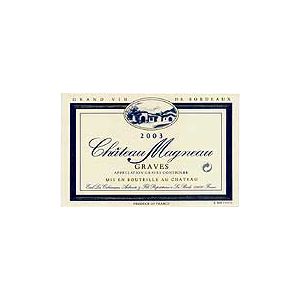
Château Magneau Graves Blanc 2003 – France

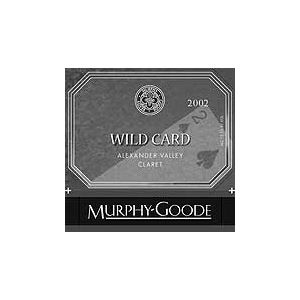
Murphy-Goode Wildcard 2002 – USA

White Wines Only Featured Selection
Rudi Pichler Gruner Veltliner Federspiel 2003 – Austria

Red Wines Only Featured Selection
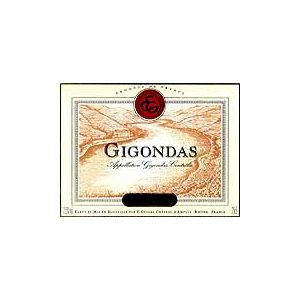
Guigal Gigondas 2001 – France

Château Magneau Graves Blanc 2003 – France

Château Magneau is an ancient property in the oldest and most quintessential of all Bordeaux appellations – Graves. It is located in the historic commune of La Brède, which is well known for its moated castle where the French philosopher Montesquieu was born. Here in the heart of the Graves appellation, the historic birthplace of the Bordeaux vineyards, the Ardurat family farms 90 acres of land with deep gravel soils.

The Ardurats have run this historic estate since the 16th century and the reign of Henri IV, the first Bourbon king. Befitting the five hundred year history of Château Magneau, the Ardurats follow time-honored traditions in making their wines. Farming is done without the use of chemical insecticides, and all harvesting is done by hand. In addition, the entire grape harvest is sorted by hand before entering Château Magneau’s up to date winery in order to insure that only the highest quality fruit goes into the estate’s offerings. Each grape variety is then fermented separately, and not blended until the assemblage. A new barrel cellar provides the ideal finishing school for the resulting wine.

Like many Graves estates, Château Magneau produces both red and white Bordeaux wines, all bearing the Graves appellation. The white Graves is made from the three traditional white Bordeaux varietals: Sauvignon Blanc (45%), Semillon (45%), and Muscadelle (10%). Each is fermented separately at low temperatures in stainless steel tanks to preserve the grapes’ aromatic profile and then blended and bottled before the spring of the following year. The average age of the white vines at Château Magneau is in excess of thirty years, which in most countries would qualify the resulting wine for an old vines designation.

The cepage of Château Magneau’s red Graves parallels that of the top performers of the commune and incorporates the three most important red grapes of Bordeaux: Merlot (50%), Cabernet Sauvignon (45%), and Cabernet Franc (5%). Unlike the white Château Magneau, the red is aged one and a half to two years in barrel, before it is racked and fined. It is a moderately tannic wine for Graves, but it develops beautifully in the bottle.

Graves: The First Bordeaux

Graves is the oldest and most historic of all the Bordeaux communes. Before Latour, Lafite, Margaux, and the rest of the well-known names of the Médoc even existed or had even seen a cultivated vine, there was Graves. In fact, Graves has been the home of cultivated vines since as early as the 1st century AD; due at least in part to the Romans inability to grow other crops in the graveled soil from which the name Graves is derived. The stone and gravel deposits are vestiges of the last Ice Age, a bane to most farmers but a boon to grape growers, whose vines struggle deep into the thin porous soil to draw life and subtle complex flavors from the nutrients below.

The wines of Graves appear to be the first Bordeaux wines to be exported, with archeological evidence that Roman garrisons in Britain were the happy recipients of Bordeaux’s quintessential wines. And by the early 12th century, Graves was the most sort after wine in England and beyond for its quality as well as its proximity to the city and port of Bordeaux itself, which lies just a few kilometers from Graves.

Today, the northern section of Graves called Pessac Léognon must battle the urban sprawl that has broken out of the confines of the city of Bordeaux and spread to the nearby suburbs of Talence and Pessac. A little south of these towns lays the pastoral heart of Graves, a pretty, rural country that includes La Brède, where vineyards mingle with pastures and pine forests. Here, life remains wedded to the land and the joys of the vine.

Graves is rightly famous for both its red and white wines. At their best, the red wines of Graves are unsurpassed for their aromatic beauty as well as their smooth, rich flavors. Earthy fragrant aromas that resemble cedar, a classic cigar box scent, black currant, and tobacco emanate from red Graves and form a bouquet that is frequently described as enchanting and profound. Moreover, fine red Graves is often the most supple on the palate. It is also the most flavorful, and easily appreciated of all Bordeaux reds.

White Graves is a dry, very aromatic wine that emits great freshness, along with substantial flavor. Perhaps, the greatest event in Graves in the last twenty years has been the revolution that has taken hold among the producers of white Graves. Once, an obscure and expensive proposition that did not always travel well, contemporary white Graves has taken on vigor, personality and even an exotic edge that underscores the physiological ripeness that was often absent in white Graves in years past. At their best, the finest whites Graves can rival the best white wines of France.

Tasting Notes: The first thing you notice about the 2003 Château Magneau Graves Blanc is its bright sunshiny color. The amplifying nose of this delightful wine is certainly the next and most unmistakable feature of the 2003 white Château Magneau. Grassy, herbal scents join with hints of pineapple and tropical fruits to add a flamboyant, exotic edge to the wine that is reminiscent of some of the best New World efforts with Sauvignon Blanc and Semillon. On the palate, the Château Magneau exhibits good length and a healthy dose of plush, ripe flavors that fill the mouth. Moreover, citrus and herb finish this portrait of a tasty white Graves and leave a pleasant lingering portfolio of flavors on the tongue for at least 15 seconds after the wine has been swallowed. We suggest serving this Graves ice cold with hors d’oeuvres or fish and at a more ambient temperature (45° -50° F) with cream sauces and heartier fare.

Accompaniments: Typically, white Graves is the perfect foil for the myriad of seafood favorites for which Bordeaux and its surrounding environs – including some of the Atlantic Ocean’s most beautiful beach resorts – are justly famous. However, the 2003 Château Magneau Graves Blanc is more than a fish wine, although it also fills that bill; we like it with Sautéed Oysters and Oysters Wrapped in Bacon. Yet, the Château Magneau’s ripe, exotic character lends itself to a myriad of cuisines and more substantial fare. An old-fashioned Chicken Fricassee with a wine flavored cream sauce, braised onions, and mushrooms provides a very tasty accompaniment to this wine and ample proof of the wine’s versatility. Sautéed Veal Scallops with mushrooms and cream offer another testimony to good eating and drinking. We also like the Château Magneau with foie gras or even a country pâté. In an entirely different vein, we suggest you try the Château Magneau Blanc with lightly spiced Hunan and Sichuan dishes. We found it both refreshing and complementary, so by all means experiment!

Recipe for White Wine

Creamed Chicken Fricassee

6 Tbl. butter 1 cup mushrooms – slightly sautéed
6 Tbl. flour 4 boneless chicken breast halves - sliced
1/2 tsp. salt & pepper 2 Tbl. sherry
1 1/2 cups chicken broth
1 cup milk

Melt butter over medium heat and add flour, stirring to a smooth roux. Add salt & pepper. Add broth and whisk to remove any lumps and then add milk. Drizzle in sherry and add mushrooms. Cook for about 10 minutes over low heat. Add chicken to sauce and cook slowly until chicken is cooked through.

Murphy-Goode Wildcard 2002 – USA

Since its inception in 1985, the Murphy-Goode winery has consistently turned out a formidable portfolio of compelling wines at affordable price. This unique family venture, an enterprise some have described as an adventure as well as a model in cooperative excellence and marketing acumen, fashions some of California’s most pleasurable, user-friendly wines. Even with more than 300 acres of prime Sonoma County vineyards, Murphy-Goode remains a family owned and operated winery – a joint undertaking of two neighbors and long time family friends and grape growers, Tim Murphy and Dale Goode, along with their marketing guru pal Dave Ready. All three families still actively tend the vineyards, make the wine, and handle all sales and marketing for this estate, much to the chagrin of less adept competition.

From the beginning the three partners shared a singular mission: to make excellent wine from exceptional grapes, and “produce something that brings to mind a three-day weekend.” Now these are our kind of folks. And as true gentlemen, these guys and now their families have been true to their word as well as their mission. Indeed, it is hard to get enough of their delicious wines.

Initially, Murphy-Goode gained recognition for its bold, full throttle Fumé Blanc, which it still produces, but today the winery is more renowned as one of Alexander Valley’s best red wine producers, with gold medal winning Cabernet Sauvignon, Merlot, Liar’s Dice Zinfandel and Pinot Noir, which complement the estate’s great Reserve Fume, Chardonnay, and Gewürztraminer. Murphy-Goode’s newest release is Wildcard, an outstanding meritage blend of Cabernet Sauvignon, Merlot, and Cabernet Franc. The winery draws on estate hillside vineyards and prime bench land grapes for its reserve wines, utilizing minimal intervention and natural farming techniques to produce wines that are truly special, like a long three-day weekend. And when was the last time you heard anyone complain about having a three-day weekend!

Regrettably, Tim Murphy passed away a few years ago, but as Murphy-Goode has always been a family affair, neither the estate’s commitment to quality nor its style of wine has changed. Tim’s three sons continue to handle much of the day to day management of the vineyard, while Dave Ready’s sons still make up the formidable wine making team. Dave Ready, Jr. is Winemaker, while his younger brother, Adam, serves as Cellarmaster. Dale Goode and Dave Ready, Sr. still put in a full day as well. The continued success of Murphy-Goode is a fine tribute to Tim Murphy, one of the premier architects of the post prohibition Renaissance viticulture in Sonoma County. Long live the legacy!

Tasting Notes: The 2002 Murphy-Goode Wildcard remains true to the estate’s commitment to fashion fleshy hedonistic wines that offer ample pleasure from their inception. The 2002 Wildcard is richly colored and laden with charm. The aroma of fresh blackberry, mingled with spice and toasted barrel, is the first indication that the consumer’s enjoyment is this wine’s total reason for being. And the best is yet to come as each sip of the 2002 Wildcard reveals a variety of velvety, mouth coating flavors. From start to finish, plenty of rich fruit and toasted oak tantalize the gullet and fill the senses, so before you know it, the bottle is gone. If ever there was a meritage wine to conjure the full gamut of Dionysian delights, the 2002 Murphy-Goode’s Wildcard fits that bill. So be careful who you invite over to share the pleasure. Consider yourself forewarned, and enjoy!

Accompaniments: When one considers the overall body, balance, and hedonistic style of the 2002 Murphy-Goode Wildcard, a multitude of complements come to mind. We recommend this wine with a myriad of dishes, most notably Steak au Poivre, accompanied by traditional Lyonnaise Potatoes. Grilled rosemary and thyme encrusted lamb chops or a stuffed veal chop provide other wonderful pairings. However, we should not forget that Wildcard is made with sophisticated every day consumption in mind, so a Monday meat loaf, Wednesday’s beef barley soup, or Thursday’s take-in rotisserie chicken from the nearby market offer equally rewarding choices with this delicious wine. Also, Wildcard is terrific all by itself, unlike many other meritage offerings, which are all too frequently long on body but short on balance and instant gratification. Not so with the Murhpy- Goode. In fact, the 2002 Wildcard is one of the most enjoyable and user friendly meritage wines we have ever tasted, so as you like it.

For the Love of Cheese: If there were ever a young red wine that was made for cheese, it is the 2002 Murphy-Goode Wildcard. Consequently, we suggest you try this wine with a number of international cheeses. American Sonoma Jack cheese, Danish Havarti, Sharp or medium English Cheddar, and most soft uncrusted French cheeses like Port Salut offer outstanding accompaniments to the 2002 Wildcard. The fleshy fruit of the Wildcard provides the perfect foil to the full creamy flavors of these cheeses. To discover additional cheese pairings or to learn more about cheese, please visit our website at www.cheesemonthclub.com and delight in the love of cheese.

Meritage

Meritage is California’s answer to Bordeaux. It is also a term that has come in vogue in the last decade to describe New World blends that are made from traditional red Bordeaux varietals. Therefore, a meritage wine is essentially a blend of three or more traditional red Bordeaux grapes with Cabernet Sauvignon, Merlot, and Cabernet Franc the most notable participants. Malbec and Petit Verdot are the other two possible players. However, there are no legal or proscribed percentages for each grape variety in a meritage wine, so producers are permitted to vary how much of each varietal finds its way into the final offering, much as Bordeaux Châteaux vary their cepages or blends depending upon the estate’s desired style of wine and the vagaries of each individual vintage. Nearly all meritage wines must eschew the name of a single varietal on the label because varietal bottling requires that at least 75% of a single variety (in California and in most other states) be present in a blend to be labeled as such. The minimum requirement is 80% in most other wine producing countries.

Recipe for Red Wine:

Madeiran Veal

1 1/2 lbs. veal scaloppini
1 cup flour; seasoned with salt & pepper
4 Tbl. butter
1/2 cup sliced mushrooms
3/4 cup Madeira, Cabernet or Merlot
Cooked egg noodles

Dredge veal in seasoned flour. Melt 1/2 of the butter in heavy skillet and sauté veal gently until browned. Saute mushrooms in remaining butter. Add the mushrooms to the skillet with the veal and pour wine over mixture. Stir the sauce until it thickens slightly. Serve over noodles.

Rudi Pichler Gruner Veltliner Federspiel 2003 – Austria

Pichler is a renowned name in the picturesque Wacchau Valley of Austria, where more than a few of Austria’s finest wines are produced. In fact, Rudi Pichler is the newest member of this elite family to make wine. After working with his father for many vintages, Rudi is now making his own wine his way. As it turns out, his way is a “no compromises” approach that features the most natural winemaking process possible.

Rudi Pichler’s winery is located in a small carriage house, which until recently contained very little in the way of modern technological equipment. Given the small size of the winery, he can easily control the temperature in the entire room, but he is unable to precisely control each fermenting tank, which would drive modern technocrats mad but not young Rudi. Instead, Rudi eschews the contemporary rage for cold fermentation in favor of warmer fermentation temperatures and an overall more natural fermentation, which allow him to gain more flavor and extract from the grapes.

Whenever possible, which seems to be nearly all of the time, Pichler uses only the wild natural yeasts for fermentation, another practice that would send the computer regulated engineers of large commercial wineries to the asylum. However, Pichler aptly demonstrates that such daring practices pay large dividends. His wines are consistently more exotic and complex than other Wachau producers’ wines, and they often exhibit an elusive quality that is simply compelling.

Rudi Pichler fashions modest quantities of several different excellent Gruner Veltliners and Rieslings, as well as a very fine, highly concentrated Weissburgunder (Pinot Blanc), all of which are highly recommended..

Tasting Notes: A thoroughly charming and well-mannered Gruner Veltliner, the 2003 Rudi Pichler Gruner Veltliner Federspiel manages to combine all the raciness and exotic charm of Austria’s most distinctive vareital with good breeding and a sunny disposition. Indeed, there is much to like in Pichler’s dry, ripe rendition of what has suddenly become Europe’s most fashionable white grape. Subtle fruit, a hint of rose petal, dried lichée, oriental spice, supreme balance, and a sublime integration of flavors all harmonize in this Pichler offering. Sipping Pichler’s Gruner Veltliner is like attending the symphony, except all the music is in the glass, so that it is the palate that is dazzled rather than the ears. Yet, what truly characterizes the Rudi Pichler Gruner Veltliner from lesser examples of this varietal is its underlying ripeness and balanced finish. Whereby many contemporary Gruner Veltliners offer interest, it is usually at a price that manifests itself in a hard edge. Notably absent in Pichler’s Federspiel is the hard edge and harsh finish that can mar the up front pleasure of lesser Gruner Veltliner offerings. So, enjoy the Pichler symphony, without worrying about hurting your ears or your palate. Prost!

Accompaniments: If there ever were ever a single varietal to accompany today’s eclectic cuisine or the explosion of ethnic offerings that now abound in many trendy kitchens and restaurants in the United States, it could very well be Gruner Veltiner, with the 2003 Rudi Pichler Federspiel Gruner Veltliner at the very top of that heap. Whether it is Tandoori from India or the heavenly concoctions of good Thai food, we suggest a well-chilled bottle or two of Pichler’s Gruner Veltliner. Along this vein, one of our favorite pairings with the Federspiel is a lightly grilled tuna that is topped with cilantro, lemongrass, red onion, and finely chopped vegetables that have been so deftly infused with a mélange of Thai spices. Other heavenly accompaniments include seared scallops that are served with either a Thai nut relish or a rich Piedmontese cream sauce with pistachio nuts or pecans. Fish, soft cheeses, and light meats will provide other winning combinations with the Pichler Gruner Veltliner as well.

Guigal Gigondas 2001 – France

Marcel Guigal has rightly been called everything from “the man with the Midas touch” to “the planet’s greatest living winemaker.” And indeed his wines deserve the accolades and adulation heaped upon them. Unquestionably, Guigal has earned the reputation for fashioning some of the Rhône’s most compelling wines, as the favorable reviews and critical acclaims for his most recent success, the 2001 Gigondas, attest. However, even more impressive is perhaps Guigal’s knack for consistency. Without fail, Guigal’s wines, whether they are red, white or rose, are at the top of the charts in both good years and bad. Moreover, each of Guigal’s many fine Rhône offerings has become the yardstick by which all others are judged in their respective appellations.

From the antique village of Ampuis, the birthplace of the great Côte-Rôtie appellation, the burgeoning wine empire of Marcel Guigal has spread to every significant appellation in the Rhône Valley. Led by Marcel and his adept son and protégé, Philippe, the Guigals have sown success and quality far and wide, forcing less quality minded producers to improve their wines or perish. Among this property’s top offerings are several outstanding Côte-Rôtie, benchmark Châteauneuf-du-Pape and Gigondas, and the most consistently fine Côtes du Rhône and Viogniers produced. Moreover, all of Guigal’s own grapes are organically grown and minimal interventional methods are used in the making of the domain’s wines.

Tasting Notes: A medium to full-bodied red wine, the 2001 Guigal Gigondas exhibits as much charm as vigor. Built along the lines of one of Marcel Guigal’s now legendary Châteauneuf-du-Papes, this Gigondas possesses a rich ruby/purple robe and deep down scents of kirsch and crème de cassis, which follow through to the palate. In the mouth, a core of tightly wound black fruits lies wrapped within silky tannins and a restrained sophisticated cachet of cedar and spice. More elegant than most Gigondas, the 2001 Guigal offering is happily devoid of overt rusticity, which can dominate some of the more traditional wines of Gigondas. But make no mistake about it, the seamless 2001 Guigal Gigondas is no lightweight; it will continue to unfold with additional time in bottle or with extensive aeration. As with all quality Rhône offerings, we suggest serving this wine cool, somewhere between cellar and room temperature, but certainly no more than 68° F.

Accompaniments: One of the delights of high quality Rhône wine is its versatility with food, and the 2001 Guigal is no exception. Whether it is served with red meat or white, a flavorful stew or a rich lentil or bean dish, you can count on the Guigal Gigondas to add to the occasion, providing the spice and accompanying sauce are not overwhelming. Some of our favorite pairings with this wine include a roast chicken basted with cream, herb and giblet stuffing or a thick savory beef stew. Cassoulet, sausage and beans, steak au poivre, and a carefully prepared leg of lamb provide other memorable moments with Guigal’s latest hit. We also think classic Italian favorites shine equally well with Gigondas and that includes everything from painstaking Piedmontese risottos to the tomato laden classics of southern Italy, so enjoy this Guigal Gigondas as you like it!

For Members Only

Give Your Friends FREE Beer, Wine, Cheese, Chocolate, Cigars & Flowers!
Through our Customer Appreciation Program

Your name has real value to your friends, co-workers, and family members! Every time a friend, family member, or anyone else you know joins any one of our clubs, [or gives a gift] for 3 months or longer, we'll give them 50% off of their first month, but only when they mention your name. And we'll also give you 50% off your next month too which can either be applied towards your current membership or you can try one of our other Clubs out! (We can add one more month to your order at 50% off for prepaid memberships!)

The Fine Print: Members giving gift memberships do not qualify for referral credits and you can't give yourself a gift to qualify! This Program is mutually exclusive of any other promotions.

Membership Q & A

Note: Please do not use the web site to make any account related information changes such as address or billing changes, membership extensions, or terminations. To ensure timely processing of your request, please call us at 800-625-8238.

Q: What can I do if I’m having difficulty receiving my shipment at home?
A: You should consider having our discrete box delivered to your work location or to a neighbor 21 yrs. of age that can receive it for you. The box is brown corrugated cardboard and doesn’t say “Wine” on it anywhere. Consider having it shipped to your work location as many of our customers do.

Q: What should I do if I’m moving or want to extend my membership?
A: Please call us prior to the 9 th of the month to make all account related information changes such as address changes, membership extensions & terminations, or gift accounts desiring to continue their memberships. Address changes made after that time may require a repackaging and re-shipping charge and will incur a $5.00 service charge from UPS that will be charged to your account.

Q: What happens if my shipment is damaged?
A: If your shipment arrives damaged, please call us immediately toll free at 1-800-625-8238 and report the incident for a prompt resolution.

Q: What happens if my credit card is declined?
A: We will send you a courtesy notice asking for an alternative payment method, and will also attempt two more times to process the charges. If we cannot secure
payment and have not been contacted by you, the order will be temporarily suspended.

Q: What happens if I join under a special incentive program and don’t stay a member for the entire term committed?
A: Not a problem. Although we want to do everything we can to keep you as a member, we will allow you to cancel your subscription early, however, you will be responsible to pay for the item which was given to you as part of the promotion. If you received a discount based on a specific term, the amount discounted will be charged to your card.


logo for wine club
Since 1994
Home
Join Our Wine Club
Gift Memberships

Membership Renewals
Reorder Your Favorites
Wine of the Month Club
More Information
Current Selections
Past Selections
Testimonials
Other Gourmet Gifts
Corporate Gifts
Wedding Gift Ideas
All About Wine
Website Tools
Who We Are
Contact Us

1 - 800 - 625 - 8238
(Outside US call: 949-206-1904)
P.O. Box 1627, Lake Forest, CA 92609