Featured Wines
January 2008
Premier Series |
|
Featured Wineries & Wines |
Membership Type |
| Peltier Station Lodi Appellation Petite Sirah | 1 Red 1 White; 2 Reds |
| Morgadío Legado del Conde Albariñ Rías Baixas | 1 Red 1 White; 2 Whites |
| Château Barreyre Bordeaux Supérieur | 2 Reds |
| Trinchero Vista Montone Napa Valley Estate Chardonnay | 2 Whites |
Master Series |
|
Featured Wineries & Wines |
Membership Type |
| Dei Vino Nobile di Montepulciano | 1 Red 1 White; 2 Reds |
| Morgadío Legado del Conde Albariñ Rías Baixas | 1 Red 1 White |
| Peltier Station Lodi Appellation Petite Sirah | 2 Reds |
Collector Series |
|
Featured Wineries & Wines |
Membership Type |
| Dei Vino Nobile di Montepulciano | 1 Red 1 White; 2 Reds |
| Domaine Amiot Guy et Fils Chassagne-Montrachet Vieilles Vignes | 1 Red 1 White |
| Condado de Haza Ribera del Duero | 2 Reds |
Peltier Station Lodi Appellation Petite Sirah 2005 – U.S.A.
Looking west, one can imagine the old grape packing sheds that once graced the tracks alongside Peltier Road. From the nearby station, thousands of tons of purple and white grapes departed in the "old days" for local wineries and the cellars of countless home winemakers. Today, Peltier Station creates premium wines from the grapes which were once shipped eastward via the rusty old railroad tracks. Owned and run by Rodney and Gayla Schatz, Peltier Station is one of the brightest new stars in the resuscitated Lodi Appellation.
Rodney and Gayla Schatz began Peltier Station Winery in 2002 with their first crush at the winery. They grow grapes and produce wine for numerous well-known wineries, both large and small. In addition, they craft a small number of cases under their own name, with their most notable wine being the Peltier Station Petite Sirah. Rodney Schatz hails from a tradition of grape growing families. His grandparents on both sides (the Marengo and Schatz families) were established growers in the 1950s, and Rodney and his wife Gayla have decided to expand on that tradition. In addition to cultivating some of Lodi's finest fruit, they now make their own wine from estate grown grapes with the help of JC van Staden, a gifted young winemaker.
JC van Staden is a very talented winemaker whose experience comes from growing up on a farm in South Africa and working with a number of prominent wineries in South Africa, France, and the United States in order to hone his craft, before coming to Peltier Station. The 2005 Peltier Station Petite Sirah is JC's first attempt for Peltier Station, and what an entrée he has served. The 2005 Petite Sirah won gold medal, best of class, and best of region winner awards at the prestigious California State Fair Wine Competition. However, this is not JC's first award, nor will it likely be his last. Moreover, given the performance of the 2005 Petite Sirah, look for JC's future to be at least as bright as the award winning wines he has created.
Tasting Notes: The award winning 2005 Peltier Station Petite Sirah was grown in a vineyard in the Lodi Appellation of South Sacramento County, an area of long, hot, sunny days tempered by the Delta Breeze. Here, the sun worshiping Petite Sirah thrives in the appellation's clay soil. Born under ideal conditions, the 2005 Peltier Station Petite Sirah has yielded an intense wine with an opaque purple robe; an aromatic bouquet of blackberry jam, cedar, and forest woodlands; and a voluptuous center. In the mouth, the 2005 Peltier Station Petite Sirah is nearly staggering in its concentration. However, it is never hot, nor weighty, in spite of a whopping 14.8% alcohol by volume. Again, black fruits and deep down woodsy flavors dominate the palate profile and finish of this well balanced effort. Considering the concentration and youth of this wine, we suggest opening the 2005 Peltier Station Petite Sirah at least one hour before consumption. And for maximum enjoyment, 55°-65° F would be the ideal temperature range when serving this blockbuster first release from Peltier Station. Enjoy!
Accompaniments: While light and delicate wines often require simple, elegant fare in order for the wine not to be overshadowed by the food, we need not worry about that scenario with the 2005 Peltier Station Petite Sirah. In fact, this wine's motto could easily be "The bigger the better" when it comes to accompaniments. Rich stews, hearty pastas, grilled Italian sausage and peppers, and game all provide excellent choices to complement this Petite Sirah. Venison tenderloin, served in a savory brown sauce; pressed duck, prepared with a blackberry glaze; and Flat Iron Steak, topped with balsamic caramelized onions, brie cheese over collard greens or broccoli rob, and garlic mashed potatoes offer savory, full-throttle choices to pair with JC van Staden's premier wine for Peltier Station. Most southern Italian favorites, such as manicotti, spaghetti with meat balls, or a heady antipasto with smoked meats and hard cheeses, offer other fine choices.Morgadío Legado del Conde Albariñ Rías Baixas 2006 – Spain
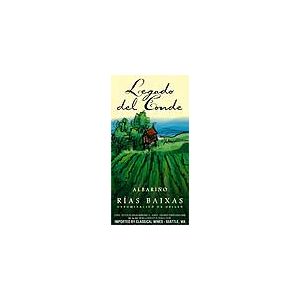
Morgadío is a unique farm and winery in Galicia's Rías Baixas appellation. Meaning "only son" in Gallego, the Spanish dialect of Spain's Galician coast, Morgadío specializes in Spain's most expensive and important white grape variety: Albariño. Within the Rías Baixas are three separate districts, but none are as great as the Condado do Tea around Morgadío. Located on the banks of the Miñho River in a sunny amphitheater, reminiscent of Germany's famous Rheingau, Morgadío enjoys a benign climate, southern exposure, and a superb terroir of reflective granite that allows it to fashion Spain's fullest and most notable Albariño.
Morgadío came to life with the recent resurrection of the legendary Albariño varietal in the early 1980's. Owned by the Méndez family of nearby Orense, this old farm is planted entirely to Albariño and is considered to be the driving force in restoring Albariño to its exalted status as Spain's foremost white wine. And not only does Morgadío possess one of the largest plantings of the varietal (50 hectares or 110 acres) it has cultivated the technology and techniques that have transformed Albariño from a local legend to an international celebrity.
Until the late 1980's Galicia's legendary Albariño grape remained just that – a legend. Often thought to be a distant cousin or even an immediate ancestor to Riesling, Albariño's high quality and extreme rarity assured its position as Spain's (and one of Europe's) most expensive wine grapes. However, the high cost involved in making Albariño caused many to overproduce the varietal or stretch its production with less expensive grapes, resulting in inevitable disappointment on the part of adventurous tasters in search of the wine world's Holy Grail. Formerly, authentic Albariño was produced inconsistently and only in miniscule lots. Fortunately, the establishment of the Rías Baixas appellation in 1988 and an ongoing movement led by Morgadío to recuperate and assure the authenticity of Albariño has rectified the situation.
Albariño: Spain's Most Compelling White Grape
Albariño is an indigenous Spanish grape variety whose home is Rías Baixas and the Galician hinterlands of northwest Spain and Portugal. Albariño was once thought to be distantly related to Riesling, but some enologists now believe that Albariño may be more closely connected to the Petit Manseng variety of southwest France, just on the other side of the towering Pyrenees Mountains from Rías Baixas. However, no dry white Petit Manseng can match the body and finesse of Spain's finest Albariño wines.
In Portugal, Albariño goes by the name Alvarinho where it usually ends up as a light summertime quaff in the guise of Vinho Verde. Surely, in no two countries could a single grape variety be more different than Albariño is in Spain and Portugal. While Portugal picks this varietal early and makes a low alcohol wine (8.5%-9% on average), Spain, under the tutelage of the Méndez family and similar minded individuals in Rías Baixas, turns out a full-bodied, intense Albariño with aromatic and flavor profiles more akin to Viognier – the greatest white variety of France's Rhône Valley.
Albariño is now being extensively studied and planted in other locales around the world, including Australia, California, and South Africa. Early reports from winemakers and consumers appear especially promising in Australia for the late maturing Albariño, where extended growing seasons are common and the grape's firm, bright acidity is much appreciated. A debt of thanks belongs to the folks at Morgadío for helping resurrect the great Albariño varietal in Spain and sharing it with the world.
Tasting Notes: With a beautiful, bright lemony robe and a fresh, rich nose that carries the scent of spring flowers, mimosa, and the waft of a sea breeze, the 2006 Morgadío Legado del Conde Albariño makes a grand statement and an even grander entry. Dry, pure, and hauntingly scented, this friendly Albariño offers up plenty of minerality and a mouth full of light clean fruit to balance its long, crisp finish. Albariño is a singular varietal with a unique character: it is both ethereal and intense and Morgadio captures the essence of this grape variety in their 2006 Legado del Conde. Nevertheless, Albariño is somewhat difficult to describe. Yet, the 2006 Morgadío Legado del Conde will never be confused for a fruity, vanilla, oak infused New World confection. Rather, the 2006 Legado del Conde is classic Albariño – a truly dry white wine and a Spanish classic. In fact, this Albariño is an Old World treasure and a wine of breed and noble bearing. We suggest serving this elegant white wine well chilled (35°- 40° F).
Accompaniments: With the sea so close and playing such an important part in the lives of the people of Galicia, the preference in Rías Baixas is to pair the region's fine seafood with a bottle or two of Albariño, and who are we to argue? The 2006 Morgadío Legado del Conde Albariño is, indeed, the perfect foil to sautéed scallops, grilled snapper, crabmeat salad, and most everything else that once inhabited the sea. We also like the Morgadío Albariño with poultry and cheese; especially well made Manchego and Mahon, two of Spain's most delectable cheeses. Fresh or fried Thai-style spring rolls also provide superb complements. And for a simple vegetarian pairing, we recommend putting the 2006 Morgadío Legado del Conde with tips of asparagus, served over a bed of saffron and leek rice. The Legado del Conde will also offer excellent companionship to light curries. Enjoy!
Château Barreyre Bordeaux Supérieur 2005 – France
Château Barreyre is evidence of just how fine many of Bordeaux's smaller, lesser known estates called petits châteaux can be. It is, also, ample testimony to the greatness in Bordeaux of the much heralded 2005 vintage. A twenty-two acre property with a view of the Gironde and the nearby port of Macau, Château Barreyre actually lies within the Médoc. It is in fact quite close to Margaux. Yet, on account of its proximity to the river, Château Barreyre is only entitled to the appellation Bordeaux Supérieur – a boon to savvy consumers looking for bona fide Bordeaux at an affordable price.
Château Barreyre is an historic property with an authentic 18th century château. The château was constructed in 1774 by Nicolas Barreyre, but the cultivation of the vine on the property dates back even further. The Barreyre family is a prominent Bordelais family of bourgeois origin, which may explain why the estate weathered the French Revolution and remains within the family, even until this day.
Presently, the viticultural excellence at Château Barreyre is being guided by winemaker Claude Gaudin. Under Gaudin's watchful eye, Château Barreyre has enjoyed considerable success. The vineyard practices a very close plantation of its vines and extracts extremely low yields. In fact, its yield per hectare is considerably less than that of many of Bordeaux's classified growths, which cost three times the price. These factors contribute greatly to the quality of wine produced at the château. On average, the cépage or blend is typically 50% Merlot, 40% Cabernet Sauvignon, and 10% Petit Verdot, which is similar to that of several nearby Margaux properties. However, due to nearly perfect ripening conditions for Cabernet Sauvignon, the final blend of the 2005 Château Barreyre contains more Cabernet than usual, which should allow the wine to age beautifully for up to a decade or more.
Tasting Notes: Upon tasting the 2005 Château Barreyre, one panel member uttered: "If this is the Silver Medal winner at the concours, I sure would like to meet the Gold Medal recipient." Later, we did taste the Gold Medal beneficiary, and guess what? We liked the Château Barreyre better. The 2005 Château Barreyre displays a deep Margaux like robe and a pronounced bouquet of blackberry, cedar, kirsch, and forest woodlands that are hard to resist. On the palate, the Château Barreyre comes across as medium-bodied, but plush. It displays plenty of berry fruit, good ripe tannins, and a long balanced finish. Succulent and almost creamy, even at the tender age of two, this is what good petit château Bordeaux is all about. Yet, the best of this wine is still to come; the 2005 Château Barreyre is still in its infancy and will continue to take on weight and improve in bottle in true Bordeaux fashion for at least four or five more years, and then offer fine drinking pleasure for up to five more years. Anticipated maturity: 2009-2015. Enjoy!
Accompaniments: Young red Bordeaux is rarely the first wine one reaches for to just sit around and sip. However, with a little breathing time, the 2005 Château Barreyre is a definite exception to the rule. It pairs nicely with a cold night and a clean glass. However, the ultimate glory of good red Bordeaux is how it graces the table and elevates delights of the kitchen. One need not be elaborate when serving red Bordeaux, but Bordeaux does have an affinity for simple, well prepared foods. Loin lamb chops; prime rib of beef; whole roasted chickens with a savory sage stuffing; and tender veal chops, grilled slowly to perfection and topped with mushrooms and a blackberry reduction sauce are just a few of our favorite dishes with the 2005 Château Barreyre. Midweek staples do fine with this wine, too. The Château Barreyre is equally comfortable at an elegant dinner party as it is with a mid-week meatloaf, served on a bare kitchen table. So, as you like it!
Trinchero Vista Montone Napa Valley Estate Chardonnay 2005 – U.S.A.
Trinchero is an historic name in Napa Valley. The Trinchero family immigrated to the United States from Italy in the 1920's during Prohibition. After World War II they purchased the abandoned 19th century Sutter Home Winery that lay fallow for decades. They revived the winery and the brand, and by 1960 the Trinchero family had garnered an enviable reputation for quality wines, most notably single vineyard Zinfandels from Amador County. In the early 1960's Sutter Home was at the forefront of fine wine production in California.
By the late 1960's, the demand for Zinfandel and other traditional California varieties was on the wane in favor of Chardonnay, Cabernet Sauvignon, and other French grape varieties. White wine became the craze throughout the 1970's, which sent red Zinfandel to the proverbial backburner among consumers. The Trincheros responded by creating the world's first white Zinfandel in 1972 as an outlet for their award winning Zinfandel grapes. White Zinfandel was an immediate sensation, and most other Napa Valley producers followed suit. The rest is history. However, the Trincheros' quest has always been to produce only the finest premium California wines – a dream the family revived with the Trinchero Family Estate and a host of family vineyards.
The Trinchero family owns 200 acres of the some of the finest vineyard land in Napa Valley. Trinchero's Reserve wines (of which the Vista Montone Chardonnay is a part) all come from the family's own home Napa Valley estate, which includes vineyards in Calistoga, St. Helena, Rutherford, and southern Napa Valley along San Pablo Bay. In addition to the family's elite Napa Valley vineyards, the Trincheros own 200 acres of vines in nearby Lake County and an additional 525 acres in Santa Barbara County. The Napa Valley Folie à Deux winery and vineyards are also part of the Trinchero family portfolio. All of Trinchero's estate bottled wines are produced using sustainable methods of agriculture and with the utmost care for the environment.
Trinchero Family Estates and Environmental Leadership
Trinchero Family Estates (TFE) is a leader in the employment of sustainable methods of agriculture, re-cycling, and green land management. Trinchero Family Estates employs only sustainable, organic, and biodynamic practices in their estate vineyards. Moreover, they eschew the use of potentially harmful chemicals and work with the state of California and other vineyards to develop healthy, natural alternatives to harsh chemicals. No chemical pesticides or herbicides are used at TFE and natural ground covers such as barley and clover prevail throughout all the estate vineyards. Furthermore, botanical oils and natural predators take the place of potentially hazardous chemicals. TFE, also, recycles 50 million gallons of water annually and re-cycles 20 tons of office paper, 850 tons of cardboard, and 100 tons of plastic each year. All proceeds from recycling revert to TFE's employees in the form of an employee-in-need fund. In addition, Trinchero has planted over 3,000 oak trees near their vineyards and created extensive greenbelts and lakes to improve the natural environment. Not surprisingly, Trinchero Family Estates has received California's Waste Reduction Awards Programs (W.R.A.P.) Award for seven consecutive years.
Tasting Notes: The 2005 Trinchero Vista Montone Chardonnay is no ordinary California Chardonnay. Grown on the hills overlooking San Pablo Bay just to the east of Carneros, the 120 acre Vista Montone Vineyard produces a Napa Chardonnay of true distinction, flavor, and finesse. Deep floral tones and pure ripe tropical fruit marry with a haunting spice box cachet to offer a beguiling set of aromatics in this wine. Add a pat of butter, a hint of oyster shell, and a touch of vanilla to the wine's already flamboyant olfactory and this wine's palate impression reveals the artist's intention: to create a bright, flavorful, racy Chardonnay that remains perfectly balanced and compelling to drink. All this goodness comes to fore once again in the 2005 Vista Montone's long, lovely finish. Enjoy this Chardonnay now and over the next few years. For optimum enjoyment of the 2005 Vista Montone, we suggest only moderate chilling (40°-50° F).
Accompaniments: While so much California Chardonnay is consumed before dinner or when whiling away the time, the very best examples of the breed and that includes the 2005 Trinchero Vista Montone, provide superb accompaniments to a wide variety of foods. Fish, chicken, pork, veal, and most soft cheeses shine in the presence of first rate Chardonnay. For starters, we heartily endorse one of the specialties from the chef at Trinchero's Culinary Center: Pan Seared Sea Scallops, served over a Fire Roasted Pumpkin Risotto. Such full flavored specialties are a natural with the Vista Montone. Fettuccine Alfredo or any grilled chicken and pasta dish, served over an herb laced cream sauce will complement this Chardonnay with aplomb as well. Enjoy!
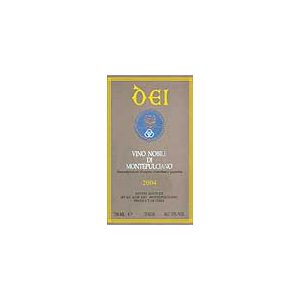
Dei Vino Nobile di Montepulciano 2004 – Italy
The Dei estate lies at the end of a tiny Tuscan road, sequestered from the commercial hoopla that lately surrounds many other Tuscan wineries. To enter the world of Dei is to step back in time. However, that step is not a retreat to the vagaries of yesteryear as the winery is modern and technologically up to date and the vineyards impeccably maintained. However, the house, the manicured gardens, and the glowing atmosphere are straight out of the 1920's. From its surroundings, Dei recalls the ambiance, comfort and confidence of a bygone era. More importantly, the estate's Vino Nobile reflects the overt charm, grace, and conviviality of its owners.
Dei was founded in 1964 when Alibrando Dei bought a parcel of land called Bossona and planted a vineyard of Prugnolo Gentile, the special clone of Sangiovese that is unique to Vino Nobile. Over the next several decades the family developed the vineyard and sold off the juice in bulk. However, in 1985 Alibrando's son, Galileo, decided to rent a cellar and, with no technical assistance, produced the first family named commercial vintage. The bottling was such a success that plans were laid to build a new modern cellar and construction began in 1989.
Today, the estate continues to blossom under the guidance of third generation, Maria Caterina Dei and oenologist Nicolò d'Aflitto. Caterina gave up her career as a professionally trained singer and actress to embrace the family business and is passionately dedicated to producing high quality Vino Nobile that highlights Vino Nobile's outstanding terroir. The current estate's 38 hectares (84 acres) of vineyard are all located in the historic Vino Nobile di Montepulciano zone and are split between four vineyards: Bossona, Martiena, La Ciarliana and La Piaggia. The original Bossona vineyard is located at about 300 meters in an idyllic amphitheatre. It is responsible for Dei's Riserva bottling, while Martiena houses both the cellar and family villa. Production is focused on the local varietals, especially Sangiovese (Prugnolo Gentile,) Cannaiolo and Mammolo.
Dei produces only about 60,000 bottles of Nobile di Montepulciano, 20,000 bottles of Nobile Riserva (only in the best years), 40,000 bottles of Rosso di Montepulciano and an extremely limited quantity of the highly acclaimed "Super Tuscan" blend Sancta Catherina from Prugnolo Gentile, Syrah, Cabernet, and Petite Verdot.
Vino Nobile di Montepulciano
Even when legions of wine thirsty tourists descend upon the Tuscan hill town of Montepulciano, it manages to retain its charm and characteristic medieval feel. In fact, this bustling town is a strollers' paradise, replete with flower bedecked alleyways and steep steps in place of streets. And thanks to a ban on vehicles in much of the old town, one comes to quickly understand how Montepulciano emerged a pearl of the "16th Century." Set on a steep hill between the Val di Chiana and the Val d'Orcia, Montepulciano is the center of the thriving DOCG (Controlled and Guaranteed Denomination of Origin) of Vino Nobile di Montepulciano, one of the greatest and oldest names in Italian wine.
The "noble wine" of Montepulciano has enjoyed its renowned reputation ever since the year 790. Even in the early medieval period, the "Vino Nobile" of Montepulciano was highly sought after, even outside of Montepulciano and the surrounding area. In 1549, Sante Lancerio, maître de chaîne to Pope Paul III, called the Nobile of Montepulciano the "Vino perfettissimo da Signori" or the Preferred Wine of the Nobility. It was, however, the 17th century doctor and poet Francesco Redi, who established the reputation of the Nobile of Montepulciano as "The King of all Wine". The name "Nobile" dates from the era when higher quality wines were exclusively reserved for noble families.
Even today, Vino Nobile di Montepulciano is universally recognized as a special wine. Vino Nobile's primary grape variety is the local Prugnolo Gentile, a unique clone of Tuscan Sangiovese that must comprise a minimum 70% of any wine that bears the title of Vino Nobile. Many point to Prugnolo Gentile as the determining factor in the quality quotient of Vino Nobile. And with the supreme polish and depth of flavor that one sees in the finest Vino Nobile di Montepulciano, it would be hard to refute the claim. Since 1980 the Vino Nobile di Montepulciano has enjoyed the distinction of DOCG status, one of the first wines in Italy to be so named
In order to be called Vino Nobile di Montepulciano, a wine must, also, be matured in wooden casks for at least two years, starting from the 1st of January following the harvest. After maturing for three years, Vino Nobile is entitled to be called "Riserva". Prugnolo Gentile must always be the primary grape variety, but other traditional Tuscan varieties such as Malvasia Nero, Canaiolo Nero, Colorino, and Mammolo are also permitted. Small amounts of Merlot and Cabernet are now legal in Vino Nobile as well.
Tasting Notes: The 2004 Dei Vino Nobile di Montepulciano is one of the stars of the outstanding 2004 vintage. A true Tuscan treasure, this deeply colored Vino Nobile dazzles the eye with deep ruby highlights and saturated purple tones. Moreover, it offers an incredible scent of roses, violets, black fruits and tobacco that just won't quit. In fact, the wine continues to develop in the glass for hours, offering up one enchanting aromatic profile after the next. The perfume on the 2004 Dei Vino Nobile is utterly captivating and befitting of the noble name of this wine. Perhaps, even more impressive is this Vino Nobile's incredible flavor profile, which matches its great olfactory. Beautifully integrated fruit, purity, body, and balance solidify this wine's position as one of the appellation's finest wines, and better still the 2004 Dei Vino Nobile has years of life and evolution ahead of it. In short, this wine is positively gorgeous now; yet, it will continue to improve in bottle for years to come. In the ideal world, one has at least a case of the 2004 Dei Vino Nobile di Montepulciano to drink over the next year and several cases in the cellar to add sunshine to rainy days for many years to come. Anticipated maturity: 2008-2015.
Accompaniments: Veal and beef are traditional Tuscan favorites with Vino Nobile di Montepulciano, but equal credence should be given to lamb, pork, and chicken dishes. Tuscany is a dry, austere landscape, especially in summer and early fall, but it is a fecund land. Its beef is exquisite and its produce legendary for its purity of flavor – all of which provide great complements to the outstanding 2004 Dei Vino Nobile di Montepulciano. Florentine Steak, rubbed with extra virgin olive oil and brushed with garlic and herbs, is perhaps the ultimate accompaniment. Chicken with black olives and capers in a light cream sauce, served over penne pasta, is another excellent choice with Dei's show stopping 2004 Vino Nobile. Parmesan Crusted Chicken, served with lightly herbed goat cheese; and a savory Lamb Ragout with mushrooms, red peppers, and onions, served over braised greens and oven roasted potatoes, provide other tasty treats with the charming, full-flavored 2004 Dei Vino Nobile, too. Salute!
Domaine Amiot Guy et Fils Chassagne-Montrachet Vieilles Vignes 2005 – France
Domaine Amiot is one of Burgundy's finest producers of white wine, fashioning a rich portfolio of outstanding white Burgundies from the commune of Chassagne-Montrachet. Guy Amiot, the present owner and guardian of the domaine that bears his name, represents the third generation of renowned growers at this property. However, most critics are quick to point out that over the last two decades Guy has taken his splendid domaine to the next level of quality and placed it firmly in the top echelon, alongside the very finest producers in the land.
Guy's forbearer, Arsène Amiot, an adopted Parisian, began the estate in 1920 after falling in love with the golden slopes of Chassagne-Montrachet, the world's finest commune for Chardonnay. Arsène's initial purchase in the tiny village of Chassagne-Montrachet accounted for a mere 2 hectares or approximately 4.5 acres of vineyard, but what jewels Arsène had acquired. The original parcels were remarkably well chosen and still form the core of the domaine. In fact Amiot's holdings included vineyards in Les Vergers, Le Clos Saint Jean, les Caillerets and les Dents de Chien, all of which were later to be designated as Montrachet Grand Cru, the mark of the world's finest and most expensive white wines.
In spite of Arsène's great affection for his beloved village and the wines it produced, he continued to tend to his business in Paris while the family remained in Burgundy. From 1925-1935 Arsène left the cultivation of the vines to 'Père' Robe, an eminent winegrower who also devoted considerable time and talent to the vinification and estate-bottling of Amiot's wines, a practice almost unknown at the time. Traditionally, the Burgundy growers dealt with a wine broker who in turn worked with shippers or négociants, who then bottled the growers' wines. These shippers worked from their offices in Beaune or Nuits-Saint-Georges and sold an estate's wines to Parisian merchants engaged in the retail trade.
In 1930 Arsène Amiot saw the opening in Paris of a wine cellar and retail store that gave select clients a way to buy the "Grand Vins of Burgundy, delivered to their residence." The business was quickly very popular and orders flooded in. This commercial success meant Amiot could expand his domaine. By 1936, upon completion of studies in viticulture and oenology in Beaune, Pierre Amiot, one of Arsène's sons took over the business and the estate acquired several new vineyard jewels like La Maltroie, Les Champgains, and Les Macherelles. Little by little, Amiot's production began to be sold directly to individual connoisseurs and savvy restaurateurs. After the Second World War, the acquisition of prestigious parcels like Les Chaumées or Les Demoiselles added further to the estate's very well-established reputation, both in France and abroad.
In 1984, Pierre Amiot passed away after a lifetime of producing estate bottled Burgundies and the torch passed to Guy, the present owner. Guy has taken the family estate to even greater heights. After completing studies in oenology, Guy gained considerable experience working in some of the finest vineyards throughout France. He now combines modern winemaking methods with a traditional knowledge of Burgundian viticulture. He has wisely decided to retain old vines (Vieilles Vignes) and focus on bringing out the individual character and terroir in each of the wines he fashions, favoring the production of wines that are aromatic, rich and balanced, as illustrated by the remarkable quality of the vintages he has produced from 1985 until present.
In 1992, the fourth generation of the Amiot family, Thierry, entered the family business and began building a new wine cellar whose elliptical vaults are both in keeping with tradition and ideal for the natural aging of the wines. Indeed, it is good to know that the future of this great estate is assured and still in the capable hands of another Amiot.
Tasting Notes: At the outset, it is important to state that Amiot Guy's Chassagne-Montrachet Vieilles Vignes (Old Vines) is not California Chardonnay, but then again neither is any other white Burgundy. A wholly different approach is taken in Burgundy towards Chardonnay, where the best producers like Amiot Guy aim to accentuate the breed, elegance, and charm inherent in the Chardonnay variety and emphasize the special terroir of their respective communes, rather than adapt California's preference for buxom beauty and oak laden concoctions that rely more upon power and the patina of oak to define their white wines. Consequently, the 2005 Amiot Guy Chassagne-Montrachet Vieilles Vignes is a brilliant, deeply colored wine that has managed to capture just enough of the magnificent sun of the 2005 vintage to radiate from the glass a brilliant, golden-flecked robe that foreshadows the soft, sophisticated and eminent drinkability of the wine that lies within. A quintessential Chardonnay from Chassagne-Montrachet, Guy Amiot's 2005 Vieilles Vignes is an outstanding introduction to the wines of Chardonnay's most famous village. Along with its brilliant robe, the medium-bodied Amiot Guy Vieilles Vignes possesses a seductive nose that is reminiscent of acacia flowers, butter, white peach, and artful dabs of vanilla and spice – all in perfect harmony. Elegant, flavorful, and quite fulfilling even in its youth, the 2005 Amiot Guy Chassagne-Montrachet Vieilles Vignes will almost certainly continue to fill out and blossom in the bottle for at least two to three more years. Enjoy this crowd pleasing, highly rewarding Chassagne-Montrachet moderately chilled (45°-50°F) or at cool room temperature (60°-64° F) to capture even more of the wine's complexity and flavor. Anticipated maturity: 2008-2011.
Accompaniments: Amiot Guy's Chassagne-Montrachet Vieilles Vignes never needs a prop to hide behind or a certain dish to make it shine, and the 2005 Amiot Guy Vieilles Vignes is no exception. In fact, this wonderful old vine Chassagne-Montrachet provides excellent companionship and a plenty of pleasure, without a morsel. However, simple seafood dishes as well as several, sophisticated seafood classics will make for a memorable evening in the company of this fine white Burgundy. Salmon, sole, and flounder are some of our favorite fish with this wine. Crab, scallops, and lobster are superb shellfish companions to a bottle of Amiot's Chassagne-Montrachet as well and may constitute our first choices with the racy 2005 Vieilles Vignes. For those craving the classics, Suprêmes de Volailles (Breast of Chicken with cream) and Escalopes de Veau (Sautéed Veal Scallops with mushrooms and cream) are two tried and true French favorites that shine in the company of this fine Chassagne-Montrachet, too, but as always ideal accompaniments should reflect your personal preferences. Bon appétit!Condado de Haza Ribera del Duero 2004 – Spain
Condado de Haza is one of several great bodegas that are owned and run by the legendary Alejandro Fernandez. Alejandro Fernandez personifies the mercurial 20th century Spanish experience. A family breadwinner from the age of thirteen, he has been a soldier, salesman, and master carpenter. After military service, he began working for an agricultural equipment firm, where he attained national success with the development of a revolutionary beet harvester. While toiling on the land with farmers and equipment he harvested yearly his own grapes and made his own wine, and he dreamed of the day he would establish his own commercial bodega for the production of Spain's greatest red wine.
In 1972, at a time when most growers in the Ribera del Duero were pulling up vines in favor of more lucrative crops, Alejandro and his wife, Esperanza, licensed Pesquera, their now famous Ribera del Duero bodega, which is lodged in a 16th century logar and press house. Today, Alejandro Fernandez is acknowledged as the unrivaled master of Spain's greatest grape variety – Tempranillo. He has accomplished this feat by the selection of the ideal soils for the temperamental Tempranillo, great innovation in the cellar as well as in the vineyard, and an uncompromising desire to produce the best red wine in Spain.
Condado de Haza was begun in 1989 as a sister project to Pesquera. It is named after a historic medieval village that sits upon a hill nearby. The vineyard Condado de Haza sits upon a south facing slope that runs for a solid kilometer along the Duero River. It has been called the greatest Tempranillo vineyard in all Spain. Its wine is bottled after spending 15 months in oak barrels, and like Pesquera it can be enjoyed early or cellared for up to 15 years or more, as Alejandro Fernandez's two greatest wines have a propensity for graceful aging and improving greatly with time in the bottle.
Tasting Notes: The 2004 Condado de Haza is another unequivocal success from one of Ribera del Duero's finest properties. It reflects in every detail the bold and brilliant winemaking style of Alejandro Fernandez. The wine is a deep saturated purple in color, and it exhibits an amplifying nose of crushed blackberries, cedar, currant, tobacco, and more. It, also, possesses a rich, textured feel in the mouth to buoy its ripe, young tannins. Sophisticated and full-bodied, the 2004 Condado de Haza is a benchmark wine for Tempranillo as well as the esteemed Ribera del Duero appellation. Aged 15 months in oak barriques, this elegant but intense wine offers plenty of pleasure now, but it will continue to improve in bottle for at least several more years and then drink well for a decade or more. Anticipated maturity: 2009-2015. For optimal enjoyment, an hour or more of aeration is recommended prior to serving.
Accompaniments: World class wine such as the 2004 Condado de Haza deserves culinary accompaniments of equal stature. Consequently, we suggest serving this brilliant, age worthy red with the finest cuts of beef, pork, or lamb. In a traditional vein, we recommend Veal with Black Olives as well as Duck served Spanish style in a pungent, roasted garlic sauce, with sliced stuffed olives and assorted vegetables. Heady cheeses also provide excellent partners to the 2004 Condado de Haza, as both the wine and cheese complement one another and supply a fine finale to a special meal or dinner party, too. However, almost any noble fare will be enhanced by this regal red, so enjoy!