Featured Wines
January 2007
Premier Series |
|
Featured Wineries & Wines |
Membership Type |
| Domaine les Fines Graves Moulin a Vent Grand Cru Beaujolais | 1 Red 1 White; 2 Reds |
| Tamellini Soave | 1 Red 1 White; 2 Whites |
| Casa Barranca Bungalow Red | 2 Reds |
| Fouassier Sancerre Clos Paradis | 2 Whites |
Master Series |
|
Featured Wineries & Wines |
Membership Type |
| Dehesa La Granja Tempranillo | 1 Red 1 White; 2 Reds |
| Tamellini Soave | 1 Red 1 White |
| Domaine les Fines Graves Moulin a Vent Grand Cru Beaujolais | 2 Reds |
Collector Series
|
|
Featured Wineries & Wines
|
Membership Type
|
| Dehesa La Granja Tempranillo | 1 Red 1 White; 2 Reds |
| Guigal Condrieu | 1 Red 1 White |
| Casa Barranca Arroyo Grande Pinot Noir | 2 Reds |
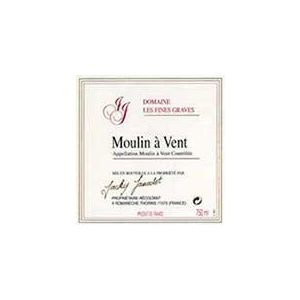
Domaine les Fines Graves Grand Cru Moulin-à-Vent 2005 – France
Jacky Janodet's Domaine les Fines Graves is the quintessential Grand Cru Beaujolais estate. This small but impressive 22-acre domain has earned Janodet the title of "The King of Grand Cru Beaujolais," and with good reason. Janodet and his wife make what most critics and connoisseurs consider to be the finest of all Beaujolais – Domaine les Fines Graves' Grand Cru Moulin-à-Vent. Perched atop the hill that crowns Beaujolais, Janodet's 50 year old vines sweep majestically down and around the slopes from the ancient windmill (Moulin-à-Vent means windmill) that crowns the hill's summit. The Moulin-à-Vent serves as the icon for all Grand Cru Beaujolais and offers the visitor an unparalleled vista of the Grand Cru villages and the surrounding countryside of Beaujolais.
Beaujolais
Beaujolais is situated in the extreme south of Burgundy. It is a vast region of nearly two hundred villages and communes, which are spread out on varying subsoil and comprise many individual terroir. Unofficially, Beaujolais forms the dividing line between northern and southern France. Straddling the un-specified equivalent of the American Mason-Dixon Line, the wines of Beaujolais flow in copious quantities north to Paris and south to Lyon and beyond.
In spite of inherent variations in quality, which reflect the differences in soil composition, altitude, and level of production among the region's thousands of growers, one common denominator comes to fore in Beaujolais – the Gamay variety. Gamay provides the defining character and flavor of Beaujolais. Today, Gamay and Beaujolais are nearly synonymous even though the red wine of Beaujolais can be bottled legally as Burgundy, if it is made from Pinot Noir, and similarly the appellation's white wine is entitled to the Burgundy label when it is produced from Chardonnay. However, only miniscule amounts of the entire production of Beaujolais is bottled as Burgundy because of the unique quality of Gamay in the granite rock of Beaujolais and the unprecedented commercial success that Beaujolais has enjoyed since the Second World War. Gamay reigns supreme in this picturesque wine country, and nowhere is this truer than in the ten Grand Cru villages of Beaujolais, which constitute the best that Beaujolais has to offer.
Comprising the heart of Beaujolais, the ten Grand Cru villages offer the consumer the finest Gamay wine in the world. In addition, each township possesses a special terroir and individual set of characteristics that make for memorable drinking. In order of ascending prestige, fullness of body, and the proven ability to age, the Grand Cru villages of Beaujolais are Brouilly, Côte de Brouilly, Chiroubles, St. Amour, Fleurie, Regnie, Chenas, Morgon, Julienas, and Moulin-à-Vent. Moulin-à-Vent is typically the fullest and most Burgundy like of the wines of Beaujolais, enjoying a reputation for ageing up to five or more years in bottle with excellent results. Moulin-à-Vent is usually the most expensive wine of the appellation as well.
Tasting Notes: Although young and fresh, the 2005 Domaine Les Fines Graves Moulin-à-Vent Grand Cru Beaujolais contains a satisfying depth and maturity to its character that clearly distinguishes it from distant Nouvelle Beaujolais relatives and lesser Grand Cru pretenders. Domaine Les Fines Grave's 2005 Moulin-à-Vent presents a royal purple robe as it carries distinct fruit to the nose: refreshing scents of black and red fruit waft from the glass. Signature fruit flavors appear with the very first sip and intensify as this noble wine airs. Both ethereal and substantial, this Moulin-à-Vent's fruit driven core is buoyed by an infusion of refreshing acidity that enlivens the palate and intensifies the pleasure. As this delightful Moulin-à-Vent chases the wind down the throat, mineral notes born of the wine's terroir re-emerge and anneal to the wine's fruit to satisfy and soothe the senses. While the Domaine Les Fines Graves' Moulin-à-Vent always retains its dancer's charm, a tactile, textural quality bestows this selection with real stuffing. However, in order to truly understand this Grand Cru Moulin-à-Vent, it is best to warm up to and be willing to get to know this wine over a meal. Once past an initial reticence, a full range of virtues appear making this offering from Domaine Les Fines Graves perhaps the finest example of authentic Grand Cru Beaujolais in the market. Enjoy it often at cool room temperature or even cooler (55º-65º F).
Accompaniments: Oh! The variety of tempting choices presented to us by the 2005 Domaine Les Fines Graves Moulin-à-Vent Grand Cru Beaujolais quite simply brightens our day and our taste buds. While many flavorful reds truly pair best with meat entrées, this Grand Cru Beaujolais pleases omnivores and vegetarians alike. Janodet's Moulin-à-Vent shines when paired with roasted chicken or Cornish hen – any basting that includes fresh rosemary is a particular winner – and other light meat dishes, such as pork chops or ham. Even fish, such as salmon or swordfish, will complement this wine – try a butter-sage sauce here. Switching to a vegetarian theme, consider roasted or grilled vegetables or hearty vegetable lasagna, both of which allow the full profile of the Moulin-à-Vent to emerge and enhance the entire dining experience. Adventurous souls may even want to try mildly spiced Asian dishes or a good ole' fashioned peach cobbler dessert with this grand Beaujolais. Take advantage of this wine's adaptability and serve it to your most eclectic set of friends: you may even find that you have a few new friends when the day is done. Bon appétit!
For the Love of Cheese: Grand Cru Beaujolais is one of the easiest wines to pair with cheese, and Domaine Les Fines Graves' Moulin-à-Vent Grand may well be the best of the best when it comes to complementing some of the world's finest mild, semi-soft cheeses. For the record, we are especially enamored of Asiago, Munester, Raclette, and Fontina with Jackie Janodet's 2005 Moulin-à-Vent; the combination is nothing less than spectacular. To find out more about these offerings and other fine gourmet cheeses pay us a visit at www.cheesemonthclub.com and enjoy!
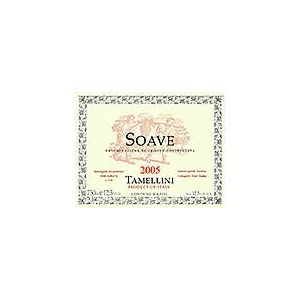
Tamellini Soave DOC 2005 – Italy
In spite of Soave's recent meteoric rise in quality and availability, Tamellini remains one of only two-dozen, estate-bottled growers and producers of authentic Soave. Shocking, but true, especially when one considers that Soave is the largest white wine-producing DOC in Italy. Most Soave growers still provide grapes or bulk juice to be blended into any number of the pleasant but innocuous brands of Soave that a few large commercial ventures, whose only current claim to fame is that they have become household names, churn out by the truckload. For many years Gaetano Tamellini was one of those nameless, faceless suppliers, whose superlative Garganega and Trebbiano grapes were sold to the massive Soave Cooperative to be ground down into the lowest common denominator, despite the consistent, superlative quality of his fruit from prime hillside sites.
However, when Soave is born on meticulously tended hillside vineyards that are not ridiculously overcropped; when the passions of the wine grower are noble and aspire to excellence; and when the wine is produced from the Soave's noble Garganega grape alone or with, perhaps, just a touch of the delicate and ethereal Trebbiano di Soave that locals refer to as Verdicchio then Soave is truly an outstanding wine, magical and irresistible, too. Welcome to the world of Gaetano Tamellini and his exciting and delicious Soave. Each of Tamellini's classic Soaves provides pure drinking pleasure and proof that Soave can be much more than just a pleasant quaff.
With the assistance of Paolo Caciorgna, one of Italy's most accomplished white wine makers, Gaetano and his brother Pio Francesco took a leap of faith in 1998 and began estate bottling their Soave, including two exquisite single vineyard offerings, Anguane and Le Bine. Each of these ancient vineyard sites expresses the blithe, elegant spirit of true Soave in its own unique way. Tamellini Soaves are the kinds of white wines that originally made Soave famous years ago, when writers and cognoscenti alike would sing the praises of the Veneto's most enjoyable white wine. Until recently, the Tamellini brothers would fashion at least three distinct Soave wines: Anguane, Le Bine, and the zones most pleasurable Soave DOC. However, Anguane is a very old vineyard that now requires replanting, so with the exception of a miniscule amount of Le Bine all of the estate's finest grapes presently go into Tamellini's Soave DOC, putting it into a class by itself. Tamellini's Soave DOC demonstrates such rich fruit and great strength of flavor that it has been dubbed "the Pouilly-Fuissé of Soave" – no mean feat. In an ideal world, one has a case in the cellar and a bottle or two in the cooler; Tamellini's Soave is truly enticing and nothing short of amazing which makes us wonder why more dedicated Soave growers don't take the hint and start putting out the real deal – authentic, sensual, fulfilling Soave that is one of the world's most enjoyable white wines.
Tasting Notes: In the last ten years, Soave and its multitude of growers have taken a great leap forward, but still no one makes better Soave than Gaetano Tamellini. Furthermore, the 2005 Tamellini Soave DOC is the finest wine we have ever drunk from this estate. This wine is every thing good Soave ought to be, and more. From its light golden robe to its long, lingering satisfying finish, the 2005 Tamellini Soave fulfills its creator's quest. The mere sight of it reminds us of sunshine in a glass and the first draught of this elegant, immensely flavorful wine offers ample testimony to why it has been likened to Pouilly-Fuissé. The wine's bouquet is a striking combination of ripe creamy fruit, lemon zest, clove, and the freshest almonds. Add pinpoint minerality, textured fruit, and a most satisfying lip smacking flavor and this aristocratic offering from Tamellini is darn near impossible to put down…the glass that is, the wine goes down ever so easily as the gullet fervently prays for more. In fact, this 2005 Tamellini is so refreshing and beguiling that the tasting panel nearly came to blows over who would get to savor the last few drops that we squeezed from the bottles, and this is not the first time we have had to guard the "empty bottles" of a Tamellini Soave. And without the heavy layer of oak that normally obscures the flavor and the very soul of many New World white wines, this Soave stands out for its elegance and purity. We suggest serving the Tamellini Soave only moderately chilled (40º-45º F).
Accompaniments: Our first inclination is to serve the 2005 Tamellini Soave DOC as the opening act to a party or intimate gathering. Our next suggestion is to continue serving it throughout the evening or with a light meal, but only to people you truly like. This beguiling white wine provides plenty of pleasure with and without food. As an aperitif it cleanses the palate and prepares the senses for the next great gustatory delight. At the same time, the Tamellini Soave has the uncanny ability to enliven light, well-prepared morsels. White fish, shrimp, light hors d'oeuvres, smoked salmon or trout, and even caviar provide excellent venues with which to enjoy this superlative white wine. Try to avoid heavy spices or raw garlic as it would be a shame to obscure even some of the charm, freshness, and personality of this medium-bodied wine by pairing it with obtrusive fare. A platter of mild goat and cow's cheeses, served with apples, pears, and freshly baked bread, offers a terrific simple accompaniment, too, that is sure to please. Enjoy!
Casa Barranca Bungalow Red 2004 – U.S.A.
Casa Barranca is as much a state of mind as it is a winery and an individual place. Centered around the Pratt House, a meticulously maintained masterpiece of American architecture, the Casa Barranca winery sits atop a gorgeous set of hills above the idyll and mystical town of Ojai, California. A recipient of National Historical Landmark status Casa Barranca, meaning "house of the ravine," was designed in 1909 by Charles and Henry Greene. The Greene's were founders of the American Arts and Crafts Movement, and they designed Casa Barranca for Charles and Mary Pratt of Pratt Institute, and Pratt&Whitney fame. To highlight just how beautiful this place is, Architectural Digest has said of Casa Barranca: "a closer approximation to Shangri-la is hard to image."
For centuries, California's Ojai Valley and surrounding sun drenched hills have provided dramatic scenic beauty, solitude, and spiritual comfort for its inhabitants – from the peaceful Chumash Indians to renowned authors, composers and spiritual leaders. Aldous Huxley treasured Ojai for its inner nature, and J. Krishnamurti called it "the most beautiful place on earth". Inspired by the breathtaking beauty of the Ojai Valley, Frank Capra used it as "Shangri-La" in his 1937 film classic, Lost Horizon.
In 1994 Bill Moses, corporate CEO, investment banker, and serious winemaker purchased Casa Barranca. Bill restored the luster to the Pratt House and totally revitalized the grounds of Casa Barranca, adding fruit trees, flowers, and of course grape vines. Under Bill's guiding hand Casa Barranca has maintained its Historic Landmark status. In keeping with the humble and pure ideals of the Arts and Crafts movement, the Pratt House and its estate are powered by solar electricity, draw their water from artesian springs and are of course surrounded by an organic vineyard and gardens which are farmed practicing sustainable principles. Casa Barranca makes its wines from organic grapes and either totally eschews sulfites or adds only minimal amounts to its wines. The result is a bevy of delicious, handcrafted wines that recall the best of France's garagiste offerings.
Casa Barranca produces only a little more than 4,000 cases of wine each year from a host of varietals. Viognier and Chardonnay are the preeminent white varietals here, while Casa Barranca's most exciting red wines remain their organic, unfiltered Pinot Noir offerings and a luscious Rhône style red called Bungalow Red that has been likened to Châteauneuf-du-Pape. Small quantities of a varietal Syrah as well as a forceful, age worthy Cabernet/Merlot blend round out the portfolio. We can hardly wait to see what Bill Moses and his capable young assistant Jean-Benoit will put out next.
Tasting Notes: In spite of what the name Bungalow Red may imply, the 2004 Casa Barranca Bungalow Red (80% Syrah 20% Grenache) is any thing but lowly. In fact this tasty, seductive red has been compared to the finest vintages of Domaine Marcoux's famous Châteauneuf-du-Pape. And for the record, the 2004 Bungalow Red won a Double Gold Medal, Best of Class at the San Francisco Chronicle Wine Competition. In addition, it could legally be labeled as a varietal Syrah. The wine is deep purple in color and possesses an intense extraction. Moreover, it sports a flamboyant, haunting nose that recalls the scent of crushed raspberries, black fruits, and white pepper. On the palate, a cascade of fresh wild berries, bacon, and wood smoke is followed by a long, dense, fruit filled finish. Pure, hedonistic, and so easy to drink, Casa Barranca's 2004 Bungalow Red is another dramatic tribute to sustainable farming and the moderate use of sulfites – all of which set Casa Barranca and its wines apart from the competition. Kudos to the folks at Casa Barranca for crafting such a delicious Californian wine that recalls the finest Syrah and Grenache based efforts from France's Rhône Valley. We suggest serving this delightful, proud red at cool room temperature (64º-68º), after a few minutes of aeration. Enjoy!
Accompaniments: The 2004 Casa Barranca Bungalow Red makes an exemplary companion to food, especially the hearty, stick to your ribs kinds of meals that make winter tolerable. So, put on the stew pot, and while you're at it don't forget to save that ham bone you put in the freezer for soup. We suggest serving the Bungalow Red with thick lentil or split pea soup, country ham, crusty bread, and some excellent cheese. Lamb or beef barley soups make other fine accompaniments to Casa Barranca's lofty tasting red. Grilled meat, stuffed eggplant, and full-flavored pastas all offer equally fine regards in the presence of the versatile Casa Barranca Bungalow Red, so what are you waiting for? Pick up the phone and invite a friend over for a memorable evening!
Domaine Fouassier Clos Paradis Sancerre 2005 – France
Domaine Fouassier is an historic property in Sancerre that specializes in the production of small lots of charming, pure, white Sancerre wines from distinctive terroir. The Fouassier family has been an integral part of the Sancerre appellation for many generations. In fact, cousins Benoit and Paul Fouassier constitute the tenth generation of this legendary family to make wine in Sancerre.
In addition to a long legacy of fine winemaking, Domaine Fouassier also owns the distinction of possessing one of the most important vineyards in Sancerre – Clos Paradis. Clos Paradis is a well situated south facing vineyard that possesses an ideal terroir, including the ultimate combination of chalk and clay, which provides the best Sancerre wines with all the ingredients they need to charm and beguile. Clos Paradis, which was planted in 1902 by Jules Fouassier, is also one of the very first vineyards in Sancerre to be planted using scientific and technical methods that are ideal for Sauvignon Blanc, which is Sancerre's only permitted white grape variety.
In addition to Clos Paradis, Domaine Fouassier fashions at least eight other unique white Sancerre wines, all from individual soils and vineyards. This wonderful domain also turns out a delightful red Pinot Noir and a Pinot Noir rosé, in addition to numerous other fine Sauvignon Blanc wines from nearby appellations such as Pouilly-Fumé, Menetou-Salon, and Quincy. In all, Domaine Fouassier comprises 110 acres of splendid vineyards in Sancerre and the surrounding villages along the upper reaches of the Loire.
Tasting Notes: Domaine Fouassier's 2005 Clos Paradis makes a compelling case for itself as the quintessential Sancerre. From the wine's bright fresh nose and sunshiny robe, the tone is set. The 2005 Clos Paradis's amplifying bouquet of melon, fig, herb, and fresh mown grass fills the senses and prepares the taster for a second wave of pleasure: on the palate this wine caresses the mouth with soft, ripe fruit and a beautifully balanced feel. And to add to this wine's supreme flavor and texture is a crisp, friendly finish that leaves the mouth thoroughly refreshed and ready for more. We suggest serving this quintessential Sancerre ice cold and then allowing it to evolve slowly in the glass as it reaches a more ambient temperature (45° -50° F).
Accompaniments: "Sancerre was made for seafood," states the prevailing wisdom of the ages, and indeed the 2005 Domaine Fouassier Clos Paradis provides ample evidence to support this traditional French mantra. Seared Seas Scallops in truffle butter served over a bed of organic greens or Steamed New Zealand Green Lipped Oysters, prepared with a tomato, fennel, and crème fresh, offer two excellent reasons to serve Clos Paradis. In fact, just about any white fish and shellfish, including lobster, provide ideal companions to complement Fouassier's famous Sancerre. With such wine and seafood one might be tempted to re-think one's definition of paradise. Yet, why stop there? Sancerre is more than just a seafood wine. Sancerre is a wonderful aperitif and a fine choice with hors d'oeuvres, sweet breads, and all kinds of cheeses. Domaine Fouassier's Clos Paradis is one of our favorite choices with Baked Brie and most other crusted cheeses. Bon Appétit!
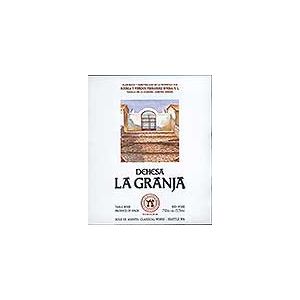
Dehesa La Granja Vadillo de la Guareña Zamora 2001 – Spain
Editor's Note: The 2001 Dehesa La Granja is a natural wine that is made with a minimum of intervention or manipulation. In keeping with a course of natural winemaking, Dehesa La Granja has been bottled unfiltered. Consequently, it is likely that many bottles of this fine, handmade wine will precipitate some natural sediment. This harmless precipitate is not a flaw in the wine. Rather, sediment is the result of expert, natural winemaking practices. To alleviate or eliminate the sediment in this wine, the contents of the bottle may be carefully decanted after the bottle has stood upright for at least an hour. Enjoy!
Dehesa La Granja is one of the four jewels in the tiara of splendid wine estates that Alejandro Fernandez of Ribera del Duero fame has brought to fore. Dehesa La Granja and the three other Fernandez gems: Condado de Haza, El Vinculo, and Pesquera rank among the finest wine estates in all Spain. In the case of Dehesa La Granja, the estate is located on a 1,800 acre ranch that borders the Duero River in Zamora, just west of the Ribera del Duero. Beginning in the 17th century and for nearly two hundred years, La Granja Valdeguerena was a major wine producing estate, before it was converted to one of Spain's greatest bull fighting ranches in the 19th century. At an enormous expense and in his usual fastidious fashion, Alejandro Fernandez resurrected and reconverted La Granja and its extensive 17th century cellar to their original vocation – the production of one of the Duero's finest wines.
Since the restoration, Dehesa La Granja has fashioned intense, traditional Tempranillo wines that have consistently garnered major critical acclaim. These wines spend two years in oak barrels and are bottled completely unfiltered, so it is likely that they will precipitate some harmless, natural sediment. This sediment is in no way a flaw. Instead it is a sign of the natural winemaking process that prevails at Dehesa La Granja and Fernandez's other estates.
In order augment the current small production at Dehesa La Granja, an additional 300 acres of Tempranillo vines have been planted at La Granja on their own rootstock (due to the property's compact sandy soil that is resistant to phylloxera), which will eventually supplement the old, un-grafted Tempranillo vines in the Guerena Valley that La Granja is presently using for the property's newest, full-bodied red. It is the likes of Dehesa La Granja that underscore the Renaissance in winemaking that has gripped Spain in the past decade – a rebirth that is transforming the potential of the world's third largest producer of wine into a veritable repository of outstanding and affordable treasures.
Tasting Notes: Haunting, stylish, suave, and well bred, the 2001 Dehesa La Granja is simply great Spanish wine and a tribute to the viticultural revolution sweeping Spain. It is also the finest example of Dehesa La Granja released to date. The 2001 Dehesa is deeply colored, full-bodied, and highly polished. It is, also, highly extracted, intense on the palate, and redolent with the aroma of sandalwood, spice and crushed black fruits. Each sip reveals more ripe fruit and additional nuances of flavor that nearly explode in a long, lengthy finish. Furthermore, extended breathing time only heightens the hedonistic pleasure inherent in this wine. It, also, discloses the ripe voluptuous fruit that stands at the core of this complex wine. As with all fine vintages of young Dehesa La Granja (and 2001 is an outstanding vintage), further aging will improve this tour de force in winemaking. The question is whether or not you are disciplined enough to wait any longer to try it or smart enough to lay down an ample supply for future gratification. After tasting the 2001 Dehesa La Granja, one has to wonder if Spanish wine has ever been better. As one long time panel member commented, "this is the real deal when it comes to Spanish reds." If you like sophisticated, full-bodied wines, the 2001Dehesa La Granja will more than fill that bill. For optimum enjoyment, we suggest serving this Spanish classic at cool room temperature (62º - 66º F). Anticipated maturity 2006-2010.
Accompaniments: In Spain, it is traditional to serve full-bodied red wines with grilled meats, rich stews, and heady paellas, and we see no reason to deviate from tradition in the case of the 2001 Dehesa La Granja. In fact, Dehesa La Granja pairs quite well with nearly all meats. We especially recommend beef and lamb as ideal accompaniments. Yet, we also like the Dehesa La Granja with pork and homemade Italian sausage. A spicy bean cassoulet is another one of our favorite dishes with this wine, and we would not hesitate to serve the comely 2001 Dehesa with venison tenderloin, prepared with glazed onions and served in a rich black currant sauce. Yum! Rich winter soups, served with crusty brick oven bread and a few slices of a great Spanish cheese like Manchego or Roncal, provide other beautiful pairings. A garlic and herb roasted rotisserie chicken provides another excellent accompaniment to the Dehesa, as does a combination of marinated eggplant, zucchini, roasted red peppers, garlic and olive oil. Whatever you decide to serve, enjoy!
It may sound redundant and trite, but Marcel Guigal has done it once again. With the release of his 2005 Condrieu, he has demonstrated why he and his family owned domain receive so much praise and adulation. Condrieu, the world's finest Viognier and one of France's most revered white wines from the tiny Rhône appellation of the same name, is a difficult wine to master. Yet, Guigal has raised the bar in Condrieu by his latest effort. He has also demonstrated that he is equally adept at producing the Rhône Valley's most compelling white wine as well as red. It is no wonder then that Marcel Guigal has been called everything from "the man with the Midas touch" to "the planet's greatest living winemaker." Unquestionably, Guigal has earned the reputation for fashioning some of southern France's most exciting wines, as the flood of favorable reviews and critical acclaims of his wines will attest. Yet, perhaps, even more impressive is Guigal's knack for consistency. Without fail, Guigal's wines, whether they are red, white, or rosé, top the charts in both good years and bad. Moreover, each of Guigal's many fine wines has become the yardstick by which all others are judged in their respective appellations.
From the antique village of Ampuis, the birthplace of the great Côte-Rotie appellation, the burgeoning wine empire of Guigal has spread to every significant appellation in the Rhône Valley. Led by Marcel and his adept son and protégé, Philippe, the Guigals have sown success and quality far and wide, and in the process forced less quality minded producers to improve their wines or perish. Most notable of Guigal's wines are the firm's several Côte-Rotie offerings, which are universally acknowledged to be the supreme examples from this ancient 2, 400 year old vineyard that dates back to early Roman times. On qualitative par with this estate's Côte-Rotie are several Condrieu offerings made from the finicky but other worldly white grape variety Viognier. There is also an excellent red Hermitage from Guigal, a wine that is certainly one of the deepest and longest-lived expressions of the Syrah grape. In a similar full-bodied, personality filled style are Guigal's newest stars: a Crozes-Hermitage Rouge and a Crozes-Hermitage Blanc, all of which are already the standard by which all other Crozes-Hermitage wines are measured, and Guigal has only produced Crozes- Hermitage since 1999. Last but not least are the firm's delicious Côtes du Rhône offerings – red, white, and rosé. The red Côtes du Rhône contains a high percentage of old vine Syrah, while the white sports a similar amount of Viognier, a practice few other producers would even think to emulate. Yet, it is just such practices that set Guigal apart.
The key to Guigal's success has always been quite simple. He cultivates his own vineyards organically with no chemical fertilizers or treatments and picks his grapes late when they are just about ready to explode with their own maturity. This late harvest, low yields, and minimal intervention (including no filtration) give birth to fragrant, round, ripe natural wines that are immensely pleasurable to drink. When purchasing juice from other producers, a practice that has helped Guigal augment his own estate holdings and hone his extraordinary winemaking skills, Guigal holds those growers to the same exacting standards he sets in his own vineyard. He buys only from producers he knows well who subscribe to his philosophy that old vines, low yields, and a late harvest are prerequisites for producing excellent wine. And, if these exacting requirements are not enough to insure quality, Guigal adds traditional wine ageing in new oak for extended periods of time. In short, Guigal leaves nothing to chance and is willing to go the limit, both in the vineyard and in the winery. Bravo!
Tasting Notes: It is mind boggling, indeed, but the 2005 Guigal Condrieu is even better than the audacious 2004. It embodies all the flamboyant charm and individuality that make Condrieu the world's most enticing Viognier, and then some. The bouquet is especially entrancing, as one would expect from Condrieu. In fact, it is so beguiling that one can almost forget to drink the wine. The scent of the 2005 Guigal Condrieu is a kin to ambrosia, and what can only be described as a foreshadowing of paradise. Scents of apricot, jasmine and spring flowers pour from the glass and permeate the room. With a few minutes of aeration, sandalwood and oriental spice tones emerge, but don't be fooled; this is no flabby fruit bomb of a wine. Yes, the 2005 Guigal Condrieu is hedonistic Viognier with more than a touch of suavity and exotica, but it remains classic Condrieu. It is a dry, heady, full-bodied wine that fills the mouth and packs a punch. We strongly suggest serving the 2005 Guigal Condrieu only moderately chilled, allowing it to breathe ten to fifteen minutes in the glass like a red wine, either before or while imbibing. Guigal's Condrieu has a way of unfolding in the glass, revealing hidden secrets and lost treasures – just another tour de force in white wine making from the world's greatest living winemaker. Enjoy! Anticipated maturity 2006-2008.
Accompaniments: The 2005 Guigal Condrieu is one more reason why Viognier is one of the world's finest grape varieties. It is also ample testimony to why Viognier, and this Condrieu in particular, is the quintessential aperitif. No other dry wine combines, finesse, flavor, and power quite like Guigal's 2005 Condrieu, and for these reasons we believe Guigal's 2005 Condrieu provides the ultimate in pleasure as an aperitif. It is bold and beautiful on its own. However, it complements a wide range of foods with aplomb, especially starters. Hors d'oeuvres, smoked salmon, onion and leek tarts, and traditional Alsace style quiches constitute some of our favorite pairings with Guigal's Condrieu. Coquilles St. Jacques and other cream or cheese based dishes with scallops provide considerable pleasure as well. Meanwhile, true cheese aficionados will find several well-selected cheeses to be the only accompaniment they desire with Guigal's outstanding 2005 Condrieu. A veritable St. André from France or an authentic Dutch Edam gets our nod, but why stop there? Bon appétit!
Casa Barranca Arroyo Grande Unfiltered Pinot Noir 2005 – U.S.A.
Casa Barranca is as much a state of mind as it is a winery and an individual place. Centered around the Pratt House, a meticulously maintained masterpiece of American architecture, the Casa Barranca winery sits atop a gorgeous set of hills above the idyll and mystical town of Ojai, California. A recipient of National Historical Landmark status Casa Barranca, meaning "house of the ravine," was designed in 1909 by Charles and Henry Greene. The Greene's were founders of the American Arts and Crafts Movement, and they designed Casa Barranca for Charles and Mary Pratt of Pratt Institute, and Pratt&Whitney fame. To highlight just how beautiful this place is, Architectural Digest has said of Casa Barranca: "a closer approximation to Shangri-la is hard to image."
For centuries, California's Ojai Valley and surrounding sun drenched hills have provided dramatic scenic beauty, solitude, and spiritual comfort for its inhabitants – from the peaceful Chumash Indians to renowned authors, composers and spiritual leaders. Aldous Huxley treasured Ojai for its inner nature, and J. Krishnamurti called it "the most beautiful place on earth". Inspired by the breathtaking beauty of the Ojai Valley, Frank Capra used it as "Shangri-La" in his 1937 film classic, Lost Horizon.
In 1994 Bill Moses, corporate CEO, investment banker, and serious winemaker purchased Casa Barranca. Bill has restored the luster to the Pratt House and totally revitalized the grounds of Casa Barranca, adding fruit trees, flowers, and of course grape vines. Under Bill's guiding hand Casa Barranca has maintained its Historic Landmark status. In keeping with the humble and pure ideals of the Arts and Crafts movement, the Pratt House and its estate are powered by solar electricity, draw their water from artesian springs and are of course surrounded by an organic vineyard and gardens which are farmed on sustainable, permaculture principles. Casa Barranca makes its wines from organic grapes and either totally eschews sulfites or adds only minimal amounts to its wines. The result is a bevy of delicious, handcrafted wines that recall the best of France's garagiste offerings.
In a good vintage Casa Barranca produces only a little more than 4,000 cases of wine from a host of varietals. Viognier and Chardonnay are the preeminent white varietals here. Both are excellent. However, the purity and delicate flavors of Casa Barranca's 2005 Chardonnay truly sets this estate apart with this varietal in terms of both quality and style. Casa Barranca's most exciting red wines remain their organic, unfiltered Pinot Noir offerings and a luscious Rhône style red called Bungalow Red that has been likened to Châteauneuf-du-Pape. Small quantities of good Syrah as well as a forceful, age worthy Cabernet/Merlot blend round out the portfolio. We can hardly wait to see what Bill Moses and his capable young assistant Jean-Benoit will put out next.
Tasting Notes: "If there is a wine better than good Pinot Noir, it is great Pinot Noir," states the old French adage, and to this we say Amen! So, bring on the 2005 Casa Barranca Arroyo Grande Unfiltered Pinot Noir and let's get down to the serious business of enjoying exceptional Pinot Noir – authentic, unfiltered, full-flavored California Pinot Noir. Scented, succulent and already ripe for drinking, the 2005 Casa Barranca Unfiltered Arroyo Grande Pinot Noir delights the senses with plenty of deep down black cherry fruit, hints of cinnamon, soy, and Asian spices. And just think, this wine is barely a year old. If there were ever justification for infanticide, it would the early consumption of a bottle of Casa Barranca's 2005 Arroyo Grande Pinot Noir, so what are you waiting for? Just allow this marvelously dense Pinot a little time in a decanter or glass to compose itself, and then enjoy how it caresses the palate and dazzles the senses. Moreover, don't be put off by the fact that this Pinot is not entirely crystal clear. Remember, the wine is unfiltered. Hence, it is alive and well and full of everything that good Pinot Noir should posses, even light, harmless sediment. Enjoy Casa Barranca's beautiful Arroyo Grande Pinot Noir at cool room temperature (64º-68º F). Anticipated maturity 2007-2011.
Accompaniments: What does fine Pinot Noir need, other than an appropriate glass? Well, in the case of the 2005 Casa Barranca Arroyo Grande Unfiltered Pinot Noir, nothing. However, that should not stop anyone from doubling the pleasure of Casa Barranca's Pinot Noir by serving it with accompaniments of equal stature. The 2005 Arroyo Grande Pinot Noir has proven itself more than capable of standing up to a superbly prepared rack of lamb, served with tender young vegetables and Mediterranean garnish. Traditional French classics, such as Boeuf Bourguignonne and Coq au Vin provide other splendid opportunities to double the pleasure of this exceptional Pinot Noir. Simple beef or pork roasts, roast turkey with stuffing, baked ham, and savory country potato salads, leek tarts, and quiches all offer ample reward as well. Bon Appétit!