Welcome to The International wine of the Month Club

Past Newsletters

Vol. 6 No. 12

Standard Selection - (1) Red, (1) White
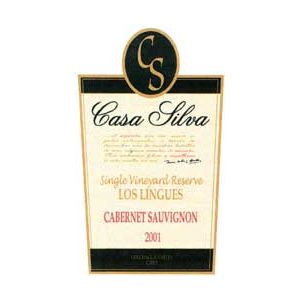
Casa Silva Cabernet Sauvignon Reserve "Los Lingues" 2001 - Chile
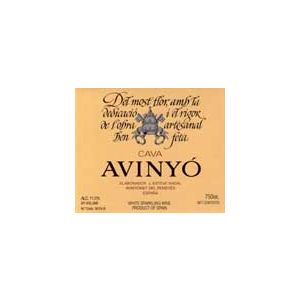
Avinyó Cava Brut NV - Spain

Red Wines Only Featured Selections
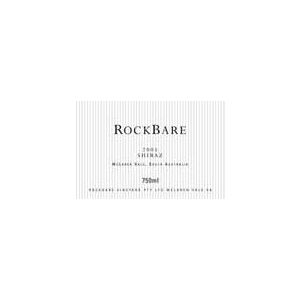
Rockbare McLaren Vale Shiraz 2002 - Australia

White Wines Only Featured Selections
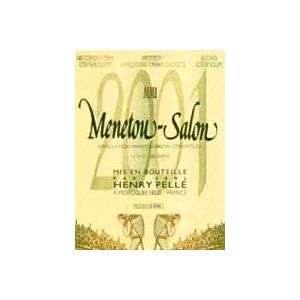
Henry Pellé Menetou Salon 2002 - France

Casa Silva Cabernet Sauvignon Reserve "Los Lingues" 2001 - Chile

The Silva family looks out on to the world from Colchagua Valley, one of the most breathtakingly beautiful wine regions on earth. Located in the heart of Colchagua, an area many critics and writers liken to a larger, more sprawling Napa Valley in the 1960's, Casa Silva is one of South America's most exciting and forward-looking wineries. Historical accounts tell us that the Silva family's predecessors were pioneers in Colchagua more than a century ago, when they brought the first grape varieties from France to this stunning valley, located just two hours south of Santiago. Today, the Silvas, father Mario and sons Mario Pablo, Gonzalo, and Francisco remain pioneers: they are Colchagua's foremost experts on Carmenère, Chile's emblematic red grape variety. Moreover, they are at the vanguard of their nation's success with Cabernet Sauvignon as well as the production of white wines, especially from traditional French varietals: Chardonnay, Sauvignon Blanc, Semillon and Viognier.

A family passion, a love for the land and its wine, and a commitment to future generations has catapulted Casa Silva in just seven years from a bulk supplier and bottler of wine to one of the continent's superstars. Since its inception in 1997, Casa Silva has become the Chilean winery with the most recognition and awards at international wine competitions. For three consecutive years, 2000, 2001, and 2002, the CatadOr Hyatt, Chile's most prestigious wine competition, has heralded Casa Silva as the Best Chilean Producer. Furthermore, the International Wine & Spirit Competition named Casa Silva as The best South American Producer, and with good cause. This estate's many wines are uniformly excellent and getting better every day.

The Casa Silva estate is located at the northern edge of the Colchagua Valley at the foot of the Cordilleran Andes. This is a magical place that is steeped in sheer physical beauty as well as Chilean tradition. Colchagua's natural climatic conditions and terroir make it an extraordinary place to produce wine, which in no small way accounts for the great number of award winning wineries now in Colchaugua. This pioneering Chilean valley actively promotes its appellation and was the first to establish a bona fide wine route for visitors. Today, it is Chile's most important wine region, and nearly all of its grapes are premium varietals: is there any longer a doubt as to why the wines of Colchagua are the most highly acclaimed in South America?

As pioneers in viticulture, the Silvas, along with their masterful winemaker Mario Geise, have established several vineyard estates in Colchagua, each specializing in the production of one or more varietals that are especially suited to that estate's terroir. From these individual estates, single vineyard offering are produced that reflect the best that Casa Silva produces, and that is saying a lot. From Los Lingues comes a very flavorful and sophisticated Cabernet Sauvignon as well as the estate's classic Carmenère. Meanwhile, Lolol specializes in a big, chewy Syrah that will soon be released for the first time in North America with that vineyard designation.

Tasting Notes: The 2001 Casa Silva Cabernet Sauvignon Los Lingues Reserve is a suave, sophisticated wine that seems to combine all the best attributes of a fine Médoc with those of a top notch Napa Valley Cabernet. Deep in color, but never thick or syrupy, the Los Lingues Cabernet offers up a beguiling array of olfactory pleasure. Scents of classic Cabernet Sauvignon, blueberry, cassis, cedar and vanilla begin to pour from the glass with just a little airing, and as the wine breathes this sensual assault intensifies. In the mouth, this Cabernet's flavor opens up to complement its stunning bouquet. It is hard to believe this wine is less than three years old and, already, it is a pleasure to drink - testament to Casa Silva's expertise and the greatness of the 2001 vintage in Colchagua. Although still a bit reticent like any fine young Cabernet, the 2001 Casa Silva Los Lingues possesses soft, ripe tannins and just the right amount of new oak. Already, the wine is balanced, beautiful, and quite centered. It makes some of us salivate to think what a few additional years of bottle age may add to this Los Lingues offering. Enjoy it now or later at cool room temperature, with at least forty-five minutes to an hour open in the glass or decanter before consuming.

Accompaniments: The 2001 Casa Silva Los Lingues Reserve is one of the few young Cabernet Sauvignon wines that is actually a pleasure to drink on its own. Unadorned, one has the full effect of all the subtle nuances and impeccable balance of this first rate Cabernet Sauvignon. Nonetheless, wine is food, and well chosen companions only complement and enhance a meal. With this in mind, we suggest pairing the 2001 Los Lingues Cabernet Sauvignon with beef tenderloin or even Beef Wellington. Duck à lOrange; Rotisserie Pork Loin in a pomegranate-walnut sauce; Grilled Loin Lamb Chops, encrusted with a cucumber, garlic, and herb paste also provide other wonderful accompaniments to the Casa Silva Los Lingues Cabernet Sauvignon. A traditional Chilean dish, Pastel de Choclo, a corn and meat pie, offers yet another interesting pairing with either the Carmenère or Cabernet from Casa Silva. For the vegetarian set, a Three Mushroom Pizza, with Cremini, Portabella, and Shitake mushrooms is a fulfilling crowd pleaser, too. And if youre stuck, just open the Los Lingues, call a friend, and have a party. Enjoy!

Recipe for Red Wine:

Corn and Meat Pie (Pastel de Chocle)

6 large ears of corn, grate the kernels
8 leaves of fresh basil, finely chopped
1 tsp. salt
3 tbsp. butter
1/2-1 cup milk
4 large onions, chopped
3 tbs. oil
1 lb. (½ kg) finely ground lean beef
Salt and pepper to taste
1 tsp. ground cumin
4 hard-boiled eggs, sliced
1 cup black olives
1 cup raisins
12 pieces of chicken, browned in hot oil, seasoned with salt,
pepper and cumin
2 Tbs. confectioners' sugar

Heat the grated corn, chopped basil, salt and butter in a large pot. Add the milk little by little, stirring constantly until the mixture thickens. Cook over low heat for 5 minutes. Leave to one side while you prepare the meat filling. Fry the onions in oil until transparent, add the ground meat and stir to brown. Season with salt, pepper and ground cumin. To prepare the pie use an oven-proof dish that you can take to the table. Spread over the bottom of the dish the onion-ground meat mixture. Arrange over this the hard boiled egg slices, olives and raisins. Put the chicken pieces on top, bone the chicken if you like. Cover the filling with the corn mixture. Sprinkle the confectioners' sugar over the top. Bake in a hot oven 400° F (205° C) for 30-35 minutes until the crust is golden brown. Serve at once. In Chile more sugar is served to sprinkle over the "pastel" as it is eaten.

Serves 12. This is a popular Chilean recipe.

Avinyó Cava Brut NV - Spain

Avinyó Cava is a pearl of a wine, a rare bubbly that exhibits both delicacy and finesse, as well as the artisan purity for which Catalonia is renowned. The Esteve Nadal family of Avinyonet del Penedés produces Avinyó at the family owned winery. The winery is located at CAN FONTANALS, the family's home, in the heart of the Penedés region of Catalonia, near Barcelona. The Nadal family's delicious sparkling wine, known locally as Cava, is produced in the same painstaking way as Champagne. Until quite recently, it was the only wine the family made for sale, preferring to concentrate its talents on making just one wine - the finest Cava in Spain.

The patriarch, Juan Esteve, planted vines of Parellada, Xarel-lo and Macabeo 30 years ago so that he could have a fine sparkling wine for his family and friends as well as the cadre of distinguished guests who arrived to visit his wife - a celebrated ceramic artist. Today Juan Esteve's two sons and a daughter carry on the tradition of Avinyó, providing a very small quantity of exquisite bubbly for export.

Avinyó is produced from primarily free run juice. In addition, the resulting wine is aged in the cellar for a minimum of 18 months. The use of a high percentage of free run juice (up to 80%) gives the wine its creamy, fresh, non-astringent character, while the extended bottle aging practiced at this winery contributes to a very long, flavorful finish. It is Avinyó's creamy center and distinctive finish that remains the signature of this estate's outstanding Cava.

On the Avinyó label, there is an inscription in Catalan that aptly represents the philosophy of the Esteve Nadal family. The inscription roughly translates into the following: From the must of the flower or free run juice and with the rigor of a work well crafted. This symbolizes the family's artisan values and the commitment to the ultimate quality of its wine. There also appears on the label a tiara from the church of the local village. Indeed, the Esteve Nadal family has crafted a jewel that many in the wine trade have rightly called other worldly.

The masio or farmhouse that originally housed the winery is also the workshop of Fina Via, the wife of Juan Esteve, who is a renowned Catalonian artist. Her ceramic works appear throughout the region and all of them are done according to the same traditional methods that were used in Catalonia during the seventeenth century.

How much more beautiful the world would be with a little more art, a little more love and a few more wines like the Avinyó Cava, one well known wine critic has stated. And indeed, we all owe a debt of thanks to Senor and Senora Esteve Nadal for doing their part to preserve the traditions of Catalonia, in both art and wine. In the words of one distinguished member of our tasting panel: It is obvious that this family's pearls are not hidden, they shine forth in my glass. Certainly, this tiny estate is doing its part to make the world smile.

Cava: Catalonian Bubbly

Cava may not sound like Champagne, but it tastes a lot like it. Produced by the traditional champagne method of fermenting the wine in the bottle, Cava is Spain's answer and some would even say rebuke to Champagne. More fine champagne method sparkling wine flows out of Catalonia than anywhere else on earth, including Champagne. The limestone hills beyond Barcelona provide the ideal soil condition, nearly identical to that of Champagne, for the cultivation of the native Xarelo-lo, Parellada, Viura, and Macabeo grapes for sparkling wine. With the addition of champagne yeasts during the fermentation, the high-acid musts of Catalonia yield sparkling wines of rich flavor, softness and finesse to rival those of Champagne itself. Where Cava may even have the edge is in its soft, round, lingering finish - the antithesis of French Champagne which can often possess just a bit too much nerve and acidity in its aftertaste or finish.

Although Cava can be made in many areas of Spain, it is the Catalan versions from Penedés that have formed the bulwark of quality and captured the world's attention. Centered near the town of San Sadurni de Noya, 20 miles west of Barcelona, the production of Cava has taken the world by storm. In the past thirty years, the export of Cava has grown from a relative trickle to Spain's leading wine export; Cava is presently the world's number one selling champagne method sparkling wine.

Tasting Notes: Produced in the actual bottle in the same painstaking way as French Champagne, the Avinyó Brut is Cava at its finest. A lovely pearl of a bubble beads to the top of the glass: soft scents of apple, pear, and fresh bread delight the nose. In the mouth, creamy fruit and the faintest hint of cinnamon caress the palate. Fun, flavorful and easy to drink, the Avinyó Brut is one of the tasting panels favorite sparkling wines. Kudos to the Esteve Nadal family for producing such charming, well balanced "Champagne", or Cava rather, with such a beguiling aftertaste that it lingers for nearly a minute. Exhibiting neither an acidic bite nor a flat, flabby finish, this wine will either change your mind about sparking wines or make you wonder why some people spend exorbitant sums on Dom Perignon. We suggest serving the Avinyó chilled (about 40º F).

Accompaniments: It is nice to know some things don't change. Hors d'oeuvres, smoked salmon with capers and onions, and even that special someone remain some of our favorite accompaniments to the Avinyó Brut. Like all fine sparkling wines, less is usually more. Neither "heady" nor heavy accentuates the subtle delicacy of sparkling wine, especially Cava. Although our preference is to consume the Avinyó Brut as an aperitif with family and friends, we do like what it does for lightly grilled or sautéed fish, and the fact that it will stand up to an herb-roasted chicken, with asparagus, attests to its subtle complexity. You may also want to try it with veal or turkey. And for those few among us who still insist upon saving the bubbly for after dinner, we suggest serving the Avinyó Brut with fruit or cheese. Enjoy!

Recipe for White Wine:

Simple Sautéed Shrimp

2 Lbs. fresh peeled & deveined shrimp
4 Tbl. sweet butter
½ cup white wine
1 Tbl. olive oil
2 cloves garlic - minced
1 shallot - minced
4 Tbl. fresh parsley - chopped
½ tsp. salt
½ tsp. Ground pepper

In a large fry pan, melt butter with olive oil until butter begins to bubble but not brown. Add shallot and garlic and sauté for 3-5 minutes on medium-low heat. Add white wine and turn up heat to medium-high for 2-3 minutes. Add shrimp and sauté quickly until shrimp turn pink and firm them add salt, pepper and fresh parsley. Sauté and stir for 3 or 4 more minutes and serve immediately.

Rockbare McLaren Vale Shiraz 2002 - Australia

Rockbare is the handiwork of Tim Burvill, Australian winemaker extraordinaire, in collaboration with the great terroir of McLaren Vale. McLaren Vale is a relatively small viticultural area of South Australia that is known for its premium grapes and its abundance of meticulously tended, family owned vineyards, which not surprisingly turn out some of the very finest fruit Australia can produce.

Tim Burvill gained extensive winemaking experience working at Southcorp, one of Australia's leading wine conglomerates, where he was responsible for making what many consider to be Australia's most exciting and expensive premium Chardonnay Yattarna. Well versed with red and white wines, as well as the merits of technical razzle-dazzle, Tim made a conscience effort when he created the Rockbare label in 2000 to eschew technical homogeneity along with the smoke and mirrors employed by so many other Australian winemakers. Instead, he employs winemaking techniques that were more in vogue a hundred years ago or more. Using minimal filtering or even a no filtration approach and very little oak, Tim does not obscure or obliterate the great McLaren fruit he sources from the region's premier vineyards. Rockbare's wines are filled with complex flavors driven by outstanding fruit and natural acidity, not some wine technocrat's rendition of the Molotov cocktail.

Rockbare produces two outstanding McLaren Vale offerings: Shiraz and Chardonnay. Both varietal offerings are produced from 100% McLaren Vale fruit, much of it from old vines that are dry-farmed.

Tasting Notes: There is nothing quite like the deep, foreboding color of a true South Australian Shiraz, and the 2002 Rockbare McLaren Vale Shiraz is perhaps the quintessential example. And better still, this wine's regal purple robe is followed by all the olfactory fireworks that make good Shiraz so popular. Eucalyptus, blackberry, herbes de Provence and a smooth but richly fruity hedonistic quality define both the scent and the savor of this luscious, easy to drink potion. The wine's palate is opulent and elegant, viscous and supple, which showcases the greatness of McLaren Vale fruit. On the finish, subtle hints of French oak meld with deft touches of mocha and dark chocolate, both of which grow in intensity with time in the glass. For optimum enjoyment, we suggest serving the Rockbare Shiraz at or below 68° F after at least 15-20 minutes of airing.

Accompaniments: In Australia, where sheep far out number people, lamb is the preferred accompaniment to Shiraz. Indeed, the 2002 Rockbare McLaren Vale Shiraz falls in line with the national preference, providing a wonderful companion to grilled lamb chops or a braised lamb shank. And for those not as enamored of lamb as our Australian brethren, fine cuts of beef, especially beef tenderloin and filet mignon, offer other equally tantalizing options. Eggplant and Zucchini Parmigiana are other favorites. In addition, almost any Mediterranean dish that is prepared with Provencal herbs would complement the Rockbare Shiraz by harmonizing with the eucalyptus and garrigue tones in the wine. Enjoy!

Henry Pellé Menetou Salon 2002 - France

Deep in the heart of France, along the upper reaches of the Loire River as it turns westward to begin its long meander to the Atlantic sits Sancerre, the spiritual home of Sauvignon Blanc. Here one finds the exemplary estate of Henry Pellé, one of the region's finest and most consistent producers.

Sancerre has produced excellent, flinty-dry, herbal Sauvignon Blanc wines for centuries, but it was not until the 1920's that the wines of Sancerre and the surrounding area emerged out of the haunts of the best seafood restaurants in Paris and the realm of connoisseurs to gain international acclaim. It was no less than Ernest Hemingway who propagated the cult of Sancerre and immortalized what many have called the best darn seafood wine in France, and perhaps the world, by extolling its virtues in his novel The Sun Also Rises. While in France, Hemingway was reputed to eschew motor travel unless he had a case of Sancerre in the trunk. So much for the need for perfect storage: we can rightfully suppose that the case never lasted long enough to be adversely affected by the vagaries of heat or vibration.

Although the secret of Sancerre and its twin, Pouilly Fumé, have long been out of the bag; their magical names no longer whispered in hushed tones, lest the mystique be lost. However, there remains one well kept secret in the area, at least until now, and that is the wines of Menetou Salon, a tiny viticultural region just beyond the Loire near Sancerre, which turns out small quantities of fine flavorful racy Sauvignon Blanc that is every bit as good as Sancerre and often better. Not surprisingly, Henry Pellé is the premier producer in Menetou Salon.

Tasting Notes: A light to medium-bodied wine, the 2002 Henry Pellé embodies all the charm and virtue for which Sancerre and the finest Menetou Salon are renowned. Scents of gooseberry, grapefruit, melon, fig, and fresh cut grass gather in the nose, alternating like the tide on an outgoing sea. In the mouth, there is plenty of palate appeal, too. Loads of ripe citrus fruits and minerals mingle with the undertone of gooseberry to enliven the mouth. Light, but well-balanced, Pellé's Menetou Salon is pleasantly dry, without the acid jolt aftertaste of lesser Sancerre-style wines, which often seem more like shock treatment for the mouth than a cleansing, refreshing finish. Like most dry Sauvignon Blanc wines, Henry Pellé's Menetou Salon is best served chilled, but we suggest allowing this wine to warm a bit in the glass (until about 50° F) before consuming it, as the numbing effect of the refrigerator tends to temporarily inhibit the ethereal qualities of the wine, especially the aroma. Enjoy!

Accompaniments: Almost every Sauvignon Blanc aficionado has a favorite accompaniment, which is testimony to the versatility of the grape and the myriad of styles in which Sauvignon Blanc can be cast. Nonetheless, it seems to us that the bright crisp tones of the 2002 Henry Pellé Menetou Salon provide the perfect foil for seafood. Grilled, broiled, raw or steamed, bring on the Menetou Salon. Yet, flavorful salads, lightly spiced Asian cuisine, and fusion inspired dishes also provide excellent accompaniments to Pellé's 2002 Menetou Salon. Some of our favorite offerings in this regard are Thai stuffed mushrooms, with minced pork, prawns, and cashew nuts; Tuna Tataki, lightly seared tuna dusted with seven Japanese spices and served with ponzu sauce; and Chili Lime Glazed Pork Tenderloin, a heavenly dish. Whatever you choose, the wine will go down easy.

For Members Only

Give Your Friends FREE Beer, Wine, Cheese, Chocolate, Cigars & Flowers!
Through our Customer Appreciation Program

Your name has real value to your friends, co-workers, and family members! Every time a friend, family member, or anyone else you know joins any one of our clubs, [or gives a gift] for 3 months or longer, we'll give them 50% off of their first month, but only when they mention your name. And we'll also give you 50% off your next month too which can either be applied towards your current membership or you can try one of our other Clubs out! (We can add one more month to your order at 50% off for prepaid memberships!)

The Fine Print: Members giving gift memberships do not qualify for referral credits and you can't give yourself a gift to qualify! This Program is mutually exclusive of any other promotions.

Membership Q & A

Note: Please do not use the web site to make any account related information changes such as address or billing changes, membership extensions, or terminations. To ensure timely processing of your request, please call us at 800-625-8238.

Q: What can I do if I’m having difficulty receiving my shipment at home?
A: You should consider having our discrete box delivered to your work location or to a neighbor 21 yrs. of age that can receive it for you. The box is brown corrugated cardboard and doesn’t say “Wine” on it anywhere. Consider having it shipped to your work location as many of our customers do.

Q: What should I do if I’m moving or want to extend my membership?
A: Please call us prior to the 9 th of the month to make all account related information changes such as address changes, membership extensions & terminations, or gift accounts desiring to continue their memberships. Address changes made after that time may require a repackaging and re-shipping charge and will incur a $5.00 service charge from UPS that will be charged to your account.

Q: What happens if my shipment is damaged?
A: If your shipment arrives damaged, please call us immediately toll free at 1-800-625-8238 and report the incident for a prompt resolution.

Q: What happens if my credit card is declined?
A: We will send you a courtesy notice asking you for an alternative payment method and your order will be temporarily suspended until we hear from you. As we incur a $ 2.00 re-processing fee each time your card does not clear, that charge is passed on to you.

Q: What happens if I join under a special incentive program and don’t stay a member for the entire term committed?
A: Not a problem. Although we want to do everything we can to keep you as a member, we will allow you to cancel your subscription early, however, you will be responsible to pay for the item which was given to you as part of the promotion. If you received a discount based on a specific term, the amount discounted will be charged to your card.


logo for wine club
Since 1994
Home
Join Our Wine Club
Gift Memberships

Membership Renewals
Reorder Your Favorites
Wine of the Month Club
More Information
Current Selections
Past Selections
Testimonials
Other Gourmet Gifts
Corporate Gifts
Wedding Gift Ideas
All About Wine
Website Tools
Who We Are
Contact Us

1 - 800 - 625 - 8238
(Outside US call: 949-206-1904)
P.O. Box 1627, Lake Forest, CA 92609