
Old World Wine Regions
We at The International Wine of the Month Club are excited to unveil our comprehensive Old World wine producing regions guide. It is our hope that they will convey some of the fascinations we have for these popular wine-making regions, as well the special magic their wines possess that make them so loved within our clubs and with wine lovers and enophiles worldwide. "Old World" is mostly classified as wine produced in European and Middle Eastern wine regions that typically have an expansive viticulture history. Learn more about wine and what goes into each bottle by reading our wine terminology glossary.
Select a membership

Italian Wine Regions
When discussing Italy, it may be tempting to debate whether food or wine is more important to an Italian. The answer, of course, is "yes." In Italy the two are inseparable. And since Italian food and Italian wine hold exalted status around the globe, isn't the question moot? Shouldn't we simply enjoy them together as we are meant to do? And since Italian vintners traditionally create wines that are intended to be consumed with food, we can revel in the twofold pleasure of selecting great bottles of wine and marrying them to fabulous, succulent meals. How about an earthy, powerful Barolo or Barbaresco from the Piedmont paired with a juicy pot roast, flavorful risotto, or satisfying polenta, for example? Or a flavorful fruity, floral Tocai from Friuli with the region's famous prosciutto accompanied by fresh melon and figs? What about a Brunello di Montalcino, a Vino Nobile di Montepulciano, or a Chianti Classico from Tuscany served with a bistecca al firoentina? See, isn't this fun!
The possible food and wine combinations boggle the mind. In fact, it would take a multi-volume encyclopedia to catalogue the scope of Italian wine production. As the country that produces more wine than any other country on earth, it's safe to say that such an accounting would be lengthy. Throw in a thousand or more grape varietals (the most of any country), slightly fewer than a million vineyards, and a landscape that moves from the slopes of the Alps across inland hills to the Mediterranean shores of Sicily and the myriad possibilities presented in a full accounting of Italian wine production sends tremors through the limbs of even the most ardent chronicler. And we're not even mentioning the centuries of tradition that led the ancient Greeks to call Italy Oenotria, the land of wine.
Looking at the long history of Italy, a patchwork of city states, duchies and kingdoms, shifting alliances and internecine squabbles, it is easy to see how traditional wine production in Italy remained provincial throughout much of history. Local wine makers grew grapes and produced wines for a limited, local market. Wines were crafted to fit local tastes and regional cuisine. Add to the equation the typical geography of Italy, a nearly continuous series of mountains and hills that form natural barriers, and we can see why Italy and so many of its glorious wines remained authentic and unknown to the rest of the world. In fact, so many fine Italian wines still await the discovery of thirsty international consumers. Consider the almost endless array of micro-climates that exist across the nation and even next door to each other, and it is clear that Italy is truly the land of the vine. Vineyards within eye sight of each other can be affected differently by variations in slope, orientation to the sun, and other components that distinguish terroir, affording a wealth of oenological treasure.
Given the variety and abundance of Italian wine, we reserve a special place in our cellar because Italy continues to produce striking deals on high quality wine. In addition, the next generation of wine makers in Italy brings its own level of excitement to the market. Willing to experiment with non-traditional varietals, blends, and the latest innovations in technique, a number of producers continue to stretch our understanding of Italian wine. So, combine this new wave with centuries of established tradition, mix in a dash of the magic that is Italy, and you will find that each bottle - and its story - takes you one step closer to understanding the soul of a great country. Learn more about what's new in today's wines from Italy here.
Alto Adige or Sud Tirol?
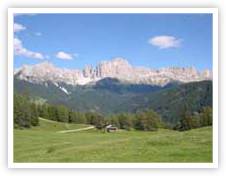
In Italian, Alto Adige refers to the high or upper reaches of the Adige, the stony, swift flowing river that Ernest Hemingway immortalized in A Farewell to Arms. However, most of the world knows this stunning country as the Sud Tirol or the South Tyrol. The dual name illuminates this region's splintered history and highlights its continuing split personality. Presently, Alto Adige is officially an autonomous region of Italy, but the Alto Adige or South Tyrol remains primarily German speaking, which underscores the fact that throughout most of its tortured history this beautiful alpine land of lederhosen and loden caps was an integral part of Austria. In fact, it was not until after World War I that the South Tyrol was ceded begrudgingly to Italy.
The Piedmont
In the north of Italy, nestled just beneath the great Alpine wall as it tumbles out of Switzerland and the gleaming Mediterranean Sea, lies the Piedmont. It is a region of myriad beauty. It is also the region of Italy closest to France in proximity as well as in the sheer quality and variety of exceptional wines it produces. For centuries, Italy's Piedmont remained a prize to be won, no doubt in part on account of the province's world famous cuisine that still draws happily on the abundance and quality of local truffles. Yet today, it is the superbly made wines of Italy's Piedmont that garner the most international recognition: complex, hedonistic red wines, still delicate whites, and sweet haunting Muscats. With such exquisite fare, should anyone question why the hearty robust delights of the Piedmontese table remain the region's most famous ambassadors to a hungry and thirsty world?
Tuscany
Tuscany enjoys a unique position in Italy. Located in the center of the Italian peninsula, its cities, culture, and people have existed for thousands of years in the throes of conflict. Drawing strength from its ancient Etruscan origin, which lent Rome its ability to build and engineer feats of unparalleled proportion, the inhabitants of Tuscany have shaped an austere, mystifyingly beautiful countryside into a rich, fecund land. And from the dynamic tension that held sway over Florence and its neighbors during the Middle Ages, there emerged the Renaissance - a 15th century ideal that made "man the measure of all things." In harmony with a singularly beautiful land that has been inexorably shaped by the finest artistry of man, Tuscans have created a nearly ideal world in which agriculture, architecture, art, and thought continue to form one seamless, vital union.
Chianti: A Region, a Wine, and a Consortium
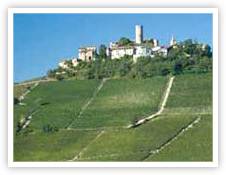
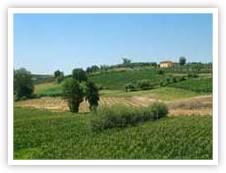
Chianti is a sea of vines amid the pastoral slopes of Tuscany. Between Florence and Siena over one hundred and fifty thousand acres of vines share the hills and hollows of this ancient land with olive groves and grain fields, bleating sheep, and woods full of oak and chestnut. Chianti is the largest DOCG in Italy, producing more than two hundred million liters of wine each year from seven distinct districts. Consequently, Chianti is, in fact, many different wines from over seven thousand registered growers in seven distinct districts and their outlying areas.
The Marches
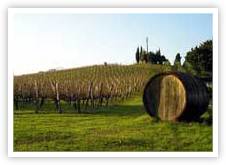
The Marches is the green, picturesque region of central Italy that lies wedged between the Appenine spine of the Italian peninsula and the cliff studded coast of the gleaming Adriatic Sea. Aside from the two month onslaught (in July and August) of Italian and Teutonic tourists that descend upon the coastal regions of the province, the Marches remains an oasis of calm, rural charm, art, religious shrines, fine food, and of course excellent wines - the very glories of Italy.
Latium
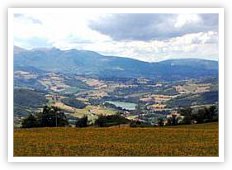
Latium is the region of Rome. It is, also, the source of so much of the wonderful produce, meat, and especially wine that flows into the Eternal City to sustain Romans and visitors alike. Latium is unquestionably one of the most important wine regions in Italy, both in sheer volume as well as quality. And what may come as a surprise to many is that ninety percent of Latium's wines are white, including the region's best known wine - Frascati.
Campania
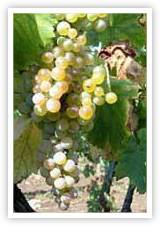
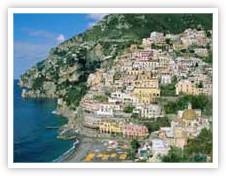
Italy's Campania retains the allure and magic of ancient mythology. From the mystifyingly beautiful Amalfi Coast that still manages to conjure visions of gods and sirens, pleasure and lore, to the volcanic, fog shrouded spine of the Appenines that bisect the Italian peninsula, the Campania never fails to enchant. Known to the Romans as the Campania Felix, meaning the "joyous country" or the "face with an open smile," the Campania is the ancient province of the Roman Empire that sits just south of Rome and neighboring Latium. As its name implies, this region produces friendly, gregarious wines in addition to an abundance of high quality produce. Learn more about the best wines of Southern Italy here.
Sicily
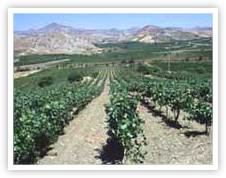
Sicily is a large and varied land that wears as many faces as a circus harlequin. Its land and people are as diverse as any earthly realm. At the crossroads of Europe, Africa, and the Middle East, Sicily possesses a history and personality all its own. The Greeks called Sicily and nearby southern Italy Enotria, land of the vine, a description that is as apt today as it was 2,800 years ago. However, like its geography and people, viticulture in Sicily is an immensely varied proposition.
More Wine Region Guides
 Contact Us

 Rated Customer Service
Assuring satisfaction to over 2,000,000 CUSTOMERS since 1994 has earned us a Better Business Bureau
rating. A BBB business since 10/05/2005.
100% Satisfaction Guarantee
Our 100% Satisfaction Guarantee ensures that every product you purchase from any of our clubs meets your high standards, contact us within 30 days and we will do our best to make it right or you may cancel your membership at anytime and receive a full refund for any unshipped product.