Vol. 5 No. 5
Standard Selection - (1) Red, (1) White
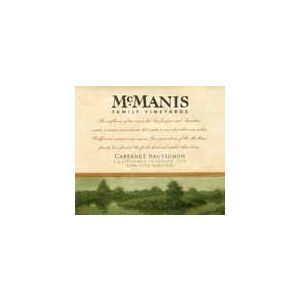
McManis Family Vineyards Cabernet Sauvignon 200 - U.S.A.
Bishop's Peak Central Coast Chardonnay 2000 - U.S.A.
Red Wines Only Featured Selections
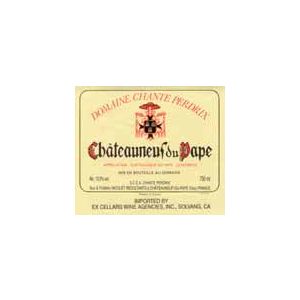
Domaine Chante Perdrix Chateauneuf-du-Pape 1999 - France
White Wines Only Featured Selections
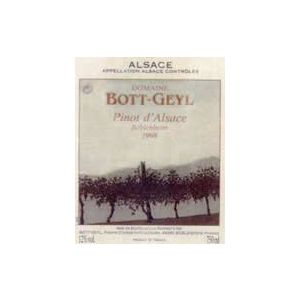
Domaine Bott-Geyl Pinot d'Alsace Bebenheim 1998 - France
McManis Family Vineyards Cabernet Sauvignon 2000 - U.S.A.
McManis Family Vineyards is a new estate with established vineyards. Located near the cool confluence of the San Joaquin and Stanislaus Rivers, just south of Lodi, McManis Family Vineyards is dedicated to the production of premium grape varietals in what is now known as the River Junction Appellation. This family venture was founded in 1990 by Ron and Jamie McManis - fourth generation family farmers. The McManis' currently operate over 110 acres of premium wine grapes, transforming the fruit into luscious wine at a state-of-the-art facility: the winery was established in 1998 to maximize the resulting wines' quality through small lot handling, whole cluster pressing, and barrel storage and fermentation.
Initially, the McManis family sold their grapes to several prominent coastal wineries. However, sensing a need by coastal vintners for quality Chardonnay, Merlot and Cabernet Sauvignon, McManis Family Vineyards had some of its grapes custom crushed at a premium north coast winery. News spread quickly of the quality and tremendous value. Today more than 20 coastal wineries are delightful recipients of the estate's Chardonnay, Merlot, Cabernet Sauvignon, Syrah and Zinfandel, but the best-kept secret in California is now bottled in small lots under the McManis Family Vineyards label.
Under the leadership of winemaker Jeff Renquist, McManis Family Vineyard has become the leading premium winery in the northern San Joaquin Valley. As a result of the variety of microclimates and soil types found at the estate, a large selection of single vineyard varietals are grown and produced. In addition, within these single vineyard designations, Renquist and the vineyard team of John Doppenberg and Jose Godinez utilize a variety of rootstocks, clones and trellising methods to enhance overall quality, maximize flavors and provide stylistic distinctions in each of the estate's wines. These practices are noticeably absent at most other San Joaquin wineries whose traditional raison d'etre has been bulk production.
McManis Family Vineyards produces a wide variety of wines including: Chardonnay, Merlot, Cabernet Sauvignon, Syrah, Zinfandel, Barbera, Petite Syrah, Malbec, Petite Verdot, among others. Since many varietals grow in single vineyard sights as small as two acres and Ron and Jamie McManis will only estate bottle the best of the estate's wine's under their own label, not all varietals are bottled under the family's name nor are they available in every vintage.
Tasting Notes: Scents of lush ripe blackberry, cassis, cedar and aged tobacco emanate from the rich, ruby-robed 2000 McManis Cabernet Sauvignon. Gobs of physiologically ripe fruit, with touches of spice, earth and toasty oak, wrap themselves delightfully around the palate as if to shout "Cabernet Sauvignon does not have to be a hard, tannic unapproachable wine in its youth; it is one of the world's great red varietals, plush and fulfilling, especially when it springs from old vines and is finished in the hands of a master winemaker." On the finish, the wine demonstrates its natural, unfiltered upbringing; it culminates in soft tannins that thankfully have not been ruined by buckets of added tartaric acid. Enjoy this delicious, natural, uncomplicated Cabernet Sauvignon at room temperature. The 2000 McManis is delightful with or without breathing time, but thirty minutes open before serving provides optimum enjoyment.
Accompaniments: Serve the 2000 McManis Cabernet Sauvignon at a gathering or party, and you'll end up with a host of new best friends. This Cabernet Sauvignon needs neither food nor props to shine, but it certainly tastes great with a wide range of foods. Given the wine's lush, uncomplicated nature, the McManis Cabernet Sauvignon admirably highlights beef, lamb, pork, pasta and just about anything else we could muster. Pot roast, pizza, and other midweek fare are certainly more esteemed in the accompaniment of the McManis Cabernet Sauvignon, so just think of what this wine could do for more illustrious fare! Whatever you serve, you are not likely to be disappointed, as long as the McManis Cabernet Sauvignon accompanies it, so enjoy!
Recipe for Red Wine:
Rib Roast Braised in Wine
1 5-6 pound boned rib roast
Flour for dredging
1/3 cup butter
2 chopped leaks - sliced
2 cups red wine
2 bay leaves
½ tsp. thyme
1 clove crushed garlic
4 sticks carrots - peeled and sliced
salt & pepper to taste
Dredge the roast with flour. In a large, heavy pot, heat the butter and brown meat on all sides. Add the onions, leeks, carrots and garlic and sauté until browned. Add the wine and seasonings. Cover and cook over medium heat until tender for 3-4 hours.
Bishop's Peak Central Coast Chardonnay 2000 - U.S.A.
Located halfway between San Francisco and Los Angeles on California's South Central Coast, Bishop's Peak is an ancient volcano that towers above the city of San Luis Obispo. It is the tallest of a series of volcanic peaks, "the Seven Sisters" that line the Los Osos Valley and continue into the Edna Valley from Morro Bay. It is one of the most important landmarks in San Luis Obispo County. The Talley family, farmers in the area for three generations, along with winemaker Steve Rasmussen, chose Bishop's Peak to convey their commitment to the production of hand crafted wines that best express San Luis Obispo County's unique winegrowing conditions.
The Talley family and Steve Rasmussen are probably best known for their exclusive single vineyard Chardonnay and Pinot Noir offerings under the Talley name, but unknown to most consumers, Bishop's Peak is the other piece to their family's legacy. Unable to produce additional quantities or varietals other than Chardonnay or Pinot Noir, at their Central Coast estate, the Talley family has set out to produce a limited amount of Chardonnay and other wines from small growers in the Central Coast. These wines are made at Talley from the fruit of growers who, like the Talley's, prune away excess yields, limit or eschew the use of herbicides and pesticides, and wait to pick their fruit at the peak of ripeness. The majority of Bishop's Peak production is divided between Chardonnay from the cooler regions of southern San Luis Obispo County and a Rhone blend from the warmer reaches of Paso Robles to the north.
The Talley's and their award winning winemaker, Steve Rasmussen, use all the same winemaking techniques for Bishop's Peak that they employ for Talley wines, including hand harvesting of all of the fruit, whole cluster pressing, minimal processing, native yeast fermentation and real oak barrels. There are no shortcuts or tricks, like oak chips or flavoring agents, used in making Bishop's Peak; and in the case of the Bishop's Peak Chardonnay, half of the wine is actually barrel fermented and the entire production undergoes malolactic fermentation (the conversion of the wine's harder malic acid to the natural, softer lactic acid).
You will notice one special and quite unique attribute when you pull the cork of a bottle of Bishop's Peak wine - the cork itself. What may appear to be a synthetic cork is really a special "cork" called Altec. It was developed by the supplier Sabate, one of the largest purveyors of cork in France and California. They developed this cork to eliminate TCA (corkiness) by granulating the bark of the cork oak tree, removing all of the woody lignins which can cause TCA and binding together the remaining suber (spongy material). The Altec cork is the best, most natural alternative to standard corks available today. We would not be surprised to see more concerned producers using this product in the next few years. It is safer than the standard cork, but more aesthetically pleasing than either a plastic cork or a screw cap. Have we found the solution to the centuries old dilemma posed by the cork stopper?
Tasting Notes: Ripe, round, and buttery, the 2000 Bishop's Peak Central Coast Chardonnay was made with good old-fashioned drinking in mind. No smoke, no mirrors, this is a Chardonnay made for those who appreciate the luscious, more hedonistic side of California Chardonnay; the Bishop's Peak is not for the "oak crowd" or those who worship toasted oak barrels as the supreme expression of a wine. Rather, this Central Coast Chardonnay displays a lovely, natural, fruit-driven personality. It's not that the folks at Bishop's Peak decided to leave out the oak on this lovely offering, it is simply that oak is not the "raison d'etre" of their Chardonnay. Instead, there are deft touches of oak in the Bishop's Peak, which imbue the wine with roundness and a subtle framework rather than overwhelm it with vanillin. What a welcome relief. Enjoy this very guzzable Chardonnay moderately chilled.
Accompaniments: While enjoyable all by itself, the 2000 Bishop's Peak is even better with food, especially seafood and poultry. We recommend you try this wine with either grilled Mahi-Mahi in a mango chutney or roast duck with an apricot glaze. The wine's fragrant aroma of citrus, fresh baked bread and Asian pear nicely complement fruit based sauces, adding an extra dimension to the fish or chicken in the sauce. We also suggest that you try the Bishop's Peak Chardonnay with scallop dishes, as the broad, clean flavors of fresh scallops provide a superb accompaniment to the hedonistic side of this wine, while the wine's crisp finish accentuates the fresh, flavorful aspects of the scallops. Another great complement to the Bishop's Peak is a baked Brie, with either an apricot or pear compote. As always, enjoy this wine as you like it.
Recipe for White Wine
Mahi Mahi with Fruit Salsa
2 lbs. fresh Mahi Mahi steaks
2 cups of each sliced and seeded:
mango, pineapple, banana
2 Tbl. raspberry vinegar
2 Tbl. chopped cilantro
2 Tbl. fresh lime juice
¼ cup diced red pepper
Rinse steaks and pat dry fish steaks and place in glass bowl. Mix all ingredients except fish in a bowl. Mash ½ of the mixture well and return to remaining fruit and refrigerate 2 hours. Preheat oven to 400° and grill fish steaks until cooked through, about 15 minutes on each side and pour fruit salsa on top!
Domaine Chante Perdrix Chateauneuf-du-Pape 1999 - France
Domaine Chante Perdrix produces one of the most exotic and seductive of all red Chateauneuf-du-Pape wines. From a traditional cepage of 80% Grenache, with small quantities of Syrah, Mourvedre and the rare Muscardin blended in, Guy and Frederic Nicolet fashion a truly exceptional Chateauneuf-du-Pape from low yielding old vines. Collectively, the Nicolets farm one continuous vineyard in the southern section of the appellation, where the soil is dominated by the famous flat river stones, galets roules, which produce Chateauneuf-du-Pape's greatest wines.
Winemaking at Chante Perdrix is done by Guy Nicolet. The red wine is made in the traditional manner, with ageing in large oak foudres and bottling from 18-24 months after the harvest. A firm, rich, spicy, flamboyant wine emerges, which curiously dinks beautifully young, even in the first few years of its life; yet, it is capable of good vintages. Some quantities of exotic white Chateauneuf-du-Pape are also made at Chante Perdrix from Grenache Blanc, Roussanne and other traditional, white southern Rhone varietals.
Tasting Notes: Flamboyant and utterly hedonistic, the 1999 Chante Perdrix Chateauneuf-du-Pape is nothing short of decadence in a glass. Tantalizing scents of kirsch, fresh Herbes de Provence and exotic spices spring from the glass. In the mouth, rich complex flavors permeate the savor of this exemplary Chateauneuf-du-Pape, providing a veritable feast for the palate. All the while, ripe, lush tannins provide ample structure and depth to the wine, and lead to an explosive finish. In short, there is a heck of a lot going on in the 1999 Chante Perdrix, and it's all very good irresistible in fact. Open this well-endowed beauty an hour before serving, and allow Chante Perdrix to work its scintillating magic. Like most fine Grenache-based wines, the Chante Perdrix is best served at cool room temperature (62°-66°).
Accompaniments: As suave and sophisticated as the 1999 Chante Perdrix Chateauneuf-du-Pape is, it is not the least bit shy or self effacing, so it will admirably accompany a tremendous variety of foods. Recently, a whole beef tenderloin, served medium-rare with thickly sliced portabella mushrooms in a red wine, shallot, Herbes de Provence reduction (all in the company of roasted root vegetables), provided the panel with a memorable complement to the Chante Perdrix. For a strictly vegetarian delight, we recommend the Chante Perdrix with a salad of roasted eggplant, sautéed portabella mushrooms, roasted red pepper, caramelized onions, tomato, and feta cheese on either a bed of mixed greens or fresh baked Focaccia bread, served with a pesto mayonnaise dressing. Yum! Avocado slices make a nice addition to the salad, too, or provide a great substitute for those who don't eat mushrooms. Most meats as well as cheese from cow or sheep's milk will also provide a wonderful accompaniment to the 1999 Chante Perdrix. Enjoy!
Domaine Bott-Geyl: Pinot d'Alsace Beblenheim 1998 - France
Domaine Bott-Geyl is a renowned Alsace estate that was founded in 1840. It grows all of the best traditional white grape varietals of Alsace: Pinot Blanc, Pinot Auxerrois, Tokay Pinot Gris, Muscat, Riesling and Gewurztraminer. Concentrating on expressive, user friendly wines with great appeal, the estate's current scion, Jean-Christophe Bott, farms his vineyards using natural methods that he describes as "nearly organic". He hand picks his fruit late in the harvest to ensure physiological ripeness and Bott is not afraid to prune away excessive yields, and profits, in order to produce purer, richer wines than most of his compatriots. How we wish more growers and wineries in Alsace, and elsewhere would practice the dying art of "epluchage", or pruning; they would make more concentrated and enjoyable wines and stress their vines less, resulting in a decreased dependency on chemical and technological
intervention during winemaking. Moreover, the strict pruning practiced at this estate accounts for its longevity of Bott-Geyl's wines and the ultimate complexity and finesse the estate's wines develop with extended bottle age.
Tasting Notes: Testimony to the longevity of fine estate bottled wine from Alsace, the 1998 Bott-Geyl Pinot d'Alsace is first approaching its peak of maturity. A blend of 40% Pinot Blanc, 40% Pinot Auxerrois and 20% Tokay Pinot Gris, this still youthful looking wine provides plenty of suave, sophisticated drinking. Delicate scents of melon, peach, orange peel and spring flowers permeate its nose, while satiny soft flavors ripe with white fruits form the wine's palate profile. The longer this Alsatian beauty remains in the mouth, the more intriguing and satisfying it becomes. This is such a fun wine to savor or quaff, we have had to cut off more than a few party types we have served it to. For optimum enjoyment, we suggest serving the 1998 Bott-Geyl Pinot d'Alsace well chilled, allowing the wine to slowly open in the glass and reveal its many charms.
Accompaniments: "Anytime a party prevails or the spirit moves me" is one taster's contribution to accompaniments with the 1998 Bott-Geyl Pinot d'Alsace. Traditional Alsatian fare certainly provides a more orthodox approach to this wine. Recently, we served the Bott-Geyl Pinot d'Alsace with pork chops smothered in apple and fresh sauerkraut, much to the delight of the evening's coterie. Yet, we also like this Pinot d'Alsace with appetizers and refined pates, especially foie gras. Another winning choice with this fine Bott-Geyl offering is lake fish. We can also recommend the Pinot d'Alsace with a variety of marinades that call for fresh ginger. If used in moderation, the fresh ginger seems to marry with the slightly exotic flavors in the Pinot d'Alsace, without overpowering them. Lightly spiced Chinese dished, such as fried dumplings and either chicken or Moo Shu Pork make nice complements, too, as this Bott-Geyl is a very versatile wine. Enjoy!
For Members Only
Give Your Friends FREE Beer, Wine, Cheese, Chocolate, Cigars & Flowers!
Through our Customer Appreciation Program
Your name has real value to your friends, co-workers, and family members! Every time a friend, family member, or anyone else you know joins any one of our clubs, [or gives a gift] for 3 months or longer, we'll give them 50% off of their first month, but only when they mention your name. And we'll also give you 50% off your next month too which can either be applied towards your current membership or you can try one of our other Clubs out! (We can add one more month to your order at 50% off for prepaid memberships!)
The Fine Print: Members giving gift memberships do not qualify for referral credits and you can't give yourself a gift to qualify! This Program is mutually exclusive of any other promotions.
Membership Q & A
Note: Please do not use the web site to make any account related information changes such as address or billing changes, membership extensions, or terminations. To ensure timely processing of your request, please call us at 800-625-8238.
Q: What can I do if Im having difficulty receiving my shipment at home?
A: You should consider having our discrete box delivered to your work location or to a neighbor 21 yrs. of age that can receive it for you. The box is brown corrugated cardboard and doesnt say Wine on it anywhere. Consider having it shipped to your work location as many of our customers do.
Q: What should I do if Im moving or want to extend my membership?
A: Please call us prior to the 9 th of the month to make all account related information changes such as address changes, membership extensions & terminations, or gift accounts desiring to continue their memberships. Address changes made after that time may require a repackaging and re-shipping charge and will incur a $5.00 service charge from UPS that will be charged to your account.
Q: What happens if my shipment is damaged?
A: If your shipment arrives damaged, please call us immediately toll free at 1-800-625-8238 and report the incident for a prompt resolution.
Q: What happens if my credit card is declined?
A: We will send you a courtesy notice asking you for an alternative payment method and your order will be temporarily suspended until we hear from you. As we incur a $ 2.00 re-processing fee each time your card does not clear, that charge is passed on to you.
Q: What happens if I join under a special incentive program and dont stay a member for the entire term committed?
A: Not a problem. Although we want to do everything we can to keep you as a member, we will allow you to cancel your subscription early, however, you will be responsible to pay for the item which was given to you as part of the promotion. If you received a discount based on a specific term, the amount discounted will be charged to your card.