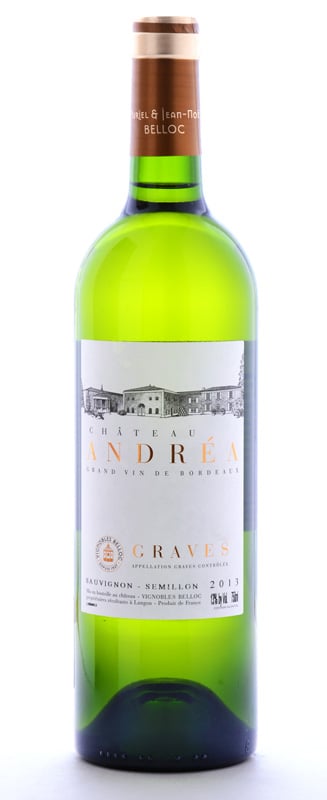
Graves is the oldest and most historic of all the Bordeaux communes. Before Latour, Lafite, Margaux, and the rest of the well-known names of the Médoc even existed or had even seen a cultivated vine, there was Graves. In fact, Graves has been the home of cultivated vines since as early as the 1st century AD, due at least in part to the Romans inability to grow other crops in the graveled soil from which the name Graves is derived. The stone and gravel deposits are vestiges of the last Ice Age, a bane to most farmers but a boon to grape growers, whose vines struggle deep into the thin porous soil to draw life and subtle complex flavors from the nutrients below.
The wines of Graves appear to be the first Bordeaux wines to be exported, with archeological evidence that Roman garrisons in Britain were the happy recipients of Bordeaux’s quintessential wines. And by the early 12th century, Graves was the most sought-after wine in England and beyond for its quality as well as its proximity to the city and port of Bordeaux itself, which lies just a few kilometers from Graves.
Graves is rightly famous for both its red and white wines. At their best, the red wines of Graves remain unsurpassed for their aromatic beauty, elegance, and smooth rich flavors. Elegance, too, comes as the calling card of white Graves, a dry, very aromatic wine that emits great freshness, along with substantial flavor thanks to the artful blending of Semillon and Sauvignon Blanc. Perhaps the greatest event in Graves in the last twenty years has been the revolution that has taken hold among the producers of white Graves. Once an obscure and expensive proposition that did not always travel well, contemporary white Graves has taken on vigor, personality and at times even an exotic edge that underscores the physiological ripeness that was often absent in white Graves in years past. At their best, the finest white Graves can rival the best white wines made anywhere in the world.