July 2006
Premier Series |
|
Featured Wineries & Wines |
Membership Type |
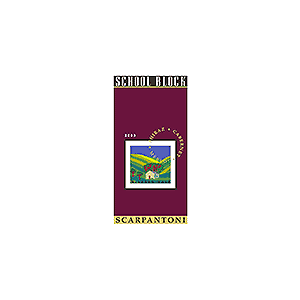
| Scarpantoni Shiraz Cabernet Merlot | 1 Red 1 White; 2 Reds |
| Chateau La Mothe Bordeaux Blanc | 1 Red 1 White; 2 Whites |
| Mas Carlot Costieres de Nimes | 2 Reds |
| Villa Giada Moscato d'Asti | 2 Whites |
Master Series |
|
Featured Wineries & Wines |
Membership Type |
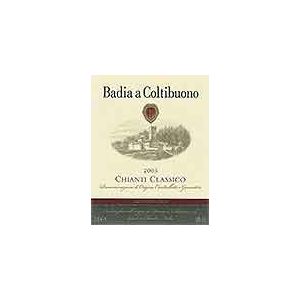
| Badia a Coltibuono Chianti Classico | 1 Red 1 White; 2 Reds |
| Chateau La Mothe Bordeaux Blanc | 1 Red 1 White |
| Scarpantoni Shiraz Cabernet Merlot | 2 Reds |
Collector Series
|
|
Featured Wineries & Wines
|
Membership Type
|
| Badia a Coltibuono Chianti Classico | 1 Red 1 White; 2 Reds |
| Rosenblum Cellars Roussanne | 1 Red 1 White |
| Undurraga Founder's Collection Cabernet Sauvignon | 2 Reds |
Scarpantoni School Block McLaren Vale Shiraz Cabernet Merlot 2003 – Australia
Editor's Note: Tasting wine is a humbling avocation. Not only is it difficult to choose wines that will appeal to thousands of palates, it constantly amazes us as to how many producers of fine wine there now are in the world, and how easy it is to miss one. Gone are the days when one could list the top one hundred or even one thousand producers of wine, but how is it that the wonderful, award winning Scarpantoni Estate remained under our radar for so long? We have chosen to feature Scarpantoni's School Block after several panel tastings, the last of which returned a unanimous endorsement; and for the record there were over twenty voting members on that panel. Consequently, we are pleased to introduce to you the Scarpantoni Estate. We sincerely hope you enjoy School Block as much as the tasting panel did.
The Scarpantoni family comes originally from the Abruzzi region of Italy on the Adriatic Sea. In 1952 Domenico Scarpantoni immigrated to Australia, where he found work in South Australia's McLaren Vale, presently the source of many of Australia's finest Shiraz and Cabernet based wines. As it turns out, Domenico Scarpantoni played a key role in making McLaren Vale the world class wine region it is today. He worked for Hardy's and then Seaview Wines as the vineyard manager. At Seaview he developed the fabulous contour vineyards that made Seaview famous a generation ago.
In 1958, Domenico purchased his first property, a 5.6 hectare plot (12 acres) in McLaren Vale. He followed the original McLaren Vale purchase with an even larger acquisition (44 acres) in 1968 when he bought the original school property in McLaren Flat. By 1979, Domenico and his wife Paula and their two sons Michael and Filippo had built a winery on the old school property. However, until the last decade, the Scarpantonis released very little of their estate wines under their own name. Instead, they continued to purchase prime McLaren Vale vineyards and build the family estate into one of South Australia's largest entirely family owned and operated wineries. Today, the Scarpantoni Estate remains a family business, with every step of the production, from viticulture to the packaged product done entirely at the estate. However, Scarpantoni now estate bottles all of its own wines, for which it has earned more than 500 medals and more than a dozen trophies and awards in national wine shows.
Presently, Domenico has taken a back seat in favor of his sons Michael and Filippo, who make all the wines at Scarpantoni and run the estate. They produce a bevy of interesting and well made wines, including School Block, Block 3 Shiraz, and Estate Reserve. They also produce varietal bottlings of Chardonnay, Sauvignon Blanc, and Cabernet Sauvignon. And to make matters even more interesting, there is even a fine sparkling red, a serious rosé, a botrytised dessert wine, and a selection of ports. Most assuredly, the Scarpantoni family will never lack for interesting and varied drinking, nor should we. Salud!
Tasting Notes: An artful blend of Shiraz, Cabernet, and Merlot from one of Scarpantoni's original vineyard sites, the 2003 Scarpantoni School Block is the kind of red wine most of the wine drinking world wishes it could drink every night. Deep in color, rich in flavor, and smooth around the edges, the 2003 School Block is the ultimate Australian tonic. More specifically, Scarpantoni's 2003 School Block is an enchanted meritage style blend that combines the best of both worlds. From the New World, it draws ripe fruit and forward rounded flavors; from the Old World, it exudes a sense of breeding, style and charm. Together the components make School Block one tasty, good drinking wine. We suggest consuming this flavorsome meritage offering fairly cool (no more than 66°F), after just a few minutes of aeration.
Accompaniments: What makes the 2003 Scarpantoni School Block so appealing as a companion to food is its versatility. It is as close to being a wine for every occasion as a wine can be. It's as if this wine spreads its arms upon opening and says: eat, drink, and wash away the weather stained cares of daily life. Bring it the simple and the sublime, and let the Scarpantoni School Block shine. We have enjoyed it with every thing from pizza and antipasto to fine filets of beef. We also recommend serving it with such interesting and eclectic fare as Fried Green Tomatoes, encrusted with basil, Boursin cheese, and country ham, and served with tomato chutney. A mid week meatloaf or a grilled coriander encrusted tuna steak fits the bill, too. With the 2003 Scarpantoni School Block, you are limited only by your imagination or lack of, so experiment and enjoy.
For the Love of Cheese: Wine and cheese are nearly synonymous, simply because they complement each other. Nonetheless, not every wine is perfect with every cheese, but the 2003 Scarpantoni School Block comes close. This delicious blend of Shiraz, Cabernet, and Merlot complements most soft and semi hard cheeses. We suggest you try it with ripe Camembert, a delicious Welsh cheese like Caerphilly, or an authentic Grafton Village Cheddar. For more information about wine and cheese complements, contact us at www.cheesemonthclub.com.
Château Lamothe de Haux Bordeaux Blanc 2005 – France
Château Lamothe de Haux is a splendid wine estate and country manor whose origins date to the 17th century. It is one of the most impressive, poetic pieces of the splendid Premières Côtes of Bordeaux. Château Lamothe was renovated in the 19th century and is now the charming home of the Néel-Chombard family who own and manage this property along with neighboring Château Sauvage and nearby Château Manos.
The splendor of Château Lamothe de Haux begins with its imposing position. It sits atop a rocky spur that is surrounded by vines. When viewed from the vineyard, the Château and its nearly two hundred acres of vines appear as a ship, plying the open waters of the sea. Situated in an undulating sea of vines, Château Lamothe is caressed by the light of both the rising and setting sun – the perfect Bordeaux terroir for the cultivation of the vine.
Although Château Lamothe itself dates only to the 17th century, the vine and the spirit of wine have thrived in the picturesque part of the Premières Côtes de Bordeaux where Château Lamothe now sits since Gallo Roman times. This area was also once an important stop over for the annual throng of pilgrims on their way to Santiago de Compostella, one of medieval Christendom's greatest pilgrimage sites. Today, the fusion of sun and earth produce the alchemy that draws visitors to its caves and render the wines of Château Lamothe so endearing.
The Néel-Chombard family and their trained winegrowers and enologists, Anne, Fabrice, Maria, and Damien fashion wonderful white as well as red wine at Château Lamothe. As with many family owned Bordeaux estates, there is equal attention paid to white and red wine here and both are made in considerable quantity. The Château Lamothe Blanc is a traditional blend of three white Bordeaux grape varieties: Sauvignon Blanc (40%), Sémillon (40%), and Muscadelle (20%). The latter varietal is an authentic Bordeaux variety from which dry white wine is fashioned; it bears no relation to Moscatel, the sweet insipid wine of old. Similarly, the Château Lamothe Rouge combines the three long-established red Bordeaux varietals into an artful blend. In a normal vintage, the traditional red cuvee is comprised of Merlot (60%), Cabernet Sauvignon (30%), and Cabernet Franc (10%).
As impressive as Château Lamothe is above ground, it is even more remarkable from below. From hidden entrances carved into solid rock, the cellars of this château descend nearly two hundred feet beneath the ground. Originally excavated in the 17th century, the stone from this enormous cellar was used to construct many of the classic elegant buildings that today render the nearby city of Bordeaux so attractive. In the place where rock alone once resided, there now rests the elegant and generous wines of Château Lamothe. The Néel-Chombard family best captures this transformation in the following ode.
"Time flows in my underground kingdom, sculpting, polishing, and ageing…
Slowly and gently…Like the stone that was once here, wine now fills up the space.
The roundness of its aromas and barrels marries that of
The vaults that protect it.Silence, coolness, and intimacy conducive to talking and tasting
Every bottle of our wine perpetuates a long love story
Between sky, earth, and men…."
Tasting Notes: Light, lovely, and delightfully uncomplicated, the 2005 Château Lamothe de Haux Bordeaux Blanc embodies all that is good in white Bordeaux. A dazzling robe, replete with a pale yellow hue, captures the color of the summer sun and sets the table for the sprightly pleasure to come. For openers, the 2005 Château Lamothe flaunts a bright, seductive nose that recalls the scents and savors of early summer: aromatic herbs, citrus, fresh mown grass, and newly picked summer fruits. Elegant, round, and immediately ingratiating, the Château Lamothe Blanc slips ever so easily down the thirsty throat and begs the unresisting arm to bend in order to have the pleasure of another quaff. In short, the 2005 Château Lamothe is simply irresistible, from its comely start to its gratifying finish. For optimum enjoyment, we suggest serving the 2005 Château Lamothe Blanc fairly well chilled (about 40° F). However, we have enjoyed this classy white Bordeaux almost as much at room temperature, so as you like it!
Accompaniments: When asked what he thought the 2005 Château Lamothe Bordeaux Blanc would be best paired with, one member of the panel smugly retorted: "A glass… well, on second thought, how about you make it two glasses." In an ideal world, there would indeed be a glass or two of 2005 Château Lamothe Blanc in every hand to start an evening's festivities, and a bottle at every place set at table. Indeed, Château Lamothe Blanc is one easy drinking wine; it could easily compete for top billing as the perfect aperitif. Nonetheless, it, also, pairs beautifully with smoked salmon, sautéed oysters, grilled scallops, and most seafood specialties. Heartier fare won't cause it to fade either. We are fond of it with a baked breast of chicken, stuffed with a breadcrumb, herb, and Parmesan dressing. Soft, creamy cow's cheeses offer wonderful accompaniments, too. We recommend it highly with ripe French Brie, Camembert, or Comté cheese. Bon appétit!
Mas Carlot Les Enfants Terribles Costières de Nîmes 2004 – France
Mas Carlot is one of those little Provencal gems that delights the heart, soul, and palate of seasoned wine drinkers. Originally a 17th century farm as the name implies (mas means farm in Provencal), this estate was resurrected in the 1960's by the Blanc family. This beautiful property and its expertly tended vineyards are located on the western edge of the Rhône, just to the southeast of the ancient Roman city of Nîmes. Natalie Blanc- Marès and her husband Cyril Marès of the neighboring property Mas Bressades are the winemakers. Yes, Nathalie married the boy next door, and what a talented young couple they are. Both Mas Carlot and Mas Bressades garner tremendous international acclaim for their superb Rhône blends.
The more than 160 acres of vines at Mas Carlot are planted primarily to the traditional Rhône varieties of Grenache, Syrah, and Mourvèdre, which average 40-50 years of age. Mas Carlot also has quite a few old vines of Cabernet Sauvignon that they marry to the estate's Syrah. All of Mas Carlot's vineyards are located in the heart of the appellation's cailloux rich terroir, a very similar stony soil composition to Châteauneuf-du-Pape. Several excellent red cuvees are made by here along with a small quantity of fine rosé. Although all of this estate's wines are intriguing, our favorite red wine offering from Mas Carlot remains Les Enfants Terribles, a Mourvèdre Syrah cepage that is named after the couple's four children: Blanche, Eugène, Olympe, and Alexander. An what wonderful children they must be.
Tasting Notes: The 2004 Mas Carlot Les Enfants Terribles Costières de Nîmes is a joyful medium-bodied wine that offers up as much pure, straightforward hedonistic pleasure as any young Rhône wine we have tasted lately. It proffers a dense purple robe for the eyes and a beautiful array of scents and savors to tantalize the nose and palate. Cherry and black fruits dominate an aromatic profile that artfully blends in touches of bark, pristine woodlands, pain grillé, and wood smoke. On the palate the Mas Carlot Les Enfants Terribles is rich, plush, and loaded with Provencal herbs and spice. In short, this wine is bad in the very best sense of the word. Now don't we all wish that our children were as bad as Cyril and Nathalie Blanc-Marès 2004 Les Enfants Terribles? We suggest serving this exuberant Rhône red fairly cool (about 65° F), after a quarter of an hour of breathing time. However, you need not be in a hurry to consume this dandy. In light of the splendid density and structure displayed by this old vine Mourvèdre/ Syrah, the 2004 Les Enfants Terribles can continue to breath for hours, without detriment. Furthermore, we fully expect this wine to continue to improve in bottle for at least several more years, so as you like it. Santé!
Accompaniments: No muss or fuss in the kitchen is necessary when opening a bottle of the 2004 Mas Carlot Les Enfants Terribles Costières de Nîmes. Like all good Rhône wines, this Mas Carlot adapts easily to a large variety of traditional and non-traditional foods. The usual Provencal favorites (cassoulet, roast leg of lamb, or an assortment of mild goat cheeses) provide wonderful companions for the Marès children, but then so do pasta, pizza, and pork barbecue. One of the nicest things about the red wines of the Rhône Valley and the Mas Carlot Les Enfants Terribles in particular is how well they complement food, particularly in summer. They have a natural affinity for hearty southern Italian dishes as well as good old-fashioned American cheeseburgers and steaks. Moreover, they show well in warm weather when other reds appear to wilt. A slight chill won't kill their flavor either, so pop the cork and have a party!
Villa Giada Moscato d'Asti 2005 – Italy
Andrea Faccio's Azienda Agricole Villa Giada brings exquisite wines to the table from the classic grape varieties his family has grown in Italy's Piedmont for more than two centuries. Located midway between Asti and Alba, the world's foremost production zones for Moscato and Barbera, Villa Giada specializes in the making of handcrafted Piedmontese wines from single vineyards. With more than forty-five acres of estate vineyards, located around three ancient farmhouses, Villa Giada's aim is to fashion great wines from individual vineyards and terroirs – a goal that local cognoscenti and international wine critics alike believe this classic estate has fulfilled.
Villa Giada's historical property dates to 1790, and the estate's ancient farmhouses and winery remain in use today. The old part of the winery still plays host to all of the estate's barriques (small oak barrels), which refine the classic Barbera wines that Andrea Faccio so adeptly crafts. In addition, Villa Giada also sports a modern winery that features stainless steel vats, temperature and pressure control equipment, and the latest technological accoutrements, which Andrea uses for making exquisite Moscato d'Asti, Piedmont's lovely frizzante (lightly, naturally sparkling white wine). Moreover, Donato Lanati, a professor at nearby Turin University and one of Italy's foremost oenologists, assists Andrea in the crafting of Villa Giada's wines. Together this dynamic duo fashions wines that are both internationally appealing and traditional in character.
Tasting Notes: The 2005 Villa Giada Moscato d'Asti is a light, lovely elixir that captures the essence of spring and captivates the senses. It exudes the pure scent and savor of Moscato: pear, peach, mango, and just enough of that kinky, exotic touch of true Moscato to be compelling. Perhaps, this is why Andrea Faccio's wine is so hard to put down. Moscato d'Asti is typically light, effervescent, low in alcohol, and long on flavor, but the Villa Giada is more than the usual pleasant dose of lush Moscato one comes to expect from the Muscat Canelli of Piedmont. The scent and savor of ambrosia haunt every sip of this naturally fruity bubbly. The Villa Giada provides a fine dollop of the ancient Muscat grape in every glass as well as an impeccably balanced format, so it never comes off as cumbersome or syrupy. We advise serving the Villa Giada Moscato d'Asti lightly or moderately chilled. Since it is easier to let a wine warm up in the glass rather than cool down, we suggest chilling the 2005 Villa Giada Moscato to approximately 40° F, then allowing it to unfold gracefully in the glass. Enjoy!
Accompaniments: The 2005 Villa Giada Moscato d'Asti is an easy drink wine. It is as comfortable on its own as it is with fruit, poached fish, or an elegant dessert. One of our favorite pastimes is adding a little Villa Giada Moscato d'Asti to a ripe honeydew or Crenshaw melon and allowing the two to stew for a few hours before serving as an appetizer or dessert. Additional suggestions as a finale include serving the Villa Giada Moscato with poached pears, a creamy fruit and custard tart, or a white chocolate cheesecake. In addition, many panel members continue to insist that less is more with this delicious Moscato and prefer consuming it au naturel or with tiny bits of a soft fruity cheese like Mascarpone. Moreover, the Villa Giada Moscato can take the place of dessert or simply be dessert itself.
Badia a Coltibuono Chianti Classico 2003 – Italy
Badia a Colitbuono is often referred to as the Abbey of Good Culture, an apt description of this splendid Medieval and Renaissance wine estate and a well-deserved tribute to one of the world's finest cooking schools. Assuredly, Badia a Coltibuono is much more than a fine wine estate, it is way of life in which the past and present merge into living history. The home of Piero Stucchi-Prinetti and his wife Lorenza de'Medeci (of the de'Medeci family) and their children, Badia a Coltibuono has come to define the sophistication and taste of Tuscany.
For centuries the great wines estates of Tuscany were not commercial enterprises in the traditional sense. They were first and foremost the country estates of the Tuscan gentry, and in typical Latin fashion their doors remained closed, even to those in the trade. Certainly, these renowned fattorias sold their wares locally and abroad but the thought of opening their family farm to the public was next to unthinkable. In fact, until Piero Stucchi-Prinetti came on the scene, very few Tuscan estates even had a marketing budget let alone a plan to market or educate the world about the treasures of Tuscany: food, wine, and a centuries old cultural heritage that by the 1970's the world was clamoring to know. Consequently, thirty years ago, Piero Stucchi-Prinetti and Lorenza de'Medeci embarked upon a new course that has helped usher in the second Italian Renaissance in Tuscany. They threw open the portals to Badia a Coltibuono and began a new day.
An astute and forward thinking international businessman, the gregarious Piero Stucchi-Prinetti perceived both the public's interest in the good life, which was inherent to Badia a Coltibuono, and the economic need on the part of Chianti Classico producers to change with the times. Instinctively, he understood the need for marketing because the paradigms in the world of wine were not about to stand still; the wine Renaissance in California alone had seen to that. Moreover, he understood the value of marketing the great products his family produced, including their way of life. As a result, his first move was to transform the estate's old stable into a trattoria or restaurant, replete with the property's stunning view of the Arno valley and the distant Appenine Mountains. From near and far, the world came to feast on a cultured way of life as well as some of the finest food and wine around.
Piero Stucchi-Prinetti's next move was even more daring. He hired a full-time director of promotions and public relations – something no other Tuscan estate in the area had done. The result was the invitation of wine importers, distributors, retailers, writers, and a list of adoring aficionados. Overnight guests were brought to Coltibuono and a bona fide hospitality program had begun, but this would be just the beginning.
Lorenza de'Medeci, who was then already well known as the food editor of Vogue Italia and the author of many cookbooks, began cooking for events at Coltibuono, which attracted even greater acclaim for the family's estate and its fine Chianti Classico. Soon, Lorenza's kitchen became the home of The Villa Table, one of the world's most renowned cooking schools. In the school's nearly two decades of existence, thousands of international chefs and serious amateur cooks have passed through the portals of Badia a Coltibuono to share the ancient abbey's renown as the guardian of traditional Tuscan cooking and the purveyor of the allure and mystic of Tuscany. As of this writing Lorenza Medeci has published thirty individual books on regional cuisine.
Today, Piero and Lorenza's children Emanuela and Roberto are the present mangers of the Coltibuono wine estate, while the couple's two other sons Paolo and Guido manage the family's now famous restaurant. Coltibuono remains one of the world's greatest producers of Chianti Classico as well as extra virgin olive oil. And as one would expect, Badia a Coltibuono remains a legend in its own time.
Tasting Notes: A Certified Organic Wine, the 2003 Badia a Coltibuono Chianti Classico exudes all the natural flavor and goodness of this great estate. The 2003 Coltibuono Chianti Classico is a formidable blend of Sangioveto (90%) and Canaiolo (10%) from a very hot vintage. Nonetheless, this pure, silky wine aptly reflects the hauntingly beautiful landscape of southern Tuscany, at the same time that it recalls all the auspicious attributes of Chianti Classico: breed, charm, nuance, and subtley of flavor, all in a solitary glass. Indeed, Chianti Classico produces the most elegant of Tuscany's world-class reds, and Coltibuono embodies the quintessence of Chianti Classico. A bright, moderately deep garnet robe gives way to a medium-bodied wine that mingles the overt scents and flavors of dried red and black fruits, earth, and fennel with the delicate undertones of fragrant woodlands – replete with a faint but beautiful profile that includes a hint of truffle. Enjoy this elegant, round, sophisticated wine at cool room temperature (no more than 66° F) after moderate aeration (30 minutes). Enjoy!
Accompaniments: A fine Chianti Classico, such as the 2003 Badia a Coltibuono, exudes sophistication and charm and provides the ideal complement to foods of similar stature. A myriad of meats and vegetables take on whole new dimension when paired with the likes of the Badia a Coltibuono Chianti Classico. Some irresistible favorites come from Lorenza de'Medeci's own kitchen. Pheasant, stuffed with braised vegetables, porcini mushrooms and a hint of truffle, makes a memorable meal and a marriage that will last forever. However, if pheasant seems a bit too exotic to tackle in your own kitchen, we suggest that you substitute game hens or other fowl for the pheasant and enjoy this wonderful food and wine pairing just the same. Fine cuts of beef and pork provide other worthy suitors. Classic Tuscan white bean dishes, served with flat Tuscan onion bread and a few slices of hard cheese, will thrill both carnivores and the vegetarian crowd, and more than satisfy the soul as well as the stomach. In a simpler vein, you may also want to try the 2003 Badia a Coltibuono Chianti Classico with a thinly shaved grilled chicken breast with grilled onions and peppers, melted Havarti cheese, and basil aioli on grilled focaccia. Parmigiano Reggiano, Pecorino Romano, and other hard cheeses in the company of this fine Chianti Classico offer more excellent, uncomplicated choices, especially for ending a meal. For more expert advice on cheese and to view our monthly international cheese selection, we suggest you peruse our In Pursuit of Cheese website at www.cheesemonthclub.com. So, whether it is simple elegance or sophisticated fare you seek, you are sure to find a friend in the Badia a Coltibuono Chianti Classico and in turn be offered a taste of the good life of the Abbey of Good Culture. Buon Appetito!
Rosenblum Cellars Fess Parker Vineyard Santa Barbara Roussanne 2004 – U.S.A.
Rosenblum Cellars is one of a just a few dozen California wineries that are internationally known. Located in Alameda, California, Rosenblum Cellars fashions 40 different wines in any given vintage – almost all in small lots from California's finest vineyards. Begun in 1978 by veterinarian Dr. Kent Rosenblum, this remarkable winery began as a basement operation. In Rosenblum's own words, "Winemaking was a hobby gone wild." And aren't we glad it did. Rosenblum Cellars has evolved into a world class winery, whose specialties include many award winning Zinfandels and a bevy of delicious Rhône style wines from single vineyards.
In 1978 after years of making wine out of his home, Kent Rosenblum and several close friends took the great leap of faith and passion: they bought property next to the infamous Dead End Bar in Oakland, once a prohibition speakeasy, and began their own winery, Rosenblum Cellars. The winery's first great success was with Zinfandel, which Rosenblum and his cohorts made fashionable by turning out a dozen or more top notch wines from the mercurial Zinfandel grape. From the beginning Kent focused on fashioning exceptional vineyard designate wines from mountainside dry farmed, head pruned, old vines. And the public response was sensational. In 1986, Rosenblum Cellars won the sweepstakes at the San Francisco Fair Wine Competition with its George Hendry Reserve Zinfandel. The winery promptly moved into its present location in Alameda and has never looked back. Under Kent's watchful eye Rosenblum Cellars has fashioned some of California's most compelling wines. Once considered unworthy of critical acclaim, vineyard designate Zinfandels have become the rage and the darling of connoisseurs and critics alike – thanks in large part to Kent Rosenblum and his team.
Although Zinfandel and Rosenblum Cellars are nearly synonymous, this world-class winery also crafts award-winning Cabernet Sauvignon, Merlot, Chardonnay, and most recently Rhône varietals such as Syrah, Petite Sirah, Mourvèdre, Viognier, Marsanne and a truly outstanding Roussanne from the Fess Parker Vineyard in Santa Barbara County.
Fess Parker may be best known for his legendary roles as Daniel Boone and Davy Crockett, but his greater claim to fame is, perhaps, the wonderful Santa Barbara winery that bears his name. Fess Parker's son Elie runs the winery and is a masterful winemaker. He is also one of the early pioneers of Rhône varietals in California. For decades the Fess Parker winery has produced some of California's most consistent and enjoyable Syrah based wines. Now the same can be said for Roussanne and a host of other fine Provencal favorites.
Roussanne
Roussanne is a unique white grape variety that derives its name from the russet colored skin of its fully ripened clusters. Its home is the mostly red wine producing appellations of Crozes-Hermitage, Hermitage, and St. Joseph in southern France. In fact, Roussanne is the only white grape varietal other then Marsanne that is permitted in those appellations. Small amounts of Roussanne can also be found in Châteauneuf-du-Pape.
Roussanne is a difficult grape to grow and an even harder grape to produce as a varietal. Its yield is low and irregular, and it is quite susceptible to powdery mildew and other viticultural maladies. By natural selection as well as all commercial accounts, Roussanne should be extinct and probably would be if it weren't for a select group of passionate growers in whose hands Roussanne shines. From its fully ripened clusters flows one of the world's most intriguing white wines, which often bears the distinct and haunting aroma of wildflowers and herbs. Roussanne can be enjoyed young or after many years in the bottle. Unlike most white varietals, it can age for up to ten years or more in the bottle. Presently, there are less than 200 acres of Roussanne planted in California, making it one of the continent's rarest grape varietals.
Tasting Notes: Rosenblum Cellars Fess Parker Vineyard Santa Barbara Roussanne 2004 offers extraordinary rewards for those willing to explore and seek treasure, for this white wine is a true gem. Composed of 100% Roussanne from the celebrated Fess Parker Vineyard, this rare and unique grape varietal infuses this 2004 Rosenblum Cellars rendition with a complex blend of tropical aromas and flavors. When one holds a glass of the Rosenblum Roussanne, the aromatic profile spills from the glass as an overflowing floral centerpiece cascades across a table. A clean, fresh, spring-like burst of floral aromas fills the nose and reveals a citrus effervescence that speaks well of each subsequent sip. As the wine passes the lips, a splash of fruit dances across the palate. And as the wine's lovely, smooth taste continues, a touch of oak emerges and mingles with woodsy spices, reminiscent of nutmeg. Yet, only after this wine eases down the gullet is the sparkle and luster of this unique offering fully understood. The Rosenblum Cellars Roussanne 2004 possesses a smooth connectivity that places it among the best white wines to come out of California, a prize worthy of a trip to the frontier.
Accompaniments: Rosenblum Cellars Fess Parker Vineyard Santa Barbara Roussanne 2004 possesses substantial charm and flavor in a smoothly elegant presentation, so it is a wine that requires food with flavor and panache to match. When constructing a menu, continue the Roussanne grape's journey westward from France to California to explore the flavors of Southeast Asia. Nutty flavors, such as cashew and peanut, join nicely with the spicy elements of the wine to fully frame its tropical fruit profile. Also, consider recipes that include fruits, such as Mandarin oranges – a hearty chicken, cashew, and Mandarin orange salad offers a satisfying summer respite. And no need to be afraid of traditional Asian spices, either, such as curry, but do avoid extraordinarily spicy hot dishes while drinking this month's selection. Our featured recipe for a Satay with Peanut Sauce, complements of The Chef's Table of Asheville, NC, is a fine example of an extremely satisfying combination of flavors – a Satay is a skewer of marinated chicken or pork that is traditionally served with a peanut dipping sauce. Serve in combination with Coconut Rice to capture the ambience of the South Seas and to accentuate the tropical floral and fruit flavors of the Rosenblum Cellars Roussanne 2004. Bon appétit.
Undurraga Founder's Collection Cabernet Sauvignon 2003 – Chile
Vina Undurraga was founded back in 1882 by Francisco Undurraga, and since that time five generations of the Undurraga family have successfully managed the winery and maintained the spirit and Old World character of the founder. However, for this writer a visit to Vina Undurraga is more than a step back in time; it is an interlude in the Old World, a visit to a time and place where gentility, grace, and good manners predominate. Furthermore, a day spent at this attractive estate, a mere 20 miles from Santiago, constitutes the culmination of a personal quest and the fulfillment of a sort of pilgrimage that began decades ago with a chance encounter with an outstanding Undurraga Cabernet Sauvignon that put to shame many costly red Bordeaux wines at a formal tasting.
Today, Undurraga produces a great assortment of outstanding wines, only some of which are red and readily available outside of Chile. Certainly, red wine offerings that are comprised of Cabernet Sauvignon, Carmenere, Merlot, and Pinot Noir, constitute the lion share of production at Undurraga as they do at most prestigious Chilean wineries. However, the quality of Undurraga's white wines is now on par with its reds. The firm's Chardonnay Reserva, Sauvignon Blanc, and Late Harvest Semillon are all clear standouts. Nonetheless, Undurraga's greatest wine remains the outstanding luxury proprietary red called Founder's Collection, which is named of course in honor of Francisco Undurraga, the firm's founder. Founder's Collection is one of South America's most expensive and sought after wines.
Tasting Notes: Wrought from Chile's outstanding 2003 vintage, Undurraga's 2003 Founder's Collection is a soft exquisitely textured Cabernet that not only tastes terrific now, it holds the promise of many more good years to come. From its deep majestic robe to its chocolate, menthol, spice box nose, straight through to its impeccably balanced finish this youthful Undurraga Cabernet shines with personality, good breeding, and great flavor. This is not the usual raw power, tannic monster of a Cabernet that so many young New World Cabernets appear to be these days. Instead, currant and cassis fruit mingle in the elegantly crafted center of this wine, whose core is accentuated all the more by sweet tannins and a long finish. Although quite elegant and flavorful from the onset, the 2003 Undurraga Founder's Collection benefits from extended aeration and continues to improve even after several hours open. If only we could always have a bottle of this wine at table and still have a case set aside to forget about for a while – just imagine! Enjoy it now and in the future!
Accompaniments: Exquisite wine deserves the finest food one can put on the table, or nothing at all. However, fine food does not necessarily mean fancy food. Simple, well-prepared meals that use only the best cuts of meats and the choicest vegetables or cheeses truly offer the most discriminating complements to the 2003 Undurraga Founder's Collection. Consequently, roast Cornish hens, prime aged filet mignon, and rack of lamb provide patrician choices to complement Undurraga's premier wine. A bottle of Founder's Collection in the company of a thick stuffed veal chop makes the mouth water, too. And come to think of it, Founder's Collection and a few large slices of authentic Dutch Edam or French Mimolette cheese promise to make a veritable feast of an ordinary meal or provide a grand finale to a gourmet affair, so as you like it. But remember, the Founder's Collection's tastes are simple; it likes only the best.