June 2006
Premier Series |
|
Featured Wineries & Wines |
Membership Type |
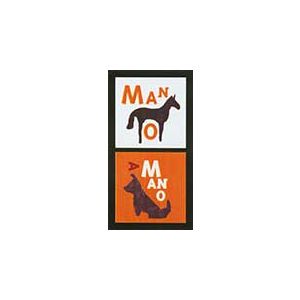
| Mano a Mano La Mancha | 1 Red 1 White; 2 Reds |
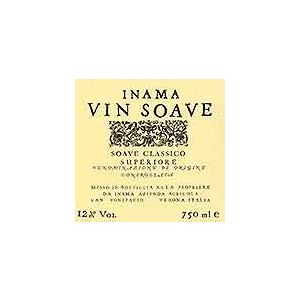
| Inama Soave Classico | 1 Red 1 White; 2 Whites |
| Savannah-Chanelle Santa Cruz Pinot Noir | 2 Reds |
| Lusco Rias Baixas Albarino | 2 Whites |
Master Series |
|
Featured Wineries & Wines |
Membership Type |
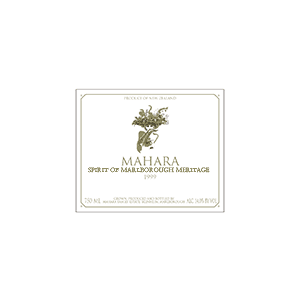
| Mahara "Spirit of Marlborough" Meritage | 1 Red 1 White; 2 Reds |
| Inama Soave Classico | 1 Red 1 White |
| Savannah-Chanelle Santa Cruz Pinot Noir | 2 Reds |
Collector Series
|
|
Featured Wineries & Wines
|
Membership Type
|
| Mahara "Spirit of Marlborough" Meritage | 1 Red 1 White; 2 Reds |
| Mahara Marlborough Chardonnay | 1 Red 1 White |
| Savannah-Chanelle Santa Cruz Mountains Cabernet Franc | 2 Reds |
Mano a Mano La Mancha 2004 - Spain
Don Quixote and the Broadway musical The Man of La Mancha have certainly been more popular abroad than the wines of La Mancha have ever been, at least until now. Mano a Mano is the personal project of Jorge Ordonez, the leading importer of Spanish wines in the United States, and for the last several years Mano a Mano has been playing to critical and popular acclaim. Everything about Mano a Mano reflects Ordonez's natural hands on approach to winemaking as the name implies. Even the label for Mano a Mano was originally hand drawn by Jorge Ordonez's children. Most importantly, Mano a Mano has put La Mancha back on the serious wine drinker's viticultural map.
The Mano a Mano winery is located on the best terroir of La Mancha. This estate's award winning wine is a 100% varietal, all from old Tempranillo vines averaging more than 40 years of age. In just a few short years Jorge Ordonez has fashioned Mano a Mano into La Mancha's flagship wine.
Jorge Ordonez
Jorge Ordonez is the most influential name in Spanish wine. From virtual obscurity in 1987, Ordonez has risen to the position of guardian, prophet, and zealot all in the name of Spanish wines. He has advanced and revolutionized the Spanish wine industry in all respects. Moreover, he has educated and introduced Americans to a treasure trove of fine Spanish wines.
When he started his quest in 1987, the then 27-year-old Jorge Ordonez was a voice in the wilderness. Two decades ago, the quality and variety of Spanish wines for export had become nothing short of dismal. Spanish wine sales lagged far behind that of France, Italy, and California and overall quality was variable at best. By the force of his dynamic, visionary personality and sheer hard work, Ordonez has brought fine Spanish wines to the forefront of American wine drinking. At the same time, the now 45-year-old Ordonez has improved the overall quality and consistency of Spanish wines. Presently, he oversees an amazing portfolio of 130 Spanish wines from 40 different wineries. His name on a bottle of Spanish wine is as close to a seal of quality as one can find, simply because "When nobody cared about Spanish wines," Ordonez proclaims, "I was there."
Robert Parker, Jr., the influential wine critic, has twice named Jorge Ordonez Wine Personality of the Year. Others have dubbed this remarkable man, the best friend Spanish wine ever had; while still others claim that Ordonez has provided the impetus for the present renaissance in Spanish wines. Indeed, this is the Siglo d'Oro or Golden Age of Spanish wine, thanks in large part to Jorge Ordonez and a few other like minded visionaries.
Tasting Notes: A highly aromatic wine from 100 % old vine Tempranillo grapes, the 2004 Mano a Mano is a knockout offering. It hails from the premier terroir of La Mancha and this handcrafted dandy certainly lives up to its name as well as its pedigree. Extremely deep in color, the 2004 Mano a Mano displays a gorgeously seductive nose that captivates from beginning to end. Aromas of black fruits, bacon fat, crushed cassis, and licorice tantalize the nose, and that's just the opening act. Better still, the amplifying olfactory carries through on the palate, offering up super ripe, concentrated flavors that are nothing short of totally satisfying. In addition, this seductive Tempranillo is imbued with a silky soft texture, balanced ripe tannins, and a long satisfying finish that lasts long after the wine has glided down the gullet. In short, this is the kind of wine we would love to drink every night. Moreover, Mano a Mano is testimony to just how good the red wines of La Mancha can be from low yielding old vines, especially in the hands of an expert winemaker. We suggest drinking this very fine Spanish dandy at cool room temperature (no more than 66 degrees F), after at least a half hour or more of breathing time. Salud!
Accompaniments: The 2004 Mano a Mano is the kind of wine that makes ordinary mid week meals shine and fancy fare taste like a veritable feast. Meat, cheese, potatoes, even complex sauces are all good bets with this delightful wine of La Mancha. We recommend it highly with prime rib of beef, meatloaf, pork chops, and almost any young, cow's milk cheese. The Mano a Mano is the kind of red wine that cuts through the fat in foods and gives the heart assurance, even as the plate of mashed potatoes and the tray of gravy make their way around to your side of the table. In short, the Mano a Mano is a stalwart wine with a heart as well as a soul, and it is these attributes that make it rise as easily to the finer attempts at the culinary arts as to the simple pleasures of country cooking. So whether dinner is Chateaubriand or Zucchini Pie, Rack of Lamb or Hamburger Surprise, the 2004 Mano a Mano is a pleasure to drink. Enjoy!
For the Love of Cheese: Youthful reds such as the 2004 Mano a Mano make ideal accompaniments to the world's finest gourmet cheeses. Full flavored cheeses such as Roncal from Spain's Navarra region or a French Pont L'Eveque from Normandy offer just the right amount of flavor and youthful exuberance to complement the Mano a Mano. Roncal is a personal favorite that we believe deserves to be better known in the United States. It is a cheese whose origin dates to 882 A.D. when King Sancho Garcia bestowed special grazing rights upon the shepherds of Navarra's Roncal Valley. Roncal's rich olive like flavor provides an excellent companion to the old vines Tempranillo of the Mano a Mano. For more information on outstanding gourmet cheese and wine selections or to order a monthly subscription to In Pursuit of Cheese, contact us at www.cheesemonthclub.com to enjoy the best of both worlds.
Inama Soave Classico 2004 - Italy
Inama has emerged as the leading estate producer of Soave Classico; no mean feat in light of the size and stature of the vast Soave DOC, whose monolithic production of white wine ranks it as Italy's most prolific. As such Inama constitutes a real anomaly in Soave. It was founded as an azienda agricola (a private estate that grows and produces its own wine) by Giuseppe Inama in the 1960's at a time when most Soave grape growers were small farmers looking only to sell their grapes to large commercial ventures such as Bolla or Folonari. Very few Soave growers then, or now for that matter, made any wine for commercial sale let alone estate bottled their entire production like Inama. And unlike the multitude of Soave growers, or even the few bona fide estate producers of Soave, the Inama Azienda Agricola vineyard is located almost exclusively on a single sight, Monte Foscarino, the premier vineyard site in all Soave Classico.
Located in the heart of Soave Classico, Inama comprises approximately sixty-six acres. At Inama, the emphasis is strictly on the production of premium and super premium white wines, all of which spring from the appellation's ancient volcanic soils. Inama's most famous wine is its outstanding Soave Classico, which garners consistently high praise from the world's wine critics and trade publications. However, few consumers know that this premier producer also fashions small quantities of an exquisite single vineyard Soave Classico labeled Vigneti di Foscarino. Vigneti di Foscarino sits alone atop the zone's pinnacle of quality, literally and figuratively, and redefines the quality quotient for all Soave Classico. Vigneti di Foscarino hails from the best part of the Monte Foscarino vineyard and is handled separately from the rest of the estate's production. It is perhaps more reminiscent of a single vineyard Pouilly-Fuissé than traditional Soave Classico. Nevertheless, the Vigneti di Foscarino, like all of Inama's wines, exudes the redolence of fresh cut flowers. It also possesses a distinctive minerality on the palate that adds charm as well as complexity to the wine's long spate of flavors. And like the estate's excellent estate bottled Soave Classico, Vigneti di Foscarino is made from the local Garganega grape that is unique to Soave.
In addition to cultivating and fashioning Soave's most famous Garganega wines, the Azienda Agricola Inama also grows small quantities of Chardonnay and Sauvignon Blanc, which it, too, crafts into wines of distinction. All of Inama's wines are made in the estate's modern winery. However, Inama himself is a minimal interventionalist who believes strongly in the adage "less is more." As much as possible, the natural process prevails at Inama, with only the bare minimum of fining and filtration ever being employed. The result is a bevy of balanced, highly aromatic wines that exude great charm as well as intensity.
Tasting Notes: The 2004 Inama Soave Classico is the finest Soave Classico this excellent estate has produced to date. Most assuredly, Inama has once again proven its prowess and redeemed the reputation of the entire zone with its 2004 offering. In short, the 2004 Inama is Soave Classico at its very finest: delicate, flavorful, pure, and vital. From the very first glimpse of its bright sunny robe to its long, mineral rich finish, the 2004 Inama Soave shines like the sun and sets the standard for all other Soave Classico. Spring flowers, soft alpine breezes, gentle fruit, and the radiant light of nearby Lago di Garda (Lake Garda) all come together in the scent and flavor of the 2004 Inama Soave Classico. In essence, this Soave Classico is the quintessential terroir wine. It reflects the delicate nature of the Garganega grape as much as it mirrors the soil, climate, and sheltered Alpine environment from whence it comes. Moreover, its charm, elegance, and sophistication are all that one can ask, and more, from a white wine. Although some may prefer this wine only barely chilled, we suggest chilling the 2004 Inama Soave Classico to 45 degrees F or less, before allowing it to unfold in the glass. As quaffable as this wine is, it also exhibits subtle charm and a fervent charisma, which befits its status in the Veneto as a white wine to savor.
Accompaniments: The 2004 Inama Soave Classico could offer lessons on what it takes to be the quintessential aperitif. Its subtlety, charm, and ethereal lightness make it slide easily down the throat, while it simultaneously and rather surreptitiously begs the brain for more. Nonetheless, we enjoy this wonderful Soave as much, or more, with food. Delicate white fish from both fresh and salt water provide outstanding accompaniments. In particular, trout, perch, and flounder provide ideal backdrops with which to highlight the 2004 Inama Soave Classico. Chilled shrimp with an herb mayonnaise or light remoulade, light hors d'oeuvres, smoked salmon with capers, caviar, and soft ripe cows' cheeses provide other favorite accompaniments. Mild sheep and goats' cheeses offer flavorful accompaniments, too. Enjoy!Savannah-Chanelle Vineyards Santa Cruz Pinot Noir 2002 - USA
Savannah-Chanelle Vineyards is a landmark winery south of San Francisco Bay along California's historic Chaine d'Or or Golden Chain. Nestled in the Santa Cruz Mountains, high above Silicon Valley, this historic property has been home to friends, family, and some of California's most exciting wines since its founding in 1892 by French immigrant Pierre Pourroy.
Located just over three miles from the village of Saratoga, the present owners (the Ballard family) continue the celebrated history and the viticultural legacy that was born on this site more than a century ago. Purchased in 1996 by Michael and Kellie Ballard, this turn of the century estate now bears the name of the Ballards' two daughters. The present winery occupies 58 acres, only 15 of which are under cultivation. From a mere 15 acres flow five award winning varietals: Chardonnay, Carignane, Cabernet Franc, Pinot Noir, and Zinfandel. The property's Zinfandel vines date to 1910, while Savannah-Chanelle's historic Cabernet Franc plantings hale from 1920, making them the oldest Cabernet Franc plantings in California. Needless to say, each of this estate's intensely individual wines is strictly limited and highly allocated.
Pinot Noir remains Savannah-Chanelle's raison d'etre, despite its other outstanding old vine varietals. Michael Ballard and Winemaker Anthony Craig make a formidable team that is bent on turning Savannah-Chanelle into a Pinot Noir house that is second to none. In Michael Ballard's own words: "We are obsessed by Pinot Noir ... we have launched a program to create the finest examples of California Pinot Noir by drawing grapes from the best Pinot-growing areas in the state, among them the Sonoma Coast and the Santa Lucia Highlands. We have also planted a new Pinot Noir vineyard just above our tasting room." Given the passion for Pinot at this estate, it should then come as no surprise that 80 percent of Savannah-Chanelle's entire production is small lots of delicious Pinot Noir. Bottled un-fined and loosely filtered, each and every bottle emanates the elegance and supreme balance of Pinot Noir, the planet's most finicky and ultimately most enjoyable grape varietal.
Tasting Notes: Soft, silky, and downright huggable, the 2002 Savannah-Chanelle Santa Cruz Pinot Noir provides ample testimony to the estate's commitment to fashioning top notch Pinot Noir. Medium-bodied and regally attired in a ruby-colored robe, this enticing Pinot Noir offers up an array of scents and savors to make the most hardened Burgundy fanatic drool with pleasure. With just a minimum of aeration, the 2002 Savannah-Chanelle Santa Cruz Pinot Noir reveals plenty of strawberry fruit and oriental spice, which appear to be the collective calling card of all outstanding Pinot Noirs - whether they are from Burgundy or elsewhere. Soft, round and supple on the palate, the Savannah-Chanelle fills the senses; yet, it finishes with consummate grace. Moreover, it continues to improve in the glass for hours after opening. We suggest serving this delightful Pinot Noir somewhere between cellar temperature and cool room temperature (55 degrees -65 degrees F). And like most Pinot Noir wines, the 2002 Santa Cruz from Savannah-Chanelle can be enjoyed straight away, but we must confess that the longer we allowed it to breathe, the more complex and ethereal it became.
Accompaniments: The 2002 Savannah-Chanelle Santa Cruz Pinot Noir is positively delightful on its own, but a number of well-prepared dishes will certainly enhance one's enjoyment of this wine. Built in a serious Beaune-style of Pinot Noir, this 2002 Savannah-Chanelle is a natural backdrop for classic Burgundian cooking. Coq au Vin, Quiche Lorraine, and roasted pork tenderloin, served with brandied apples, caramelized onions, or other savory condiments, provide proof of the adage that fine wine is even finer with food. Salmon and tuna recipes, bar those that feature hot or exotic sauces, provide additional enjoyment when paired with this classic Pinot Noir. On the lighter side, one might consider an old European favorite, which calls for completing a meal with a dish of fresh ripe strawberries in the company of the final glass of Burgundy or first rate Pinot Noir. What a delightful finale this duo makes. Salut!
Lusco Rias Baixas Albarino 2004 - Spain
Lusco is the passion of Jose Antonio Lopez, the most important figure in the Rias Baixas. For more than two decades, Jose Antonio has been the "Superman" behind the resurrection of the once nearly extinct Albarino varietal and the leading champion of the entire Rias Baixas appellation of Galicia, which lies along the lofty ridges of Spain's verdant northwest corner.
Jose Antonio began the revival of Galicia's fabled Albarino varietal some two decades ago as founder and managing partner of the Morgadio estate. There he succeeded in recalling an obscure viticultural region to worldwide awareness by creating dry, fully ripe Albarino wines, which critics have likened to Viognier, southern France's most expensive and compelling white wine.
In order create the ultimate Albarino - very dry, exotic, intense and wholly unique - Jose Antonio struck out on his own in 1996 with the acquisition of the renowned, mature twelve-acre, southeast-facing Albarino vineyard of Pazo Pineiro. Along with the acquisition of the region's most notable vineyard, Jose Antonio, also, purchased the nearby 16th century manor house (Pazo), whose meter-thick walls provide ideal insulation against temperature extremes, to serve as his winery. Lusco, from the Galician word for the pensive moments of anticipation and reflection just before dawn and dusk, presently produces the most riveting of all Albarino wines.
Tasting Notes: The 2004 vintage in Galicia was a normal, healthy one, devoid of the intense wilting heat of 2003 or the rain soaked dampness of 2002. Consequently, the 2004 Lusco Rias Baixas Albarino is a classic Albarino and a textbook example of this estate's and the Rias Baixas' most illustrious white wine. The 2004 Lusco recalls the essence of spring, when the first breathe of warm vernal air begins to dispel winter's chill. Thus, the 2004 Lusco offers up delicately perfumed scents of forsythia, pear, and wild flowers, all of which tantalize the nose and rouse the soul to the annual awakening. Indeed, the scent of this beguiling Albarino is as seductive as its flavor, which recalls a hardy draught from a cold mountain spring unto which flower petals and citrus blossoms have secretly fallen. However, what is, perhaps, most impressive about the 2004 Lusco Albarino is how well it drinks now. Still in its infancy, this Albarino will improve further for at least two more years. In short, the 2004 Lusco Albarino is a white wine to dispel the outmoded notion that Spain only makes great red wines. We suggest you consume this sophisticated Albarino only moderately chilled (about 45 degrees F) in order to revel fully in the viticultural glory of Spain.
Accompaniments: Fresh fish and the finest fruits de mer provide excellent accompaniments to the 2004 Lusco Albarino. Given Lusco's strong personality and considerable underpinning, we highly recommend it as an accompaniment to spicy fish stoups, bouillabaisse, cioppino, and other tomato based Mediterranean style fish stews. Presently, sautéed shrimp in a fresh, moderately spiced tomato sauce tops our list of prime companions to the 2004 Lusco Albarino. However, most baked, grilled, or sautéed white fish, seafood kebobs or chowders offer considerable enjoyment in the company of the well bred 2004 Lusco Albarino. This is a wine that begs for interesting and intriguing dishes to truly shine. In fact, Albarino is rarely relied upon as a sit around and sip kind of wine. It is at its best with robust foods, even spicy hard to match selections, because it is difficult to overshadow. Eclectic cuisine and fusion fare provide equally exciting complements, too. So, be bold, be daring and enjoy the gustatory adventure that Lusco provides. Enjoy!
Mahara "Spirit of Marlborough" Meritage1999 - New Zealand
A walk through Hans and Theresa Herzog's meticulously tended Wairau vineyard is akin to a stroll in paradise. Lofty green mountains hover above the fruited vineyard that recalls both the Garden of Eden and the idyll expressed on a Watteau canvas. Without seeming out of step, the Herzogs' Mahara Winery combines the best of the natural world with the civility and comfort of old world charm. Located at the end of Jeffries Lane in one of Marlborough's more temperate locales, the Mahara Winery is simply the finest vineyard in Marlborough, and more; it is, also, New Zealand's best restaurant.
Unquestionably, Hans Herzog is the maestro behind the artistry at this exceptional estate. Descended from one of Switzerland's most renowned families (not to be confused with the Baron Herzog label, purveyors of inexpensive kosher wines, who sadly have blocked Hans Herzog from ever selling wine in the United States again under his rightful name. Hans Herzog's family has proudly carried their surname for more than 500 years, but the Baron Herzog group has recently claimed legal right to the Herzog brand name under US law and they are preventing Hans Herzog from using his name on the label. The Mahara Winery was formerly known as Herzog. What is truly ironic in all this is that Hans Herzog is the real baron. So much for justice!)
Hans Herzog was once the proprietor of Zurich's most fashionable restaurant. Today, he and his wife Therese hold court at the small intimate restaurant on the Mahara property, which is actually part of their home. However, this is no rustic little affair. The Herzog Luxury Restaurant is an impeccably appointed temple of gastronomy that serves artfully prepared cuisine and equally impressive wines. This is the place to dine in New Zealand. "An epicurean heaven," is how one critic described the Herzog restaurant. And "I really can't recommend the restaurant too highly... without a doubt it offers the finest dining in New Zealand," is how Wine and Food critic James Halliday describes it. And then there is the wine.
Hans Herzog is a master in the cellar as well as in the kitchen. His small, impeccably clean and well-appointed winery draws attention to its master. In fact, the Mahara Winery resembles more the atelier of an artist or master craftsman than it does a modern winery; testimony to the very hands on approach Hans takes to his wines and the passion with which he approaches wine - his labor of love.
An experienced wine maker, Hans Herzog has made wine for nearly thirty-five years. He is renowned for practicing only sustainable methods of viticulture and intentionally limiting vineyard yields, which are purported to be the lowest per vine in Marlborough. His high-density planted vineyard comprises only ten hectares (22 acres), but is packed with nine different varietals: Pinot Gris, Chardonnay, Viognier, Montepulciano, Pinot Noir, Merlot, Cabernet Sauvignon, Cabernet Franc, and Malbec. In all, six different wines are made at Mahara, and each is more intense and profound than the next. However, the estate's meritage blend Spirit of Marlborough is, perhaps, the best known internationally. It is neither fined nor filtered and is the equal of many a great Pomerol.
Tasting Notes: New Zealand's rendition of Classified Bordeaux, the 1999 Mahara Spirit of Marlborough Merlot (60%), Cabernet Franc (15%), Cabernet Sauvignon (15%), Malbec (10%), né Meritage is, perhaps, the fullest, most concentrated wine we have ever tasted from New Zealand. More importantly, it is, also, one of the purest, most delicious wines we have had the pleasure to drink, from anywhere. And better still, Hans Herzog's flagship wine is just beginning to come of age. Thanks to the expert élèvage of Hans Herzog, this full-bodied Bordeaux style wine has many long years ahead of it, but is it oh so good already! A deep purple robe and gobs of fruit, tempered with hints of blackberry and cassis, a touch of the good earth, and the sunshine of the Wairau Valley, shine through this wine, rendering its glossy, Pomerol like format simply irresistible. Destined for greatness, it is almost a shame to drink this wine at such a tender age, except it tastes so good now. From the moment the cork leaves the bottle, the 1999 Mahara Spirit of Marlborough is ready to drink, with fruit and tannin playing a two-part harmony. Yet, the wine continues to unfold in the glass for hours - a sure sign of so many more good things to come. Enjoy!
Accompaniments: A Standing Rib Roast, Loin Lamb Chops, or just enough time to savor the day provide the best accompaniments for the 1999 Marhara Spirit of Marlborough. This is not a wine to rush through. Like its creator, Hans Herzog, the Mahara Spirit of Marlborough is an entity that takes time to get to know, but once the relationship has been established, it is hard to imagine life without the presence. Hence, we suggest that time be a prerequisite for the enjoyment of this remarkable offering. With or without food, there is enough balance, flavor, texture, and bottle age in the Mahara Spirit of Marlborough to charm a hound off a covey of birds. Surely, if food is going to play a role here, it should be simple but very elegant. Hence, we suggest sticking to traditional French cuisine and other time-honored classics. Bon Appetit!
Mahara Marlborough Chardonnay 2002 - New Zealand
Hans Herzog has made wine for nearly thirty-five years, but the Mahara Family Vineyard is the culmination of this brilliant winemaker's many outstanding viticultural accomplishments. A walk through Hans and Theresa Herzog's meticulously tended Wairau vineyard is akin to a stroll in paradise. Lofty green mountains hover above the fruited vineyard that recalls both the Garden of Eden and the idyll expressed on a Watteau canvas. Without seeming out of step, the Mahara Winery combines the best of the natural world with the civility and comfort of old world charm. Located at the end of Jeffries Lane in one of Marlborough's more temperate locales, Herzog's Mahara Winery is simply the finest vineyard in Marlborough, and more; it is also home to New Zealand's best restaurant.
The meticulous Herzog is renowned for practicing only sustainable methods of viticulture and intentionally limiting vineyard yields, which are purported to be the lowest per vine in Marlborough. His high-density planted vineyard comprises only ten hectares (22 acres), but is packed with nine different varietals: Pinot Gris, Chardonnay, Viognier, Montepulciano, Pinot Noir, Merlot, Cabernet Sauvignon, Cabernet Franc, and Malbec. In all, six different wines are made at Mahara, and each is more intense and profound than the next. The estate's Chardonnay and meritage blend Spirit of Marlborough are, perhaps, the best known internationally. Herzog's Mahara Chardonnay rivals the finest white Burgundies, while the unfined unfiltered Spirit of Marlborough is the equal of many a great Pomerol from Bordeaux.
Marlborough: A Noble LandMarlborough is situated on the northern tip of New Zealand's mystical South Island, where it enjoys a unique dry maritime climate. High mountains isolate this enchanted land from the cold alpine interior of the rest of the South Island, while the spectacular Marlborough Sound to the north provides a conduit to the sea as well as the planet's most majestic view of New Zealand's North Island as it soars skyward across the swells of Wellington Straits - a sight that ranks as one of the world's most stunning vistas. Moreover, Marlborough is about as close to viticultural paradise as one can find, especially for Chardonnay and Sauvignon Blanc.
Marlborough's long, sunny, but not excessively hot growing season provides nearly ideal conditions for grape growing. The average summer daytime temperature hovers between 24 degrees C and 28 degrees C (72 degrees - 80 degrees F) depending upon one's altitude and proximity to the sea. The air is crystal clear and the light luminous; with nary an overcast day let alone much rain during the long growing season. Cool nights keep acid levels high in the grapes, even as sugar levels rise abruptly. Such conditions lend themselves to an extended growing season, which provide slow even ripening and extended hang time for the grapes. The result is ripe healthy fruit, with fresh vibrant flavors and a crisp herbaceous zing.
In addition to its superb summer climate, Marlborough also boasts excellent soil for grapes. Most of Marlborough consists of silty, free draining alluvial loams over gravelly sub-soils. In addition, river stones lie scattered throughout Marlborough, remnants of the many rivers that once coursed through the pretty valleys of Marlborough. These river stones store heat from the warm sunny days and radiate that heat back into the vineyards at night, thereby providing a unique microclimate and terroir, much like that of Châteauneuf-du-Pape. Moreover, most Marlborough growers are committed to sustainable agricultural practices in order to preserve the region's noble terroir. And the French thought they had a monopoly on terroir; we think not.
Tasting Notes: A no holes barred, spare no expense Chardonnay, the 2002 Mahara Chardonnay has been called "The ultimate Chardonnay"... "A Chardonnay for people who really don't like Chardonnay anymore or are just plain sick and tired of the hegemony of oak".... And "The finest white wine we have encountered in a good long while," and that about sums it up. More aromatic and complex than most Chardonnays, this full-bodied white acts like a red and has a flavor profile all its own. Built to last in the Burgundy tradition (whole bunch pressing, barrel fermentation, and a year in seasoned French barriques), the 2002 Mahara Chardonnay oozes with the scent of melted butter and is infused with floral tones and spring flowers for added pleasure and complexity. Each sniff reveals another enchanting tone. Although rich and fulfilling in the mouth, the Mahara Chardonnay is exquisitely textured and balanced; all components work in harmony, including the oak, which reveals itself in touches of butterscotch and vanilla. Long, dry, and haunting on the finish, Hans Herzog's 2002 Mahara Chardonnay needs to be savored and not guzzled. Considering the depth and elegance of this wine, we suggest that the 2002 Mahara Chardonnay not be drunk overly chilled (about 45 degrees - 50 degrees F) for optimum enjoyment.
Accompaniments: "Classic wines deserve classic dishes," states the age-old adage. And on this account, Hans and Therese Herzog would agree. Consequently, the 2002 Mahara Marlborough Chardonnay deserves better than your average mid week fare, so French classics are the proprietor's choice in this case. Our premier suggestion then is pairing the Mahara Chardonnay with a classic French Escalopes de Veau (Sautéed Veal Scallops in mushrooms and cream). Also, almost any cream based Suprême de Volaille (Chicken Breasts in a cream or cheese based sauce with fresh vegetables) would be excellent as well. Coquilles St. Jacques provides another golden opportunity as does Poached Salmon. Many soft French and Swiss cheeses offer other fine opportunities. Authentic Bucheron from France and Raclette form Switzerland are especially noteworthy with this wine. Bon Appetit!
Savannah-Chanelle Vineyards Santa Cruz Mountains Cabernet Franc 2002 - USA
Savannah-Chanelle Vineyards is a landmark winery south of San Francisco Bay along California's historic Chaine d'Or or Golden Chain. Nestled in the Santa Cruz Mountains, high above Silicon Valley, this historic property has been home to friends, family, and some of California's most exciting wines since its founding in 1892 by French immigrant Pierre Pourroy.
Located just over three miles from the village of Saratoga, the present owners (the Ballard family) continue the celebrated history and the viticultural legacy that was born on this site more than a century ago. Purchased in 1996 by Michael and Kellie Ballard, this turn of the century estate now bears the name of the Ballards' two daughters. The present winery occupies 58 acres, only 15 of which are under cultivation. From a mere 15 acres flow five award winning varietals: Chardonnay, Carignane, Cabernet Franc, Pinot Noir, and Zinfandel. The property's Zinfandel vines date to 1910, while Savannah-Chanelle's historic Cabernet Franc plantings hale from 1920, making them the oldest Cabernet Franc plantings in California. Needless to say, each of this estate's intensely individual wines is strictly limited and highly allocated.
Although Pinot Noir now constitutes the primary focus of Savannah-Chanelle's red wine production, the winery's estate bottled Cabernet Franc from ancient vines remains its most expensive and intriguing offering. Like all of Savannah-Chanelle's red wines, the estate bottled Cabernet Franc is bottled un-fined and loosely filtered. Moreover, it makes a riotous statement; almost from the moment the cork exits the bottle.
Tasting Notes: Wow! The 2002 Savannah-Chanelle Santa Cruz Cabernet Franc is a huge staggering statement. It is a monolithic wine that could only have been made from very old hillside vines whose yields are low. This wine must top out at 15º alcohol or more, but there is much more to this wine than sheer power. True to its varietal, it is profoundly rich in color, deep, dark, and foreboding. However, it is also very aromatic and loaded with flavor. Ripe berry fruits, kirsch, and coffee tones all leap from the glass. And on the palate the 2002 Savannah-Chanelle Cabernet Franc is positively mind-boggling. It is as big and flavorful as one can imagine. To put it mildly, the 2002 Savannah-Chanelle Cabernet Franc is no delicate, wisp of a red, nor is it likely to leave even the most stalwart red wine drinker wanting. Enjoy this legendary Cabernet Franc anywhere between cellar temperature and moderate room temperature (55º-68º F), after a bit of aeration.
Accompaniments: The 2002 Savannah-Chanelle Cabernet Franc makes an outstanding companion to hearty, stick to your ribs kinds of foods and those difficult to pair dishes that defy more diminutive wines. Considering the size and stature of the 2002 Savannah-Chanelle Santa Cruz Cabernet Franc, we heartily endorse serving this colossus with Texas Barbecue, Irish Lamb Stew, or even full flavored cheeses. This is a wine to cut through the fat and open up the arteries, so a little herb, spice, or savory is not apt to hinder its performance. In short, the Savannah-Chanelle Cabernet Franc is the perfect wine to pair with heavy or slightly piquant sauces. So fire up the grill, put on the steaks, and slather on the sauce, the 2002 Savannah-Chanelle Cabernet Franc is ready to stand and deliver. Enjoy!