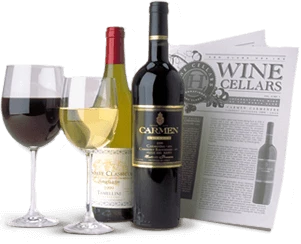
Welcome to The International wine of the Month Club

Featured Wines

May 2006

Premier Series
Featured Wineries & Wines
Membership Type
De Angelis Lacrima Christi Rosso 1 Red 1 White; 2 Reds
Undurraga Chardonnay Reserva 1 Red 1 White; 2 Whites
Chateau La Rose Tour Blanche Bordeaux 2 Reds
Il Palazzone Orvieto Classico 2 Whites


Master Series
Featured Wineries & Wines
Membership Type
Girardin Santenay Premier Cru 1 Red 1 White; 2 Reds
Undurraga Chardonnay Reserva 1 Red 1 White
De Angelis Lacrima Christi Rosso 2 Reds


Collector Series
Featured Wineries & Wines
Membership Type
Girardin Santenay Premier Cru 1 Red 1 White; 2 Reds
Georg Breuer Rudesheim Estate Riesling 1 Red 1 White
Hewitson The Mad Hatter Shiraz 2 Reds

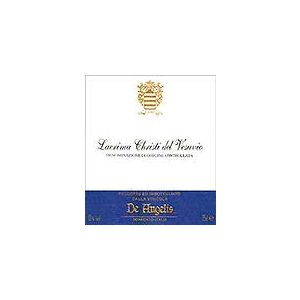
De Angelis Rosso Lacrima Christi del Vesuvio 2004 – Italy

De Angelis Rosso Lacrima Christi del Vesuvio 2004 – ItalyThe De Angelis brothers have quickly become the leading purveyors of excellent Lacrima Christi wines, and with good reason.  They are one of a mere handful of Lacrima Christi producers whose wines actually match their breathtaking location.  Located on the foothills of Mount Vesuvius, bordering majestic Sorrento Bay, the Azienda Agricola De Angelis overlooks the prettiest part of the Campania.  The Campania Felix, meaning the “joyous country” or the “face with an open smile,” is the ancient province of the Roman Empire that sits just south of Rome and neighboring Latium.  Like its name implies, this region produces friendly, gregarious wines, and none is more exemplary of the good nature and open character of the land and people of the Campania than the De Angelis Rosso Lacrima Christi.

The estate’s owners, the DeAngelis Brothers, typify the unparalleled character of their enchanted region.   From barely twenty acres of hillside vineyards they produce, with the help of Oenologist Angelo Valentino, the two mythical wines of Sorrento:  Rosso Lacrima Christi and Bianco Lacrima Christi.  Lacrima Christi means “tears of Christ,” and as legend has it the wines of this area of Vesuvius were so named because here, it is said, that Lucifer was cast out of heaven, causing Christ to weep. 

The Rosso Lacrima is the result of the marriage of the local Piedirosso grape to the legendary Aglianico, one of the ancient grape varietals that the Greeks brought to southern Italy more than 2500 years ago.  Meanwhile, the Rosso’s fraternal twin, the Bianco Lacrima Christi, is the product of two other native varietals, Coda di Volpe and Falanghina, which produce a fine, fragrant white wine that is prized as much for its full, rich savor as it is for its uncanny facility to accompany the delightful fish dishes of Sorrento and nearby Amalfi.   

Tasting Notes:  The De Angelis brothers are known for their richly robed, decadent style of Lacrima Christi, but the glorious 2004 De Angelis Rosso Lacrima Christi del Vesuvio is without a doubt the brothers’ finest effort to date.  It offers a veritable feast for the senses, beginning with a deep black cherry colored robe and a haunting bouquet.  The nose comes across as an infusion of pure black fruits, summer berries, plum and cedar, which deftly move onto the palate.  With each sip, the De Angelis Rosso Lacrima Christi continues to reveal its fleshy sensual side by offering up plenty of forward fruit, tender softness, and tactile pleasure.  Yet, beneath this wine’s overt opulence lies excellent structure in the form of soft ripe tannins and subtle spice, which both define and frame the wine’s forward fruit.  And if all this goodness is not sufficient, the glorious 2004 De Angelis Lacrima Christi astounds with a pleasantly dry, spicy finish that persists long after the wine has been consumed. We advise allowing this Lacrima Christi at least fifteen minutes of breathing time before serving.  And as with most reds, we prefer drinking the 2004 De Angelis Lacrima Christi somewhere between cellar and cool room temperature (60°-66° F).  Enjoy!

Accompaniments:  Simple regional fare and country cooking from southern Italy provide a wealth of outstanding accompaniments to the 2004 De Angelis Rosso Lacrima Christi.  Most notable among these complements is an authentic cioppino, southern Italy’s rendition of bouillabaisse or fish soup.  Other winning pairings include shrimp or lobster Fra Diavolo, linguine with red clam sauce, and even a simple hardy marinara with penne pasta, thick country bread and shaved Parmesan or Romano cheese.  Brick oven baked pizzas, Eggplant Parmigiana or Eggplant Rollini, grilled sweet or hot Italian sausage, Veal Sorrentino, and thick, spicy, homemade lentil or minestrone soups provide other fine accompaniments.  Other tasty companions for the 2004 De Angelis Lacrima Christi include a tomato and fresh buffalo Mozzarella salad or vegetarian lasagna.  If southern Italian favorites are off the menu, we suggest you fire up the grill, put on a good old-fashioned USDA prime or choice rib-eye steak, and serve it with finely whipped garlic mashed potatoes and sautéed green beans.  However, as ripe and succulent as the 2004 De Angelis Lacrima Christi del Vesuvio is, it can stand solidly on its own, without food. It is the rare Italian red that tastes as good au natural as it does with food.  Buon Appetito!

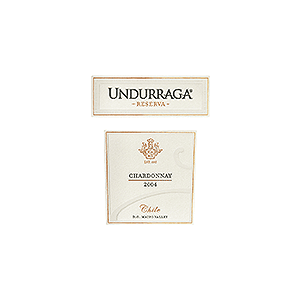
Undurraga Chardonnay Reserva 2004 – Chile

Undurraga Chardonnay Reserva 2004 – ChileVina Undurraga was founded back in 1882 by Francisco Undurraga and since that time five generations of the Undurraga family have successfully managed the winery, maintaining the spirit and Old World character of the founder.  However, for this writer a visit to Vina Undurraga is more than a step back in time; it is an interlude in the Old World, a visit to a time and place where gentility, grace, and good manners predominate.  Furthermore, a day spent at this attractive estate, a mere 20 miles from Santiago, constitutes the culmination of a personal quest and the fulfillment of a sort of pilgrimage.  Yet, my interest in Undurraga and Chilean wine in general began after what seemed like a chance encounter.

This story really begins with the very first exceptional bottle of Chilean wine I had ever drunk.  It was a well aged Cabernet from Undurraga that would now be eligible for Medicare, but at the time what many considered to be a “lowly” Chilean red put to shame in a formal tasting many much more expensive classified Bordeaux – to the horror of more than a few wine snobs.  However, the true irony of all this is that the bottle of Undurraga Cabernet in question was about to be discarded by a wine shop owner who had assumed that its contents would be over the hill, dead and buried, if indeed they had ever been any good at all.

Three decades ago when I encountered the unassuming Undurraga Cabernet, Chilean wine in the United States was a rarity.  Moreover, fine Chilean wine in the 1970’s was considered by most “serious” wine drinkers to be an oxymoron or an anomaly at best.  Chilean wine was thought to be cheap and adequate – nothing more. And who ever thought it could age?  Needless to say what ventured forth from the bottle in question that day was neither cheap nor ordinary, and it had aged beautifully.  The label and price may have been less than awe inspiring, but the contents of the bottle were top notch.  This experience convinced me, and quite few others, that fateful day of the truth of the maxim:  You can never drink a label or a price tag, only the contents of a bottle.  This encounter also instilled in me the desire to see the place that had spawned such wine and meet the good people that placed pearls inside lowly shells:  hence, a recent visit to Undurraga and the fulfillment of a promise.

Today, Undurraga produces a wide variety of premium wines, only some of which are readily available outside of Chile.  Red wines, comprised of Cabernet Sauvignon, Carmenere, Merlot, and Pinot Noir still constitute the lion share of production at Undurraga as they do at most prestigious Chilean wineries, but the quality of Undurraga’s white wines is now on par with its reds.  The firm’s Chardonnay Reserva is a particular standout, but the Sauvignon Blanc and Late Harvest Semillon are exceptional as well.  However, Undurraga’s most notable single offering remains its outstanding luxury proprietary red called Founder’s Collection, which is named of course in honor of Francisco Undurraga – the firm’s founder.  Undurraga’s Founder’s Collection is one of South America’s most expensive and sought after wines.

The panel’s recent visit to Vina Undurraga was as pleasant as my first encounter with this estate’s ancient Cabernet.  Truly, Undurraga possesses a striking winery, set in a park like atmosphere.  Even on a rainy day, Vina Undurraga is stunningly beautiful.  Moreover, we were all elated to see how far Chilean producers have come in the last thirty years and Undurraga in particular as it mirrors Chile’s meteoric rise in quality, without losing its Old World charm.  In fact, it is hard to imagine that the wines from Vina Undurraga have ever been better.  Today, Undurraga remains one of Chile’s top wine estates, and with good reason: the wines they make are as charming and delightful as the people who make them.

Tasting Notes:  The 2004 Undurraga Chardonnay Reserva is an elegant, flavorful style of Chardonnay that combines that best of both Worlds – the Old and the New.  This Chardonnay’s amplifying nose is redolent with the aromas of apples, fresh baked bread, white flowers, and dried apricot all wound around a gentle vanilla oak that knows how to highlight a wine’s attributes rather than annihilate them.  And as pretty as the aroma of the 2004 Undurraga Reserva Chardonnay is it is the wine’s beautiful center, with its myriad of flavors, which makes it most appealing.  On the palate, a ripe medium body loaded with charm and flavor greet the thirsty throat.  Ripe apple fruit, hints of mineral and spice, and a long gentle perfectly balanced finish just made us all come back for more.  Of all the Chilean Chardonnay’s we tasted on our recent trip, the Undurraga Reserva was the most eminently drinkable and food friendly on account of its impeccable balance.  We suggest you enjoy this exceptional Chardonnay moderately chilled (40º - 45º F) and often.

Accompaniments:  Well, for some of us on the tasting panel, food is an option with the 2004 Undurraga Chardonnay Reserva; each time we tasted it we drank it so eagerly that by the time the food arrived the wine was gone.  That should tell you something.  Nevertheless, for those of us lucky enough to stash a glass, we can attest to the 2004 Undurraga Reserva Chardonnay’s added ability to pair with foods.  One memorable dish is a simple Salmon Seviche with a lime and avocado coulis we tried in Chile.  It pairs perfectly with the wine.  We also suggest a baked Pecan Crusted Trout with a lemon whiskey beurre blanc.  Grilled Salmon topped with asparagus, blue crab, and béarnaise sauce, with creamy grits and seasonal vegetables, is another wonderful experience.  Certainly, most other white fish and pasta dishes with cream based sauces will, also, pair nicely with Undurraga’s Reserva Chardonnay.  Enjoy!

Château La Rose Tour Blanche Bordeaux 2003 – France

Château La Rose Tour Blanche is testimony to just how good Petits Châteaux Bordeaux can be in the hands of careful, quality driven craftsmen. This property and the quality it achieved in the mercurial 2003 vintage, also, provide ample evidence of the importance of weather in determining the quality and style of every vintage in Bordeaux; the unusually torrid sun-drenched 2003 vintage in Bordeaux proved to be a boon to dedicated serious estates like La Rose Tour Blanche and a bane to the myriad of lackadaisical under performers that proliferate in all appellations of Bordeaux and at all levels of quality, including estate’s with Grand Cru status.  For Château La Rose Tour Blanche the 2003 vintage is their finest effort to date.

Château La Rose Tour Blanche is owned and managed by the Milhade family, now famous in Bordeaux for their restoration of historic Bordeaux wine properties and their uncompromising devotion to the production of hedonistic, high quality, full-flavored Bordeaux wines.  Over the last few decades, the Mihades have acquired a string of impressive Petits Châteaux, all of which perform at the top their respective appellations.  Their success is no accident. The Mihades have upgraded the vineyards at each château and adopted the quality practices and expensive techniques that one normally finds only at the highest echelon of Classified Bordeaux Châteaux.  Moreover, the Milhades are not afraid to exclude or declassify up to half of their crop at certain properties in order to fashion top-notch Bordeaux.  Bravo!  Vive la difference!

Tasting Notes:  “Charming, round, soft, and pretty,” were the adjectives most often heard uttered around the tasting table in conjunction with the lovely 2003 Château La Rose Tour Blanche.  Indeed, the 2003 Château La Rose Tour Blanche is pretty, red Bordeaux. Within a ruby red robe and a medium body lies a balanced, distinctive, healthful wine that speaks of classic claret.  Scents of wild berries, spring rains, and awakening woodlands permeate the nose; while, a hedonistic mélange of berries, deftly laced with traces of cinnamon and the assorted spices that haunt oriental bazaars, play upon the palate.  As the La Rose Tour Blanche opens, the soft sweet smell of wood smoke and sizzling bacon can, also, be detected lurking in the background like remembrances of things past or a presage to the human need for comfort food.  Like all claret (red Bordeaux wine) the 2003 Château La Rose Tour Blanche is best served cool (between 58°-68° F).  Extended breathing time is not required, but we do suggest that the wine spend a few minutes in the glass before being consumed.  Salut!

Accompaniments:  Although claret or red Bordeaux is not normally a wine that most people sit around sipping before dinner, the 2003 Château La Rose Tour Blanche may provide a notable exception.  This wine’s relaxed charm and hedonistic bent make it easy to consume on its own or double as an aperitif.  Nevertheless, you will find that simple meals enhance the La Rose Tour Blanche, as they do nearly all fine red Bordeaux.  In particular, cheeses, fruit, and smoked meats provide a nice venue in which to enjoy the savory 2003 La Rose Tour Blanche.  Roast veal, pork tenderloin, chicken, and duck are also good choices, especially when served in a light gravy.  Bon appétit!

Il Palazzone Orvieto Classico Superiore Terre Vineate  2004 - Italy

Il Palazzone is a stunningly beautiful estate, which sits atop a hill.  It overlooks the venerable hill town of Orvieto.  A more appropriate testimony to the illustrious name of Orvieto would be hard to find.  Both the estate and the wine at Il Palazzone due justice to the accolades and the unabashed praise that millennia of joyful Etruscans, Romans, and assorted moderns have heaped upon Orvieto and its lovely white wine.

Orvieto Classico is certainly the most representative wine from Umbria; it can also be one of Italy’s most consistently delightful white wines. Unique among Italy’s white wines for its complex blend of five varietals, Orvieto is rarely an easy wine to make because of differing ripening timetables for each of the five varietals and the requisite difficulty of proportionate blending.  Il Palazzone incorporates all five of the traditional varietals into its Orvieto: Orvieto, Procanico, Verdello, Grechetto, Malvasia and Drupeggio

For centuries, Orvieto was a semi-sweet wine, not unlike Vouvray, but today nearly all Orvieto is vinified dry.  Some producers still turn out small quantities of amabile or abboccato, the designations given to sweet Orvieto, but the very finest producers like Il Palazzone seem to impart a wonderfully rich and silky body and an intensely fruity bouquet to their wine, without the residual sugar that most contemporary wine drinkers eschew.

The Dubini family are the present guardians of Il Palazzone.  They bought the estate in 1970 and by 1972 they had resurrected and restructured this neglected property into what has become the model estate in Orvieto. The semi-abandoned country house was fixed up and 40 acres of vineyards were planted on soils of volcanic origin with ideal southeastern exposure.  Molto bene!

Tasting Notes:  The soft scents of wildflowers and honey emanate from the golden-hued 2004 Il Palazzone Terre Vineate Orvieto Classico Superiore.  This is a wine the carries the seductive scent of spring in every draught of its delightful bouquet.  Moreover, all of this lovely Orvieto’s olfactory goodness follows through on the palate, so that very sip of the 2004 Il Palazzone Terre Vineate Orvieto recalls the vernal awakening amidst the budding green and amber-hued hills that surround Orvieto. The wine, like the vaulted town of Orvieto itself, appears timeless – a cross between the ancient and the eternal.  The 2004 Il Palazzone Terre Vineate combines the best attributes of the golden-hued abboccato style of Orvieto, for which Orvieto was once famous, with all of the freshness and vivacity of contemporary dry Orvieto.  In the 2004 Terre Vineate, the Dubini family has fashioned a soft, succulent dry Orvieto of grace, elegance, and distinction, which speaks directly to the senses.  It purveys a truly aesthetic quality, worthy of the city for which it is named.  Serve the 2004 Il Palazzone Terre Vineate moderately chilled (about 40° F).

Accompaniments:  In Orvieto, the wine that bears the name of Italy’s most illustrious hill town is best known as an aperitif or a starter wine with a delicate first course.  The 2004 Il Palazzone Terre Vineate is wonderful aperitif and much more.  Displaying more body and flavor than other Orvieto, the 2004 Il Palazzone provides a wonderful accompaniment to fish, pork, lightly smoked meats, and cheeses.  A simple grilled fish, served with a creamy cheese infused polenta, provides a first rate companion to Il Palazzone’s finest.  For those seeking heartier fare, a traditional thick bread and cabbage soup with a cheese crust, the kind that is served in homes or local trattorias throughout northern and central Italy, gets our nod as a kindred companion to the 2004 Il Palazzone Terre Vineate.  Sautéed scallops in a cream sauce, served with homemade pasta, lentils and peas, provide another near perfect pairing.  And remember, one also has the option of serving the 2004 Terre Vineate all by itself.  Enjoy!

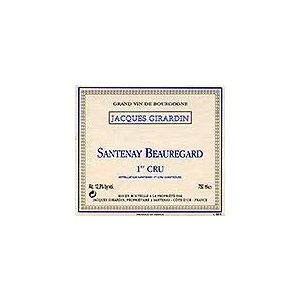
Domaine Jacques Girardin Santenay Premier Cru 2003 – France

Domaine Jacques Girardin Santenay Premier Cru 2003 – FranceJacques Girardin is the archetypal Burgundy grower and producer.  In other words, the Domaine Jacques Girardin is a real family affair.  Jacques tends the vineyards, works the cellar, and makes the wines; while his wife keeps the books, handles all the sales, and sees to the mounting pile of export regulations that make it increasingly difficult for small family owned wineries to export their wares.  For generations, the Girardin family has been well represented among the finest names in Burgundy.  Jacques’ father Jean was a renowned winemaker as is Jacques’ brother Vincent.  Jacques has been producing fine estate bottled offerings at his domaine since 1978. 

Domaine Jacques Girardin is located in the south of Burgundy in the commune of Santenay, the most southerly area of the fabled Côte d’Or.  It comprises a mere 8 hectares (17.6 acres).  However, all of Girardin’s red wine holdings warrant Premier Cru status.  The family’s most heralded red wine hails from the 1er Cru vineyards of Beauregard and Clos Rousseau in Santenay.  Jacques Girardin also fashions tiny quantities of very good Santenay Blanc and Chassagne-Montrachet 1er Cru Morgeot. All of Girardin’s Premier Cru (1er Cru) wines spend 12 months in barrique, of which 30% of the barrels are new.  The result is supple, beautifully wrought Burgundian Pinot Noirs that drink extremely well even in their youth.  Santé!

Burgundy

Burgundy is a wine as well as a place.  In fact, it is many wines and many distinct locales, all of which were once part of the ancient duchy of Burgundy.  Situated several hundred kilometers southwest of Paris, Burgundy is hallowed ground to serious lovers of the vine.  From its golden hillsides, whose center slopes are so aptly named the Côte d’Or, flow France’s most expensive and profound wines.  Names such as Romanée Conti, Chambertin, Clos de Vougeot, and Le Montrachet among others have been delighting serious wine aficionados for centuries.  Yet, there is much more to Burgundy and its wines than a few illustrious names.  For starters, Burgundy is the ancestral of home of two of the world’s most revered grape varieties – Chardonnay and Pinot Noir.

Clearly, Burgundy is much more than a single wine or one great vineyard: it is a special place, a land almost entirely devoted to wine in one fashion or another.  However, what remains surprising to many wine drinkers is that Burgundy is both red and white wine, the best of which come from Chardonnay and Pinot Noir exclusively.  With a few rare exceptions, the finest Burgundies emanate from the region’s core, the Côte d’Or, which begins on the fabled Côte de Nuits, just to the south of Dijon, and flows all the way south to Santenay at the tip of the Côte de Beaune.  The Premier and Grand Cru wines from these illustrious hillsides are worth their weight in gold.  Salut!

Tasting Notes:  Elegant and classy, the 2003 Jacques Girardin Santenay Premier Cru is a wine to dress up and take out on the town.  Refined and oozing with potential, this red Burgundy is already delicious and reveals itself as a charming and satisfying dinner companion.  Properly served in a wide-bowled glass, this garnet-colored wine releases aromas that carry the distinct signature of its terroir; grassy and woody notes mingle and evolve with each sip.  An initial savor full of cherry and spice greets the palate and completes a provocative first impression.  A weighty thickness to the wine’s texture, however, lets us know that this dinner invitee is no gadfly.  A mellow tannic structure emerges to provide substance for this balanced and well-delineated Burgundy.  Happily, as this still young Pinot Noir matures, it will broaden and mellow further, acquiring additional charm to add to its already sophisticated profile.  Finally, a pleasant and longish finish contains just enough zing to let you know two things: first, this is a wine made for food, and second, this is a wine that has the last word as if it, not you, orchestrated the evening’s pleasures.  So, indulge and patiently get to know this enchanting Burgundy. We suggest decanting it a half hour before serving for optimum enjoyment.  Salut!

Accompaniments:  Scour descriptions of Burgundian foods traditionally paired with a top-notch wine such as the 2003 Jacques Girardin Santenay Premier Cru and one will find adjectives such as hearty, honest, earthy, warm and welcoming.  A classic choice is Boeuf Bourguignon, which combines braised beef, onions, mushrooms, fried bacon, and a bottle of Burgundian red table wine in a hearty stew.  Serve this traditional favorite with the Santenay 1er Cru 2003 and you’ll marvel at how effortlessly your guests move from stew to glass and back again.  An equally satisfying entrée, featured in the accompanying recipe, is Herb Crusted Pork Tenderloin.   The succulent tenderness of the pork wonderfully complements the elegant flavors of this single vineyard Santenay Premier Cru.  A key to preparation is to let the cooked tenderloin rest so juices redistribute evenly through the cut of meat. Serve with sides of roasted shallot mashed potatoes and roasted haricot verts.  If you wish to add a sauce to your pork, try a dried cherry sauce that softly complements the wine’s center.  Offer a dense, flavorful loaf of bread, serve a soft aromatic aged cheese, and place an old-fashioned mustard pot as a centerpiece, and, voilà, you’re ready for your guests to arrive.

Georg Breuer Rudesheim Estate Riesling 2003 – Germany

Georg Breuer founded Weingut Georg Breuer in 1880.  The firm began as a partnership between Breuer and the venerable shipping firm of Scholl and Hillebrand.  Subsequently, Breuer purchased the estate outright and passed it on to his sons Bernhard and Heinrich. Under the expert direction of the Breuers, this family estate has been carefully expanded over the years to its present 54 acres, all in the great Rheingau communes of Rudesheim and Rauenthal – the most prestigious of the Rhine’s many fabulous wine villages.  Breuer’s best sites include a major portion of Rudesheim’s dramatic, precipitous Berg Schlossberg and all of Rauenthal’s Nonnenberg.  Both are Grand Cru (Erstes Gewachs in Germany) vineyards.

Today, Breuer is synonymous with authenticity in Germany.  The late Bernhard Breuer was instrumental in forming the Rheingau Charta grower’s association – the forerunner of Erstes Gewachs (Grand Cru) authentic Riesling movement.  He was also the founding director of the German Wine Academy and the co-author of many books on the various German wine regions.  The Breuer family is respected internationally as tireless defenders of German viticultural integrity.  In addition, the very talented Bernhard Breuer made Mont du Toit, an outstanding red wine from one of South Africa’s greatest vineyards – Clos du Toit.  Sadly, with Breuer’s sudden passing Mont du Toit will no longer be made.  The outstanding 1999 Mont du Toit is now a collector’s item.  

The Breuer estate makes several distinguished Riesling wines:  Berg Schlossberg, Nonnenberg, Rudesheim Estate, and Montosa.  All are made dry.The Rudesheim Estate Riesling is the most accessible and charming of Breuer’s top wines, especially in it youth; it marries the freshness of the finest Riesling to a high polished minerality.  In short, it is the purity of the Riesling fruit and the subtle minerality that springs from the steep hand picked slopes of Rudesheim that set the Breuer Rudesheim Estate offering apart.  However, all of Breuer’s wines are meant for the serious table.  They are age-worthy, investment-quality wines of the highest order, and for more than a century they have brought the Breuer name respect and international acclaim.

The Rheingau

The Rheingau is Germany’s finest piece of viticultural real estate.  For nearly its entire length the Rhine River flows steadily north, until just below the city of Mainz.  Here, the Rhine confronts the steep, wooded slopes of the Taunus Mountains, causing the river to turn more than 90º to the west until it reaches Rudesheim.  For these twenty glorious miles the steep marly slopes above the Rhine play host to Germany’s most heralded grape varietal, Riesling.  Upon these hills, the vines bask in a sun bowl of glorious light created by the Rhine and the river’s perfect westward bend that affords the vines an optimal southeastern exposure.  The Rheingau is comprised of the finest vineyards along the right bank of this twenty mile stretch that runs from just east of Eltville to Rudesheimer Berg.

Along the Rheingau, the climate is milder than nearly anywhere else in Germany and the reflection of light from the Rhine casts golden rays of sunshine upon the grapes that line its slopes.  Consequently, the Rheingau style of wine is nothing like the soft, sweet, self effacing wines one encounters from most other parts of Germany.  Instead, the Rheingau is known for full-bodied, highly aromatic wines that age well in the bottle and develop complexity and nuance of flavor.  The wines of Rauenthal are typically the fullest and spiciest in the Rheingau; while the finest Rudesheim offerings are more immediately ingratiating.  Rudesheim and Breuer’s wines in particular marry superlative fruit to strength of character, all of which yield over time considerable complexity as well as world class wine.         

Tasting Notes:  The 2003 Georg Breuer Rudesheim Estate Rheingau Riesling is no flabby, syrupy fruit bomb, so you may dispel any pre-conceived notions you may have formed about Riesling or German wines in general.  Nevertheless, the 2003 Georg Breuer Rudesheim Estate Riesling does display plenty of praiseworthy fruit; yet, it does so without sugary sweetness.  The wine’s tremendous burst of pure Riesling fruit is admirably offset by bracing acidity and subtle minerality, which afford this luscious wine considerable balance as a complement to its rich beguiling flavor.  The product of slate soils, hand harvesting, and small yields, the Breuer Rudesheim Estate Rieslingoffers up an array of lovely aromas that include white peach, slate, lemon zest, and a hint of oriental spice.  Rich and ripe on the palate, it would be natural to expect a sweet finish to this wine, but this is a Breuer wine, so no sugary residuals need apply. Instead, a dry French Burgundian style finish completes the harmonious tapestry of Breuer’s Rudeshein Estate Riesling.  Enjoy this charming, flavor packed Riesling moderately chilled (about 40° F).

Accompaniments:  The 2003 Georg Breuer Rudesheim Estate Rheingau Riesling is an easy wine to pair with food.  The wine’s wonderful fruit and dry finish afford a myriad of possibilities and pleasures when paired with fish, shellfish, sushi, game birds or even pork.  One of the panel’s favorite recommendations is Pan Seared Salmon, presented with a fruit, lychee, and fennel chutney.  Medallions of pork or veal in a light cream sauce offer another winning choice with the Rudesheim Estate Riesling.  Lettuce Wraps, Spring Rolls, and Vietnamese cuisine offer other wonderful accompaniments, as does Japanese tempura.  We have also enjoyed this extraordinary Riesling all by itself, so as you like it.

Hewitson The Mad Hatter McLaren Vale Shiraz 2003 – Australia

Hewitson has been the source of many of South Australia’s finest Shiraz and Rhône style wines, ever since Dean Hewitson launched his now famous winery in 1996.  A graduate of Roseworthy, Australia’s premier School of Enology, Dean worked at Petaluma, one of Australia’s finest wineries, spent a couple of years at UC Davis where he completed his Masters, and experienced fifteen vintages worldwide before settling down to his latest venture. 

Presently, Hewitson’s specialty is crafting wines for the pure pleasure of others, and this he does by procuring the finest old vine fruit from the best vineyards in South Australia and turning that fruit into magic in the bottle.  In short, Dean Hewitson produces a formidable array of fine wines from pre-phylloxera vines, which means the vines are all on their original rootstock.  The result is there is no other wine on earth that more closely resembles its original European ancestors than Hewitson’s.

Hewitson’s top two wines are both Shiraz offerings from the McLaren Vale area of South Australia: The Mad Hatter and L’Oizeau.  The production of the Mad Hatter Shiraz is a mere 550 cases.  Curiously, the name “Mad Hatter” is not an attempt to cash in on the famous Lewis Carroll character.  Rather “Hatter” is the name Dean’s friends have used for him ever since he was a boy, and “Mad”….well, to know Dean is to know him… a real character to be sure.  Rest assured there is nothing mad about Hewitson’s wine; the only one mad is the consumer who can’t find another bottle of it.  In addition to The Mad Hatter and L’Oizeau, Hewitson fashions Mourvèdre Old Garden from a vineyard planted in 1853. If this is madness, give us more.  

Tasting Notes:  A sleeping giant, the 2003 Hewitson Mad Hatter Shiraz is an elegant, rich, highly polished McLaren Vale Shiraz that is poised to burst.  In short, this is the essence of outstanding Shiraz and a tribute to the greatness of this varietal in South Australia.  The 2003 Mad Hatter is packed with enormous character, flavor, and style.   Black fruits, cassis, smoke, licorice, and polished wood are just a few of the scents and savors that gush from this knockout Shiraz.  Still in its infancy, the 2003 Mad Hatter already possesses great length, depth, and hedonistic pleasure.  Rich, but never sweet or over the top, this three-year old beauty has character, and concentration, in addition to a well-defined center that will most assuredly continue to develop for years to come.  Built along the lines of the greatest Shiraz based wines of France, the 2003 Mad Hatter Shiraz is a tour de force in winemaking and testimony to just how good McLaren Shiraz can be in the hands of a dedicated winemaker.  Drink this splendid Shiraz at cool room temperature after an hour of more of breathing time….and remember this is only the beginning of a long and illustrious life for the 2003 Hewitson Mad Hatter Shiraz, so stock up and enjoy!

Accompaniments:  It would be a shame to drink the 2003 Hewitson The Mad Hatter with just any old meal.  Consequently, we highly recommend that accompanying dishes match the wine in style and quality.  The highest grades of beef, lamb, and pork all afford excellent accompaniments to The Mad Hatter, as do many classic Cuban and Spanish dishes.  An Onion and Manioc Encrusted Rack of Lamb is one perennial favorite that gets our collective nod.  A rich Ratatouille, served with homemade pasta; Cuban-style Baby Rack Ribs, presented on a bed of crisp yucca and black beans, provide other unbeatable choices with Hewitson’s tasty old vine Shiraz.  As The Mad Hatter matures, it will complement an even greater array of foods, even marinated tuna steaks, so start planning the menu.


logo for wine club
Since 1994
Home
Join Our Wine Club
Gift Memberships

Membership Renewals
Reorder Your Favorites
Wine of the Month Club
More Information
Current Selections
Past Selections
Testimonials
Other Gourmet Gifts
Corporate Gifts
Wedding Gift Ideas
All About Wine
Website Tools
Who We Are
Contact Us

1 - 800 - 625 - 8238
(Outside US call: 949-206-1904)
P.O. Box 1627, Lake Forest, CA 92609