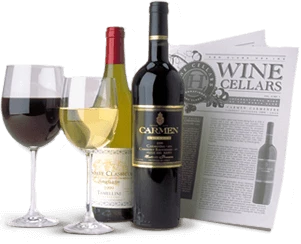
Welcome to The International wine of the Month Club

Featured Wines

Vol. 9 No. 1

Premier Series
Featured Wineries & Wines
Membership Type
Boccadigabbia Rosso Piceno 1 Red 1 White; 2 Reds
H de l'Hospitalet Blanc de Blanc 1 Red 1 White; 2 Whites
Altico Jumilla Monastrell-Syrah 2 Reds
Santa Monica Tierra de Sol Chardonnay Reserve 2 Whites


Master Series
Featured Wineries & Wines
Membership Type
La Ciarliana Vino Nobile 1 Red 1 White; 2 Reds
H de l'Hospitalet Blanc de Blanc 1 Red 1 White
Altico Jumilla Monastrell-Syrah 2 Reds


Collector Series
Featured Wineries & Wines
Membership Type
La Ciarliana Vino Nobile 1 Red 1 White; 2 Reds
Cape Mentelle Chardonnay 1 Red 1 White
Cape Mentelle Shiraz 2 Reds

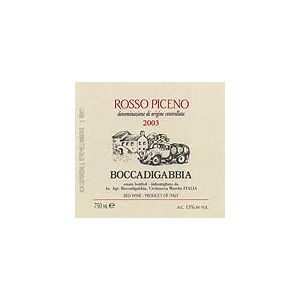
Boccadigabbia Rosso Piceno 2003 – Italy

Boccadigabbia is a small producer of premium wines in one of Italy’s finest but least known wine regions – the Marches – but even by the modest standards of the Marches, Boccadigabbia’s 17-acre estate is quite diminutive. However, by now we should have all come to the realization that good things do indeed come in small packages, or at least from small estates, and this is especially true of fine wine from Italy. Therefore, it should come as no surprise that Boccadigabbia is the Marches’ premier producer of Rosso Piceno, a delicious blend of Sangiovese and Montepulciano that emanates from the region’s sun drenched hills, which rise above the gleaming Adriatic Sea. Rosso Piceno is also the region’s most important and prolific DOC, surpassing even Verdicchio in both prestige and sheer volume.

Until 1950, Boccadigabbia belonged to Prince Luigi Girolamo Napoleon Bonaparte, a direct descendent of the Napoleon Bonaparte we all know from legend and lore as well as high school history class. Moreover, the Boccadigabbia estate was one of the first to plant French varietals under the Napoleonic administration in the early 19th century, and this practice continues even today under Elvio Allessandri, the present owner.

Under the auspicious leadership of Elvio Allessandri, Boccadigabbia has gained international distinction to go along with the well-deserved accolades the estate has always received in Italy. And in addition to being the Marches’ foremost producer of traditional Rosso Piceno, Boccadigabbia is now fashioning miniscule quantities of Akronte, a very fine Cabernet Sauvignon; La Castelletta, a distinctive blend of Pinot Gris, Pinot Blanc, and Pinot Noir; Montalperti, a barrel-fermented Chardonnay that is ranked among the finest in Italy; and Garbi, a spunky, refreshing blend of Chardonnay and Trebbiano. Given the outstanding quality and limited availability of each of these fine wines, we are sure to hear more about the very fine, meticulously tended Boccadigabbia estate.

The Marches

The Marches is the green, picturesque region of central Italy that lies wedged between the Appenine spine of the Italian peninsula and the cliff studded coast of the gleaming Adriatic Sea. Aside from the two month onslaught (in July and August) of Italian and Teutonic tourists that descend upon the coastal regions of the province, the Marches remains an oasis of calm, rural charm, art, religious shrines, fine food, and of course excellent wines – the very glories of Italy.

The most important wines of this rural oasis that sits just due east of Florence are Rosso Piceno, the most authentic and traditional of the regions wines; Rosso Conero, an even more robust version of Rosso Piceno in that its cepage is the same as Rosso Piceno, except here Montepulciano plays the dominant character and Sangiovese the supporting role; whereby, the opposite is the case with Rosso Piceno; and finally Vedicchio, the quintessential fish wine that hails from two distinct DOC’s, Castelli di Jesi and Matelica. Verdicchio from either region can be quite good, depending upon the producer, but by and large Matelica remains the source of the finest, fullest, and most authentic Verdicchio – a wine that also happens to be the Marches most compelling white wine, especially with seafood for which the Marches is justifiably renowned.

Tasting Notes: Bold and brooding, the nearly opaque 2003 Boccadigabbia Rosso Piceno possesses the color of aubergine on its edges, and in its forbidding center the wine appears as the deep well of blackness that seems to subsume the earth just before dawn. Make no mistake, this is no cherry colored strawberry scented whole berry fermented red. This is authentic, old-fashioned Rosso Piceno – the specialty of Italy’s Marches. In fact, Boccadigabbia is the finest and fullest Rosso Piceno we have ever tasted. An entrancing, deep down scent of black fruits, tinged with licorice and truffle, haunt the nose. Equally full, rich, and immensely flavorful on the palate, as a wine this deeply colored would predict, the 2003 Boccadigabbia Rosso Piceno both delights and surprises with its balance of fruit and tannin. Moreover, its savor of black fruits, earth, roses, violets, and forest woodlands all meld harmoniously with the wine’s lusty rusticity. Big boned, but never course, the 2003 Boccadigabbia Rosso Piceno is one staggering statement. And like most of Italy’s finest red wines, this Rosso Piceno is best when either consumed immediately upon opening or afforded extended aeration. Consequently, opening the 2003 Boccadigabbia at least an hour or more before serving at cool room temperature (64°-68° F) will more than repay the patience expounded. Enjoy!

Accompaniments: The traditional hearty, stick to your ribs kind of foods that typify the Marches are indeed the perfect accompaniments to the 2003 Boccadigabbia Rosso Piceno. Beef or pork bracciole, better known as the tomato, onion and herb infused loin of pork the local inhabitants refer to as porchetta, are two of our favorite Marchesan dishes with the Boccadigabbia Rosso Piceno. Sweet or hot Italian sausage cooked to perfection in a thick, mouth filling tomato sauce makes for another fine pairing. In fact, most beef, bean, pasta or pork dishes get our nod with this wine, too. And if you want to turn an old-fashioned pizza into a special affair, open a bottle of the Boccadigabbia Rosso Piceno ahead of time, and have a party. Lest you think this wine a mere country bumpkin, we are equally proud to serve it in the company of more sophisticated Northern Italian or Piedmontese fare, so enjoy it as you like it!

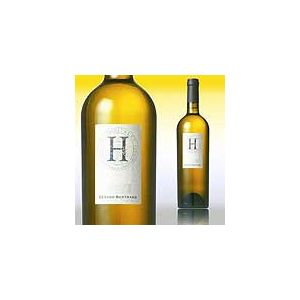
H de l’Hospitalet Blanc Sud de la France 2004 – France

H de l’Hospitalet Blanc from Ch?teau de l’Hospitalet is the ultimate white blend of all the fairest varietals from the sun-drenched hills of the Languedoc. Produced by Gérard Bertrand, the reigning king of Languedoc wine, H seeks to recreate in a single bottle all the pleasure and charm of a visit to the south of France.

For a long time Gérard Bertrand and his coterie of excellent Languedoc wines have enjoyed a serious following in Europe, but mostly they have remained a bit of an insider’s secret – until now. We first featured a Bertrand Minervois to considerable member acclaim several years ago before this estate’s wines were generally available in the United States, but with the recent international press, replete with corresponding accolades for current releases, the Bertrand secret is finally out of the bag.

Undoubtedly, Gérard Bertrand is the most respected name in the Languedoc – the oldest and largest wine region in France. The Bertrand name is associated with most of the very best domains and vineyards in all of southern France, and like his father before him, Gérard has not only inherited the Bertrand legacy from his forbearers, he has augmented and cultivated the family heritage by acquiring an ever increasing array of outstanding properties – each of which produces wines of superlative quality and eminent distinction.

Georges Bertrand, Gérard’s father, was a visionary, unlike most 20th century Languedoc growers. Georges was also a winemaker and a great wine taster, and he knew the value of premium varietals and excellent terroir. Georges reconstructed his family’s estate, Domaine de Villemajou, in the heart of Corbières and began acquiring other prime parcels and ancient estates. In the early1970’s, Georges also advised and supported other forward thinking Languedoc growers and winemakers who aspired to greatness. Gérard has continued and fortified his late father’s crusade by adding Cigalus, Ch?teau Laville-Bertrou, and the venerable Ch?teau de l’Hospitalet to his retinue of great Languedoc estates, all of which has earned him the rightful title: the King of Languedoc.

All Bertrand estate wines are produced in respect to the environment, using sustainable methods and hand harvesting. Each authentic bottle of Bertrand wine also bears the emblem of the Visigoth Cross, the symbol of Languedoc since the 7th century.

Languedoc

The Languedoc is the world’s largest single viticultural area, encompassing many appellations and distinctive sub regions – all of which are capable of producing fine wine. The Languedoc stretches all the way from the Spanish border in the west, within sight of the towering Pyrenees, to the banks of the Rhône River, which lies far to the northeast. This vast domain encompasses a huge swath of dry coastal plain and sheltered mountains from which flow the guts and the glory of French viticulture.

The Languedoc, whose name is synonymous with the language of southern France, was the first part of ancient Gaul to be extensively planted to the vine. And long before the Romans and Caesar’s legions had subdued the Gallic tribes to the north, wine was big business in Languedoc. The Phoenicians passed this way, and not surprisingly, the region’s beauty and superb conditions for the cultivation of the vine did not escape the first Greek colonists who planted vines there, making Languedoc the cradle of French viticulture in the fifth century BC. For nearly two thousand years, Languedoc remained the “big dog” and premier purveyor of wine to France and the world. Sadly, the glory of France’s most historic wine region – the birthplace of troubadours and Provencal, the lyrical language of poetry – ended in the 19th century with the advent of phylloxera.

Phylloxera, the most dreaded of all vine diseases because it attacks the roots and systematically sucks the life out of a vine, devastated the vineyards of France in the 19th century, targeting Languedoc as its prime host. Following the phylloxera outbreak, the Languedoc lost most of its premier hillside vineyards, old vines and premium varietals. Subsequent replanting was undertaken using inferior grape varietals that would quickly bring high yields and much needed cash. Moreover, the great hillside vineyards descended to the plains, where soil, drainage and exposure (terroir) were inferior to the older, loftier heights of legend and lore. Unfortunately, throughout the late 19th century and most of the 20th century as well, the Languedoc languished in the doldrums of viticulural obscurity, unless of course common, everyday plonk was your beverage of choice. Once the proud bastion of French vitucultral excellence, the Languedoc had become by the early 20th century the world’s major source of huge quantities of insipid wines, whose main virtues were none other than high alcohol and cheap prices – all of which were subsidized by the French government.

Today, the Languedoc is rapidly returning to its former glory. The worldwide demand for cheap, course wine no longer exists; the emphasis today is on quality rather than quantity. In addition, the only official incentive for grape growers is to plant premium varietals, move back to the ancient hillside sites, and produce less wine of greater quality. Since the 1970’s this is exactly what has happened, leading viticulturalists and critics alike to proclaim a veritable Renaissance in the Languedoc, much of it spearheaded by Gérard Bertrand and his father Georges before him.

Tasting Notes: A mélange of all the top white varietals from the finest vineyards in Languedoc, the golden hued 2004 H de l’Hospitalet Blanc shines likes the Provencal sun. Chardonnay, Viognier, Marsanne, Vermentino, and more combine to provide one delightful tasty concoction in this latest offering from Gérard Bertrand. The scents and savors of apricot, pineapple, and other tropical fruits dominate this luscious wine. Throw in a dollop of nectar, a pinch of Mediterranean herb, and a dash of thistle and voila….H de l’Hospitalet Blanc is born. Bold, ripe, and bursting with flavor H Blanc is very easy to drink. Moreover, it retains just enough acidity to offset its forward fruit and finish perfectly dry. We suggest serving the H Blanc quite well chilled (about 40º F), especially in warmer locales. Salut!

Accompaniments: The 2004 H de l’Hospitalet Blanc is so seductive that it need not rely on accompaniments to shine like the Languedoc sun. In fact, this wonderful wine requires nothing more than a glass, unless you are truly content to sip this French coquette from a straw straight out of the bottle (not our first choice). Nonetheless, we confess to having a few special dishes we recommend with the affable 2004 H Blanc. Simple salads, prepared with the freshest organic greens and a mild goat cheese get our nod, as does charcoal broiled octopus and calamari with marinated black chick peas. A good old fashioned Maryland style crab cake provides another excellent companion to this exotic white wine. Furthermore, Tilapia and Mahi and Mahi seem to share a natural affinity with the H Blanc, so do not be afraid to pair either of these two fishes with Bertrand’s Languedoc specialty. And last but certainly not least, we suggest you consider a platter of fresh fruit and soft cow’s milk cheeses to accompany H Blanc, and enjoy!

Altico Monastrell-Syrah Jumilla 2003 – Spain

Altico is the latest and finest creation to date from Agapito Rico, Jumilla’s preeminent wine artisan. Agapito Rico is, perhaps, best known for Carchelo, a moderately priced Monastrell blend that has taken wine critics and savvy consumers by storm, but this wonderful winemaker fashions an entire array of exciting wines. From 175 acres, located in a high remote mountain valley in Murcia, Jumilla native Agapito Rico fashions compelling Rhône style wines from varying amounts of Mourvedre, Syrah, Merlot, and Tempranillo. At Altico, in vineyards located at over 2200 feet in a desert like climate, the indigenous Monastrell (Mourvedre) thrives on its own rootstock and is farmed organically for nearly all intents and purposes. In addition, average yields are an impressively low 1.5 tons per acre, one of the lowest in Europe. Since its recent release Altico, a masterful blend of 60% Monastrell and 40% Syrah, has become Agapito Rico’s flagship wine.

For decades, Spain had been referred to as “the sleeping giant of European wine,” but with Agapito Rico’s Altico and similar like-minded estates coming to fore – wineries that have built new facilities and know how to craft world class wines – Spain is just now beginning to realize its enormous potential as a treasure trove of excellent red, white, and sparkling wines. In the case of Agapito Rico, it is a combination of excellent modern winemaking and an extensive acreage of old vine Mourvedre that lead the quality charge. Monastrell or Mourvedre as it is more commonly called internationally is responsible for some of the wine world’s ultimate crowd pleasers, especially when married to its soul mate Syrah. Consequently, with the awakening of this great sleeping giant, one has to wonder if Spain’s Second Golden Age is not already upon us. Enjoy it!

Tasting Notes: The 2003 Altico Monastrell-Syrah is a concentrated, velvety dry red wine with a hedonistic bent. Big, balanced and juicy, the 2003 Altico offers up copious quantities of ripe black fruits, subtle earth tones, and peppery spice in a very harmonious format – not unlike the more refined examples of Gigondas or even Châteauneuf-du-Pape that one encounters along the Rhône. And like all of Agapito Rico’s wines, the 2003 Altico is eminently drinkable and utterly pleasing. It is deep in color, long on flavor, and as soft as suede in the finish. A blend of 60% Monastrell and 40% Syrah, this tried and true combination produces red wines of extraordinary texture and intensity. Serve the 2003 Altico Monastrell-Syrah Jumilla at cool room temperature (64°-68° F), and then allow it to open a few minutes in the glass before partaking. Enjoy!

Accompaniments: The 2003 Bodegas Altico Monastrell-Syrah from Agapito Rico is an easy wine to like, with or without food accompaniments. Perhaps, this makes it a rarity among Spanish reds, which normally insist on food to be exciting. Nevertheless, the tasting panel enjoyed the Altico immensely with quite a few conventional as well as unusual foods. One of our favorite offerings with this wine remains lamb, just about any way one can imagine serving it. However, we also recommend a simple corn, bean, and mango salad as an alternative to meat. This salad accentuates the lush Monastrell fruit of the Altico; meanwhile, Altico’s Syrah lineage provides ample backbone and depth, not to mention savor and spice. So, if you want to or have to turn midweek staples like hamburger, flautas, ribs, or pork barbecue into a veritable treat, we can think of no better wine to assist you than the 2003 Altico Monastrell-Syrah. Buon Provecho!

Santa Monica Tierra de Sol
Private Reserve Chardonnay 2001 – Chile

Founded in 1976 by Emilio de Solminihac, Santa Monica is one of the most contemporary wineries in Chile. Yet, this superb property is truly an amalgam of Old World charm and modern technology Located in the beautiful Rapel Valley of central Chile, this historical 19th century property includes a beautiful old hacienda that dates from Chile’s colonial past as well as one the cleanest, most up to date wineries in all South America.

Emilio de Solminihac, more affectionately known as Don Emilio to a burgeoning legion of young Chilean winemakers, is the guardian of traditional winemaking in Chile and one of South America’s finest winemakers. He is also an affable gentleman who seems cut from a bygone age. Hailing from a wine making family, Don Emilio received his first training in wine as a young man while working in his grandfather’s vineyard and winery. Later he would graduate from the Universidad de Chile with a degree in agricultural engineering, and subsequently depart for France, where he would study at the Université de Bordeaux under the legendary Emile Peynaud – then France’s most renowned oenologist. While attending the Université de Bordeaux, Emilio earned that venerable institution’s esteemed degree in oenology, the first Chilean to do so.

Today, Santa Monica reigns as an oasis of calm and simple elegance. Beyond its gates lay long rows of well-tended vines that doze between the towering Andes and the coastal mountain ranges. From these neat rows of vines that hold just about every grape imaginable, Don Emilio fashions a bevy of delicious wines. However, the highly acclaimed Private Reserve Tierra de Sol and Gran Reserva offerings of Chardonnay and Cabernet Sauvignon constitute the signature series at Santa Monica. In them, one can taste and see Don Emilio’s passion for making traditional Burgundy and Bordeaux style wines – wines that are complex, age worthy, and as endearing as they are enduring.

Tasting Notes: The 2001 Santa Monica Tierra de Sol Chardonnay is no ordinary New World Chardonnay. It is neither brash nor flabby, and despite barrel fermentation it is definitely not all about oak Instead, Don Emilio chose to fashion his outstanding Tierra de Sol Chardonnay in the Burgundian tradition, which means this Chardonnay is built to last. The 2001 Santa Monica Tierra de Sol continues to wear a pale yellow robe and emit a heavenly scent reminiscent of French Meursault, the quintessential white Burgundy that ranks as one of France’s finest Chardonnay based wines. In the nose, the gentle scent of an ocean breeze, spring flowers, dried apricots, mineral, and stone all come to fore in the glass. Meanwhile, on the palate the wine remains fresh and vibrant; it exhibits elegant refined fruit, traces of hazelnut, and vanilla, too. As with fine white Burgundy, we suggest serving the 2001 Santa Monica Tierra de Sol Chardonnay between 40° – 50° F for optimal pleasure.

Accompaniments: The 200l Santa Monica Tierra de Sol Chardonnay is the epitome of a mature Chardonnay. It is soft, approachable, and utterly satisfying – unlike so many of this varietal’s over the top California compatriots. Consequently, it deserves the freshest, simplest, and most elegant of meals. We suggest serving grilled shrimp or a plain steamed lobster in drawn butter with this well balanced classic. Seared scallops in a savory cream sauce or Coquilles St. Jacques provide other outstanding pairings. In fact, most fish and pasta dishes without tomato sauce provide ample opportunities for enjoyment with the 2001 Tierra de Sol Chardonnay, too. And of course, a glass on its own is a treat in itself.

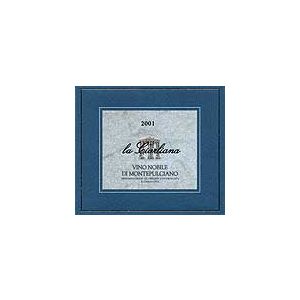
La Ciarliana Vino Nobile di Montepulciano 2001- Italy

Nothing about Luigi Frangiosa’s simple brick winery prepares the visitor for the delightful surprises that lie within. The first treat lies just beyond the winery’s solid wooden door. Only upon entering the winery does it become apparent that what appears from the outside to be a modest one story building is really a multi level structure that descends several stories into the hill upon which the winery is constructed. Below ground are a meticulously tended cellar and ageing room, just chock full of every size and type of barrel and tank – all of which are scrubbed clean and impeccably maintained.

When complimented on the spotless state of his winemaking facility, the warm, unassuming Frangiosa dismisses such comments by recalling how he started making wine in his garage, laundry room, and every other nook and cranny in his house that his wife consented to give up during harvest time, providing he kept their home clean. Consequently, keeping his long dreamed of winery squeaky clean is now just second nature. “She’s a good woman,” Luigi was quick to add when recounting his story. What some men and women won’t do to assuage their mates’ passions!

Surprisingly, the 40 something Frangiosa only began bottling his own wine in 1996, after spending his entire life tending vines at the noble houses of Vino Nobile. La Ciarliana takes its name from a small chapel near the majestic hill town of Montepulciano and Frangiosa alludes to the fact that his estate’s name is testament to the great leap of faith he made when he fashioned his first Vino Nobile in 1996. Until that time Luigi had not made wine commercially. He was vineyard manager for Carpinetto and several other key producers in the Vino Nobile DOCG, positions he still holds today, despite the enormous success of his own winery. As of last count Frangiosa admits to overseeing more than 100 hectares (220 acres) of Vino Nobile vines, including his family’s own holdings, which cascade down the hillsides just out the back door of the winery. However, it is not until one actually steps out the rear door of La Ciarliana and onto a spacious flower bedecked terrace that the length and breath of this property comes into true focus. Here one beholds a great panorama of vines as they course up and down steep undulating hills that recall the ancient beauty and rhythm of Tuscany.

However, as engaging and intriguing as the architecture, location, and personal story of this small jewel of a property may be, it is truly Luigi Frangiosa’s outstanding wines that provide the greatest treats of all. And at the top of this estate’s hierarchy are the truly noble Vino Nobile di Montepulciano wines Frangiosa fashions, but only in vintages he deems worthy. In addition, he crafts a wonderful Super Tuscan IGT offering called San Pellegrino and a light, but excellent Rosso di Montepulciano. All the wine at La Ciarliana is made by Luigi himself. “If there is a mistake, there is no one else to blame,” he admits sheepishly. “I make the wine, and my family owns the vineyards I tend.” With these statements in mind we can surely count on Luigi’s passion for wine remaining his avowed vocation. Salud!

Tasting Notes: The 2001 La Ciarliana Vino Nobile di Montepulciano showcases the noble in this illustrious appellation’s name. In the words of one of the more artistic and philosophical members of the panel: “this is a very masculine wine, with a strong feminine side.” And indeed, the 2001 La Ciarliana Vino Nobile is a resonant, highly structured wine with plenty of mineral and tannin to assure a long healthy life. From a true Vino Nobile with a 28 day maceration period (the time the crushed grapes spend fermenting on the skins) one could hardly expect otherwise. However, there also exists in this artfully wrought wine a lush rich core of freshly squeezed grape and black cherry fruit, deep down complex flavors that conjure the bouquet of roses, finely toned Florentine leather, and much much more. This is Vino Nobile at its best – a powerful, highly extracted wine with tremendous flavor and style, even at a tender age. In many ways, Vino Nobile, and the 2001 La Ciarliana in particular, constitutes the quintessential Tuscan red, an expression of the duality of nature, both human and divine. As with all fine Tuscan reds, we highly suggest that the 2001 La Ciarliana Vino Nobile be decanted at least a half hour before serving at no more than 68° F.

Accompaniments: The 2001 La Ciarliana Vino Nobile di Montepulciano offers a great home to many international foods as well traditional Tuscan fare. We love this wine with a marinated and grilled sirloin steak, served with a mushroom, chestnut, shallot, and green peppercorn sauce, along with a warm goat cheese potato salad, and fresh haricots verts. Lamb is another perennial favorite with Vino Nobile, so the 2001 La Ciarliana shines here as well. However, another of our favorite offerings with this wine is a trio of starters that consist of a white bean paste, a red pepper hummus, and a black olive and sun dried tomato tapenade, all served with cristini and freshly baked focaccia. Yum! Certainly, thick garlic and herb laden pastas provide excellent accompaniments to Luigi Frangiosa’s legacy, too, so enjoy. Buon Appetito!

Cape Mentelle Margaret River Chardonnay 2002 – Australia

Cape Mentelle’s founding dates to 1970, which makes it one of the very first vineyards in Western Australia’s now legendary Margaret River. This beautiful winery is situated between the town of Margaret River and the Cape from which the vineyard draws its name. The name Mentelle is in honor of two French brothers, Edmunde and Francois- Simon Mentelle, who in the 18th century became well-known geographers and cartographers: just one breathtaking look at this coast tells why they were honored to impart their name to such a far off place. To augment its natural charm and superb terroir, the Cape Mentelle vineyards are surrounded by landscaped native gardens that play host to an abundance of local birdlife. In short, Cape Mentelle is not only one of Western Australia’s most prestigious wine addresses, it is also one of the most beautiful.

The Cape Mentelle vineyards and winery were originally established by David and Mark Hohnen. Nearly four decades later, Cape Mentelle is a thriving four hundred acre enterprise that devotes its energy to the production of outstanding Margaret River wines, including Chardonnay, Sauvignon Blanc, Semillon, Shiraz, Cabernet Sauvignon, and most recently Zinfandel. In addition, it serves as a sister company to New Zealand’s Cloudy Bay as both estates are now owned by Veuve Clicqout, the great French Champagne house.

Margaret River

The Margaret River is Western Australia’s hottest tourist attraction, and with good reason. It is home to Australia’s finest surfing and it harbors a friendly, urbane wine industry that caters to the increasing number of oenophiliac residents of Perth who are now more than ever willing to make the four hour pilgrimage south to this green shimmering corner of southwest Australia, where crystalline waters and high rolling surf offer Australia’s most compelling seascapes. Blessed with a spectacular unspoiled coastline, a mild near perfect climate for the cultivation of the vine, and plenty of space, the Margaret River wine region unfolds upon the hills and paddocks of this majestic land in and around the town of Margaret River and its meandering river from whence the entire area draws its name. Moreover, Margaret River wines account for the highest percentage of gold medal and trophy award wines in Australian wine competitions – a tribute to the Margaret River’s dedication to premium varietals, quality winemaking, and outstanding terroir.

In the early1960’s, a scholar named John Gladstone was the first to recognize and publicize Margaret River’s special climate, soil, and conditions known as terroir. In a detailed account Gladstone wrote glowingly of the similarities between the finest wine producing regions of Bordeaux and Margaret River. Moreover, he extolled the perfect weather of Margaret River for the cultivation of the vine, especially for traditional French varietals. And, indeed, Gladstone’s proclamation has proven to be more than mere wishful thinking, surpassing even his own expectations: In the past four decades the Margaret River has established itself as a world-class wine producing region for Shiraz and Chardonnay as well as the traditional Bordeaux varietals.

Tasting Notes: The 2002 Cape Mentelle Margaret River Chardonnay transports you to a breezy terrace overlooking a blue ocean harbor. The fresh and fruity aromas of the Cape Mentelle Chardonnay conjure memories of past summers and the pleasing, timeless fragrance of the sea. Perhaps a vision of the western coast of Australia, replete with breaks the envy of surfers around the world and a seascape speckled with billowing sails, will complete the image in your mind’s eye. On the palate, the 2002 Chardonnay refreshes with a burst of citrus that provides the mind and the palate with the appropriate spark to recall memories of easy seaside vacations, where the only exigency is to decide what wine to serve. And like all our best vacations, there is substance behind the shine of this Chardonnay as well. Long after the bottle has been consumed, the wine’s savory center continues to haunt the mind and palate with all that make the South Seas enchanting: tropical fruits, coconut, vanilla, and spice. And in the end, there is only ease and pleasure as the tannic structure of this Margaret River Chardonnay pleasantly balances and completely supports the mélange of fruit flavors brought to life by the Cape Mentelle vintners. A soft finish encourages one to savor subtle notes of oak and partake of the buttery, creamy texture with which this wine descends the throat. With its invitation to linger, both over the glass and over one’s own idyllic memories or imaginings, the 2002 Cape Mentelle Chardonnay refreshes and supplies a sensual reminder of the best the Margaret River has to offer. Serve moderately chilled (40º-45º F).

Accompaniments: With winter upon us, let’s build a list of menu suggestions for the 2002 Cape Mentelle Margaret River Chardonnay that is sure to satisfy cravings for one of our favorite seasonal comfort foods, soup. Seafood soups and creamy bisques provide satisfying starters as well as main courses. Certainly, New England clam chowder and lobster bisque provide hearty and flavorful complements to the well-constructed Cape Mentelle Chardonnay. Yet, let’s be daring, throw caution to the southern winds, and journey to the edges of the Indian Ocean, which laps at the shores of the Margaret River vineyards. A curried mussel soup fragrantly seasoned with ginger and lemongrass offers the perfect complement to the 2002 Cape Mentelle Chardonnay. This soup highlights the citrus accents of the Chardonnay, while the curry marries well with the wine’s balanced core. We suggest the accompanying recipe as it is simple to execute and requires only a source of live mussels, which should be available throughout the year at local fish markets. If one lives on the west coast, however, a few well-placed phone calls may lead to a fresh-off-the-boat source since the west coast mussel season generally runs from November to April. If seafood soup is unappealing, try an equally satisfying and creamy butternut squash or potato leak soup. Regardless of your choice, allow the combination of soup and Chardonnay to satisfy your stomach and warm your soul.

Cape Mentelle Margaret River Shiraz 2003 – Australia

Cape Mentelle’s founding dates to 1970, which makes it one of the very first vineyards in Western Australia’s now legendary Margaret River. This beautiful winery is situated between the town of Margaret River and the Cape from which the vineyard draws its name. The name Mentelle is in honor of two French brothers, Edmunde and Francois- Simon Mentelle, who in the 18th century were well-known geographers and cartographers: just one breathtaking look at this coast tells why they were honored to impart their name to such a far off place. To augment its natural charm and superb terroir, the Cape Mentelle vineyards are surrounded by landscaped native gardens that play host to an abundance of local birdlife. In short, Cape Mentelle is not only one of Western Australia’s most prestigious wine addresses, it is also one of the most beautiful.

The Cape Mentally vineyards and winery were originally established by David and Mark Hohnen. Nearly four decades later, Cape Mentelle is a four hundred acre enterprise that is devoted to producing an outstanding array of Margaret River wines, including Chardonnay, Sauvignon Blanc, Semillon, Shiraz, Cabernet Sauvignon, and most recently Zinfandel. In addition, it serves as a sister company to New Zealand’s Cloudy Bay as both estates are now owned by Veuve Clicqout, the great French Champagne house.

Tasting notes: Balance is the hallmark of the 2003 Cape Mentelle Margaret River Shiraz. Despite its youth, the Cape Mentelle Shiraz is table ready and poised to offer a full-bodied tasting experience. A deep ruby red color and a gratifyingly voluptuous aroma let us know from the outset that here is a wine worth exploring. As one expects from a top quality Shiraz, a complex array of fruit flavors greets the palate. Pleasing in its intensity, an overall berry timbre holds lingering hints of blackberry, currant, and raspberry. A crisp tannic profile further awakens the senses; at the heart of this Shiraz pulses a mocha undercurrent that provides additional depth and richness. Currently the 2003 Shiraz offers a complementary and satisfying blend of ripe round fruit and youthful tannins, which will allow the winemaker’s art to continue to mature and emerge as the wine ages. Meanwhile, a longish aftertaste follows to a heartening alcohol warmth and an emerging dryness, further evidence that the 2003 Cape Mentelle Shiraz will only grow more intriguing with age. Regardless of its future promise, uncork a bottle of the 2003 Cape Mentelle Shiraz tonight and revel in the exuberant robust charm of its youth. Serve at cool room temperature.

Accompaniments: Listen closely to the Cape Mentelle Margaret River Shiraz 2003, and it will implore you to go outside and uncover the grill for one last hurrah before the cold of winter settles in. It doesn’t really matter what you grill; the 2003 Cape Mentelle Shiraz possesses a variety of attributes that all desire to accompany your favorite grilled fish, meat or vegetable dish to perfection. On the one hand, the intense fruity flavor of the Shiraz says pair me with your best marinade and favorite cut of lamb or chicken. The balsamic vinegar of the marinade provides a pleasing contrast to the rich berry flavors of the wine. While on the other hand, the crisp tannic side to this still youthful Shiraz asks to be served with accompanying sides of grilled vegetables – winter squash, juicy caramelized onion wedges, and tender new potatoes. The sweetness imparted to these vegetables by the grill tends to mellow and blend the Shiraz’s components to even greater depths of satisfaction. And finally, the subtle spices swirling throughout the glass demand the last word and request a heavily peppered steak grilled to mouth-watering perfection. So, it’s nice to know that when the last warmish day of mid January thaw beckons, you can do no wrong by firing up the grill one more time and opening a bottle of the 2003 Cape Mentelle’s Margaret River Shiraz. Enjoy!


logo for wine club
Since 1994
Home
Join Our Wine Club
Gift Memberships

Membership Renewals
Reorder Your Favorites
Wine of the Month Club
More Information
Current Selections
Past Selections
Testimonials
Other Gourmet Gifts
Corporate Gifts
Wedding Gift Ideas
All About Wine
Website Tools
Who We Are
Contact Us

1 - 800 - 625 - 8238
(Outside US call: 949-206-1904)
P.O. Box 1627, Lake Forest, CA 92609