Vol. 8 No. 7
Standard Selection - (1) White, (1) Red
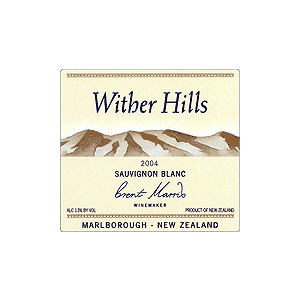
Wither Hills Marlborough Sauvignon Blanc 2004 – New Zealand
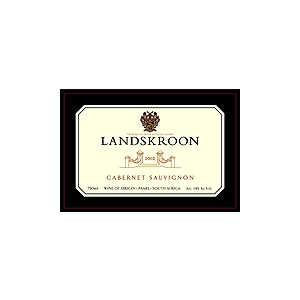
Landskroon Wine Estate Paarl Cabernet Sauvignon 2002 – South Africa
White Wines Only Featured Selection
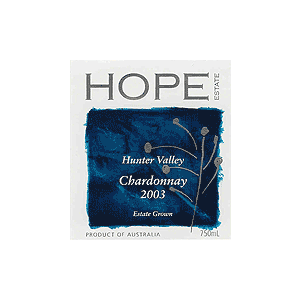
Hope Estate Hunter Valley Chardonnay 2003 – Australia
Red Wines Only Featured Selection
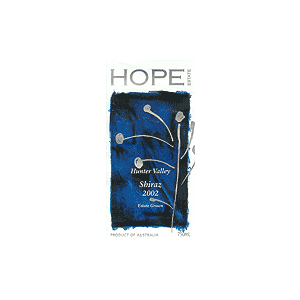
Hope Estate Hunter Valley Shiraz 2002 – Australia
Wither Hills Marlborough Sauvignon Blanc 2004 – New Zealand
The Wither Hills Winery is named after the range of starkly beautiful hills
that ring the southern portion of the Wairau Valley. This is Marlborough Country,
where vines flourish under ideal conditions. The Wither Hills provide a pristine
environment for viticulture that is unmatched anywhere else. Amid cool translucent
waters, green grass, and blue skies, one sees the very surroundings reflected
in the outstanding Sauvignon Blanc, Chardonnay, and Pinot Noir produced at
the Wither Hills Winery.
Surprisingly, grapes are relatively new to both Marlborough and the Wither Hills. In fact, it was not until 1978 that grape growing was actually introduced to Marlborough by viticulturist John Marris. Soon after, Marris’s son Brent was inspired to pursue a career in winemaking and became the first certified winemaker in Marlborough. In 1994, Brent established Wither Hills as his own brand, combining his own winemaking skills with his father’s viticultural expertise. Since its inception, Wither Hills has enjoyed a well-deserved reputation for excellence, which is reflected in enormous critical acclaim and a long list of Trophies and Gold Medals.
Marlborough: The Home of Royal Grapes
Situated on the northern tip of New Zealand’s mystical South Island, Marlborough enjoys a unique dry maritime climate. High mountains isolate this enchanted land from the cold alpine interior of the rest of the South Island, while the spectacular Marlborough Sound to the north provides a conduit to the sea as well as the planet’s most majestic view of New Zealand’s North Island as it soars skyward across the Wellington Straits – a sight that ranks as one of the world’s most stunning vistas. Moreover, Marlborough is about as close to viticultural paradise as one can find, especially for white wines.
Marlborough’s sunny but not excessively hot growing season provides nearly ideal conditions for grape growing. The average summer daytime temperature hovers between 24° C and 28° C (72° - 80° F) depending upon one’s altitude and proximity to the sea. The air is crystal clear and the light luminous; with nary an overcast day let alone much rain during the long growing season. Cool nights keep acid levels high in the grapes, even as sugar levels rise abruptly. Such conditions lend themselves to a long growing season, which provide slow even ripening and extended hang time for the grapes. The result is ripe healthy fruit with fresh vibrant fruit flavors and a crisp herbaceous zing.
In addition to its superb summer climate, Marlborough also boasts excellent soil for grapes. Most of Marlborough consists of silty, free draining alluvial loams over gravelly sub-soils. In addition, river stones lie scattered throughout Marlborough, remnants of the many rivers that once coursed through the pretty valleys of Marlborough. These river stones store heat from the warm sunny days and radiate that heat back into the vineyards at night, thereby providing a unique microclimate and terroir, much like that of Châteauneuf-du-Pape. And the French thought they had a monopoly on terroir; we think not.
Tasting Notes: An excellent vintage for Sauvignon Blanc, the 2004 autumn in New Zealand produced a Wither Hills Marlborough Sauvignon Blanc that sports a pale yellow robe, with a sparkling green hue, brilliant clarity, and oodles of flavor. What's more, a vibrant bouquet of citrus and tropical fruits, with hints of cut grass and capsicum, delights the nose. On the palate, the Wither Hills exhibits crisp elegance, excellent weight, and considerable mouth feel. A bevy of concentrated tropical fruit flavors dominate its flavor profile. Lemon, lime, grapefruit, and pineapple flavors marry beautifully with herbs and a very pleasant grassiness for which the Sauvignon Blanc wines of Marlborough are famous. A crisp refreshing finish that lingers pleasantly in the mouth completes the picture and makes you wish you had another bottle or two of the Wither Hills because one bottle may simply not be enough. We suggest serving the 2004 Wither Hills Sauvignon Blanc well chilled (35°- 40° F), especially on warm days.
Accompaniments: Sauvignon Blanc is made for summer or is summer made for Sauvignon Blanc? In either case, the two are inseparable in our minds, so bring on all the salads, seafood, barbecue, and cold pasta dishes you can muster with the 2004 Wither Hills Marlborough Sauvignon Blanc. For a genuine treat, boil up the lobster pot and chill down the Wither Hills. Copious quantities of boiled or steamed lobster, served with drawn butter, fresh corn, and a cold asparagus salad, is all the tasting panel needs to be happy. After all, our tastes are truly simple; we like only the best. Other enjoyable pairings include spaghetti with white clam sauce, shrimp on the barbie, and oysters just about any way you like them or care to prepare them. For the more adventuresome, Spiced Tilapia, drizzled with cilantro and mint vinaigrette, provides another excellent accompaniment. California rolls, Asian stir-fries, and most traditional Japanese fish, vegetable, and noodle dishes offer other splendid choices, so call a friend and have some fun.
Recipe for White Wine
Cold Asparagus Salad
1 lb. trimmed fresh asparagus 5 slices roasted red peppers - julienned
1/4 cup olive oil juice of 1/2 lemon or lime
4 Tbl. balsamic vinegar 1 tsp. Dijon mustard
1/4 tsp. ground pepper
1/4 tsp. salt
Cut asparagus spears into thirds. Drop into boiling water for 3-5 minutes or until just starting to soften but not cooked through. Place asparagus in colander and quickly run under cold water to stop the cooking process. Drain well and set aside.
In a medium bowl, whisk together oil, vinegar, salt, pepper, lemon/.lime juice and mustard. Toss with asparagus and chill for 1-2 hours. Toss asparagus with red pepper slices and serve.
Landskroon Wine Estate Paarl Cabernet Sauvignon 2002 – South Africa
The Landskroon Wine Estate is situated near Paarl in the heart of the Cape
Winelands of South Africa. A sizeable estate, Landskroon comprises 1440 acres
of which some 700 acres are devoted to noble grape vines. The estate is owned
and managed by the de Villiers families of Paul and Hugo de Villiers Jr. They
are the ninth generation of de Villiers to carry on the proud tradition of
winemaking in South Africa.
Even with a rich history that dates back more than three hundred years; it is truly amazing just how few outsiders have heard of the Landskroon Wine Estate, until now. History is full of unsung champions and undiscovered providers of excellence, and among the de Villiers can be found a goodly number of history’s unheralded, dating all the way back to 1692 and the first French Huguenot settlers to South Africa. Among those early pioneers was Jacques de Villiers, a winemaker from Niort in France, who came to the Cape of South Africa to help save South Africa’s fledgling wine industry.
The Cape’s wine industry had begun in 1655 at the instigation of Jan van Riebeck, the first commander of the Dutch Colony on the Cape, but without Jacques de Villiers and his compatriots, viticulture may well have failed in what is now one of the world’s most important wine growing lands. Furthermore, more than three hundred years later, the present winemaker Paul de Villiers would win the coveted Diners Club Wine Maker of the Year 2000 Award and land the de Villiers family on the world’s viticulture map; at the same time he would assist South Africa in rebuilding its wine industry after years of international sanctions and neglect. Not surprisingly, it was Landskroon’s Cabernet Sauvignon that also won Double Gold in 2002, an event that would effectively end the de Villiers unsung status and rightfully catapult Landskroon to the forefront of the world’s notable wine estates. Bravo!
Low yields, excellent terroir, modern winemaking facilities, and expert vinification are all keys to Landskroon’s success. Undoubtedly, quality is the watchword here; the de Villiers value a natural winemaking process that eschews the addition of chemicals or excessive irrigation, and the results appear in their numerous award-winning wines. The estate’s Cabernet Sauvignon is Landskroon’s most widely decorated soldier as of late, but there is much more to this property than a single variety. Red varietals predominate, constituting seventy percent of the estate’s production. Cabernet Franc, Merlot, Shiraz, Cinsault, and Pinotage – South Africa’s own unique grape – all are grown and skillfully handled by the de Villiers. Elegant white wines are produced, too, mainly from Chenin Blanc, Chardonnay, and Sauvignon Blanc.
However, what may remain the wine world’s best-kept secret is just how fine the fortified wines of South Africa are. South African Ports rival those of Portugal itself, and Landskroon is indeed one of South Africa’s best fortified wine producers. The de Villiers use the traditional varieties of Tina Barocca, Tinta Roriz, Souzao, and the beloved Touriga Nacional to fashion many of the continent’s most exciting and provocative Ports. For what it is worth, Robin Leach of Lifestyles of the Rich and Famous has called the Landskroon Cape Vintage Port “The BEST PORT in the World,” and who are we to argue? Enjoy!
Tasting Notes: The 2002 Landskroon Cabernet Sauvignon is as dark, deep, and foreboding as a wine can be, but don’t let that scare you off. What lies within is as beautiful and exhilarating as the great continent that produced it. Reminiscent of Cahors, the “black wine” of France, or an old vine Coonawarra Cabernet from South Australia, the charm of the Landskroon lies in the heart of the wine, in the layers of rich flavor that suffuse it. The savor of dusty blackberry fruit, intermingled with mint and plum, emerge from this wine’s center and act as a harbinger of the wine’s long, distinctive finish. The Landskroon’s explosive aftertaste conjures all of the flavor of fruit, oak, and the unique soil that appear as the community calling card for all of the finest Cabernets made on the Cape of South Africa. We suggest allowing the 2002 Landskroon Cabernet Sauvignon the courtesy of airing for at least thirty minutes before serving. Also, considering the Landskroon’s broad soft tannins, a little extra time in bottle will most certainly pay further dividends, so why not put a few extra bottles aside for a rainy day; you will be glad you did.
Accompaniments: An antelope steak would indeed provide a more than suitable accompaniment to the 2002 Landskroon Cabernet Sauvignon, and lest you gasp or gag at the mention of it, please consider the source of this fine wine and the appropriateness of pairing local foods with regional wines. Nonetheless, local supermarkets and even most specialty butcher shops in the United States are not likely to purvey antelope – one of South Africa’s gastronomic delights, according to some sources. “A crying shame,” one member of the tasting panel muttered. However, never fear, the Landskroon Cabernet does an equally splendid job when paired with less exotic fare. Consequently, we suggest tenderloin of veal, served with mushrooms in a truffle sauce, or smoked breast of duck, served with warm foie gras. Grilled lamb chops and top sirloin steaks provide other fine choices. Quail, venison, and most other forms of game render splendid companions to the Landskroon Cabernet Sauvignon as well.
For the Love of Cheese: For ardent cheese enthusiasts, what could be better than an assortment of international cheeses to accompany the 2002 Landskroon Cabernet Sauvignon? Cotswald Pub Cheese, Dutch Gouda, and French Pont-L’Eveque are just a few of our favorites with this South African gem. The latter, Pont-L’Eveque, is especially tasty with the Landskroon as both the wine and the cheese are full-flavored and rich in texture. On account of its many attributes, Pont-L’Eveque has been called a cheese lovers cheese. For other great cheese selections, contact our international gourmet cheese of the month club at www.cheesemonthclub.com, and enjoy the good life!
Recipe for Red Wine:
Marinated & Grilled Lamb Chops
1/3cup brown sugar 1/2 tsp. pepper
1/4cup soy sauce 1/2 tsp. ground ginger
2 Tbl. ketchup 1/4 tsp. garlic powder
Juice of 1 lemon 6 lamb chops
1/2 tsp. salt
Combine all ingredients except for the lamb chops and mix well in a glass bowl or large, heavy duty plastic freezer bag. Add chops to marinade and refrigerate overnight, turning chops at least once.
Grill chops over medium heat until cooked through. Discard remaining marinade.
Hope Estate Hunter Valley Chardonnay 2003 – Australia
Wine has been called “nectar of the gods, a potent elixir, and nature’s
own medicine.” For Michael Hope, a successful Sydney pharmacist turned
vigneron, wine is all that and more. In 1994, Hope moved his family out of
Sydney and up to the bucolic Hunter Valley, with the hope of raising his family
in a more rural environment. Immediately, he purchased a pretty piece of vineyard
land, and within a couple of years he acquired the adjacent long-shuttered
Saxonvale Winery, along with all 200 acres of Saxonvale’s prime vineyard
land. In 1997, Hope released his first wine. By 1999 the Hope Estate had already
gained a reputation for fashioning some of Hunter Valley’s most popular
wines or as Hope himself is fond of saying, “nice, feel good, lifestyle
wines that everyone can enjoy.”
Hope Estate is located some two and half hours north of Sydney in Australia’s oldest wine producing region. The Hunter is Australia’s Catskills, a dreamy pastoral land of far off Blue Mountains and plenty of legends and lore. It is also a weekend retreat for Sydneyites in search of a little slice of the bush as well as some fine food and a hearty taste of the grape. Hope Estate also offers an excellent restaurant, the Wollemi, that features modern country fare.
Hope Estate wines are produced exclusively from Hunter Valley fruit, a rarity oddly enough in the oldest and most established of all Australian wine regions. Chardonnay and Shiraz are this winery’s flagship offerings, but excellent Merlot, Cabernet Sauvignon, and Verdelho, are also grown and made here under the watchful eyes of Hope, Neil Orton, Vineyard Manager, and Peter Howland, the estate’s Winemaker. No pun intended, we hope to see a lot more of this estate’s wines in years to come.
Tasting Notes: Produced from only ten blocks of estate grown Chardonnay, employing natural wild yeasts, the 2003 Hope Estate Hunter Valley Chardonnay is no ordinary Australian Chardonnay. Absent is the over the top level of alcohol and copious quantities of raw oak that mar far too many Chardonnays from “Down Under.” Instead, the 2003 Hope Estate is loaded with ripe tropical fruit, a creamy texture, and subtle nutty tones. Both in the nose and on the palate, this Chardonnay remains distinctive and totally natural, right down to the taste of terroir on the finish. In short, it offers more than a glimpse of the hedonistic side of Chardonnay – a side that is sadly far less prevalent today than it used to be. We hope other Australian winemakers will take notice. Enjoy this luscious unique wine well chilled (35°-40° F) and often.
Accompaniments: Since the 2003 Hope Estate Hunter Valley Chardonnay is not your typical Chardonnay, it doesn’t call for run of the mill accompaniments. In fact, this wine really doesn’t need much in the way of accompaniments at all. The flavorful, fleshy nature of the Hope Estate Chardonnay provides plenty of easy drinking all by itself. Nevertheless, many interesting, off beat, even spicy concoctions provide excellent companionship for the extroverted Hope Estate Chardonnay. One of our favorite complements to this wine remains Shrimp, with whole wheat pasta, whole plum tomatoes, and red pepper sauce. For an even more intense experience, we suggest substituting a light arrabiata sauce for the sweeter red pepper sauce. Ham, pork tenderloin and most soft, ripe cheeses offer other excellent choices as well. Apples, pears, and pineapples add additional luster. Bon appétit!
Hope Estate Hunter Valley Shiraz 2002 – Australia
Wine has been called “nectar of the gods, a potent elixir, and nature’s
own medicine.” For Michael Hope, a successful Sydney pharmacist turned
vigneron, wine is all this and more. In 1994, Hope moved his family out of
Sydney and up to the bucolic Hunter Valley, with the hope of raising his family
in a more rural environment. Immediately, he purchased a pretty piece of vineyard
land, and within a couple of years he acquired the adjacent long-shuttered
Saxonvale Winery, along with all 200 acres of prime vineyard land. By 1999
Hope Estate had gained a reputation for fashioning some of Hunter Valley’s
most popular wines or as Hope himself is fond of saying, “nice, feel
good, lifestyle wines that everyone can enjoy.”
Hope Estate is located some two and half hours north of Sydney in Australia’s oldest wine producing region. The Hunter is Australia’s Catskills, a dreamy pastoral land of far off Blue Mountains and plenty of legends and lore. It is also a weekend retreat for Sydneyites in search of a little slice of the bush as well as some fine food and a hearty taste of the grape. Hope Estate also offers an excellent restaurant, the Wollemi, which features modern country fare.
Hope Estate wines are produced exclusively from Hunter Valley fruit, a rarity oddly enough in the oldest and most established of all Australian wine regions. Shiraz and Chardonnay are this winery’s flagship offerings, but excellent Merlot, Cabernet Sauvignon, and Verdelho, are also grown and made here under the watchful eyes of Hope, Neil Orton, Vineyard Manager, and Peter Howland, the estate’s Winemaker. No pun intended, we hope to see a lot more of this estate’s wines in years to come.
Tasting Notes: Bearing more than a passing resemblance to the great Syrah based wines of France’s Rhône Valley, the 2002 Hope Estate Hunter Valley Shiraz sports a deep purple robe, an amplifying bouquet of black fruits and spice, and enough flavor for at least two wines. With a minimum of thirty minutes of breathing, and we do suggest ample airing of all young Shiraz, the redolent scents if ripe juicy plums, mocha, and even chocolate emerge from the glass and caress the palate. From the first sip to the last, sophisticated fruit and plenty of sprite acidity – two commodities lacking in many Australian Shiraz – complement and play off each other in the Hope Estate. From start to finish, the 2002 Hope Estate Shiraz delights the taster with its gentle warmth and perky, sophisticated flavors. As with most Syrah based wines, this Hope Estate offering is at its best when consumed cool. Consequently, we suggest serving it at an ambient temperature of no more than 68° F. It can also be served cool (about 55° F) in hot humid weather Enjoy!
Accompaniments: Meat and spicy Mediterranean fare are often cited as the tried and true favorites in the company of Shiraz, and the 2002 Hope Estate Hunter Valley Shiraz can more than fill that bill. So, whether it’s burgers on the grill, lamb kabobs, or Zucchini Parmigiana, the Hope Estate Shiraz is ready for duty. Texas Barbecue, baby back ribs, and Veal Pizzaiola (pounded veal sautéed in garlic and olive oil with calamata olives and a rich marinara sauce) provide other great accompaniments. Actually, the 2002 Hope Estate Shiraz will add splendor to almost any dining experience, including the leftover meatloaf or mid week casserole. Nonetheless, there is no need to typecast this beautiful Shiraz because it is more than an all purpose meat and potatoes kind of wine. Deep-sea fish provide excellent partners, too, particularly marinated tuna steak, especially when cooked over a sizzling mesquite fire. Bon appétit!
For Members Only
Give Your Friends FREE Beer, Wine, Cheese, Chocolate, Cigars & Flowers!
Through our Customer Appreciation Program
Your name has real value to your friends, co-workers, and family members! Every time a friend, family member, or anyone else you know joins any one of our clubs, [or gives a gift] for 3 months or longer, we'll give them 50% off of their first month, but only when they mention your name. And we'll also give you 50% off your next month too which can either be applied towards your current membership or you can try one of our other Clubs out! (We can add one more month to your order at 50% off for prepaid memberships!)
The Fine Print: Members giving gift memberships do not qualify for referral credits and you can't give yourself a gift to qualify! This Program is mutually exclusive of any other promotions.
Membership Q & A
Note: Please do not use the web site to make any account related information changes such as address or billing changes, membership extensions, or terminations. To ensure timely processing of your request, please call us at 800-625-8238.
Q: What can I do if Im having difficulty
receiving my shipment at home?
A: You should consider having our discrete box delivered
to your work location or to a neighbor 21 yrs. of age that can
receive it for you. The box is brown corrugated cardboard and doesnt
say Wine on it anywhere. Consider having it shipped
to your work location as many of our customers do.
Q: What should I do if Im moving or
want to extend my membership?
A: Please call us prior to the 9 th of the month to make
all account related information changes such as address changes,
membership extensions & terminations, or gift accounts desiring
to continue their memberships. Address changes made after that
time may require a repackaging and re-shipping charge and will
incur a $5.00 service charge from UPS that will be charged to your
account.
Q: What happens if my shipment is damaged?
A: If your shipment arrives damaged, please call us immediately toll
free at 1-800-625-8238 and report the incident for a prompt resolution.
Q: What happens if my credit card is declined?
A: We will send you a courtesy notice asking for an alternative payment
method, and will also attempt two more times to process the charges. If we
cannot secure
payment and have not been contacted by you, the order will be temporarily suspended.
Q: What happens if I join under a special
incentive program and dont
stay a member for the entire term committed?
A: Not a problem. Although we want to do everything we can
to keep you as a member, we will allow you to cancel your subscription
early, however, you will be responsible to pay for the item which
was given to you as part of the promotion. If you received a discount
based on a specific term, the amount discounted will be charged
to your card.