Vol. 8 No. 5
Standard Selection - (1) White, (1) Red
Gustave Lorentz Pinot Gris d’Alsace Reserve 2002 – France
Dona Dominga Carmenère Reserva 2003 - Chile
White Wines Only Featured Selection
Marco Felluga Molamatta Collio Bianco 2003 – Italy
Red Wines Only Featured Selection
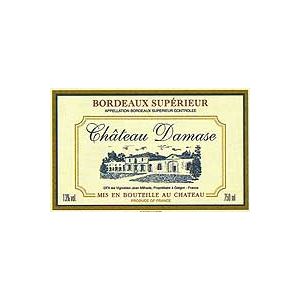
Château Damase Bordeaux Supérieur 2001 – France
Gustave Lorentz Pinot Gris d’Alsace Reserve 2002 – France
Gustave Lorentz is a family owned and operated winery that dates to 1836.
At present, the very capable 40-year old Georges Lorentz is the Lorentz in
charge, with some assistance from his “retired” father, Charles.
Indeed, it must be true that old winemakers rarely just die; instead, they
age to perfection and impart wisdom and knowledge to their children, before
gracefully fading away.
The Lorentz winery is one of the largest family owned facilities in Alsace. It encompasses sixty-six acres of premium vineyards in Bergheim, including nearly half of the great Grand Cru vineyard of Altenberg de Bergheim and all of Kanzlerberg, the smallest Grand Cru vineyard in Alsace. Bergheim is located in the very finest section of Alsace, a mere 3 kilometers from Ribeauville and just 5 kilometers from Riquwihr. This is the real Alsace wine country, the very heart of the famous Route de Vin. All of the Lorentz wines come from this area known as the Haut Rhin and express the unique Bergheim terroir.
Like most Alsace producers, Gustave Lorentz features several levels of wine from a wide variety of traditional Alsace grapes. The ubiquitous Pinot Blanc provides a steady income and a solid foundation upon which Lorentz, like the majority of Alsace growers, is building his empire. As one would expect, Riesling, Tokay Pinot Gris, and Gewürztraminer constitute the pinnacle of this properties achievement, as they do throughout Alsace. In addition, Lorentz’s wines are featured in many of the Michelin-starred restaurants in Alsace and some of the finest restaurants around the world. From simple vintage cuvees to Reserve and Grand Cru bottlings as well as the rare late harvest wines known as Vendanges Tardives, Lorentz is dedicated to the fashioning of the highest quality Alsace wines. Vive la différence!
Alsace
Alsace is quite possibly the most picturesque wine region in all France. It is an enchanted land of beautifully restored half-timbered houses, flower bedecked balconies and window boxes, and of course vineyards. It is bounded by the Vosges Mountains to the west, which block out the dreary maritime weather that plagues so much of the rest of northern France, and the Rhine River and Germany to the east. On account of its favored position and corresponding climate, Alsace is the sunniest province in northern France. This extra sunshine makes Alsace an ideal spot for the cultivation of the vine and the production of premium wines.
In Alsace, white wine reigns supreme. This is a matter of local preference and tradition, in spite of the province’s production of some very noteworthy Pinot Noir wines and the contemporary clamor for red wine. Pinot Blanc is the stable of Alsace, where it makes a fresh, sprightly wine of considerable merit. Nonetheless, the greatness of Alsace lies more typically in the crafting of some of the world’s finest wines from Riesling, Gewürztraminer, and Pinot Gris – the vast majority of which are made dry rather than sweet. The relative dryness of most Alsatian wines may come as a surprise to many, especially those for whom German sounding names and tall thin green bottles are synonymous with sweetness. However, Alsatian wines are unique unto themselves and rarely do they resemble their German counterparts in style, flavor, or level of residual sugar. Robert Parker Jr. has called the wines of Alsace “some of the greatest white wines produced on the planet,” and some of the most pleasurable and hedonistic, too, we might add.
Tasting Notes: The 2002 Gustave Lorentz Reserve Pinot Gris is a bright, cheerful wine that shines with the color of the noonday sun. It proffers an intriguing nose of minerals, spice and understated fruit. On the palate the 2002 Lorentz Pinot Gris Reserve is a true chameleon of ever-changing hues and flavors, whose personality is dependent largely upon the temperature of the wine and how long it has breathed. When first opened and icy cold, the tastes of lemon ice and fresh mineral are most evident. As the wine breathes and reaches towards a more ambient temperature, it takes on broader, more hedonistic tones that deftly combine fruit and spice and everything nice. Initially, we suggest serving the 2002 Gustave Lorentz Reserve Pinot Gris icy cold. Then, we suggest you allow it to warm slowly in the glass, over at least a thirty-minute period, in order to completely appreciate this wine’s evolution and metamorphosis.
Accompaniments: The 2002 Gustave Lorentz Reserve Pinot Gris is quite a versatile wine. Its chameleon like nature makes it a natural for a wide variety of cuisines and an excellent accompaniment to many ordinarily difficult to pair foods. Not surprisingly, Quiche Lorraine, leek tarts, and spicy omelets that are made from asparagus and several types of cheese provide excellent traditional accompaniments to this generous Alsatian Pinot Gris. Pork Tenderloin, especially when marinated in fruit based sauces, presents another splendid marriage. Pâté, highly charged hors d’oeuvres, shellfish, and spicy fish chowders also supply additional first-rate accompaniments to Lorentz’s Reserve Pinot Gris. And unlike the majority of lavishly oaked Chardonnay wines that still saturate the market, Asian stir-fry, fusion dishes, and most soy-based foods pose no clashes or difficulties when accompanied by this Alsatian beauty, so be daring; experiment! Enjoy!
Recipe for White Wine
Quiche Lorraineau Fromage
9” pie shell 1 1/4 cup light cream
1 cup Swiss cheese – grated 1/4 tsp. salt
1 cup ham – diced 1/8 tsp. pepper
4 eggs 1/2 tsp. nutmeg
2 Tbl. butter
Sprinkle grated cheese in pie shell and bake at 400 degrees for 7 minutes. Lightly beat, milk, salt, pepper and nutmeg. Pour mixture into pie shell and dot with butter.
Bake in preheated oven at 375 degrees for 40 minutes or until a knife inserted in center comes out clean. Allow pie to set for 5 minutes out of oven before serving.
Dona Dominga Carmenère Reserva 2003 - Chile
Dona Dominga is the latest venture of the Silva family, a leader in redefining
the world’s expectations of Chilean wine and a driving force behind the
success of Chile’s most important wine producing region: Colchagua. The
Silva family has been pioneers in the breathtakingly beautiful Colchagua Valley
since the 19th century. Historically, the Silvas were one of the first families
to plant vines in this enchanted land that abuts the Cordillera of the Andes
and, today, their beautifully restored colonial style winery remains the oldest
in the valley.
Casa Silva possesses a rich history as well as a string of world-class wines that have come to captivate international consumers and critics alike. Furthermore, Casa Silva persists in positioning itself as one of South America’s most exciting and forward-looking wineries by establishing Dona Dominga, a truly exceptional line of Reserva wines from the family’s vineyards in Colchagua. Through it all, Casa Silva remains a truly family affair. Today, the Silvas, father Mario and sons Mario Pablo, Gonzalo, and Francisco all take part in the daily operations of the winery and not surprisingly, they continue to be pioneers. The Silvas, along with their very capable oenologist Mario Geise, are considered Colchagua’s foremost experts on Carmenère, Chile’s emblematic red grape variety. Moreover, they are at the vanguard of their nation’s success with Cabernet Sauvignon as well as the production of premium white wines, especially traditional French varietals: Chardonnay, Sauvignon Blanc, Semillon and Viognier.
A family passion, a love for the land and its wine, and a commitment to future generations has catapulted Casa Silva in just eight years from a bulk supplier and bottler of wine to one of the continent’s superstars. Since its inception in 1997, Casa Silva has become the Chilean winery with the most recognition and awards at international wine competitions. For three consecutive years, 2000, 2001, and 2002, the Catad’Or Hyatt, Chile’s most prestigious wine competition, has heralded Casa Silva as “the Best Chilean Producer.” Furthermore, the International Wine & Spirit Competition in London named Casa Silva as “The best South American Producer”, and with good cause. This estate’s many wines are uniformly excellent and getting better with each successive vintage.
Carmenère
Carmenère is a grape varietal that has virtually disappeared from its native Bordeaux, but quite literally this little known varietal has been resurrected or at the very least been born again. Like the mythical phoenix that rises from the ashes, Carmenère has a new lease on life. After more than a century of obscurity, this flavorful, difficult to grow red grape variety is alive and well in Chile. It grows especially well in the scenic Colchagua Valley, where it ripens fully and is considered by its adherents to be next to godliness.
For a very long time, many in Chile believed or at least wanted to believe for commercial purposes that Carmenère was a clone of Merlot. And although there are some obvious differences in leaf appearance as well as the size and flavor of their fruit, both varieties had grown up alongside each other in Chilean vineyards for generations, with no distinction made between them. However, Carmenère is in fact a distinct varietal that carries its own set of attributes and characteristics. After years of speculation and extensive experimentation that culminated in1994 with DNA testing and a positive identification by French ampelographer (vine expert) Jean-Michel Boursiquot, the true identity of Carmenère was established or more accurately re-established
Carmenère most assuredly traveled to Chile in the early 19th century, before the advent in Europe of phylloxera, the dreaded vine louse that decimated Bordeaux and most other European vineyards in the late 19th century. Although Carmenère remains one of only six legal red grape varietals in Bordeaux, it is de facto no longer part of the Bordeaux blend that is now dominated by Merlot, Cabernet Sauvignon, and to a lesser extent Cabernet Franc. Two of Carmenère’s unique characteristics, the need for a very extended ripening time and low yields, probably led to its demise in Bordeaux, where the weather is hardly conducive to a late ripening, shy bearing varietal. On the contrary, Carmenère thrives in Colchagua where the long growing reason and lack of disease provide the ideal terroir for what is quickly becoming Chile’s own grape variety.
Tasting Notes: The very deep rich color and incredible viscosity of the 2003 Dona Dominga Carmenère Reserva underscore the superior quality of the 2003 vintage in Colchagua. Scents of ripe blackberries, chocolate, mocha, and spice fill the nose. On the palate, the taste of woodland fruits, lightly roasted coffee, and melted dark chocolate prevail – all of which are rounded out with a deft touch of oak. Nonetheless, in spite of an impressive array of olfactory and gustatory delights, the Dona Dominga Carmenère remains hard to describe simply because Carmenère is such a distinctive grape. It offers the taster a truly unique experience. Smooth, fleshy, but well structured, the 2003 Dona Dominga Carmenère Reserva combines the finest attributes of both Merlot and Cabernet Sauvignon, with a personality all its own. We suggest you allow this excellent Carmenère to breathe for at least 30 minutes prior to serving between 64°- 68° F.
Accompaniments: In Chile, beef and more beef, usually in the form of what is referred to as lomo, constitute the traditional accompaniments to Carmenère and its cousin Cabernet Sauvignon. And after considerable experimentation, we certainly second the motion of beef, including filets, sirloins, and succulent stuffed veal chops with the 2003 Dona Dominga Carmenère Reserva. Chicken, duck, and most poultry dishes pair nicely, too. In fact, poultry and other light meats often showcase the distinctive qualities of Carmenère at least as well as red meat. Besides, Carmenère, with its spicy, slightly exotic flavors, aptly holds up to savory sauces and often complements complex dishes with even more panache than Cabernet based wines. Blackberry, orange, and many other fruit based sauces provide interesting pairings with Carmenère, so don’t be afraid to experiment, and enjoy!
For the Love of Cheese and Chocolate, Too: Several cheeses and an extraordinary chocolate we sampled recently are not to be missed with the 2003 Dona Dominga Carmenère Reserva. If you are up for treat, try Tetilla, a super creamy Spanish cheese from Galicia that absolutely melts in your mouth. From a little closer to home, a two-year aged Vermont Grafton Cheddar offers another sensory delight. This is a cheese with extraordinary flavor but not the bitter bite of so many other lesser cheddars. And if by the time you get to dessert there is even a drop of Dona Dominga left, wash it down with one of the other worldly dark Belgian chocolates from Jean Galler. You may go to bed fat, numb, and happy but you won’t regret it. For more information on fantastic cheese and chocolate pairings, visit us at www.cheesemonthclub.com and www.chocolatemonthclub.com respectively.
Recipe for Red Wine:
Madeira Veal Chops
4 - 1” loin veal chops 1/3 cup Madeira or red wine
5 Tbl. butter 1/4 cup beef broth
1 egg, slightly beaten 1/2 tsp. rosemary
1/2 cup plain bread crumbs salt & pepper to taste
3 Tbl. shallots – finely chopped fresh parsley
1 lb. fresh mushrooms – sliced
Dip chops in egg and then bread crumbs. Season with salt & pepper. Heat 3 Tbl. butter in a large skillet and brown chops well on both sides. Remove chops to a plate. In the same skillet, heat remaining butter and add shallots. Saute for 1-2 minutes and add mushrooms, continue to sauté for 5 more minutes. Add wine, cook for 1 minute and add beef broth and rosemary.
Return chops to sauce in pan and cook over low heat until chops are tender. Sprinkle with parsley.
Marco Felluga Molamatta Collio Bianco 2003 – Italy
The Marco Felluga family has been fashioning some of the Collio’s most
enchanting wines for four generations, and now with more than a hundred years
of experience this estate is undeniably Collio’s brightest star. Located
in the extreme northeast corner of Italy, sandwiched between the Julian Alps
that border nearby Slovenia and the glimmering blue waters of the Adriatic
Sea, Collio is home to more superbly crafted white wines than any other region
of Italy. Here the natural aria condizionata as the locals call it, provides
the Collio with the perfect climate for the cultivation and production of four
of Italy’s leading white varietals – Pinot Grigio, Pinot Bianco,
Tocai Friulano, and Ribolla Gialla.
For centuries the Collio languished in isolation and poverty, due to the
shifting tides of political unrest, which began in antiquity and continued
until the end of the Second World War. Therefore, it was not until after
World War II and Europe’s ensuing stability that the Collio began its
meteoric viticultural ascent. However, its land has always been ideal for
the cultivation of the vine and one of the Collio’s earliest and most
renowned vineyards, Russiz, has produced extraordinary wine for centuries.
In fact in 1868, the Villa Russiz winery was established near Capriva to
support a renowned orphanage. Today, Russiz remains Marco Felluga’s
prized Pinot Grigio vineyard and the source of this estate’s single
vineyard Russiz Superiore.
In addition to its award winning Pinot Grigio, the folks at Marco Felluga also fashion excellent Tocai Friulano and an outstanding proprietary white wine called Molamatta along with other traditional Collio varietals. Although renowned for white wines, Marco Felluga also produces small quantities of very fine Merlot.
Tasting Notes: A rare and exciting blend of Tocai Friulano (40%), Pinot Bianco (40%), and Ribolla Gialla (20%), the 2003 Marco Felluga Molamatta is a wine of distinctive flavor, substance, style, and quality. The scent of stone fruits, minerals, and hints of exotic spices haunt the aromatic profile of this lovely wine. On the palate, the Molamatta is rich in fruit and rather full-bodied for an Italian white wine, but pleasantly dry. It also possesses a long luxuriant finish that summarizes all the scents and savors that abide in this wonderful wine, leaving the taster completely bedazzled, if not utterly satisfied. In typical Felluga fashion, a glass of Molamatta is an invitation to partake of sunshine in a glass. Served cool, lightly chilled, or iced, the 2003 Marco Felluga Molamatta is a rare and venerable treat. Enjoy!
Accompaniments: Given the wealth of flavor and supreme style of the 2003 Marco Felluga Molamatta, successful food pairings are not hard to come by. Some of our favorite choices include a wide range of seafood dishes, including scallops prepared almost any way imaginable. Whether the scallops are grilled or baked in a traditional Coquilles St. Jacques, they provide a splendid accompaniment to the Molamatta. Chicken offers another fine backdrop with which to showcase this wine. One especially simple but complementary dish is Oregano Chicken; whereby, pounded chicken breasts are baked with lemon, butter, white wine, and oregano, and with just five minutes left to cook are coated with a thin layer of melted mozzarella cheese. Yum!
Château Damase Bordeaux Supérieur 2001 – France
In resurrecting Château Damase, the Milhade family has done it again.
They have transformed yet another under performing Bordeaux Supérieur
property into a model of excellence. How is it that year after year some big
named Bordeaux properties with plenty of capital, an excellent terroir, and
a fine reputation to boot turn out wines of marginal quality at best; while
others like Château Damase and the string of first rate Bordeaux estates
under the Milhade umbrella consistently outperform their more heavily marketed
neighbors?
The Milhade family is well known in Bordeaux for their loving restoration of historic Bordeaux wine properties and an uncompromising devotion to the production of hedonistic, high quality, full-flavored Bordeaux wines. In addition, they have adopted quality practices and techniques that are normally found only at the highest echelon of Classified Bordeaux Châteaux. Moreover, the Milhades are not afraid to exclude or declassify up to half of their crop at certain properties in order to fashion top-notch wine.
Named after Damase Milhade, the founder and forbearer of this splendid house, Château Damase is the smallest of the Milhade estates – a mere 22 acres. This estate is also unique in that all of its vineyards are planted to Merlot, a rarity in Bordeaux, which means the blend or cepage of Château Damase is always 100% Merlot.
Tasting Notes: Deeply colored and scented with the fragrant smells of berries that have been infused with the subtle aroma of clean earth and forest woodlands, the 2001 Château Damase embodies all the elegance and charm for which true Merlot and honest red Bordeaux Supérieur are justly famous. Smooth, elegant, and juicy, the Château Damase is charm personified. Never hot or weighty, this uncomplicated claret slips down ever so easily, leaving a subtle clean aftertaste that beguiles the imbiber and begs for another sip, and then another, and then….well you get the picture. Consequently, you would be wise to have a second bottle on hand. W e suggest serving Château Damase at cool room temperature and that it be afforded at least 20-30 minutes of aeration. Even though the 2001 Château Damase is neither weighty nor closed upon opening, a little breathing time truly accentuates the charm as well as the flavor of this juicy claret. Enjoy!
Accompaniments: The words simple elegance sum up both the 2001 Château Damase Bordeaux Supérieur and our choice of foods to accompany it. A rotisserie chicken or an herb-grilled breast of chicken provides an ideal background with which to highlight the Château Damase. However, for the more culinary adept among you, we heartily recommend Chicken Barigoule, a rotisserie fried chicken breast with braised artichokes, garlic, pearl onions, carrots, asparagus, and tomatoes – a simple but very elegant meal that showcases the finesse and subtlety of this medium weight claret. Most whites meats, including pork tenderloin, present other wonderful gastronomic opportunities with this superbly crafted Bordeaux Supérieur. Soft cheeses are another good bet. In fact, each time we tasted this wine, we liked it as much with food as without. Its forward easygoing personality was the only necessary accompaniment, so as you like it.
For Members Only
Give Your Friends FREE Beer, Wine, Cheese, Chocolate, Cigars & Flowers!
Through our Customer Appreciation Program
Your name has real value to your friends, co-workers, and family members! Every time a friend, family member, or anyone else you know joins any one of our clubs, [or gives a gift] for 3 months or longer, we'll give them 50% off of their first month, but only when they mention your name. And we'll also give you 50% off your next month too which can either be applied towards your current membership or you can try one of our other Clubs out! (We can add one more month to your order at 50% off for prepaid memberships!)
The Fine Print: Members giving gift memberships do not qualify for referral credits and you can't give yourself a gift to qualify! This Program is mutually exclusive of any other promotions.
Membership Q & A
Note: Please do not use the web site to make any account related information changes such as address or billing changes, membership extensions, or terminations. To ensure timely processing of your request, please call us at 800-625-8238.
Q: What can I do if Im having difficulty
receiving my shipment at home?
A: You should consider having our discrete box delivered
to your work location or to a neighbor 21 yrs. of age that can
receive it for you. The box is brown corrugated cardboard and doesnt
say Wine on it anywhere. Consider having it shipped
to your work location as many of our customers do.
Q: What should I do if Im moving or
want to extend my membership?
A: Please call us prior to the 9 th of the month to make
all account related information changes such as address changes,
membership extensions & terminations, or gift accounts desiring
to continue their memberships. Address changes made after that
time may require a repackaging and re-shipping charge and will
incur a $5.00 service charge from UPS that will be charged to your
account.
Q: What happens if my shipment is damaged?
A: If your shipment arrives damaged, please call us immediately toll
free at 1-800-625-8238 and report the incident for a prompt resolution.
Q: What happens if my credit card is declined?
A: We will send you a courtesy notice asking for an alternative payment
method, and will also attempt two more times to process the charges. If we
cannot secure
payment and have not been contacted by you, the order will be temporarily suspended.
Q: What happens if I join under a special
incentive program and dont
stay a member for the entire term committed?
A: Not a problem. Although we want to do everything we can
to keep you as a member, we will allow you to cancel your subscription
early, however, you will be responsible to pay for the item which
was given to you as part of the promotion. If you received a discount
based on a specific term, the amount discounted will be charged
to your card.