Vol. 8 No. 12
Premier Series |
|
Featured Wineries & Wines |
Membership Type |
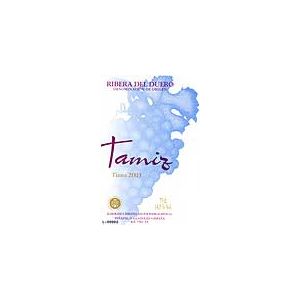
| Tamiz Ribera del Duero - Spain | 1 Red 1 White; 2 Reds |
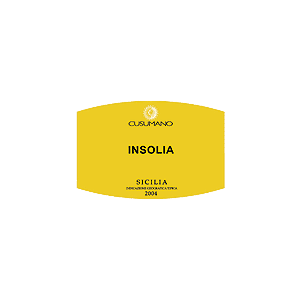
| Cusumano Insolia - Italy | 1 Red 1 White; 2 Whites |
| Friends Sonoma Zinfandel - USA | 2 Reds |
| Casa Silva Sauvignon Gris - Chile | 2 Whites |
Master Series |
|
Featured Wineries & Wines |
Membership Type |
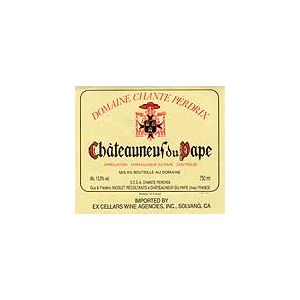
| Chante Perdrix Chateauneuf-du-Pape - France | 1 Red 1 White; 2 Reds |
| Cusumano Insolia - Italy | 1 Red 1 White |
| Tamiz Ribera del Duero - Spain | 2 Reds |
Collector Series
|
|
Featured Wineries & Wines
|
Membership Type
|
| Chante Perdrix Chateauneuf-du-Pape - France | 1 Red 1 White; 2 Reds |
| Guigal Condrieu - France | 1 Red 1 White |
| Dominio de Conte - Rioja Alta | 2 Reds |
Bodegas Teofilo Reyes Tamiz
Ribera del Duero Tinto 2003 – Spain
Teofilo Reyes is the most respected enologist in the Ribera del Duero, and
Tamiz is the fruit of Reyes’ own six-acre property along with the very
best grapes from a select group of neighboring growers. This small family vineyard
lies in the western part of the Ribera del Duero appellation from whence the
region’s most illustrious wines flow: most notably the legendary Vega
Sicilia, Pesquera, and Alion. What makes this part of the Ribera del Duero
so special is its high elevation (over 2,500 feet) and unique chalky, limestone
topsoil over a bedrock of hard schist – not exactly the best soil for
growing wheat, but about as good as it gets for Spain’s illustrious Tinto
Fino, Ribera del Duero’s local version of Tempranillo.
Reyes has a long and impressive résumé of winemaking in the Ribera del Duero. Born in nearby Burgos, Toefilo Reyes’s 50-year career spans the entire revival and subsequent meteoric rise of the Ribera del Duero from its days as the lowly breadbasket of Castile to one of Spain’s most important red wine producing regions. Today, no single Spanish appellation fashions as many compelling wines as the Ribera del Duero, and a great deal of the region’s transformation and viticultural success can be attributed directly to Reyes. He is responsible for creating Protos, the local cooperative’s most successful venture, which won great critical acclaim in the 1970’s. Even more impressive, it was Reyes who created the modern day classic Pesquera, with the backing of Alejandro Fernandez. A truly sensational wine, Pesquera almost single handedly transformed the Ribera del Duero and planted the region firmly in the 20th century.
Bodegas Teofilo Reyes was launched in 1994 after Reyes’ association with Alejandro Fernandez came abruptly to a halt. Neither Reyes nor his family was ready to squander his oenological talent, so they launched their own winery. It immediately became a critical and commercial success. Quantities remain tiny by virtually all commercial standards and world demand for Reyes’ wines far outstrips supply, so we are fortunate to be able to enjoy this estate’s delightful Tamiz Tinto, a blend of 98% Tinto Fino (Temranillo) and 2%Albillo (another local variety). Plans are underway to expand this exceptional property, so hopefully we have not seen the last of this exciting winery.
Tasting Notes: A super saturated wine, the 2003 Tamiz Ribera del Duero Tinto recalls in appearance the “black wines” of Cahors from southwest France, but as the Berenstain Bears and all perspicacious adults soon come to realize “appearances are deceiving.” Indeed, the Tamiz is as dark and foreboding in color as any red wine, but here the comparison of the 2003 Tamiz Tinto to Cahors and other deep, brooding tannic monsters abruptly ends. The scents of fresh black cherry, cola, and plum seep from the nose of the Tamiz. And in the mouth, the Tamiz displays no hard dry tannins, only fleshy fruit and ripe round flavors. This is a beautiful example of a well-made Ribera del Duero Tinto. A product of a very ripe vintage that is aged just eight months in American oak, instead of the customary two and three year stints the region’s Crianza and Reserva wines see, the 2003 Tamiz Tinto embodies supreme balance, charm, and freshness to accompany its long lush flavor profile. Certainly, considerable aeration improves this wine, but it shows almost as well after only ten or fifteen minutes in the glass, so as you like it. A minute or two on AccelaBreathe works wonders. For more information on this exciting new wine tool, click on www.accelabreathe.com. We suggest you serve the Tamiz Ribera del Duero Tinto at cool room temperature (64°-68° F) for optimal enjoyment.
Accompaniments: Given the voluptuous nature of the 2003 Tamiz Ribera del Duero Tinto, a wide variety of gustatory delights awaits both the serious gourmet and the ordinary gourmand alike. Whether you prefer butter and herb roasted chicken, country cassoulet, or an epicurean creation, the 2003 Tamiz is ready to accompany just about any meat or poultry dish with aplomb, including game birds. Quail and pheasant offer especially pleasing partners. We also suggest the Tamiz Tinto with turkey and all the trimmings; we have found that it pairs particularly well with the dark meat of the turkey and the more savory parts of a meal, like stuffing for instance. In addition, we strongly suggest that you not overlook traditional Mediterranean favorites, even typical Italian specialties like lasagna. In fact, almost any food with which you would consider serving Châteauneuf-du-Pape or similar hedonistic style of Rhône wine works quite well with the 2003 Tamiz Ribera del Duero Tinto. Enjoy!
Cusumano Insolia Sicilia 2004 – Italy
Cusumano is a family owned and run winery that was born again in 2001, when
brothers, Alberto and Diego, took over the management of the concern from their
father Francesco. Since that time the estate has doubled in size and the quality
of its wines has skyrocketed. We have been following the meteoric success of
this family for the last four years and believe the Cusumano brothers are,
indeed, on to something special. In short, they have been performing magical
feats with a variety of classic and indigenous varietals from more than half
a dozen vineyards they own throughout Sicily.
With a passion for terroir and the production of authentic expressions of Sicily’s rich viticultural heritage, the Cusumano brothers have set about acquiring numerous vineyards in the western and southern regions of the Mediterranean’s largest island in order to offer the world a glimpse of what this great land has to offer. The brothers have also reconstructed a 19th century family farmstead to handle modern wine production. This handsome new facility, which was completed only in 2003, houses everything from the winery’s offices to a new underground barrique cellar for aging wine – a novel undertaking in Sicily.
Presently, Cusumano fashions a myriad of wines that center around the elegant and distinctive Insolia, an indigenous white Sicilian varietal; Chardonnay; Nero d’Avola, a spicy mouth filling red grape; Merlot; Syrah; and Cabernet Sauvignon. Cusumano’s most recent examples of Insolia as well as their limited offerings of proprietary reds constitute some of the very finest Sicilian wines we have had the pleasure to taste.
Sicily: More a Continent Than an Island
Sicily is a large and varied land that wears as many faces as a circus harlequin. Its land and people are as diverse as any earthly realm. At the crossroads of Europe, Africa, and the Middle East, Sicily possesses a history and personality all its own. The Greeks called Sicily and nearby southern Italy Enotria, land of the vine, a description that is as apt today as it was 2,800 years ago. However, like its geography and people, viticulture in Sicily is an immensely varied proposition.
In terms of wine, Sicily is, indeed, more a continent than an island. Its sheer variety of grapes, autochonous and otherwise, set it apart from the rest of Europe. In addition, Sicily’s grape harvest is the longest in Europe. Harvest begins the first days of August in the island’s western provinces and doesn’t end until the vine-covered slopes of Mt. Etna have been picked in November. Due to the proliferation of mountains, the surrounding sea, Sirocco winds, and extreme temperatures, more climates and zones exist in Sicily than in any other single wine producing region on earth, and this doesn’t even take into account what are popularly referred to as microclimates. And then there are the island’s soils, a countless array of colors and textures that are capable of imparting infinite variations to the wines they render.
Today as always, Sicily remains an exciting passionate place. From a wine grower’s perspective, it remains a kin to an artist’s palette or a blank canvas. Both canvas and palette speak forever of infinite potential and variety, they whisper the promise of greatness, and occasionally they give birth to a masterpiece for which a thirsty world is grateful.
Tasting Notes: We bet you haven’t had an Insolia before, but then there is a first time for everything. First and foremost, the 2004 Cusumano Insolia is one tasty white wine, but please put aside all preconceived notions because Insolia is not like Chardonnay, Sauvignon Blanc, Pinot Grigio, or any other white wine you may have tasted in the last month … or year. The 2004 Cusumano Insolia is a bright, festive wine that sports a slight golden hue that reminds us of Sicily and the formidable light that illuminates the alluring, often exotic, islands that inhabit the Mediterranean Sea. One whiff of the 2004 Cusumano Insolia, with its soft ripe fruit and enticing waft of spice, reminds us of an Oriental bazaar. Ripe lush fruit becomes entwined with anise and nutmeg and beckons the taster forward as if inviting an intrepid traveler into a trader’s tent. A beautiful combination of creamy ripe fruit, cinnamon, and much more fill the mouth, but the wine never appears insipid. What a unique, refreshing white wine this is that begs only to be drunk and enjoyed! We suggest serving the exuberant 2004 Cusumano Insolia well chilled (35°-40° F). Salute!
Accompaniments: A party would be a splendid accompaniment to the 2004 Cusumano Insolia, but the hosts beware; they may risk their lives when they run out. This is one feel good party wine. However, the Cusumano Insolia also provides the perfect pairing with several Sicilian favorites, including Shrimp Fra Diavolo and Pasta Arrabiata. The Cusumano Insolia not only mitigates the heat of those dishes, it blends perfectly with the spiciness, without ever going over the top. In fact, most pasta dishes that feature vegetables, lightly grilled chicken, or fish pair splendidly with this wine, too. And let’s not forget soy based stir-fries and fish based soups such as bouillabaisse and cioppino, which fare almost as well as a classic Shrimp Fra Diavolo. In short, this is a wine made with good old-fashioned enjoyment in mind, so just enjoy it!
Friends Sonoma County Zinfandel 2001 – USA
Friends is more than a wine or even a winery: it is the collaboration of friends from two Sonoma County wineries, and that’s just for starters. Friends grew out of the friendship of the Pedroncelli brothers, Jim and John, Tim Murphy and Dale Goode of Murphy-Goode, and the outstanding Winery Associates team, headed by Dave Ready, that purveys several of Sonoma County’s most consistently fine Zinfandels and Cabernets. This venture includes not only the owners and working partners in each of the wineries but also growers, salespeople, and various clients. Initially, Friends was conceived as a special wine for charity auctions. It includes a Zinfandel and a Cabernet Sauvignon, which are released only when the wines are ready to be consumed. The 2001vintage is the first and only release to date of these special Friends offerings, but others we hope will surely follow.
The Friends label features a friendship bracelet as a symbol of peace and good will. Native Americans often used handcrafted artifacts like the friendship bracelet as a sign of their friendship and fidelity to others. Today, a friendship bracelet is often exchanged between best friends as a reminder to each that their friendship is meant to endure forever. Not surprisingly, the friendship between the Pedroncelli, Murphy, Goode, and Ready families dates back many years, and their decades long commitment to marketing their wines mutually in a unique highly successful venture such as Winery Associates is testament to their good faith.
Tasting Notes: A unique blend from prized lots of Sonoma County Zinfandel; the 2001 Friends Zinfandel is one huggable wine. Rich in color and pleasantly aromatic, this medium bodied Zinfandel displays a good deal of berry fruit, both in the nose and the flavor. All that is good in Zinfandel: blueberry, raspberry, and a hint of bramble, which has come to serve as Zinfandel’s calling card, all come happily together in the 2001 Friend’s Zinfandel. Meanwhile, traces of coffee, chocolate, and mocha poke through the berry fruit on the palate to add further to this Zin’s charm. But what is best of all, this “Friend” leaves without a bark or a bite. It makes you wish you had a bottle of Friends Zin for every night of the week… then just think of how many new friends you would make. Enjoy the Friends Zinfandel at cellar temperature (55-60 degrees Fahrenheit) as you would any fine red Zinfandel.
Accompaniments: Aged and not released until it was ready to be drunk, the 2001 Friends Sonoma County Zinfandel is presently the perfect party wine. It is enjoyable with a host of foods from Carolina pork barbecue or strips of rare beef tenderloin to grilled Eggplant Parmigiana or Middle Eastern tabouli. However, we believe Zinfandel has a real affinity for Italian specialties. A particular favorite is ravioli, stuffed with ricotta, spinach, zucchini, and Parmesan cheese along with chopped fresh tomatoes, mushrooms, garlic, and capers. A hearty Pasta Primavera or Spaghetti Bolognese makes another fine accompaniment. In fact, we have enjoyed the Friend’s Zinfandel with almost everything we have tried and we have enjoyed it equally well without food. It’s a good old-fashioned drinking wine. Enjoy!
Casa Silva Sauvignon Gris 2005 – Chile
An impeccably clean well-run winery, Casa Silva continues to astound with the quality as well as the variety of its wines. Undoubtedly, this is one of a hand full of South America’s very finest wine estates. Located some two hundred kilometers south of Santiago, in the heart of Colchagua, an area many are now calling Chile’s Napa Valley, Casa Silva has garnered more recognition and awards at international wine competitions than any other Chilean winery. Furthermore, Catad’Or Hyatt, Chile’s most prestigious wine competition, has named Casa Silva “the Best Chilean Producer” three consecutive times. And that’s not all, the International Wine & Spirit Competition recently named Casa Silva as “The best South American Producer.” Kudos to the Silva family, father Mario and sons Mario Pablo, Gonzalo, and Francisco, and Mario Geise, the winery’s outstanding consulting enologist, for taking this beautiful property to such lofty heights in less than a decade.
Surprisingly, Casa Silva’s inception dates back to only 1997, the year this property began bottling premium wines under its own name. However, historical accounts tell us that the Silva family’s predecessors were pioneers in Colchagua more than a century ago, when they brought the first grape varieties from France to their Angostura estate at the base of the towering Andes. Today, the Silvas remain pioneers: they are Colchagua’s foremost experts on Carmenère, Chile’s emblematic red grape variety, and they produce the finest Sauvignon Gris we have ever tasted. Moreover, this great property is at the vanguard of South America’s success with many other grape varieties, including Sauvignon Blanc, Semillon, Viognier, and of course Cabernet Sauvignon.
Tasting Notes: Produced from 90 and 100 year old vines that are the oldest in Colchagua, the 2005 Casa Silva Sauvignon Gris is reason alone to propagate more of the rare Sauvignon Gris variety. As a relative of Sauvignon Blanc, Sauvignon Gris often yields a dry medium weight wine with lots of aromatic profile, but this Casa Silva offering takes this excellent but obscure variety to new heights. The 2005 Casa Silva Sauvignon Gris sports a beautiful color and a great nose, which is, perhaps, best described as aromatic fireworks. Melon, fig, and pure freshly squeezed citrus aromas make this wine a feast for the olfactory. Happily, the same long unique flavors, along with a gentle mineral tone, fill the mouth and linger on the palate long after the wine has been consumed. We suggest serving this outstanding offering between 40°-50° F.
Accompaniments: Seafood is the first word and, perhaps, the last word as well in accompaniments to the 2005 Casa Silva Sauvignon Gris. Clams, mussels, oysters, and shrimp are all good bets with this pure, tasty unique wine. Specifically, Shrimp Ceviche and Seafood and Cheese Empanadas provide especially fine complements to Casa Silva’s flagship white wine and all are a great way to wow a crowd. Chilean Sea Bass or marinated Yellow Fin Tuna, cooked over a charcoal or mesquite fire, offer other terrific pairings. Nonetheless, we suggest you not limit this fine white wine to seafood. The Casa Silva Sauvignon Gris accompanies hors d’oeuvres, pastas, and a host of pork and ham dishes with aplomb, too. Furthermore, we like it as an aperitif. Enjoy!
Domaine Chante Perdrix
Châteauneuf-du-Pape 2003 – France
Domaine Chante Perdrix produces one of Châteauneuf-du-Pape’s most
flamboyant and exotic wines. It also fashions what is likely the appellation’s
most consistently hedonistic and seductive Châteauneuf-du-Pape. At Chante
Perdrix, whose name means “Song of the Partridge,” Guy and Fréderic
Nicolet fashion truly exceptional wine from low yielding vines. They use a
traditional cépage or blend of Grenache (80%), with the balance Syrah,
Mourvèdre, and the rare Muscardin varietal. Collectively, the Nicolet
brothers farm one continuous 46-acre vineyard at the southern end of the appellation,
where the earth consists more of stone than soil. Here, the proliferation of
gravel and to a lesser extent the flat river stones called galets roulés
dominate, which force the vines to burrow deep into the earth for sustenance;
thereby facilitating the great charm and warmth of Chante Perdrix and solidifying
this estate’s reputation as the most delicious and forward Châteauneuf-du-Pape.
The quiet, unassuming Guy Nicolet is the winemaker at Chante Perdrix, which assures that only time-honored, traditional winemaking methods prevail at this Provencal domain. A traditionalist, Nicolet ages his red Châteauneuf-du-Pape for up to 18-24 months in large oak foudres. What emerges is a firm, spicy, flamboyant wine that drinks remarkably well, even when young; yet, it will improve for up to ten years or more in bottle. In addition, Nicolet fashions small quantities of exotic white Châteauneuf-du-Pape that is worth seeking out.
Châteauneuf-du-Pape
Châteauneuf-du-Pape is the Rhône Valley’s most important appellation. Located in Provence, astride the swift moving Rhône River, this sun-drenched locale is blessed with a dry Mediterranean climate that is nearly ideal for the cultivation of vines and the production of red wine. Châteauneuf-du-Pape also possesses some of the oldest vines in France; the average age of the vines in Chateauneuf du Pape is in excess of 40 years, by far the oldest of any major appellation in France. In addition, the entire production of this great wine is hand harvested. Moreover, we have not yet mentioned the region’s fabulous terroir – large flat stones known as galets roulés that are mingled with plenty of decomposed gravel. The remnants of Alpine glaciers that once covered southern France; Châteauneuf-du-Pape’s glacial till provides excellent drainage and imparts subtle nuances of flavor to the appellation’s outstanding wines.
Châteauneuf-du-Pape, meaning the Pope’s new castle, derives its name from the sprawling edifice that the Roman popes built as a summer palace during the Babylonian Captivity. Forced to flee the political tumult of Rome from 1305-1378, Pope Clement V, a Frenchman, and his successor John XXII, left indelible marks on the history of wine by planting vines around their château and producing some of the Medieval world’s most noteworthy wines. Later, during the 1920’s, Châteauneuf-du-Pape would once again play a significant role in the history of wine by voluntarily adopting a set of controls and guidelines put forth by Baron Le Roy of Château Fortia. This action became the model for the entire French system of Appellation Control and nearly all other subsequent attempts to guarantee the authenticity of wine and improve the wine of individual geographic locales.
Tasting Notes: A deep, dense, and fully packed Châteauneuf-du-Pape, the 2003 Domaine Chante Perdrix is one of the most delicious young Châteauneuf-du-Pape’s we have ever tasted. Youthful, rich, and voluptuous, this wine already drinks well; however, it is just starting to strut its stuff. Poised to blossom, this huggable Châteauneuf-du-Pape offers up the decadent scents of an exotic market: coffee, herbs, incense, oriental spices, and a hint of smoke. On the palate, this full-bodied Chante Perdrix is rich, layered, and beautifully textured. It fills the mouth with oodles of ripe, berry fruit along with subtle hints of forest woodlands, kirsch, and fresh cooked bacon. One would almost think this wine a meal rather than a beverage, but then we would all be denied the simple pleasure of just drinking this delightful concoction. Given the wine’s supreme youth, we suggest decanting the 2003 Chante Perdrix at least one hour ahead of serving if it is for near term consumption. Better still, put this wine on AccelaBreathe for a few minutes, (For more information on this amazing new wine tool, contact www.accelabreathe.com) or lay the wine down awhile longer and enjoy the fireworks that unfold in the glass. Salut!
Accompaniments: If ever there were only one wine for all occasions, it would have to be Châteauneuf-du-Pape, and our first choice would be the suave, jammy, incense laden 2003 Domaine Chante Perdrix. In its youth, red meats make great partners with the Nicolets’ most recent offering, especially a whole beef tenderloin, served medium-rare, with thickly sliced portabella mushrooms in a red wine, shallot, and Herbes de Provence reduction. A braised lamb shank gets our nod, too. For a tasty, but hearty vegetarian accompaniment, we suggest a salad of roasted red peppers, sautéed portabella mushrooms, roasted eggplant, tomato, caramelized onions, and a healthy crumbling of feta cheese. Served over a bed of complex greens or freshly baked focaccia, with a dollop of pesto mayonnaise as a dressing, this dish makes a sublime accompaniment to the 2003 Chante Perdrix. If you opt to hold this wonderful wine awhile, we suggest serving it with roast duckling, prepared with a blackberry or kirsch based sauce; we have found that duck provides one of the finest complements to mature vintages of Châteauneuf-du-Pape. Bon appétit!
Marcel Guigal has done it again. With his latest release of Condrieu, the world’s finest Viognier and one of France’s most revered white wines from the tiny Rhône appellation of the same name, Guigal has cemented his fame as one of the greatest producers of both red and white wines. It is no wonder then that Marcel Guigal has been called everything from “the man with the Midas touch” to “the planet’s greatest living winemaker.” Unquestionably, Guigal has earned the reputation for fashioning some of southern France’s most compelling wines, as the flood of favorable reviews and critical acclaims of his wines will attest. Yet, perhaps, even more impressive is Guigal’s knack for consistency. Without fail, Guigal wines, red, white and even rosé, are all at the top of the charts in both good years and bad. Moreover, each of Guigal’s many fine wines has become the yardstick by which all others are judged in their respective appellations.
From the antique village of Ampuis, the birthplace of the great Côte-Rotie appellation, the burgeoning wine empire of Guigal has spread to every significant appellation in the Rhône Valley. Led by Marcel and his adept son and protégé, Philippe, the Guigals have sown success and quality far and wide, and in the process forced less quality minded producers to improve their wines or perish. Most notable of Guigal’s wines are the firm’s several Côte-Rotie offerings, which are universally acknowledged to be the supreme examples from this ancient 2, 400 year old vineyard that dates back to early Roman times. On qualitative par with this estate’s Côte-Rotie are several Condrieu offerings made from the finicky but other worldly white grape variety Viognier. There is also an excellent red Hermitage from Guigal, a wine that is certainly one of the deepest and longest-lived expressions of the Syrah grape. In a similar full-bodied, personality filled style are Guigal’s newest stars: a Crozes-Hermitage Rouge and a Crozes-Hermitage Blanc, both of which are already the standard by which all other Crozes-Hermitage wines are measured, and Guigal has only produced Crozes- Hermitage since 1999. Last but not least are the firm’s delicious Côtes du Rhone offerings – red, white, and rosé. The red Côtes du Rhone contains a high percentage of old vine Syrah, while the white sports a similar amount of Viognier, a practice few other producers would even think to emulate. Yet, it is just such practices that set Guigal apart.
The key to Guigal’s success has always been quite simple. He cultivates his own vineyards organically with no chemical fertilizers or treatments and picks his grapes late when they are just about ready to explode with their own maturity. This late harvest, coupled with low yields and minimal intervention (including no filtration) gives birth to fragrant, round, ripe natural wines that are immensely pleasurable to drink. When purchasing juice from other producers, a practice that has helped Guigal augment his own estate holdings and hone his extraordinary winemaking skills, Guigal holds those growers to the same exacting standards he sets in his own vineyard. He buys only from producers he knows well who subscribe to his philosophy that old vines, low yields, and a late harvest are prerequisites for producing excellent wine. And, if these exacting requirements are not enough to insure quality, Guigal adds traditional wine ageing in new oak for extended periods of time. In short, Guigal leaves nothing to chance and is willing go the limit, both in the vineyard and in the winery. Bravo!
Tasting Notes: An audacious wine, the 2004 Guigal Condrieu embodies all the flamboyant charm and unique qualities that make Condrieu the world’s most beguiling Viognier. For starters, the bouquet is haunting. In fact, it is so entrancing that one could almost forget to drink the wine. Initially, the scent of the 2004 Guigal Condrieu, with a perfume reminiscent of ambrosia that is infused with jasmine and spring flowers, wafts from the glass and tantalizes the nose. With a little additional aeration, an aroma resplendent with apricot and oriental spices emerges from this heady concoction, so much so that one could easily mistake this classic Condrieu for a sweet wine. Don’t be fooled. The 2004 Guigal Condrieu is no fruit bomb or wilting violet. Rather, it is dry white wine with a taste of exotica; it is pure hedonism in a glass. It is also one heady extroverted white wine that packs a wallop to complement its great spicy mid palate and bone-dry exit. Moreover, this wine unfolds in the glass like a fine red wine, so be patient. Long and refreshing on the finish, this racy, one of a kind Condrieu is nothing short of a tour de force in white wine making. We suggest serving the 2004 Guigal Condrieu only moderately chilled, allowing it to breathe ten to fifteen minutes in the glass like a red wine before imbibing. Salut!
Accompaniments: No other still white wine makes a bolder statement or captivates its audience quite like fine Condrieu. For this reason, we believe the 2004 Guigal Condrieu provides the ultimate pleasure as an aperitif. It shines on its own. Nevertheless, it possesses the ability to complement many foods, especially starters. Hors d’oeuvres, smoked salmon, onion and leek tarts, and traditional Alsace style quiches constitute some of our favorite pairings with Guigal’s Condrieu. Coquilles St. Jacques and other cream or cheese based dishes with scallops provide considerable pleasure as well. Meanwhile, true cheese aficionados will find several well-selected cheeses to be the only accompaniment they desire with Guigal’s masterful Condrieu. A veritable St. André from France or an authentic Dutch Edam gets our nod. Bon appétit!
Dominio de Conté Rioja Reserva 1998
Dominio de Conté is the finest wine produced by Bodegas Breton, a small world-class estate in the Rioja Alta, from which the most beautiful and prestigious Rioja wines emanate. Founded in 1983, Bodegas Breton is a partnership that includes the legendary Dominio de Conté site, whose average vineyard age is the oldest in the Rioja. It also encompasses the famous 100-acre Viña Loriñon property, which lies at the heart of the Rioja along the south bank of the Ebro River.
Bodegas Breton specializes in the cultivation of indigenous Rioja varietals: Tempranillo, Graciano, Mazuelo, and Garnacha for the estate’s red Riojas and Viura and Malvasia for the estate’s white wines. Here, winemaking is very much in the traditional Rioja style – only Spanish grape varieties are utilized and the emphasis is on Crianza and Reserva style wines (which means extended barrel aging in American oak and pronounced berry and wood flavors), a profile that has come to define not only Breton’s own traditional style but Rioja’s distinctive flavor as well.
In spite of its recent origin, Breton takes a very time-honored approach to its wines. The philosophy and overriding objectives of this estate are twofold: to preserve the elegant, balanced historic “Rioja Alta” style and perpetuate the longevity for which traditional Rioja is legendary. Moreover, since its premier release, Bodegas Breton has consistently sought to increase extract in its wines in order to complement the racy, impressive structures that are naturally obtained from the estate’s mature, low yielding vineyards.
In the outstanding 1998 vintage, Breton has fashioned a Dominio de Conté Reserva that provides more than eloquent testimony to the greatness of this luxury brand and the old vines from which it springs. In addition, one sees in this single vineyard Reserva Breton’s ability to craft wines that age gracefully and gain complexity with extended bottle age. In keeping with tradition, the Dominio de Conté Reserva is made only in the finest vintages.
Tasting Notes: Regal in robe and still youthful in appearance, the 1998 Dominio de Conté Reserva exudes an enchanting powerful Pomerol like perfume, which befits the most elegant and stylish wines of Bordeaux as well as Rioja. Scents of cassis, plush hedonistic fruit, and oriental spice pervade the nose. Yet, when this wine graces the palate, it turns to all charm. The Dominio de Conté’s flavors are pronounced but gentle and well integrated, an elegant melange of berry, oak, and vanilla spice. So, what makes this wine so beguiling? It’s the haunting nose and strong feminine profile, which combine balance with subtlety and strength. An eminently satisfying wine, the 1998 Dominio de Conté Reserva is a top candidate for Best Dinner Party Wine of the Year. Moreover, the 1998 Dominio de Conté Reserva serves as a living reminder of the great depth and age worthiness of Rioja – attributes that first made this region and its wines legendary in the 19th century. Viva the 1998 Dominio de Conté! For optimum enjoyment, allow this elegant Reserva to breath for at least half an hour in a decanter, before savoring it at no more than 64º - 68° F.
Accompaniments: Great wines shine in the face of good food, but food pairings need not be elaborate to accompany sophisticated wines such as the 1998 Dominio de Conté Reserva. In fact, the simpler the better, but only the highest quality ingredients need apply. Considering this wine’s status on the dinner party circuit, we recommend you serve only the best free range chicken or the finest cuts of beef, lamb or pork to serve with this wine. Consequently, Chicken Marengo, a simple but flavorful dish that was created by Napoleon’s chef after the battle of Marengo suitably fits the bill. It accentuates all the sophisticated flavors in the wine and in turn the dish is enhanced as well. Crown Roast of Lamb or Pork provides another excellent accompaniment to the 1998 Dominio de Conté Reserva as do Chateaubriand and a well-aged filet mignon. Mushroom Pie offers an excellent vegetarian option. Nevertheless, duck, goose, quail and game hens solicit other good bets to escort Breton’s most heralded wine. Enjoy!