Vol. 8 No. 11
|
Premier Series
|
|
|
Featured Wineries & Wines
|
Membership Type
|
| Cavalchina Bardolino - Italy | 1 Red 1 White; 2 Reds |
| Avinyo Cava Brut - Spain | 1 Red 1 White; 2 Whites |
| Charles Krug Merlot - USA | 2 Reds |
| Cavalchina Bianco di'Custoza - Italy | 2 Whites |
|
Master Series
|
|
|
Featured Wineries & Wines
|
Membership Type
|
| Seghesio Barolo - Italy | 1 Red 1 White; 2 Reds |
| Avinyo Cava Brut - Spain | 1 Red 1 White |
| Cavalchina Bardolino - Italy | 2 Reds |
|
Collector Series
|
|
|
Featured Wineries & Wines
|
Membership Type
|
| Seghesio Barolo - Italy | 1 Red 1 White; 2 Reds |
| Whitford Chardonnay - USA | 1 Red 1 White |
| Whitford Pinot Noir - USA | 2 Reds |
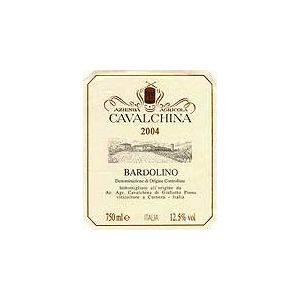
Cavalchina Bardolino 2004 – Italy
The Calvachina winery is located along the southern shore of majestic Lake Garda. It has belonged to the present owners, the Piona family, since the beginning of the 1900s. As far back as 1848 Cavalchina was registered officially as having the finest vineyards in the region, and thankfully they still do. Presently, the Piona family harvests grapes from two distinct sites: 16 hectares at the original Cavalchina estate in the Veneto and at La Prendina, a nearby parcel just over the regional border of Lombardia. Grapes from both estates are vinified at Cavalchina, but each is fermented and bottled individually.
Cavalchina specializes in traditional regional wines, including a very fine Bianco di Custoza and several excellent Bardolino (a blend of the local Corvina, Rondinella, and Molinara grapes) in varying styles. Giulietto Piona, the reigning family patriarch, invented Bianco di Custoza at Cavalchina in 1962; he is now considered the founder of that thriving DOC. Presently, his talented son Luciano makes all of the wine at Cavalchina.
At Cavalchina and La Prendina, the estate wines are marvelously consistent and always delicious. Yet, every vintage brings a new and interesting surprise from this ingenious proprietor: one barrel of an innovative and scrumptious dessert wine, a Bardolino Novello, an older vintage of something squirreled away in the cellar, or a wonderful vino da tavola. Luciano Piona always keeps life fun and interesting, just like the marvelous array of wines he loves to produce. And even though Luciano Pioni routinely fashions increasingly superlative wines from one vintage to the next, the outstanding 2004 vintage may be Cavalchina’s greatest effort to date, placing this estate into a whole other dimension.
Cavalchina’s wines are enormously popular in their native Veneto, and they can be found in nearly all of the area’s best trattorias. One of the greatest pleasures of the regional Italian table (and in Italy there is only regional cooking as there is really no such thing as a national Italian cuisine) is to eat fresh lake fish and home made pastas accompanied by a genuine Bardolino, Bianco di Custoza or estate bottled Soave. Wines of such breeding may be considered unassuming by those who have never tasted honest estate bottled examples, but the traditional wines of the Veneto contribute so much to the splendor of the Venetian table and to the enjoyment of fine food, everywhere. Cavalchina’s delicious wines are natural partners to northern Italy’s culinary cavalcade. In fact, this estate’s Bardolino is considered by consumers, critics, and local cognoscenti to be the consummate wine of the Bardolino appellation and the finest accompaniment to its regional fare. Certainly, we agree. Cavalchina is in a class by itself.
Tasting Notes: Bright, cherry-colored, fleshy, and round, the 2004 Cavalchina Bardolino is the perfect embodiment of all that is good and magical about authentic Bardolino – one of the Venteo’s ultimate pleasures. As delicate as Venetian lace and as lusty as a Titian masterpiece, Cavalchina’s 2004 Bardolino will have you reaching for a second bottle in no time. Simply stated, the 2004 Cavalchina Bardolino is the picture of style, elegance, and vivacity in a glass. Its compelling scent of black cherry fruit, marzipan and almond extract make for a most appealing olfactory profile. On the palate, warm round flavors married to youthful exuberance render the 2004 Cavalchina Bardolino the purest expression of the local Corvina, Rondinella, and Molinara grapes we have ever tasted. Medium bodied, refreshing, and immensely drinkable (the quintessential attributes of true Bardolino), the Cavalchina displays the ultimate Bardolino personality and a wealth of irresistible flavors. In short, this wine is downright huggable. Moreover, it has heart and soul to complement its forward, ever ingratiating personality. We suggest serving the 2004 Cavalchina Bardolino at cool room temperature in temperate climates (64°- 66° F) and at cellar temperature (55?- 60? F) in warm weather or less temperate locales in order to maximize enjoyment. We suggest thirty minutes of aeration in a decanter or just one or two minutes on AccelaBreathe, the amazing new wine tool that allows wines to air quickly, gently, and consistently. AccelaBreathe was developed by Dr. Michael Hunt, Ph.D. specifically for our wine tasting panel. Michael was formerly a Senior Research Chemist for E.I. Dupont de Nemours and is now a consulting member of our tasting panel. With AccelaBreathe you will never again have to open young red wines hours ahead in order for them to properly air or be on their best behavior. AccelaBreathe takes the time out of wine aeration and puts the fun back into tasting. AccelaBreathe is now available to our wine club members at a considerable cost savings. We heartily recommend this wonderful new wine tool. For more information on AccelaBreathe, contact www.accelabreathe.com
Accompaniments: The 2004 Cavalchina Bardolino is a marvelously adaptable wine, with or without food. Its flavorful, medium bodied format suits most pastas and salads, so whether you are serving a simple chicken salad or homemade pasta with a complex sauce, the Cavalchina is ready and able to please. Heartier fare like risottos and grilled meats also offer appealing accompaniments. Stews, cassoulets, marinated grilled tuna steaks, and meatloaf are hardly too robust, either. In fact, a good hamburger or aged Angus sirloin are a treat with the 2004 Cavalchina Bardolino as well. Consequently, in spite of its fleshy, huggable nature, we suggest you not be fooled by this hedonistic effort because it packs a punch. It has plenty of flavor and alcohol and can stand up to piquant sauces and highly charged flavors, so as you like it.
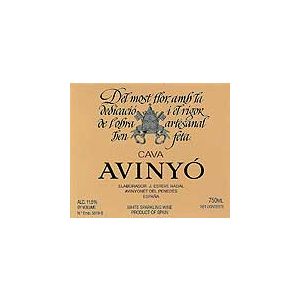
Avinyó is, perhaps, the most highly acclaimed boutique Cava producer in all Spain. This outstanding little cellar consistently fashions a pearl of a wine, a rare bubbly that exhibits both delicacy and finesse, as well as a true artisan purity for which Catalonia is renowned. The Esteve Nadal family of Avinyonet del Penedés produces Avinyó at the family owned winery. The winery is located at CAN FONTANALS, the family’s home, in the heart of the Penedés region of Catalonia, near Barcelona. The Nadal family’s delicious sparkling wine, known locally as Cava, is crafted in the same painstaking way as Champagne. Until quite recently, it was the only wine the family made for sale, preferring to concentrate its talents on making just one wine – the finest Cava in Spain.
More than three decades ago, Juan Esteve, the patriarch of Avinyó, planted three varieties of traditional Catalan vines: Parellada, Xarel-lo and Macabeo, so that he could have a fine sparkling wine for his family, friends, and the cadre of distinguished guests who were arriving to visit his wife – a celebrated ceramic artist. Today Juan Esteve’s two sons and a daughter carry on the tradition of Avinyó, providing only small quantities of exquisite bubbly for export.
On the Avinyó label, there is an inscription in Catalan that aptly represents the philosophy of the Esteve Nadal family. The inscription roughly translates into the following: “From the must of the flower or free run juice and with the rigor of a work well crafted.” This symbolizes the family’s artisan values and the commitment to the ultimate quality of its wine. There also appears on the label a tiara from the church of the local village. Indeed, the Esteve Nadal family has crafted a jewel that many in the wine trade have rightly called “other worldly.”
The masio or farmhouse that originally housed Avinyó’s winery is also the workshop of Fina Via, the wife of Juan Esteve; her work is legendary in Catalonia’s. Her ceramic works appear throughout the region and all of them are done according to the same traditional methods that were used in Catalonia during the seventeenth century, Spain’s Golden Age.
On the subject of Avinyó’s beautiful wine, one well-known wine critic so aptly stated. “How much more beautiful the world would be with a little more art, a little more love and a few more wines like Avinyó Cava.” And indeed, we all owe a debt of gratitude to Senor and Senora Esteve Nadal for doing their part to preserve the traditions of Catalonia, in both art and wine. In the words of one distinguished and long-time member of our tasting panel: “It is obvious that this family’s pearls are not hidden, they shine forth in my glass.” Assuredly, this tiny estate continues to do its part to make the world a better place.
Cava: Spanish Bubbly
It has been said that Cava is Spain’s answer to Champagne. Others would argue that is more of a rebuke. However, Cava and Champagne have much in common, including their taste and method of production. Both are produced by the traditional champagne method of fermenting the wine in the bottle. More fine champagne method sparkling wine flows out of Spain’s region of Catalonia than anywhere else on earth, including Champagne. And like Champagne, Cava is primarily a non-vintage wine that is made in a consistent distinct house style that does not vary. Moreover, the limestone hills beyond Barcelona provide the ideal soil condition, nearly identical to that of Champagne, for the cultivation of the native Xarelo-lo, Parellada, Viura, and Macabeo grapes for sparkling wine. With the addition of champagne yeasts during the fermentation, the high-acid musts of Catalonia yield sparkling wines of rich flavor, softness and finesse to rival those of Champagne itself. Where Cava may actually have the “edge” is in its soft, round, lingering finish – the antithesis of French Champagne which can often possess just a bit too much nerve and acidity in its aftertaste or finish.
Although Cava can be made in many areas of Spain, it is the Catalan versions from Penedés that have formed the bulwark of quality and captured the world’s attention. Centered near the town of San Sadurni de Noya, 20 miles west of Barcelona, the production of Cava has taken the world by storm. In the past thirty years, the export of Cava has grown from a relative trickle to Spain’s leading wine export; Cava is presently the world’s number one selling champagne method sparkling wine.
Tasting Notes: Produced in the actual bottle in the same painstaking way as French Champagne, the Avinyó Brut is Cava at its finest. A lovely pearl of a bubble beads to the top of the glass: soft scents of apple, pear, and fresh bread delight the nose. In the mouth, creamy fruit and the faintest hint of cinnamon caress the palate. Fun, flavorful and easy to drink, the Avinyó Brut is one of the tasting panels favorite sparkling wines. Kudos to the Esteve Nadal family for producing such charming, well-balanced “Champagne” or should we say Cava, whose beguiling aftertaste lingers for nearly a minute. Exhibiting neither an acidic bite nor a flat, flabby finish, the Avinyó Cava will either change your mind entirely about sparking wines or make you wonder why some people spend exorbitant sums on luxury brands of French Champagne. We suggest serving the Avinyó Brut chilled (about 40º F).
Accompaniments: It is nice to know some things don’t change. Hors d’oeuvres, smoked salmon with capers and onions, and even that special someone remain some of our favorite accompaniments to the Avinyó Brut. Like all fine sparkling wines, less is usually more. Neither “heady” nor heavy accentuates the subtle delicacy of sparkling wine, especially Cava. Although our preference is to consume the Avinyó Brut as an aperitif with family and friends, we do like what it does for lightly grilled or sautéed fish, and the fact that it will stand up to an herb-roasted chicken, with asparagus, attests to its subtle complexity. You may also want to try it with veal or turkey. And for those few among us who may still insist upon saving the bubbly for after dinner, we suggest serving the Avinyó Brut with fruit or cheese. Enjoy!
Charles Krug Napa Valley Merlot 2001 – USA
Charles Krug is the oldest winery in Napa Valley. It is also the Peter Mondavi Family winery, the original Mondavi Napa Valley winery that was established by Caesar Mondavi, Robert and Peter’s father. Krug has also been referred to as “the other Mondavi winery” and “the road less traveled” because, unlike brother Robert’s winery, Krug has eschewed the limelight and kept a relatively low profile, except among critics and connoisseurs.
Originally founded in 1869 by Charles Krug, this historic property, like most others in Napa Valley, languished during Prohibition. Purchased by Caesar Mondavi, Krug first began producing wine under the Mondavi name in 1943. Today, the Krug Winery comprises more than 800 acres of prime Napa Valley vineyards. All of this estate’s vineyards are located in the most acclaimed regions of Napa Valley and are farmed exclusively under the direction of Peter Mondavi and his family.
The Charles Krug Winery produces an impressive array of wines, but the full throttle estate bottled Merlot and Cabernet Sauvignon wines that the Peter Mondavi Family have made legendary are certainly the specialties at this historic property. In addition, there is a splendid Carneros Pinot Noir, a traditional full-bodied, oak aged Napa Valley Chardonnay, and excellent full-bodied Reserve offerings in Cabernet Sauvignon, Merlot, and Sangiovese. A few other special bottlings of Napa treats are also available. However, what we like best about Krug wines is the consistent high quality of fruit that is found in each of the winery’s offerings and a no smoke and mirrors approach to producing traditional, full-flavored Napa Valley wines. At Krug, no fainthearted or overly sculptured wines need apply; this is real Napa Valley wine, the way it ought to be.
Tasting Notes: No wimpy Merlot need apply here… the 2001 Charles Krug Napa Merlot is as statuesque as California Merlot gets. This is real Napa Valley Merlot: rich in color, highly aromatic, and long on flavor. Ripe black current fruit, tobacco, and dark chocolate flavors haunt the nose and palate, and gradually unfold into a seamless tapestry for the senses – in short, a hedonist’s delight. And unlike the ocean of cheaper, more insipid renditions of Merlot, the Charles Krug can breathe for hours and take on more depth and complexity, without developing a harsh bite. As big as this Merlot is, it is never hard or brash. For maximum enjoyment, we suggest serving the 2001 Krug Napa Valley Merlot at approximately 65º F, after decanting or spending an extended hiatus in the glass.
Accompaniments: What to serve with the 2001 Krug Napa Valley Merlot? “Any thing it wants.” You won’t easily run out of choices of foods to serve with the 2001 Krug Merlot; this big ol’ Merlot can stand up to just about any dish you can concoct. How about a rich and creamy Pesto Chicken Salad or a Steak Diane? Traditional southern Italian favorites are a hit, too. Grilled cheese and fennel sausages, served with Pasta Arrabbiata, provides superb companionship to the Mondavi Family Merlot. In fact most pasta, meat, and cheese dishes complement this hearty, easy to please Merlot. And if you want to perk up a mid week meal, the 2001 Charles Krug Merlot is the way to go. Enjoy!
Cavalchina Bianco di Custoza 2004 – Italy
The Calvachina winery is located along the southern shore of majestic Lake Garda. It has belonged to the present owners, the Piona family, since the beginning of the 1900s. As far back as 1848 Cavalchina was registered officially as having the finest vineyards in the region, and thankfully they still do. Presently, the Piona family harvests grapes from two distinct sites: 16 hectares at the original Cavalchina estate in the Veneto and at La Prendina, a nearby parcel just over the regional border of Lombardia. Grapes from both estates are vinified at Cavalchina, but each is fermented and bottled individually.
Cavalchina specializes in traditional regional wines, including the zone’s finest Bianco di Custoza (a blend of Garganega, Tocai, and Trebbiano grapes) and several excellent Bardolino in varying styles. Giulietto Piona, the reigning family patriarch, invented Bianco di Custoza at Cavalchina in 1962; he is now considered the founder of that thriving DOC. Presently, his talented son Luciano makes all of the wine at Cavalchina.
At Cavalchina and La Prendina, the estate wines are marvelously consistent and always delicious. Yet, every vintage brings a new and interesting surprise from this ingenious proprietor: one barrel of an innovative and scrumptious dessert wine, a Bardolino Novello, an older vintage of something squirreled away in the cellar, or a wonderful vino da tavola. Luciano Piona always keeps life fun and interesting, just like the marvelous array of wines he loves to produce. And even though Luciano Pioni routinely fashions increasingly superlative wines from one vintage to the next, the outstanding 2004 vintage may be Cavalchina’s greatest effort to date. Not surprisingly, Cavalchina’s wines are enormously popular in their native Veneto and can be found in nearly all of the area’s best trattorias.
Tasting Notes: As limpid and refreshing as a mountain stream and as satisfying as a creamy dessert, the 2004 Cavalchina Bianco di Custoza weds quench ability to host of distinctive, satisfying flavors. Bright, tangy, and brimming with subtlety as well bravado, the Cavalchina Bianco di Custoza is in a class by itself. This wine dazzled the panel with its scent and savor of lemon custard cream, lime sorbet, and eau de vie. Yet, everything about this dry white wine conveys a satisfied air of simple elegance and personal comfort, which add to its thirst quenching ability. We suggest serving the 2004 Cavalchina quite chilled (35°-40° F), at least initially, and then allowing it to slowly evolve in the glass as it warms. This is providing one doesn’t consume the bottle in short order. For the too rapid consumption of the 2004 Cavalchina Bianco di Custoza there remains only one solution – another bottle. Enjoy!
Accompaniments: The 2004 Cavalchina Bianco di Custoza is the natural scion of the local cuisine, which in this part of the Veneto draws heavily from the abundance of Lake Garda and neighboring lakes and streams. The delicacy of trout and other fresh water fish highlights the elegance and distinction of the Cavalchina Bianco di Custoza. Hence, nearly all baked or grilled fish provide the ultimate complement to this wine. However, three and four cheese pizzas; vegetable pizzas, especially those with mushrooms, olives, or roasted red peppers; and even the classic pizza margherita provide excellent accompaniments. Thin sliced prosciutto wraps offer other tasty treats with this refreshing wine. Yet, we also enjoyed the 2004 Cavalchina Bianco di Custoza strictly as an aperitif, without food. Its fresh tangy flavors provide the perfect palate cleanser and set the stage for a most rewarding meal or a simple evening with family and friends.
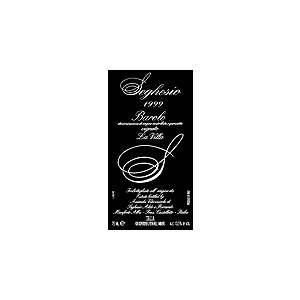
Seghesio La Villa Barolo 1999 – Italy
Aldo and Riccardo Seghesio’s La Villa Barolo emanates from a single vineyard in the Monforte zone of Barolo. Carefully cultivating a mere 9-acre vineyard, the Seghesios produce a correspondingly small amount of wine that is renowned for its elegance and harmony rather than its brute strength.
La Villa is a beautiful small exceptionally steep south-facing slope that can only be worked by hand. Since 1988, Aldo and Riccardo have bottled the meager yields of their prized vineyard as an individual cru or single vineyard offering. The style of La Villa reflects the vineyard’s proximity to the better-known La Ginestra. These two crus share similar characteristics, including elegance and finesse – qualities rarely seen in other Barolos. La Villa Barolo’s most pronounced characteristics are its unusually deep color, entrancing bouquet, superb texture, and long lingering finish.
In addition to superlative Barolo, the Seghesio’s also fashion very attractive Dolcetto d’Alba, Barbera, and Nebbiolo from 3 additional acres that lie down the slope from La Villa. During the past decade, the low yield, excellent terroir, and superb winemaking at Seghesio have translated into success for this jewel of a property.
Barolo
Barolo has affectionately and appropriately been referred to as the “king of wines, and the wine of kings.” In a fine vintage and in the hands of a skilled winemaker, Barolo is unquestionably a noble wine, richly deserving of the many accolades that have been bestowed upon it.
Born on the Langhe Hills of Italy’s Piedmont, on steep craggy Alpine foothills as they tumble out of nearby Switzerland and France, Barolo is the most masculine of Piedmont’s three great Nebbiolo wines and the focal point in the region’s viticultural tiara. Although Gattinara, typically the lightest and most feminine of Piedmont’s great reds, and Barbaresco, sometimes referred to as a baby Barolo for its propensity for being lighter and easier to drink in its youth than its more stalwart neighbor, share the same noble Nebbiolo vine as Barolo, it is Barolo that possesses the pedigree and rules the roost. Barolo’s lineage dates back to the Middle Ages and by the mid 18th century its wine had evolved into its present form in the vicinity of Alba, the white truffle capital.
Today, the limited production of Barolo generates from the huddled hills of two valleys, Serralunga and Barolo, and their five principal communities, all of which lie to the southwest of the city of Alba and are reputed to impart distinctive characteristics and traits to their respective progeny. The townships of Serralunga, Castiglione Falletto, and Monforte are situated in the Serralunga Valley and are reputed to produce the region’s most masculine, longest-lived Barolos. Meanwhile, Barolo and La Morra, from which the more “delicate” wines of the zone are said to flow, are part of the Barolo Valley. However, there are many exceptions and innumerable variations in Barolo on the same theme, and this does not even take into account the decades old debate in Barolo over the relative merits of the modern and traditional styles of Barolo, which have as much to do with individual winemaking techniques as they do the amount and kind of barrel aging the wines receive. In the end, there is great Barolo
fashioned in all five of the major townships, in both modern and traditional styles. Salute!
Tasting Notes: If ever there were a Barolo to dispel the myth that “the king of wines” is despotic and unapproachable in its youth or is somehow undrinkable before its tenth birthday, the 1999 Seghesio La Villa is just such a wine. Deeply robed, but elegantly tinged with the telltale glint of orange that imbues all Nebbiolo wines as they mature, this stylish Barolo offers up a beautiful complex aroma. Plum, licorice, rose petal, and forest woodland all come to mind. Better still, the same delectable scents carry through on the palate, providing plenty of mid palate appeal and nuance of flavor to savor for quite some time. Elegant, but by no means a lightweight, the 1999 La Villa Barolo possesses a healthy dose of firm ripe tannins to under gird its plush center and assure many more years of pleasurable drinking. As is the case with all Barolo wines, the Seghesio La Villa begs for aeration. Consequently, whenever possible, we suggest an hour or two hiatus in decanter for optimal enjoyment
or just five minutes on Accela Breathe, the wonderful new wine tool that allows wines to air quickly, gently, and consistently. For more information on Accela Breathe, contact www.accelabreathe.com
Accompaniments: The complex, nuance of flavors that define the 1999 Seghesio La Villa Barolo and all fine Barolo wines for that matter, plead for foods of equal stature. Rarely does one sit around drinking Barolo, but consumed at table with traditional Piedmontese cooking and savory sauces, one comes to appreciate the royal nature of this wine. Risottos, made with authentic Arbio rice of course, constitute many of our favorite choices with the La Villa. A whole chicken, mushroom, and truffle risotto, cooked very slowly and dashed with a first rate balsamic vinegar from Modena makes for a heavenly match. Less regional dishes do well, too. Roast loin of pork, stuffed with a bread, onion, and herb farce provides a savory treat. Marinated steaks and pork tenderloins offer tasty uncomplicated alternatives, too. In addition, Barolo offers one of the finest accompaniments to hard cheeses. Hunks of authentic Italian Parmesan or Provolone cheese pose no threat to this wine and offer a great way to finish a glass of the Seghesio Barolo.
Whitford Haynes Vineyard
Napa Valley Chardonnay 2002 – U.S.A.
All of Whitford’s wines are the progeny of the outstanding Haynes Vineyard, which is located in the Coombsville area of Napa Valley. This small 43-acre vineyard has been in the same family since 1885 when James Whitford, the grand uncle of the present owner Dunc Haynes, purchased it from Nathan Coombs for a little more than $3,000. For most of its history the Haynes Vineyard has done double duty, serving both as a vineyard and a prime source of almonds, peaches, and prunes. In addition, it has acted as a personal refuge for the Whitford family (Dunc Haynes’ mother’s family) during hard times, most notably in 1906 when the fire that followed the legendary San Francisco earthquake destroyed the Whitford’s San Francisco home.
Since the early 1940’s Dunc Haynes has worked the land at Haynes Vineyard. During World War II, Dunc harvested prunes from the property and later, while attending law school, he worked summers at the estate. Later, the prune trees were uprooted and the land leased for cattle grazing. In the 1960’s, when property taxes began to exceed the rental revenue, Dunc decided to plant the existing vineyard. He consulted U.C. Davis and one of his law firm’s more renowned clients, Louis M. Martini. Martini wisely advised Dunc to plant Chardonnay and Pinot Noir, since they were perfectly suited to the vineyard’s cool climate. Happily, Dunc followed Martini’s advice and Haynes Vineyard was born.
In the first two decades of its existence, Haynes Vineyard was the source for Stags Leap Wine Cellars’ many outstanding and award winning Chardonnays. It became quickly apparent to everyone, including Dunc, that the Haynes Vineyard possessed an extraordinary terroir. After several decades of growing fruit for one of Napa Valley’s most prestigious and expensive winery’s, it was time for Dunc Haynes to produce and bottle his own wine; hence, the birth of Whitford Cellars.
In the early 1990’s, the legendary Andre Tchelistchef was responsible for making Whitford’s wines, but since 1997 Ken and Teresa Bernards have been at the winery’s press and pump. Ken and Teresa are two of California’s most respected winemakers. In addition to overseeing all of Whitford’s 1,500-2,000 case production of wine, the Bernards also fashion limited quantities of their own wines, which bear the Ancien label. Both Ancien and Whitford are entirely produced and bottled at Whitford Cellars.
Today, the Haynes Vineyard reigns as one of Napa Valley’s greatest single vineyards. Its cool microclimate and unique soil composition make it ideal for the cultivation of cool climate grapes such as Chardonnay, Pinot Noir, and most recently Syrah. Not surprisingly, these three noble grapes are the only grapes grown at Whitford Cellars.
Tasting Notes: The 2002 Whitford Haynes Vineyard Chardonnay is no ordinary California Chardonnay; so forget the lightweight candied fruit and the overbearing vanilla oak that oppress far too many New World Chardonnays. Instead, savor the scent and flavor of a limited production, truly remarkable, 100 % barrel fermented Napa Valley Chardonnay that puts to shame the majority of its California counterparts. Moreover, the recently released 2002 Whitford Cellars Chardonnay is at the peak of its prowess: Whitford does not release its Chardonnay until it is ready for consumption. Hence, this substantial single vineyard offering possesses great color, sophisticated flavor, and tremendous texture – all of which recall the tradition of the finest white Burgundies. The scents of apple, pear, hazelnut, and vanilla cream all come to fore in this heavenly wine. And better still, a beautiful well integrated tactile feel coats the palate and imparts a whole array of complex flavors, beginning with what one panel member described as “the symphony in my glass.” In short, the 2002 Whitford Haynes Vineyard Chardonnay is the rare California Chardonnay that can hang with the best white Burgundies; it possesses both a body and a soul, which are worth discovering. For maximum pleasure, enjoy this superb Napa Valley Chardonnay at approximately 40º- 45º F.
Accompaniments: Food and wine are natural companions, and this is especially true when the wine in question is a mature high quality Chardonnay like the 2002 Whitford Haynes Vineyard. Certainly, one could easily and ecstatically consume copious quantities of this wine without the benefit of tender morsels, but when Sautéed Lobster is served in a broth of savory succotash, with polenta, garlic butter, and fried pasta, it becomes difficult to image that fine wine alone, even the 2002 Whitford Haynes Vineyard Chardonnay, is truly better than the same wonderful wine in the company of a great meal. Truly, who among us is content with half the pie when we can have it all? Other faithful accompaniments to Whitford’s Haynes Vineyard Chardonnay include Alaskan King Crab Legs, served with drawn butter; Sautéed Halibut, served with a creamy corn sauce and accompanied by a Monterey Jack cheese and potato cake; and a Free Range Chicken Breast, stuffed with herbs and duck confit, and served over a bed of creamy mashed potatoes. Almost any pasta with an Alfredo Sauce provides innumerable pleasure as well. Enjoy!
Whitford Haynes Vineyard
Napa Valley Pinot Noir 2003 – U.S.A.
All of Whitford’s wines are the progeny of the outstanding Haynes Vineyard, which is located in the Coombsville area of Napa Valley. This small 43-acre vineyard has been in the same family since 1885 when James Whitford, the grand uncle of the present owner Dunc Haynes, purchased it from Nathan Coombs for a little more than $3,000. For most of its history the Haynes Vineyard has done double duty, serving both as a vineyard and a prime source of almonds, peaches, and prunes. In addition, it has acted as a personal refuge for the Whitfords (Dunc Haynes’ mother’s family) during hard times, mostly notably in 1906 when the fire that followed the legendary San Francisco earthquake destroyed the Whitford’s San Francisco home.
Today, the Haynes Vineyard, which was totally replanted in 1967 by Dunc Haynes, reigns as one of Napa Valley’s greatest single vineyards. Its cool microclimate and unique soil composition make it ideal for the cultivation of cool climate grapes such as Chardonnay, Pinot Noir, and Syrah. Not surprisingly, these three noble grapes are the only ones grown at Whitford.
Tasting Notes: The 2003 Whitford Haynes Vineyard Pinot Noir is no lightweight, wimpy, fruit bomb of a Pinot. Rather, it is California Pinot Noir at its best. This substantial single vineyard offering possesses a rich robe and a deep down amplifying bouquet that a number of tasters described independently as “simply fantastic,” and that accolade may even be a bit modest. A heaven scent of ripe black cherry fruit, oriental spice, and a gentle waft of vanilla tantalize the nose. And better still, a beautiful well integrated tactile feel coats the palate and imparts a whole array of complex flavors, beginning with what one panel member aptly describes as “the very essence of Pinot Noir.” In short, the 2003 Whitford Haynes Vineyard Pinot Noir is a rare Pinot; it is wrought with the dynamism of delicacy and power, as well as sensual allure. For maximum pleasure, enjoy this superb example of New World Pinot Noir at no more than 66º F. A half hour or more of aeration will certainly improve this wine, but it is so good straight away, hardly anyone will notice if it has breathed, let alone complain.
Accompaniments: Food and wine are natural companions. One without the other is generally regarded as seeing only half the equation or more precisely is viewed as experiencing just half of the pleasure, and this is certainly true of the 2003 Whitford Haynes Vineyard Pinot Noir. Indeed, one could quite happily, if not ecstatically, sit and consume as much of a bottle of this wonderful Pinot Noir as his or her fellow imbibers would permit, but Whitford’s Haynes Vineyard Pinot Noir is so perfect with certain foods that it would be a real shame not to enjoy it with several well-selected accompaniments. Our premier choice then with Whitford’s masterful Pinot Noir is a very fresh lightly grilled tuna steak, served with mango jalapeño chutney. The tropical fruit flavor of the mango accentuates the oriental spice and complexity in the wine; at the same time the gentle use of jalapeño magnifies the fruit in the wine and highlights the fresh broad flavor of the tuna itself. Salmon, pork, and even lamb provide other excellent accompaniments to this well endowed Pinot Noir, so as you like it.