Vol. 7 No. 9
Standard Selection - (1) Red, (1) White
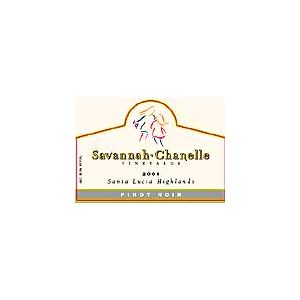
Savannah-Chanelle Vineyards Santa Lucia Highlands Pinot Noir 2001 - USA
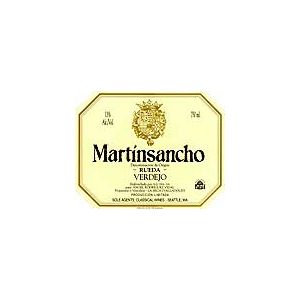
Bodegas Angel Rodriguez Martinsancho Verdejo 2003 - Spain
Red Wines Only Featured Selection
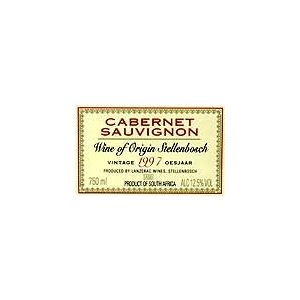
Lanzerac Stellenbosch Cabernet Sauvignon 1997 South Africa
White Wines Only Featured Selection
Casa Tamaya Sauvignon Blanc 2003 Chile
Savannah-Chanelle Vineyards Santa Lucia Highlands Pinot Noir 2001 - USA
At Bodegas Angel Rodriguez, the man and the story behind the wine are almost as intriguing as the wine itself. Simply stated, Angel Rodriguez and the emergence of Rueda as the most prestigious still white wine-producing region of Spain are synonymous. Angel's story is the story of a unique grape called Verdejo. Although Verdejo is among only a handful of truly noble Spanish white varietals, Verdejo was in serious danger of extinction by the early 1970's due to the pervasive planting of more prolific native varietals such as Viura and Palomino and the introduction of international favorites such as Chardonnay. Through his loving refusal to uproot his ancient 17th century vineyard, Martinsancho, Angel Rodriguez saved the shy bearing, thick-skinned Verdejo from extinction
The original majuelo or 17th century vineyard of Martinsancho is less than one acre of gnarled, ungrafted vines, preserved in isolation as a museum of pre-phylloxera viticulture and a continuing source of undisputed varietal authenticity. Once considered an anachronism and an economic liability, nurseries throughout Europe now treasure the Martinsancho vineyard for the vine cuttings it provides and the legacy it has preserved. Yet, thirty years ago no one seemed to care about this old vineyard with extremely low yielding vines; in fact, few had even heard of Martinsancho's existence. Besides, Verdejo was not deemed profitable enough by most experts to preserve, let alone grow, despite the vine's noble pedigree and the undisputed quality of the wine it produced. Yet, in spite of the prevailing pressure and expert advice to uproot the old vineyard, Angel Rodriguez preserved it, and then undertook the near impossible or what many have called sheer lunacy: he re-grafted a vineyard by hand onto 25 acres of premier land, using Martinsancho cuttings.
In 1974 Angel Rodriguez planted the noble, nearly extinct Rueda Verdejo into his very best vineyard: thereby, assuring the continuation of the Martinsancho vineyard as well as the venerable production of Verdejo. In this special 25 acre vineyard, the alluvial soil is nearly all gravel to a depth of over thirty feet. Moreover, the harsh continental climate and the extreme altitude of Old Castile, together with the vineyard soil's austere inhospitality to all types of insects and bacteria, allow for the practice of completely organic viticulture a rarity, especially for white wine.
With the help of Angel Rodriguez, other Rueda growers have planted Verdejo to the point that this shy bearing vine is once again the leading white varietal in Rueda. For his great sacrifice and untiring efforts in favor of re-establishing Verdejo's prominence in its region of origin, Angel Rodriguez has been officially honored by King Juan Carlos of Spain.
In spite of his great accomplishment and the recognition he well deserves, Angel Rodriquez remains a humble man who believes in tradition. He steadfastly maintains a very low-tech approach to the natural production of his wine. Angel still uses the centuries old, subterranean family bodega, replete with ancient 5,000 liter oak barrels for aging. The only quasi-modern pieces of equipment are two 20,00 liter glass tanks, which are used for the fermentation of the unpressed Martinsancho Verdejo, but subsequently even the Martinsancho is transferred underground for clarification and aging in ancient casks.
Production of the great Martinsancho remains quite small, just under 2000 cases, but this wine's refined tactile quality and great depth of flavor reveal the indomitable spirit of a great winemaker and the preservation of a legacy. Enjoy!
Tasting Notes: Wow! It is hard to believe that this most recent release of Martinsancho Verdejo from Angel Rodriguez surpasses the knockout, other worldly 2001rendition of this exceptional wine, but it does. An amplifying nose of fresh citrus, spring flowers, minerals, and liquid stones dominate the nose of the 2003 Martinsancho Verdejo. The result is a purity rarely seen in other white wines, and the gustatory outcome can best be described as stupendous, but then again everything about this wine is outstanding. From Martinsancho's brilliant golden, green-tinged robe to one of the purest, longest, most natural tasting finishes we have encountered in years, the 2003 Martinsancho Verdejo is truly unique and nothing short of remarkable. Aromatic, delicious, succulent, creamy, delicate, pure, rare, superbly balanced, and understated elegance are just a few of the many adjectives and descriptors used to describe the 2003 Martinsancho Verdejo, but, perhaps, the following comment by wine critic Robert Parker Jr. about an earlier vintage of Martinsancho says it all: This is the best dry white table wine I have tasted from Spain. To Parker's salient comment we add: Martinsancho is also the most consistently fine Spanish white we have ever tasted, in spite of the obvious vintage variations that plague Rueda. Enjoy this one of kind gem cool, moderately chilled, or frosty. We love it any way we can get it.
Accompaniments: It is almost a shame that one has to even consider accompaniments to the 2003 Martinsancho Verdejo, but it tastes so good with food. Certainly, food enhances wine and vice versa, but in the case of the 2003 Martinsancho no accompaniment is truly necessary; this wine speaks volumes by itself. However, if you want to make a dish look good, serve that dish with a bottle or two of the 2003 Martinsancho. Tapas, hors d'oeuvres, smoked salmon with capers, fish, shellfish, poultry, and even a light or medium charged paella all provide wonderful accompaniments to the Martinsancho Verdejo. Better yet, we suggest you have a party and invite twenty or thirty of your new best friends, or if you have just moved and want to make a nice impression on the new neighbors, serve the 2003 Martinsancho as your opening act. This way you are sure to enjoy the compliments as well as the wine and its accompaniments. Salud!
Why Wine is Healthy Part II
By now most of us are aware of the beneficial effects of red wine in fighting cardiovascular disease. However, recent studies involving moderate wine drinkers and the consumption of wine reveal other interesting but no less startling revelations about the benefits of wine. For one, studies show that moderate wine drinkers possess higher intelligence (we always knew that our wine club members were endowed with superior intelligence) and greater bone density than their non-wine consuming counterparts. So, today it is not only sensible but also essential that Granny and Gramps continue to take calcium, get plenty of exercise, and take a glass or two of red wine to ward off osteoporosis. Furthermore, a daily glass of wine can also help fight anorexia as well as obesity. But the best news about wine is yet to come!
Recently, David Sinclair, PhD, a genetic scientist and pathology professor at Harvard Medical School, claims to have uncovered a survival gene that appears to double as a longevity gene. This survival gene increases the production of an enzyme called resveratrol, which increases the time a cell has to repair itself. Quite fortuitously for mere mortals, resveratrol is produced naturally in grapes where its raison d'etre is the fight against fungal infection a common malady for grapes. Not surprisingly, recent studies with resveratrol from numerous sources reveal a long list of potential benefits for humans as well. Certainly, the most obvious benefit of resveratrol is its powerful antioxidant quotient, an important factor that enables humans to fight cancer, heart disease, memory loss, fungal infection, and perhaps a whole lot more.
Considering the almost miraculous properties already attributed to resveratrol, one would think that every pharmaceutical company in the world would be lining up to produce it, but alas the only beneficial and consistently reliable source of this life enhancing enzyme is found presently in a glass of red wine, but not just any wine as it turns out. Resveratrol is found almost exclusively in red wines because of prolonged contact with the skin during the fermentation of red wine. Moreover, certain red varietals such as Pinot Noir and Cabernet Sauvignon appear to possess more resveratrol than other grapes, especially when they are grown in cool climates where the threat of fungal infection is apparently greatest. And not surprisingly, the more natural and un-filtered a red wine is the more resveratrol it is likely to contain. In other words, the most commercial, highly manipulated wines need not apply another reason to choose estate-bottled wines that eschew damaging interventionalist methods of winemaking.
No doubt, beneficial resveratrol supplements will one day be available for ingestion, but popping a pill will never supplant the pleasure of consuming a glass of good wine. And what could be more beneficial to human health than sipping a glass of fine wine with friends or family over a well-prepared meal? Neither non-drinkers nor heavy alcoholics have the same longevity rates as moderate wine drinkers. So, can there still be a doubt as to why the French have what many have referred to as the longevity factor? Moderate wine consumption is simply good for us. Wine contains many beneficial compounds that are activated or accentuated during fermentation. Moreover, wine is a restorative that provides rest from the weather stained cares of life, while it promotes civility and social interaction. So, enjoy wine, you'll live longer!
Bodegas Angel Rodriguez Martinsancho Verdejo 2003 - Spain
Savannah-Chanelle Vineyards is a landmark winery along California's historic Chaine d'Or (Golden Chain). Nestled in the Santa Cruz Mountains, high above Silicon Valley, this historic property has been home to friends, family, and fine wines since its founding in 1892 by French immigrant Pierre Pourroy.
Located just over three miles from the village of Saratoga, Savannah-Chanelle continues the celebrated history and the viticultural legacy that was born on this site more than a century ago. Purchased in 1996 by Michael and Kellie Ballard, this turn of the century estate now bears the name of the Ballards' two daughters. The present winery occupies 58 acres, with only 15 of those acres under cultivation. From this tiny vineyard plot flow five award winning varietals: Chardonnay, Carignane, Cabernet Franc, Pinot Noir, and Zinfandel. The property's Zinfandel vines date to 1910, while Savannah-Chanelle's Cabernet Franc plantings hale from 1920 the oldest Cabernet Franc plantings in California.
Yet, despite the abundance of varietals from which to choose and many old vines, Pinot Noir remains Savannah-Chanelle's raison d'etre. Michael Ballard and Winemaker Anthony Craig make a formidable team that is bent on turning Savannah-Chanelle into a Pinot Noir house that is second to none. In Michael Ballard's own words: We are obsessed by Pinot Noir we have launched a program to create the finest examples of California Pinot Noir by drawing grapes from the best Pinot-growing areas in the state, among them the Sonoma Coast and the Santa Lucia Highlands. We have also planted a new Pinot Noir vineyard just above our tasting room. Given the passion for Pinot at this estate, it should then come as no surprise that 80 percent of Savannah-Chanelle's entire production is small lots of delicious Pinot Noir. Bottled un-fined and loosely filtered, each and every bottle emanates the elegance and supreme balance of Pinot Noir, the planet's most finicky and ultimately most enjoyable grape varietal. Salut!
Tasting Notes: Soft as satin and smooth as silk, the 2001 Savannah Chanelle Santa Lucia Highlands Pinot Noir is pure pleasure in a glass. Lightly colored, but oh so alluring, this cool climate Pinot Noir offers up an array of enticing scents: cherry blossoms, cola nut, strawberry, and a hint of oriental spice the telltale cachet of all first rate Pinot Noirs, whether they are from Burgundy or some other suitable, cool climate locale. Soft, round and supple on the palate, the Savannah Chanelle fills the senses but finishes with consummate grace and nary an edge. We suggest that you serve this delightful Burgundian style Pinot Noir fairly cool, preferably between cellar temperature and cool room temperature (55°-65° F). And like most Pinot Noir wines, we prefer consuming the Savannah Chanelle Santa Lucia Highlands straight away, without muss or fuss, or extended breathing time. Just pop the cork and have
a party!
Accompaniments: Considering how charming and gentle the 2001 Savannah-Chanelle Santa Lucia Highlands Pinot Noir is, it almost goes without saying that food is a superfluous accompaniment. Certainly, this elegant Beaune-style Pinot can stand admirably on its lovely legs. Nevertheless, fine classic cooking complements this noble effort. Coq au Vin, Quiche Lorraine, grilled or roasted pork tenderloin that is served with brandied apples and caramelized onions, whole spit fired rotisserie chickens, and most salmon recipes, bar those with a hot or exotic sauce, conjure additional enjoyment from this classic Pinot Noir. In order to preserve the supreme class and finesse of this natural tasting Burgundian look alike, we suggest that a light hand prevail with the garlic, herb and more piquant spices, which more naturally suit much more rustic wines. For a superb, but out of the ordinary pairing, Champagne Truffles, made with a combination of white and mild dark chocolate can provide a great finale with the last
glass of the 2001 Savannah-Chanelle Pinot at dessert, that is if you can make it to dessert with any of this lovely wine left in your glass. For other expertly selected chocolates, please consult our international chocolate of the month club enjoy!
Lanzerac Stellenbosch Cabernet Sauvignon 1997 South Africa
Lanzerac Estate is a jewel of a property, located in Stellenbosch, on the Cape of South Africa. Since its inception in 1692 (indeed, the South African wine industry has been around that long), Lanzerac has been one of the finest producers of wine in South Africa and enjoyed critical international acclaim. Lanzerac is the first South African wine estate to be featured by C&H because we believe it is the best of the scant few, bona fide wine estates in South Africa that consistently produce world class wine. In fact, this estate turns out exceptional wines of extraordinary value, which bodes well for consumers and the likelihood that we will see and taste more offerings from this property in the future.
Under the leadership of Christo Wiese, who purchased the estate in 1991, Lanzerac has claimed its rightful place among the world's leading wineries. Weise upgraded all of the property's vineyards and built a new modern winery in 1996, just as South Africa was emerging from decades of political and economic oblivion under Apartheid. His efforts highlight the estate's excellent wines and showcase the enormous viticultural potential of Stellenbosch, not to mention all of South Africa.
Set amid the stunningly beautiful scenery of the Cape, Lanzerac stands as a beacon of progress and a guide for other aspiring South African wine estates. Presently, it produces outstanding Chardonnay, Cabernet Sauvignon, Merlot and Pinotage for export. The Chardonnay and Cabernet Sauvignon have so far garnered the most fanfare, winning gold medals and four-star ratings from European publications. In addition to crafting fabulous wines, Lanzerac operates the only luxury five star hotel/winery in Africa.
Tasting Notes: The 1997 Lanzerac Stellenbosch Cabernet Sauvignon tastes more like classified Bordeaux than most contemporary Bordeaux. Kudos to the winemaking team at Lanzerac for producing a deeply colored, highly extracted Cabernet that combines Old World charm with all the flavor and tactile advantage that modern winemaking can muster. This well aged beauty offers up a classic Cabernet nose: blackberry, cassis, and dark chocolate, along with hints of roasted coffee and the telltale cigar box scent that makes great Bordeaux reds so irresistible. Ditto this wine's olfactory goodness and add the weight and tactile feel of claret and voilà, the flavor of the1997 Lanzerac Cabernet Sauvignon rushes the palate. The wine finishes with just enough residual tannin to add a little zip to the finish and insure a few more years of successful ageing. We suggest you serve the Lanzerac Cabernet Sauvignon at no more than 68º F. Like all Bordeaux-style reds, it will lose some of its subtley and charm if served too warm.
Accompaniments: Fine wine deserves fine food, need I say more, reiterated one member of our tasting panel. Indeed, this statement sums up the panel's feeling toward the 1997 Lanzerac Cabernet Sauvignon. Many of Lanzerac's tried and true pairings constitute our favorite accompaniments as well. Hence, we suggest you don your apron and begin practicing the culinary arts. Why not consider either a braised or slow roasted loin of lamb, served with fava beans and a Rouquefort cheese gratin, or three noisettes of filet mignon, served with three different classic sauces. Rib-eye Wellington is another favorite that brings out all the latent goodness that constitutes the 1997 Lanzerac Cabernet Sauvignon. If cooking is absolutely not your thing, be sure to check next month's outstanding selection of international cheeses for the best ready made and shipped accompaniments. Enjoy!
Casa Tamaya Sauvignon Blanc 2003 Chile
Casa Tamaya is located in the Limari Valley, nearly two hundred and fifty miles north of Chile's capital of Santiago. While most traditional Chilean estates hail from the wide river valleys to the south of the capital, this exciting new property stands as the vanguard of viticultural excellence in the northern valley of Limari. Begun in 1997 as the independent ventures of two farming companies, Vinedos del Limari and Cerrillos de Tamya, Casa Tamaya was formally launched in 2001 with the consolidation of both independent enterprises and the subsequent construction of a beautiful new winery, which includes offices, a guesthouse, gardens, and an image to match the recent transformation of the Limari.
Glitz and glamour aside, what lies below and beyond the façade of Casa Tamaya is what truly counts. At Casa Tamaya, three levels of fine wine and more than a few treasures abound, making this new 240 acre property ripe pickings for savvy consumers. Only first-rate European varietals are grown here, and nearly every offering we have tasted from this estate has been more than a cut above. Some of our favorite wines from Casa Tamaya are a delicious knock out Sancerre-style Sauvignon Blanc and an artful Reserve blend of Merlot, Cabernet Sauvignon and Syrah. Other top-notch offerings include a very fine Reserve Chardonnay and a tasty Viognier.
Tasting Notes: The 2003 Casa Tamaya is Sauvignon Blanc at its best. Built along the lines of the finest Sancerre style Sauvignon Blanc from France's Loire Valley, the best of which exhibit the pungent scents and flavors of grass, herbal essence, melons, and tropical fruits, the Casa Tamaya outperforms all but the very top echelon of wines from Sancerre. As one member of the testing panel so saliently remarked, This wine out Sancerres most Sancerre. Ripe, pure, and loaded with flavor, this round beautifully balanced wine contains all the exotica and hedonistic pleasure of Sancerre, but without the after burn and bite that are too often associated with France's quintessential rendition of Sauvignon Blanc. We suggest drinking the 2003Casa Tamaya Sauvignon Blanc at varying temperatures, ranging from cool to downright frosty, depending upon the outside temperature and the accompaniments or lack of. The hotter the ambient temperature or the food, the colder we suggest you serve the wine. Enjoy!
Accompaniments: The 2003 Casa Tamaya is an ode to summer, a remembrance of halcyon days, and a souvenir of those sequestered sequels of summer's end known affectionately in North America as Indian summer, and for these reasons and many more food need not accompany a glass or two of this delightful elixir. The Casa Tamaya is a Sauvignon Blanc that needs no date or calling card as it brings its welcome with it. Nonetheless, the fruits of summer taste all the better in the company of the Casa Tamaya. Oysters, clams, lobster, shrimp, and scallops, prepared almost any way imaginable, all provide delicious marriages and are in turn enhanced by the Casa Tamaya's exuberance and sensual allure. Hors d'oeuvres, smoked salmon appetizers, and certain mildly spicy Hunan dishes, such as Hunan Chicken with vegetables, provide other winning combinations. And last but not least, almost any type of soft or crusted cheese will affectionately highlight the delicious aromatic profile of the Casa Tamaya, so check out our outstanding selection of international cheeses and invite a few friends over for a party.
For Members Only
Give Your Friends FREE Beer, Wine, Cheese, Chocolate, Cigars & Flowers!
Through our Customer Appreciation Program
Your name has real value to your friends, co-workers, and family members! Every time a friend, family member, or anyone else you know joins any one of our clubs, [or gives a gift] for 3 months or longer, we'll give them 50% off of their first month, but only when they mention your name. And we'll also give you 50% off your next month too which can either be applied towards your current membership or you can try one of our other Clubs out! (We can add one more month to your order at 50% off for prepaid memberships!)
The Fine Print: Members giving gift memberships do not qualify for referral credits and you can't give yourself a gift to qualify! This Program is mutually exclusive of any other promotions.
Membership Q & A
Note: Please do not use the web site to make any account related information changes such as address or billing changes, membership extensions, or terminations. To ensure timely processing of your request, please call us at 800-625-8238.
Q: What can I do if Im having difficulty receiving my shipment at home?
A: You should consider having our discrete box delivered to your work location or to a neighbor 21 yrs. of age that can receive it for you. The box is brown corrugated cardboard and doesnt say Wine on it anywhere. Consider having it shipped to your work location as many of our customers do.
Q: What should I do if Im moving or want to extend my membership?
A: Please call us prior to the 9 th of the month to make all account related information changes such as address changes, membership extensions & terminations, or gift accounts desiring to continue their memberships. Address changes made after that time may require a repackaging and re-shipping charge and will incur a $5.00 service charge from UPS that will be charged to your account.
Q: What happens if my shipment is damaged?
A: If your shipment arrives damaged, please call us immediately toll free at 1-800-625-8238 and report the incident for a prompt resolution.
Q: What happens if my credit card is declined?
A: We will send you a courtesy notice asking for an alternative payment method, and will also attempt two more times to process the charges. If we cannot secure
payment and have not been contacted by you, the order will be temporarily suspended.
Q: What happens if I join under a special incentive program and dont stay a member for the entire term committed?
A: Not a problem. Although we want to do everything we can to keep you as a member, we will allow you to cancel your subscription early, however, you will be responsible to pay for the item which was given to you as part of the promotion. If you received a discount based on a specific term, the amount discounted will be charged to your card.