Welcome to The International wine of the Month Club

Past Newsletters

Vol. 7 No. 3

Standard Selection - (1) Red, (1) White
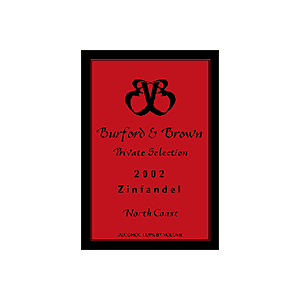
Burford & Brown - Zinfandel - 2002 - CA
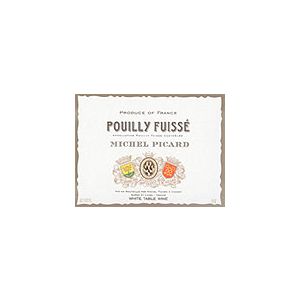
Picard - Pouilly-Fuisse - 2002 - French

Red Wines Only Featured Selections
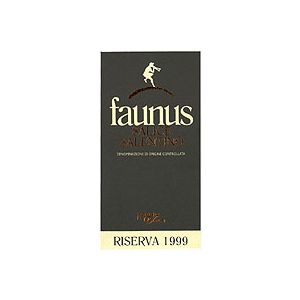
Faunus Salice Salentino - Reserve -1999 - Italian

White Wines Only Featured Selections
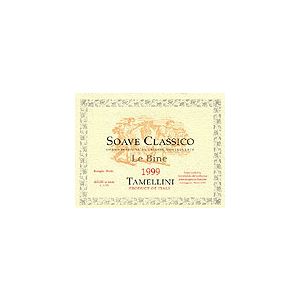
Tamellini - Le Bine Soave Classico - 2001 - Italian


Burford & Brown Zinfandel - 2002 CA

Burford & Brown is a bodacious new venture starring Peter Burford and Adam Brown. Peter Burford, an Australian graduate of Roseworthy, Australia's premier School of Oenology, is perhaps best known as the recent impetus behind the renaissance and the rising consumer popularity enjoyed by Alexander Valley Vineyards. He has also been the vitality and driving force behind many of California's premier Zinfandel producers, including the world renowned Renwood Winery not bad for a young Australian lad. On the other side of this brand new coin is Adam Brown, the Sales and Marketing Manager extraordinaire for Alexander Valley Vineyards.

Burford and Brown are characters, but two very talented and fun loving characters. Their venture was really born the first night they met. Burford, on hiatus from the great D'Arenberg Estate Winery in South Australia, had just finished his first California crush at Alexander Valley Vineyards when Adam Brown spotted him alongside Highway 101 in Healdsburg, California puffing a cigar a very fine cigar at that. Earlier, Burford had attended the company Christmas Party and was out relaxing. Adam Brown spotted Peter and decided to stop and pick up the poor bloke he had eyed at the edge of the road. He figured that anyone out at 1:00 A.M. in Peter's condition needed a ride home, so he stopped and picked him up (it wouldn't be the last time, we're told), and after a late night talking and getting to know each other, a friendship was born. The year was 1995.

Peter was soon appointed winemaker at Alexander Valley Vineyards, a well-established Sonoma County estate. Soon the fortune of this outstanding property was on the upswing, and its offerings went from strength to strength as Burford perfected his craft working with the very same varieties he had mastered in Australia: Chardonnay, Cabernet Sauvignon, Merlot, and Syrah (Shiraz). But at Alexander Valley Vineyards, Burford also had the opportunity to work with Pinot Noir and Zinfandel, with which he became enamored. He eventually left Alexander Valley Vineyards and went to the Renwood Winery where he was able to work exclusively with Zinfandel, his new love.

Subsequently, in typical Australian fashion, Peter was soon up for a new challenge and a taste of exotica, so by 1999 he found himself literally in the hot spot of winemaking Thailand. It was there in ancient Siam that Peter gained worldwide renown. There, he was able to harvest two crops a year, without traveling, one in the spring and another in the fall, not the customary single harvest that occurs in the fall everywhere in temperate climates. Although he had worked at prestigious wineries in both Australia and California, it was his work in Thailand that landed Peter as the feature of a three-page article in the Wine Spectator, and brought him ultimately to the attention of the wine world. And all this time, judging by the proximity of Thailand to Australia, we all thought Peter had just gone out on one of his famous walkabouts and got a little lost.

Upon Peter's return to California, he re-united with Adam Brown and the topic of doing their own thing was re-visited. Their first endeavor was in 2001 when they produced a three hundred case lot of a knockout Barbera. In 2002 they crushed another small lot of superb Barbera, with the help of their wives and Adam's three children, and followed that with an excellent North Coast Zinfandel that they made from grapes they snatched from Ravenswood, completing the hat trick. In November 2003, the first bottle of Burford and Brown inched along the bottling line, and we are happy to say that we have procured nearly all of the 2002 Burford & Brown Zinfandel. We trust you will enjoy this wine as much as the tasting panel did.

Ask the Panel:

Question: Recently, I attended a wine class in which the speaker stated that nearly all of the world's vitis vinifera vines, including all of my favorites: Chardonnay, Cabernet Sauvignon, and Merlot, have to be grafted onto special American rootstocks, which are derived from such grape varieties as Concord and Catawba. He went on to state that this is the only way that the great vineyards of the world can survive phylloxera (the dreaded vine parasite). Can this possibly be true?

Response: Unfortunately, it is. Since there is no cure for phylloxera, the only hope for vinifera vines and their renowned wines is the management of the phylloxera problem. Consequently, in order to manage this scourge, resistant root systems become the key to controlling the disease. European varietals must be grafted onto North American rootstocks. In other words, Chardonnay, Cabernet, and other European vines are grafted onto the resistant root systems of native North American varietals. This successful practice was first used in the 19th century in Europe, and it remains the only treatment for phylloxera today. It is, also, the only reason that Europe's vinifera vineyards still exist, and it is the only way California and all other American states can now successfully grow any European varietals.

Sadly, during the 1970's California wine boom, many of that state's new or replanted vineyards were grafted onto non-resistant or marginally resistant root systems, in the belief that phylloxera was no longer a problem. Unfortunately, all of those optimists have discovered that the dreaded vine louse is alive and well, and as virulent as ever. This has necessitated the replanting of countless vineyard properties onto more resistant rootstock. This monumental, ongoing effort is costing vintners and consumers millions of dollars, and will no doubt continue to do so. In the meantime, we will all have to grin and bear the present situation, content in the knowledge that California remains the fourth largest producer of vinifera wines in the world, in spite of its spate of indigenous vine maladies.

Tasting Notes: The 2002 Burford & Brown Private Selection North Coast Zinfandel is a round, vivacious dare we say sexy Zin. It is difficult to believe that this is Burford & Brown's first Zinfandel release, but then again with Peter Burford at the tap we shouldn't be surprised. This deeply colored, medium-bodied North Coast offering exudes an enchanting array of aromatic fireworks: raspberry, bramble, wild strawberry and an ample dose of vanilla caress the nose. Plush but far from flabby, Burford seems to have hit his debut Zinfandel just right. This Burford & Brown is an easy to drink Zin that avoids the hot, flabby, high alcohol, monolithic style of many other North Coast producers. In winemaking terms, Burford has found the sweet spot, which means he has produced a balanced wine with just the right amount of alcohol, fruit and acidity. Enjoy!

Accompaniments: Bring on the meat mate. Rustle up some burgers or a good steak, and don't forget to serve them with some fried onions and a big wedge of Cheddar cheese. Or how about a thick extra cheese pizza or better still, the classic pepperoni pizza, accompanied by none other than a bottle of 2002 Burford & Brown Zinfandel. What's more, just about any southern Italian favorite is a good choice with this juicy Zin; a good thick, gently simmered marinara especially highlights the Burford & Brown's rich fruit and hedonistic frame. Hickory smoked pork barbecue, baby back ribs or marinated beef brisket that's been cooked slowly over a charcoal fire provide other winning combinations with Burford & Brown's debut Zinfandel.

Red Wine Recipe

Barbecued Beef Brisket
4-6 lb. brisket untrimmed 2 Tbl. white vinegar
1 cup ketchup 1 cup water
G cup minced onion 2 Tbl. prepared horseradish
2 Tbl. mustard salt & pepper to taste

Combine all ingredients into a bowl except the brisket. Mix well. Place brisket (fat side up) in a large baking dish. Pour mixture of ingredients over meat, cover with plastic wrap and refrigerate for 2-3 hours.

Remove plastic wrap and bake (covered with foil) at 300 degree for 3-4 hours.


Picard Pouilly-Fuisse - 2002 French

Picard Père et Fils is one of the largest wine producers and négociants in Burgundy and, with nearly 300 acres of vineyards, Michel Picard is also one of Burgundy's largest landholders. Although modest in size by California and by most other New World standards, Picard's domain defines the pinnacle in Burgundy, France's most famous wine region. As part of his vast holdings, Michel Picard owns at least five distinct historical estates in Burgundy, including his latest acqui-sition, the Château de Chassagne-Montrachet, which serves as the company headquarters. He also produces an excellent array of red and white Burgundies, which bear the Michel Picard label, most notably Chablis, Pouilly Fuissé, and Beaujolais-Villages.

Despite the growing size of this vast estate, wine remains very much a family affair at Picard Père et Fils. Michel's father began the family business in 1951and Michel joined the family enterprise when he was only 16 years old. Picard's wife, Liliane, is also part of the business. Her family has produced many generations of winegrowers. Today, even the Picard's son and daughter, Gabriel and Francine, are an integral part of this growing concern.

By all accounts, Michel Picard is a very accomplished and talented individual. In addition to consistently producing a superlative array of wines and owning 30 independent retail shops and related wine facilities for bottling and printing, Picard serves as mayor of Chagny in Burgundy, a position he has held since 2001. Motivated by a desire to change the town's political climate, Michel entered the race only two weeks prior to the election, and won.

However, there is even more to Michel Picard than fine wine and civic pride. Michel is also a true patron of the arts. He has commissioned a number of major art works in Burgundy, and he is dedicated to preserving the ancient Flemish art form of tapestry production. And in his spare time, Michel serves on the Board of the internationally acclaimed culinary school Ecole des Arts Culinaires de Lyon, which is directed by Chef/Restaurateur Paul Bocuse. Not surprisingly, Michel Picard wines are the sponsoring wines at the school representing Burgundy.

Moreover, Michel Picard has long been an enthusiastic supporter of the legendary Hospice de Beaune wine auction, one of the oldest charitable endeavors on earth. In fact, Michel has been among the top three purchasers at the auction since 1995. Each year he purchases an average of 50 barrels at the Hospice de Beaune event.

During the mid 1990's, when several key purchasers decided not to participate in the auction, Michel Picard personally traveled throughout Burgundy to encourage négociants to support the auction and preserve the tradition. Michel Picard's efforts and dedication have helped preserve the grand tradition of the Hospices de Beaune wine auction one of the wine world's premier events.

Tasting Notes: Pouilly-Fuissé has been called the quintessential aperitif and the world's most drinkable white wine, so we are happy to say that the 2002 Michel Picard Pouilly-Fuissé certainly supports those accolades. From the first glimpse of its bright yellow robe to the telltale ethereal finish that can only spell seduction by Pouilly-Fuissé, the Michel Picard is a charmer and consummate crowd pleaser. Scents of citrus, stone fruits, freshly baked bread, soft ripe cheese, and more haunt the nose and beg for another sniff as they implore a taste. Gentle, ripe, and round in the mouth, the Picard Pouilly- Fuissé reminds us of why the wines of the illustrious Pouilly-Fuissé commune have been called the world's most drinkable wines because they are. Indeed, it would be hard to find a Chardonnay that goes down easier than this elegant offering from Michel Picard. Although opinions, like tastes, vary, we suggest serving the Picard Pouilly-Fuissé well chilled (about 40º F). You can always let the wine rest in the glass until it reaches a more ambient temperature, but that is only if you can resist its utter enchantment.

Accompaniments: Seafood and the fruits of the sea provide excellent accompaniments to the 2002 Michel Picard Pouilly-Fuissé. Whether baked, grilled, poached or sautéed, fresh flounder, sole or sea bass pair beautifully with this elegant white wine. Scallops, shrimp, lobster, and prawns offer other tried and true pairings. However, a bowl full of mussels, sautéed in a light saffron cream sauce, remains our perennial favorite. Chicken fricassee works well, too. However, the glory of Pouilly-Fuissé, and the Michel Picard is no exception, is its ability to shine on its own, unadorned or obliterated by food. Indeed, the 2002 Michel Picard Pouilly shines in the company of a single, thin, well-made glass and supplies the aperitif par excellence. Better still, call a friend and pour two glasses then wait for the enchantment to begin.


White Wine Recipe:

Chicken Fricassee

1 large stewing chicken cut-up 1 onion
1 cup flour 1 tsp. salt
5 Tbl. butter 3 egg yolks - beaten
3-4 cups chicken broth 1 cup heavy cream

Coat the chicken pieces with I of the flour. In a heavy fry pan, melt 2 Tbl. butter and ad the
chicken until the flour coating just begins to crust up. Add the chicken broth and whole onion, bring to boil, reduce heat and simmer uncovered for 45 minutes. Remove the chicken and onion. Keep the chicken warm and discard the onion.

In a separate pan, melt remaining butter, Add 3 Tbl. flour slowly to form a roux. Simmer on
low heat for 5 7 minutes and add the beaten egg yolks quickly and then the cream. Add the
entire mixture to the chicken broth mixture and stir over medium heat until thick. Pour over the chicken and serve!


Faunus Salice Salentino - Reserve - 1999 Italian

Faunus is the name of the ancient Roman woodland deity, the counterpart of ancient Greece's Pan of Shakespeare's A Midsummer Night's Dream fame. This mystical name was chosen by the owners of Poggio Le Volpi to evoke the winery's bucolic setting near Monteporzio Catone, among the enchanted hills of the Castelli Romani. Situated south of Rome, among rolling hills with south facing slopes and enchanted woodlands; formidable castles that are actually ancient hilltop towns; vast vineyards; magnificent palaces and villas that were built by the old aristocracy; this part of the Castelli Romani recalls all of the wistful enchantment of Shakespeare's most beloved romantic comedy. And happily, the wines of this dreamy country are as enchanting as the land itself.

Poggio Le Volpi was established in 1986 on a 40 acre vineyard. A vast limestone cave was excavated beneath the property's old farmhouse along with a modern winery, to provide the utmost in tradition and as well as modern technology. Since its inception Poggio le Volpi has won rave reviews in Italy and abroad, especially from Luca Maroni, Italy's leading wine guru, who has also been referred to as that nation's Robert Parker. Over the last decade, Poggio Le Volpi has acquired holdings in both Apulia and Sicily, hence Faunus, the estate's Salice Salentino.

Salice Salentino is one of southern Italy's most charming wines. It is born on the plains and low hills of the Salento Peninsula in the region of Puglia on the heel of the Italian boot. The climate is Mediterranean, quite hot and dry in summer with very cool nights, which gives the grapes a very long hang time, allowing them to ripen late and impart substantial aromatic profile to the resulting wines.

Accompaniments: The folks at Poggio Le Volpi have a number of favorite dishes they like to serve with the 1999 Faunus Salice Salentino, and each bears emulating. For a simple mid week meal, they suggest pairing the Faunus with Bucatini al Sugo, a thin tube shaped pasta that is served with a hearty tomato sauce. Orecchiette con Porcine e Fiorelli, ear shaped noodles with porcini mushrooms and zucchini flowers, is one of our personal favorites, but the ultimate accompaniment to Faunus may be artichokes, typically one of the most difficult foods to pair with wine. Carciofi Ripieni, artichokes stuffed with breadcrumbs, herbs and ground pork, may indeed create an enchanted state of being. The 1999 Faunus Salice Salentino Riserva also provides a little rapture to typical beef, lamb, and pork dishes. Enjoy!

Tasting Notes: The 1999 Faunus Salice Salentino Riserva is a delightful, full-bodied wine. Made from a traditional blend of 60% Negro Amaro and 40% Malvasia Nero that was grown in a red calcareous rock and iron rich soil, the Faunus exhibits the complex deep purple color, tinged with brick, that characterizes the finest Salice Salentino wines. Fragrant aromas of ripe plums, cherries and wild berries along with the bouquet of violets and truffles evoke the scents of an enchanted wood. On the palate the Faunus comes across as hardy and rich with a pleasant hint of rusticity; an 18 month hiatus in Slavonian oak and extensive bottle ageing has rounded any edges this well- structured wine must have possessed in its infancy. We have always enjoyed the Faunus at cool room temperature (about 66° F) with only a few minutes of aeration, and we suggest you do the same.


Tamellini Le Bine Soave Classico - 2001 Italian

Tamellini is one of less than two-dozen estate bottled growers and producers of Soave. Shocking, but true, especially when one considers that Soave is the largest white wine-producing DOC in Italy. Most Soave growers provide grapes or bulk juice to be blended into any number of the pleasant but innocuous brands of Soave that a few large commercial ventures, whose only current claim to fame is that they have become household names, churn out by the truckload. For many years Gaetano Tamellini was one of those nameless, faceless suppliers, whose superlative Garganega and Trebbiano grapes were sold to the massive Soave Cooperative to be ground down into the lowest common denominator, despite the consistent, superlative quality of his fruit from two prime hillside sites.

With the assistance of Paolo Caciorgna, one of Italy's most accomplished white wine makers, Gaetano and his brother Pio Francesco took a leap of faith in 1998 and began estate bottling their Soave, including two exquisite single vineyard offerings, Anguane and Le Bine. Each expresses the blithe, elegant spirit of true Soave in its own unique way. These are the kinds of wines that originally made Soave famous years ago when writers and cognoscenti alike would sing the praises of the Veneto's most enjoyable white wine. Anguane appears to be the more feminine and delicate of the two, while Le Bine possesses richer fruit and a greater strength of flavor that has earned it the title of the Pouilly- Fuissé of Soave no mean feat. In an ideal world, one has a case of each in the cellar and a bottle or two in the cooler; Tamellini's Soaves are truly nothing short of enticing, which makes us wonder why dedicated Soave growers don' take the hint and start putting out some real Soave.

Accompaniments: The 2001 Tamellini Le Bine Soave Classico is the wine to serve to people you like or you want to like you. It provides the ultimate opening act to an elegant dinner party or casual get together. But whether you serve Le Bine to casual company or a special group of friends, we suggest that it be served as an aperitif or in the company of light, well-prepared morsels; it would be a shame to overshadow all of the charm, freshness, and personality of this medium-bodied wine by pairing it to obtrusive fare. Fish, shrimp, light hors d'oeuvres, smoked salmon with capers, and caviar provide some of our favorite accompaniments to the Tamellini Le Bine. A mild goat cheese offers another winning combination that we endorse. Enjoy!


Tasting Notes: The 2001 Tamellini Le Bine Soave Classico is everything good Soave ought to be, and more. Slightly golden in color, the Le Bine reminds us of sunshine in a glass, and from the first draught of this elegant, immensely flavorful wine, one can see why it has been likened to Pouilly-Fuissé. The scents and savors of ripe creamy fruit, lemon zest, a hint of almond, and pinpoint minerality all add up to making this aristocratic offering from Tamellini easy and intriguing to drink. In fact, the 2001 Le Bine was so refreshing and beguiling that the tasting panel was clamoring for more, long after the last drops had been squeezed from the bottles. And without the heavy layer of oak that normally obscures the flavor and very soul of many New World white wines, the Le Bine stands out for its purity and breed. We suggest serving the Tamellini Le Bine moderately chilled (40º-45º F), and often.

For Members Only

Give Your Friends FREE Beer, Wine, Cheese, Chocolate, Cigars & Flowers!
Through our Customer Appreciation Program

Your name has real value to your friends, co-workers, and family members! Every time a friend, family member, or anyone else you know joins any one of our clubs, [or gives a gift] for 3 months or longer, we'll give them 50% off of their first month, but only when they mention your name. And we'll also give you 50% off your next month too which can either be applied towards your current membership or you can try one of our other Clubs out! (We can add one more month to your order at 50% off for prepaid memberships!)

The Fine Print: Members giving gift memberships do not qualify for referral credits and you can't give yourself a gift to qualify! This Program is mutually exclusive of any other promotions.

Membership Q & A

Note: Please do not use the web site to make any account related information changes such as address or billing changes, membership extensions, or terminations. To ensure timely processing of your request, please call us at 800-625-8238.

Q: What can I do if I’m having difficulty receiving my shipment at home?
A: You should consider having our discrete box delivered to your work location or to a neighbor 21 yrs. of age that can receive it for you. The box is brown corrugated cardboard and doesn’t say “Wine” on it anywhere. Consider having it shipped to your work location as many of our customers do.

Q: What should I do if I’m moving or want to extend my membership?
A: Please call us prior to the 9 th of the month to make all account related information changes such as address changes, membership extensions & terminations, or gift accounts desiring to continue their memberships. Address changes made after that time may require a repackaging and re-shipping charge and will incur a $5.00 service charge from UPS that will be charged to your account.

Q: What happens if my shipment is damaged?
A: If your shipment arrives damaged, please call us immediately toll free at 1-800-625-8238 and report the incident for a prompt resolution.

Q: What happens if my credit card is declined?
A: We will send you a courtesy notice asking you for an alternative payment method and your order will be temporarily suspended until we hear from you. As we incur a $ 2.00 re-processing fee each time your card does not clear, that charge is passed on to you.

Q: What happens if I join under a special incentive program and don’t stay a member for the entire term committed?
A: Not a problem. Although we want to do everything we can to keep you as a member, we will allow you to cancel your subscription early, however, you will be responsible to pay for the item which was given to you as part of the promotion. If you received a discount based on a specific term, the amount discounted will be charged to your card.


logo for wine club
Since 1994
Home
Join Our Wine Club
Gift Memberships

Membership Renewals
Reorder Your Favorites
Wine of the Month Club
More Information
Current Selections
Past Selections
Testimonials
Other Gourmet Gifts
Corporate Gifts
Wedding Gift Ideas
All About Wine
Website Tools
Who We Are
Contact Us

1 - 800 - 625 - 8238
(Outside US call: 949-206-1904)
P.O. Box 1627, Lake Forest, CA 92609