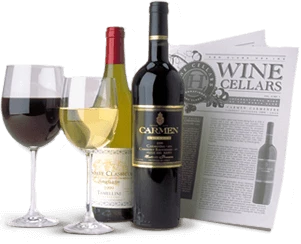
Vol. 7 No. 2
Standard Selection - (1) Red, (1) White
Bertrand Minervois PR 2001 - France
Amberley Semillon - SW 2003 - Australia
Red Wines Only Featured Selections
Turramurra Estate Cabernet Sauvignon 1999 - Australia
White Wines Only Featured Selections
Lynmar Quail Hill Chardonnay 2000- CA
Bertrand Minervois 2001 - France
Gérard Bertrand is, perhaps, the most respected name in the Languedoc the oldest and largest wine region in France. The Bertrand name is associated with many of the very best domains and vineyards in all of southern France, and like his father before him, Gérard has not only inherited the Bertrand legacy from his forbearers, he has augmented and cultivated the family heritage by acquiring an ever increasing array of outstanding properties each of which produces wines of superlative quality and eminent distinction.
The Languedoc remains the world's largest single viticultural area, encompassing many appellations and distinctive sub regions all of which are capable of producing fine wine. Stretching all the way from the Spanish border in the west, within sight of the
towering Pyrenees, to the banks of the Rhône River far to the northeast, Languedoc cuts a huge swath of dry coastal plain and sheltered mountains from which flow the guts and the glory of French viticulture.
The Languedoc, whose name is synonymous with the language of southern France, was the first part of ancient Gaul to be extensively planted to the vine. And long before the Romans and Caesar's legions had subdued the Gallic tribes to the north, wine was big business in Languedoc. The Phoenicians passed this way, and not surprisingly, the region's beauty and superb conditions for the cultivation of the vine did not escape the first Greek colonists who planted vines there, making Languedoc the cradle of French viticulture in the fifth century BC. For nearly two thousand years, Languedoc remained the big dog and premier purveyor of wine to France and the world. Sadly, the glory of France's most historic wine region the birthplace of troubadours and Provencal, the lyrical language of poetry ended in the 19th century with the advent of phylloxera.
Phylloxera, the most dreaded of all vine diseases because it attacks the roots and systematically sucks the life out of a vine, devastated the vineyards of France in the 19th century, targeting Languedoc as its prime host. Following the phylloxera outbreak, the Languedoc lost most of its premier hillside vineyards, old vines and premium varietals. Subsequent replanting was undertaken using inferior grape varietals that would quickly bring high yields and much needed cash. Moreover, the great hillside vineyards descended to the plains, where soil, drainage and exposure (terroir) were inferior to the older, loftier heights of legend and lore. Unfortunately, throughout the late 19th century and most of the 20th century as well, the Languedoc languished in the doldrums of viticulural obscurity, unless of course common, everyday plonk was your beverage of choice. Once the proud bastion of French vitucultral excellence, the Languedoc became the world's major source of huge quantities of insipid wines, whose main virtues were none other than high alcohol and cheap prices all of which were subsidized by the French government.
Today, the Languedoc is returning to its former glory. The worldwide demand for cheap, course wine no longer exists; the emphasis today is on quality rather than quantity. In addition, the only official incentive for grape growers is to plant premium varietals, move back to the ancient hillside sites, and produce less wine of greater quality. Since the 1970's that is exactly what has been happening, leading viticulturalists and critics alike to proclaim a veritable Renaissance in the Languedoc, much of it spearheaded by Gérard Bertrand and his father Georges before him.
Unlike most of the Languedoc's growers, Georges Bertrand was a visionary. He was also a winemaker and a great wine taster, and he knew the value of premium varietals and excellent terroir. Georges reconstructed his family's estate, Domaine de Villemajou, in the heart of Corbières and began acquiring other prime parcels and ancient estates. In the early1970's, Georges also advised and supported other forward thinking Languedoc growers and winemakers who aspired to greatness. Gérard has continued and fortified that crusade.
Since his father's premature death in 1987, Gérard has brought Cigalus, the Languedoc's finest proprietary red and white wines, into the Bertrand fold. He has also acquired the Chateau de l'Hospitalet, an ancient hospice renowned for it wine, whose origins go back to 1561. In addition, Ch_teau Laville-Bertrou, a superlative Minervois estate, and a host of other fine properties from various Languedoc appellations and areas have come under the direction of the Gérard Bertrand. All of Bertrand's estate wines are produced in respect to the environment, using sustainable methods and hand harvesting.
The Visigoth Cross: The Visigoth Cross is the emblem of the outstanding wines of Gérard Bertrand. Its image appears on the neck of the bottle of each of his wines. Dating from the 7th century, the Visigoth Cross depicts two doves drinking from a cup, to represent sharing and communion. From the crosspiece hang the symbols for the alpha and the omega. This original version of the Visigoth cross became centuries later the cross and symbol of Languedoc.
Accompaniments:The 2001 Gérard Bertrand Les Matins D'Aurore Minervois needs only a glass and an appreciative, eager taster for companions. This is truly one wine that can captivate without food, but that is providing you are not one of those people who object to too much flavor in a wine or in other words too much of a good thing. Nevertheless, Bertrand's Minervois highlights many well-prepared foods, providing a splendid accompaniment to beef, lamb, and traditional Mediter-ranean favorites, especially imaginative regional Italian cooking. We suggest serving Les Matins D'Aurore with hearty pasta dishes that are made with fresh tomatoes, herbs, and wild mushrooms. A Venetian specialty, Stuffed Duck (Anatra Ripiena), prepared with soppressata sausage, Provencal herbs and aged Parmesan cheese, is another favorite. Enjoy!
Tasting Notes:A deeply colored and provocative wine, the 2001 Gérard Bertrand Les Matins D'Aurore (meaning morning sunrises) is nothing short of profound. Amazingly rich, smooth and enticing, this fabulous Minervois tantalizes the senses with the aroma of black fruits and garrigue, evoking the quintessential scents of the Provencal landscape and recalling the glory of traditional Chateauneuf-du-Pape. Highly extracted, but utterly mouth filling, there is nary an edge to this splendid old vine Grenache and Syrah blend. Unquestionably, Les Matins D'Aurore is the finest Minervois we have ever tasted, an effort that bears testimony to the Renaissance sweeping the ancient Roman appellation of Miner-vois, which lies in the heart of the Languedoc. We suggest you drink this amplifying red often, and any way you like it. We prefer giving the wine at least 15-20 minutes to breathe, but we have also enjoyed it straight away with little or no aeration. Salut!
Red Wine Recipe
Osso Bucco
4 pieces veal shanks 1 can (28 oz.) whole tomatoes
2 Tbl. flour 1 cup white wine
H cup cooking oil G cup chopped parsley
1 garlic clove minced 2 bay leaves
1 celery stalk chopped salt & pepper, to taste
2 carrots chopped 1 grated lemon peel
Coat veal shanks with flour. Heat oil in heavy fry pan and add garlic. Brown the meat on both sides in the oil and garlic. Add the onion, carrots, celery, tomatoes, bay leaves and wine. Cover and simmer on low heat for 2 hours. Add salt and pepper. Sprinkle in the parsley and lemon peel. Serve with risotto or spaghetti.
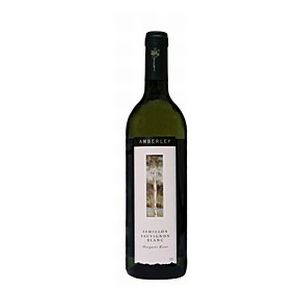
Amberley Semillon Sauvignon Blanc 2003 - Australia

Amberley Estate lies tucked among the low hills of the Margaret River, Western Australia's green temperate corner, a mere three miles from the sea. Here the Margaret River cuts through wooded hills and steep ridges that are carpeted with wild flowers, before sighing almost inaudibly into the gleaming Indian Ocean, where Technicolor waters and huge rolling surf make the Margaret River region one of the world's top surfing spots. These very same waters, along with steady ocean breezes, a unique soil, and a Mediterranean climate also make Margaret River one of the finest natural wine producing areas on earth and a great place to visit.
Wine writers and importers scour the globe in search of great winemaking regions and fine wines to purvey, but such areas are few and far between, and the fruit of their vines are even scarcer. Great wine regions appear as little strips of land in just a hand full of countries, and then there is the age old problem of separating the wheat from the chaff, the good from the bad, and the sour grapes from the sublime ambrosias. Happily, the Margaret River is one of the blessed few locales, a chosen land, in which viticulture is a natural pursuit, and there are more than a hand full of award winning wines from which to choose.
In the 1960's, a scholar named John Gladstone was one of the first to recognize Margaret River's special climate, soil and conditions known as terroir. In his work Gladstone wrote about the similarities between the finest wine producing regions of Bordeaux and the Margaret River. He extolled the perfect weather of the Margaret River for the cultivation of the vine, especially the traditional Bordeaux varietals, and indeed Gladstone's proclamation has been proven correct. After all, the prophet is usually right, or mostly. In the case of the Margaret River, its climate is better than that of Bordeaux. Rainfall in the Margaret River is less than in Bordeaux (averaging only 30-35 inches per year) and more predictable. Furthermore, most of the region's precipitation falls during the winter and spring, and rarely does it rain during harvest time. The same cannot be said of Bordeaux, where the annual autumn deluge washes out many an aspiring candidate for vintage of the century, dashing the hopes of countless frustrated vignerons, and turning what could have been greatness into an a ocean of light mediocre wine, or worse. Moreover, high humidity and the ensuing rot that autumn rains bring to Bordeaux are rare in the Margaret River, which means far less spraying and chemical interventions are necessary in Margaret River than in Bordeaux. In short, Margaret River is naturally a more hospitable climate in which to grow wine.
The Margaret River is not yet so widely known in the United States as some older wine producing regions of Australia such as Barossa, Hunter or even the Clare Valley. And even after thirty years of extensive planting in the Margaret River, this prime viticultural locale produces less than 2% of Australia's wine. Yet, the Margaret River garners a much larger portion of gold medals and trophies for its wines than any other viticultural region of Australia a tribute to the Margaret River's dedication to premium varietals and quality winemaking.
As with any great enterprise, one is sure to find an impetus or catalyst, a mover or shaker behind the success of Amberley, one of the Margaret River's first wine estates. In this particular case, it is the dynamic duo of Chief Winemaker Eddie Price and Marketing Director Phil Fletcher. Eddie and Phil have been at Amberley since its inception in the late 1980's or shortly thereafter. Together they have built the engine that could, and does it ever run. Recently, we have had difficulty procuring enough of Amberley's wines to slake the thirst of all of our club members. Amberley's Estate Semillon Sauvignon Blanc routinely sells out first; long before the next vintage is available, frustrating many of its loyal fans. And the same situation prevails with most of the other offerings in Amberley's extensive portfolio as well, which makes Eddie and Phil as happy as Kangaroos in.. a very large paddock, but it makes the rest of us just a bit ornery, so if you want to reorder some extra bottles of the Amberley Semillon Sauvignon Blanc, please do it soon.
Accompaniments: As light and easy as the 2003 Amberley Semillon Sauvignon Blanc appears, one may be tempted to relegate the wine to the venial position of aperitif or party wine extraordinaire. However, we suggest that you also not miss the opportunity to pair this Australian beauty with some interesting and worthy food companions. Just about anything that swims or crawls upon the ocean floor provides our first choice with this Semillon Sauvignon Blanc. One of our favorite pairings is with a Seafood turnover, a puffed pastry stuffed with scallops and shrimp and served with a lobster sauce. Steamed mussels, prepared with garlic butter and herbs provide another great accompaniment. In addition, we suggest you consider the Amberley with various Thai or Asian fusion preparations. Po Pia Sod, the Thai rendition of fresh spring rolls (not fried) with whole shrimp brings out the lush fruit and herb tones in this Semillon Sauvignon Blanc, and in turn the runaway flavors in the spring roll that destroy Chardonnay and most other white wines are tamed. Salads or bean dishes, served with either fresh papaya or a papaya relish offer some more notable marriages with the 2003 Amberley Semillon Sauvignon Blanc. Enjoy!
Tasting Notes: Semillon Sauvignon Blanc is barely a year old (wine is made in February and March south of the equator rather than in August, September and October), but already it is delicious and ohhh so easy to drink. A blend of 70% Semillon and 30% Sauvignon Blanc, it aptly combines the varietal characteristics of both grapes. Melon, fig, gooseberry, and pineapple all are evident in the wine's aroma. On the palate, this same mélange of scents is deftly woven into a light, pretty wine, with plenty of flavor and a refreshing finish, which makes just a single glass of the Amberley Semillon Sauvignon Blanc seem unthinkable. As you quickly consume the bottle, you will know why Amberley's Semillon Sauvignon Blanc sells out so quickly: the wine goes down so easy, and before you know it you are reaching for another bottle. Although this wine is made to be drunk fairly young, it's a crying shame that we consume all of the Amberley Semillon Sauvignon Blanc before its first birthday because our experience has been that this wine takes on an added dimension in both depth and flavor, shortly after its second year in bottle (probably due to the initial partial barrel fermentation), so consider yourself forewarned. You may have to make some extra space in your cellar.
Turramurra Estate Cabernet Sauvignon 1999 - Australia
![]()
David and Paula Leslie's tiny Turramurra Estate (only 22 acres of vines are cultivated) was established in 1989 on the north facing slopes (the sunny side south of the equator) of Victoria's Mornington Peninsula. This secluded property is a mere 65 kilometers southeast of Melbourne, but it seems more like eons away from the hustle and bustle of Australia's second largest city. This lovely estate sits on a hill overlooking a beautiful garden and a small lake, all of which are only a stone's throw from stunningly beautiful Phillip's Bay, which separates Australia from Van Damein's Land, or Tasmania as it is more commonly referred to today. The Turramurra Estate is aptly named for the aboriginal word for high hill, a picture of which appears in some fashion on every one Turramurra's wine labels.
Proprietors David and Paula Leslie are the consummate hosts. They are both warm
and genuinely welcoming, but without pretense. Spending time with the Leslies is indeed one of life's pleasant interludes. Both are passionate about producing great wine. Moreover, a visit with the Leslies is a respite from the ordinary marketplace mentality of marketing and hype in favor of a glimpse into a well-ordered world in which the rhythms of life, the seasons, family and friends play an integral part. Perhaps, it is precisely this couple's integrated approach to life that appears in Turramurra wines, manifesting itself year after year in a myriad of multi dimensional wines that take on a seamless quality as they age and mature, becoming with time as comforting as an old friend or the glow of a roaring wood fire in the hearth as it wards off the chill of a cold winter's night.
Increasingly, the Mornington Peninsula is garnering attention as one of the most exclusive cool climate viticultural areas of Australia because of the region's moderate climate (a rarity in Australia) and prolonged growing season, and Turramurra Estate is indeed at the vanguard. Chardonnay, Sauvignon Blanc, Cabernet Sauvignon, Pinot Noir and Syrah are all grown and painstakingly produced by Turramurra, all with fine results that set the standard for the entire viticultural area and redefine the flavor profile and expectations in Australia of each of the wine's respective varietals. WOW is about the best way to describe these wines: we think you will agree.
Accompaniments: The ultimate beef tenderloin, rack of lamb or braised lamb shank would probably be most meat lover's first choices with the full flavored, highly structured 1998 Turramurra Cabernet Sauvignon. It is the tasting panel's philosophy that regal Cabernet based wines such as Turramurra deserve noble foods, at least the very best quality food you can bring to table. Simple can be as pleasing as complex, but this is not a wine to skimp on; it is too polished and subtley complex. So, in addition to classic red meat choices, we also recommend the Turramurra with a gently smoked Supreme of Duck, served with wild greens and a cassis reduction or mild cassis vinaigrette or even Rock Cornish Hen Forestière, roasted with natural pan gravy and presented with braised wild rice and mushrooms. For a meatless delight, why not try grilled organic vegetables with a pistachio mint sauce, and enjoy?
Tasting Notes: Oh baby, is this a Cabernet, or what? Opaque, purple, and loaded with flavor, the 1998 Turramurra Estate Cabernet is a gift from the Land Down Under. Produced on the Mornington Peninsula of Victoria, this Turramurra Cabernet offers up rich, complex scents of blackberry, current, cedar, and tobacco, the likes of which are hard to come by in Australia or elsewhere. In the mouth, this wine explodes, revealing layer after layer of blackberry fruit, mingled with the taste of olive and deep down barrel flavors. A good dollop of tannin frames the finish, and reminds the taster that this is still just the beginning of a long eventful life for this fine Bordeaux-style Cabernet. Enjoy it now and in many years to come. We plan on stocking our cellar, and suggest you do, too.
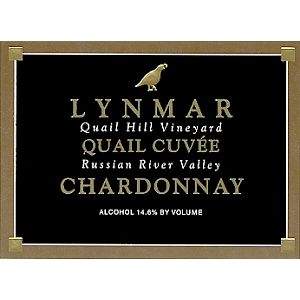
Lynmar Quail Hill Chardonnay 2000 - CA
Lynmar and the highly acclaimed Quail Hill Vineyard constitute the sixth child of Lynn and Mara Fritz. Mara, a linguist, gourmet cook and mother of five and Lynn, an attorney, Chairman and CEO of Fritz Companies, an international shipping giant, purchased the Quail Hill Vineyard in 1982. An established, dry-farmed, low yielding vineyard, devoted exclusively to Chardonnay and Pinot Noir, Quail Hill reminded the Fritzes of Burgundy. From the beginning, this husband and wife team lovingly tended their unique, cool climate Russian River vineyard, turning out a small production of prized grapes. Within a few years, Quail Hill was commanding the highest prices for its fruit in Sonoma County.
In response to the superior fruit and the overwhelming acclaim emanating from the Quail Hill Vineyard, Lynn and Mara decided to become winemakers. In 1990, the Fritzes founded Lynmar, their small family winery. Their mission, then and now, remains the same; namely, their sole goal is to produce the finest Chardonnay and Pinot Noir in the Russian River Valley. At the heart of this quest lies the superior quality of the Quail Hill Vineyard and the Fritzes personal devotion and involvement.
The Quail Hill Vineyard possesses a unique terroir. The vineyard sits on a rise above and west of the Laguna de Santa Rosa, a wide expanse of old riparian forest, freshwater marsh and seasonal wetlands, that is home to rare species of plants and animals, including thousands of migratory birds. Here the growing season is long and the Goldridge soil, a well-drained combination of sand, silt and clay, is perfect for Chardonnay and Pinot Noir. In addition, sustainable agricultural methods are used, and almost all vineyard work is done by hand.
Accompaniments: Given the supreme elegance, balance, and charm that characterize the 2000 Lynmar Quail Hill Chardonnay, we believe this is a rare California Chardonnay that does not require food to mask its flaws or tame the overpowering taste of oak that has come to be more synonymous with California Chardonnay than the flavor of the grape itself. We love to drink the Lynmar Quail Hill all by itself. However, it is also on account of the wine's attributes, most notably balance and breed, that it deserves the finest fare brought to table, so we suggest you put your best foot forward in the kitchen. Poached Salmon, Lobster Newburg, Coquilles St. Jacques, Chicken Simmered in Cream and Onions, and most other white wine classics all provide premier accompaniments to the classically wrought Lynmar Quail Hill Chardonnay. Enjoy!
Tasting Notes: A dollop of pure ripe Chardonnay fruit, a cachet of light but lovely spice, a touch of butter, and a double dose of elegance and flavor are the words that best describe the 2000 Lynmar Quail Hill Vineyard Chardonnay. From this wine's inviting nose that emanates lime, papaya, spiced apple, and more to its clean, elegant finish that haunts rather than lingers, Lynmar has captured all the beauty, charm, and drink ability of the finest Russian River Chardonnays. Each sip seems to offer a new flavor or subtle nuance to ponder, without fatiguing the palate or overwhelming the senses. We suggest serving the Lynmar Quail Hill Vineyard Chardonnay often, but only moderately chilled (about 50º F) to capture the wine's essential flavors.
White Wine Recipe
Salmon in Pancetta Cream
1 lb. fresh salmon fillet cut into 4 pieces 1 zucchini sliced thin
1 oz. sliced pancetta (can substitute bacon) 1 cup heavy cream
1/4 cup shallot chopped 2 Tbl. fresh basil
1 carrot sliced thin
Steam carrot and zucchini slices for about 3-4 minutes until cooked but crisp.
In a fry pan, cook pancetta until browned and crisp. Remove pancetta from
pan and crumble. With drippings still in the pan, sauté the shallot until it is limp. Slowly add the heavy cream to the pan. Bring to a boil and reduce heat. Gently simmer for 5 minutes. Stir in chopped basil.
Rinse the salmon and pat dry. Place salmon skin side down in a baking dish. Broil
for 6-8 minutes or until fish is cooked through. Remove salmon to a plate and top with cream sauce. Cover the sauce with pancetta crumbles and steam vegetables.
For Members Only
Give Your Friends FREE Beer, Wine, Cheese, Chocolate, Cigars & Flowers!
Through our Customer Appreciation Program
Your name has real value to your friends, co-workers, and family members! Every time a friend, family member, or anyone else you know joins any one of our clubs, [or gives a gift] for 3 months or longer, we'll give them 50% off of their first month, but only when they mention your name. And we'll also give you 50% off your next month too which can either be applied towards your current membership or you can try one of our other Clubs out! (We can add one more month to your order at 50% off for prepaid memberships!)
The Fine Print: Members giving gift memberships do not qualify for referral credits and you can't give yourself a gift to qualify! This Program is mutually exclusive of any other promotions.
Membership Q & A
Note: Please do not use the web site to make any account related information changes such as address or billing changes, membership extensions, or terminations. To ensure timely processing of your request, please call us at 800-625-8238.
Q: What can I do if Im having difficulty receiving my shipment at home?
A: You should consider having our discrete box delivered to your work location or to a neighbor 21 yrs. of age that can receive it for you. The box is brown corrugated cardboard and doesnt say Wine on it anywhere. Consider having it shipped to your work location as many of our customers do.
Q: What should I do if Im moving or want to extend my membership?
A: Please call us prior to the 9 th of the month to make all account related information changes such as address changes, membership extensions & terminations, or gift accounts desiring to continue their memberships. Address changes made after that time may require a repackaging and re-shipping charge and will incur a $5.00 service charge from UPS that will be charged to your account.
Q: What happens if my shipment is damaged?
A: If your shipment arrives damaged, please call us immediately toll free at 1-800-625-8238 and report the incident for a prompt resolution.
Q: What happens if my credit card is declined?
A: We will send you a courtesy notice asking you for an alternative payment method and your order will be temporarily suspended until we hear from you. As we incur a $ 2.00 re-processing fee each time your card does not clear, that charge is passed on to you.
Q: What happens if I join under a special incentive program and dont stay a member for the entire term committed?
A: Not a problem. Although we want to do everything we can to keep you as a member, we will allow you to cancel your subscription early, however, you will be responsible to pay for the item which was given to you as part of the promotion. If you received a discount based on a specific term, the amount discounted will be charged to your card.