Welcome to The International wine of the Month Club

Past Newsletters

Vol. 7 No. 10

Standard Selection - (1) Red, (1) White
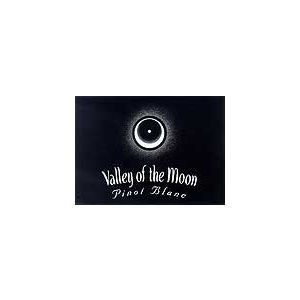
Valley of the Moon Sonoma County Pinot Blanc 2002 – USA

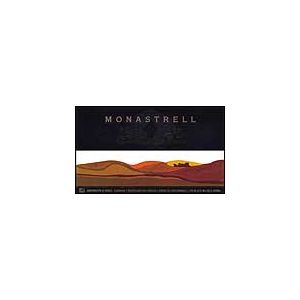
Castillo del Baron Yecla Monastrell 2003 – Spain

Red Wines Only Featured Selection
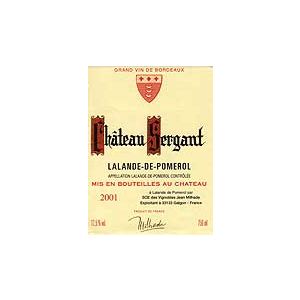
Château Sergant Lalande-de-Pomerol 2001 – France

White Wines Only Featured Selection
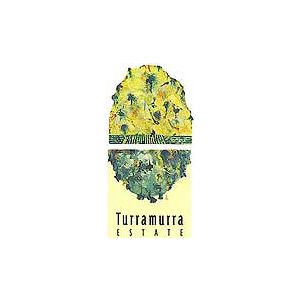
Turramurra Estate Chardonnay 1999 – Australia


Valley of the Moon Sonoma County Pinot Blanc 2002 – USA

Valley of the Moon is the most historic wine property in Sonoma County as well as one of California’s viticutural icons. Haunted by history and romance, the Sonoma Valley was called “Valley of the Moon” by the Native Americans who inhabited the area because as the moon ascended in the evening sky, it appeared to rise, again and again, over the peaks and glens of the Mayacamas mountain range. Thus, the moon in all its phases is the symbol for Valley of the Moon Winery and Vineyards, which are located in the very heart of Sonoma Valley. The etched design on the bottle of each Valley of the Moon wine depicts the lunar phases surrounded by a “cosmos” of white dots; thereby, portraying the expression of moonlight as the reflected light of the sun.

The land on which the Valley of the Moon Winery and Vineyards is located has an illustrious past. Once, it was part of the vast 48,000 acre Agua Caliente Land Grant owned by the legendary statesman General MarianoVallejo, the 19th century Mexican Governor of California. After California became part of the United States, the property changed owners several times before 1863 when the “Stone Tract” portion of the property was conveyed to Mr. George Whitman. According to the best records, Mr. Whitman was the first owner to grow wine grapes on the land. He also built a winery there and by 1876 his enterprise was a hugely successful one, annually producing 50,000 gallons of wine and at least 2,000 gallons of brandy. Later in the 19th and early 20th centuries a succession of owners would take possession of this illustrious property, including George Hearst, the father of the now famous newspaper magnate William Randolph Hearst.

Prohibition hit Sonoma County especially hard, and like most California vineyards the Valley of the Moon property languished during Prohibition and its aftermath. The entire viticultural region would have to await the wine Renaissance of the 1960’s and 70’s for the first signs of redemption. For the Valley of the Moon estate, it was not until winemaker Mike Lee and Gary Heck, the present owner, took possession of this historic property that its restoration began. Under the guidance of Heck, Lee, and winemaker Pat Henderson, Valley of the Moon has finally been restored to its former glory. Today, the Valley of the Moon Winery and Vineyards is distinguished by the marriage of its rich history to a new state-of-the-art wine production facility.

The creation of Valley of the Moon wines begins with hand selection. All of the fruit comes from the estate and a few select nearby vineyards that are chosen on the basis of their long histories of producing the absolute highest quality fruit. As vineyard management is simply the most important part of winemaking, these vineyards must also share the estate’s “banana belt” microclimate, which allows the grapes to develop deep rich flavors and colors. Warm Mediterranean-like days followed by cool Sonoma Valley evenings, characterized by the nightly fog banks that roll in from the Pacific Ocean and up into the Valley of the Moon, keep the fruit at an optimum temperature.

Valley of the Moon produces traditional red and white varietals, bottling an outstanding Zinfandel from a vineyard planted in the 1940’s, a Syrah, a Sangiovese, a Barbera and a Meritage called Cuvee de la Luna, in addition to the winery’s benchmark Pinot Blanc and Chardonnay offerings. At Valley of the Moon Winery, the minimum amount of sulphite is used, so that a range of twenty-five to thirty-five parts per million free-sulfites is typical, a very low percentage, especially for white wines. Furthermore, Valley of the Moon uses no other preservatives in its wines due to improved filtration technology and a philosophy that espouses healthy, natural tasting wines.

Tasting Notes: Rich in robe and dominated by tropical fruit aromas, the 2002 Valley of the Moon Pinot Blanc is a veritable smorgasbord of scents and plush ripe flavors. Guava, pineapple, and hints of toasted coconut dominate the bouquet and savor of this pure, fruit driven Pinot Blanc. Reflecting its roots in the deep alluvial soil and coastal climate of southern Sonoma County, the 2002 Valley of the Moon Pinot Blanc epitomizes the exuberant ripe Sonoma-style of California winemaking that is now imitated the world over. Gaining length, depth and flavor as it airs, each sip of this luscious, dry, full throttle white wine demonstrates why Pinot Blanc is a premium varietal that deserves further worldwide recognition. A pleasure to drink from start to finish, this Valley of the Moon offering possesses all the ripe, sensuality of the varietal; yet, it is balanced by the delicate nuance of French oak and the characteristic raciness and restrained spice that typifies the finest examples of this grape. We suggest serving this wine well chilled, at least at first. Afterwards, it can slowly evolve to 50°-55° F for a whole new taste sensation.

Accompaniments: Like most well made Pinot Blanc’s, the 2002 Valley of the Moon Pinot Blanc has a natural affinity for Asian food, fusion dishes, and a host of eclectic gastronomic offerings. Plainly said, we suggest that you pair this wine with so called hard to match dishes, and enjoy the result. Some of our favorite suggestions include an oriental lump crab roll, served with Chinese vegetables and a black sesame dipping sauce; a mixed green salad that is topped off with caramelized walnuts, poached pears, tomatoes, crushed blue cheese, and a Champagne vinaigrette; or an Indian Bhel Puri, which is a mélange of puffed rice, dried vermicelli, onions and fresh coriander. Other worthwhile accompaniments are grilled or roasted pork tenderloins with fruit chutneys and most Vietnamese foods. We heartily recommend fresh Vietnamese spring rolls, served with either a sweet and sour sauce or a mild peanut and garlic sauce. Simply prepared foods and many soft cheeses also complement the Valley of the Moon Pinot Blanc; many even accentuate the wine’s extroverted personality and wealth of flavor. Enjoy!

Recipe for White Wine

Chinese Vegetables with Sesame Sauce

1/2 lb. shiitake mushrooms, cleaned 1 Tbl. honey
2 cups bok choy cabbage sliced thick 1 tsp. chili oil
2 red bell peppers – sliced 1 cup vegetable oil
1 lb. snow peas 1 Tbl. hot mustard
2 Tbl. rice vinegar 3 cloves garlic - minced
4 Tbl. soy sauce 1/4 cup toasted sesame seeds
1/2 cup sesame oil juice of 1 orange

Mix all ingredients except vegetables in a large bowl. Refrigerate at least 1 hour (2 is preferable). Mix well and serve with sliced Chinese vegetables.


Castillo del Baron Yecla Monastrell 2003 – Spain

Before we go any further, we know you have to be wondering a couple of things, not the least of which are two rather obvious questions: What is a Monastrell? And where in the world is Yecla? Now that we have gotten that out of the way we can proceed. As the wise old sage once said, “All will be revealed in good time.”

Castillo del Baron is fast establishing itself as one of the world’s most consistent producers of quality wines at affordable prices, from anywhere. Serious wine critics heap multitudes of praise upon this large bodega, hailing its wares as “the best kept secret in quality wine,” and that is probably because almost no one can locate Yecla on a map, let alone make his way there, and even fewer consumers know what a Monastrell is. Nevertheless, Castillo del Baron’s reputation continues to grow, and with good reason. Entirely family owned and run, this wonderful, off the beaten path estate has a knack for producing wines with both character and a soul from up to date technology.

Yecla, which also happens to be the center of the Spanish furniture industry, is located deep in the dry mountainous interior of southeastern Spain, some fifty kilometers from the picturesque Costa Blanca resorts that lie along the gleaming Mediterranean. In other words, Yecla is situated southwest of Valancia and northwest of Alicante, or more plainly put; it’s in the middle of nowhere – just where it ought to be. Yecla has not traditionally been one of Spain’s more renowned wine regions nor has it been a hot bed of viticultural excellence, despite the multitude of thirsty tourists that descend upon nearby resorts every year; however, all that is changing thanks to Castillo del Baron. Finally, the Renaissance has arrived in Yecla.

What distinguishes Yecla from other hot country interior wine regions is first and foremost the terroir, a combination of soil, climate, elevation, exposure, and the total environment conducive to vines. In Yelca, an excellent mixture of stony limestone soils and high altitude (2000-2500 feet), where cool sea breezes penetrate, offer the potential to make more than a decent every day wine. Moreover, the investment, will, and varietal selection made by Castillo del Baron are now ensuring that Yecla’s potential is finally being realized. And as the tasting panel is fond of saying, “One can’t have too many faithful friends, too much love, or enough fine wine.” So, bravo and muchos kudos to Castillo del Baron!

The final piece to the quality quotient at Castillo del Baron is the choice of grape variety – Monastrell. Better known around the world by its French name Mourvèdre, this ancient variety is believed to have its roots, literally and figuratively, in southeastern Spain in and around Yecla. Indeed, there is a village not far form Yecla called Murviedro, which may well have given the grape its more common name. Today, in southern France, especially in Provence, Languedoc, and along the Rhône, Mourvèdre/Monastrell is an essential component in nearly every serious red blend. In addition, Mourvèdre is the grape solely responsible for the great wines of Bandol, which remains one of France’s best-kept wine secrets. Undoubtedly, Monastrell is well suited to warm Mediterranean climates, where it ripens late, a trait that tends to preserve the natural acidity in grapes, resulting in fresh, highly flavored wines. Thus, Castillo del Baron and Yecla are now on the viticultural map.

Tasting Notes: “Huggable, extroverted, and enticing,” are just a few of the adjectives penned by panel members to describe the 2003 Castillo del Baron Monastrell. A delightful, exuberant wine without a doubt, the 2003 Castillo del Baron is a tour de force in winemaking for the soon to be famous Yecla and nothing short of an explosion of fresh ripe red and black fruits, infused with a warm, earthy Mediterranean twist of herbs and spices. Reminiscent of a first rate Rhône-style red, this offering is deep in both color and flavor, but without a trace of hard tannin or nary an edge. From start to finish, the 2003 Castillo del Baron Monastrell is pure pleasure in a glass. Built for easy access and immediate gratification, there is no need here for extended breathing, coaxing or decanting. Just open and pour. The ideal wine for every season, the 2003 Castillo del Baron Monastrell is comfortable at room temperature or slightly chilled, depending upon the ambient temperature. When outside temperatures rise above 80° F, we prefer the Castillo del Baron and most other Rhône-style reds slightly chilled, but as always….as you like it!

Accompaniments: The 2003 Castillo del Baron Monastrell is as easy to pair with a wide variety of foods as it is to drink on its own, completely unadorned. Friendly, gracious, and thoroughly unpretentious, (Now, don’t you wish the world were like that?), the 2003 Castillo del Baron Monastrell provides excellent companionship for everything from Texas barbecue to authentic Valencia paella. It is also one of the panel’s favorite wines to serve with juicy, sirloin burgers right off the grill, accompanied by fresh ripe tomatoes, onion, and all the fixings. We also suggest you try the Castillo del Baron with vegetable pizzas. One of our favorites is a three cheese and artichoke pizza, usually a not so easy combination to pair with wine, but the 2003 Castillo del Baron rises admirably to the occasion. Other favored pairings include a slice or two of Cantal, a remarkable French cheese from Auvergne, or Le Chevrot and Wensleydale, two of this month’s selections from our international cheese of the month club. For more creamy, palate-pleasing choices, look elsewhere on this website, and have a party! And for the record, the Castillo del Baron is one great party wine. Enjoy!

Recipe for Red Wine:

You’re favorite pizza dough (enough for 6 small pizzas)
1 cup tomato sauce
a pinch of dried oregano
a pinch of dried basil
1 zucchini – sliced
1 yellow bell pepper – sliced
1 red bell pepper – sliced
1 green pepper – sliced
2 cups mozzerella cheese - shredded

Shape the dough into 6 balls and roll out each one making individual pizzas. Transfer the dough onto baking stones or flat baking pans. Cover each “pizza’ with a thin layer of tomato sauce. Place assorted vegetable slices on top of sauce, sprinkle with cheese and then sprinkle cheese with oregano and basil.

Bake in preheated 500 degree oven for 10 minutes or until cheese in lightly brown and bubbly.

Château Sergant Lalande-de-Pomerol 2001 – France

Château Sergant is one of the stars of the excellent Bordeaux commune of Lalande-de-Pomerol. Situated on the gravelly plateau of Lalande-de-Pomerol, which connoisseurs and critics alike consider to be the rising star of Bordeaux’s right bank communes, Château Sergant produces on average a mere 7,500 cases of fine red Bordeaux from 40 acres of vines.

Purchased in the 1960’s, this admirably situated property was completely replanted by Jean Milhade, one of Bordeaux’s most respected vignerons. The Milhade family is well known in Bordeaux for their loving restoration of historic Bordeaux wine properties and an uncompromising devotion to the production of high quality, opulent, full-flavored red wines. Consequently, Château Sergant now serves as a model for other growers in the area.

Merlot, Cabernet Sauvignon, and Cabernet Franc constitute the oenological triumvirate responsible for the fine claret produced at this estate. Undoubtedly, quality is the overriding objective at Château Sergant, and quality is what flows from this property by doing all the right things: producing low yields, practicing hand harvesting and sustainable farming methods, controlling fermentation, barrel ageing for 18 months, and using a second label for vats that do not meet the Château’s strict standards. It is just such practices that have helped this fine estate win a number of gold medals, including at least one first place finish from the Concours Agricole de Paris, France’s most prestigious wine fair.

Tasting Notes: The classically wrought 2001 Château Sergant is deep in color and heady with the scents of cedar, crushed blackberry, and chocolate. Opulent and medium bodied, this wine exhibits a complex cache of flavors in the mouth, including fresh berries, hints of licorice, and that certain something the French call je ne sais quoi, and unequivocally that is a very good thing. Fine, supple, and supremely elegant, the 2001 Château Sergant is drinking beautifully at a mere three years of age thanks to a hedonistic cepage of 70% Merlot, 20% cabernet Sauvignon, and 10% Cabernet Franc. Nevertheless, well-integrated tannins provide a fine counterpart to the wine’s decadent fruit and lend themselves to further ageing. We suggest serving the 2001 Château Sergant at cool room temperature (no more than 68º F), after a half hour of breathing time. Enjoy!

Accompaniments: The 2001 Château Sergant, like most fine Pomerol, constitutes the quintessential crowd pleaser at an elegant dinner party. Stuffed Crown Roast of Pork, Tournedos of Beef, and, perhaps, the finest accompaniment of all Braised Rabbit, served in a savory cream sauce, all provide superb accompaniments to the racy Château Sergant Lalande-de-Pomerol. Duck à l’Orange, a simple spit roasted chicken, or even turkey with all the trimmings offer more fine accompaniments this lovely claret. And if you’re feeling selfish, skip the dinner party and drink the 2001 Château Sergant with that special someone or by yourself. Grill a few shitake or portabella mushrooms and put out a plate of selected cheeses and make your own party. After all, who’s better than you, anyway?

Turramurra Estate Chardonnay 1999 – Australia

David and Paula Leslie’s tiny Turramurra Estate (a mere 22 acres of vines) was established in 1989 on the north facing slopes (the sunny side south of the equator) of Victoria’s Mornington Peninsula. A secluded property, a mere 65 kilometers southeast of Melbourne, Turramurra flourishes eons away from the hustle and bustle of Australia’s second largest city. This lovely estate sits on a hill overlooking a beautiful garden and a small lake, all of which lay only a stone’s throw from stunningly beautiful Phillip’s Bay, the mystical body of water that separates Australia from “Van Damein’s Land,” or Tasmania as it is more commonly referred to today. The Turramurra Estate is aptly named for the aboriginal word for high hill, a picture of which appears in some fashion on every one of Turramurra’s wine labels.

Turramura’s proprietors, David and Paula Leslie, are warm and welcoming hosts, who aptly set the tone for the special wines that flow from their cellar. Spending time with the Leslies is indeed one of life’s pleasant interludes. Both are passionate about producing great wine. Moreover, a visit with the Leslies is a respite from the ordinary marketplace mentality of marketing and hype in favor of a glimpse into a well-ordered world in which the rhythms of life, the seasons, family and friends play an integral part. Perhaps, it is precisely this couple’s integrated approach to life that appears in Turramurra wines, manifesting itself year after year in a myriad of multi dimensional wines that take on a seamless quality as they age and mature. So, whether it is the estate’s flamboyant Chardonnay or one of the property’s Bordeaux style reds, you are sure to discover the comfort of an old friend or the glow of a roaring wood fire as it wards off the chill of a cold winter’s night.

Tasting Notes: A rambunctious white wine, the 1999 Turramurra Chardonnay is about as flamboyant as Chardonnay gets. It sports a deep robe that hints at maturity, but in all other respects this full throttle white exhibits youthful exuberance along with a host of exotic flavors. A rich decadent nose, redolent with lavish fruit, vanilla cream, smoke, roasted nuts, and hints of butterscotch, more than amplifies the senses. Full, exotic flavors explode in the mouth, while subtle spice and pleasant hints of un-sweetened pineapple perform their tantalizing dance across the palate to provide a long clean finish. Rich and full-bodied, but never flabby, this well aged beauty serves as ample testimony to the benefits of natural yeast fermentation and the staying power of high quality Chardonnay from low yields. The 1999 Turramurra may indeed be out of the ordinary, but that is what makes it so extraordinary. Enjoy!

Accompaniments: Age has a way of transforming us all…. some for the better…. others for the worse. When it comes to Chardonnay, only the finest survive and prosper. In the case of the1999 Turramurra Chardonnay, we have a delightfully mature wine, but you need not worry about rushing out to find it an assisted living facility. In fact, this is one spry, independent senior. Consequently, it needs little accompaniment, beyond a hand full of hazelnuts; a delicious baked Brie, served with almond slivers and dried apricots; a classic French Suprême de Volaille aux Champignons, which roughly translates into the finest chicken breast with mushrooms and cream we have ever tasted; or perhaps, best of all, steamed lobster in drawn butter. In fact, you could skip an accompaniment or simply consider serving the Turramurra Chardonnay at the end of meal in place of dessert.

For Members Only

Give Your Friends FREE Beer, Wine, Cheese, Chocolate, Cigars & Flowers!
Through our Customer Appreciation Program

Your name has real value to your friends, co-workers, and family members! Every time a friend, family member, or anyone else you know joins any one of our clubs, [or gives a gift] for 3 months or longer, we'll give them 50% off of their first month, but only when they mention your name. And we'll also give you 50% off your next month too which can either be applied towards your current membership or you can try one of our other Clubs out! (We can add one more month to your order at 50% off for prepaid memberships!)

The Fine Print: Members giving gift memberships do not qualify for referral credits and you can't give yourself a gift to qualify! This Program is mutually exclusive of any other promotions.

Membership Q & A

Note: Please do not use the web site to make any account related information changes such as address or billing changes, membership extensions, or terminations. To ensure timely processing of your request, please call us at 800-625-8238.

Q: What can I do if I’m having difficulty receiving my shipment at home?
A: You should consider having our discrete box delivered to your work location or to a neighbor 21 yrs. of age that can receive it for you. The box is brown corrugated cardboard and doesn’t say “Wine” on it anywhere. Consider having it shipped to your work location as many of our customers do.

Q: What should I do if I’m moving or want to extend my membership?
A: Please call us prior to the 9 th of the month to make all account related information changes such as address changes, membership extensions & terminations, or gift accounts desiring to continue their memberships. Address changes made after that time may require a repackaging and re-shipping charge and will incur a $5.00 service charge from UPS that will be charged to your account.

Q: What happens if my shipment is damaged?
A: If your shipment arrives damaged, please call us immediately toll free at 1-800-625-8238 and report the incident for a prompt resolution.

Q: What happens if my credit card is declined?
A: We will send you a courtesy notice asking for an alternative payment method, and will also attempt two more times to process the charges. If we cannot secure
payment and have not been contacted by you, the order will be temporarily suspended.

Q: What happens if I join under a special incentive program and don’t stay a member for the entire term committed?
A: Not a problem. Although we want to do everything we can to keep you as a member, we will allow you to cancel your subscription early, however, you will be responsible to pay for the item which was given to you as part of the promotion. If you received a discount based on a specific term, the amount discounted will be charged to your card.


logo for wine club
Since 1994
Home
Join Our Wine Club
Gift Memberships

Membership Renewals
Reorder Your Favorites
Wine of the Month Club
More Information
Current Selections
Past Selections
Testimonials
Other Gourmet Gifts
Corporate Gifts
Wedding Gift Ideas
All About Wine
Website Tools
Who We Are
Contact Us

1 - 800 - 625 - 8238
(Outside US call: 949-206-1904)
P.O. Box 1627, Lake Forest, CA 92609