Vol. 6 No. 10
Standard Selection - (1) Red, (1) White
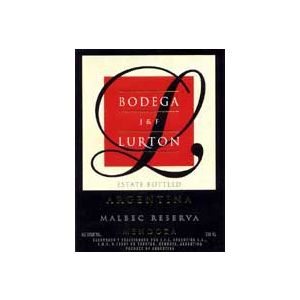
Bodega Lurton Malbec Reserva 2001 - Argentina
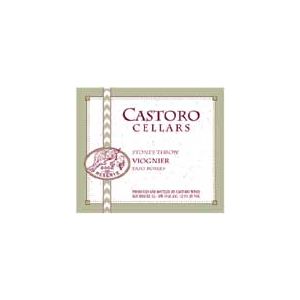
Castoro Cellars Paso Robles Viognier 2002 - U.S.A.
Red Wines Only Featured Selections
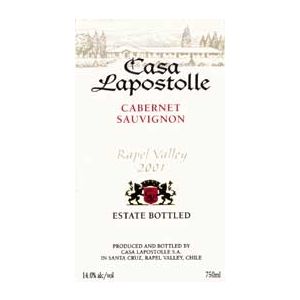
Casa Lapostolle Cabernet Sauvignon 2001 - Chile
White Wines Only Featured Selections
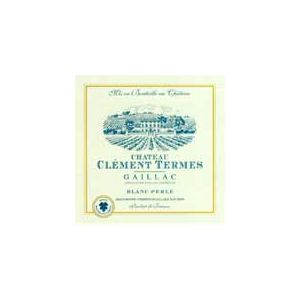
Château Clément Termes Gaillac Perlé 2002 - France
Bodega Lurton Malbec Reserva 2001 - Argentina
The Lurton brothers have done it again: namely, Jacques and Francois Lurton have upped the ante on the quality of wine in Mendoza, Argentina's sprawling wine juggernaut, just as they have done elsewhere around the world, in every great wine producing region where they have chosen to make wine or set up shop. However, this time they have raised the bar on themselves. The 2001 vintage marks the tenth vintage for the brothers Lurton in Argentina and a bell weather of quality, especially for the Lurton's Malbec, their flagship wine and Argentina's most important red grape varietal.
Jacques and Francois Lurton SA was founded in 1988, when the Lurton brothers established their own wine production company. Initially, Jacques and Francois were wine consultants and distributors for other leading wineries and distribution companies around the world (Vina San Pedro, Catena, Ginestet, Hardy, Saintsbury, and the Swedish State Monopoly to name a few), but always having been enamored and intrigued by Argentina and its potential for producing great wines, they began their own production of wines in Argentina, releasing their first vintage in 1992.
Since 1995, Jacques and Francois have acquired more than 500 acres in Argentina, of which in excess of 250 acres have already been planted to vines. In addition, the Lurtons have built their own cellar and winery in Tunuyan, about 100 miles south of the city of Mendoza, which demonstrates just how serious these two guys are about Argentina. Unequivocally, the brothers' Mendoza bodega has been the dynamic duo's most successful venture to date.
The Lurtons' own vineyards surround their beautiful new Mendoza winery, but several other neighboring terroirs have been chosen as well to augment the estate's philosophy of producing natural, high quality wines. These terroirs have been selected for the quality of their soil, climate and proximity to pure Andean water. All of Bodega Lurton's Mendoza vineyards were virgin territory, without ever having any input of chemicals. The Lurtons continue to safeguard their properties by refusing to employ herbicides and by practicing natural methods of production. For the estate's Reserva bottlings, select old vine parcels (some as old as 100 years) at neighboring estates are sourced to augment the Lurton's more youthful vines.
Today, the frères Lurton are currently producing world class wine not only in Argentina but in a host of other countries around the world, too. The brothers have always worked on the principle that it is possible to make fine wine wherever vines grow under good normal, healthy conditions. As proof, Jacques and Francois have put together a truly impressive range of wines, from the widest variety of places around the world.
Currently, the Lurtons have operations in Australia, Chile, France, Spain, and Uruguay in addition to Argentina. Each of the Lurton offerings possesses its own distinctive style and reflects the terroir of its origin. Furthermore, and, perhaps, more important to the quality conscious consumer is that the Lurtons' wines constitute excellent values and possess uniformly a very high quality/value ratio.
Jacques and Francois Lurton have made the most of their early experience in the vineyards of Bordeaux, the advantage of being the offspring of André Lurton, one of Bordeaux's leading proprietors of famous Chateaux (Chateau Bonnet, Chateau La Louviere, Clos Fourtet, etc.,). The have also capitalized on the considerable expertise in wine production and distribution that they have garnered personally and collectively through their varied international experiences. And if nothing else, the Lurtons have proven their hypothesis; namely, that fine wine can be produced in a myriad of locales. In the process, they have also demonstrated that in many wine regions around the world the overall improvement in the quality of wines has not consistently kept pace with the technological progress made by cutting edge winemakers, like themselves. Happily, the Lurton bothers have been bent upon improving that scenario, along with the overall state of winemaking around the world, so that consumers can enjoy consistently the high quality wines they have come to expect. Bravo!
Malbec at a Glance
Malbec is one of the five classic red grapes that comprise red Bordeaux or claret. Although now relegated to a minor role in Bordeaux, Malbec or Cot as it is sometimes called remains the heart and soul as well as the brawn and brains of Cahors, the illustrious black wine of southwest France a wine renowned for its power and longevity Malbec produces one of the deepest, most intensely hued wines in the world. Argentina is now considered to be the spiritual home of Malbec, where old vines of this premium varietal yield the finest wine that nation can produce as well as one of South America's most compelling wines.
Tasting Notes: A traditional Bordeaux style red, the 2001 Bodega Lurton Malbec Reserva sports a very deep garnet robe that is nearly opaque. From the initial sniff of this comely wine, it becomes apparent why the lusty Malbec varietal reigns supreme in Argentina. A rich, flamboyant nose, redolent with black fruit, rose petal, and violet seduces the nose. Fortunately, the aromatics carry through on the palate, with additional traces of vanilla and a patina of new oak to frame the brilliance of this very flavorful, but immensely smooth Malbec. Seductive and captivating are the two adjectives that best describe this wine. For the ultimate in drinking pleasure, we suggest you allow the 2001 Lurton Malbec Reserva to breathe for at least twenty to thirty minutes before serving it at cool room temperature.
Accompaniments: Beef is the national dish of Argentina, as any one who has ever visited Argentina will attest. And what better accompaniment is there to the national dish than the national wine? The 2002 Bodega Lurton Malbec Reserva will most assuredly fill that bill, and then some. Given the high flavor profile of the Lurton Malbec we suggest serving it with a serious steak. Some of our favorite cuts of beef with Malbec are sirloin, t-bone, rib eye, and porterhouse. To complement the woodsy, flamboyant side of the wine, a side dish with the steak of sautéed Cremini, Portabella, or Shitake mushrooms, prepared in a red wine reduction with shallots and a dash of rosemary and spicy mustard, can constitute a heavenly feast. However, lest you think the Lurton Malbec Reserva is a one dimensional wine, we also suggest you try it with some tried and true alternatives to Beef Almighty. Lusty red pasta sauces, three mushroom pizzas, and grilled ostrich provide other splendid parings with the Lurtons' lovely Malbec. And let's not forget lamb or even the best burger money can buy; they are all splendid complements to Lurtons' work of viticultural art. Enjoy!
Recipe for Red Wine:
Spicy Rib-Eye Beef
1 boneless beef rib-eye roast
1 cup red wine
1 tsp. paprika
2 cloves garlic minced
1 cup soy sauce
1 cup apricot halves
2 Tbl. tomato paste
fresh parsley
1/2 cup of coarse cracked pepper
Cover roast with cracked pepper. Combine soy sauce, red wine, garlic, tomato paste, paprika and mix well. Pour over roast, coating well. Cover with plastic wrap and refrigerate overnight, turning meat every couple of hours.
Remove roast and discard marinade. Wrap roast well with aluminum foil and place in a roasting pan. Bake at 325 degrees for 2-3 hours or until internal temperature reaches 160. Garnish with apricot halves and fresh parsley sprigs.
Castoro Cellars Paso Robles Viognier 2002 - U.S.A.
The husband and wife team of Niels and Bimmer Udsen, a warm and welcoming couple, founded Castoro Cellars more than two decades ago. They have one of the oldest wineries in the Paso Robles AVA and were some of first grape growers to realize the great potential of Paso Robles for such warm weather varietals as Viognier and Zinfandel. The winery was named after the Italian translation of Niels' long-time nickname, Beaver, prompting the winery's motto Dam fine wine. During the past twenty years, Castoro has grown from making a few barrels of wine in a rented corner of someone else's winery to developing a custom crush operation and a 25,000 case winery, a portrait that parallels the meteoric rise of the Paso Robles appellation from rough and tumble cattle country, replete with cowboys and an aura of the Wild West, to an exciting but very community minded wine region, deserving of a pilgrimage by every serious
connoisseur of California wines.
The creation of Castoro Cellars has been an organic process for Niels and Bimmer Udsen. Both view wine as an integral part of the daily meal and hold strongly to the belief that quality wine should be available to all wine consumers. In fact, Niels often states: Originally, we just wanted to make wine for our friends so they could enjoy great wine more often without having to pay half a day's wage for the experience. But that's not all. Both partners share a deep respect for the land and desire to encourage stewardship of the environment. Consequently, Niels and Bimmer have structured Castoro Cellars to reflect their values, and they have developed an approachable and environmentally conscious brand. The Udsen's have translated this respect for the environment into sustainable practices for their winery and vineyards, including the implementation of various responsible farming practices and the cultivation of three organic vineyards.
All Castoro's vineyards employ sustainable viticulture practices, such as the use of pomace (residue from grape skins and seeds that have been semi-composted) for fertilizer and weed suppression, and predatory insect releases, which eliminate or greatly reduce the need for pesticides. Not only is it beneficial for the environment, it is better for our vineyards and for our vineyard neighbors, explains Bimmer. Recycling is faithfully practiced at the winery, too, to the greatest extent possible.
Castoro Cellars is still led by its original team of winemakers. For more than twenty years, Niels Udsen, veteran Winemaker and Enologist Tom Myers, and Assistant Winemaker Mikel Olsten have worked together at Castoro to create world-class wines at affordable prices. The duration of their relationship is nearly unprecedented anywhere else in California. Niels and Tom's friendship goes back even further, to their days of working together at Estrella River Winery in the 1970's. The way in which the team works together is facilitated by the winery's close, family-like atmosphere, so it was a great tribute to all three when Tom Myers received the 2002 Winemaker of the Year award for San Luis Obispo.
Tasting Notes: A flamboyant and full-bodied Viognier, the 2002 Castoro Cellars Paso Robles Viognier offers the consumer more than a touch of the exotica for which this premium varietal is renowned. A heavenly floral scent, infused with a mélange of tropical flowers and a deft spray of jasmine, caress the nose. Thanks to a slow cold fermentation in stainless steel tanks all the olfactory goodness in this Rhone-style Viognier has been thoughtfully retained for all to enjoy. On the palate the wine is long and fairly intense, but the flavors are well integrated due to a three and half-month hiatus in small oak barrels. More extensive oak aging of Viognier can rob this varietal of its exuberant fruit and vitality, but in the case of the Castoro Cellars, the taster can have his cake an eat it, too. Rarely is dry white wine such a decadent, hedonistic pleasure. From start to finish the 2002 Castoro Cellars Paso Robles Viognier is a staggering statement and another fine testimonial to the greatness of Viognier in the right hands and from the right terroir. Although easy to drink, this splendid wine packs a sneaky punch (15.1% alcohol), which is nearly imperceptible to the taster, so the Castoro Viognier is more than a glass of wine, no matter how you look at it or drink it. We suggest serving this wine moderately chilled around 45° F.
Accompaniments: In California and France, Viognier is considered by many to be the quintessential aperitif. Strong, vinous, yet hauntingly delicate, good Viognier is a fine way to start a special evening and a great palate cleanser, and the 2002 Castoro Cellars Viognier is no exception. Due to its great flavor and larger than life structure, it stands admirably on its own, but this Viognier also pairs extremely well with foods that would overwhelm less endowed examples of this varietal. A Crab Rangoon or an Oriental Lump Crab Roll makes an excellent pairing, as does almost any sophisticated crab dip. We also suggest serving the CastoroViognier with any delicate white fish that has been baked, poached or sautéed, and served with a light cream sauce or fruit based chutney. Pork Tenderloin can also provide a handsome companion, providing it is roasted rather than grilled, and its marinade is subtle and its sauce not too highly charged. Delicate, fruit based salsas are some of our favorite choices with the Castoro Viognier and pork tenderloin. Mild cheeses and pâtés can provide other winning combinations with the 2002 Castoro Viognier as well. Enjoy!
Recipe for White Wine:
Roasted Ginger Pork Tenderloin
1 1/2 lbs. Pork tenderloin (2 pieces)
3-4 Tbl. fresh ginger root grated
1/2 cup white wine
1 clove garlic minced
1 tsp. fresh sage
1 Tbl. mustard
2 Tbl. soy sauce
1 tsp. Worcestershire sauce
1/2 tsp. rosemary sprigs
Rinse and pat dry pork. In a large roasting pan combine wine, garlic, soy sauce, Worcestershire sauce and mustard. Mix well with a wooden spoon. Add the remaining spices. Place pork in roasting pan and marinate 30 minutes, turning pork frequently.
Preheat oven to 400 degrees. After pork has marinated, place roasting pan in preheated oven, reduce heat to 350 degrees and cook for 20-30 minutes, or until pork is cooked through.
Casa Lapostolle Cabernet Sauvignon 2001 - Chile
Casa Lapostolle is a collaborative effort of two great families: the Marnier family of Grand Marnier fame and the Rabat family of Chile. Together with her husband, Cyril de Bournet and Don Jose Rabat Gorchs, Alexandra Marnier-Lapostolle reigns over one of South America's premier wine estates. In less than a decade, this winery has taken the international wine world by storm, and under the administrative direction of José Rogers this estate's meteoric rise is sure to continue.
In creating Casa Lapostolle, the Marnier-Lapostolle family has pursued the same uncompromising approach to quality that made Grand Marnier a household name. The objective at Casa Lapostolle is to consistently create world-class wines by marrying French expertise to the incomparable terroir of Chile. Indeed, the Chilean climate is perfect for the cultivation of the vine, and the soil harbors no phylloxera. In addition, Chile contains a great number of old vines, primarily from French varietals that were brought from France in the 19th century, before the dreaded vine louse devastated the parent stock in Europe. Consequently, many of these old vines continue to thrive in the vineyards of Chile, and all Chilean vines, old and new, grow naturally on their own rootstocks. The result is pure, natural tasting wines that express expert care and ideal growing conditions.
Today, Casa Lapostolle comprises more than 750 acres of prime vineyards, located in three distinct growing areas. This estate produces several excellent white wines, along with a coterie of outstanding reds. Cabernet Sauvignon and Merlot dominate Casa Lapostolle's red wine offerings, with Carmenere (Chile's own unique red varietal) playing only a supporting role. Casa Lapostolle's enviable red wine portfolio includes Cuvée Alexandre and most recently Clos Apalta, as well as the property's excellent regular estate-bottled Cabernet and Merlot offerings.
Tasting Notes: A hypothetical blend of California Cabernet and fine red Bordeaux, the 2001 Casa Lapostolle adeptly blends ripe fruit with subtle, complex earth tones. Deeply colored and packed with flavor, this is no self-effacing quaff. It is imbued with the enticing scents and flavors of ripe berries, cassis and spice that are nicely accentuated by the use of new oak. Although round and already quite generous, the 2001 Casa Lapostolle will benefit from at least an hour open before serving like most fine, young Bordeaux and Cabernet. We also suggest that you lay down a few bottles of this delicious, medium-bodied Cabernet for a few years, as it possesses all of what it needs to age gracefully and pay handsome dividends. Serve at cool room temperature.
Accompaniments: Fire up the grill, and bring on the steaks. The 2001 Casa Lapostolle Cabernet Sauvignon is the ideal accompaniment to what constitutes the Chilean national food beef. Grilled lamb, pork, and burgers provide other fine pairings. And don't worry about a little marinade or spicy condiment doing damage to this fine Cabernet; we have found that the Casa Lapostolle rises to the occasion. The 2001 Casa Lapostolle Cabernet Sauvignon also pairs well with most cheeses and pastas, and can be enjoyed on its own as well.
Château Clément Termes Gaillac Perlé 2002 - France
Château Clément Termes was founded in 1860 by Jean-Pierre Termes when he planted his wine estate above the lovely town of Lisle-sur-Tarn on the right bank of the picturesque Tarn River. More than a century later, the descendents of Jean-Pierre Termes still cultivate this Gaillac estate's choice vineyards. In the past, Château Clément Termes shipped vin de messe or sacramental wine to the clergy throughout France, testimony to the purity and quality of the estate's wines.
Gaillac lies to the southeast of Bordeaux on what may be France's most beautiful river the Tarn. Not so long ago, the wines of Gaillac were often sold as Bordeaux since Gaillac lies at the highest navigable point of the Tarn, making transportation down river by way of the Garonne to the city of Bordeaux a relatively easy affair. What may seem to us today as chicanery was in fact an acceptable practice in bygone days. Such was the case for Gaillac and other high quality wines from the hinterlands, like Cahors, which built great reputations for longevity as well as traveling well. Moreover, during the Middle Ages, Gaillac wines were highly sort after in their own right. They became one of the favorite wines of Richard the Lion Hearted and other Plantagenet kings of England.
Today, Gaillac is made in several distinct styles, one of which is Blanc Perlé a specialty of the region. Blanc Perlé is made by keeping choice lots of the region's indigenous white grapes, espcially Mauzac, Len de l'El, and Muscadelle (a grape that produces dry white wine and bears no resemblance to Muscatel) on their lees for an extended period, before bottling the resulting wine under a slight pressure. This preserves some of the wine's natural carbon dioxide, which remains in the bottle.
Tasting Notes: Bright, cheerful, and energetic, the 2002 Château Clément Termes embodies the essence of Blanc Perlé. The wine's pale straw color captures a glimpse of the enchanted Gaillac landscape and prepares the nose for the dancing, fresh citrus and melon scents that leap from the glass. On the palate, the Château Clément Termes is sprightly and refreshing, revealing both fresh fig and marmalade like flavors as well as a great quaff ability. In other words, this wine goes down easily and quickly. Fortunately, its moderate alcohol content and intrinsic purity make it easy on the head. We suggest serving Château Clément Termes well chilled (about 40º F), like a dry white Bordeaux or Sauvignon Blanc.
Accompaniments: Bring on the party or the picnic, or perhaps even the last vestiges of summer that seem to linger as sequestered sequels to warm carefree days, and you have a perfect foil to the 2002 Château Clément Termes Blanc Perlé. Other fine accompaniments include expertly prepared Sashimi and Sushi, Stuffed Shitake Mushroom Caps, and Tequila Shrimp, a dish made with cooked shrimp, freshly squeezed lime juice, cilantro and tequila. Yum! Sautéed oysters or scallops, fried clams, and marinated mussels provide other memorable complements to the 2002 Château Clément Termes Blanc Perlé. Enjoy!