Vol. 5 No. 8
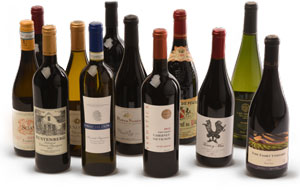
Standard Selection - (1) Red, (1) White
J. Lohr Los Osos Merlot 1999- USA
Nino Franco Prosecco Rustico Brut Italy
Red Wines Only Featured Selections
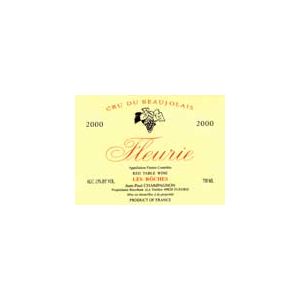
Champagnon Fleurie Les Roches Grand Cru Beaujolais-France
White Wines Only Featured Selections
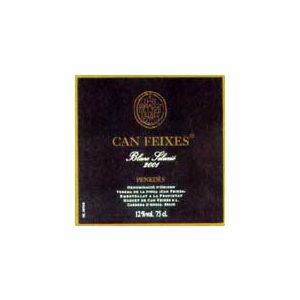
Bodega Huguet Can Feixes Blanc Seleccio 2001 - Spain
J. Lohr Los Osos Merlot 1999- USA
J. Lohr is one of the most important wine estates along the burgeoning Central Coast of California. With approximately two thousand acres of prime viticultural real estate in Monterey County and Paso Robles, J. Lohr is one of the largest family-owned wine estates in that part of California. Founded in 1972 by Jerry Lohr, the estate has grown into a storehouse of premium, estate-bottled varietals from Chardonnay to Valdiguie. A South Dakota farmer, turned Civil Engineer and real estate developer after graduating from Stanford University in 1959, the imposing Lohr still directs this family venture, and with veteran winemaker Jeff Meier he oversees all aspects of operation from viticulture to winemaking. Quality and pleasurable drinking are the key words here.
Although J. Lohr produces many different wines under several labels (Ariel, Cypress as well as J.Lohr), it is the winery's Vineyard Series and estate produced red varietals, which offer the consumer the most extraordinary quality. Perhaps, the most recent of the estate's offerings, the Los Osos Merlot, is also the most compelling. The 1999 vintage marks only the third release for the rich, highly extracted J.Lohr Los Osos Merlot, but what a wine this is. Produced from two clones of French Merlot, with small additions of Cabernet Sauvignon and Cabernet Franc, the 1999 Los Osos marks a turning point in the history of Paso Robles Merlot. Long known for its great old vine Zinfandels and round blackberry flavored Cabernet Sauvignons, Paso Robles can now claim Merlot in its diadem of great red varietals, with the help of J. Lohr.
The 1999 Los Osos establishes Merlot as the fullest, most concentrated of J. Lohr's estate bottled varietals, towering over the suave but much softer, less imposing Seven Oaks Cabernet Sauvignon. Moreover, it puts most other premium Merlot, even those from Napa Valley with more famous names, to shame. Undoubtedly, the perfect combination of terroir (the Los Osos Merlot is produced from well drained and situated chalk and gravel complexes in Paso Robles) and winemaking expertise went into making the 1999 Los Osos Merlot. The extraordinary 1999 vintage also lent a hand in producing such a compelling Merlot.
The 1999 vintage will be remembered as one of the most exceptional red wine vintages along the Central Coast of California, says J. Lohr. This was a La Nina growing season when the Pacific Ocean waters off the coast of California cool, or transition from warm to cool - providing the most even and moderate temperature vintage, rivaling the great year of 1985. This vintage produced a small crop of some of the most concentrated and heavily pigmented red Bordeaux grapes that we have ever seen in Paso Robles. Such moderate, even growing conditions are perfectly suited to producing perfectly ripe Merlot grapes and complex flavorful wines.
In addition to the exceptional Los Osos Merlot, J. Lohr produces other noteworthy estate offerings, including the very fine Seven Oaks Cabernet Sauvignon, the Riverstone Chardonnay, and the South Ridge Syrah, among others. J. Lohr also produces the venerable Bramblewood Zinfandel from a vineyard planted in Lodi in the 1930's. The small production Vineyard Series provide additional reasons for rejoicing. Three cheers to Jerry Lohr and Jeff Meier very consistently providing many compelling reasons to drink fine wine often.
Tasting Notes: A saturated St. Emilion style wine, the 1999 J. Lohr Los Osos Paso Robles Merlot is no shrinking violet. A robust, purple robe begins the odyssey, while gobs of blackberry fruit and firm ripe tannins complete the journey. Yet, there is so much in between the pages of this wine one would have to keep a journal on the Los Osos in order to accurately describe it. Unlike the majority of California wines, which we believe, rarely require much airing, this J. Lohr selection acts more like its Bordeaux counterparts, benefiting enormously from at least a half hour open; its staggering center of cassis, blackberry, and complex earth tones comes together in a crescendo of flavor after some breathing, at the same time that the wine's tannic structure softens. Drink this excellent Paso Robles Merlot at cool room temperature after at least thirty minutes open, or lay it down for another year and watch mother nature work her magic. Either way, you are in for a treat. Enjoy!
Accompaniments: Fire up the grill and bring out the meat, preferably a thick, juicy steak to accompany the 1999 J. Lohr Los Osos Merlot. Make mine a sirloin, did we hear someone say? Why not? Sirloin is one of the most flavorful cuts of beef and the most heart healthy as well. Let's not hear any moaning about it being too tough. Good sirloin, properly grilled and sliced (thin) is rarely tough. In fact, it's usually easier to chew than chicken, and it's a wonderful complement to Merlot. Besides, a little chewing won't kill you, providing you still have your own teeth or a good set of dentures. For a meatless treat with the Los Osos, we suggest a hearty risotto, with portabella mushrooms, herbs, and slices of dark truffle. Yum! Another treat with this full throttle Merlot is lamb, but we suggest you skip the mint jelly. Instead, grill the lamb with garlic, olive oil, butter and rosemary or pan roast it, making gravy from the drippings. Have no fear, the 1999 J. Lohr Los Osos will cut through any fat in the meat or gravy, and in turn the wine will become even broader and richer on the palate on account of the fat in the meat.
Recipe for Red Wine:
Spicy Rib-Eye or Sirloin Beef
1 Large beef rib eye roast or sirloin steak ( about 3-5 lbs.)
1/3 cup course or cracked pepper
1 cup soy sauce
½ tsp. garlic powder
2 tsp. tomato paste
1 tsp. paprika
½ cup red wine vinegar
¼ lb. apricot halves
Trim any excess fat from meat. Pat roast with pepper. Mix together soy sauce, vinegar, paprika and garlic powder; pour over roast and marinate in refrigerator overnight, if possible. If not, 4-6 hours will do.
Remove roast from marinade and wrap in aluminum foil and place in a large baking pan. Bake at 325° for two hours or until internal temperature reaches 160°. Remove foil and place apricot halves over roast while it is still hot and serve.
Nino Franco Prosecco Rustico Brut Italy
The Nino Franco Winery is located in Valdobbiadene among the Alpine foothills, north of the Piave River in the upper reaches of the Veneto. Valdobbiadene is the finest production zone for Prosecco, and Nino Franco is its consummate craftsman. Some years ago, Primo Franco took over this estate from his father, Nino Franco, invested heavily in improvements to the winery and vineyards, thereby transforming this estate into the region's foremost producer of sparkling Prosecco much to our delight.
Today Primo Franco takes an active part in governing the Prosecco DOC, setting high standards of quality for Italy's most beloved sparkling wine and assuring the preeminence of the region's vineyards as the most meticulously tended in Italy.
Prosecco is a native Italian varietal, which deserves the beloved status it has long been accorded in its homeland and the recent attention it has garnered abroad. In its native Veneto, Prosecco is a staple in every welcoming home and the symbol of Venetian conviviality. It is routinely offered to houseguests and served at nearly every wedding and Sunday luncheon. From any afternoon affair to the wee hours of the morning to the occasional sip before lunch, life in the Veneto just would simply not be the same without Prosecco. From Venice to the Dolomite Alps, Prosecco is undeniably the wine of the Veneto.
Although Prosecco can be made sparkling or still, the emphasis in Valdobbiadene, as in most of the Veneto, is on the beautiful, dry, lightly sparkling versions like Nino Franco Rustico. However, it is with Prosecco's predominance as a sparkling wine that the inevitable comparison with Champagne ends. DOC regulation allows for a wide range of styles and techniques, resulting in a host of fresh, delicious bubbly that is meant to be consumed young, and with abandon. Alcohol levels for Prosecco are typically lower than for Champagne, usually no more than 10.5%-11%. In most Prosecco, the mousse (bubbles) is intentionally soft and non aggressive, to heighten rather than mask fruit flavors. Both bone dry and slightly sweet sparkling versions of Prosecco can still be found, but such wines are more the exception today rather than the rule.
Most producers, Nino Franco included, make several different Prosecco wines. In addition to the Rustico, Nino Franco's most popular wine, the firm turns out two other excellent sparkling wines from Prosecco and a lovely still Prosecco called Sassi Bianchi. No other wines are produced at Nino Franco, allowing this great house to concentrate on what it does best make delicious, quaffable Prosecco that will make an aficionado out of even the most ardent opponent of Champagne.
Tasting Notes: Exuberant and fresh like spring, the Nino Franco Prosecco Rustico Brut embodies all that is good about the awakening land. It proffers the scents of pear, apple, and white peach, all of which are entwined in a delicate, round body. In addition, what makes this Prosecco even more appealing is that it sparkles and caresses, without ever trying to imitate Champagne. Although dry and refreshing on the palate, the Nino Franco never slips into austerity; it doesn't pretend to be Chardonnay or Pinot Noir either, and it remains forever lively, sprite, and wholly approachable. Moreover, the Nino Franco Prosecco Rustico Brut is a clean, natural tasting, no headache kind of sparkler that is just plain fun to drink. In fact, the Nino Franco goes down r-e-a-l easy. Indeed, it is a good thing that you only receive a single bottle of each wine every month because with the Nino Franco (Prosecco) you would be surely tempted to open a second bottle to share with yourself horrors! Enjoy the Nino Franco Rustico fairly well chilled, and as often as you can.
Accompaniments: Nino Franco Prosecco Rustico Brut is the perfect anytime sparkler. In the Veneto, good sparking Prosecco is an afternoon tradition, beginning with a summer lunch or wedding celebration. It is also provides the sparkle for an evening party or a romantic interlude. The Nino Franco Rustico will provide the perfect companion to all of those events and more. It also makes for a wonderful aperitif, and it pairs well with most hors-d'oeuvres. We also suggest that you try it with risotto, fish, and light meats. Shrimp, scallops, sautéed shellfish, and lightly fried tempura dishes offer other tasty propositions with the Nino Franco. With such an eminent drink ability and a friendly welcoming spirit, the Nino Franco Prosecco is truly an anytime the spirit moves you kind of wine, making it easy to see why Prosecco is undeniably the wine of the Veneto and Nino Franco its favored son.
Note: Nino Franco Rustico is completely delicious unadorned, but it is worth mentioning that Prosecco mixed with white peach juice is the authentic Bellini. And as with any sparkling wine, be sure the wine is well-chilled and exercise caution in opening the Nino Franco as the wine is under pressure. When opening, always firmly hold the cork and wire stopper, while pointing the bottle away from anyone or anything fragile. Enjoy!
Recipe for White Wine
Shrimp & Vegetable Risotto
16 large shrimp (peeled & deveined)
1 large shallot - chopped
¼ tsp. saffron
¾ cup arborio rice
1 cup frozen peas
1 lb. asparagus (trimmed & steamed)
1 14oz. can chicken broth
1 Tbl.Corn oil spread
3 Tbl. white wine
2 Tbl. grated Parmesan cheese
In a large saucepan, over high heat, bring to boil the chicken broth, saffron and ¾ cup of water. Reduce heat and keep on low to maintain a simmer.
Boil shrimp in a large saucepan until just cooked throughout; drain and keep warm. In the same saucepan, over medium heat, sauté shallot with 1 Tbl. corn oil spread until translucent, but not brown. Add Arborio rice and cook about 5 minutes. Add wine and cook until it is absorbed. Begin adding a ladle full of simmering broth mixture to the rice, one at a time, making sure to wait until each ladle full is absorbed before adding the next. Stir continuously until all broth is gone. Stir in peas and shrimp and cook about 5 more minutes. Add Parmesan cheese and serve immediately over asparagus stalks.
Champagnon Fleurie Les Roches Grand Cru Beaujolais-France
For many years, the exceptional Grand Cru Beaujolais of Jean-Paul Champagnon was one of Beaujolais' best-kept secrets. Unfortunately, the secret is out, but we have managed to garner just enough of this great producers delicious 2000 Fleurie Les Roches
to offer to a limited number of our members.
Champagnon is a meticulous grower/producer who arduously works rugged hillside vineyards full of granite to produce one of the very finest of Grand Cru Beaujolais. In a traditional system of land sharing or sharecropping called métier, Champagnon cares for the vineyard as his own, but does not own it. In turn he retains a sizeable portion of the harvest. He sells off the bulk of his harvest to some of the biggest names in Beaujolais; the top 5% of his grapes he keeps for himself, transforming the crème de la crème into classic Grand Cru Fleurie. Vive la difference!
Tasting Notes: Round, charming, and so easy to drink, the 2000 Champagnon Fleurie Les Roches is a real crowd pleaser. It is packed with all the vinous fruit and sound underpinning that make the best Fleurie the most sought after of all Grand Cru Beaujolais. Strawberry, current and violet scents permeate the aroma and linger in the mouth, providing a subtle haunting of sensual delight. The 2000Champagnon Les Roches is one of the more powerful renditions we have tasted from this appellation, due in no small part to the excellent weather conditions which prevailed throughout the remarkable 2000 vintage in Beaujolais. This bodes well for the wine's longevity, providing you can keep your hands off of this charming Beaujolais. It is too bad so little of the Champagnon Fleurie is produced. Serve this delightful Grand Cru cool, but not too cold, about 60° Fahrenheit.
Accompaniments: Pasta, grilled salmon, and lightly flavored meats such as veal, ham, and pork make fine accompaniments to the 2000 Champagnon Fleurie Les Roches, especially when the wine is young and in the full bloom of its youth. If you can forego the youthful pleasure inherent now in this wine, it will develop secondary characteristics and provide memorable meals with light game, quail, Cornish hens and squab. Traditional, savory Burgundian dishes, such as Coq au Vin, are other fine choices with this round Fleurie. And if these classic dishes do not provide enough tasty choices, there is no better red wine pairing with cheese than Grand Cru Beaujolais. Many a memorable evening we have spent with friends in the company of a plate of excellent cheeses and several bottles of Champagnon's Fleurie. Soft, creamy cheeses such as Port Salut, Bel Paese, Double Gloucester, Gouda, and Edam are just a few of the wonderful cheeses we have enjoyed with this wine. Bleu Cheeses and mature crusted cheeses can often overpower most red wines, Grand Cru Beaujolais included, but as always we hope you won't be afraid to experiment, and enjoy! Why not check out our cheese club for additional accompaniments.
Bodega Huguet Can Feixes Blanc Seleccio 2001 - Spain
The historic Can Feixes estate is situated on gravelly slopes in a high amphitheater, almost at the tree line, astride the famous Montserrat pinnacle in northern Penedes. This is the Penedes vineyard farthest from the Mediterranean, which means the climate at this estate is more continental and drier that of the surrounding vineyards. The high altitude and austere mountain terrain of this rugged area of Catalonia constitute the tiny viticultural home of the native Parellada varietal, which locally is known as Montonec (grape of the mountain).
The Can Feixas estate dates back to 1400 with the arrival of Jaumes Feixas in the upper reaches of the Penedes, and historical records indicate that wine has been produced continuously at Can Feixas since at least 1690. Whether under the auspices of the Feixas family or the Huguet's, the present owners for nearly 100 years, Can Feixas has always been considered the region's Grand Cru.
Today, the vineyard at Can Feixas comprises nearly 300 acres, planted primarily to Parellada, with some Macabeo and Chardonnay for white wines and Tempranillo and Cabernet for reds. A small quantity of a special Gran Reserva Cava is also produced from the traditional varietals. The Huguet brothers, Joan and Josep Maria handle all viticulture and enology respectively at their estate.
Tasting Notes: Produced primarily from the free run must of Parellada, with minor additions of Macabeo and Chardonnay, the 2001 Can Feixes Blanc Seleccio resembles a hypothetical cross between a Grand Cru Chablis and a dry Rheingau Riesling. At Can Feixas the native Montelec produces very small, tight-bunched grapes of great structure and aroma. An amplifying nose comprised of pure mineral, gravel, citrus, and wild flower hints at the complexity and longevity of the estate's Seleccio Blanc. Long and textured in the mouth, the feel of this wine needs to be experienced to be described: it is neither simple nor ordinary. Although beautifully wrought now, the 2001 Can Feixas will undoubtedly evolve for several more years in bottle. For this reason, we suggest you that allow this white wine to breathe like a red in the glass for at least 15 minutes, allowing the chill of the refrigerator to dissipate and the great texture of the wine to come forth. Enjoy!
Accompaniments: The 2001Can Feixas Seleccio Blanc is a bold enough wine to hold up to a variety of foods. We have enjoyed it with a grilled salmon, which was served in balsamic vinaigrette with asparagus, broccoli, and wild mushrooms, over a bed of organic greens. A simple chicken and brown rice dish, with onion, carrot, zucchini and herbs makes another wonderful accompaniment to the Can Feixes. Most fish and poultry will be right at home with this wine, as will the majority of vegetarian selections. Several panel members suggest tofu with the Seleccio Blanc, while others attest to consuming copious quantities of the Can Feixas with sushi and sashimi. As always, we cannot recommend consuming any raw seafood due to the possibility of parasites and the variability of expertise in handling and preparation that we have encountered. However, if you choose to ignore this caveat, the Can Feixes should more than fill the bill.For Members Only
Give Your Friends FREE Beer, Wine, Cheese, Chocolate, Cigars & Flowers!
Through our Customer Appreciation Program
Your name has real value to your friends, co-workers, and family members! Every time a friend, family member, or anyone else you know joins any one of our clubs, [or gives a gift] for 3 months or longer, we'll give them 50% off of their first month, but only when they mention your name. And we'll also give you 50% off your next month too which can either be applied towards your current membership or you can try one of our other Clubs out! (We can add one more month to your order at 50% off for prepaid memberships!)
The Fine Print: Members giving gift memberships do not qualify for referral credits and you can't give yourself a gift to qualify! This Program is mutually exclusive of any other promotions.
Membership Q & A
Note: Please do not use the web site to make any account related information changes such as address or billing changes, membership extensions, or terminations. To ensure timely processing of your request, please call us at 800-625-8238.
Q: What can I do if Im having difficulty receiving my shipment at home?
A: You should consider having our discrete box delivered to your work location or to a neighbor 21 yrs. of age that can receive it for you. The box is brown corrugated cardboard and doesnt say Wine on it anywhere. Consider having it shipped to your work location as many of our customers do.
Q: What should I do if Im moving or want to extend my membership?
A: Please call us prior to the 9 th of the month to make all account related information changes such as address changes, membership extensions & terminations, or gift accounts desiring to continue their memberships. Address changes made after that time may require a repackaging and re-shipping charge and will incur a $5.00 service charge from UPS that will be charged to your account.
Q: What happens if my shipment is damaged?
A: If your shipment arrives damaged, please call us immediately toll free at 1-800-625-8238 and report the incident for a prompt resolution.
Q: What happens if my credit card is declined?
A: We will send you a courtesy notice asking you for an alternative payment method and your order will be temporarily suspended until we hear from you. As we incur a $ 2.00 re-processing fee each time your card does not clear, that charge is passed on to you.
Q: What happens if I join under a special incentive program and dont stay a member for the entire term committed?
A: Not a problem. Although we want to do everything we can to keep you as a member, we will allow you to cancel your subscription early, however, you will be responsible to pay for the item which was given to you as part of the promotion. If you received a discount based on a specific term, the amount discounted will be charged to your card.