Vol. 5 No. 1
Standard Selection - (1) Red, (1) White
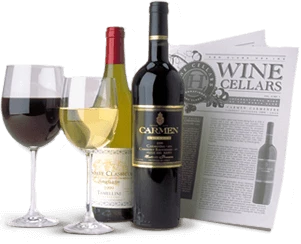
1999 Carmen Carmenere Cabernet Sauvignon - Chile
1999 Tamellini Soave Classico Anguane
Red Wines Only Featured Selections
1998 Apollonio Copertino - Italy
White Wines Only Featured Selections
2000 Carmen Reserve Chardonnay
Carmen Carmenere Cabernet Sauvignon 1999 - Chile
Carmen is Chiles oldest wine brand, dating back to 1850. A century and a half ago Christian Lanz founded Vina Carmen and lovingly named the estates beautiful vineyards for his wife. Today, Vina Carmen remains the showpiece Lanz envisioned. Combining tradition, superb vineyards and a new state of the art winery constructed in 1992, Vina Carmen is now South Americas leading winery as well as its oldest. Under winemakers Alvaro Espinoza and Matias Lecaros, Carmen has for the past four years (1997, 1998, 1999, 2000) been named Top Winery of the Year by Wine & Spirits magazine.
Presently, the more than 500 acres of Carmen Vineyards spread across several valleys and many micro-climates surrounding Chiles capital, Santiago. This constellation of microclimates allows Carmen to select the best grape varieties for each area and to excel with many different grapes and styles of wine. The winery has also been extremely successful in experimenting with unique, lesser known varietals, including Chiles own indigenous variety, Carmenere. This variety is believed to have originated in Bordeaux, where it was known as Grande Vidure. Sadly, it disappeared in Bordeaux with the advent of phyloxera. Carmenere was certainly exported to Chile before phyloxera more than a century ago, where it grew inconspicuously among the Merlot, until being identified as a distinct varietal.
Internationally renowned winemaker, Alvaro Espinoza, joined Carmen in 1993 and for the past eight years has been augmenting his reputation by producing many of South Americas most compelling wines at the estate. Alvaro, known both as a winemaker and a wine grower, has also instituted organic farming at Carmen. Beginning the endeavor with a 50-acre vineyard for Cabernet Sauvignon and Chardonnay for the winerys luxury Nativa label, Carmens mission each year is to increase the vineyard parcels grown under environmental sustainable standards. Using organic methods, the winery reduces the impact upon nature as much as possible and produces increasingly more interesting wines. Presently, Carmen uses no pesticides in their vineyards and is leading the way in Chile toward more environmentally sensitive viticulture.
In order to insure that Carmens future will remain as bright as its past, Carmen has hired the articulate and energetic Matias Lecaros as winemaker. Matias belongs to a traditional Chilean family that has been involved in agriculture and winegrowing since the 17th century. His fathers family is originally from Ponguehue where they pioneered the plantation of vineyards in the Aconcaqua Valley.
Matias joined Carmen in 2000 after graduating with a degree in Oenology from the University of Chile in 1996. He then worked as head winemaker for Santa Rita and, subsequently, acted as a consulting oenologist for several wineries in the south of France. He brings with him the ability and experience to continue Carmens tradition of producing some of the best wines on the continent.
In addition to the great Carmenere or Grand Vidure, Carmen, specializes in all of the major Bordeaux varietals, producing excellent reds from Cabernet Sauvignon, Grand Vidure and Merlot and in whites the best Sauvignon Blanc south of the equator. Recently, both the regular and reserve bottlings of Chardonnay have also been formidable offerings, demonstrating Carmens acumen and Chiles ability to produce world-class whites, as well as reds. Initial releases of Pinot Noir have also garnered serious acclaim and bode well for this thin-skinned varietal in the cooler coastal vineyards that Carmen maintains at high altitudes. We have only one regret in bringing you the wines of Vina Carmen and that is that we cannot feature all of them at the same time or even concurrently. To do so would require a year or more of continuous Carmen offerings, each as wonderful and unique as the next, but sadly, they would be to the detriment of other fine producers the world over.
Tasting Notes: Structured like a classified Bordeaux, the 1999 Carmen Carmenere Cabernet Sauvignon Reserve is full of delicious red and black fruits and suave spice tones that lend a decadent air to this hedonistic delight. Yet, this Carmen offerings best is yet to come. With a little more bottle age or sufficient airing, the layer of ripe tannin will peel away, revealing all the secondary characteristics that make this wine so tasty: coffee, berry, chocolate and bacon fat the flavors the Bordelais refer to as gras or fat in fine red claret. Bottled unfiltered, the Carmen Carmenere Cabernet Sauvignon Reserve is highly extracted yet, beautifully balanced in a medium format. If you choose to serve the wine now in its youth, we suggest you open it a couple of hours ahead and pour it carefully into a decanter, allowing any sediment to remain in the bottle. Any harmless sediment the wine may throw only underscores its natural treatment and lack of filtration. Enjoy!
Accompaniments: Like all great Merlot and Cabernet-based wines, the 1999 Carmen Carmenere Cabernet Sauvignon is best when the candles scutter, subdued light glints upon crystal glasses and the best your kitchen has to offer comes to table. Fine holiday fare, especially beef tenderloin, filet mignon, or Beef Wellington provide ideal accompaniments to this Carmen Reserve. Heartier, less defined fare may well be as pleasing but the supreme elegance and breed of the Carmen Carmenere Cabernet Sauvignon begs for simple elegance to highlight the wine as well as the food. Cabernet or Port wine reductions, even fruit glazes containing blackberry or raspberry provide wonderful sauces for red meat or fowl to accompany this wine. So, if beef is not in your diet, a well-prepared duck with a blackberry sauce will provide another winning combination with the Carmen Carmenere Cabernet Sauvignon Reserve. Enjoy!
Recipe for Red Wine:
Duck with Cherry Sauce
2 Tbs. sweet butter
1 3-5 lb. domestic duckling quartered
2 Tbs. dry sherry
1 Tbs. flour
1 cup pitted Bing cherries save juice
1 Tbs. tomato paste
1 clove garlic crushed
Brown the duck pieces in a large skillet with butter. Wipe out any excess fat and pour sherry over meat. Sear for 1-2 minutes. Remove meat and add to the skillet, cherries, garlic, simmer 5 minutes or until cherries and garlic blend well.
In a small bowl, add cherry juice, flour and tomato paste, add slowly, while stirring, to the cherries and garlic in the skillet. Cook low-medium until thick. Return the duck pieces to the skillet, cover and simmer until well cooked, about 1 hour.
Tamellini Soave Classico Anguane 1999
When Soave is born on a good, hillside vineyard that isnt ridiculously overcropped; when the passions of the wine grower are noble and well-aimed; when the wine is produced from the noble Garganega grape alone, or with perhaps just a touch of the delicate and etheral Trebbiano di Soave that many identify as Verdicchio then Soave is truly excellent, and irresistible, too. Welcome to the world of Gaetano Tamellini and his bevy of exciting and delicious Soave. From his simple DOC Soave to his outstanding single vineyard offerings, Anguane and Le Bine, Tamellinis wines provide pure drinking pleasure and proof that Soave is more than just a pleasant quaff.
For years Gaetano Tamellini was content to grow grapes, which like nearly all of the countless Soave growers, good and bad, sold his production to the Soave Co-op. This massive cooperative monopolizes all but a handful of the DOC production, vinifying millions of bottles of juice, which it sells to negociants throughout the production zone. Is there any surprise then that so much of the Soave in the export market tastes alike pleasant by quite innocuous? Convinced that his hillside vineyards deserved better and encouraged by the consistently fine offerings he had always bottled for home use, Tamellini took the great leap of faith. He joins the elite rank of only 15 growers in all of Soave who bottle their own individual estate bottled wines. This is especially mind-boggling when you consider that Soave is the largest white wine-producing DOC in Italy.
Furnishing his cellar from scratch with the most up to date equipment, Tamellini began production with the very difficult 1998 vintage. With the assistance of Paolo Caciorgna, one of Italys greatest white wine makers, Gaetano and his brother Pio Francesco turned out formidable Soave offerings in what can be safely categorized as a less than great vintage. Even more exciting results followed in 1999, a plainly superior, more conducive vintage than its predecessor. Hence, a star was born.
Even before the Tamellini Brothers debut vintage, importer Marc De Grazia knew a good thing when he saw it. Moreover, his counsel to have Paolo Caciorgna oversee each step of the vinification process and his own willingness to import single vineyard Soave, have paid off handsomely. From some 40 acres of vineyards Tamellini produces excellent Soave, Soave Superiore and two small individual single vineyard bottlings: Anguane and Le Bine. Each captures the elegance and blithe spirit of true Soave, in its own unique way. This is especially true of the Anguane vineyard, which the growers believe produces the most alluring and feminine of all Soave. Named after mythical fairies that are said to dance in the vineyard, the local cognoscenti say there is a certain feminine sensuality that pervades this vineyard, making it the most popular of vineyards among the workers. Surely, the wine produced from Anguane is nothing short of enticing.
Tasting Notes: The 1999 Tamellini Soave Classico Anguane is a veritable single vineyard Soave; it reveals true elegance, freshness and style. What makes the Anguane so pleasing is the distinctly feminine spring-like quality which is evident in both the aroma and flavor of the wine. Lemon zest, almonds, clean fruit and a gentle minerality persist in this wine, from the very first draught of the bouquet to the refreshingly long and ebullient finish. The Tamellini Anguane is the type of Soave that makes many wonder why Chardonnay remains the white wine of choice in America, and why so many Soave producers content themselves with homogenized, industrialized, innocuous versions of their noble wine: when with a little effort and attention to detail, Soave could be one of the worlds most satisfying and sought after dry white wines. The Tamellini Anguane is a wonderful example of the charm and quality Soave is capable of producing, when it wants to. Serve the lovely Soave Anguane moderately chilled and enjoy!
Accompaniments: Serve this wine as the opening act at a party or gathering, and youll have more friends than you can count one taster gushed. Well, more friends than you can count isnt all its cracked up to be, quipped another member of the tasting panel .especially if your friends are lushes like mine. This wine is way too good to waste on the lush set. Id rather serve it to a bunch of consummate Chardonnay drinkers and knock their socks off. They wont believe its not their favorite grape, and theyll like it even better because the oak hasnt ruined the taste of the wine and secretly, I can hope they dont like it, so therell be more wine left for me.
Whether you serve the Tamellini Anguane to casual company or a special group of friends, we suggest you use it as an aperitif or with a light, well-prepared first course. All of the zesty personality, freshness and medium body in this lovely wine should be preserved, so by all means serve it with simple elegance. Fish, shrimp, hors doeuvres, smoked salmon with capers, and even caviar all make terrific accompaniments to the Tamellini. Monterey Jack, Gouda, Fontina and other soft, creamy (not crusted) cheeses from cows milk are also fine choices; they accentuate the gentle fruit, flavor and breed of this wine without overpowering it. Buon Apetito!
Recipe for White Wine
Smoked Salmon Bruschetta
8 oz. fresh smoked salmon (preferably Scottish) chopped thin
½ cup heavy cream
¼ tsp. freshly ground pepper
1 Tbl. capers drained
About 15 freshly toasted rounds of Italian bread
Whip the heavy cream with pepper until thick. Add salmon pieces and whipped cream into blender and blend with 1 tsp. of the capers. When smooth enough to spread, put approx. 1 teaspoon of mixture onto toast rounds and top with remaining capers.
Apollonio Copertino 1998 - Italy
The Apollonio Winery was founded at the end of the 19th century in one of Italys oldest and most important wine producing regions, Puglia. Presently, the winery and vineyards are owned and managed by two brothers, Massimilliano and Marcello Apollonio, who took over production of the estate after the death of their father who had run the winery for many years. The focus of this ancient property is on traditional wines, wines from their respective DOC zones, but in the last several years the winerys equipment and cellar have been modernized with a corresponding leap in quality.
Apollonio produces three excellent, but distinctly different wines. The first is Primitivo Terragnolo, the most concentrated of the winerys offerings. This is a robust, full, somewhat rustic wine that is thought by many to be made from the ancestor of American Zinfandel. The other offerings are Salice Salentino and Copertino, wines made primarily from the traditional Negro Amaro varietal. Each of these deeply colored wines are highly aromatic, lush on the palate, and laden with flavor. The Copertino is, however, noticeably the most sophisticated of Apollonios wines, exhibiting a slightly deeper color and even more complex finish than the Salice.
Tasting Notes: The 1998 Apollonio Copertino has a deep ruby robe and an amplifying nose of ripe fruit, especially red and black cherries. The flavors are of dark berries, with spice and leather notes. There are also hints of smoke, chocolate and pepper in this wines lively repertoire of flavors. Full flavored but not hard, the Copertinos tannins are surprisingly tame, leading to a long, smooth, multi-layered finish that lingers in the mouth. Allow the Copertino to stand open for at least thirty minutes before serving. Quite naturally made and bottled unfiltered, the Copertino may throw a slight amount of harmless sediment which can be eliminated by decanting.
Accompaniments: Homemade lasagne, fresh out of the oven, is a great way to highlight The 1998 Apollonio Copertino. This combination reminds me of Sunday dinner at my grandparents house, reminisced a senior member of our tasting panel. Hunks of real provolone or Parmesan cheese are other good accompaniments to the Copertino, as are most Italian specialties. However, in addition to traditional tomato-based southern Italian fare, we also recommend that you try the Copertino with pork, steak, stews and even game. In our experience this wine will also enhance almost any dish served with a rich gravy. Enjoy!
Carmen Reserve Chardonnay 2000 - Chile
Carmen is Chiles oldest wine brand, dating back to 1850. A century and a half ago Christian Lanz founded Vina Carmen and lovingly named the estates beautiful vineyards for his wife. Today, Vina Carmen remains the showpiece Lanz envisioned. Combining tradition, superb vineyards and a new state of the art winery constructed in 1992, Vina Carmen is now South Americas leading winery as well as its oldest. Under winemakers Alvaro Espinoza and Matias Lecaros, Carmen has for the past four years (1997, 1998, 1999, 2000) been named Top Winery of the Year by Wine & Spirits magazine.
Presently, the more than 500 acres of Carmen Vineyards spread across several valleys and many micro-climates surrounding Chiles capital, Santiago. This constellation of microclimates allows Carmen to select the best grape varieties for each area and to excel with many different grapes and styles of wine, most notable Chardonnay, Sauvignon Blanc, Cabernet Sauvignon, Merlot and Carmenere, Chiles own, indigenous varietal. Recent Reserve Chardonnay bottlings from Carmen rival top rated California and French offerings in quality, capturing the finesse and subtle complexity of white Burgundy along with the pure, ripe fruit of Chardonnay from Napa or Sonoma. In essence, Carmen seems to have combined the best of both worlds in their Reserve Chardonnay, no mean feat in South America, or elsewhere.
Tasting Notes: A hypothetical blend of white Burgundy from Chassagne-Montrachet and a top notch Chardonnay from Sonoma County, the 2000 Carmen Reserve Chardonnay offers the consumer the opportunity to have his cake and eat it. Pure, buttery tones and ripe clean fruit melt into subtle French oak, which thankfully accentuates the wines attributes and overt charm, unlike many New World Chardonnays which purvey little more than oak overtones. Hints of a spice cachet add interest and complexity, both in the aroma and the flavor. Deep in color and long on flavor, the Carmen Reserve is one good reason why Chardonnay remains the number one premium white wine varietal the world over. In the case of the Carmen Reserve, it could easily serve as the poster child for Chardonnay, and act as a reminder of how good Chardonnay can be in the careful hands of skilled, serious practioners. Serve cool to moderately chilled, and enjoy!
Accompaniments: A variety of rich, expertly prepared seafood dishes win our nod to accompany the 2000 Carmen Reserve Chardonnay. A delicious Mahi Mahi and a Carmelized Sea Scallops appetizer over a leek infused angel hair pasta are two of our favorite accompaniments. Other fine choices include grilled salmon steaks or even a simply steamed whole lobster, served with drawn butter. Served all by its lonesome, the 2000 Carmen Chardonnay remains delicious but like all truly good Chardonnay, complex dishes heighten the latent sensuality inherent in Chardonnay and add to the nuance of flavor in the wine.
Wine Facts and Other Tantalizing Morsels
In response to the number of inquiries we have received regarding sparkling wines, prompted in part by our recent sparkling wine feature, Chandon Brut Fresco, we are pleased to offer you the following sparkling wine facts:
· Known individually as perles, the collective name for the bubbles in sparkling wine is mousse.
· The average bottle of Champagne or sparkling wine made by the methode traditionelle contains approximately 49 million bubbles.
· The average bottle of methode traditionelle sparkling exerts at least 90 psi at 50° F. This is roughly equivalent to 5.5 atmospheres of pressure or that of a large, fully inflated car tire.
· A good remueur or riddler can turn 10,000 Champagne bottles a day. However, today most sparkling wine, Champagne included, is turned its obligatory quarter turn each day mechanically in large electronically operated pupitres or desks.
This is, maybe, far less romantic than the notion of the traditional artisan riddler, but it is no less effective and it spares the old-fashioned riddler from carpal tunnel syndrome, a serious occupational hazard.
Terms of the Vine
Flinty: A descriptor for extremely dry white wines such as Sauvignon Blanc, whose bouquet is reminiscent of flint struck against steel.
Hazy: Used to describe a wine that has small amounts of visible matter. A good quality if a wine is unfined and unfiltered.
Imperial: An oversized bottle holding 4 to 6 liters; the equivalent of eight standard bottles.
Jeroboam: An oversized bottle holding the equivalent of six bottles. In Champagne, a jeroboam holds four bottles.
Late Harvest: On labels, indicates that a wine was made from grapes picked later than normal and at a higher sugar (Brix) level than normal. Usually associated with botrytized and dessert-style wines.
Lees: Sediment remaining in a barrel or tank during and after fermentation. Often used as in sur lie aging, which indicates a wine is aged "on its lees."
Limousin: A type of oak cask from Limoges, France.
Maceration: During fermentation, the steeping of the grape skins and solids in the wine, where alcohol acts as a solvent to extract color, tannin and aroma from the skins.
Method Champenoise: The labor-intensive and costly process whereby wine undergoes a secondary fermentation inside the bottle, creating bubbles. All Champagne and most high-quality sparkling wine is made by this process.
Murky: More than deeply colored; lacking brightness, turbid and sometimes a bit swampy. Mainly a fault of red wines.
Produced and Bottled By: Indicates that the winery crushed, fermented and bottled at least 75 percent of the wine in the bottle.
Stemmy: Wines fermented too long with the grape stems may develop this quality: an unpleasant and often dominant stemmy aroma and green astringency.
Tartrates: Harmless crystals of potassium bitartrate that may form in cask or bottle (often on the cork) from the tartaric acid naturally present in wine.
Vegetal: Some wines contain elements in their smell and taste which are reminiscent of plants and vegetables. In Cabernet Sauvignon a small amount of this vegetal quality is said to be part of varietal character. But when the vegetal element takes over, or when it shows up in wines in which it does not belong, those wines are considered flawed. Wine scientists have been able to identify the chemical constituent that makes wines smell like asparagus and bell peppers.
Volatile (or Volatile Acidity): Describes an excessive and undesirable amount of acidity, which gives a wine a slightly sour, vinegary edge. At very low levels (0.1 percent), it is largely undetectable; at higher levels it is considered a major defect.
For Members Only
Give Your Friends FREE Beer, Wine, Cheese, Chocolate, Cigars & Flowers!
Through our Customer Appreciation Program
Your name has real value to your friends, co-workers, and family members! Every time a friend, family member, or anyone else you know joins any one of our clubs, [or gives a gift] for 3 months or longer, we'll give them 50% off of their first month, but only when they mention your name. And we'll also give you 50% off your next month too which can either be applied towards your current membership or you can try one of our other Clubs out! (We can add one more month to your order at 50% off for prepaid memberships!)
The Fine Print: Members giving gift memberships do not qualify for referral credits and you can't give yourself a gift to qualify! This Program is mutually exclusive of any other promotions.
Membership Q & A
Note: Please do not use the web site to make any account related information changes such as address or billing changes, membership extensions, or terminations. To ensure timely processing of your request, please call us at 800-625-8238.
Q: What can I do if Im having difficulty receiving my shipment at home?
A: You should consider having our discrete box delivered to your work location or to a neighbor 21 yrs. of age that can receive it for you. The box is brown corrugated cardboard and doesnt say Wine on it anywhere. Consider having it shipped to your work location as many of our customers do.
Q: What should I do if Im moving or want to extend my membership?
A: Please call us prior to the 9 th of the month to make all account related information changes such as address changes, membership extensions & terminations, or gift accounts desiring to continue their memberships. Address changes made after that time may require a repackaging and re-shipping charge and will incur a $5.00 service charge from UPS that will be charged to your account.
Q: What happens if my shipment is damaged?
A: If your shipment arrives damaged, please call us immediately toll free at 1-800-625-8238 and report the incident for a prompt resolution.
Q: What happens if my credit card is declined?
A: We will send you a courtesy notice asking you for an alternative payment method and your order will be temporarily suspended until we hear from you. As we incur a $ 2.00 re-processing fee each time your card does not clear, that charge is passed on to you.
Q: What happens if I join under a special incentive program and dont stay a member for the entire term committed?
A: Not a problem. Although we want to do everything we can to keep you as a member, we will allow you to cancel your subscription early, however, you will be responsible to pay for the item which was given to you as part of the promotion. If you received a discount based on a specific term, the amount discounted will be charged to your card.