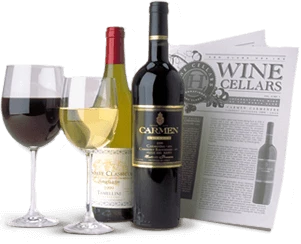
Welcome to The International wine of the Month Club

Past Newsletters - April 2010

Premier Series
Featured Wineries & Wines
Membership Type
Carma Colchagua Valley Estate Carménère 2007 – Chile 1 Red 1 White; 2 Reds
Fontaleoni Vernaccia di San Gimignano 2008 – Italy 1 Red 1 White; 2 Whites
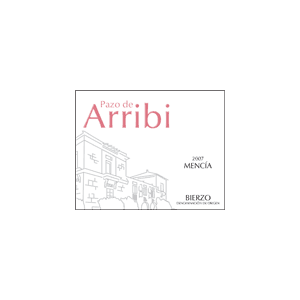
Pazo de Arribi Bierzo Mencia 2007 – Spain 2 Reds
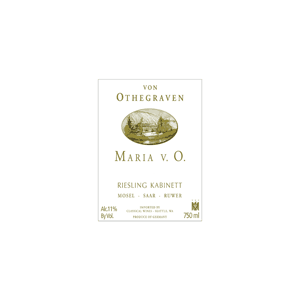
Von Othegraven Maria v. O. Saar Riesling Kabinett 2006 – Germany 2 Whites


Master Series
Featured Wineries & Wines
Membership Type
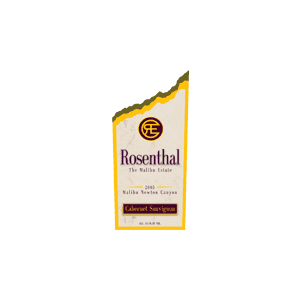
Rosenthal The Malibu Estate Cabernet Sauvignon 2005 - USA 1 Red 1 White; 2 Reds
Fontaleoni Vernaccia di San Gimignano 2008 – Italy 1 Red 1 White
Carma Colchagua Valley Estate Carménère 2007 – Chile 2 Reds


Collector Series
Featured Wineries & Wines
Membership Type
Rosenthal The Malibu Estate Cabernet Sauvignon 2005 - USA 1 Red 1 White; 2 Reds
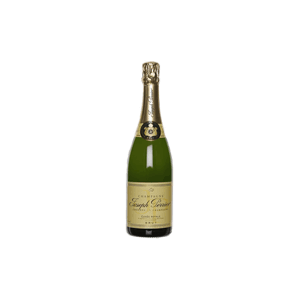
Joseph Perrier Cuvée Royale Brut N.V. Champagne – France 1 Red 1 White
Bodegas y Viñedos Montecastro Ribera del Duero 2005 – Spain 2 Reds

Carma Colchagua Valley Estate Carménère 2007 – Chile

Carma Colchagua Valley Estate Carménère 2007 labelCarma comes from a prominent estate vineyard in Palmilla, an area of Colchagua Valley renowned for the production of Carménère. In the Palmilla sector of Colchagua, Chile’s most notable variety ripens to perfection. The summer days are hot and sunny, while the nights are exceptionally cool – the ideal scenario for Carménère. The tremendous daily swings between high daytime and low nighttime temperatures afford Carménère an exceedingly long hang time, and impart to the resulting wine a profound aromatic profile, exceptional flavor, and ripe, racy tannin. No wonder Carménère is quickly becoming one of the world’s most sought after wines.

Carménère (car-men-yehr)

Carma's Colchagua Valley VineyardsBelonging to the Cabernet family, Carménère is one of six permitted varietals for red wine in its native Bordeaux. Nevertheless, Carménère is relatively rare today in Bordeaux where it is typically used only in small amounts, if at all, by most châteaux. During the phylloxera infestation of the mid-1800s, Carménère vines were hit especially hard and the varietal was nearly wiped out. Consequently, as the vineyards of Bordeaux were replanted in the late 19th century, Carménère was largely forsaken in favor of varietals that produced higher, more consistent yields and were less prone to disease. Luckily for Carménère, it had for many years enjoyed the good fortune of being mistaken for both Merlot and Cabernet Franc, leading to its unintentional importation to other countries.

Carménère traveled to Italy, New Zealand, and most notably to Chile prior to the Bordeaux phylloxera outbreak of the mid-1800s, when Carménère cuttings were believed to be Merlot. Only in the 1990s were these “Merlot” vines discovered to be, in fact, Carménère. Chile is now the largest producer of Carménère wines worldwide, and the grape is used in blends and bottled as a pure varietal wine, the latter being quite a departure from its traditional role in Bordeaux. Fortunately for Carménère as well as for consumers, the warmer, drier climate of Chile is much more favorable to the healthy growth and production of Carménère, which when handled properly produces wines with intense red fruit, earth, smoke, and spice flavors, than its native Bordeaux ever was. Moreover, Carménère’s tannins are softer than those of Cabernet Sauvignon, making it easier to drink and enjoy in its youth and a great companion to Cabernet Sauvignon and Merlot in meritage blends.

Tasting Notes: A robe of deep violet red glints in the glass and hints at the warmth and sparkle of Carma’s 2007 Colchagua Carménère. The aroma of freshly picked raspberries and mulberries, along with notes of cherry, herb, and roasted coffee beans, confirm the initial impression. However, it is not until one sips and savors the 2007 Carma Carménère, with its mélange of fruit, spice, and dark chocolate tones that conviction sets in. Indeed, this wine is unique: it is after all authentic Carménère and an excellent example at that. While the exaggerated, flamboyant flavors of Carménère can sometimes be too much of a good thing for the uninitiated, the Carma minds its manners. Having been brought up well, it’s a real crowd pleaser. A ripe, medium-bodied rendition of Chile’s most exemplary varietal, the 2007 Carma Carménère offers up plenty of flavor as well as a silky smooth body and a fine-grained, satisfying finish. Drink this charismatic Carménère at cool room temperature (no more than 66º F), and don’t forget to give it a little aeration! It will repay the courtesy with a politeness all its own. Enjoy!

Carma's Carmenere Grapes at the End of the HarvestAccompaniments: Carménère is the most versatile of all Bordeaux varietals, and the 2007 Carma is a case in point. Given the Carma’s friendly nature, even uninitiated Carménère drinkers will likely admire its easy drinkability and opt to consume it au naturel. However, a wide array of foods only enhances the stature of Carménère. Consequently, we have enjoyed the 2007 Carma Carménère with everything from red pepper hummus with pita chips to spicy empanadas. One of our favorite mid week pick-me-ups is a bottle of Carma Carménère paired with sizzling chicken or steak fajitas, sautéed with plenty of red and yellow peppers. This simple, healthy dish draws rave reviews, but then so does more elaborate fare. Veal medallions served over caramelized onions and artichoke heart risotto with sweet peas, mushrooms, and sweet peppers in Madeira wine sauce provides a wonderful dinner party companion for the Carma. Prosciutto Wrapped Chicken Breasts stuffed with fresh herbs and Manchego cheese offers another opportunity to enjoy this wine. Duck and lamb provide equally gratifying accompaniments. And no need to eschew spice or avoid butter, cheese, or rich sauces when Carménère comes to town: the 2007 Carma has a propensity for cutting through fat and grease to add a heart healthy dimension to recipes, so enjoy!

For the Love of Cheese:  With an affinity for cheese and a propensity for cutting through fat, the 2007 Carma Carménère doubles as an ideal accompaniment to cheese. Like most fine red Bordeaux, the Carma Carménère complements many gourmet cheeses, including the finest Gouda, Cantal, Munster, Port Salut, and aged hard cheeses such as Parmesan. It also holds up beautifully to goat and sheep’s chesses. For more delicious cheese selections and details on our outstanding international gourmet cheese club, please visit our website at www.cheesemonthclub.com and enjoy the best that life has to offer.

Fontaleoni Vernaccia di San Gimignano 2008 – Italy

Fontaleoni Vernaccia di San Gimignano 2008 labelWine, food, and the traditional life of Tuscany are alive and well at the Azienda Agricola Fontaleoni. Here the Troiani family makes some of Tuscany’s finest wines, including the region’s most illustrious white wine, Vernaccia di San Gimignano. Just a few kilometers from the storied, medieval towers of San Gimignano and the ancient town of Certaldo, the Troiani family has created a slice of heaven – a pastoral paradise that consists of 45 hectares (approximately 95 acres) of vines, olive trees, and a dreamland landscape.

From a hillside balcony that opens dramatically onto a panorama of hills, vines, and vast stretches of the magical, undulating land known as Chianti, the Fontaleoni estate vineyards slope gently down from Antico Desco, the family’s traditional restaurant and bed and breakfast. The restaurant, located to one side of the family’s stone house, brings to life the glory of this mystical land by combining the flavors of Tuscan cuisine with the sincerity, authenticity and warmth of the Troiani family. And of course, the food and the atmosphere are both served with the excellent wines of Fontaleoni, which flow from the vines that grow just outside the terrace of the restaurant and the inn’s three beautifully appointed guest rooms. Here one can enjoy superb Tuscan food and wine amidst the tranquility of a fecund, starkly beautiful countryside, a land deftly sculptured by nature and the hand of man. To drink the cool, hauntingly beautiful Vernaccia di San Gimignano of Fontaleoni as the deep, haunting tones of light begin to spread across the nearby trees and vines recalls Michelangelo’s moving scenes of creation on the ceiling of the Sistine Chapel. As Vernaccia di San Gimignano was a favorite of the De Medici family (Michelangelo’s patron) and as some have claimed of the artist himself, one has to wonder if Tuscany’s favorite son ever sojourned in these very hills. If so, it would explain the impetus for Michelangelo’s most famous work.

From Fontaleoni, the Troianis produce five wines or “pearls” as the estate’s aficionados are fond of saying. Tuscany’s finest dry white wine Vernaccia di San Gimignano is Fontaleoni’s greatest claim to fame. Fontaleoni produces two special estate bottled Vernaccia wines; both warrant DOCG status as Vernaccia di San Gimignano. The brightest and most traditional of these is this month’s feature. The other, Vigna Casanova, is a more internationally styled white wine that combines 10% Chardonnay with the estate’s Vernaccia. Two delicious DOCG Chianti wines are fashioned here as well from the indigenous Sangiovese grape. In addition, a bit of Rosso di San Gimignano, which is designated La Cerreta, is offered for sale. It is an artful blend of Sangiovese and Merlot. And last but not least, the Troianis press authentic virgin olive oil that is not to be missed.

At Fontaleoni one can enjoy the full realm of beauty that the ancient land of the Etruscans has to offer. Here there is abundance as well as solitude, and even more than a little magic. What else could one ask for?

Tasting Notes: Rare among Tuscan white wines for its flavor, freshness, and longevity, Vernaccia di San Gimignano owes its 800 year reign as the region’s most lauded white wine to the predominance of the relatively rare Vernaccia clones that thrive in the environs of San Gimignano. Whereby most Tuscan whites rely upon the more innocuous and ubiquitous Trebbiano and Malvasia grape varieties, Vernaccia di Gimignano must be comprised predominantly or entirely of Vernaccia. The 2008 Fontaleoni Vernaccia di San Gimignano is produced from 100% Vernaccia di San Gimignano from the estate. For starters, this charming Vernaccia cuts a brilliant figure in the glass. It throws a bright glow, a combination of the soft green of the magical landscape and the golden yellow glow of the Tuscan sun. Pure and aromatic, the 2008 Fontaleoni Vernaccia offers up a refreshing draught of fruit, soft scents of almond blossom, and a subtle minerality that persists on the palate. However, what may be most alluring about this wine is its eminent drinkability. It goes down so, so easily and keeps you coming back for more. It will continue to mature gracefully in bottle for at least two more years, but it will be hard to resist drinking this superb Vernaccia now while it is in the bloom of its youth. For optimal enjoyment we suggest only moderate chilling (40º-50º F). 

Accompaniments:  The beauty of fine Vernaccia di San Gimignano, and the 2008 Fontaleoni is no exception, is how well it fares as an aperitif. It needs no calling card, other than its own welcome. Moreover, Fontaleoni’s Vernaccia has the ability to enliven traditional Tuscan seafood dishes. It pairs especially well with fish, from both fresh and salt waters. Seared sea scallops, with a ragout of cannelloni beans and crispy pancetta bacon; and grilled trout, with almonds and fresh green beans constitute just two fine choices to accompany the Troianis’ Vernaccia di San Gimignano. White pizza with rock shrimp, fresh ricotta, mozzarella, and arugula offers another fine pairing. Grilled vegetables, hors d’oeuvres, cream based pasta dishes, and hearty salads provide other opportunities to highlight the 2008 Fontaleoni Vernaccia di San Gimignano. Buon Appetito! 

Pazo de Arribi Bierzo Mencia 2007 – Spain

Pazo de Arribi Bierzo Mencia 2007 labelPazo de Arribi is a relatively new wine venture with vineyards in the ancient province of Galicia. It is a collaborative effort between Bodegas Adriá and Classical Wines of Spain. Bodegas Adriá was established in 2002 with a local Bierzo family, renowned for several generations for their expert winemaking skills with traditional Galician varietals. Located in the Bierzo DO (Denominación de Origen), Pazo de Arribi specializes in the production of the region’s two premium grape varieties: Godello and Mencia.

Pazo de Arribi highlights the finest attributes of Bierzo and the desire to consistently produce excellent, traditional wines in the region’s cool climate. From Pazo de Arribi, one can count on aromatic, hauntingly beautiful Godello from estate grown fruit as well as complex, full-bodied, richly textured Mencia from old vines. From our tasting experience and the favorable critical acclaim Pazo de Arribi’s wines are currently receiving, it is evident that the winery’s prescribed goal has already been realized. In just a few short years Pazo de Arribi has helped Bierzo claim its rightful place among Spanish DO’s. Moreover, Pazo de Arribi has graced us with a set of special wines that are both fun and intriguing to drink.

Mencia

The Mencia varietal is considered by enologists to be the direct ancestor and precursor of modern Cabernet Franc. This vine hails from the plantings of the earliest Roman settlers in Bierzo, who planted Mencia two thousand years ago in what remains one of Europe’s most isolated wine regions. Bierzo is a remote area of Galicia, Spain’s cool, wind swept province astride the Atlantic. Certainly, it is the very isolation of the Bierzo that has allowed Mencia to survive and even thrive. Moreover, the average age of the vines in Bierzo is quite old, which lends itself to the production of high quality wines.

Consequently, the wonderfully fruity, spicy, and wholly intriguing Mencia varietal has recently been discovered or rather re-discovered by modern legions of wine drinkers. They are no doubt intrigued by this unique viticultural entity we call Mencia, whose attributes are consummate with both modern Merlot and Cabernet but with a softer, more exotic tone. It is Mencia’s re-birth and the contemporary emphasis on quality versus quantity in Bierzo that led to the formation of Pazo de Arribi.

Tasting Notes: Pazo de Arribi is no ordinary winery, nor is Mencia a typical grape variety, so fasten your seatbelt and enjoy the ride. Produced from 30 year old Mencia vines, the 2007 Pazo de Arribi offers the taster a special wine experience. For openers, Pazo de Arribi’s deep ruby and violet tinged robe imbues this Mencia with a mystical air, not unlike the land of Bierzo itself. However, what is most intriguing is the celestial set of aromas and flavors that graciously emanate from the center of this wine. Initially, the round cherry and cassis flavors that typify Mencia are all in evidence, but we beg you to allow the 2007 Pazo de Arribi Mencia to breathe. With fifteen or more minutes of aeration in a glass or decanter this wine will bloom: a bouquet of blueberries and violets mingled with the scent of spring woodlands emerges, and the center of this wine blossoms into a wellspring of smooth, textured, thoroughly captivating flavors. On the palate, the wine’s fruit marries to the subtle spice and mineral tones that stem from the unique terroir of Bierzo, a high, enchanted land ringed by mountains and influenced by the nearby Atlantic Ocean. The result is a medium to full-bodied wine with deep fruit flavors, subtle earth tones, and an exceedingly round seamless structure. Consequently, we highly suggest allowing the mouthwatering 2007 Pazo de Arribi Mencia a little aeration before serving between cellar and cool room temperature (55°-66°F).

Accompaniments: The 2007 Pazo de Arribi Mencia provides an exemplary partner for a host of simple and sophisticated dishes. The wine’s amplifying flavor and seamless structure make it easy to pair with nearly all types of meats. The 2007 Pazo de Arribi provides stunning companionship to ham and pork; grilled or roasted chicken with garlic, herbs, and spices; and typically hard to pair vegetables such as asparagus. Some of our favorite accompaniments with this wine are prosciutto wrapped roasted asparagus. For an authentic Spanish presentation, try substituting a fine grade of Spanish jamon, if available, for the prosciutto. Grilled or roasted chicken over a bed of organic greens that are laced with black and green Spanish olives, red onion, and garlic sautéed green beans, offers another simple feast with which to enjoy the flavorful 2007 Pazo de Arribi Mencia. Grilled salmon provides good companionship as well. Buen Provecho!

For the Love of Cheese:  For years, many of Spain’s finest wines remained virtually unknown outside their native regions, and the same can be said for the host of excellent Spanish cheeses that have just recently begun to arrive upon our shores.  Most of us have now tasted or at least heard of Manchego and Mohan, but what about Roncal, Idiazábal, and the hundred or more other delicious cheeses that Spain produces?  The 2007 Pazo de Arribi Mencia pairs exceptionally well with many of these cheeses, so we suggest pairing fine Spanish cheeses with Pazo de Arribi’s unique Mencia.  For more information on international gourmet cheeses, contact us at www.cheesemonthclub.com and savor the difference!

Von Othegraven Maria v. O. Saar Riesling Kabinett 2006 – Germany

Von Othegraven Maria v. O. Saar Riesling Kabinett 2006 labelThe Maximilian von Othegraven estate dates to 1804. However, intensive high quality viticulture in Kanzem, the present site of this domain, can be traced back much earlier to 1500. Today, Dr. Heidi Kekel, the niece and goddaughter of Maximilian von Othegraven, owns and runs this extraordinary property. With the passing of Maximilian and his wife Maria, Kekel is the heir to the throne, and what a job she has done. Moreover, the outstanding 2006 vintage along the Mosel, Saar, and Ruhr has provided Kekel with all the material she needs to craft extraordinary wines.

In Germany, it is widely acknowledged that there are two great wine regions for the noble Riesling varietal, the Mosel and the Rhine. However, in sunny vintages such as 2006, the Saar is acknowledged to be the best part of the Mosel. At Kekel’s von Othegraven estate the electric, stately elegance of the Mosel reaches its apogee. From one of the steepest and few great south-facing slopes above the Saar that is protected from the cold north wind, Heidi Kekel produces wines of supreme elegance, finesse and flavor. Possessing 13 of the 50 acres of the great Altenberg vineyard, Kekel is unquestionably the region’s leading grower.

Von Othegraven’s Maria v. O. is named for Heidi Kekel’s aunt Maria, and if the wine that bears her name even slightly resembles that grand lady, what a gracious, winsome person she must have been. In addition to the delicious Maria v. O. Riesling, Kekel also fashions several other show stopping wines from the ancestral Altenberg estate as well as fine Ockfener Bockstein and Wiltinger Scharzberg Rieslings from nearby sites.

Tasting Notes: A golden, sun-drenched robe, pure ripe fruit, and subtle minerality and spice are the calling cards of von Othegraven’s 2006 Maria v. O. Riesling. In short, this Maria v. O. is classic Saar Riesling, replete with an amplifying nose redolent with the essences of freshly picked apple, pear, and quince. Add perfect acid balance, freshness, and touches of mineral and slate from the estate’s noble terroir, and the bouquet of the 2006 Maria v. O. reflects every bit of the charm and complexity of the greatest Saar Rieslings. On the palate, the same stony, pinpoint essence of the region meets soft natural fruit and subtle complex spice tones – all of which continue to work their charms as the wine unfolds graciously in the glass. And as she takes her curtain call, the lovely 2006 Maria v. O. finishes just off dry with a bow and a kiss, which are enough to entice us to another glass, and another glass, and . . .Well, you get the picture! Enjoy the 2006 Maria v. O. icy cold or only slightly chilled (35º- 55º F). 

Accompaniments: Accompaniments: As an off dry Riesling with subtle complexity, the 2006 Maria v. O. comes across as the perfect pairing for an eclectic group of foods. Aside from the many traditional tried and true Riesling pairings, such as grilled fresh water fish or light charcuterie, we also endorse the Maria v. O. with tapas and more complex seafood dishes with a twist. Guacamole, Shrimp and Avocado Salad, and even Green Tipped New Zealand Mussels in a Tomatillo sauce are just a few eclectic dishes that pair well with this wine. We are, also, fond of the Maria v. O with stir fries and delicate tempuras. Prosciutto, served with sweet cantaloupe, honeydew melon, or even asparagus provides another opportunity for this wine to shine. An assortment of soft cheeses makes for a most pleasant evening with Maria v. O. as well. And of course, a Riesling as balanced and finely flavored as the 2006 Maria v. O. can double as an aperitif extraordinaire. Enjoy!

Rosenthal The Malibu Estate Cabernet Sauvignon 2005 - USA

Rosenthal The Malibu Estate Cabernet Sauvignon 2005 labelThe Malibu Estate, the country home of George Rosenthal, continues to produce Southern California’s finest wines. In the 19th century, Los Angeles County was reputed to have been the leading producer of premium wine in California, but with the advent of phylloxera and Pierce’s Disease, followed by urban sprawl, wine production had nearly ceased in Los Angeles County and in much of Southern California as early as the 1950’s. Such was the unhappy state of wine affairs in and around Los Angeles until 1987, when George Rosenthal planted a prime portion of his Malibu ranch to European varietals and put Malibu and Los Angeles County back on California’s viticultural map. Others have followed suit in an attempt to emulate The Malibu Estate’s success, but none have thus far managed to fashion wines as compelling as Rosenthal’s The Malibu Estate.

Critics have commented that The Malibu Estate has two distinct levels of wine: great and greater. And after two decades of splendid wines, it would be hard to argue against that summation. The estate’s low yields and small production make it difficult to turn out anything but the best. This winery fashions a delicious, ripe, succulent Merlot and an exceptional estate Cabernet Sauvignon that has become the winery’s claim to fame. Nonetheless, with Rosenthal’senviable record with red wines, it would be easy to lose sight of the fact that The Malibu Estate also produces southern California’s most compelling Chardonnay, albeit in small quantities. In fact, the estate’s Chardonnay may be California’s best kept secret. All of Rosenthal’s estate bottled wines are made using sustainable methods of agriculture and now bear the distinct Malibu Newton Canyon appellation.

In addition to crafting superb wines under The Malibu Estate banner, Rosenthal is responsible for Surfrider, a special meritage bottling from the estate’s Malibu vineyards as well as a Chardonnay, Pinot Gris, Pinot Noir, and Sauvignon Blanc from the Central Coast. Rosenthal Estate Wines donates a percentage of the profits from all Surfrider wines to the Surfrider Foundation, a grassroots, non-profit, environmental organization that is dedicated to protecting the oceans, waves, and beaches along the California coast.

The force and vision behind Rosenthal Estate Wines is of course George Rosenthal. George has been a real estate developer, restaurant/hotel owner, movie mogul, and breeder of fine Andalusian horses. However, today, his primary passion is fashioning Rosenthal The Malibu Estate into a living, sustainable work of art. The artist in residence is French winemaker Christian Rougenet, who spares no expense in the pursuit of full throttle, highly extracted wines of distinction. At Rosenthal Estate Wines The Malibu Estate, the grapes are entirely handpicked from low yield vines and the resulting hand crafted wines are all aged in the finest French oak barrels. The estate’s red wines are bottled un-fined and un-filtered. Moreover, no wine is released until it is ready to drink, a practice that defies contemporary economic exigencies but aptly defines this estate’s commitment to quality.

Tasting Notes: The 2005 Rosenthal The Malibu Estate Cabernet Sauvignon happily follows in the footsteps of its illustrious predecessors. In fact, it may be the finest estate Cabernet to date. The 2005 Rosenthal The Malibu Estate Cabernet possesses the telltale inky black robe and haunting aromatics for which this estate’s Cabernet is renowned. Enticing aromas of blackberry, chocolate, and sandalwood well up from the glass to tantalize the nose. And in the mouth one finds caches of cassis, dark chocolate, mint and subtle spice, all of which unfold with aeration to offer layer upon layer of hedonistic pleasure. From the first sip, this intensely appetizing, elegantly wrought Cabernet offers the grateful imbiber superb balance, flavor and texture. Moreover, the 2005 Malibu Estate Cabernet Sauvignon finishes with a rich spice box finish that makes one beg for more. Alluring already, the newly released 2005 Rosenthal The Malibu Estate Cabernet will continue to mature beautifully for many more years to come. For optimal enjoyment, we suggest serving this knock-out Cabernet Sauvignon at cool room temperature (60º-66º F) after at least twenty minutes of aeration. Enjoy! 

Accompaniments: Accompaniments: Since its release, Rosenthal’s The Malibu Estate Cabernet Sauvignon has served as a bellwether of conviviality and grace at table. Making its appearance at intimate Hollywood gatherings and exclusive restaurants across the country has placed The Malibu Estate Cabernet in the company of some of the tastiest and most imaginative meals in the land. However, one need not be intimated by this wine’s pedigree: The Malibu Estate Cabernet Sauvignon is no prima donna. Meat, cheese, and the more savory aspects of a meal all do great homage to this exuberant Cabernet. Consequently, roast leg of lamb, prepared Provencal style with garlic, olive oil and fresh rosemary, provides one of the tastiest accomplices to this exceptional wine. The pronounced flavor of the lamb melds with the full flavor of the wine to provide the perfect pairing. Tender cuts of beef, such as Filet Mignon and Châteaubriand, offer equally fine accompaniments that showcase the flavor and complexity of this wine. Buffalo Pot Roast, served with roasted root vegetables; duck breast, venison, spit roasted hens, and gourmet cheeses make excellent complements to the 2005 Rosenthal The Malibu Estate Cabernet, too. However, if all you want is a splendid Cabernet Sauvignon to drink unabashedly, the 2005 Rosenthal The Malibu Estate Cabernet Sauvignon is the wine to drink, now and for years to come. Enjoy!

Joseph Perrier Cuvée Royale Brut N.V. Champagne – France

Joseph Perrier Cuvée Royale Bru bottleEditor’s Note: Champagne is a wine that is under pressure. It should always be well chilled before opening. Always exercise caution when opening a bottle of sparkling wine. Never use a corkscrew. Point the bottle away from people and objects. Use a clean towel or cloth to firmly grip the bottle. Gently remove the wire stopper while firmly holding the cork in place. Then with thumb and forefinger, remove the cork slowly from the bottle. Do not let the cork fly. Enjoy!

The Champagne House of Joseph Perrier was founded in1825 at Châlons-sur-Marne by Joseph Perrier. Since its founding, this small prestigious maker of high quality Champagne has been in great demand among kings and connoisseurs. A favorite of Queen Victoria and Edward VII, Joseph Perrier can now be found only in select restaurants and wine shops. In France, many of the country’s most renowned restaurants, including those awarded multiple stars by Michelin, consider the exquisite wines of Joseph Perrier to be a must for their demanding clientele.

Unlike most Champagne houses Joseph Perrier grows a high proportion of its own grapes. The remaining grapes come from 30 select crus from the renowned Montagne de Rheims and La Côte des Blancs that have supplied Joseph Perrier from father to son for three and four generations. Cuvée Royale is the house’s flagship wine and most traditional offering. It is a blend of 35% Pinot Noir, 35% Chardonnay, and 30% Pinot Meunier. In addition to Cuvée Royale, Joseph Perrier fashions small quantities of Blanc de Blancs, Rosé Brut, Demi-Sec, and vintage selections, including Cuvée Joséphine. All of Joseph Perrier’s Champagnes are aged before release a minimum of three years and disgorged only upon demand.

Tasting Notes: Creamy, sensuous, and eminently drinkable, the Joseph Perrier Cuvée Royale is exquisite Champagne crafted for an intimate evening. Imbued with a golden glow from the late evening sun and a delicate mousse of tiny sensual bubbles that crown the glass, Cuvée Royale is indeed a Champagne fit for kings and queens. Soft scents of acacia, daffodil, and citrus peel tantalize the nose. In the mouth, Cuvée Royale caresses the palate with balanced precision as it offers hints of apple and hawthorn that meld imperceptibly with the savor of freshly baked bread. However, what may be most ingratiating about Joseph Perrier’s Cuvée Royale is its luxurious finish. Crisp but not acidic, Cuvée Royale makes its exit with regal dignity, and imparts to all participants in the spectacle the desire for the evening not to end. For optimal enjoyment, we initially suggest chilling Cuvée Royale Brut to 40º F. However, the wine will blossom completely as it sheds its chill and reaches towards ambient temperature. Enjoy!

Accompaniments: Champagne is the wine of celebration, festivals, and feasts, and premier Champagnes such as the Joseph Perrier Cuvée Royale Brut need no other accoutrements than a clean, clear fluted glass to work their magic. Yet, delicate morsels and artfully prepared dishes enhance even the finest of Champagnes. Hors d’oeuvres such as canapés; smoked salmon with capers and cream cheese; exquisite sushi rolls made with salmon or sea bass, seaweed, cream cheese, and papaya; and blue crab mousse on French rounds all provide excellent accompaniments to Cuvée Royale Brut. Crawfish cocktails, crab claws, lobster, scallops, and Tahitian style salads complement this wine with aplomb, too. Light tempuras and most creamy, cow’s milk cheeses offer good companionship as well. With Champagne the simplest preparation of the finest ingredients is often the best, so it is best to avoid hot, spicy, garlic laden sauces that can obliterate the delicacy, finesse, and unique flavor of Champagne.

Bodegas y Viñedos Montecastro Ribera del Duero 2005 – Spain

Bodegas y Viñedos Montecastro Ribera del Duero 2005 labelBodegas y Viñedos Montecastro was founded in 2001 by a group of Madrid professionals led by the prominent publishers of El Economista, Alfonso de Salas, the Marqués de Montecastro y Llanahermosa, and Juan Gonzalez. Since its inception, Montecastro has fashioned outstanding Ribera del Duero from established vineyards. This impeccably run property has built a modern bodega and modeled itself after the finest estates in Ribera del Duero, which is unquestionably one of Spain’s top red wine producing appellations. 

From the beginning, Montecastro has made wine at the very highest level. They have focused on Tempranillo, the Ribera del Duero’s most important varietal. Moreover, they have retained Jean-Francois Hébrard (of the famous Château Cheval Blanc) as technical director. Hébrard has overseen the acquisition of the property as well as all of the subsequent planting. He has also helped the estate select a small group of growers with old vines, who can appropriately augment the estate’s 55 acres. Presently, Montecastro’s vines range in age from 10 to 100 years of age, and all are subject to highly restricted yields and are situated at various altitudes and soils in order to add complexity to the ensuing wine.

Montecastro is dedicated to sustainable methods of agriculture. Even the modern bodega emulates the region’s traditional medieval subterranean chimney (zarcera), which serves a dual purpose: it provides natural ventilation and daylight illumination without resorting to the use of additional fossil fuels. Natural fermentation is the order of the day at Montecastro, too. Only new and second year barrels are used, and the results are remarkable. Come and taste the difference a little pride and hard work can achieve. Bravo!

Tasting Notes: The deeply colored 2005 Montecastro Ribera del Duero is as charming and sophisticated as its creators and the hallowed terroir from whence it springs. It is also every bit as ingratiating as the estate’s knockout 2003 and 2004 Ribera del Duero offerings, which remain some of the region’s most compelling wines. Montecastro’s 2005 Ribera del Duero offers an extremely deep, satisfying nose, intense, polished flavors, and a long finish that seemingly goes on forever. Aged for nearly a year and a half in small oak barrels, Montecastro’s 2005 Ribera del Duero offers us the rare opportunity to enjoy hedonism in a glass. This prodigious offering provides all the elegance, breed, and explosive fruit one could ask for, along with ample tannin and smooth, polished oak to frame the center of this prodigious wine. Once again, low yields and expert wine making have propelled Montecastro to the forefront of producers in Ribera del Duero. Drink this outstanding offering now or tuck it away for several more years until it makes you cry, stamp your feet, and beg for more. As with all the finest Ribera del Duero wines, we suggest decanting the exceptional 2005 Montecastro at least an hour before serving at cool room temperature (62º-66º F). Anticipated maturity: 2010-2018.

Accompaniments: Montecastro fashions a quintessential dinner party wine that will rise to the heights of the finest cuisine, so first and foremost we suggest planning an elegant dinner party around the 2005 Montecastro Ribera del Duero. Although charming, elegant, and plenty satisfying on its own, this aristocratic red positively shines in the company of well prepared dishes. We have found that the more savory the fare, the greater the reward with this wine. Rack of Lamb, served with a savory stuffing; Filets of Beef Tenderloin, covered with an herb infused medley of mushroom and accompanied by pearl onions; Venison Stew; Spit Roasted Quail, prepared with a wild rice risotto; and Crown Roast of Pork, served with onion and sage stuffing are just a few of the more tempting dishes we suggest with the 2005 Montecastro Ribera del Duero. Chicken, veal, and ham provide additional opportunities for gastronomic pleasure with the ebullient 2005 Montecastro. Enjoy!

I'm ready toPlace My Order Button


logo for wine club
Since 1994
Home
Join Our Wine Club
Gift Memberships

Membership Renewals
Reorder Your Favorites
Wine of the Month Club
More Information
Current Selections
Past Selections
Testimonials
Other Gourmet Gifts
Corporate Gifts
Wedding Gift Ideas
All About Wine
Website Tools
Who We Are
Contact Us

1 - 800 - 625 - 8238
(Outside US call: 949-206-1904)
P.O. Box 1627, Lake Forest, CA 92609