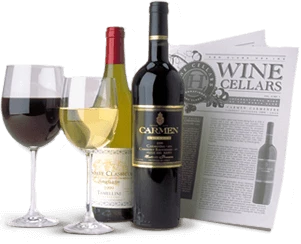
Past Newsletters - May 2009

Premier Series
Featured Wineries & Wines
Membership Type
Daumas Gassac Moulin de Gassac Aniane Guilhem 2007 – France 1 Red 1 White; 2 Reds
Joseph Drouhin Macon-Villages 2007– France 1 Red 1 White; 2 Whites
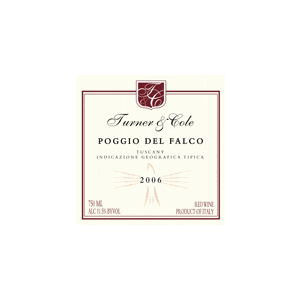
Turner & Cole Poggio del Falco 2006 – Italy 2 Reds
Ribera del Guadiana 2008 – Spain 2 Whites


Master Series
Featured Wineries & Wines
Membership Type
Artesa Carneros Pinot Noir 2006 - U.S.A. 1 Red 1 White; 2 Reds
Joseph Drouhin Macon-Villages 2007– France 1 Red 1 White
Daumas Gassac Moulin de Gassac Aniane Guilhem 2007 – France 2 Reds


Collector Series
Featured Wineries & Wines
Membership Type
Artesa Carneros Pinot Noir 2006 - U.S.A. 1 Red 1 White; 2 Reds
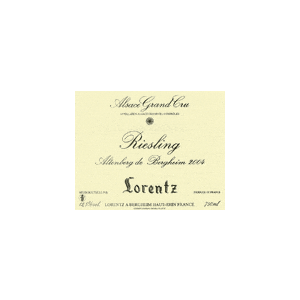
Georges Lorentz Riesling Grand Cru d’Alsace 2004 – France 1 Red 1 White
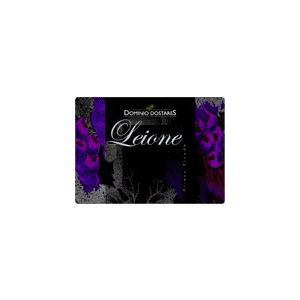
Dominio Dostares Leione Prieto Picudo 2005 – Spain 2 Reds

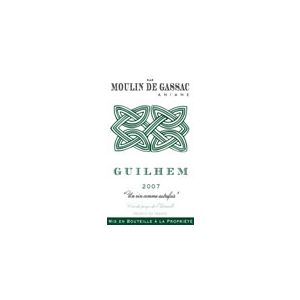
Daumas Gassac Moulin de Gassac Aniane Guilhem 2007 – France

Guilhem 2007In 1970 Aimé and Véronique Guibert fell under the spell of an old Languedoc mas, or farmhouse, and set out to create a veritable Languedoc grand cru wine from the garrigue (herb-scented brush) and forests of Gassac. Nearly everyone thought they were crazy. By the early 1970s the Languedoc, the most ancient of French wine regions, had fallen from its pedestal and sunk to its lowest point in recorded history. Instead of enjoying its reputation as the cradle of French viticulture and reclaiming its rightful position after phylloxera among the premier wine-producing regions of the world, the Languedoc was prostituting itself by ripping up old hillside vineyards and replanting them with inferior grapes on the valley floor to produce oceans of cheap, ordinary wines. The Guiberts turned that tide with the creation of Mas de Daumas de Gassac.

Through the enormous efforts of Aimé and Véronique Guibert and the unyielding belief and advice of Emile Peynaud, then Bordeaux’s most venerable enologist, the Languedoc’s first modern grand cru was born in 1978. A blend of 80% Cabernet Sauvignon and 20% other varietals whose components include Grenache, Merlot, Malbec, Syrah, Pinot Noir and a host of other French and Italian varietals, Mas de Daumas Gassac was an immediate success. Within a few years, it had been dubbed “the Château Lafite of Languedoc.” Moreover, the Guiberts’ success began the resurrection of the Languedoc and sparked a renaissance in viticulture and winemaking in southern France that continues until this day.

In addition to fashioning a grand cru wine, Mas de Daumas Gassac produces Moulin de Gassac with equal care. Moulin de Gassac is made in red, white, and rosé from traditional Languedoc varietals, so it is not a second wine of Mas de Daumas; it is a partnership of two Languedoc villages, Paulhan, which sits astride the banks the Hérault River, and Villeveyrac, a small town with a splendid amphitheatre of vines that overlooks the gleaming Mediterranean and the ancient port of Sète. Only traditional Languedoc vines that have attained a minimum of twenty-five years of age are used in Moulin de Gassac Rouge. The prestigious Revue du Vin de France has said of Moulin de Gassac Rouge, “Never has there been anything to match this quality at such a reasonable price . . . a world apart from soulless international wines, they truly mirror the region.” The Moulin de Gassac Blanc now enjoys similar accolades, as do Mas de Gassac’s excellent varietal bottlings.

Tasting Notes: The 2007 Moulin de Gassac Rouge began life on the sunny slopes of the finest Languedoc vineyards. It is a traditional blend of Syrah (30%), Grenache (30%), Carignan (25%), and Cinsault (15%) from 25- 50 year old vines. Although made in a more approachable style than Mas Daumas de Gassac’s “Grand Cru,” the 2007 Moulin de Gassac Rouge displays an impeccable integration of its four component varietals, excellent depth of flavor, and subtle complex flavors. It is, in fact, a much more enjoyable wine now than its 2007 Grand Cru sibling and will likely remain so for the next four or five years of its life. A mélange of red and black fruits, herbes de Provence, and garrigue, all deftly framed by smooth French oak, it is hard to imagine a better example of the preeminence of select Languedoc vineyards than Daumas de Gassac’s Moulin de Gassac. Gracious, flavorful, and ready to shine from the moment it is poured into the glass, this medium-bodied beauty pays tribute to the Guibert family and their nearly forty-year odyssey to produce the finest wines in the Languedoc. Although ready to please from the onset, some aeration prior to consumption further enhances the wine, so let it breathe as you wish. Furthermore, we found the wine to be exhibiting nearly as much freshness and additional complexity a day later, so laying a few bottles away for a year or two should prove to be a wise investment in drinking pleasure. Salut!

Accompaniments: In possession of all the elements of the finest Languedoc and Provencal wines, the 2007 Moulin de Gassac Rouge provides superb accompaniment to both simple and complex Mediterranean fare. For starters, cassoulets; thick, rich pasta dishes; stews; and spicy vegetarian specialties all complement this Languedoc specialty. Pork Shoulder served with lentils and ratatouille; sausage and beans; and venison tenderloin prepared with a heady brown gravy offer just a few tasty pairings with the delicious 2007 Moulin de Gassac Rouge. However, one of the delights of high-quality Languedoc wine is its versatility with food, and the 2007 Moulin de Gassac is no exception. Another favorite pairing with this wine is a roast chicken basted with herbs and cream, and stuffed with an onion, sage, and giblet stuffing. Piedmontese risottos and even tomato laden classics of southern Italy marry well with this Languedoc classic, so as you like it . . . there is no need to fret here about serving just the right dish. Enjoy!

For the Love of Cheese: So many cow, sheep, and goat’s milk cheeses hail from the south of France, so perhaps this is why Languedoc wines are some of the easiest wines to pair with the exhausting gamut of French cheeses? Fortunately, the 2007 Moulin de Gassac Rouge is not an exception in this regard, either. For the record, we are especially enamored of Cantal, Muenster, Raclette, and soft, creamy chèvres or goat cheeses with the 2007 Moulin de Gassac Rouge. To find out more about these offerings and other fine gourmet cheeses, pay us a visit at www.cheesemonthclub.com

Joseph Drouhin Macon-Villages 2007– France

Joseph Drouhin VineyardsJoseph Drouhin is one of the most respected names in the world of wine. Founded in 1880 by Joseph Drouhin, this prestigious Burgundy firm is presently being run with great critical and commercial success by the fourth generation of the Drouhin family: Frédéric, Laurent, Philippe, and Véronique Drouhin are firmly at the helm. They have taken over for their legendary father, Robert, who retired in 2003.

A négociant (wholesale merchant) and domain grower and producer, Maison Joseph Drouhin fashions many of Burgundy’s greatest red and white wines, including several spectacular Premier Cru and Grand Cru Chablis, and the celebrated Marquis de la Guiche Montrachet, a wine that has been called “the world’s greatest white wine.” Furthermore, the tremendous critical acclaim Drouhin’s wines have received across the board in recent years only underscore just how terrific the entire Drouhin portfolio is from top to bottom. Beheld of 150 acres of prime Burgundy vineyards, which are spread throughout the region’s top communes, plus 125 acres in Oregon, one could spend a lifetime discovering the wines of Burgundy and the lure of Chardonnay and Pinot Noir, without ever leaving Maison Drouhin.

Equally adept with Chardonnay and Pinot Noir, Maison Drouhin possesses some of the finest vineyards in Chablis and Chassagne-Montrachet for white wines and equally superb holdings for reds on both the Côte de Beaune and Côte de Nuits. All of Drouhin’s estate wines are grown and produced using sustainable methods of agriculture. The Drouhin fields are plowed, natural compost is spread, and wild grass still grows between the vineyard rows, which means no chemical fertilizers or herbicides are ever used. Moreover, Maison Drouhin has for years used the most natural weapons against insects and vine diseases by introducing natural bacteria and predators into the vineyards, rather than resorting to systemic control through chemicals. All of Maison Drouhin’s grapes remain hand harvested; and for the estate’s red wines only natural, wild yeasts are employed during fermentation. The results are simple: Drouhin produces only the best at every level of quality.

Macon-Villages

Macon-Villages is the most popular white wine of France’s fabled Burgundy region. It draws its name from the small city of Macon in southern Burgundy and the 26 distinct villages from which the appellation’s delicious Chardonnay wines flow. This part of the Maconnais is a hilly, quite rural part of Burgundy. Lucky for us the wines of Macon-Villages are born on the region’s limestone subsoil, which help distinguish the appellation’s wares from less favored locales. Here, Chardonnay reigns supreme and accounts for more than 90 % of the entire region’s production. Pouilly-Fuissé, St. Véran, and several other renowned Macon villages are considered the stars of the region and are entitled to their own appellation.

Tasting Notes: Taste and see the goodness of the Maconnais in the fresh, scented, exceedingly easy-to-drink 2007 Joseph Drouhin Macon-Villages. Endowed with a sunshiny yellow robe and the telltale Macon aromas of acacia flowers, beeswax, citrus, fresh-cut mountain apples, and minerals, this first class Macon-Villages offers an abundance of haunting flavors to accompany its pretty, aromatic profile and sleek, elegant body. Spring flowers, citrus oil, and the gentle minerality of the Macon all come to life in the mouth, too. These gentle flavors caress and seduce the palate with the purity of Chardonnay. In short, this definitive Macon-Villages captures the essence of Chardonnay when it has not been buried beneath the preponderance of oak. Instead, elegance and the full assortment of Maconnais flavors come to fore. We suggest drinking this pure, natural-tasting Chardonnay only lightly to moderately chilled (48º-55º F), especially in more temperate climates. However, some members may prefer to serve this wine at a colder temperature. We opted for less chilling because we believe a more ambient temperature allows Macon-Villages its full expression of flavors . . . but as you like it. Enjoy!

Accompaniments: First-rate Macon-Villages makes for a great aperitif and provides a wonderful segue to a meal. Consequently, we suggest serving the 2007 Joseph Drouhin Macon-Villages at the beginning of an evening or at the start of festivities, and then continuing with it as an accompaniment to appetizers or a simple first course. Given this wine’s crisp citrus fruit and long lingering minerality, it can more than hold its own with a wide assortment of foods. Some of our favorite appetizer selections with Drouhin’s Macon-Villages include seafood starters such as Shrimp Cocktail, Sautéed Oysters, Crispy Crab Rangoons, Maryland Style Crab Cakes, and Shrimp and Vegetable Rolls. Pizzettes, tasty, easy-to-prepare pizza dough rounds with fresh basil, tomato, warm gorgonzola cheese, and extra virgin olive oil, rank among the elite accompaniments, as well. In addition, almost any light- to medium-flavored cow’s milk cheese (Colby, Edam, Muenster, and Port Salut) and a loaf of crispy French bread provide plenty of companionship. Moreover, Macon-Villages is versatile, so almost any food that is not too highly charged will gladly complement this wine, as well.

Turner & Cole Poggio del Falco 2006 – Italy

Turner & Cole Poggio del Falco 2006Turner & Cole Poggio del Falco is produced by Michele Barbiero at the illustrious Morazzano estate, one of Tuscany’s finest properties. The Morazzano estate is located in the hills of the Montescudaio DOC, just a little over four kilometers from the hallowed ground of Sassicaia. Morazzano and proprietor Michele Barbiero are renowned for their Brunello di Montalcino and Super Tuscan reds (full-bodied blends made from Sangiovese, Merlot, and Cabernet). All of Morazzano’s wines are farmed organically. Moreover, no added sulfites or other chemicals were used in making the Poggio del Falco – further testament to Michele Barbiero’s commitment to crafting pure, natural wines at Morazzano.

In addition to Poggio del Falco and the outstanding Brunello di Montalcino that Michele Barbiero fashions from a 4.5-acre vineyard in Brunello, Morazzano turns out several other outstanding reds, including Ribuio and Re. Both wines contain varying portions of the region’s most illustrious varietals: Sangiovese, Merlot, and Cabernet. The only caveat here seems to be the estate’s limited production, so we will have to work harder in the future to secure more of Michele Barbiero’s outstanding wines.

Tasting Notes: The 2006 Poggio del Falco from Morazzano is a sophisticated, organic offering that embodies a wealth of flavor. In short, this pure Super Tuscan red from an exceptional vintage convinces us that sometimes dreams do come true: wine of this caliber is hard to come by and typically sells for three times the price of the Poggio del Falco. The 2006 Poggio del Falco epitomizes all that is good about the finest Tuscan reds and the haunting landscape from which they spring. Deep ruby in color, this unfiltered Sangiovese, Merlot, and Cabernet blend shines in the glass and on the palate. It offers up a host of pretty scents and flamboyant flavors: violets, roses, ripe silky black cherry fruit, and a taste of Tuscan terroir all combine to form a hedonistic onslaught that makes the 2006 Poggio del Falco hard to resist. And in the mouth Poggio del Falco’s plush fruit melds to the wine’s ripe, textured tannins, allowing the wine to finish with both grace and style. No ordinary Tuscan red, the 2006 Poggio del Falco exhibits a purity and tantalizing charm that are hard to match. Although endowed with a wealth of fruit and forward charm for present pleasure, we suspect the Poggio del Falco will continue to improve further in bottle. We recommend serving it cool (59º F-65º F) straight from the bottle. With only a few minutes in the glass, it will be ready to please.

Accompaniments: A tasty Tuscan red such as the 2006 Poggio del Falco provides the ideal complement to all kinds of foods. A myriad of pastas, meats, and vegetables take on a whole new dimension when paired with this wine. Poultry, fine cuts of beef and pork, even game, provide worthy suitors. Classic Tuscan white bean dishes served with crusty Italian bread and a few slices of hard cheese offer exceptional accompaniments, too. However, one of our favorite recipes with Super Tuscans is Quail or Pheasant stuffed with braised vegetables, porcini mushrooms, and a hint of truffle. And for a simple midweek treat, you may want to open a bottle of the 2006 Poggio del Falco to accompany grilled chicken served over bowtie pasta with a homemade pesto sauce. But one need not be Lorenza de Medici in the kitchen to enjoy this wine. The 2006 Poggio del Falco will make almost any meal or aged cheese taste better; and when all else fails, it will stand and deliver on its own . . . . so as you like it. Buon Appetito!

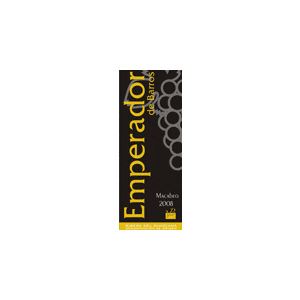
Bodegas Viticultores de Barros Emperador Macabeo Ribera del Guadiana 2008 – Spain

Emperador Macabeo Ribera del Guadiana 2008The Bodegas Viticultores de Barros was founded in 1983 by 35 quality growers from Extremadura's Tierra de Barros region. They pooled their resources to launch the venture. Their aim was to revitalize viticulture in the Tierra de Barros, which had long languished in the shadow of the Rioja and other more celebrated appellations to the north, and develop the full potential of their vineyards and winemaking. Thus, the Bodegas Viticultores de Barros was at the forefront of the vitcultural renaissance in Spain that began more than two decades ago.

Today, Bodegas Viticultores de Barros encompasses 1,250 acres of vines. All of the bodegas’ vineyards are grown in the typically deep red clay/chalk soils of the region, which retain the needed moisture for producing balanced fruit in one of Spain's most arid climates. Vintage consistency is nearly a given in the Tierra de Barros, and viticulture is organic out of necessity as well as tradition. The dry continental climate of the Barros area of Extremadura and the vineyards’ relatively high altitudes (ranging from 1000 to 1700 feet) help to assure structure and elegance in the wines and limit the need for any chemical intervention.

Bodegas Viticultores’ specialty is fashioning wines to be drunk within the first few years of life by using the latest technology and following precise and selective harvesting techniques. Macabeo (also known as Viura) is the preferred varietal for white wines here, while Tempranillo is the varietal of choice for all of the bodegas’ reds. Under the expert guidance of the Bodegas Viticultores de Barros winemaking team, this winery fashions only two wines, one white and the other red. Both wines are rich in flavor and highly aromatic, which renders them some of the finest wine values in the market today.

Tasting Notes: Like its red counterpart, the 2008 Emperador Macabeo is a 100% varietal and an intense young wine that offers splendid aromatics and a truly enjoyable mouthful of wine. For starters, this bright, sunshiny white wine offers luscious scents of dried pineapple, apricot, and herbs. On the palate, the 2008 Emperador Macabeo blossoms and deepens in flavor with each and every sip; deep-down fruit flavors mingle with the savor of herbs, minerals, and lemon zest. And with patience and a little aeration, this exhilarating, mouthfilling wine nearly explodes on the palate before finishing perfectly dry. Aromatic, heady, and vibrant, the 2008 Emperador Macabeo could easily serve as the poster child for Macabeo, Spain’s most widely planted white varietal. Moreover, Bodegas Viticultores’ Macabeo epitomizes the consummate quality that has emerged lately from Ribera del Guadiana and other heretofore unsung wine-producing regions of Spain. For optimal enjoyment, we suggest you provide this delicious wine a bit of aeration. We gave it a good chill (40º F) and then allowed it to sit in our glasses a few minutes before partaking. The only disappointment the panel had with this Macabeo came when we finished the bottle; watching grown men and woman beg, cajole, and grovel is never a pretty sight. Consequently, we recommend you have an extra bottle or two on hand. Enjoy!

Accompaniments: Bodegas Viticultores’ reputation rests on its ability to fashion fruit-driven, pleasure-giving wines from traditional Spanish varietals. Consequently, the 2008 Emperador Macabeo is built for good-old-fashioned drinking in mind, with or without food. Frankly, we enjoyed this wine immensely all by itself. However, we must confess that its greatest attribute may be its ability to accompany some very hearty, often-difficult-to-pair dishes. Seafood Paella, Shrimp and Angel Hair Pasta in a tomato basil sauce, and Pan Seared Chicken served with garlic mashed potatoes and zucchini in a black bean sauce are just a few dishes that shine in the presence of the 2008 Emperador Macabeo. Sushi and sashimi offer good choices, too. Soft cow or sheep’s milk cheeses offer a tasty interlude with this wine as well, so why not skip dessert and save some 2008 Emperador Macabeo to accompany a platter of superb cheeses? Salud!

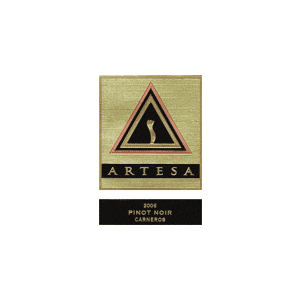
Artesa Carneros Pinot Noir 2006 - U.S.A.

Artesa Carneros Pinot NoirArtesa is perhaps the most imaginative and striking of all Napa Valley wineries, rivaling and even surpassing the likes of Opus One and Dominus. Resplendent with a sculpture-studded visitor center and futuristic fountain, everything about this young winery exudes panache and style. From panoramic views of San Pablo and San Francisco Bays to the bevy of opulent, individualistic wines that flow from meticulously tended vineyards, Artesa offers every enticement to stay and taste.

Artesa means “craftsman” in Catalan, the language of Barcelona and the winery’s owners, the Raventos family. As the name implies, all of this world-class winery’s offerings are handcrafted. Born in 1991 to great fanfare, Artesa has undergone several makeovers in order to specialize in the production of small lots of exquisite wines from single-vineyard sites.

Established originally to make only premium sparkling wines, Artesa has adroitly switched its focus to include a range of premium still wines from California’s finest varietals. Since 1997, millions of dollars have been spent on a “winemaker’s wish list,” which has raised the bar at this outstanding property, not only for its still varietal offerings but also for the estate’s traditional methode champenoise sparkling wine, as well.

Artesa Winery FountainToday, the winery’s most notable wines include two superb Carneros offerings, a tantalizing, full-bodied Pinot Noir and an equally stunning Carneros Chardonnay; and a rich, elegant Napa Valley Cabernet Sauvignon. These are, of course, in addition to Artesa’s excellent champagne-style sparkling wines. In total, Artesa comprises 352 acres in Carneros that are devoted mostly to Chardonnay and Pinot Noir; 409 acres in northern Alexander Valley, which are dedicated equally to the Bordeaux varietals and Tempranillo; and a new 300-acre Sonoma Coast property that will produce Chardonnay, Pinot Noir, and Spain’s most important white varietal, Albarino.

In order to produce top-notch Chardonnay, Cabernet Sauvignon, and Pinot Noir that occupy the highest echelon of Napa Valley offerings, Artesa employs Dave Dobson as Head Winemaker. Dave came to Artesa in 2005 after resurrecting Rutherford Hill and re-establishing the legendary winery as one of Napa Valley’s greatest estates. He chose to leave Rutherford Hill and come to Artesa because “this [Artesa] is a winery with history, with an amazing facility and with dedicated, smart, passionate people. But what really puts it over the top are the vineyards. We're in all the right places to do amazing things: Foss Valley, Alexander Valley and, of course, Carneros. It's an embarrassment of riches."

Artesa Winery SculptureIn order to fashion Artesa’s riches, Dave spends months in the vineyards. It is the part of the job he loves most "because it's where sun, rain and soil meld into something sublime,” he states. “ It's where the winemaker can have a huge impact on quality by ensuring even ripening and determining when to harvest and it's where you can make a huge difference. In the winery, once you've got the basics down, you're kind of working on the margins. In the vineyard, improvements can be dramatic and profound." And the proof is in the wines. Dave’s tenure at Artesa has unequivocally raised the quality bar.

In addition to Artesa, the Raventos family owns Codorniu, Spain’s first and foremost producer of Cava; Bodegas Bilbainas, a historic property in the heart of Haro in La Rioja Alta; Septima, a stunning new winery in the famed Agrelo district of the province of Mendoza in Argentina; and other prime Spanish properties. All are renowned for their quality and individual styling.

Tasting Notes: Bold, beautiful, and impeccably balanced, the 2006 Artesa Carneros Pinot Noir makes a hedonistic and stylistic statement. It is dark, scented, and savory – no wimpy wisp of a Pinot here. Delicious scents of currant, clove, chocolate, and wood smoke permeate the nose. In the mouth, this wine’s olfactory carries through on the mid palate, offering an elegant, rich, multi-layered center that combines red fruit, spice, and fresh-cut tobacco leaf flavors that persist long after swallowing. Fresh acidity on the finish adds an extra dimension to the wine and artfully frames this wine’s hedonistic bent. Concentrated and complex, the 2006 Artesa Carneros Pinot Noir will continue to improve in bottle for several more years. However, one of the glories of this wine and the finest Carneros Pinot Noirs are their ability to bloom in the glass after just a few minutes of aeration. Enjoy this superb Pinot at cool room temperature (no more than 66º F).

Accompaniments: As a bold, balanced, full-bodied Pinot the 2006 Artesa Carneros Pinot Noir can hold court with a variety of accompaniments, including traditional Burgundian specialties, such as Coq au Vin and Boeuf Bourguignon. In addition, this wine excels equally well with duck and turkey and all their trimmings as it highlights the savory parts of the meal, especially stuffing. Veal and spring lamb offer other fine pairings, as do halibut, salmon, and tuna prepared with fruit chutneys, teriyaki, or even a little spicy heat. Colorado Rack of Lamb, accompanied by potato gnocchi, sweet peas, pearl onions, and mushrooms, offers an exciting companion with which to explore the soul of Artesa’s exemplary Carneros Pinot Noir. Grilled Yellowfin Tuna topped with either a mango or pineapple salsa and served with Asian vegetable spring rolls provides another exciting complement. Furthermore, a few pieces of fine cheese such as Morbier or just the company of an old friend will be more than enough to complement this enjoyable, full throttle Pinot Noir. Salut!

Riesling Grand Cru d’Alsace 2004 – France

Riesling Grand Cru 2004Gustave Lorentz is a family-owned and -operated winery that dates to 1836. Today, this fine estate rests in the very capable hands of Georges Lorentz, who fashions a bevy of delicious white wines with some assistance from his “retired” father, Charles.

The Lorentz winery is one of the largest family-owned facilities in Alsace. It encompasses nearly sixty-six acres of premium vineyards in Bergheim, including nearly half of the great Grand Cru vineyard of Altenberg de Bergheim, famous for its extraordinary Riesling, and all of Kanzlerberg, the smallest Grand Cru in Alsace. Bergheim is located along the famous Route de Vin in the very finest section of Alsace, a mere 3 kilometers from Ribeauville and just 5 kilometers from Riquwihr. This is the heart and soul of Alsace wine country. All Lorentz wines come from the Bergheim area, also known as the Haut Rhin, and express the unique terroir of the region. Lorentz’s top wine is his single-vineyard Grand Cru Altenberg de Bergheim Riesling.

Georges and Charles LorentzLike most Alsace producers, Gustave Lorentz features several levels of wine from a wide variety of traditional Alsace grapes. The ubiquitous Pinot Blanc provides a steady income and a solid foundation upon which Lorentz has built his domain, as have most other family growers in Alsace. As one would expect, Riesling, Tokay Pinot Gris, and Gewürztraminer constitute the pinnacle of this estate’s achievement, as they do throughout Alsace. In addition, Lorentz’s wines are featured in many of the Michelin-starred restaurants in Alsace and some of the finest restaurants around the world. From simple vintage cuvees to Reserve and Grand Cru bottlings to the rare late harvest wines known as Vendanges Tardives, Lorentz is dedicated to the fashioning of the highest quality Alsace wines. Vive la différence!

Alsace

Gustave Lorentz VineyardsAlsace is quite possibly the most picturesque wine region in all France. It is an enchanted land of beautifully restored half-timbered houses, flower-bedecked balconies and carved window boxes, and, of course, vineyards. It is bounded by the Vosges Mountains to the west, which block out the dreary maritime weather that plagues much of the rest of northern France, and the Rhine River and Germany to the east. Because of its favored climate and position, Alsace is the sunniest province in northern France. This extra sunshine makes Alsace an ideal spot for the cultivation of the vine and the production of premium wines, especially Riesling and Pinot Gris.

In Alsace, white wine reigns supreme. Pinot Blanc is the staple of Alsace, where it makes a fresh, sprightly wine of considerable merit. Nonetheless, the greatness of Alsace lies more typically in the crafting of some of the world’s finest wines from Riesling, Gewürztraminer, and Pinot Gris – the vast majority of which are made dry, rather than sweet. The relative dryness of most Alsatian wines may come as a surprise to many, especially to those for whom German-sounding names and tall thin green bottles are synonymous with sweetness. However, Alsatian wines are unique unto themselves and rarely do they resemble their German counterparts in style, flavor, or level of residual sugar. Robert Parker Jr. has called the wines of Alsace “some of the greatest white wines produced on the planet,” and they are some of the most pleasurable and hedonistic wines, too, we might add.

Tasting Notes: Georges Lorentz has once again fashioned an outstanding Grand Cru Riesling from the famous Altenberg de Bergheim vineyard. For those of you who may still think of Riesling exclusively as a sweet German concoction, we ask you to put aside all pre-conceived notions and prepare yourself for the glory of Alsace and the essence of a noble varietal in the 2004 Gustave Lorentz Altenberg de Bergheim Riesling Grand Cru. This Grand Cru offering is neither sweet nor does it much resemble its German counterparts across the Rhine. Brilliant, limpid, and dressed in a pale yellow robe with a glint of the morning sun, this Grand Cru Riesling dazzles with its enchanting perfume, offering a mélange of citrus oils, liquefied minerals, and a subtle unctuous quality that defines the very best examples of Alsace Riesling. Furthermore, the 2004 Altenberg de Bergheim Riesling is long and flavorful in the mouth, and it caresses the palate with all the charm and intensity of its enchanting aroma. So, what is there not to like? Moreover, the 2004 Gustave Lorentz Altenberg de Bergheim Riesling Grand Cru remains complex, dry, and downright racy on the finish. Just one glass of the 2004 Altenberg de Bergheim Riesling should be enough to convince the uninitiated as well as the most ardent of Riesling detractors of this noble variety’s greatness. We suggest serving the 2004 Altenberg de Bergheim moderately chilled (40º- 45º F), at least initially. However, one of the glories of Altenberg de Bergheim Riesling is allowing the wine to creep slowly towards cool room temperature and metamorphose in the glass: this way you are sure not to miss all that this wonderful Riesling has to offer, including the wine’s long, satisfying finish that persists on the palate for up to thirty seconds after the wine has been swallowed. Anticipated maturity: 2009-2015.

Accompaniments: The 2004 Gustave Lorentz Altenberg de Bergheim Grand Cru Riesling provides the perfect complement to seafood as well as to traditional Alsace favorites. Crab or prawns with avocado, grilled white fish, and an old-fashioned onion or leek tart offer plenty of complement to Lorentz’s flagship offering. Lobster salad, sautéed oysters served in a savory cream based broth, and veal roast with braised onions provide other tasty treats to highlight this exquisite Alsace Riesling. Duck, goose, sweetbreads, and pork complement Lorentz’s Altenberg de Bergheim Grand Cru Riesling, too. And for Riesling purists, all that is required for the ultimate in gustatory pleasure is a clean glass and a special occasion, like tonight, to thoroughly enjoy this wonderfully dry Riesling. Santé!

Dominio Dostares Leione Prieto Picudo 2005 – Spain

Dominio Dostares Leione Prieto Picudo 2005Dominio Dostares (Doe-mean-yo Doe-star-ace) was founded in 2004 by the highly-respected Dominio de Tares (Doe-mean-yo Day-tar-ace) estate of Bierzo with the objective of reviving León’s exceptional Prieto Picudo grape. Prieto Picudo (Pre-ate-o Pee-cue-doe) is a rare indigenous red variety that had been reduced to a few hundred acres of old vines, which, in the hands of small local cooperatives, were being used to make first-rate rosé instead of extraordinary red wine, despite the vines’ ancient age, high level of color, extract, and alcohol. Dominio de Tares acquired 75% of those venerable old Prieto Picudo vines in Léon, many in excess of 100 years of age, and began Dominio Dostares by applying production methods they had perfected in the Bierzo DO with that region’s indigenous Mencia variety. The results have been nothing short of spectacular, as Dominio Dostares has received tremendous accolades from critics and wine lovers alike on their three special wines: Estay, Leione, and Cumal – all from old vines of Prieto Picudo.

Domino Dostares introduced Estay, Leione, and Cumal in 2007. While the three wines share many similar characteristics, Estay is by far the lightest of the three wines. Leione and Cumal are deeper, more age-worthy wines that spend longer time in oak. Of the latter, Leione is the more feminine offering and Cumal the weightier, more massive wine. Both of these special Prieto Picudo wines are rare and offer the taster a glimpse of two sides of the same coin. More importantly, these wines taste great.

Tasting Notes: As an outstanding example of the rare, indigenous grape variety by the name of Prieto Picudo, the 2005 Dominio Dostares Leione is imbued with a deep, deep purple color and a knockout aroma that is both lush and mysterious. A totally captivating wine, the 2005 Leione is made from vines 90 to100 years of age. It is a truly unique offering that owes its special flavor to the inimitable Prieto Picudo. However, Leione’s style and hedonistic appeal most closely resemble that of outstanding Châteauneuf-du-Pape; only Leione is cleaner, softer, and more seductive. It is pure September juice, red fruits, black fruits, violets, and spice. How else does one describe a wine for which there is no other frame of reference? In tastings of the three wines of Dominio Dostares, the words seductive and seductress are most often repeated, and Leione leads the trio in casting her spell and working her magic. For optimum enjoyment, phone a friend and enjoy this “mysterious” wine after a bit of aeration. We suggest serving it between cellar and cool room temperature for maximum flavor intensity (55°-66°F).

Accompaniments: The 2005 Dominio Dostares Leione provides an exemplary partner for a host of simple and sophisticated dishes. The wine’s full flavor and seamless structure make it easy to pair with nearly all types of meats. Tender young veal, grilled chicken, or even a juicy sirloin steak will complement Leione with aplomb. Serve the main dish with an artfully prepared orzo salad with garbanzo beans, fresh tomatoes, red onion, and mint, and you have a simple feast with which to accompany the flavorful 2005 Dominio Dostares Leione. A chicken and shrimp paella provides another lovely accompaniment, especially when just enough saffron is added for panache. In fact, almost any rice and bean dish, even moderately spicy black bean versions served with Cuban pork, will not overwhelm this unique wine. So whether you are planning a formal dinner party or an impromptu get-together, the 2005 Leione should provide plenty of gustatory pleasure. Enjoy!

I'm ready toPlace My Order Button


logo for wine club
Since 1994
Home
Join Our Wine Club
Gift Memberships

Membership Renewals
Reorder Your Favorites
More Information
Wine of the Month Club
Current Selections
Past Selections
Testimonials
Other Gourmet Gifts
Corporate Gifts
Wedding Gift Ideas
All About Wine
Website Tools
Who We Are
Contact Us

1 - 800 - 625 - 8238
(Outside US call: 949-206-1904)
P.O. Box 1627, Lake Forest, CA 92609